Why Is Polar Bear Skin Actually Black?
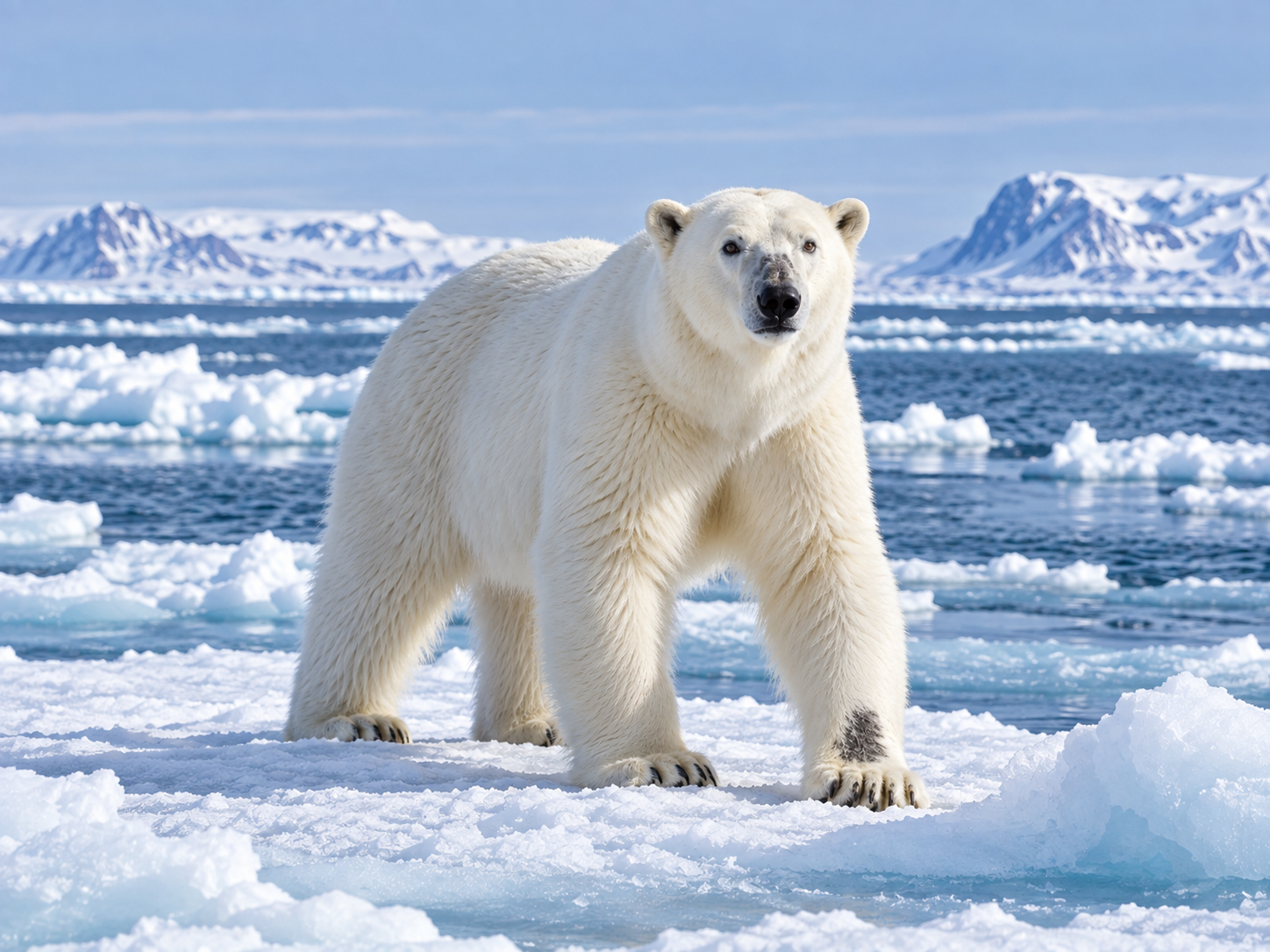
A polar bear looks almost completely white.
The fur, the face, the body and even the enormous paws seem built for a world of snow and ice.
But underneath all that pale fur is something unexpected.
The skin is black.
That immediately raises another question.
Why would an animal living in one of the world's brightest, coldest environments have such dark skin?
The usual answer is simple: black absorbs sunlight, so the dark skin should help the bear warm up.
There is some truth to that idea.
But the full story is more interesting.
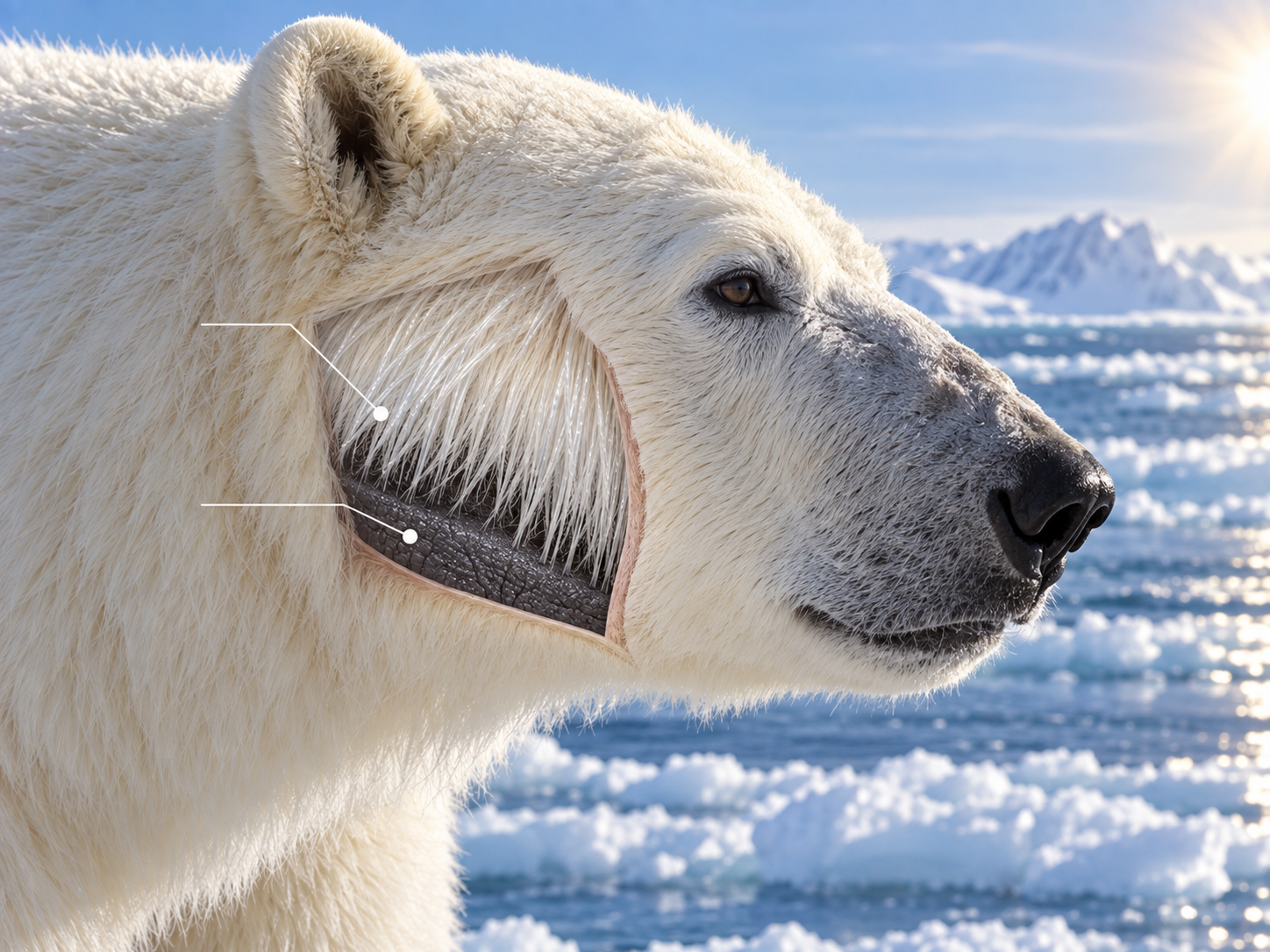
A polar bear's hair is not actually white. Its hairs contain no pigment and are largely transparent, hollow structures that scatter light, making the coat appear white.
And recent experimental work has challenged the old idea that sunlight routinely passes through the thick fur and heats the black skin. In much of the thick dorsal coat, very little solar energy reaches the skin at all.
So the black skin is real.
Its connection with warming is more complicated.
And that makes the polar bear even more unusual.
Chapter 1 — The Bear Looks White, But the Fur Isn't
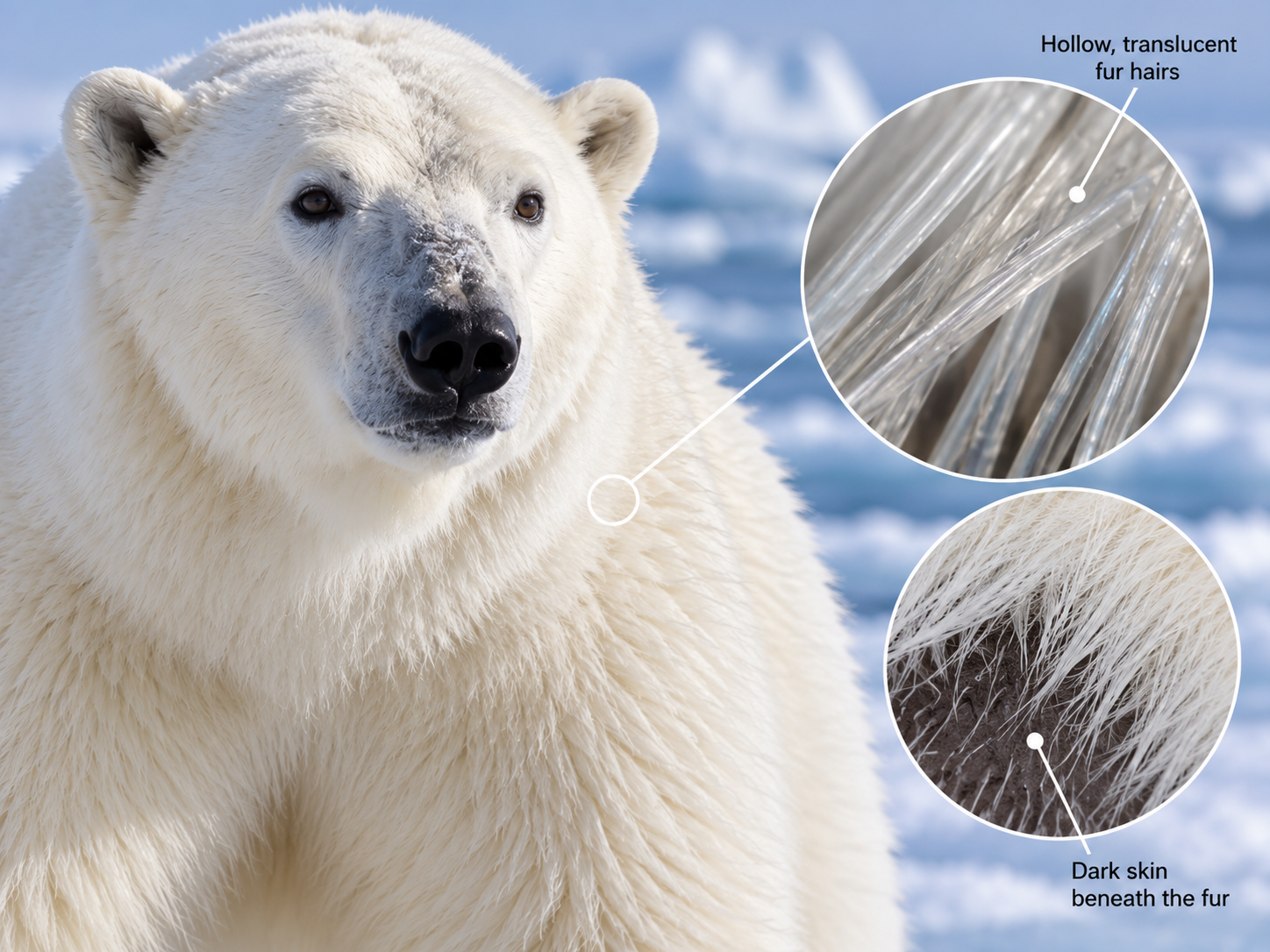
Start with the part everyone can see.
A polar bear's coat looks white.
But unlike the white fur of many other mammals, polar bear hair contains essentially no pigment. The individual hairs are transparent and hollow, and their structure scatters incoming light, giving the animal its familiar white appearance.
So the white colour is largely an optical effect.
The hairs themselves are not filled with white paint.
They are more like tiny light-scattering tubes.
That matters because it means the colour of the fur and the colour of the skin are doing two completely different things.
The fur helps the bear blend into snow and ice while also forming an important insulating layer.
The skin underneath is dark.
Peel the visual layers apart and the famous white bear suddenly looks very different.
Why White Fur Can Come From Clear Hair
Chapter 2 — Why Have Black Skin at All?
Now the obvious question.
Why not white skin too?
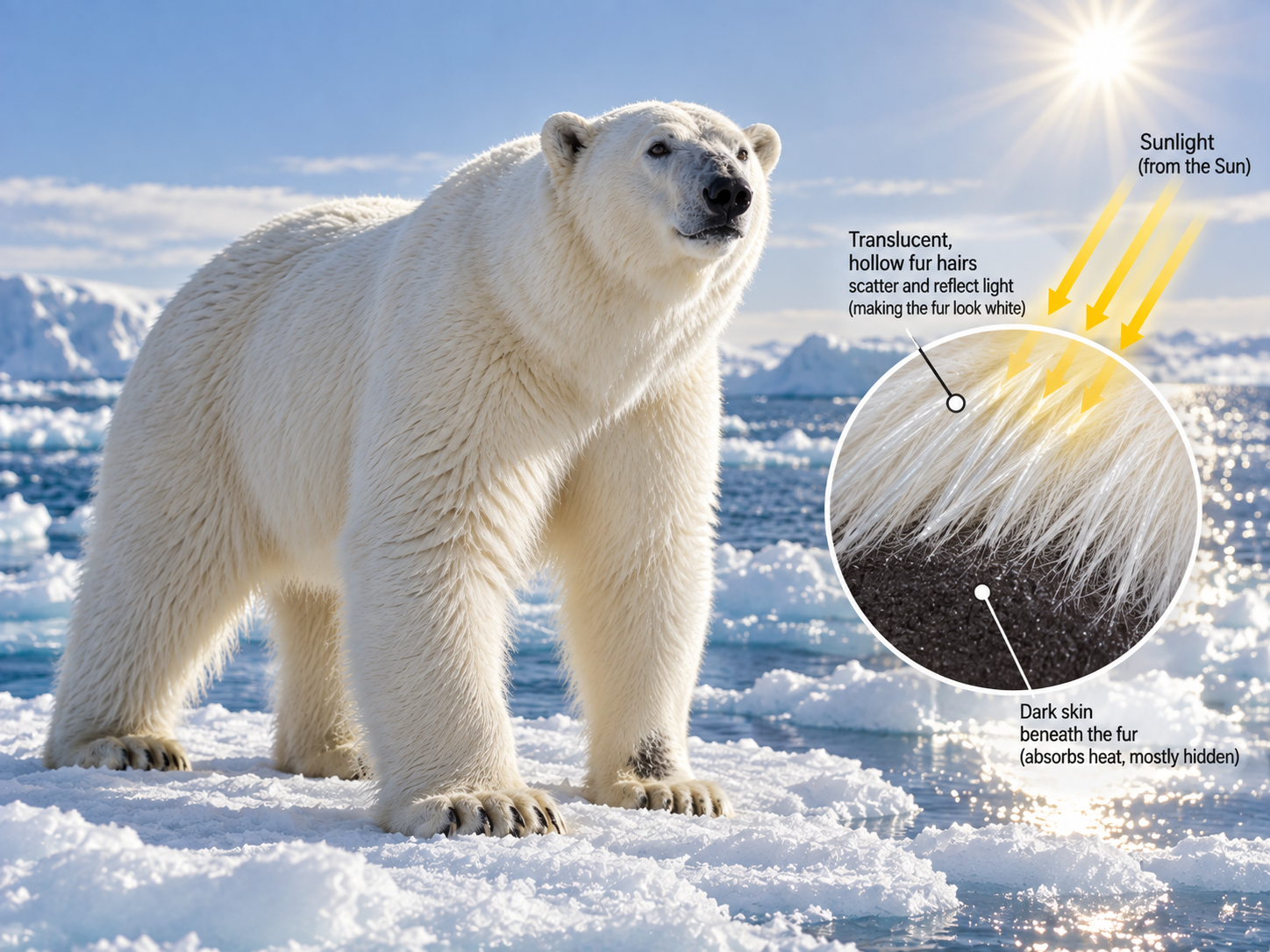
Dark skin absorbs light more strongly than pale skin.
That led scientists and science educators to suggest a straightforward possibility: sunlight passing through or between the hairs could be absorbed by the dark skin, potentially giving the bear some additional heat. Smithsonian educational material still describes the black skin as an adaptation that can absorb solar heat.
It sounds perfectly logical.
The Arctic may be brutally cold, but it is not always dark.
When the Sun is above the horizon, snow and ice can reflect a great deal of light.
A dark surface absorbs more of that incoming radiation than a light one.
So black skin can contribute to solar absorption where sunlight actually reaches it.
But there is an important catch.
The fur is not a thin curtain.
It is a remarkably effective insulating coat.
And that changes the calculation.
Chapter 3 — The Old “Solar Panel” Story Is Too Simple
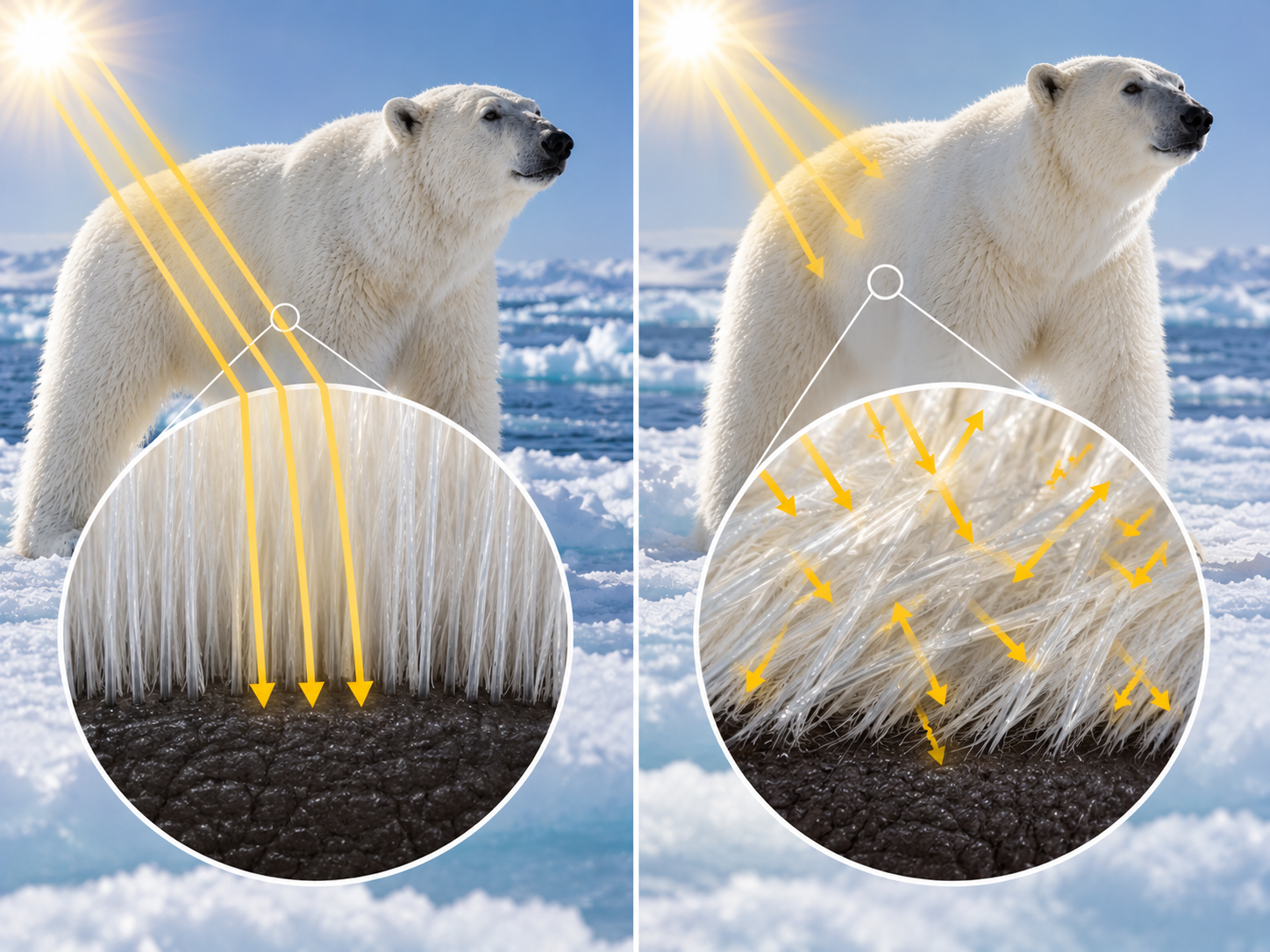
For years, polar bear fur was sometimes described almost like a solar collector.
The idea went roughly like this:
Sunlight enters the bear's translucent hairs.
The hairs guide or scatter some of that light downward.
The black skin absorbs it.
The absorbed energy becomes heat.
It is an attractive explanation.
There is even a long scientific history behind attempts to understand how light interacts with the polar bear pelt. Older research found that the pelt has unusual optical properties and that light can travel through it in complex ways.
But another study challenged the popular claim that polar bear hairs function like little optical fibres. Direct measurements found substantial attenuation of visible light within individual hairs, arguing against the idea that they efficiently guide light like fibre-optic cables.
And newer experimental work has gone further.
Researchers measuring polar bear pelts found that in the thickest parts of the coat, only a very small fraction of incoming solar radiation reached the skin. In one tested mid-back region, solar transmittance through the fur was about 3.5%. The study concluded that most solar absorption there occurred within the fur rather than at the skin.
That changes the story.
The black skin may absorb sunlight.
But over much of the thick coat, the sunlight may never reach it in the first place.
So the simple picture of a polar bear using black skin as a giant solar heater is probably too broad.
The fur itself does much of the optical and thermal work.
Where Does the Sunlight Actually Go?
Chapter 4 — Then Why Is the Skin Black?
This is where we need to be careful.
We know the skin is dark.
We know dark pigmentation absorbs light.
We also know that polar bears live in an environment where sunlight, reflective snow and ice, and extreme cold can all matter.
But that does not mean scientists have proved that black skin evolved mainly as a solar-heating system.
The evidence is more complicated.
A 2014 study comparing polar bear fur with another mammal's coat found that despite large differences in reflectance, the amount of solar heat actually reaching the skin was similar under the tested conditions. The researchers concluded that the thick insulating fur greatly restricted radiant heat flow and that coat colour had little effect on heat reaching the skin in those circumstances.
The more recent 2024 pelt experiments reached a similar conclusion for thick-fur regions.
That leaves an honest answer:
The black skin may have a role in absorbing solar radiation where light reaches it, but its exact evolutionary importance is not fully settled.
That is different from saying the black skin has no purpose.
Biological features rarely have to perform only one job.
Skin pigmentation can also protect tissue from ultraviolet radiation, and pigmentation occurs throughout the skin rather than only on areas exposed to the Sun. But evidence does not let us confidently reduce the polar bear's black skin to one single function.
Sometimes the best scientific answer is not a dramatic one.
We know what the feature is.
We know what it can do.
We are less certain about exactly why evolution settled on that colour.
What We Know and What We Don't
Chapter 5 — The Real Superpower Is the Fur
The black skin gets the headline.
The fur deserves more credit.
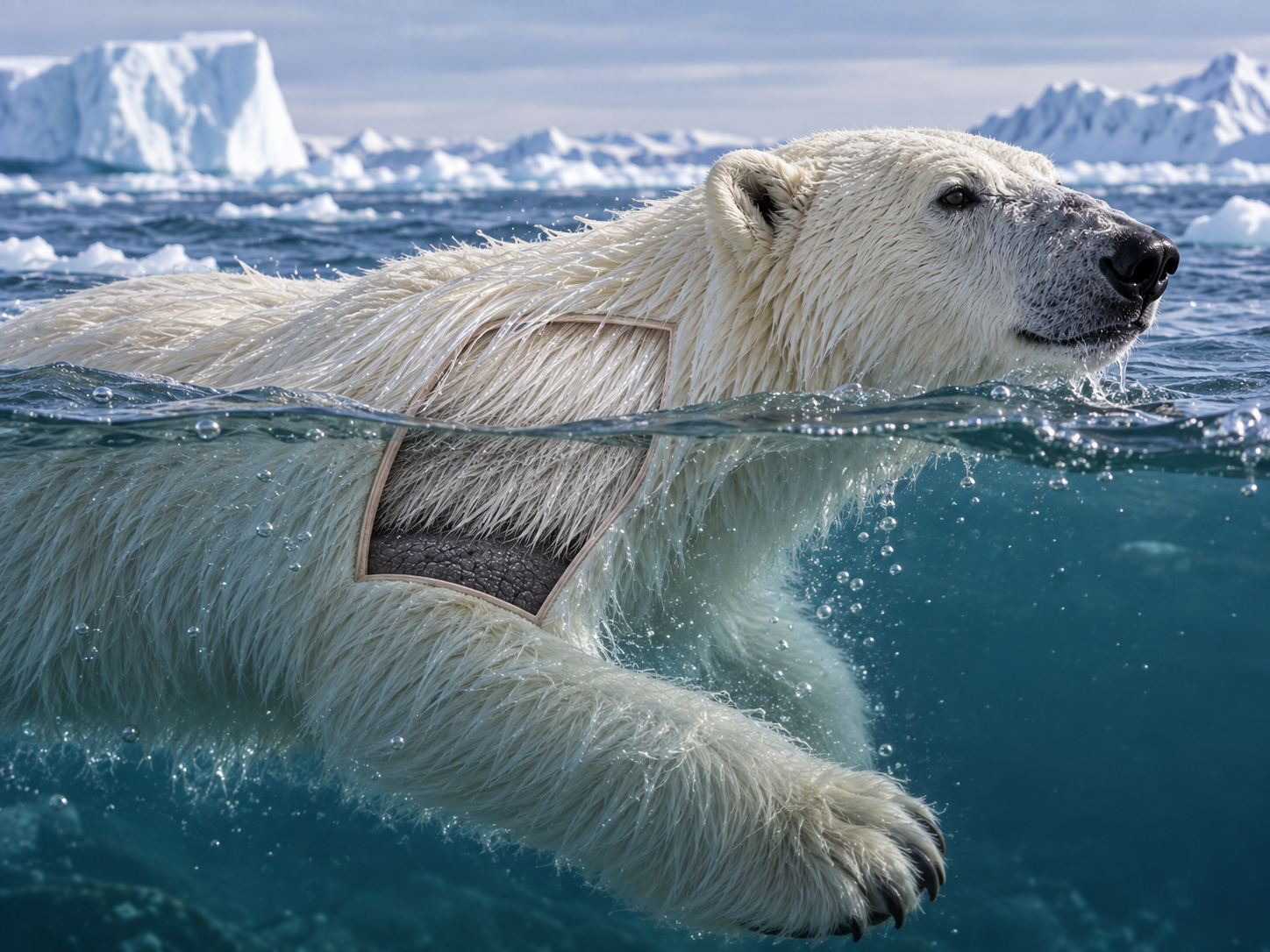
A polar bear has two layers of fur: a dense insulating undercoat and longer guard hairs that protect it from the environment.
That arrangement solves several problems at once.
The underfur traps air close to the body.
The outer hairs help keep water away and protect the insulating layer.
And the entire coat creates a thick barrier between the bear and the Arctic air.
This matters especially when the bear enters cold water.
Water pulls heat away much faster than dry air does.
The bear therefore needs more than a warm-looking coat. It needs insulation that continues to work when the environment becomes wet and cold.
Its body also stores a substantial layer of fat, adding another barrier and providing an energy reserve.
So when we ask why the polar bear's skin is black, we should not forget where the real thermal defence is.
It is mostly the system around the skin.
The dark skin sits underneath one of the animal's most important insulating structures.
Chapter 6 — Black Skin Does Not Make the Bear a Black Bear Underneath
There is another interesting detail.
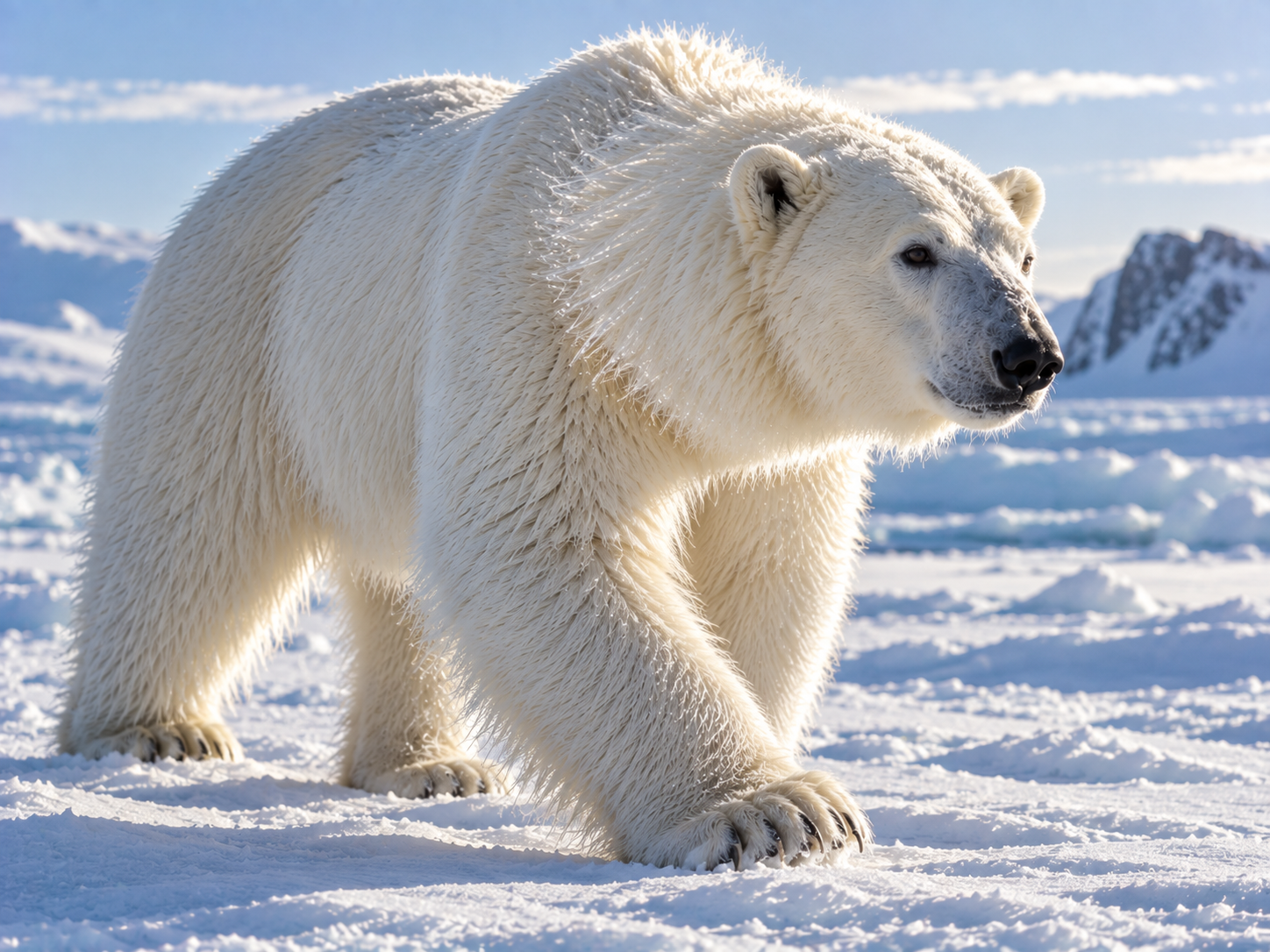
The skin is not normally visible.
The fur is so dense that the dark colour underneath has almost no effect on how a healthy polar bear looks from a distance.
This is why a polar bear can have black skin and still remain almost perfectly white against the Arctic landscape.
The two features are working at different levels.
The fur determines much of the animal's visible appearance.
The skin lies underneath as living tissue.
That separation is useful.
A bear can have darkly pigmented skin without losing the camouflage provided by its pale coat.
And because the fur itself is not white from pigment, it can sometimes look cream-coloured or yellowish. Oils, environmental residue and other factors can change its appearance.
The famous white bear is therefore a little misleading.
What you are really seeing is a layer of nearly pigment-free hair scattering light over a dark body.
Chapter 7 — The Strange Part Is Not That the Skin Is Black
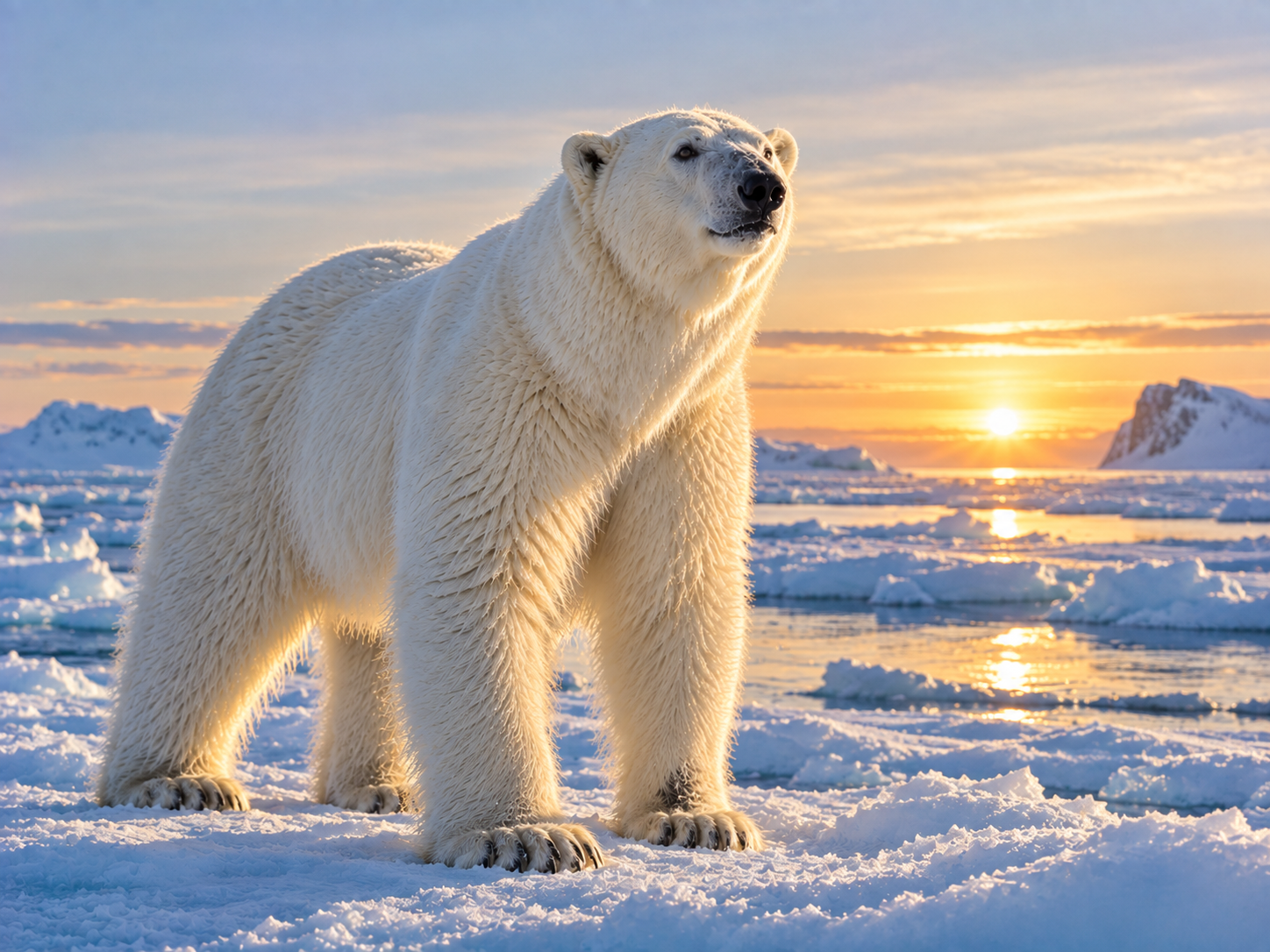
The strange part is that the whole system works together.
Transparent-looking hairs.
Dark skin.
Dense insulation.
Reflected Arctic light.
Solar radiation.
Cold air.
None of these features makes much sense when considered alone.
Together, they make more sense.
The polar bear's white appearance comes largely from the optical behaviour of its hairs, not from white pigment.
The black skin can absorb radiation that reaches it.
But experiments show that thick fur prevents much of the Sun's energy from reaching the skin in the first place.
So the popular story needs a small correction.
Yes, the polar bear has black skin.
Yes, black skin absorbs light.
But no, we should not confidently describe the bear as simply using its black skin as a built-in solar panel.
The most important lesson is actually about insulation.
The polar bear does not survive the Arctic because of one unusual feature.
It survives because several layers of biology work together.
And hidden beneath the famous white coat is one of the simplest surprises in the animal kingdom:
the world's most recognisable white bear has black skin.
The Whole Polar Bear Coat System
Why Is Polar Bear Skin Actually Black?
The surprising answer begins with the fur.
It only looks white.
Polar bear hairs contain no white pigment; their structure scatters light and makes the coat appear white. Beneath that coat, the skin is darkly pigmented.
For a long time, the black skin was often explained as a simple solar-heating adaptation.
There is a sensible reason for that idea: dark skin absorbs light.
But the physics of the real animal is more complicated.
The fur is thick and highly insulating, and recent experiments show that in much of the coat only a tiny fraction of incoming sunlight reaches the skin. Much of the solar energy is absorbed or scattered within the fur instead.
So the safest conclusion is not that black skin is a proven built-in solar panel.
It is that polar bear skin is dark, it can absorb radiation that reaches it, and its exact evolutionary significance is more complicated than the popular explanation suggests.
The real marvel is the combination.
The fur looks white.
The skin is black.
And between them is an extraordinary insulating system built for the Arctic.
FAQ
1. Is polar bear skin really black?
Yes. Polar bears have darkly pigmented skin beneath their fur.
2. Why does a polar bear look white if its skin is black?
Its hairs are largely pigment-free and scatter light, making the coat appear white.
3. Is polar bear fur actually white?
Not in the sense of being filled with white pigment. Individual hairs are translucent or transparent and hollow.
4. Does black skin help polar bears absorb sunlight?
It can absorb radiation that reaches the skin, but thick fur prevents much of the Sun's energy from reaching the skin in many parts of the body.
5. Is polar bear fur like fibre-optic cable?
That popular comparison is disputed. Direct measurements have argued against the idea that individual hairs efficiently guide visible light like optical fibres.
6. What keeps a polar bear warm most effectively?
Its thick fur and substantial layer of body fat provide major insulation against the Arctic cold.
7. Why are polar bear hairs hollow?
The hollow structure is part of the unusual physical structure of the hair and contributes to the way the coat interacts with light and insulation.
8. Can polar bear fur become yellow?
Yes. Oils from food, sunlight-related changes and environmental residue can make the coat look cream or yellowish.
9. Does black skin definitely exist mainly to warm the bear?
That has not been established as a complete explanation. Recent experiments suggest solar heating of the skin is limited through thick regions of fur.
10. What is the biggest misconception about polar bear skin?
That black skin alone explains how the bear stays warm. Its survival depends on the entire coat-and-body system, especially thick insulating fur and body fat.