Why Do Wolves Howl at the Full Moon?
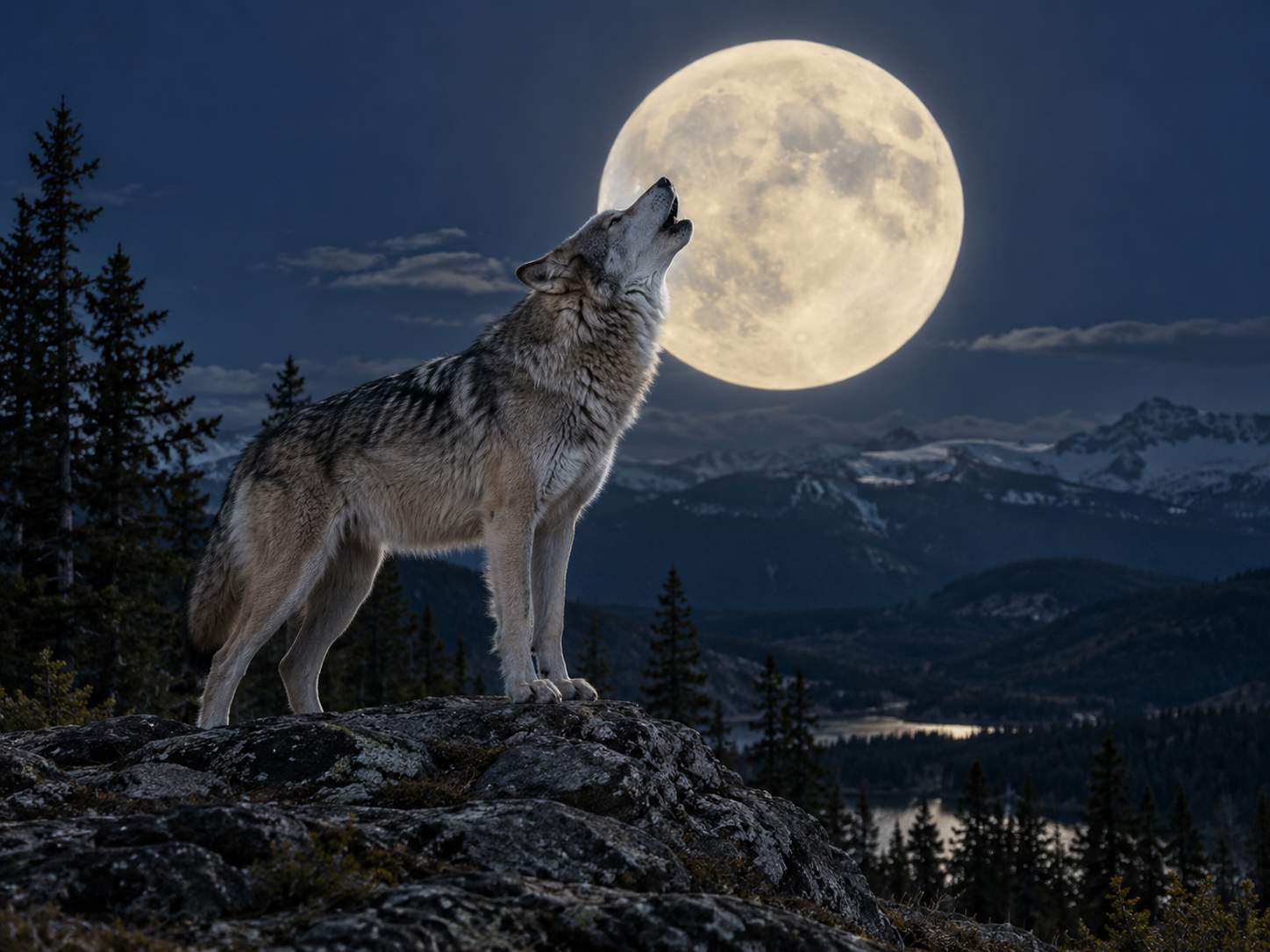
It is one of those images that seems too perfect to be false.
A wolf stands on a hill.
The moon is full.
Its head rises toward the sky.
And then comes the long howl.
We have seen the scene so many times that it feels like something wolves naturally do.
But there is a problem.
Wolves do not howl at the full moon.
The moon is not the reason they howl.
Wolves howl to communicate. A howl can help pack members find one another, bring a scattered group back together, warn other wolves to stay away, or signal that a wolf is somewhere nearby.
So why do we keep seeing wolves howling under a full moon?
Part of the answer is very simple.
We notice wolves more at night.
And a full moon makes a night-time scene easier for us to see.
The wolf and the moon belong in the same picture.
They just do not have the relationship the picture suggests.
Chapter 1 — The Moon Is Not the Audience
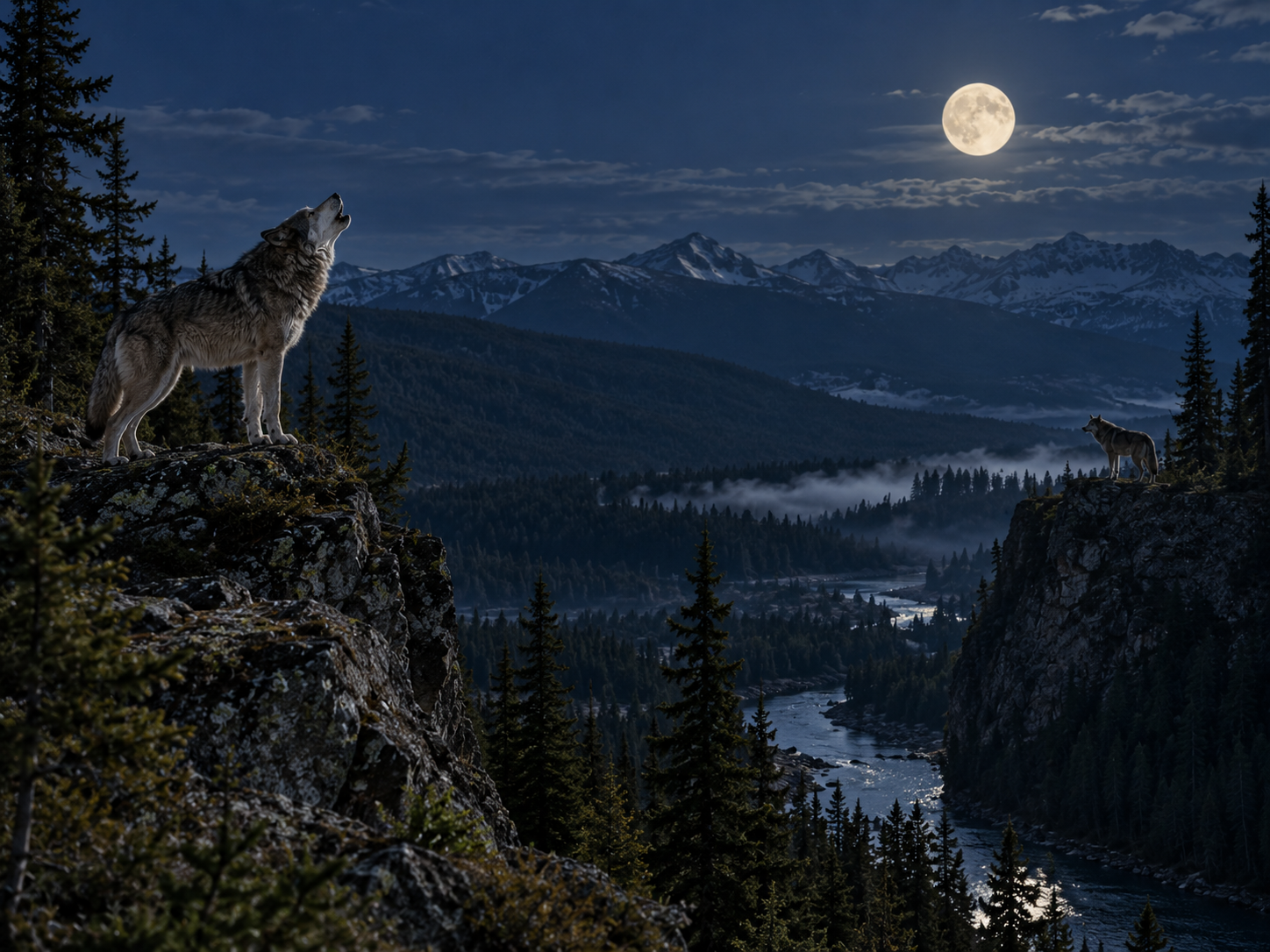
A wolf begins to howl.
The moon is full.
It is tempting to connect the two.
But watch the wolf more closely.
It is not staring at the moon because it needs the moon.
The howl is going somewhere else.
To another wolf.
Wolves use sound to communicate over long distances. A howl can help a wolf locate members of its pack when they are separated. It can also warn unfamiliar wolves that a territory is occupied.
That means the important thing is not what is above the wolf.
It is what is far away from the wolf.
A pack may be spread out across a large area.
Trees block the view.
Hills get in the way.
One wolf may disappear from sight.
But sound can travel.
A howl carries across the landscape.
Another wolf hears it.
And suddenly the distance between them becomes easier to manage.
The wolf is not talking to the moon.
It is talking across the forest.
Who Is the Wolf Howling To?
Chapter 2 — So Why Do Wolves Howl at Night?
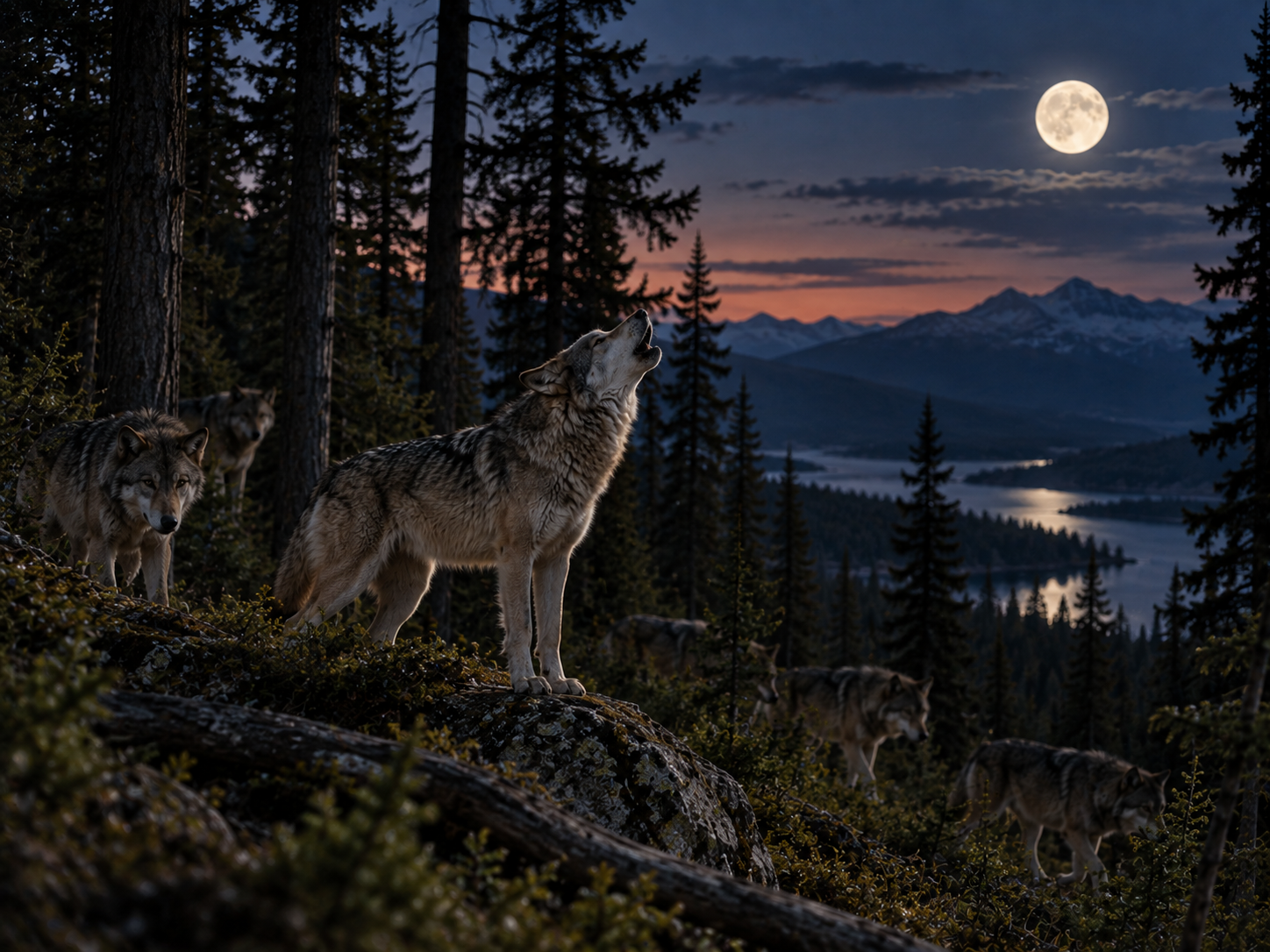
This part is real.
Wolves do howl at night.
But that still does not mean they are howling at the moon.
Wolves are generally more active during evening, night and early morning, and howling is often heard during those times. The International Wolf Center notes that people hear wolves most easily in the evening when winds tend to be calmer and wolves are active.
Night also makes long-distance sound useful.
The forest is quieter.
There is less daytime activity around the animals.
And wolves that are moving through their territory may become separated from one another.
A howl can bring everyone together.
Sometimes a wolf simply needs to say:
“Where are you?”
And another wolf answers:
“I'm here.”
That does not mean every howl has one exact translation.
Scientists have found that wolf howling happens in many situations, and the reasons are more complicated than a simple list of messages. Yellowstone researchers found strong seasonal changes in howling and noted that wolves howl in different social and environmental situations.
Still, the basic picture is clear.
Night gives the howl a good stage.
The moon is just sharing the sky.
Why Night Is a Good Time to Howl
Chapter 3 — One Howl Can Travel a Long Way
Imagine losing sight of your family in a forest.
You cannot call them.
You cannot text them.
You cannot see where they went.
A wolf has a different solution.
It howls.
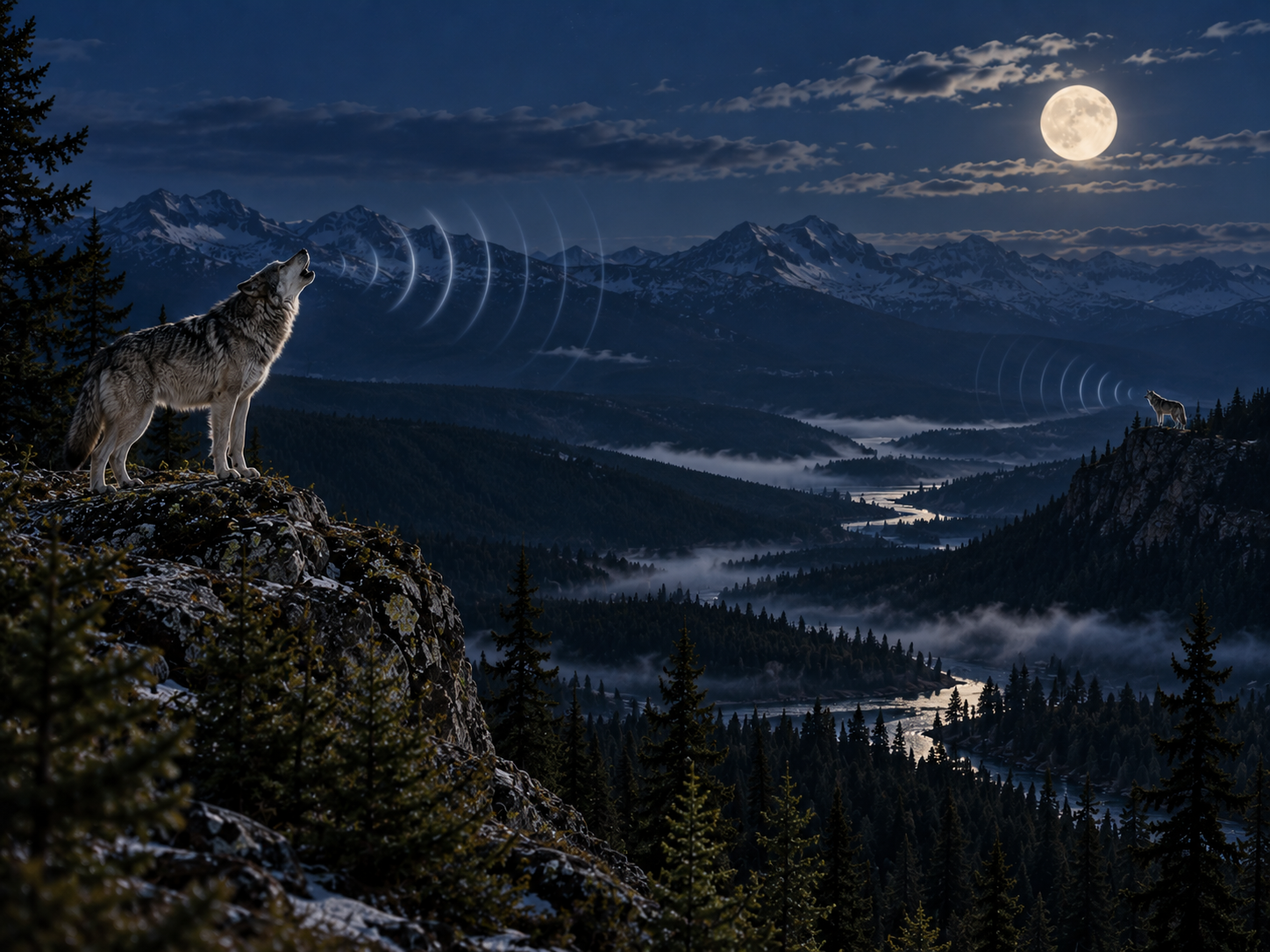
A wolf's howl is designed to travel.
The International Wolf Center describes howling as the wolf vocalization used for long-distance communication. Individual wolves can have recognizable howls, allowing pack members to distinguish one animal from another.
The Smithsonian's National Zoo says wolf howls can be heard by other wolves from roughly 6–7 miles away, depending on conditions.
That is a surprisingly long distance.
And it explains why a howl sounds so different from a bark.
A bark works well when another animal is nearby.
A howl needs to cross the landscape.
It needs to rise above the smaller sounds of the forest.
It needs to keep travelling.
That long, carrying sound is useful when wolves are spread out over a territory.
One wolf howls.
Another answers.
The distance has not disappeared.
But now both wolves know something important.
Someone is there.
Why a Howl Travels So Far
Chapter 4 — Howling Can Bring the Pack Back Together
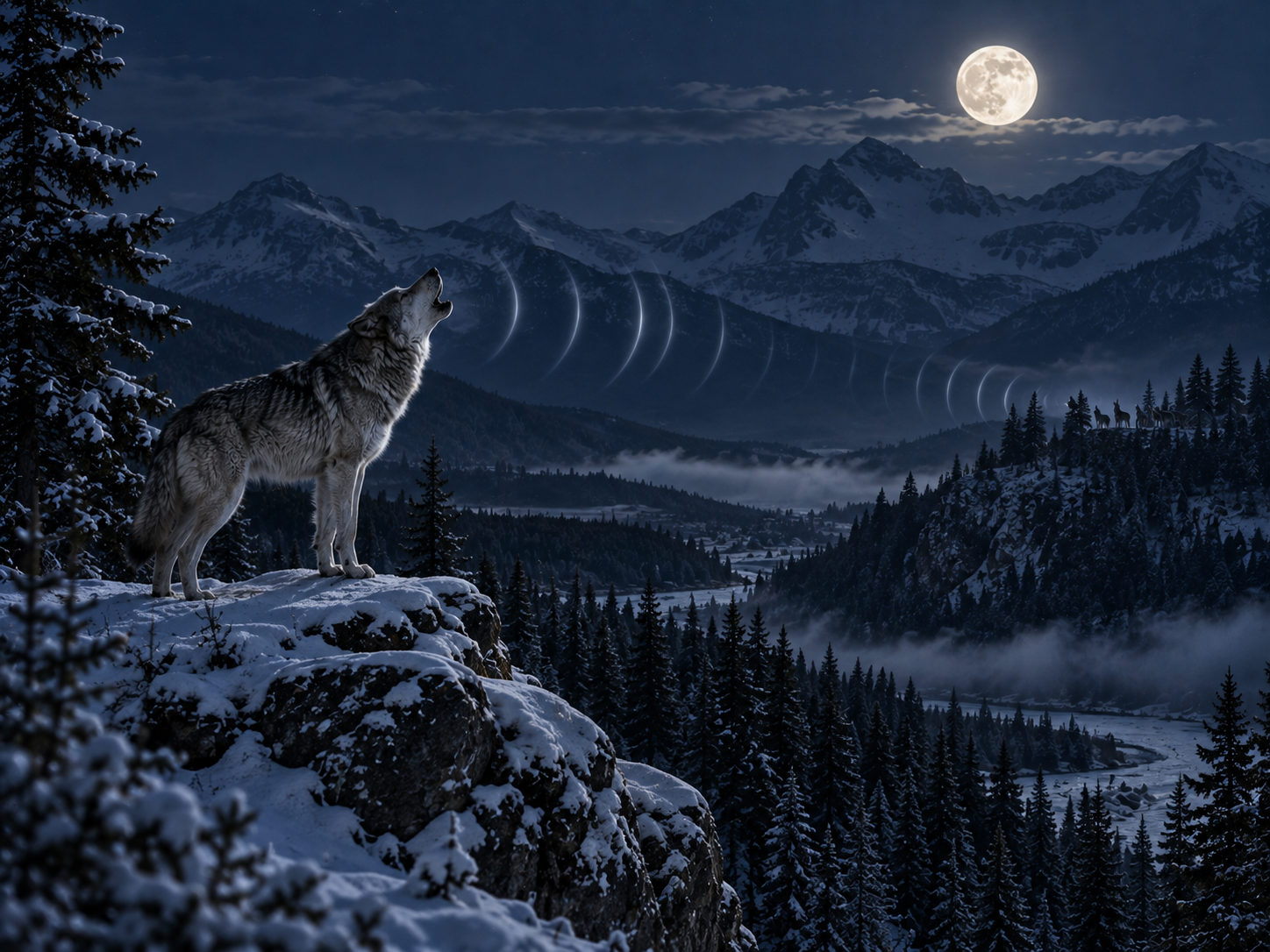
Now imagine a wolf wandering away from the others.
It cannot see the pack.
It may not know exactly where everyone is.
Then it hears a howl.
It answers.
Another wolf responds.
The sound gives the separated animal a direction.
This is one of the most useful things a howl can do.
The Smithsonian describes a “lonesome howl” used by a separated wolf to locate its pack. If the pack answers, the wolf can use those responses to find its way back.
This makes the howl more than a dramatic sound.
It is a way of staying connected.
A pack is not always walking in one neat group.
Wolves may spread out while travelling or hunting. Sometimes they need to find one another again.
The howl helps.
And that may be one reason wolves seem to “sing” together.
When one wolf starts, others may answer.
For us, it sounds like a chorus.
For the wolves, it is communication happening across space.
How a Lost Wolf Finds the Pack
Chapter 5 — The Howl Also Says, “This Territory Is Taken”
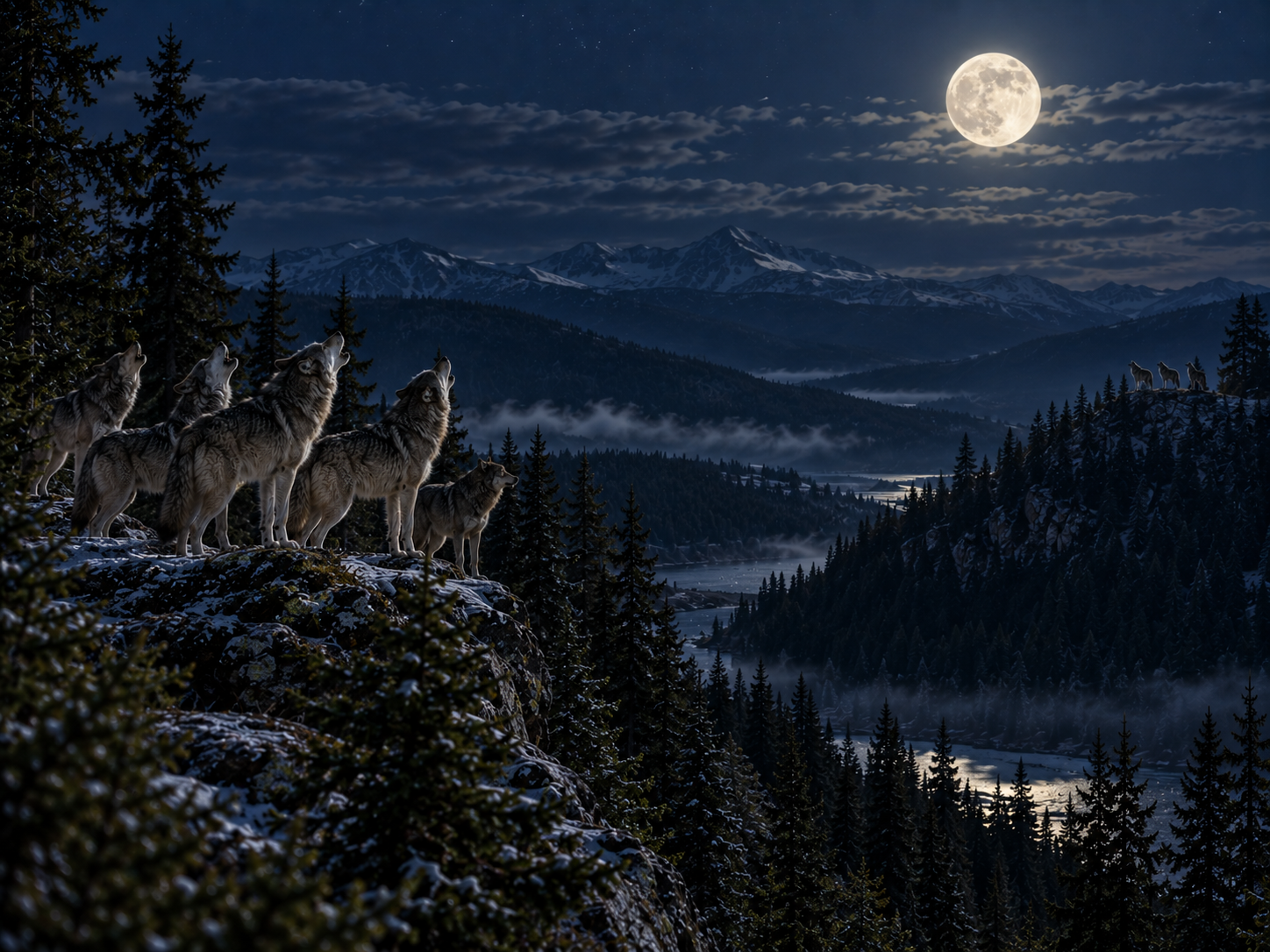
There is another message hiding inside the sound.
Stay away.
Wolves live in territories.
They scent-mark them.
They patrol them.
And howling can help make their presence known to other wolves. The International Wolf Center identifies defensive howling as a way to keep strangers away and protect territory, while the National Park Service notes that wolves howl to warn other wolves to stay out of their territory.
This creates an interesting problem.
You cannot put a fence around a forest.
There is no wall saying:
Wolf pack territory ends here.
Instead, wolves leave information behind.
Scent is one part.
Sound is another.
A howl can tell a nearby wolf that the area is occupied.
That can save both sides a great deal of trouble.
An unfamiliar wolf does not necessarily need to enter the territory and meet the resident pack to find out that another group is there.
The message may have arrived first.
The Howl as a Territorial Signal
Chapter 6 — But Wolves Do Not All Howl for the Same Reason
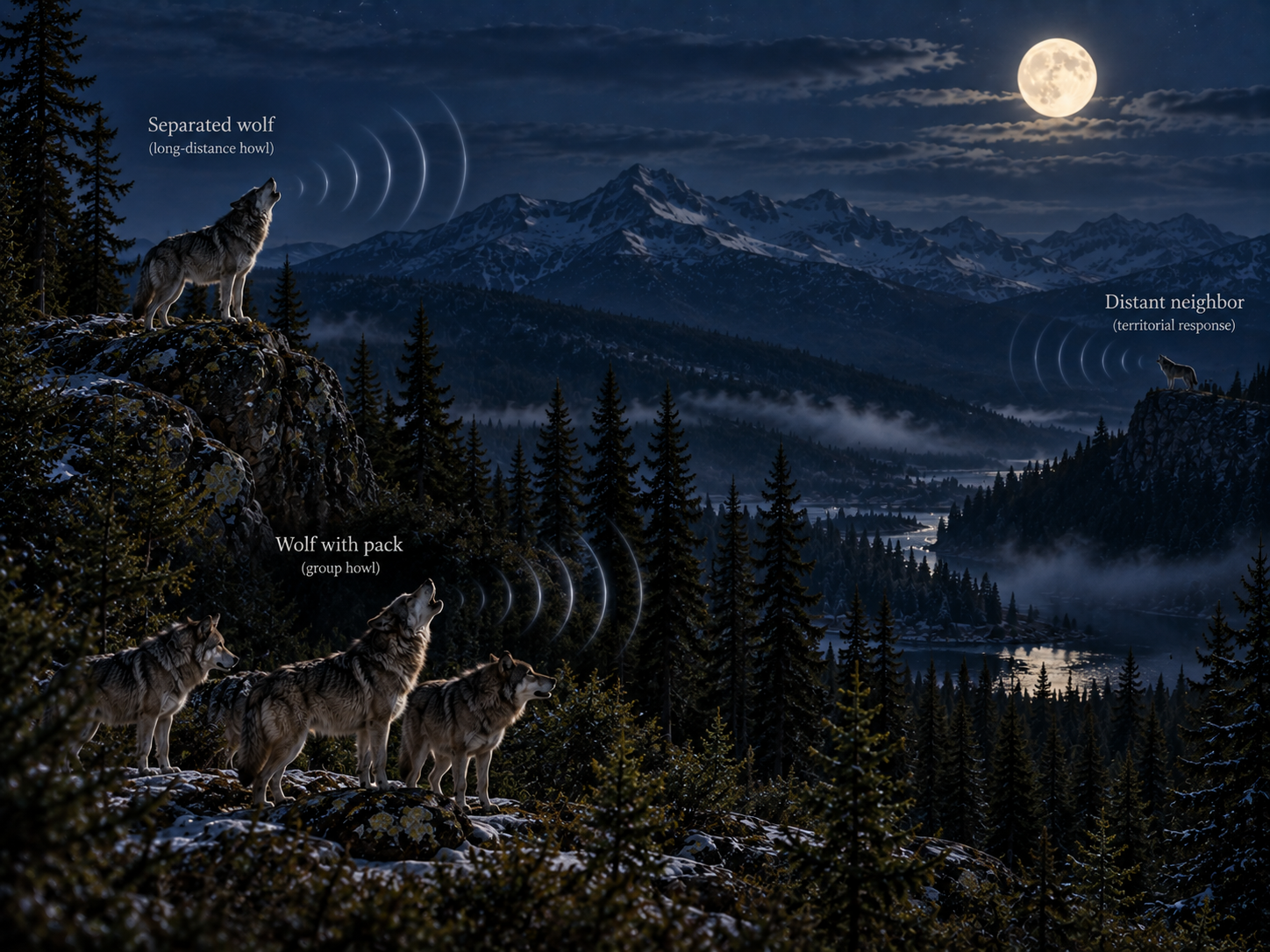
This is where the simple story starts to break down.
There is no single wolf translation for a howl.
Researchers studying wolves in Yellowstone found that howling occurred in many different social and environmental situations. They also found strong seasonal changes in how often wolves howl.
Howling became much more common during parts of the breeding season.
It also changed depending on whether wolves were interacting with their own pack or with neighboring packs.
That matters.
Because it means a howl is not necessarily like a sentence.
We should be careful about saying:
“This exact howl means ‘come here.’”
The science is more complicated.
Wolves can recognize differences between individual howls. A howl can also reflect the wolf's emotional or motivational state. But researchers are still investigating whether wolf howls carry specific kinds of detailed information in the way human language does.
So when a wolf howls, we can be confident that the sound has a communication role.
But we should not pretend we can translate every howl word for word.
Sometimes the honest answer is:
We know the wolf is communicating. We do not know everything it is saying.
We Cannot Translate Every Howl
Chapter 7 — So Where Did the Full Moon Story Come From?
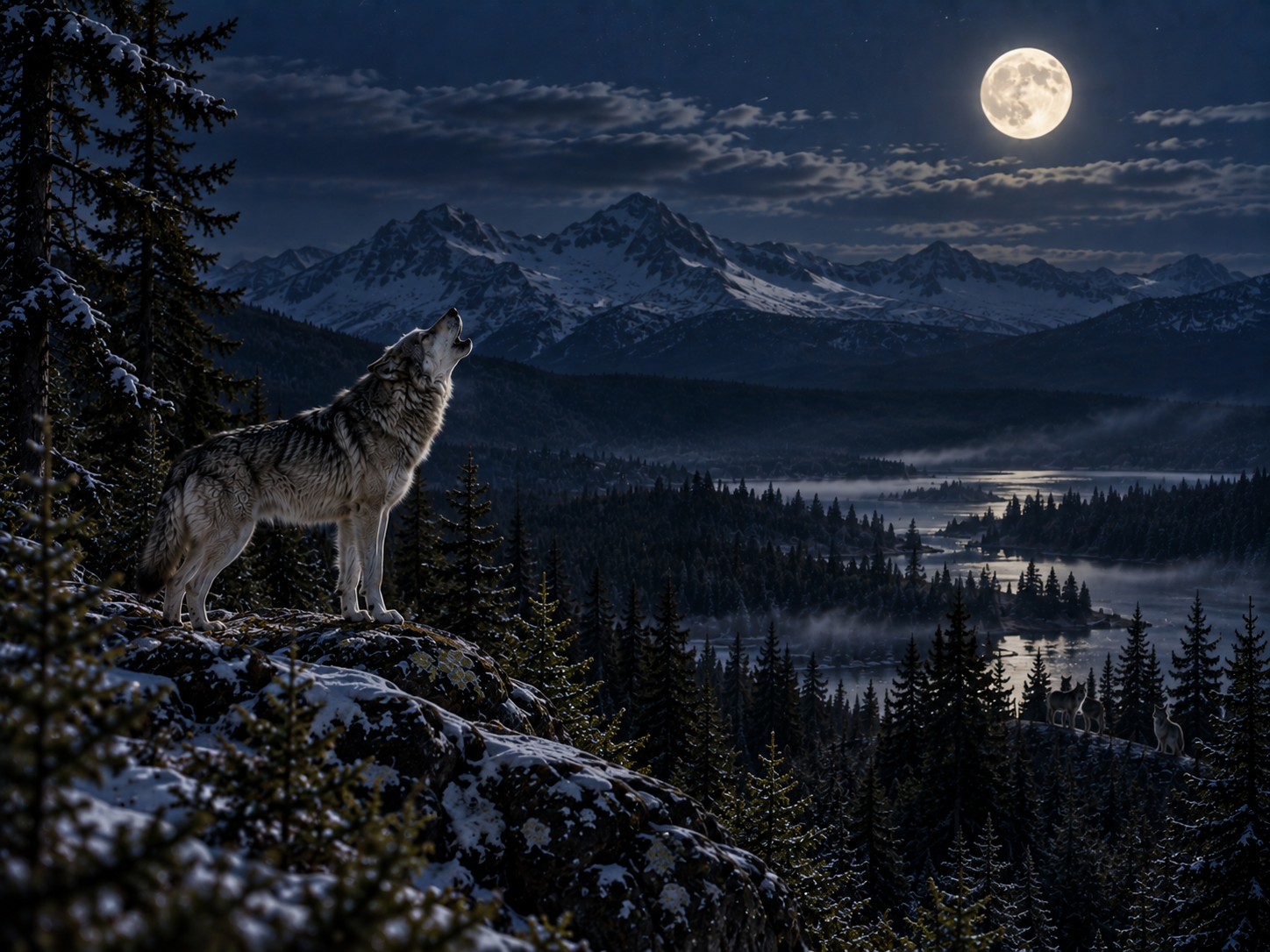
Now return to the famous picture.
A wolf.
A dark forest.
A full moon.
A howl.
It is easy to understand why those things became connected.
Humans have always noticed the night sky.
Wolves really do howl at night.
A full moon makes a wolf easier to see against a dark landscape.
And artists, stories and films turned that coincidence into a powerful image.
But the biology tells a different story.
Wolves howl during the day too. The International Wolf Center explicitly notes that wolves call at different times of day and that howling is not directed at the moon.
The National Zoo says the same thing plainly: the idea that wolves howl at the moon is a myth. Wolves howl for social and territorial reasons instead.
So the full moon is not the cause.
It is the backdrop.
And perhaps that is why the story survived.
The image is beautiful.
The real explanation is simply different.
A wolf raises its head because sound carries better that way.
It sends a call through the night.
Another wolf answers.
The moon keeps shining above them.
It was never the one being called.
Wolf, Howl and Moon: What Is Really Happening?
FAQ Frequently Asked Question
1. What is the main reason behind this phenomenon?
It is mainly caused by the natural environmental and physical processes explained in the article.
2. Is this phenomenon completely natural?
Yes. The phenomenon occurs through natural processes, although human activity may affect its surrounding environment in some cases.
3. When does this phenomenon occur or become most visible?
Its visibility or intensity can change with seasons, weather, water conditions, or other environmental factors.
4. Can people see this phenomenon all year round?
Not always. Conditions can vary, so it may be easier to see during particular times or under specific conditions.
5. Is the common story about this phenomenon actually true?
Some popular descriptions are exaggerated. The scientific explanation is usually more specific than the popular version suggests.
6. Where can this phenomenon be found?
It occurs at the location discussed in the article, where the necessary natural conditions come together.
7. Does this phenomenon happen anywhere else?
Similar processes can occur elsewhere, but the exact combination of conditions may make this example unusual.
8. Is the phenomenon dangerous to humans?
The phenomenon itself is not necessarily dangerous, but visitors should still follow local safety rules and environmental guidelines.
9. Can the phenomenon disappear or change over time?
Yes. Natural conditions can change, causing its appearance, intensity, or frequency to change as well.
10. Why is this phenomenon scientifically interesting?
It shows how several natural processes can work together to produce something that looks unusual or surprising.