Introduction — The One-Legged Mystery
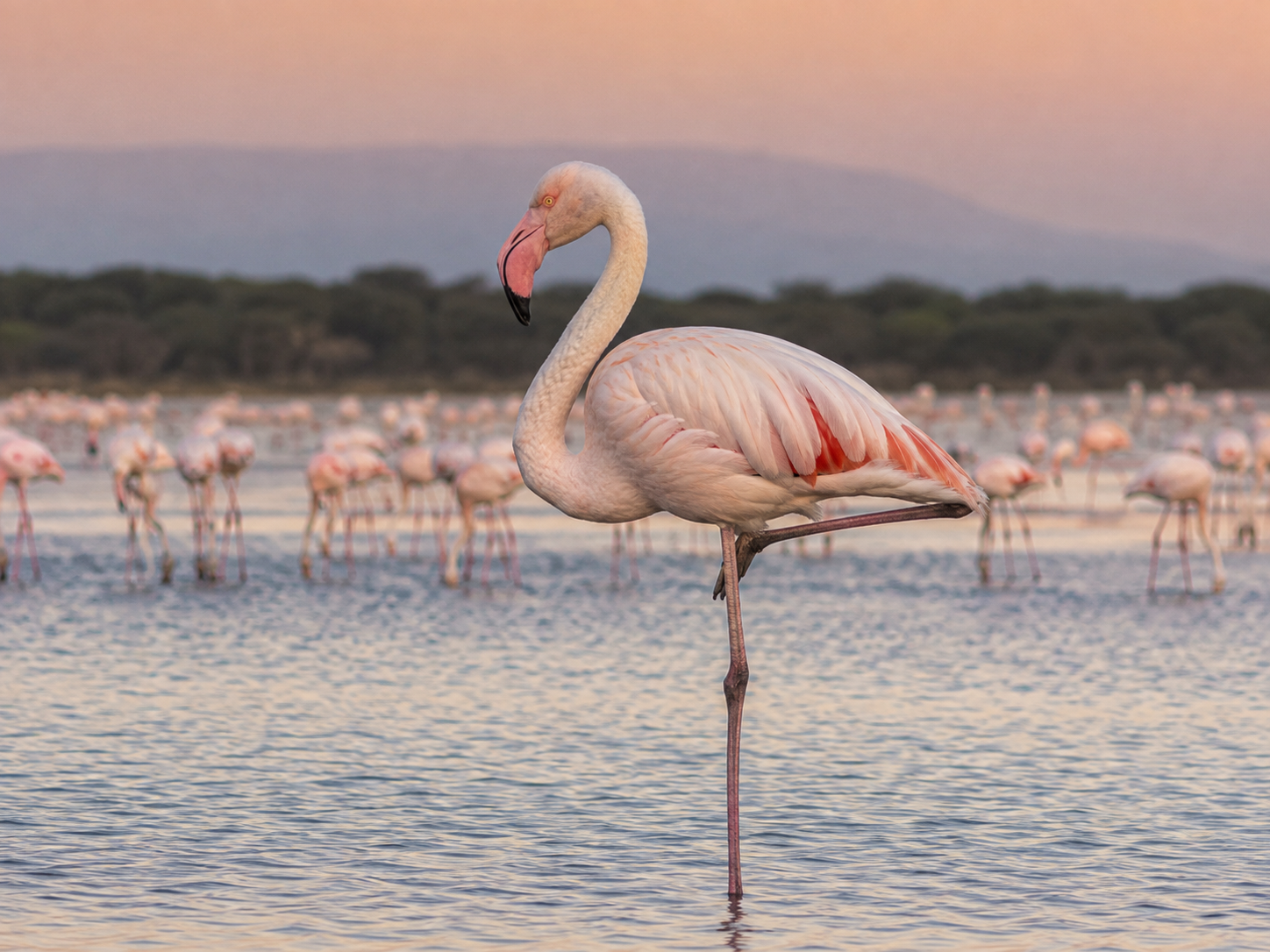
A flamingo can stand on one leg for a surprisingly long time.
It looks uncomfortable. For us, standing on one leg quickly becomes a balance exercise. Our muscles keep working to stop us from falling.
But flamingos seem to have figured out a better system.
Researchers have found that a flamingo can support its body on one leg with very little active muscle force when its leg is positioned correctly. In experiments, even a flamingo cadaver could remain stable on one leg without muscle activity.
So the famous pose may not be a tiring balancing trick at all.
The flamingo's body appears to do much of the work.
There is another reason the posture may be useful. Flamingos have long, exposed legs that can lose heat. Research has found that they stand on one leg more often in colder conditions and especially while standing in water, suggesting that the posture can also help with temperature control.
So why one leg?
The answer is not just one thing.
It seems to be a clever combination of anatomy, energy saving and temperature control.
Chapter 1 — A Body Built to Balance
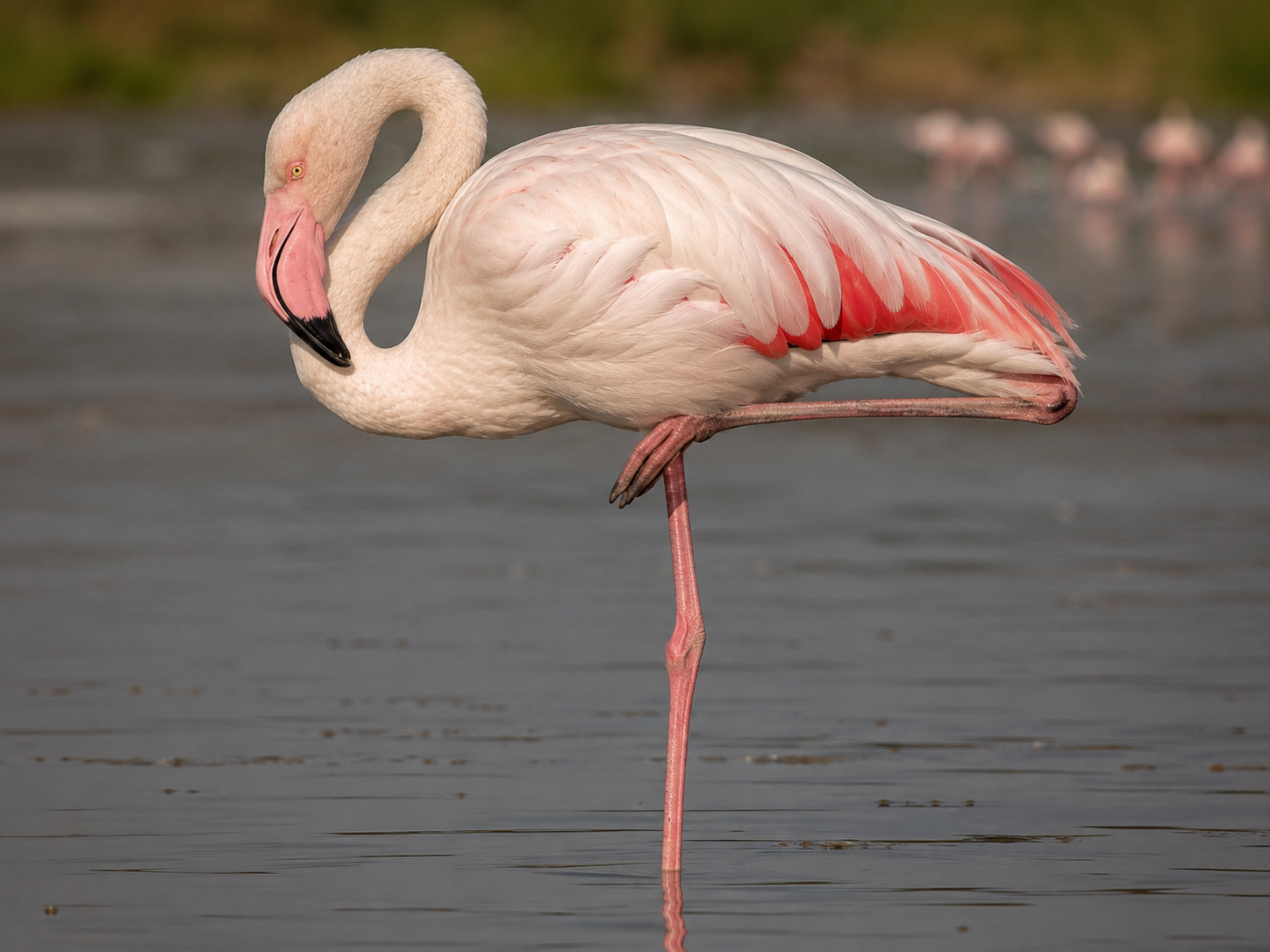
Look closely at a flamingo's legs and they can seem almost unreal.
They are extremely long compared with the bird's body, and what looks like a backward-bending knee is actually the bird's ankle region. The true knee is much higher and is mostly hidden within the body.
That unusual leg structure gives flamingos a very different way of standing.
When a flamingo lifts one leg and places the other underneath its body, the joints can settle into a stable position.
Instead of constantly fighting gravity with its muscles, the bird can use the shape and position of its limb to support its weight.
This is more than a guess.
In a 2017 biomechanics study, researchers tested flamingo cadavers and found that they could support their body weight on one leg without muscle activity when the leg was placed in the same general posture used by living flamingos.
That means the flamingo is not simply good at balancing.
Its body is built to make balancing easier.
The result is a posture that can remain stable without demanding the kind of constant muscular effort that a human would need.
And that changes the whole question.
Perhaps flamingos do not stand on one leg because they are unusually good at doing something difficult.
Perhaps they stand on one leg because, for a flamingo, it is the easy way to stand.
Flamingo Leg Balance
Chapter 2 — The Leg That Locks Into Place
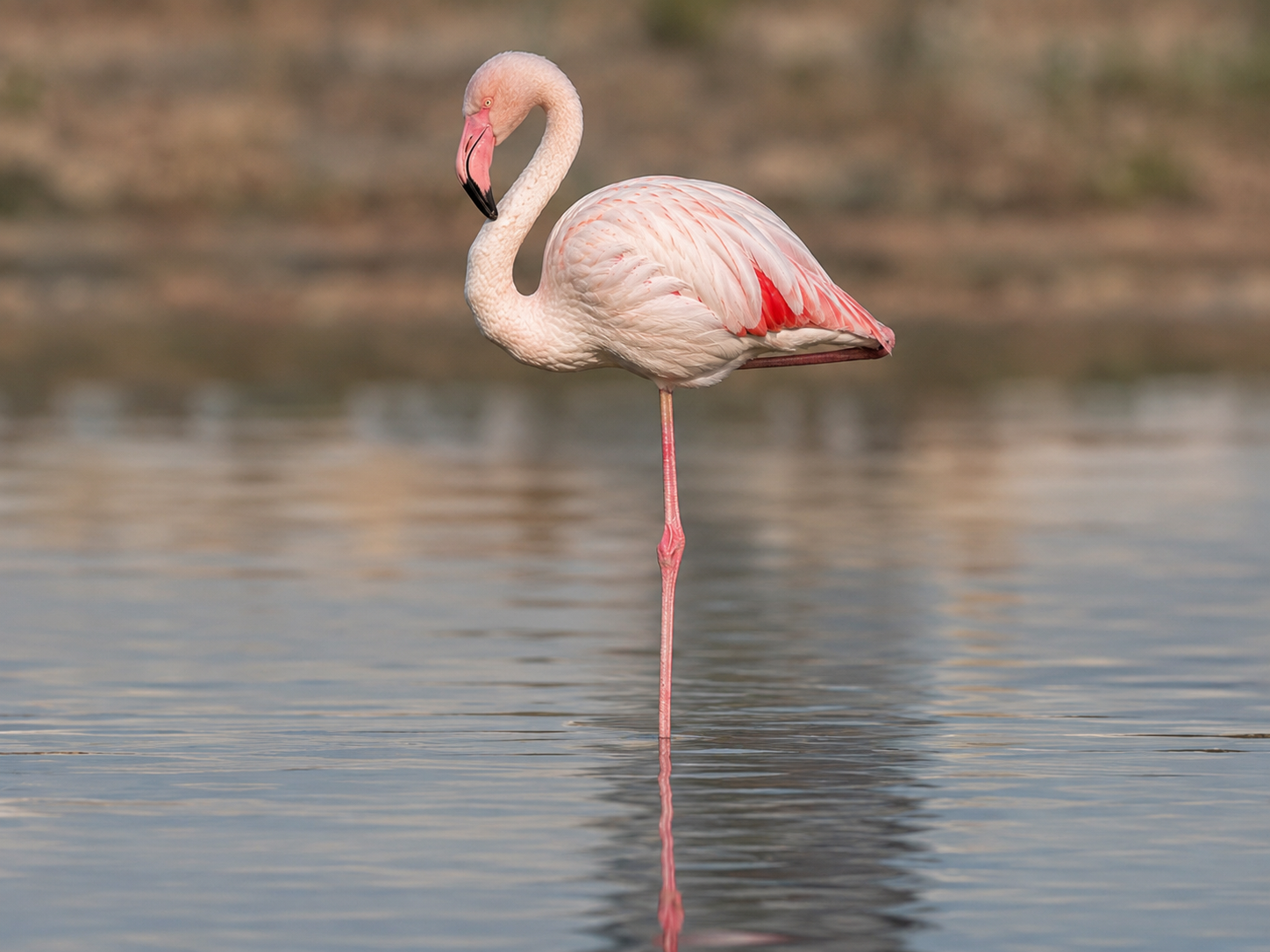
The secret is not really a lock like a door.
It is more like a mechanical stay.
When the flamingo places its leg in the right position, gravity helps hold the body over the supporting foot. The joints settle into an arrangement that makes the posture naturally stable.
Researchers studying flamingo biomechanics described this as a passive, gravity-driven support mechanism.
In simple terms, the flamingo's body weight helps keep the leg in position rather than constantly pushing the leg out of position.
This also explains something that would otherwise seem strange.
A flamingo can remain almost perfectly still while standing on one leg.
The 2017 study found very little body sway when resting compared with when the birds were alert or moving. The position of the body's center of pressure also reduced the need for muscular effort.
Think about what happens when you stand on one leg.
Your ankle makes tiny corrections.
Your muscles tighten and relax.
Your body moves slightly from side to side.
You are constantly making adjustments.
A resting flamingo appears to have a much more efficient arrangement.
Its anatomy is doing much of the balancing for it.
That is why the pose can look almost effortless.
The Natural Support System
Chapter 3 — Keeping Warm
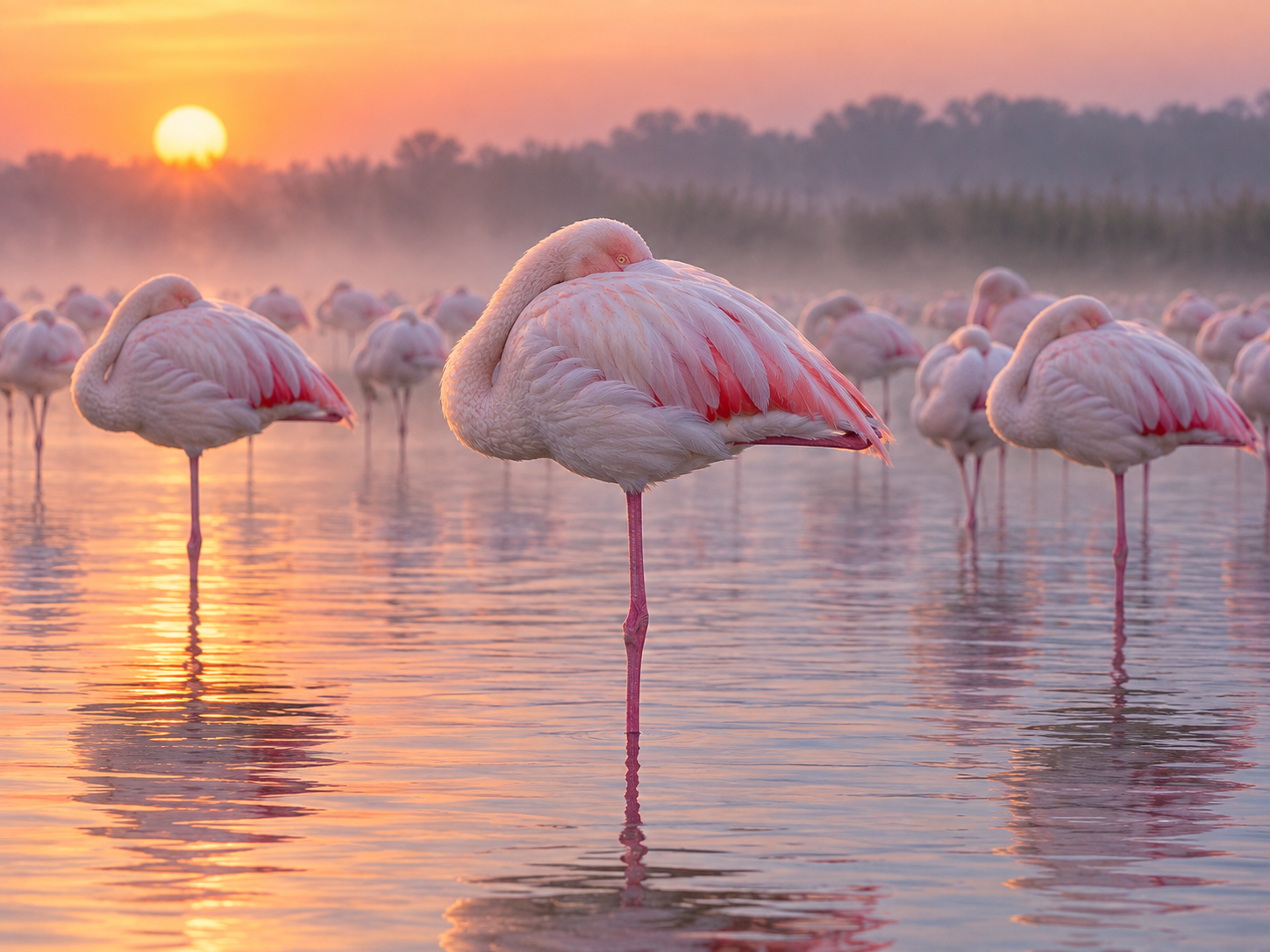
The one-legged pose may also help flamingos control body heat.
This makes sense when you look at their legs.
Flamingos have long, mostly featherless legs, which means they can lose heat through them. Wading birds can use their exposed legs to release heat, but those same legs can become a source of heat loss when conditions are cold.
In a 2010 study of captive Caribbean flamingos, researchers found that birds stood on one leg more often when the temperature was lower. They also found that one-legged resting was more common in water than on land.
Their conclusion was that the posture likely helps with thermoregulation—the body's way of controlling temperature.
The basic idea is simple.
One leg stays tucked closer to the body.
The other remains on the ground.
That reduces the amount of exposed leg surface compared with standing on two legs.
It is not the only reason flamingos use the posture, and scientists are still studying exactly how important heat conservation is compared with the mechanical advantage.
But the evidence is strong enough to say that temperature matters.
In fact, more recent observations have also found that flamingos spend more time standing on one leg while in water.
So the strange pose may serve two purposes at once:
It is mechanically efficient, and it may help manage heat loss.
One Leg and Body Heat
Chapter 4 — Sleeping on One Leg
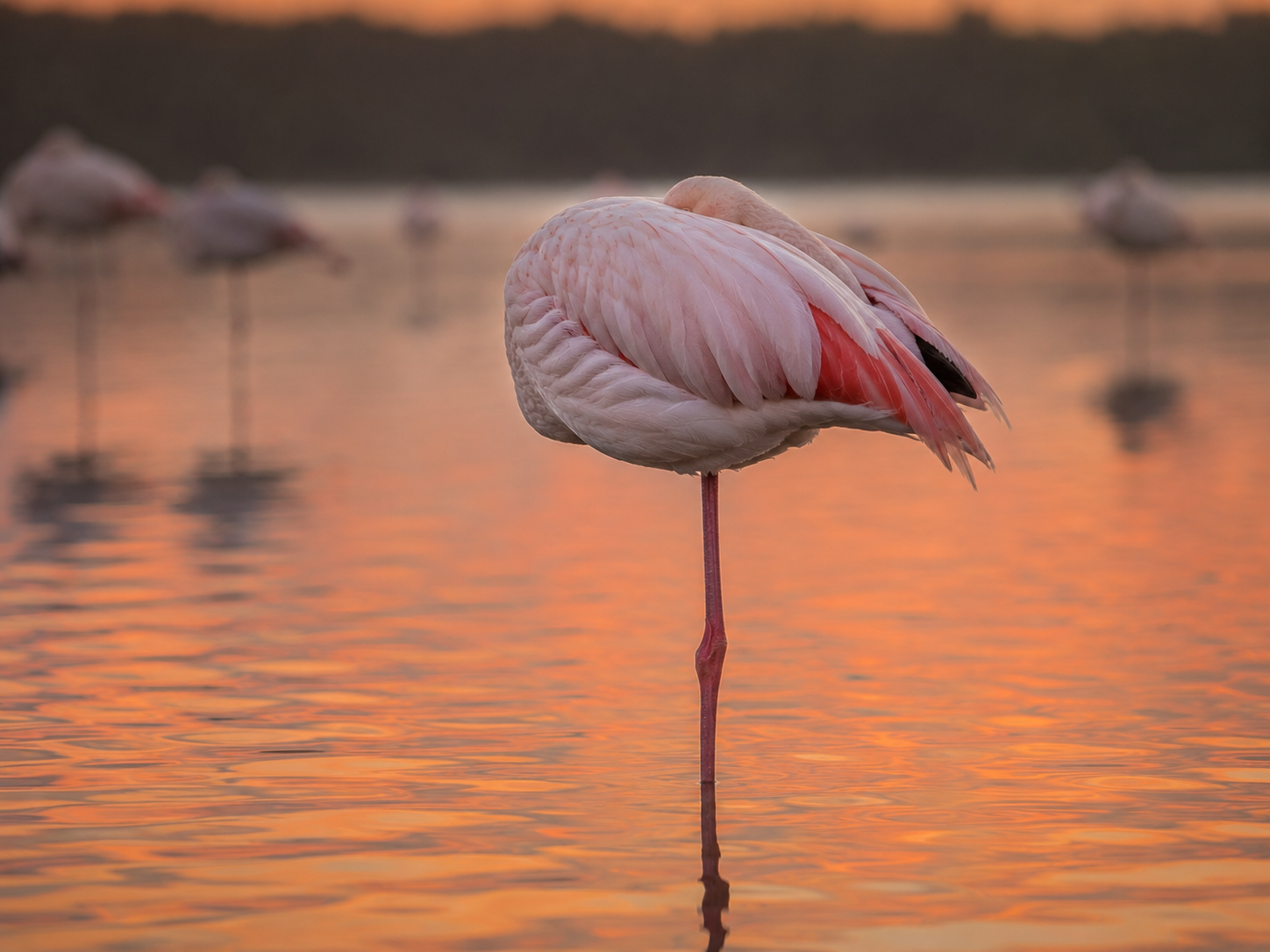
The one-legged posture is not only something flamingos do while casually standing around.
They can also rest and sleep in this position.
That is one reason the behavior has attracted so much attention.
If standing on one leg required constant muscular effort, remaining in that position for long periods would seem expensive.
The biomechanics research suggests the opposite.
The one-legged position can be remarkably stable and may require little active muscular force. The researchers even suggested that this mechanical efficiency could help explain why flamingos are able to maintain the posture for long periods.
But flamingos are not completely motionless at night.
Studies of captive greater flamingos have shown that their nighttime behavior includes periods of resting as well as movement and foraging. Their activity changes through the night rather than simply switching from “awake” to “completely asleep.”
So when you see a flamingo sleeping on one leg, it is not necessarily frozen in exactly the same position for hours.
It can adjust its posture.
It can change legs.
And it can become active again.
The remarkable part is that the resting posture itself does not appear to demand a huge amount of energy.
For a bird with such long legs, that is an impressive piece of natural engineering.
Sleeping on One Leg
Chapter 5 — What Scientists Still Don't Know
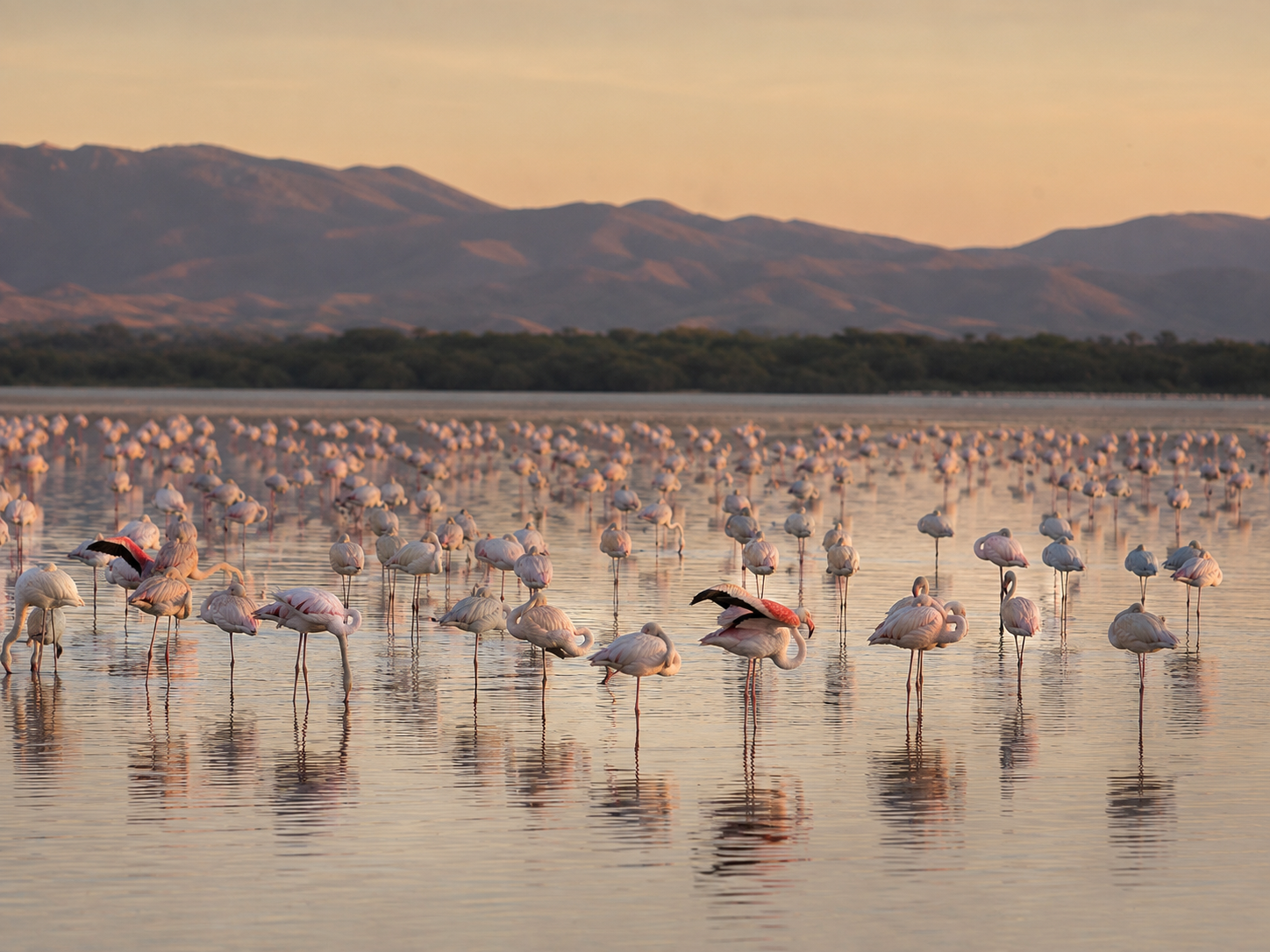
So, why do flamingos stand on one leg?
The simplest answer is:
There is probably more than one reason.
We have strong evidence that their body is remarkably well suited to the posture. Their one-legged stance can be mechanically stable and require little active muscle force.
We also have evidence that temperature affects the behavior. Flamingos tend to use the posture more under some cooler conditions and especially while standing in water.
But scientists cannot yet say that one explanation completely solves the mystery.
The old idea that flamingos stand on one leg simply to avoid muscle fatigue does not fit the newer biomechanics evidence very well.
And while keeping one leg closer to the body may reduce heat loss, thermoregulation may not explain the behavior in every situation.
The evidence suggests that the posture is simply very efficient.
A flamingo's body makes it possible to rest on one leg without the constant effort a human would need.
That may be the biggest lesson from this strange-looking behavior.
Sometimes an animal does something that looks difficult only because we are looking at it with a human body in mind.
For us, standing on one leg is work.
For a flamingo, it can be one of the easiest ways to rest..
Why Do Flamingos Stand on One Leg?
FAQ Frequently Asked Questions
1. Why do flamingos stand on one leg?
Research suggests that the posture is highly energy-efficient. A flamingo can use its leg structure and body weight to remain stable with very little active muscle force. Standing on one leg may also help reduce heat loss.
2. Do flamingos sleep on one leg?
Yes. Flamingos can rest and sleep while standing on one leg. Their unusual leg structure allows them to maintain the posture without the large amount of muscle activity that would be needed for a human to do the same.
3. Does standing on one leg keep flamingos warm?
It may help. Studies have found that flamingos use the one-legged posture more often under cooler conditions and particularly when standing in water. However, thermoregulation is probably not the only reason for the behavior.
4. Do flamingos get tired standing on one leg?
Apparently, not in the way humans would. Research suggests that the one-legged posture can be mechanically stable and require very little active muscle force, which makes it suitable for long periods of resting.
5. Can flamingos stand on either leg?
Yes. Studies have not found a strong preference for one leg. Individual birds can divide their resting time between both legs.
6. Why don't flamingos fall over while standing on one leg?
Their leg position creates a stable mechanical arrangement. When the body is positioned correctly above the supporting foot, gravity helps stabilize the posture instead of constantly pulling the bird out of position.
7. Do flamingos stand on one leg all the time?
No. They can stand on two legs, walk, feed and swim. They simply use the one-legged posture frequently while resting.
8. Is the flamingo's knee really bending backward?
What looks like a backward-facing knee is actually part of the ankle and lower leg. The true knee is much higher and is mostly hidden within the bird's body.
9. Do scientists know the exact reason flamingos stand on one leg?
Not completely. Evidence strongly supports mechanical efficiency, and studies also support a role for temperature control. But scientists have not shown that one single explanation accounts for the behavior in every situation.
10. Why does a flamingo's one-legged stance look so effortless?
Because, for a flamingo, it may actually be easier than it looks. Its anatomy allows the body to remain stable over one leg with very little active muscular effort. What looks like impressive balancing to us may be a comfortable resting position for the bird.