Introduction
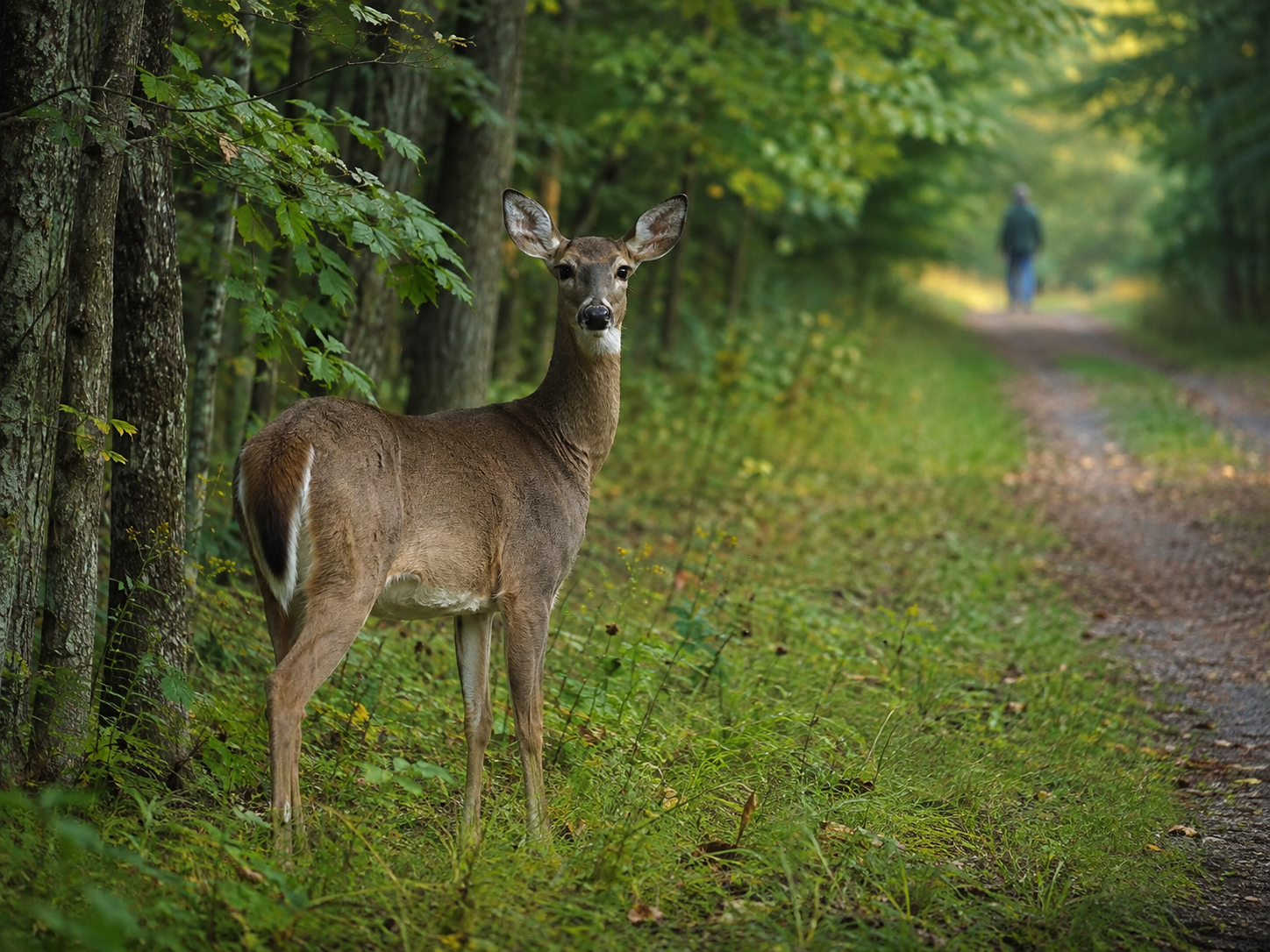
You are walking through a forest, along a quiet road, or perhaps just near the edge of a field when you notice something watching you.
A deer has stopped.
It is completely still. Its head is raised, its ears are pointed toward you, and its eyes seem fixed directly on your face.
For a moment, neither of you moves.
Then, suddenly, the deer turns and disappears.
So why did it stop and stare?
It is tempting to think the deer is curious about you. Perhaps it is trying to figure out who you are. But that explanation misses something much more interesting.
For a deer, stopping and staring can be part of a rapid decision-making process. The animal has detected something unusual and needs more information before deciding what to do next. Deer rely heavily on sight, hearing and smell to detect possible danger, and researchers and wildlife agencies have documented how they may raise their heads, focus their attention and orient their ears when something suspicious is nearby.
The deer is not necessarily deciding, “Should I run from this human?”
It may first be deciding something simpler:
“What exactly am I looking at?”
That small pause is where the mystery begins.
Chapter 1 — The Deer That Suddenly Freezes
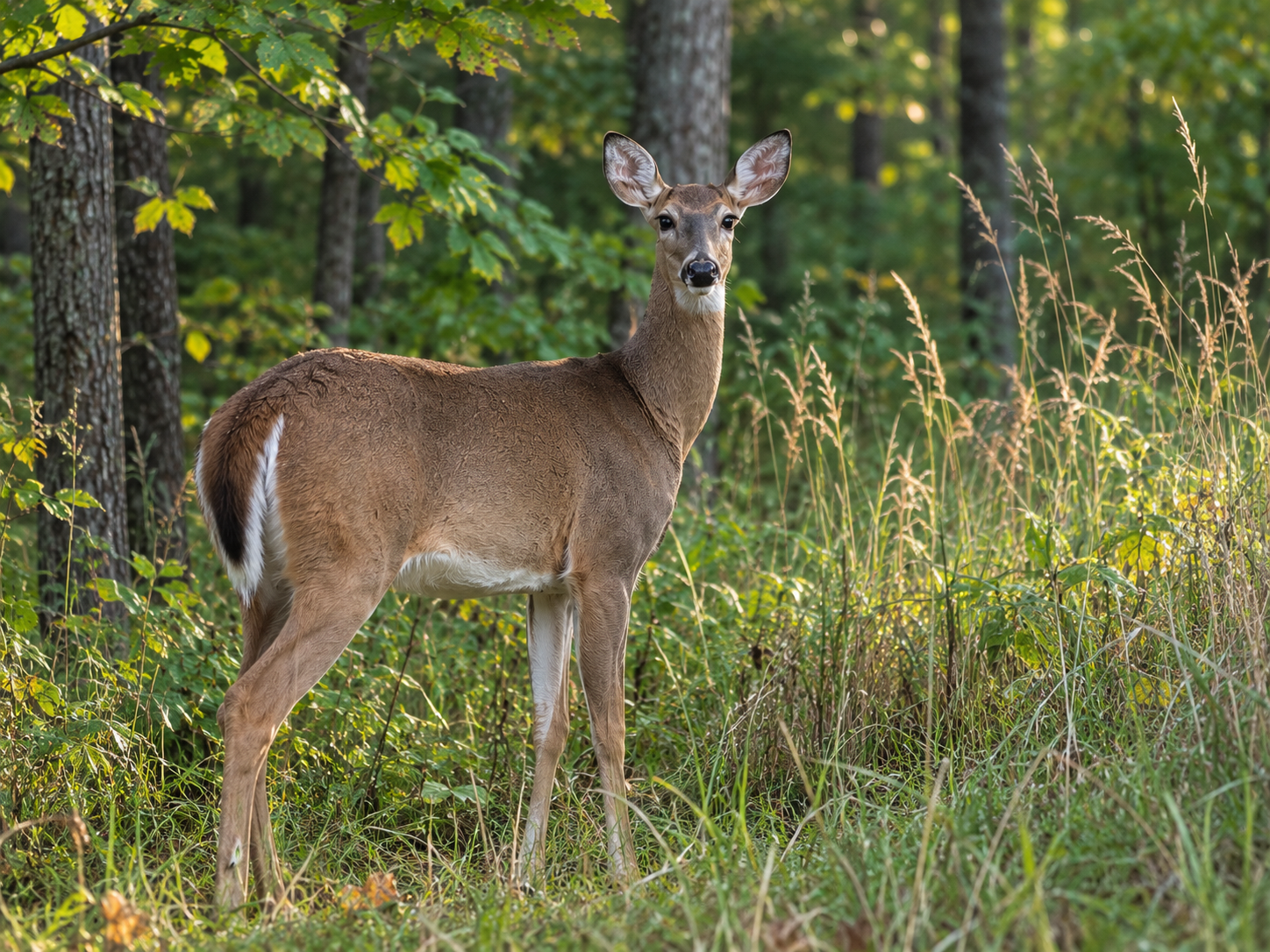
A deer can be moving normally one moment and completely motionless the next.
It may be feeding, walking through grass or crossing a trail when something catches its attention. The head comes up. The body becomes still. The ears begin to move.
To a human observer, it can look almost as though the animal has been caught by surprise.
But freezing is not necessarily helplessness.
For prey animals, movement can reveal location. A deer that immediately runs may announce exactly where it is and where it is going. Remaining still for a moment can give the animal an opportunity to gather more information before making its next move. The National Park Service specifically notes that mule deer may freeze when danger is nearby because movement can attract predators.
This creates an interesting trade-off.
Run too early, and the deer may waste energy or flee from something that was never dangerous.
Wait too long, and a genuine predator could get closer.
So the deer pauses.
Its eyes are working. Its ears are listening. Its nose is sampling the air.
And you may happen to be standing directly in the middle of that investigation.
Why Does a Deer Freeze?
Chapter 2 — What the Deer Can See
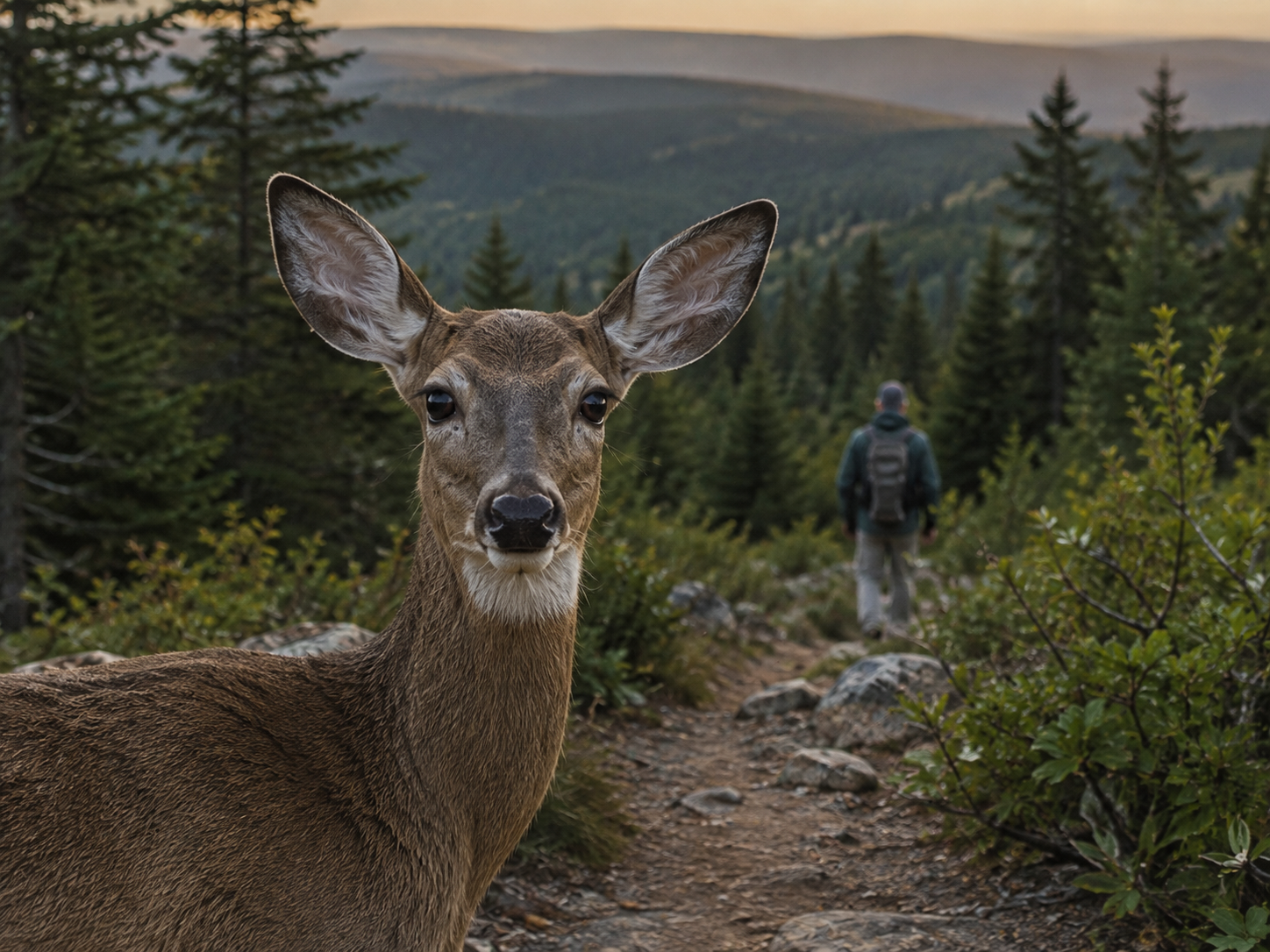
When a deer looks at you, it is not seeing the world exactly as you do.
Deer have eyes positioned toward the sides of their heads rather than facing directly forward. This gives them a very wide field of view, which is useful for an animal that needs to notice danger approaching from different directions. The National Park Service notes that mule deer can see in almost every direction except directly behind them.
That wide view comes with a useful advantage: the deer does not have to turn its whole body to monitor its surroundings.
Movement is especially important.
A person standing quietly may not produce the same visual signal as a person suddenly walking toward the deer. A raised arm, a quick step or someone emerging from behind a tree can change the situation instantly.
Deer also have adaptations that help them see in dim conditions. Their eyes contain a reflective layer called the tapetum lucidum, which helps light pass through the visual system more effectively in low light. It is also responsible for the familiar glow seen when a flashlight or vehicle light hits a deer's eyes at night.
This is one reason a deer encountered around dawn or dusk can seem unusually alert.
It is operating in a world where small changes in movement and light matter.
A Deer’s View of the World
Chapter 3 — Why Movement Matters So Much
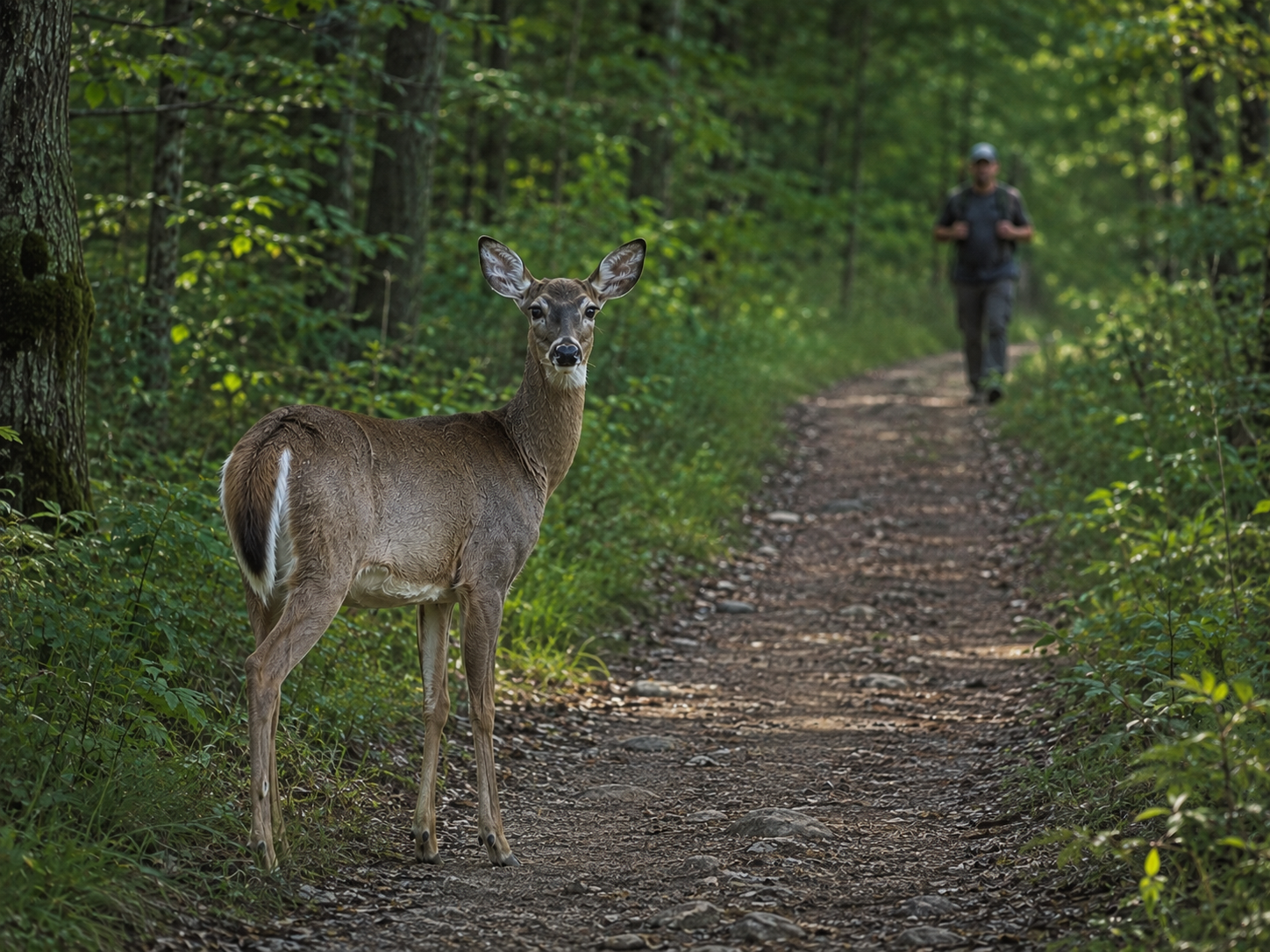
Imagine standing in a forest and trying to decide whether a distant shape is dangerous.
You cannot simply ask it.
You have to watch.
Deer face the same problem, except the consequences can be much more serious.
A predator may be hidden behind vegetation. A person may simply be walking along a trail. A branch may move in the wind. Another animal may be passing nearby.
The deer has to separate harmless signals from dangerous ones.
That is why the frozen moment can be so revealing. The animal may be reducing its own movement while paying closer attention to what is happening around it.
This does not mean the deer has consciously worked out a complicated plan. Animal behavior is shaped by nervous systems, instincts, experience and immediate environmental conditions.
The important point is that freezing can buy time.
A deer that has not yet identified a clear threat does not necessarily need to sprint away. It can remain still, gather more information and then respond.
The National Park Service describes deer using sight, smell and hearing to detect predators and notes that mule deer may freeze when danger is nearby.
That makes the stare less mysterious.
The deer is not necessarily fascinated by you.
It may simply be trying to make a better decision.
Why Movement Changes the Decision
Chapter 4 — The Deer Is Listening Too
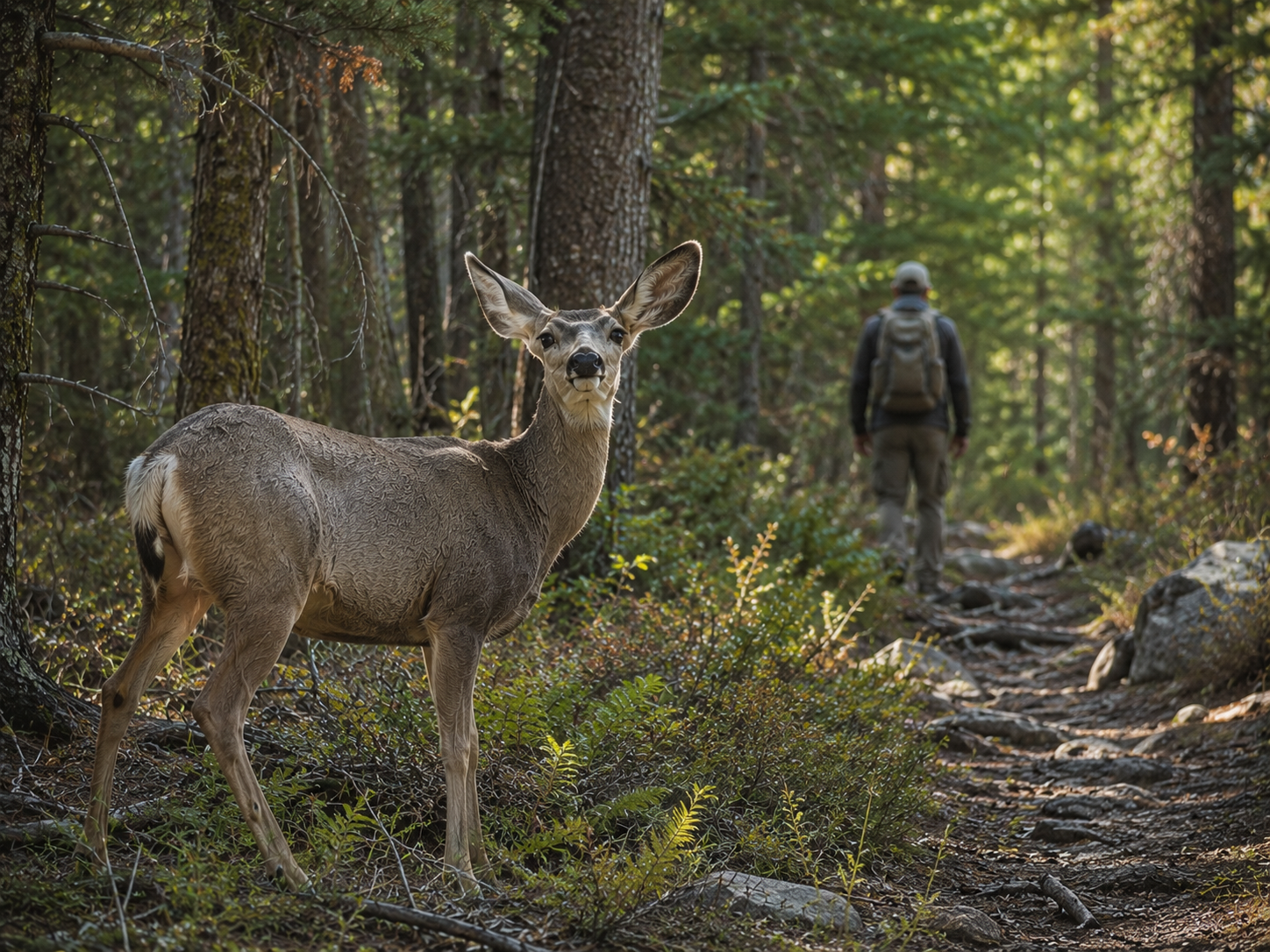
When a deer stares at you, it is easy to focus on its eyes.
But the ears may tell an equally important part of the story.
Deer have excellent hearing, and their large ears can move to help locate sounds. The National Park Service describes mule deer as having large ears and notes that they can move their ears independently to help pinpoint the source of a sound.
So while you think the deer is looking at you, it may also be listening to you.
Your footsteps.
Leaves moving beneath your shoes.
A distant vehicle.
Another person behind you.
A dog somewhere nearby.
The forest itself is full of sounds that you may barely notice.
Smell adds another layer.
Deer use their sense of smell to detect potential danger, and wildlife agencies describe sight, hearing and smell as important parts of their predator-detection system.
This means the deer does not experience the encounter as simply “human in front of me.”
It receives several pieces of information at once.
You see a staring deer.
The deer is gathering a much larger picture.
Three Senses, One Decision
Chapter 5 — Why Does One Deer Run While Another Keeps Watching?
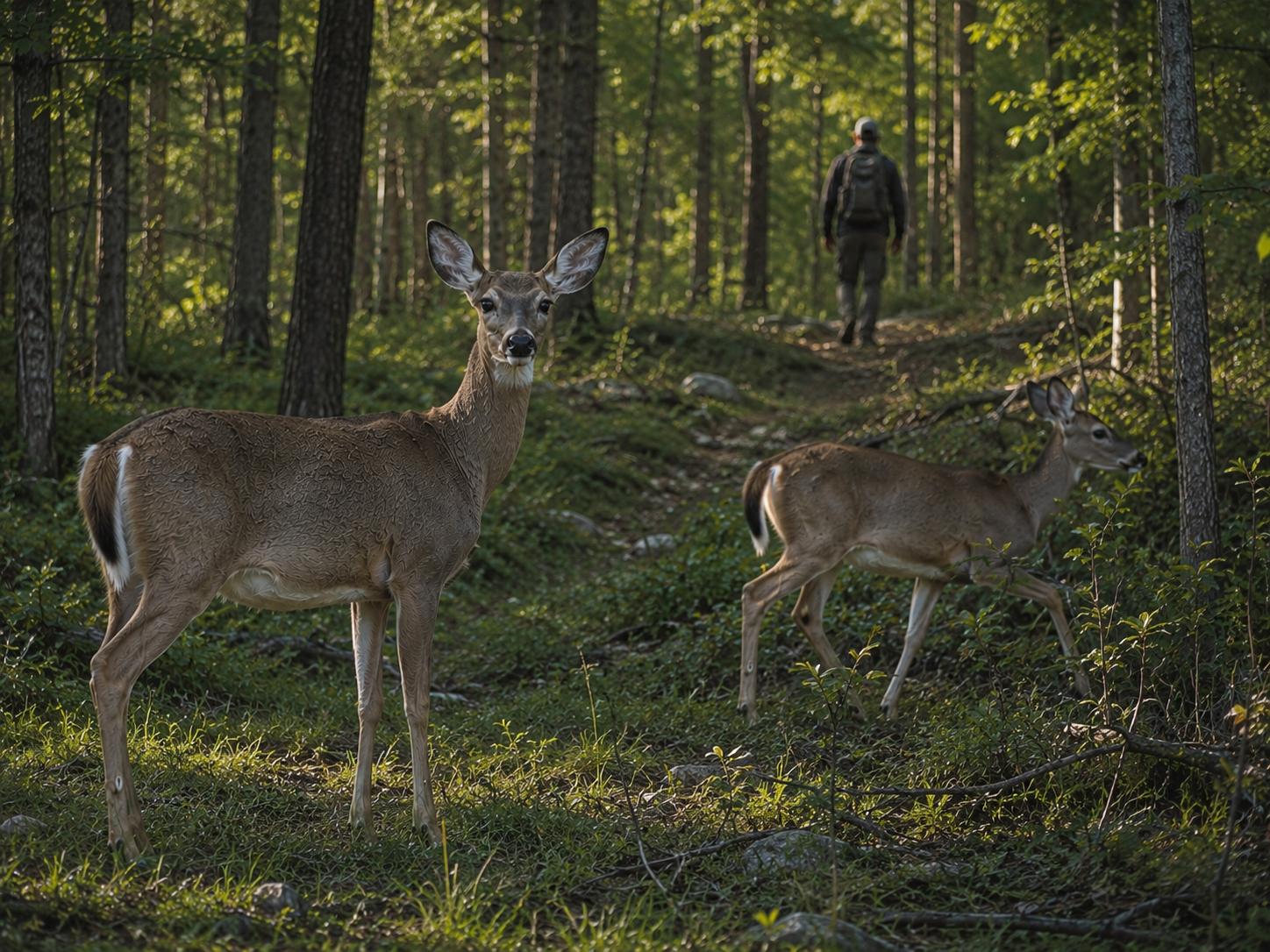
This is where the encounter becomes especially confusing.
You may see one deer notice you and immediately disappear into the trees.
Another may simply stand there.
Why?
Because there is no single response that every deer must follow.
The animal's decision can depend on how close you are, whether you are moving toward it, how exposed the deer feels, whether there is nearby cover, and what other sounds or smells are present.
A deer in dense woodland has different options from one standing in an open field.
A deer that has already detected you clearly may respond differently from one that has only noticed movement in the distance.
Experience can matter too.
And sometimes the safest response is not immediate flight.
Running costs energy. It can also carry the animal into an unknown part of the environment.
But if the threat becomes clear, the calculation changes quickly.
The National Park Service notes that when deer hear or see movement associated with danger, they can flee. White-tailed deer may also use a raised tail as a visual warning signal when alarmed.
So the famous moment when a deer suddenly bolts is not the opposite of staring.
It may be the next step after staring.
First the animal gathers information.
Then it decides.
Why Deer React Differently
Chapter 6 — Read the Deer’s Body Language
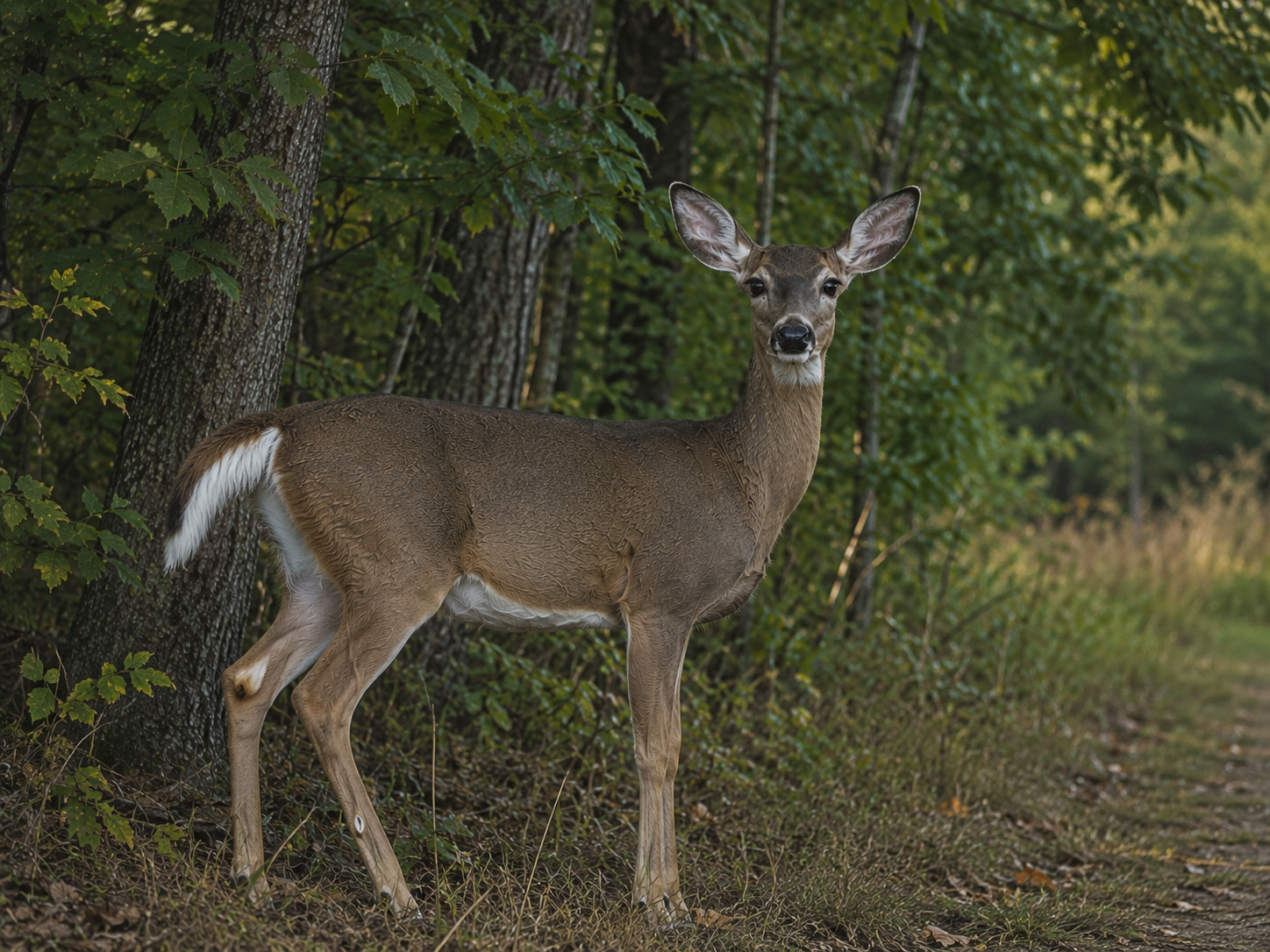
The stare itself is only one part of the message.
Look at the rest of the animal.
The ears can reveal where the deer is directing its attention. Large ears can rotate toward sounds, helping the animal locate what it hears.
The head may rise when the animal becomes more alert.
The body may become noticeably still.
The tail can become important when the deer is alarmed. In white-tailed deer, raising the white tail can act as a visual alarm signal to other deer.
But body language should not be treated like a perfect dictionary.
An ear pointing backward does not always mean exactly one thing. A tail position does not give humans a complete reading of the animal's internal state.
Context matters.
The most useful lesson is therefore not to memorize dozens of supposed signals.
Instead, look for the overall pattern:
Is the deer becoming more alert?
Is it getting ready to move?
Is it turning toward cover?
Is it becoming increasingly disturbed by your presence?
Those changes tell you more than the stare alone.
Reading a Deer’s Body Language
Chapter 7 — What Should You Do When a Deer Stares at You?
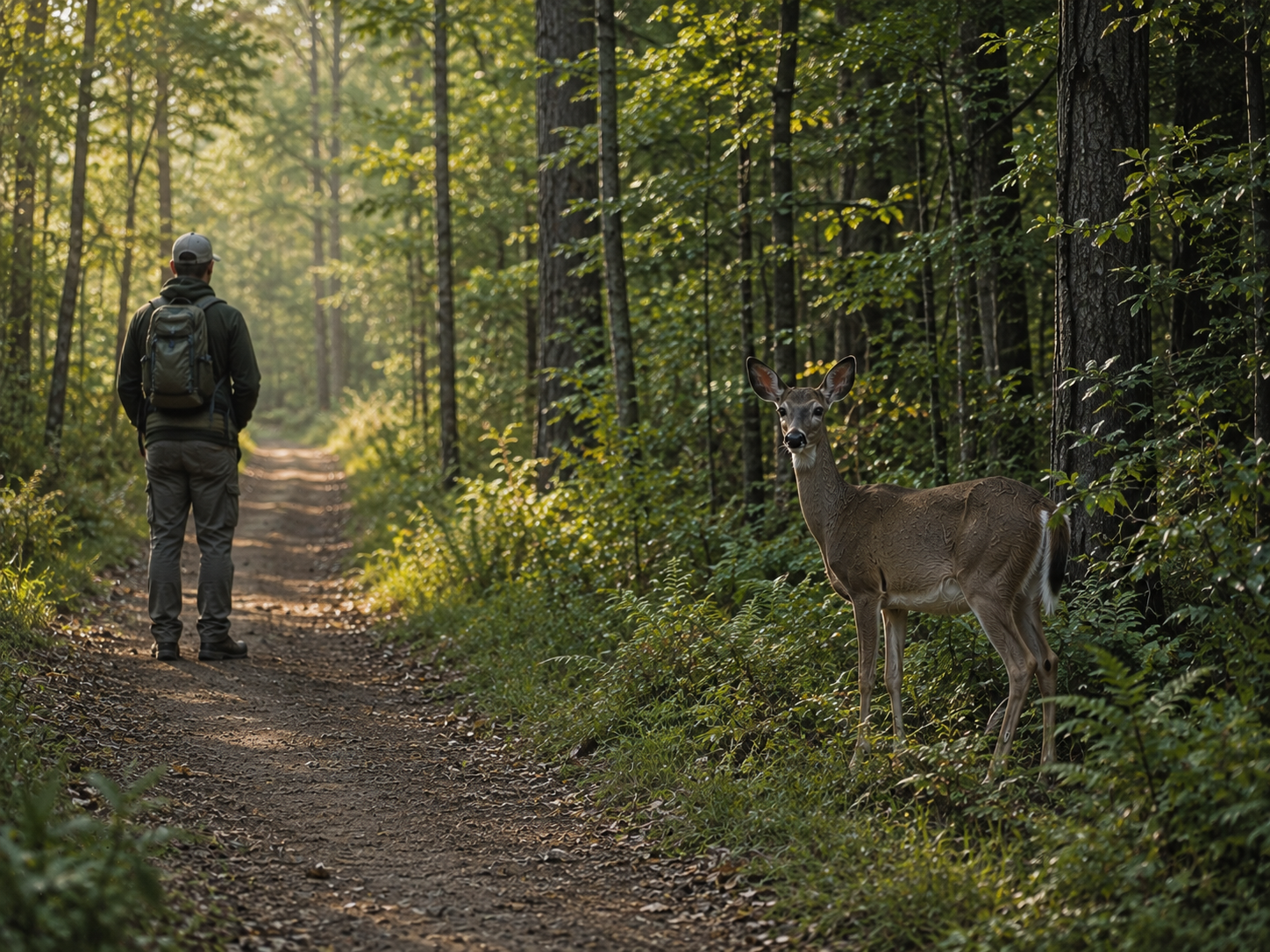
The best response is surprisingly simple.
Stop and give the deer space.
If you are walking toward it, slow down or stop. Do not approach just because the animal has not run away.
Remember what is happening from the deer's perspective. It has detected you, but it may still be deciding what you are going to do.
Sudden movement can change that decision.
If the deer begins moving away, let it go. Do not follow it for a better photograph. Do not try to get closer because it appears calm.
This is especially important during periods when deer may be protecting young or when bucks are behaving more aggressively. A wild animal that appears relaxed is still a wild animal.
And never assume that a deer standing still means it is comfortable with you.
Sometimes the most respectful response to that famous woodland stare is simply to stand still for a moment yourself.
Let the deer decide what happens next.
Eventually, it may lower its head and return to feeding.
Or it may turn away.
Or, with almost no warning, it may bound into the trees.
That final decision is the answer to the question you have been watching unfold.
The deer was never simply staring.
It was deciding.
What To Do When a Deer Stares at You
FAQ Frequently Asked Question
1. Why do deer stare at humans?
A deer may stare because it has detected a person and is gathering more information before deciding whether the person is a threat. Sight, hearing and smell all contribute to this assessment.
2. Why does a deer stop and freeze when it sees me?
Freezing can reduce movement while the deer assesses what it has detected. Movement can attract attention from predators, so remaining still can be part of a defensive response.
3. Are deer curious about humans?
They may investigate unfamiliar things, but it is too simplistic to say that a deer stares at humans because it is curious. A more reliable explanation is that the animal is gathering information and assessing possible danger.
4. Can deer see humans clearly?
Deer have a wide field of view because their eyes are positioned toward the sides of their heads. They are also adapted to seeing in relatively low-light conditions, which helps them remain alert around dawn and dusk.
5. Can deer hear me when I am walking?
Yes. Hearing is an important part of how deer detect potential danger. Their large ears can help them locate sounds coming from different directions.
6. Can a deer smell a human?
Yes. Deer have a strong sense of smell and use odors as part of their awareness of the surrounding environment and potential danger.
7. Why does a deer sometimes run away and sometimes keep staring?
The response depends on the situation. Distance, movement, habitat, available cover and other sensory information can all influence whether a deer continues watching, moves away or flees.
8. What does it mean when a deer raises its tail?
In white-tailed deer, a raised white tail can serve as a visual alarm signal to other deer when the animal is disturbed or senses danger.
9. Should I approach a deer that is staring at me?
No. A deer that remains still is not necessarily comfortable with your presence. Give it plenty of space and allow it to leave without being followed or cornered.
10. What should I do if a deer freezes and stares at me?
Stay calm, avoid sudden movements and give the deer an unobstructed route away from you. If it decides to leave, let it go rather than following it.