Introduction — The Strange Head of a Scavenger
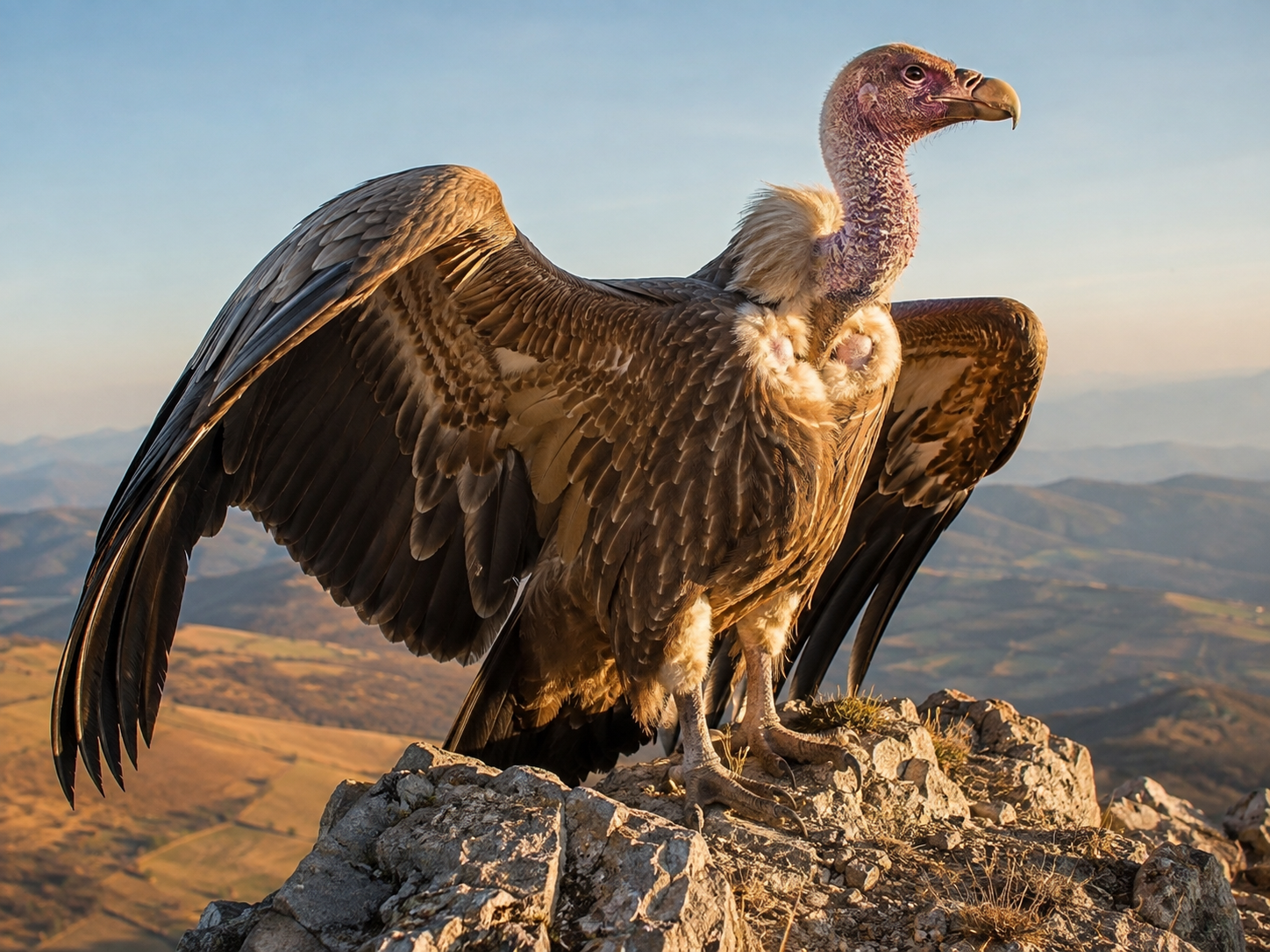
A vulture is not a bird most people would describe as beautiful.
Its wings can be enormous. Its flight can be graceful. But then there is the head: mostly bare skin, sometimes wrinkled, sometimes brightly colored, and very different from the feather-covered heads of most birds.
At first, the reason seems obvious.
Vultures eat dead animals. They often push their heads deep into carcasses (the dead body of an animal) to reach meat and organs. A feather-covered face could quickly become covered in blood and tissue.
That probably is part of the answer.
But there may be another reason.
Vultures spend hours soaring through very different temperatures, from hot ground to cold air high above it. Research on griffon vultures suggests that their bare skin can play an important role in thermoregulation, helping them manage heat. (ScienceDirect)
So the bald head is not simply an ugly feature.
It may be a practical piece of survival equipment.
And once you look more closely, the vulture's entire body starts to make sense.
The hooked beak.
The huge wings.
The bare head.
The powerful digestive system.
Almost everything about it is built around one unusual job:
finding and safely eating the dead.
Chapter 1 — The Strange Head of a Scavenger
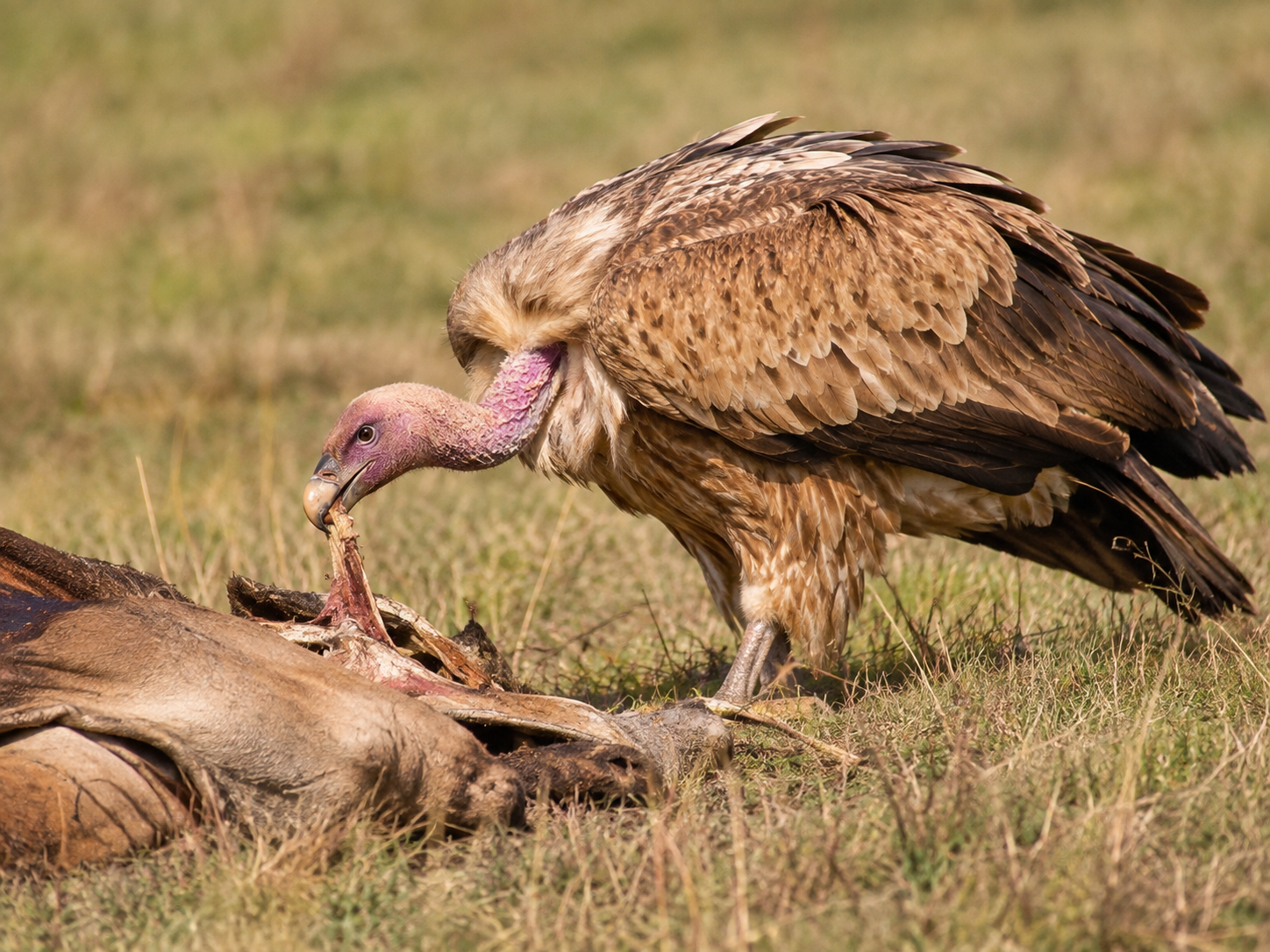
The bald head makes more sense when you look at how a vulture eats.
Unlike an eagle or hawk, a vulture usually does not kill its own prey.
It waits for an animal to die and then feeds on the carcass.
That creates a very different problem.
When a vulture tears into a carcass, its head and neck can come into direct contact with blood, muscle and decomposing tissue. A featherless head means there are fewer feathers around the face to become soiled or stuck together. This has long been considered one of the main advantages of the bare-headed design. Recent reviews continue to connect the loss of head feathers with this feeding style. (ScienceDirect; Springer)
It is worth being careful here.
Not every vulture species has exactly the same head covering, and the evolution of featherless skin may involve more than one advantage.
The vulture's bare head is therefore better understood as part of a package of adaptations that fit its scavenging lifestyle.
It does not need a beautiful head.
It needs a practical one.
And the same unusual skin may have another job that has become increasingly interesting to scientists.
Why the Head Is Bare
Chapter 2 — What Happens When a Vulture Feeds?
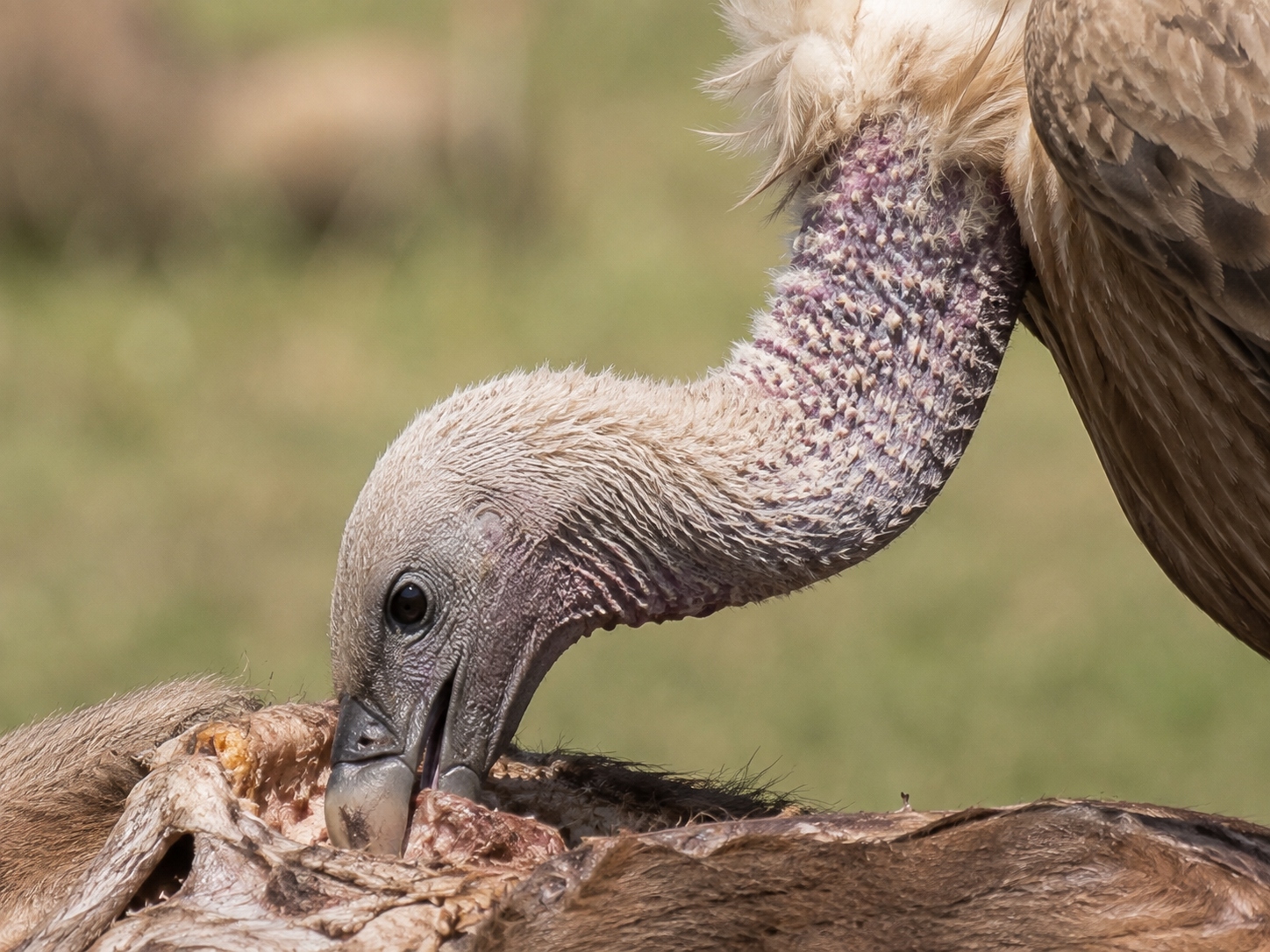
A carcass is not an easy meal.
The skin can be tough. The meat may be deep inside the body. Other scavengers may arrive at the same time.
Vultures are built for this competition.
Their beaks are strongly hooked and shaped for tearing tissue. Different vulture species have different skull and beak shapes because they feed in different ways. Some are better at ripping through tougher tissues, while others have narrower heads suited to reaching deeper into a carcass. (Springer)
Their feet are also different from those of hunting eagles.
A vulture does not need powerful talons for catching live prey. Its feet are better suited to standing on and holding food while the beak does the real work. (IUCN)
Then there is the stomach.
A vulture can eat food that would be dangerous for many other animals.
Their digestive systems are highly specialized for this diet. Studies of vulture biology have found exceptionally acidic stomach conditions in obligate scavenging species, which can help break down food and may act as a barrier against many microorganisms swallowed with carrion. (PMC)
This does not mean vultures are completely protected from disease.
They can still carry or encounter pathogens.
But their bodies are remarkably well adapted to a diet that most animals would avoid.
For a vulture, decay is not necessarily a warning.
It is a food signal.
Built to Eat Carrion
Chapter 3 — The Hidden Cooling System
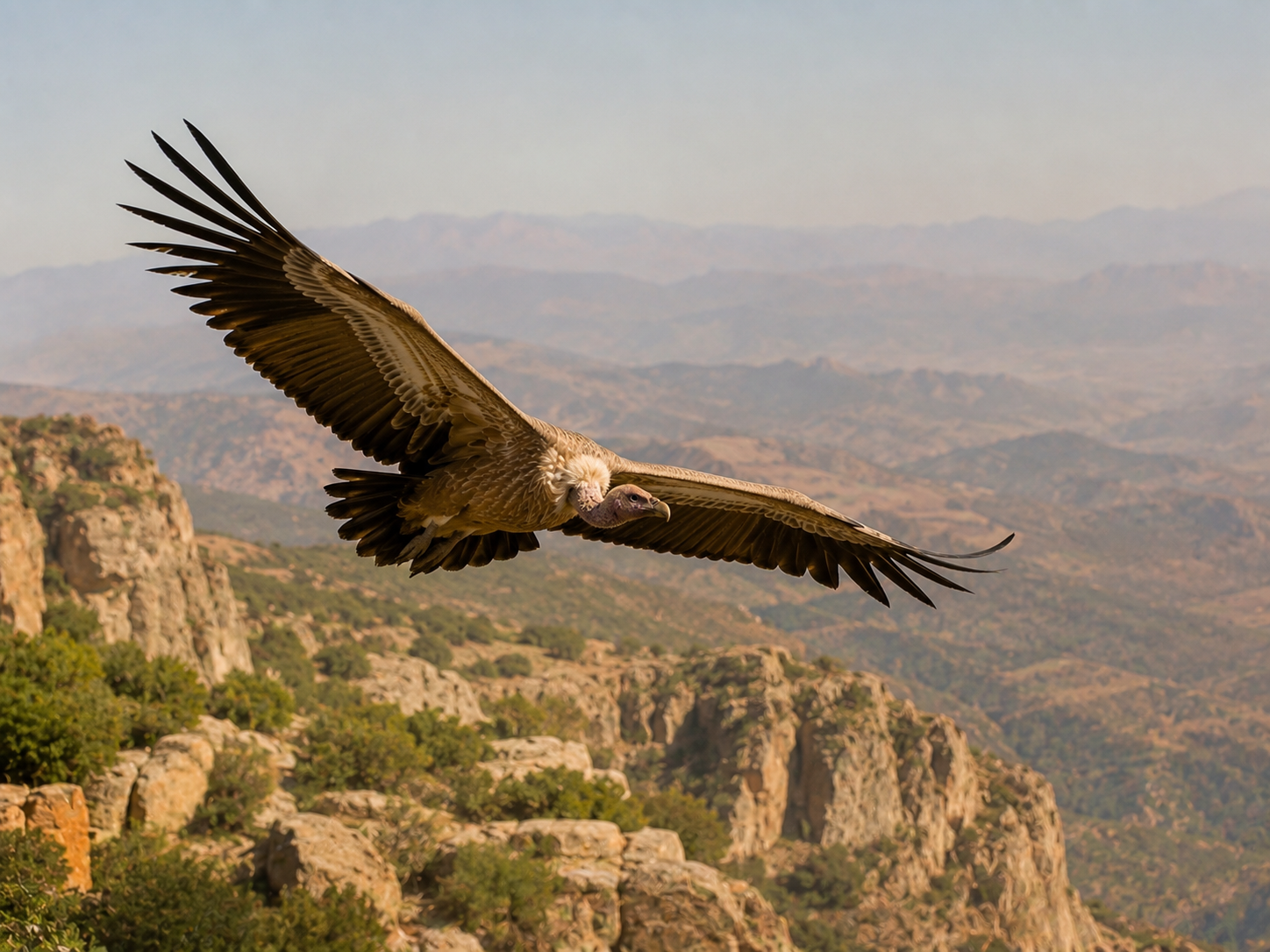
The strangest thing about a vulture's bare head may be that it is not only about feeding.
Vultures can experience huge changes in temperature during a single day.
A bird may spend part of the morning on hot ground, then rise on thermal currents into much colder air.
For griffon vultures, researchers have suggested that bare skin on the head and neck can help with heat exchange. Changes in posture can also expose more or less bare skin depending on the conditions. (ScienceDirect)
Think of the head as a small natural radiator.
When the bird needs to lose heat, exposed skin can release heat to the surrounding air.
When conditions are colder, body posture can help reduce exposure.
This matters because vultures spend so much time moving between different thermal environments.
Their lifestyle depends on soaring.
They use rising air to travel long distances while searching for food, which can take them from warm ground to much cooler air above it. (ScienceDirect)
So the bald head may be doing two jobs.
It can make feeding easier.
And it may help the bird manage heat.
Evolution often works this way.
A feature does not necessarily have one single purpose.
Sometimes the best adaptations are useful in several situations at once.
The Vulture's Natural Cooling System
Chapter 4 — Built for a Life Around Carrion
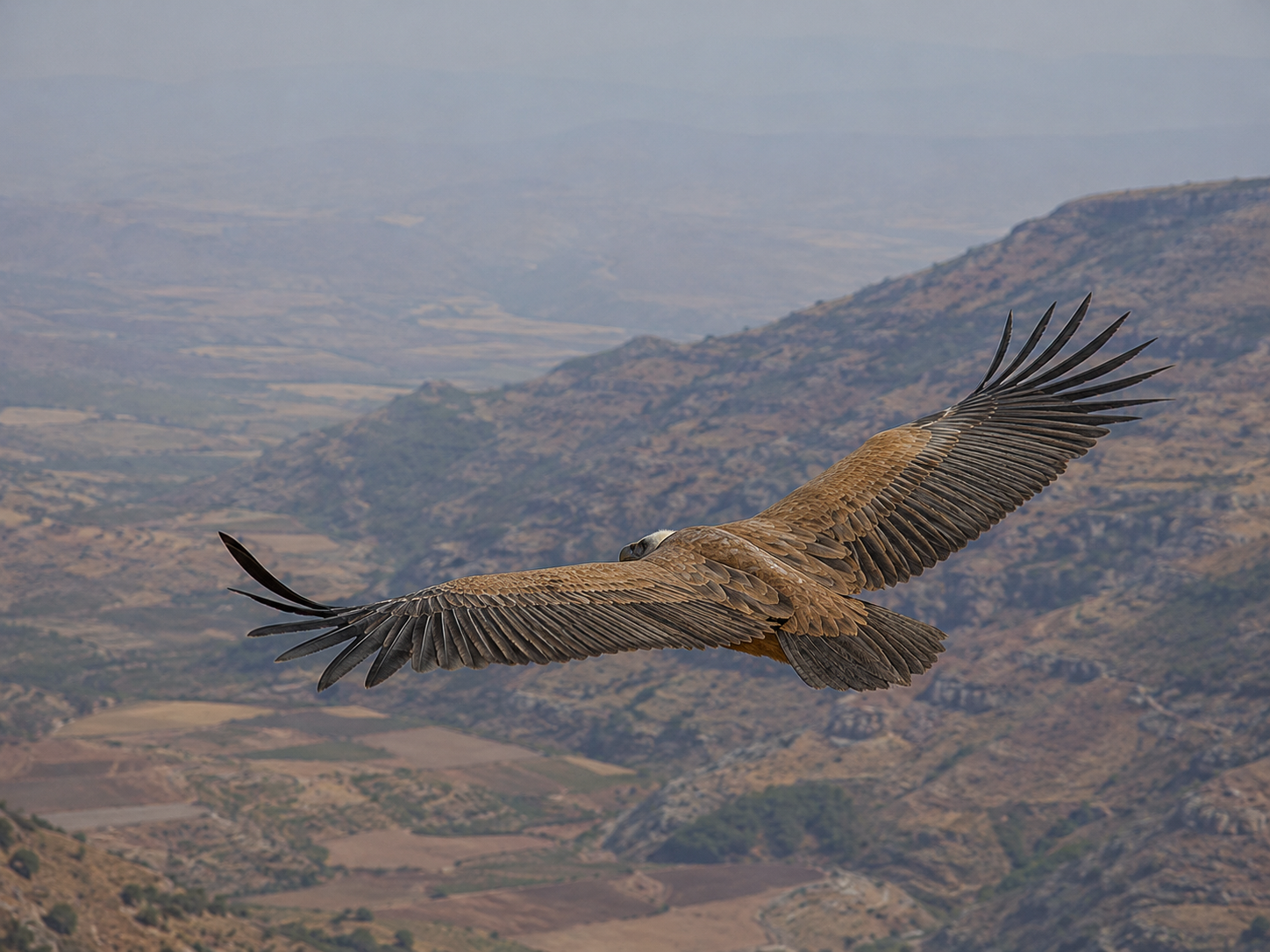
The bald head gets most of the attention.
But it is only one part of the vulture's design.
Start with the wings.
Vultures spend enormous amounts of time searching from the air. Their broad wings are excellent for soaring on rising columns of warm air, allowing them to travel long distances without constantly flapping. (ScienceDirect)
That saves energy.
And energy matters for a scavenger.
A vulture may have to travel a long distance before finding its next meal.
Then comes the beak.
It is strong, hooked and specialized for tearing flesh. Different species have slightly different feeding tools, allowing several vultures to exploit different parts of the same carcass. (Springer)
The digestive system is just as important.
Vultures routinely consume decaying meat containing huge communities of microorganisms. Their digestive systems are adapted to this difficult food source, including highly acidic stomach conditions in many obligate scavengers. (PMC)
And then there is their behavior.
They are excellent at finding food from above.
A single bird can discover a carcass and attract other vultures, creating feeding groups that can process a carcass quickly.
Nothing about this bird is accidental.
It is a specialist.
Take away the feathers from the head, look at the beak, look at the wings, look at the stomach—and the same story appears again.
This is a bird built around scavenging.
The Perfect Scavenger
Chapter 5 — Why Vultures Matter More Than People Think
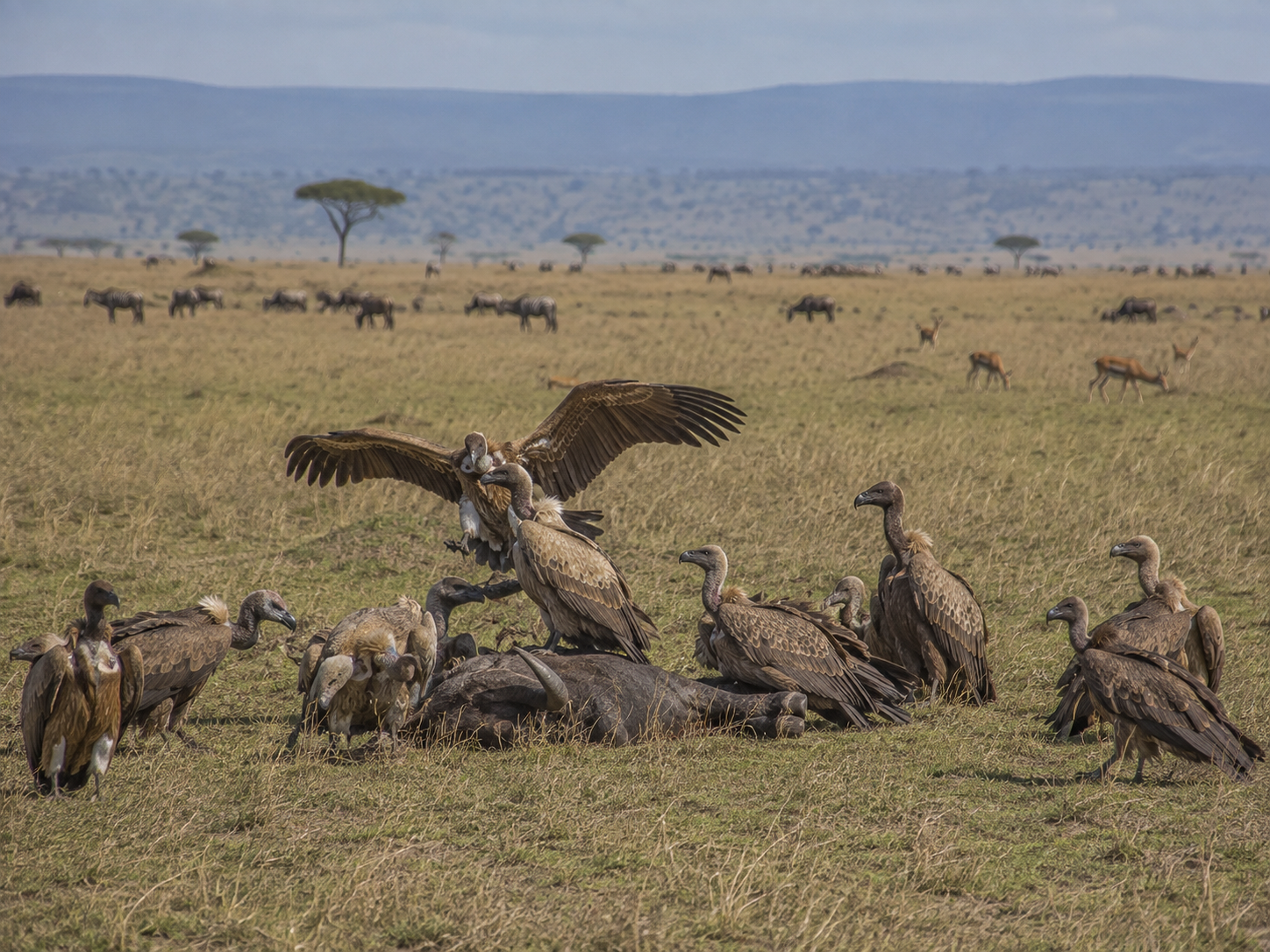
A dead animal may look like waste.
For an ecosystem, it is also food, nutrients and a potential source of contamination.
Vultures help remove carcasses quickly.
That matters because an abandoned carcass can remain available to other scavengers, insects and microorganisms for much longer. Vultures can process large amounts of carrion and move nutrients back into the ecosystem. (PMC)
Their role can also affect other animals.
When vultures disappear, other scavengers can become more important around carcasses. Research in India has linked the collapse of vulture populations with increases in feral dogs and changes in disease-related risks, although these relationships involve several interacting factors and should not be reduced to a single cause. (PMC)
The important point is simple:
Vultures clean up a problem that nobody else wants.
And they do it at enormous scale.
This is why their decline is not just a problem for birdwatchers.
It can affect agriculture, livestock management, waste disposal and public health.
A healthy ecosystem does not need every animal to be beautiful or popular.
Some species are valuable precisely because they perform jobs that are easy to overlook.
Vultures are one of them.
Why Vultures Matter
Chapter 6 — India's Vulture Crisis
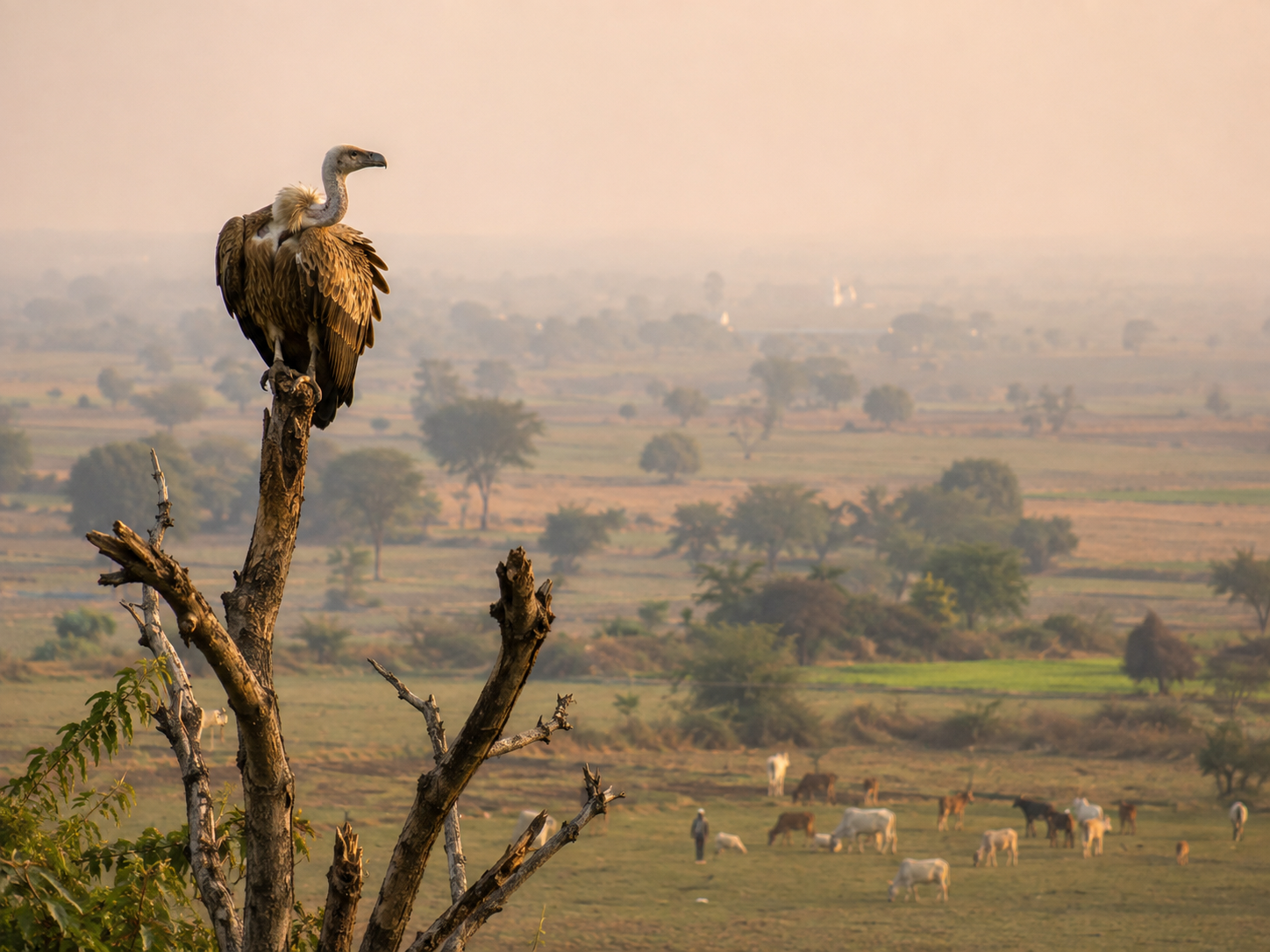
India once had enormous numbers of vultures.
Then the population collapsed.
During the 1990s and early 2000s, several Indian Gyps vulture species experienced some of the fastest wildlife declines ever recorded. The major cause was eventually identified as diclofenac, a veterinary painkiller and anti-inflammatory drug used to treat livestock. Vultures feeding on carcasses of animals treated with the drug could die from kidney failure. (WII)
The scale of the decline was extraordinary.
The Wildlife Institute of India's recent national assessment reports long-term declines of approximately 98% for White-rumped Vultures, 95% for Indian Vultures and 91% for Red-headed Vultures. The report also says these populations continue to decline in India, despite earlier efforts to reduce the main drug threat. (WII)
India banned veterinary use of diclofenac in 2008.
Conservation efforts have since expanded.
They include vulture breeding centers, monitoring programs, vulture-safe zones and efforts to reduce exposure to other harmful veterinary drugs. The government’s Vulture Conservation Action Plan has also emphasized safer veterinary medicines and protection of vulture habitats. (MoEFCC)
But the recovery is not simple.
Recent Wildlife Institute of India research shows that several vulture populations remain dangerously low and fragmented. Researchers are still monitoring nesting sites and identifying continuing threats. (WII)
The story is therefore not “India saved its vultures.”
It is more complicated.
India identified one of the major causes.
It acted.
Some declines slowed.
But several species are still in serious trouble.
And that makes the vulture's future dependent not only on breeding more birds, but also on making the landscapes around them safer.
A bald head may be one of the most recognizable features in the bird world.
In India, keeping that head in the sky has become a much bigger challenge.
India's Vulture Crisis
FAQ Frequently Asked Questions
1. Why are vultures bald?
A featherless head is useful for a bird that regularly feeds inside animal carcasses. Bare skin is less likely to become heavily soiled than feathers, and research also suggests that exposed skin can help with temperature regulation. (ScienceDirect)
2. Do vultures lose their feathers?
Not from eating carrion. Their bare heads and necks are normal anatomical features, not areas where feathers have been lost because of their diet.
3. Does a bald head help vultures stay cool?
It can. Research on griffon vultures suggests that bare skin on the head and neck can play a role in thermoregulation. Changes in posture can also alter how much bare skin is exposed. (ScienceDirect)
4. Why do vultures eat dead animals?
Vultures are specialized scavengers. Their strong beaks, digestive systems, soaring abilities and feeding behavior allow them to exploit carcasses that many other animals cannot use safely or efficiently. (ScienceDirect)
5. Can vultures get diseases from rotten meat?
Vultures are remarkably well adapted to carrion and can tolerate many microorganisms that would be dangerous to other animals. Their digestive systems provide an important barrier, although vultures are not completely immune to pathogens and some microorganisms can survive passage through their bodies. (Nature; PMC)
6. Why are vultures important to ecosystems?
They remove animal carcasses quickly and help return nutrients to the ecosystem. Their scavenging can also reduce the amount of decaying organic material available to other organisms. (PMC)
7. Why did India's vultures decline so dramatically?
One of the major causes was the veterinary drug diclofenac. Vultures feeding on carcasses from treated livestock could suffer fatal kidney failure. Other threats also affect vultures, but diclofenac was responsible for the catastrophic decline of several Gyps species in South Asia. (WII)
8. Did India ban diclofenac?
India banned the veterinary use of diclofenac in 2008. Conservation programs have since focused on safer veterinary medicines, breeding, monitoring and protected feeding and nesting areas. (MoEFCC)
9. Are India's vultures recovering?
The situation is mixed. The decline slowed after major conservation measures were introduced, but the latest Wildlife Institute of India assessment shows that several key species remain at extremely low levels and some continue to decline. (WII)
10. Are vultures dangerous to humans?
Vultures generally avoid healthy living animals and specialize in scavenging. Their ecological role is usually beneficial because they remove carcasses that would otherwise remain in the environment. The bigger concern is not that vultures attack people, but that losing them can create ecological and sanitation problems. (PMC)
The main thing to remember
The vulture's bald head is not just a strange-looking feature.
It fits into a much larger system:
Bare head → easier feeding → possible heat control → powerful digestion → efficient soaring → rapid carcass removal.
And that is what makes vultures so interesting.
They look unusual because they are highly specialized.