A Giant Hiding in Plain Sight
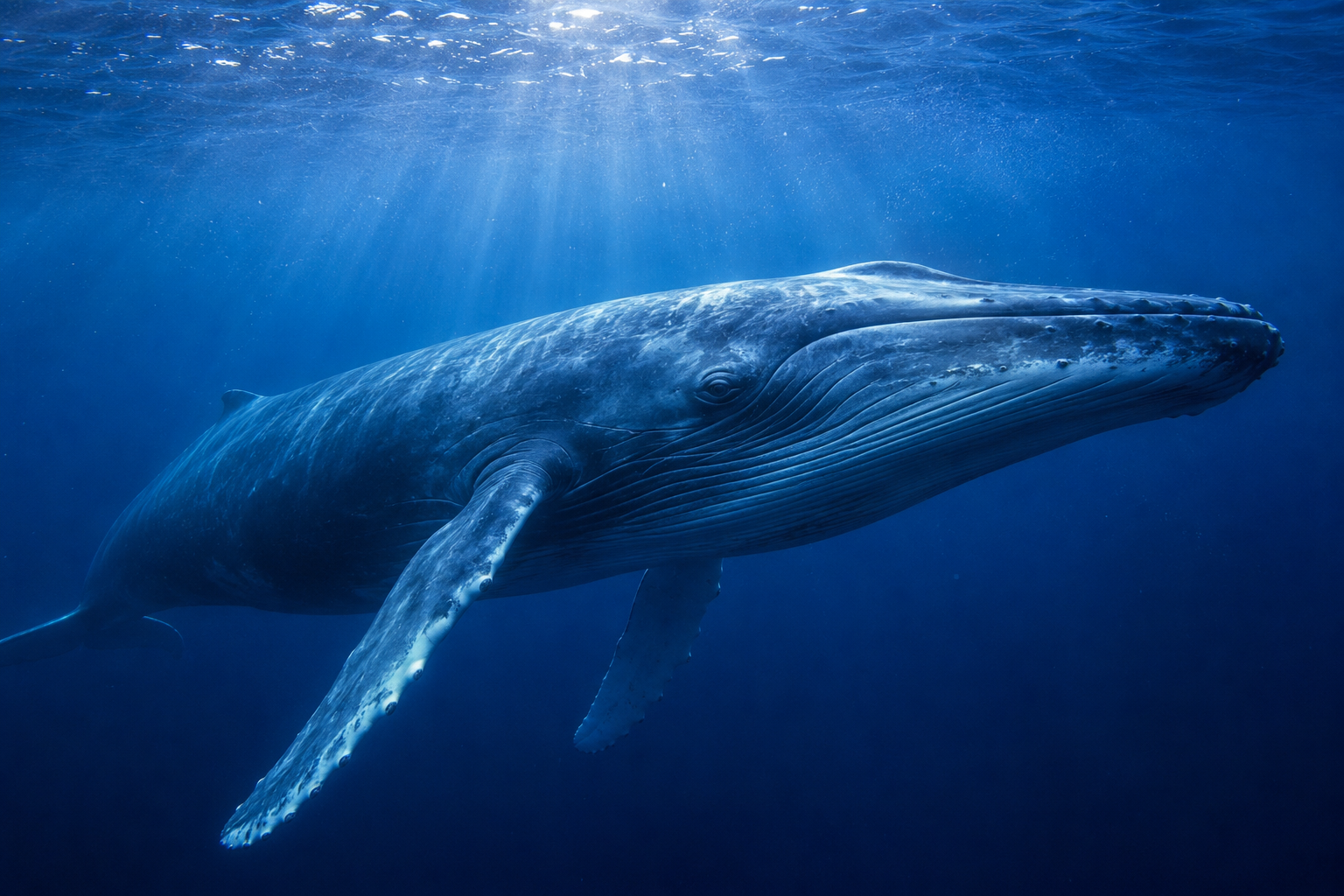
Stand on the deck of a ship in the middle of the Pacific Ocean and look around. All you see is endless blue water stretching to the horizon.
Now imagine that beneath those waves, an animal longer than a basketball court is silently passing below you.
You probably wouldn't notice it.
That enormous creature is the blue whale—the largest animal ever known to have lived on Earth. Not just the largest living animal today, but larger than any dinosaur scientists have ever discovered.
It's astonishing that something so massive can spend most of its life hidden beneath the ocean's surface.
Bigger Than Anything That Ever Walked the Earth
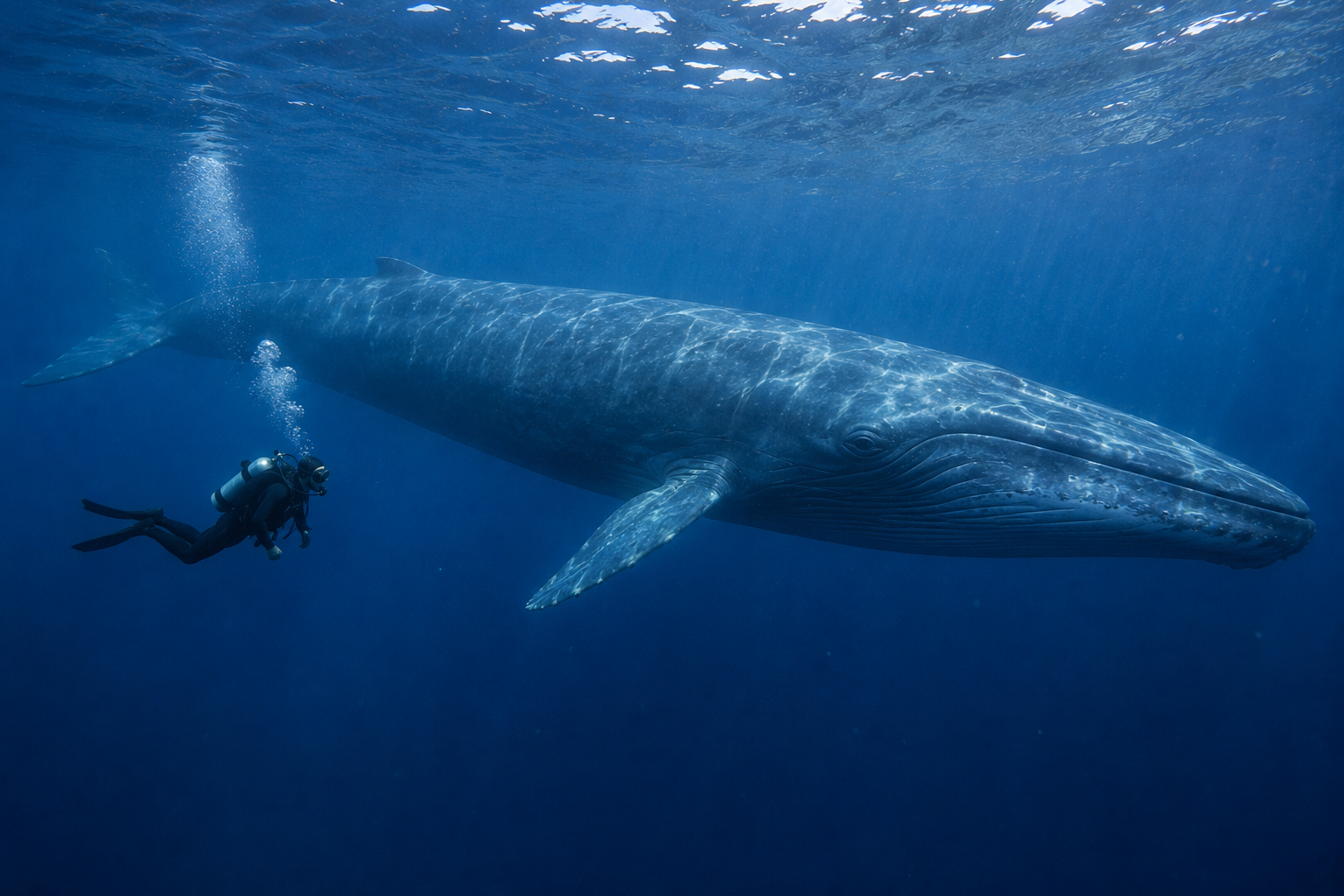
When people hear the word "giant," they often think of Tyrannosaurus rex or other famous dinosaurs.
But even those prehistoric predators are outmatched.
An adult blue whale can grow to around 30 meters (98 feet) in length and weigh as much as 180 tonnes. Its tongue alone can weigh as much as an elephant, and its heart is roughly the size of a small car.
Despite these incredible dimensions, blue whales survive on one of the smallest animals in the ocean—tiny shrimp-like creatures called krill.
It seems impossible, but nature often works in surprising ways.
A Voice That Travels Across Oceans
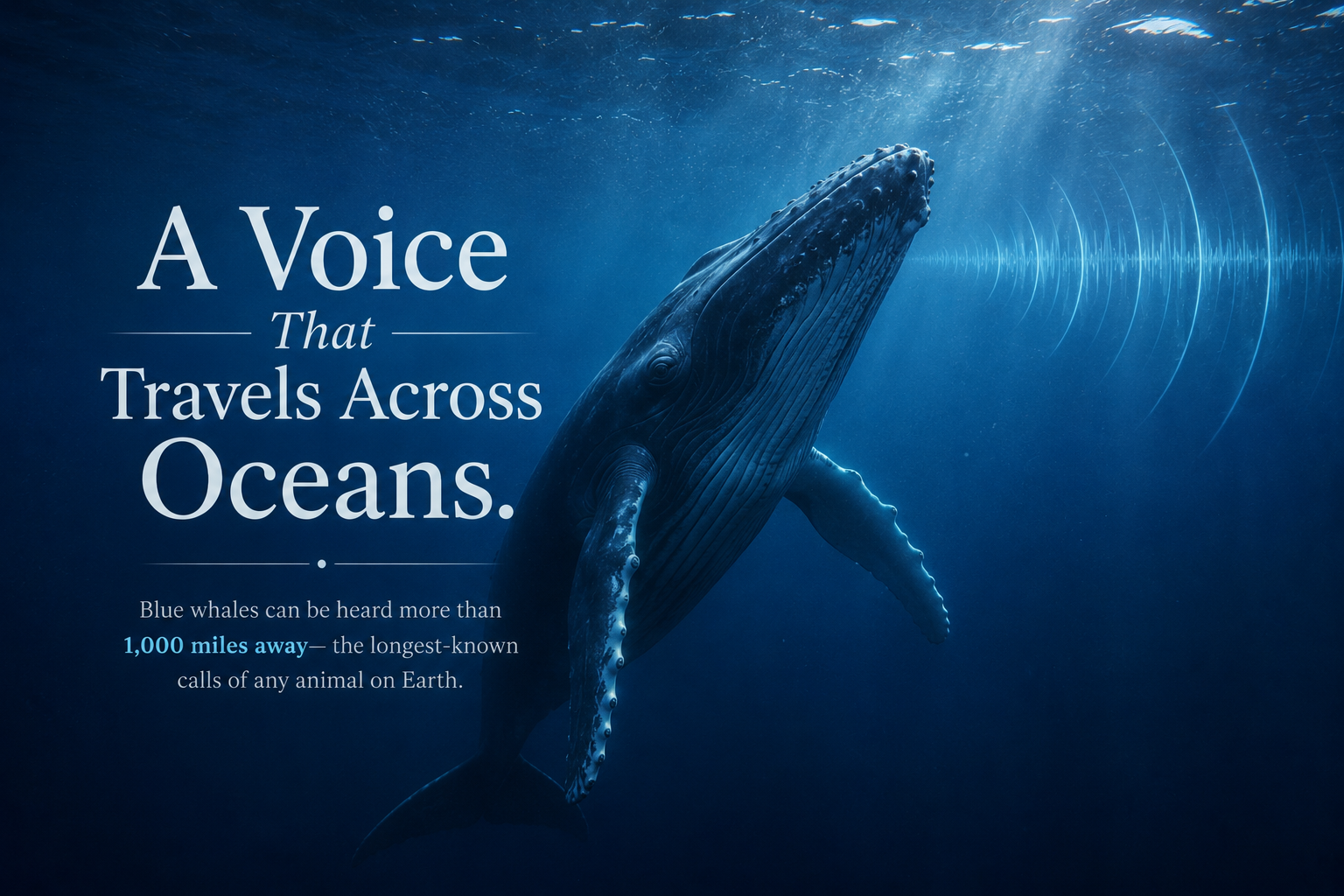
Blue whales don't roar like lions or trumpet like elephants.
Instead, they produce deep, low-frequency calls that humans usually cannot hear without specialized equipment.
These sounds can travel hundreds of kilometers through seawater, allowing whales to communicate over extraordinary distances.
Scientists are still learning exactly what these calls mean. Some are believed to help whales find mates, while others may allow family groups to stay connected as they migrate across vast oceans.
Even after decades of research, much of the blue whale's underwater world remains a mystery.
When we picture prehistoric life, it's easy to assume that dinosaurs were the biggest creatures to ever exist. After all, some dinosaurs stretched across entire football fields and weighed as much as several elephants.
Yet the blue whale surpasses them all.
Scientists estimate that a fully grown blue whale can reach nearly 30 meters (98 feet) in length and weigh up to 180 tons. That's heavier than a fully loaded passenger airplane.
To put its size into perspective:
- Its heart can weigh around 180 kilograms.
- Its tongue can weight as much as an adult elephant.
- A newborn calf is already about 7 meters (23 feet) long.
- A single heartbeat can sometimes be detected from several meters away underwater.
Even more remarkable is the fact that all this size is supported by a diet consisting mainly of tiny krill.
The Tiny Creatures That Keep Giants Alive
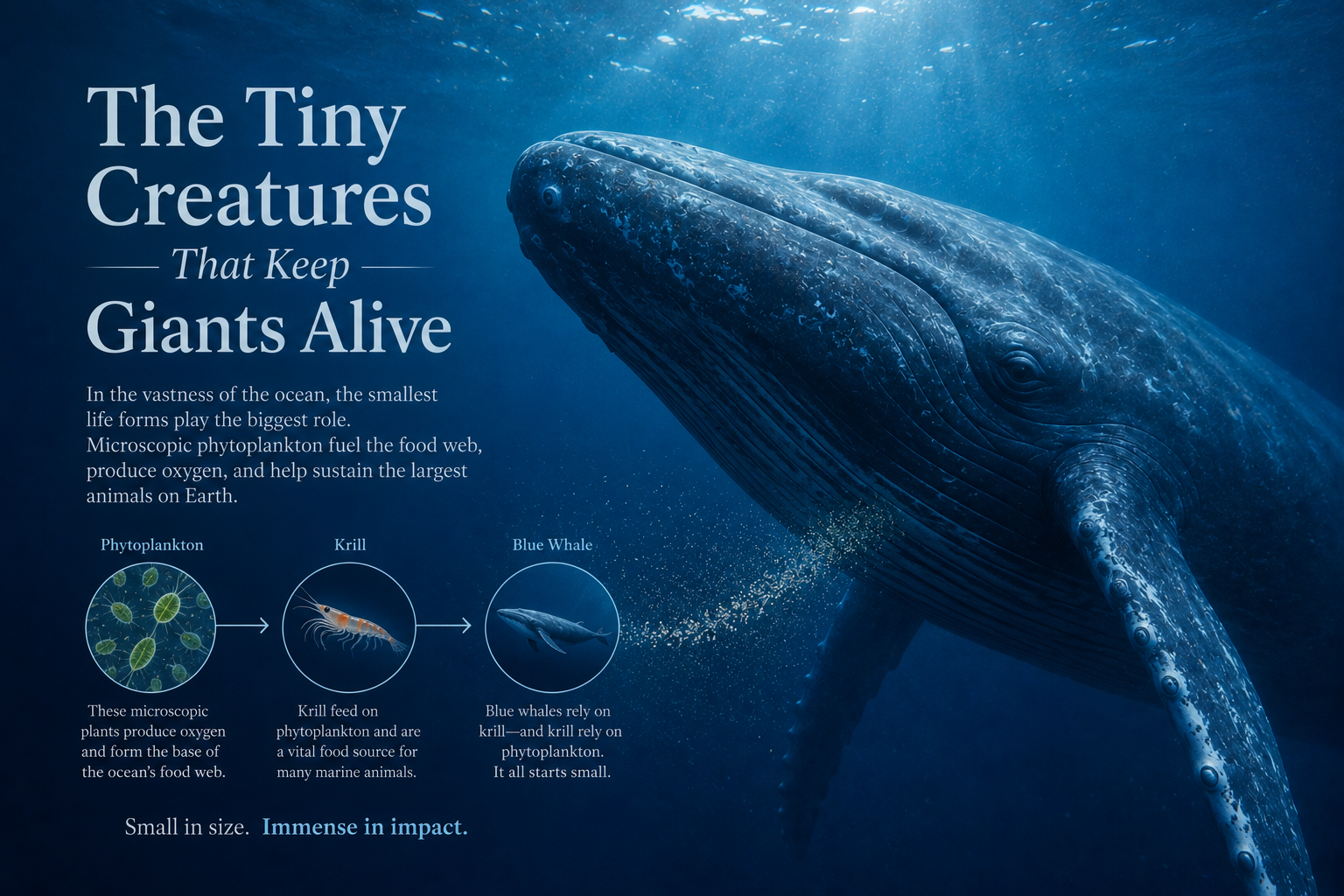
If someone asked you what the largest animal on Earth eats, you might imagine giant fish or sharks.
The reality is far more surprising.
Blue whales feed almost entirely on krill—small shrimp-like crustaceans that are only a few centimeters long.
During feeding season, a single blue whale may consume up to four tonnes of krill in one day.
Instead of chewing, blue whales use an extraordinary feeding method called filter feeding.
They rush through dense swarms of krill with their mouths wide open, taking in thousands of liters of seawater. Then, by pushing the water back out through comb-like structures called baleen plates, they trap the krill inside before swallowing them.
Nature has created a giant that survives by harvesting some of the ocean's smallest animals.
Built for Life in the Open Ocean
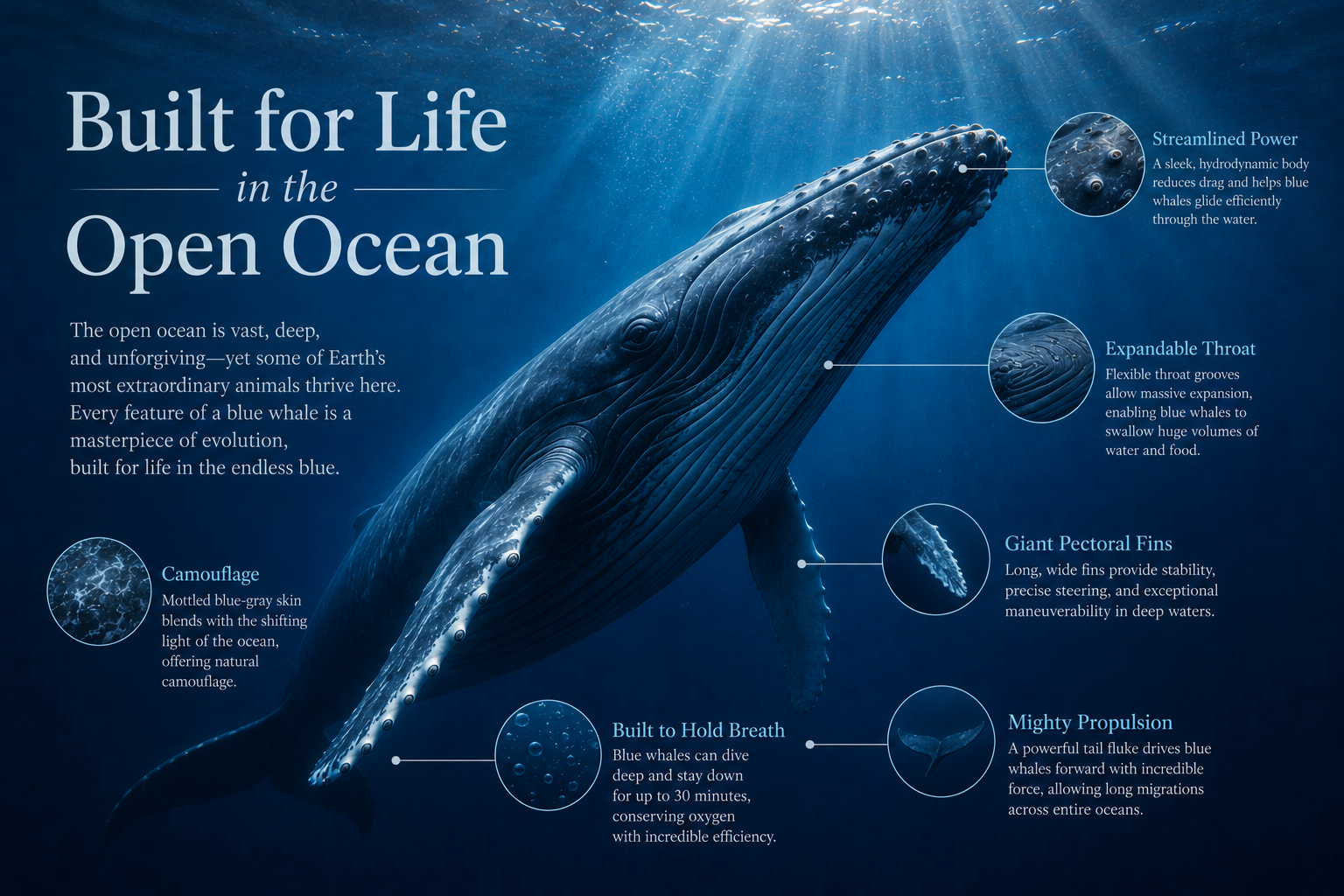
Living in the open ocean is completely different from living on land.
There are no trees for shelter, no caves to hide in, and no fixed paths to follow.
Everything depends on adaptation.
Blue whales have streamlined bodies that reduce resistance in the water, allowing them to travel thousands of kilometers with surprising efficiency.
Their thick layer of blubber acts as insulation against the freezing temperatures of deep oceans while also storing energy for long migrations.
Although they breathe air like humans, blue whales can remain underwater for 10 to 20 minutes before returning to the surface for another breath.
Every dive is carefully timed, conserving oxygen until they surface again with a spectacular blow that can rise several meters into the air.
The Longest Journey in the Ocean
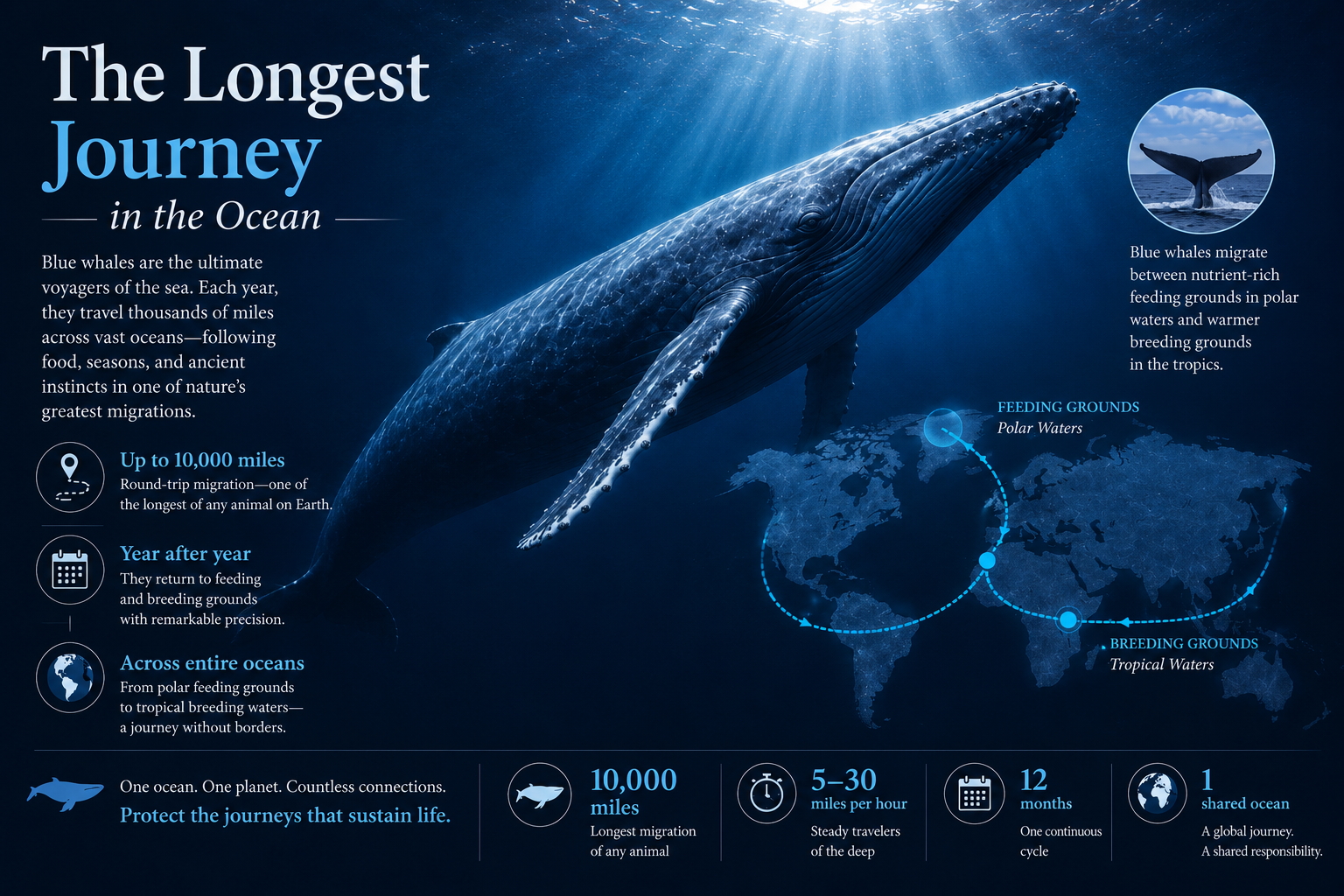
Every year, blue whales undertake one of the longest migrations on Earth.
During summer, they travel to cold polar waters where krill are abundant. Here they feed almost continuously, building up the energy needed for the months ahead.
As winter approaches, they begin an incredible journey toward warmer tropical and subtropical waters.
Unlike many animals, blue whales don't migrate because they're escaping cold temperatures.
They migrate because warmer waters provide a safer environment for newborn calves, which have only a thin layer of blubber and need gentler conditions during their first months of life.
Some blue whales travel more than 8,000 kilometers (5,000 miles) in a single migration.
Even after decades of research, scientists are still uncovering the exact routes they follow.
A Mother's Greatest Challenge
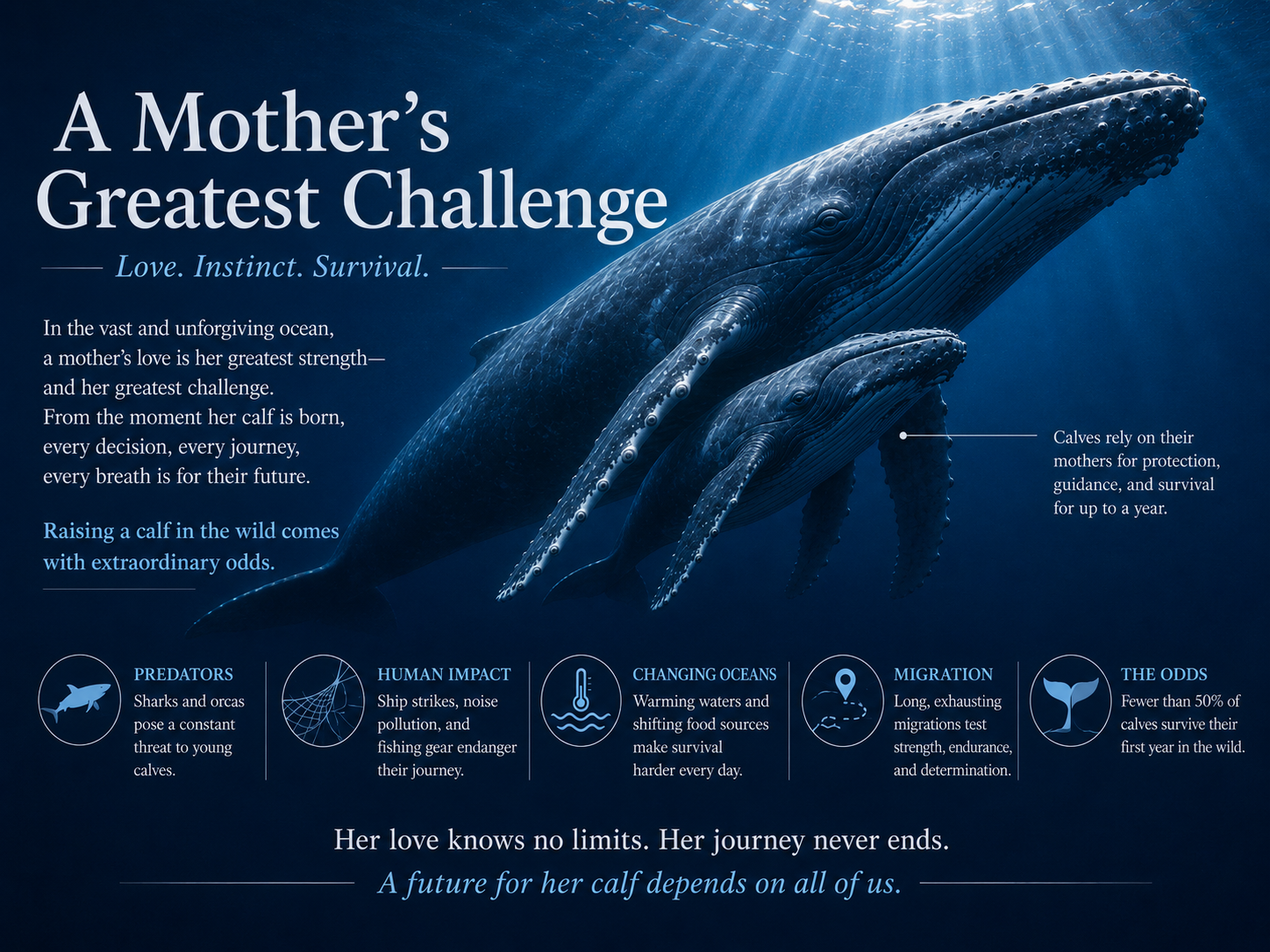
A baby blue whale enters the world at an astonishing size.
Newborn calves can weigh nearly three tonnes and measure around 7 meters (23 feet) long.
Despite their enormous size, they rely entirely on their mothers.
Blue whale milk is incredibly rich in fat, allowing calves to gain up to 90 kilograms (200 pounds) every day during the first months of life.
The mother stays close, protecting her calf as it learns to swim, breathe, and navigate the vast ocean.
This close bond is essential because the open sea offers little protection from predators such as killer whales.
When Humans Nearly Silenced the Giants
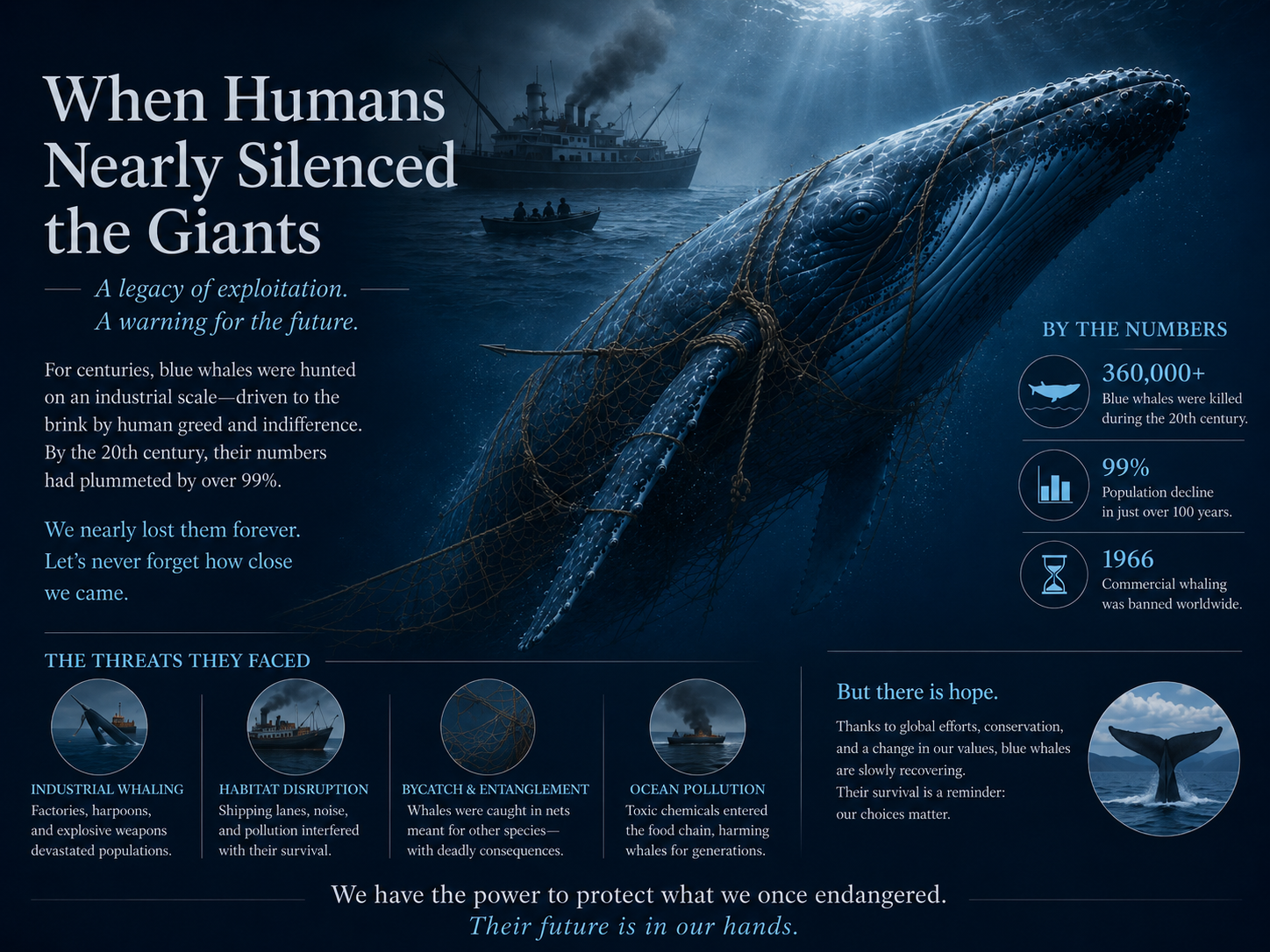
There was a time when blue whales filled oceans across the globe.
Then came the era of industrial whaling.
During the 20th century, faster ships and explosive harpoons allowed humans to hunt whales on an unprecedented scale.
Thousands of blue whales were killed each year for their oil and other products.
By the mid-1900s, the global population had fallen dramatically, pushing the species close to extinction.
International protection eventually brought commercial hunting to an end, giving blue whales a chance to recover.
Although their numbers are slowly increasing in some regions, they remain an endangered species, facing threats such as ship strikes, fishing gear entanglement, underwater noise, and climate change.
Amazing Blue Whale Facts
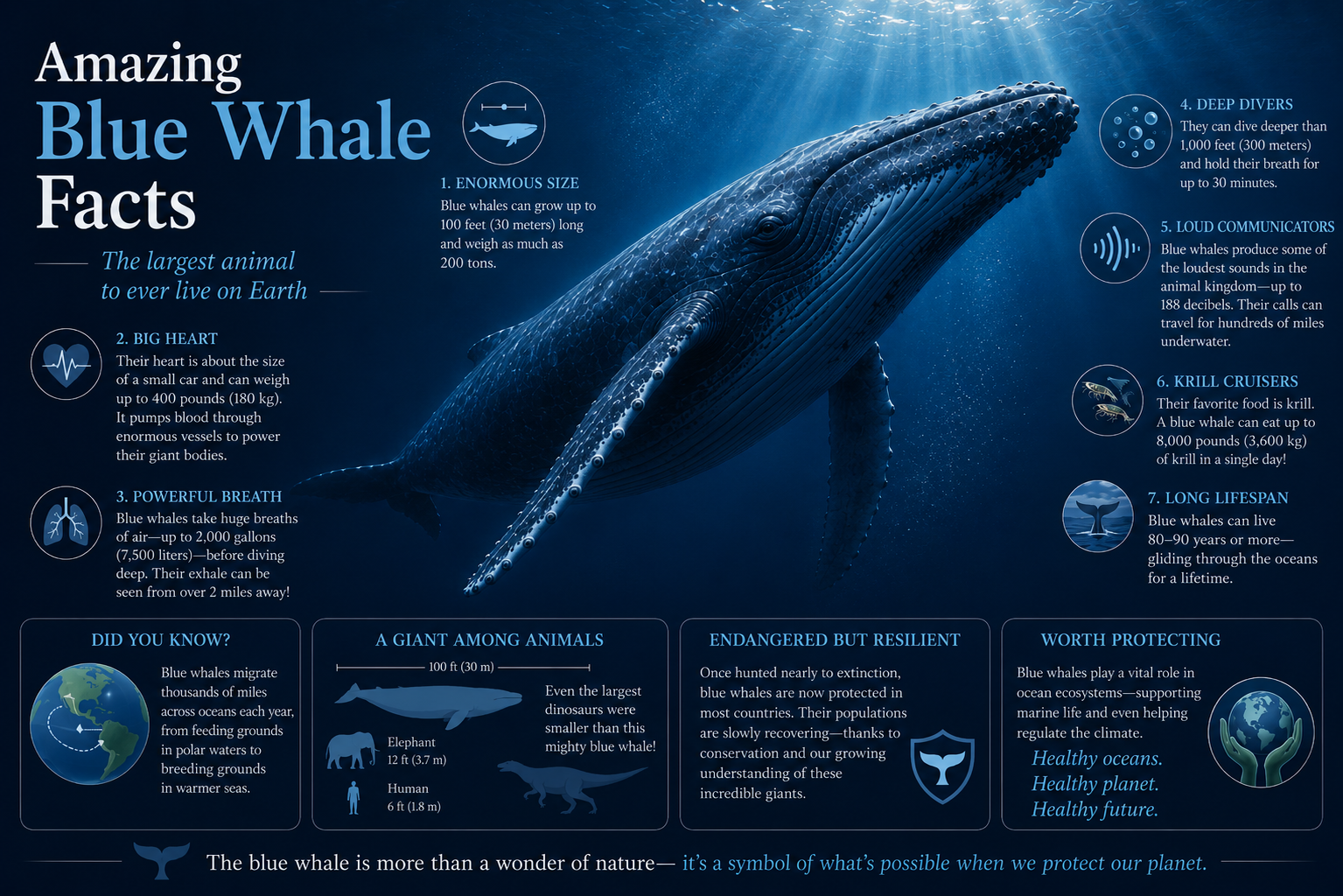
A blue whale is the largest animal ever known to have lived on Earth.
Its heart can weigh as much as a motorcycle.
A newborn calf drinks hundreds of liters of milk every day.
Blue whales communicate using deep sounds that can travel enormous distances underwater.
Despite their size, they feed mainly on tiny krill.
They can live for 80 to 90 years, and some individuals may live even longer.
Blue whales are more than ocean giants—they are a vital part of marine ecosystems.
Their movements help recycle nutrients through the ocean, supporting microscopic organisms that form the foundation of the marine food web. Healthy whale populations contribute to healthier oceans, benefiting countless other species.
Protecting blue whales also means protecting the habitats that sustain fish, seabirds, dolphins, and many other forms of marine life.
The blue whale challenges everything we think we know about nature.
It is the largest animal ever to exist, yet it feeds on creatures small enough to fit on your fingertip. It can cross entire oceans, communicate across incredible distances, and disappear beneath the waves without leaving a trace.
Even after centuries of exploration, these gentle giants remind us that our planet still holds mysteries waiting to be understood.
The next time you look out across the sea, remember that somewhere beneath those endless waves, the largest animal in Earth's history may be quietly making its journey—hidden from view, but never short of wonder.
Start writing here...