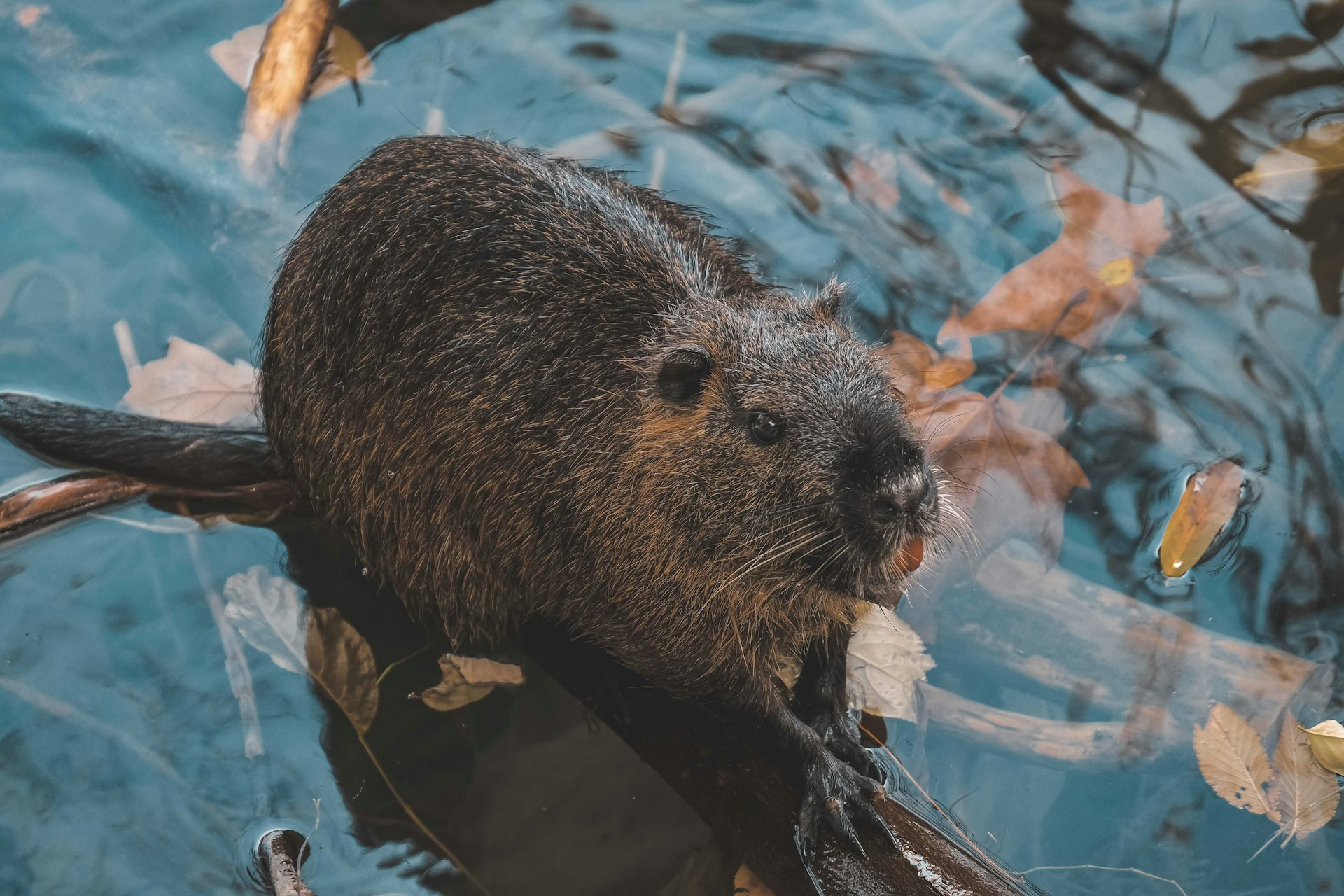
Imagine an animal that can change the course of a river, create lakes, reduce floods, improve water quality, and provide homes for hundreds of other species—all without using machines or modern technology.
It sounds impossible, but one small mammal has been doing exactly that for millions of years.
Meet the beaver—often called nature's engineer.
Most people know beavers as animals that build dams. But very few realize that a single beaver family can completely transform an entire landscape. Their work doesn't just benefit themselves; it creates thriving ecosystems where fish, birds, frogs, insects, and even large mammals can survive.
More Than Just a Dam Builder
The next time you hear the word "beaver," don't think of just a rodent with big teeth. Think of one of the most important architects in the natural world.
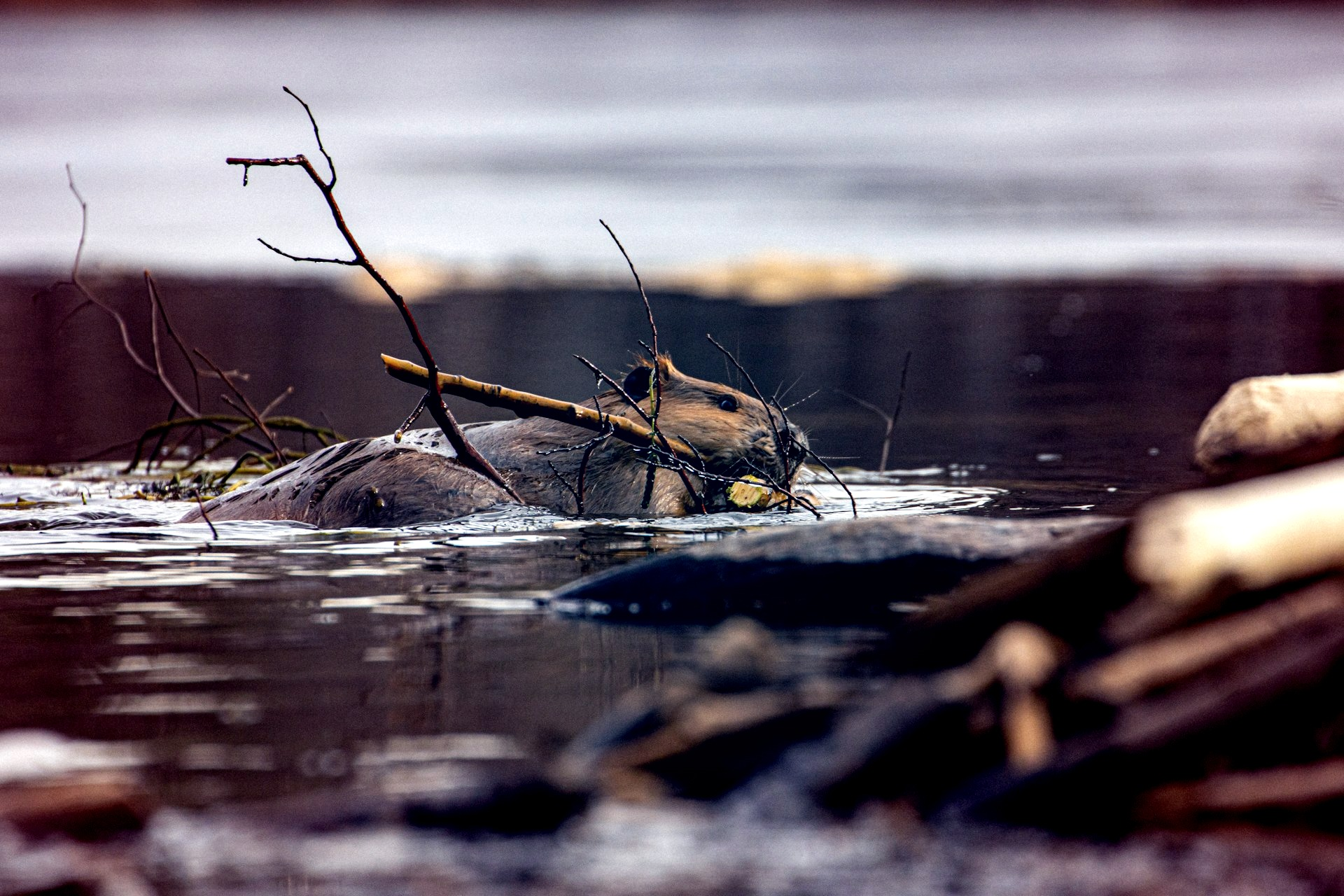
Beavers are the second-largest rodents on Earth after the capybara. They are found across North America, Europe, and parts of Asia.
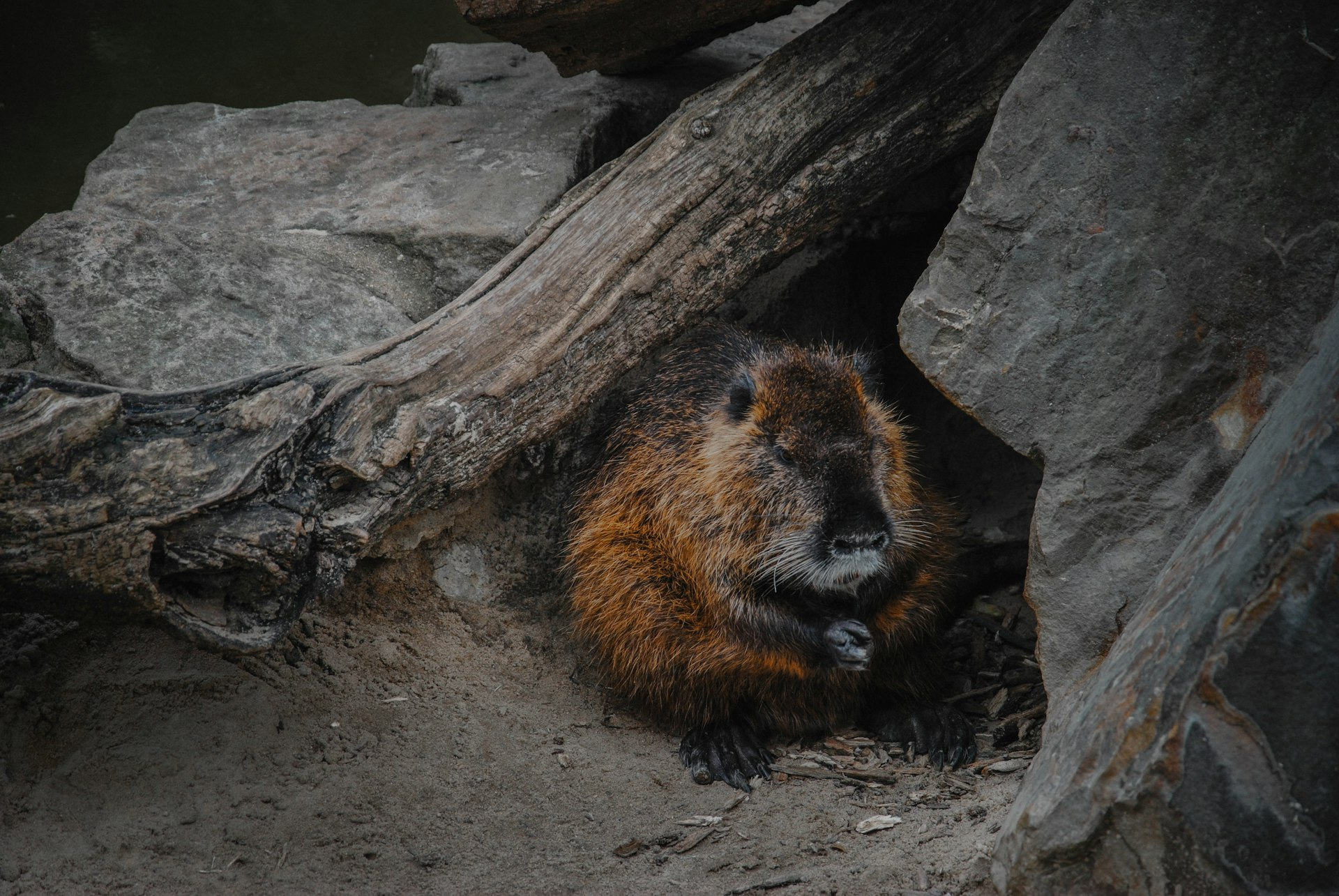
At first glance, they might look slow and harmless. But beneath their thick fur lies an incredibly skilled builder equipped with powerful jaws, webbed feet, waterproof fur, and a flat tail that acts as both a rudder and a support while working.
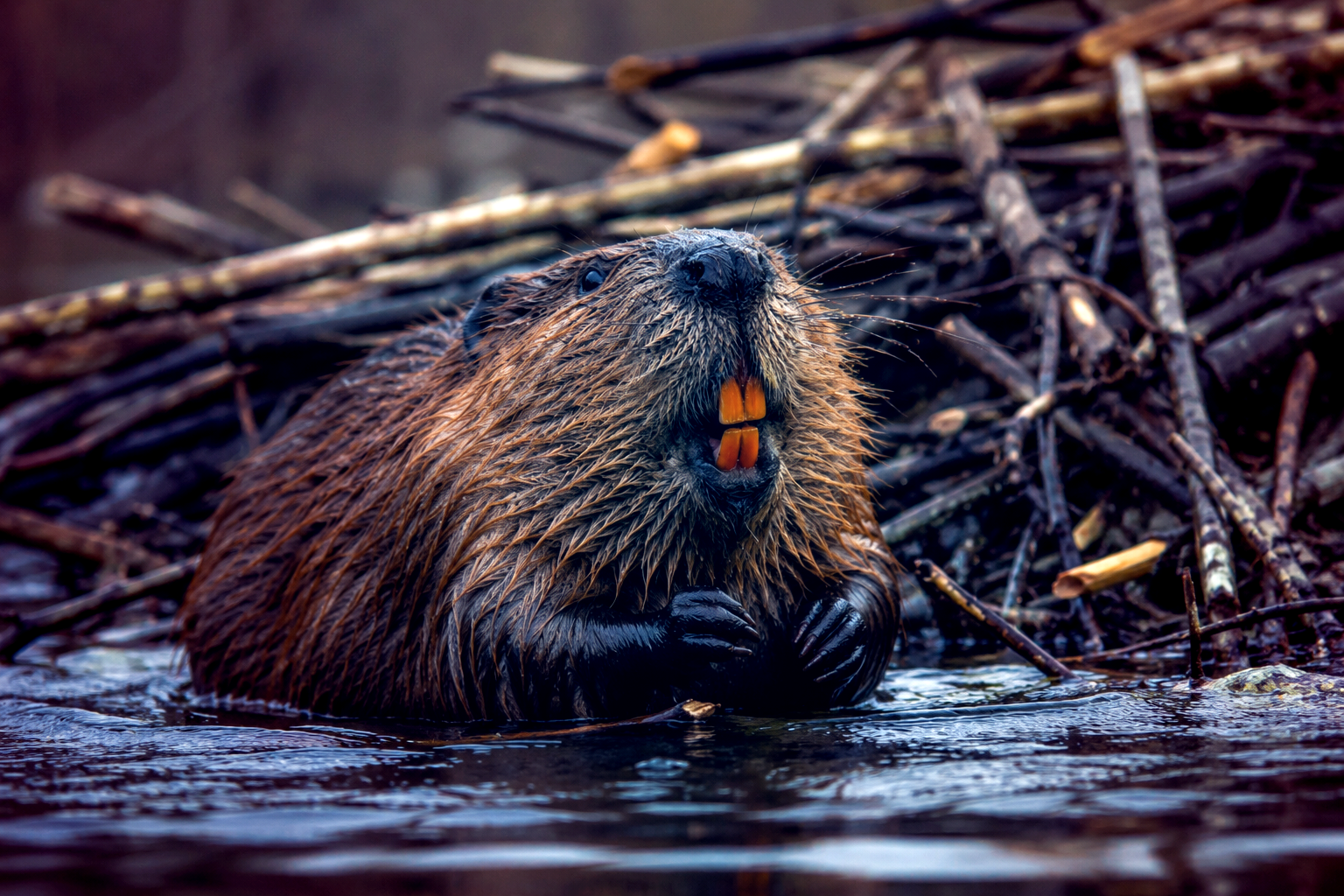
A beaver's front teeth never stop growing.
That might sound like a problem, but it's actually a perfect adaptation. By constantly chewing wood, the teeth stay sharp and at the right length.
Their orange-colored teeth are even stronger than human teeth because they contain iron, making them exceptionally durable.
Why Do Beavers Build Dams?
Beavers don't build dams because they enjoy construction.
They build them for survival.
In the wild, wolves, bears, foxes, and other predators can easily catch a beaver on land. Water is their safest place.
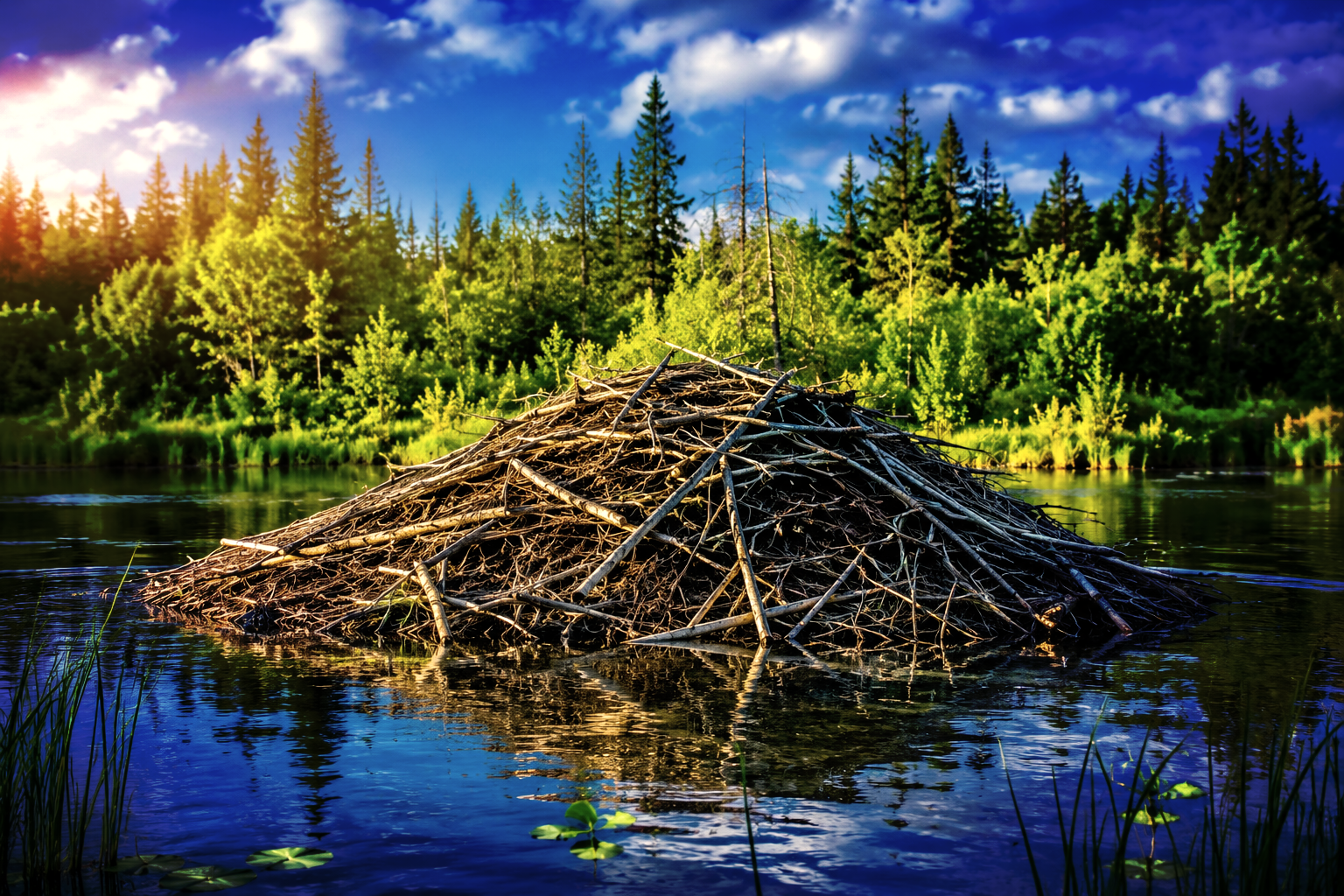
By building a dam across a stream, beavers create a deep pond. In the middle of that pond, they build a dome-shaped home called a lodge.
The underwater entrance makes it almost impossible for most predators to reach them.
What looks like a pile of sticks from the outside is actually a carefully designed home with dry living chambers and ventilation
A Single Dam Can Change an Entire River
When a beaver builds a dam, the flow of water slows down.
This simple action triggers an amazing chain reaction.
The new pond stores rainwater during wet seasons.
During dry months, it slowly releases water back into the environment.
Instead of rushing away, water remains in the landscape much longer.
This helps nearby trees, plants, and grass survive droughts.
Scientists have discovered that beaver wetlands can also reduce the impact of floods because they naturally hold back large amounts of water.
Without realizing it, beavers become natural flood managers.
Nature's Construction Project Helps Hundreds of Species
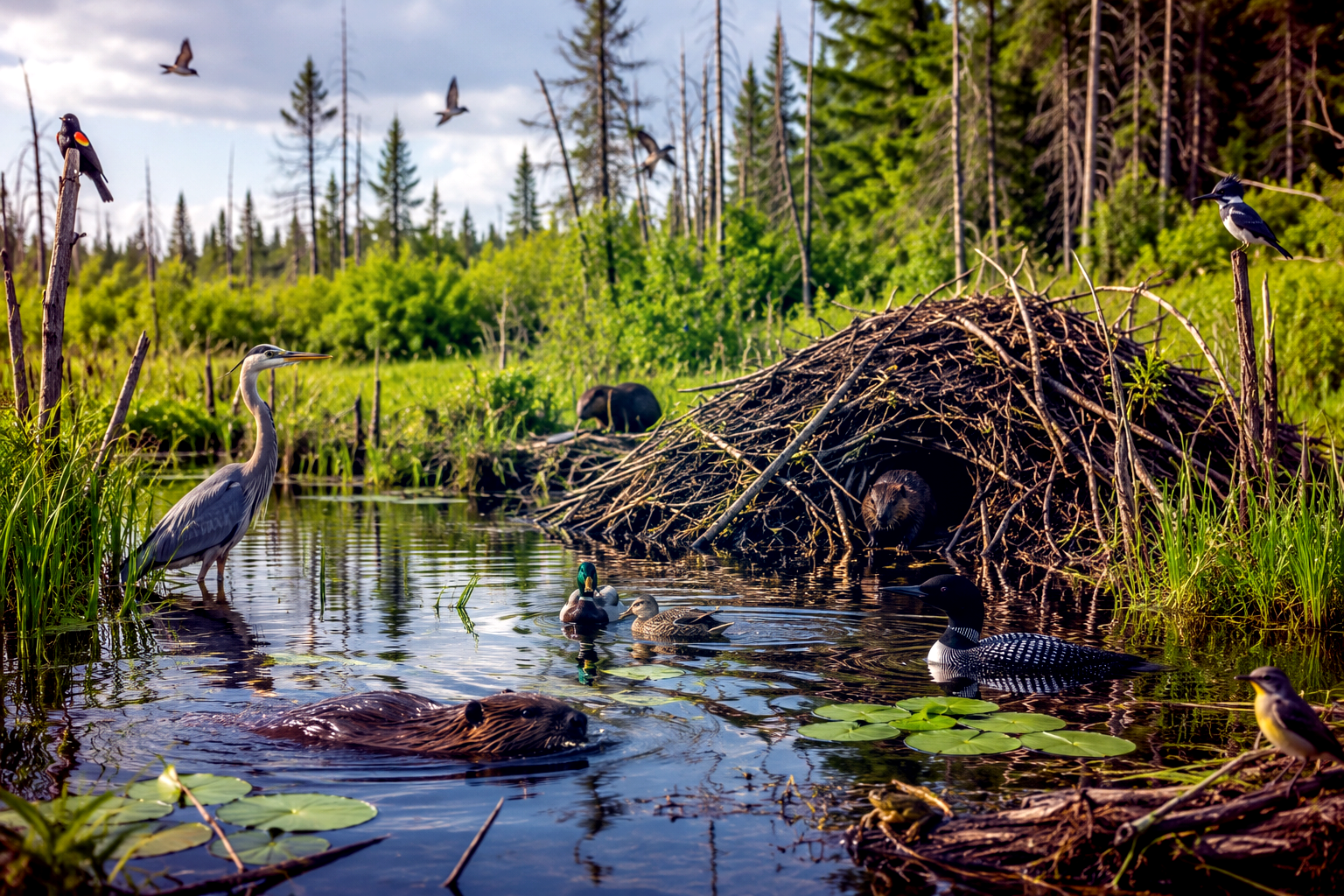
Here's where things become truly fascinating.
A beaver never intends to help other animals.
Yet almost every creature living nearby benefits from its work.
The ponds created by beavers provide homes for:
- Ducks
- Frogs
- Salamanders
- Fish
- Otters
- Turtles
- Dragonflies
- Water insects
- Herons
- Moose
- Deer
Many birds that normally couldn't find suitable nesting sites begin living around beaver ponds.
Fish use the calm water for breeding.
Amphibians lay eggs in shallow wetlands.
Even insects multiply rapidly, creating food for birds and bats.
One beaver family can indirectly support hundreds of different species.
They Never Stop Working

Beavers are mostly active during the evening and night.
They spend much of their lives collecting branches, repairing dams, strengthening lodges, and storing food before winter arrives.
Unlike humans, who build a house and stop, beavers constantly maintain their structures.
Heavy rain can damage a dam overnight.
The following evening, the beavers begin repairing it almost immediately.
Their instinct for maintenance is remarkable.
One of the smartest things beavers do is prepare for winter long before snow begins to fall.
Instead of hibernating, they remain active.
Before lakes freeze, they gather hundreds of branches and store them underwater near their lodge.
When winter arrives, they simply swim beneath the ice and collect food from their underwater pantry.
Because the entrance stays below the ice, predators have almost no chance of reaching them.
It's an incredible survival strategy that has worked for millions of years.
Can Beavers Really Sense Running Water?
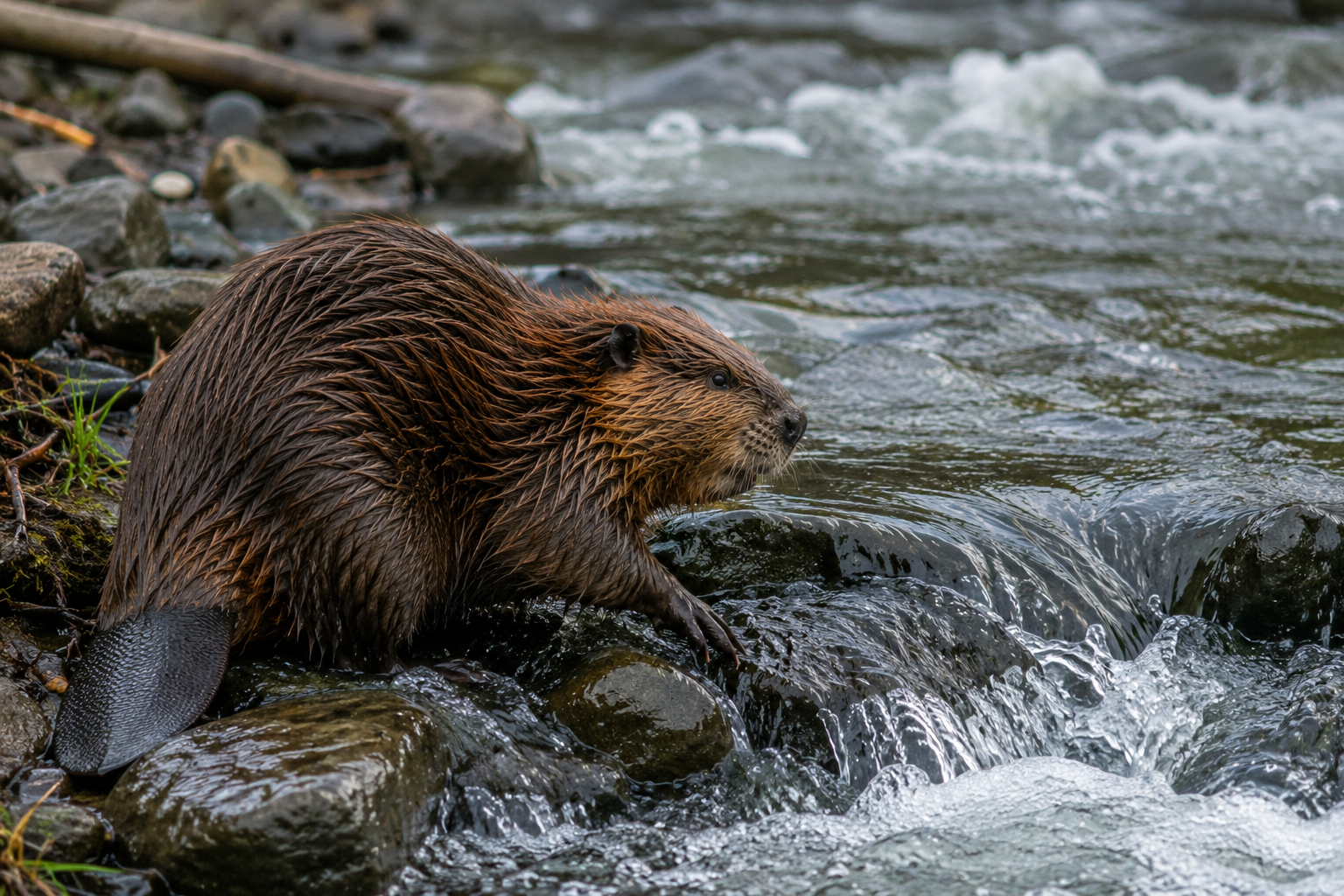
Scientists have noticed something curious.
If beavers hear the sound of flowing water—even from a speaker—they often begin searching for the source.
Why?
Running water usually means there's a leak in their dam.
Their instinct tells them to repair it immediately.
Researchers have observed beavers carrying sticks and mud toward artificial sounds of flowing water, even when no actual leak exists.
It's one of the most fascinating examples of instinctive engineering in the animal kingdom.
The Comeback of an Extraordinary Animal
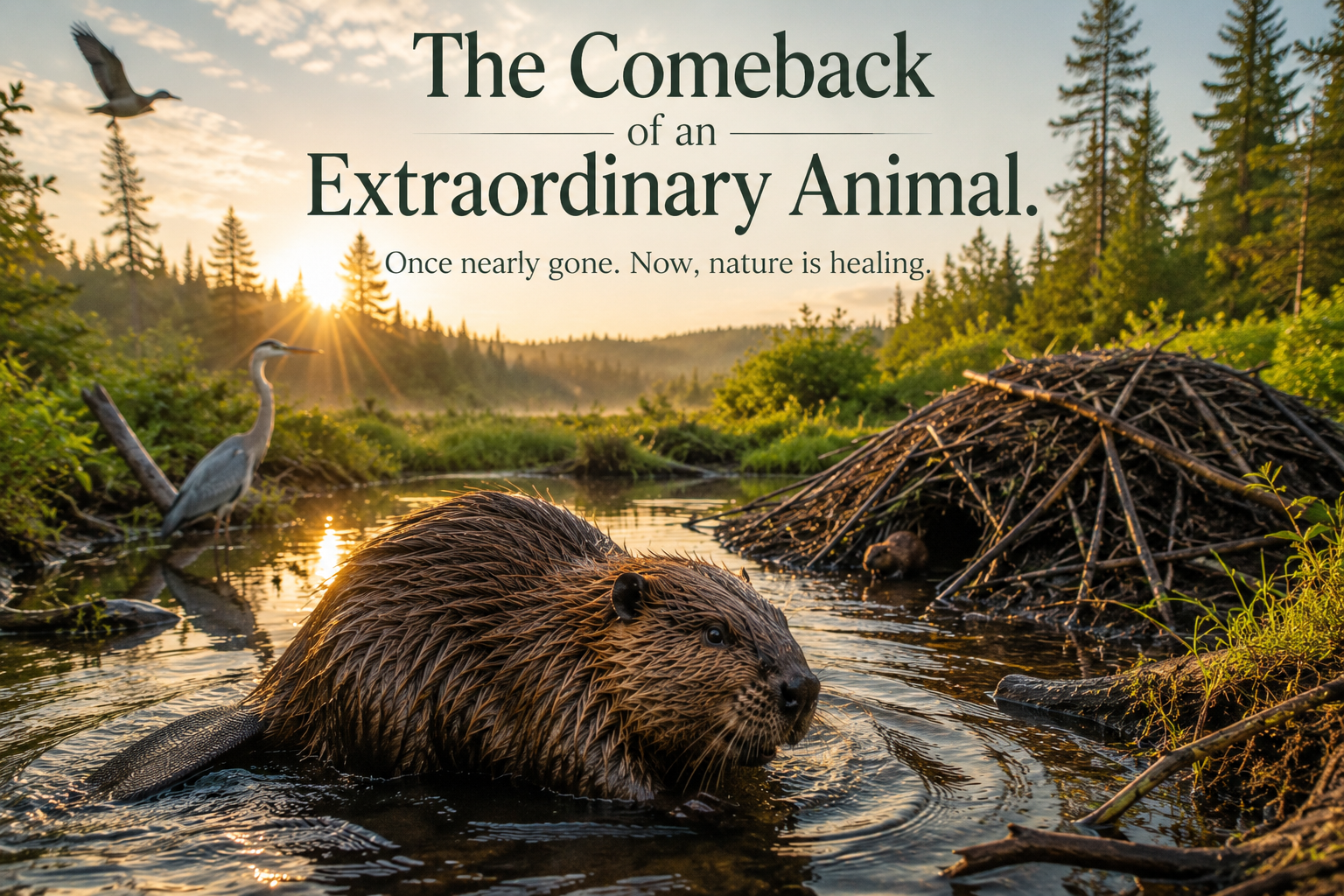
A century ago, beavers were hunted extensively for their fur.
In many regions, they nearly disappeared.
As their numbers declined, wetlands disappeared too.
Without beavers, rivers flowed faster, ponds dried up, and many animals lost important habitats.
Fortunately, conservation efforts have helped beavers return to many parts of Europe and North America.
As they come back, something amazing happens.
Wetlands return.
Bird populations increase.
Fish habitats improve.
Biodiversity begins to recover.
Sometimes, restoring nature doesn't require expensive technology.
Sometimes, it simply requires allowing nature's own engineers to do their work.
Amazing Beaver Facts You Probably Didn't Know
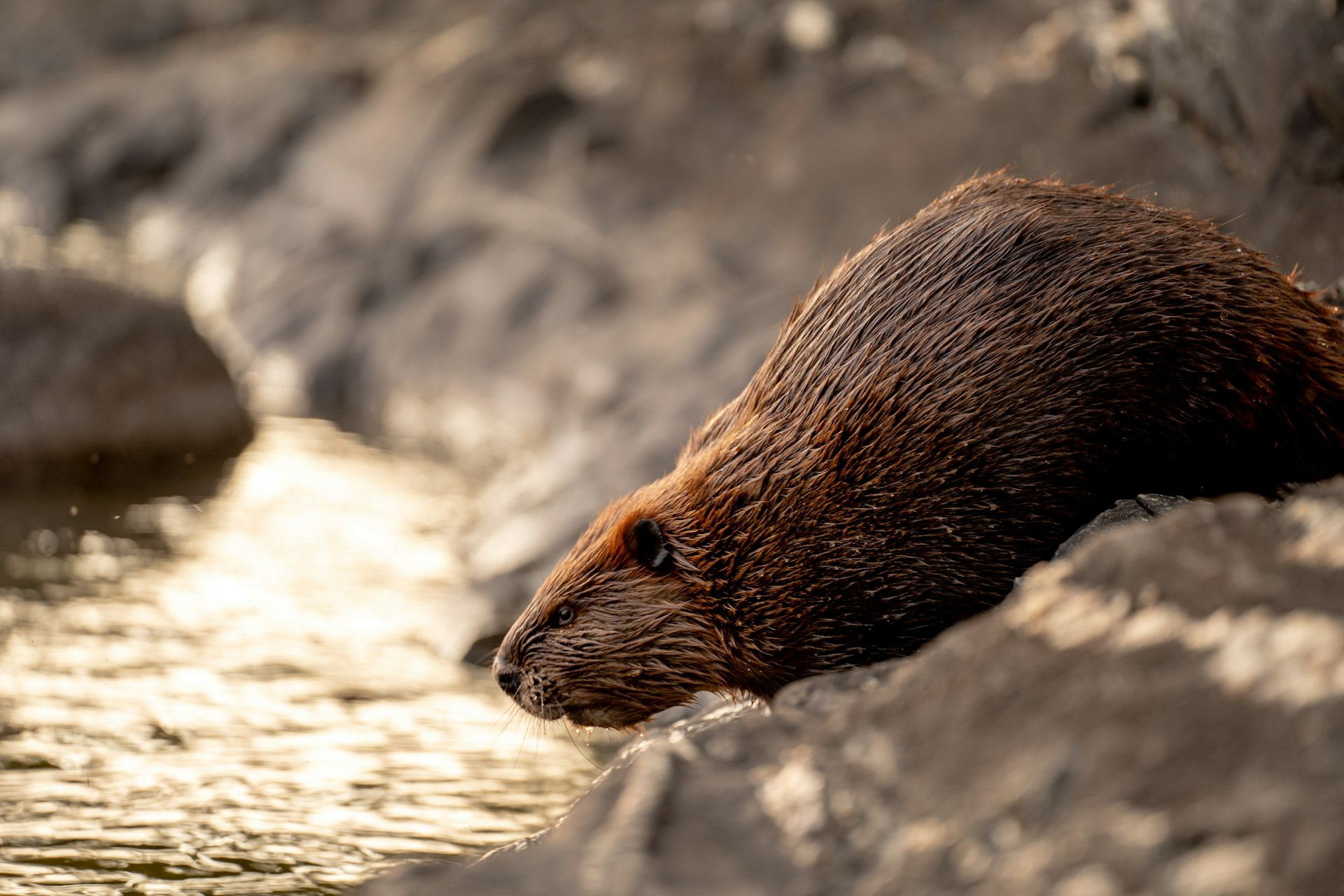
A beaver can stay underwater for up to 15 minutes.
Their transparent eyelids act like swimming goggles.
Beaver dams are visible from space in some regions.
The largest recorded beaver dam is over 850 meters (2,790 feet) long.
Their waterproof fur contains thousands of dense hairs that trap warm air.
A beaver's flat tail helps with swimming, balance, and storing fat for winter.
They communicate by slapping their tails on the water to warn family members of danger.
Why Beavers Matter More Than Ever
As climate change brings stronger droughts and floods, scientists are paying closer attention to beavers.
Their wetlands naturally store water, improve water quality, reduce erosion, and create habitats for wildlife.
Many conservation projects now protect or reintroduce beavers because they perform valuable environmental work that would otherwise require expensive human engineering.
Sometimes, the best solution isn't building more concrete structures.
Sometimes, it's giving nature the space to solve problems on its own.
When most people think of wildlife, they imagine powerful predators like lions or tigers.
But some of nature's greatest heroes are much smaller.
Beavers don't roar, hunt, or dominate the food chain.
Instead, they quietly reshape rivers, revive forests, and create homes for countless species.
Their story reminds us that true strength isn't always about size or power.
Sometimes, it's about making the world around you better—one stick at a time.
FAQ section
1.Why do beavers build dams?
Mainly for safety — a dam creates a deep pond around their lodge, and an underwater entrance makes it nearly impossible for predators like wolves or bears to reach them.
2.Can beavers sense running water?
Yes — the sound of flowing water triggers an instinct to repair a potential leak, and beavers have even been observed responding to recordings of running water with no actual leak present.
3.How do beavers survive winter without hibernating?
They store hundreds of branches underwater near their lodge before the lake freezes, then swim beneath the ice to access this food supply throughout winter.
4.How long can a beaver hold its breath underwater?
Up to about 15 minutes, aided by transparent eyelids that work like built-in swimming goggles.
5.How long is the largest recorded beaver dam?
Over 850 meters (2,790 feet) — long enough to be visible in satellite imagery.
6.How do beavers help prevent floods?
Their dams slow and store water, which reduces the severity of downstream flooding and helps the surrounding landscape survive droughts