Chapter 1
King of the Frozen North
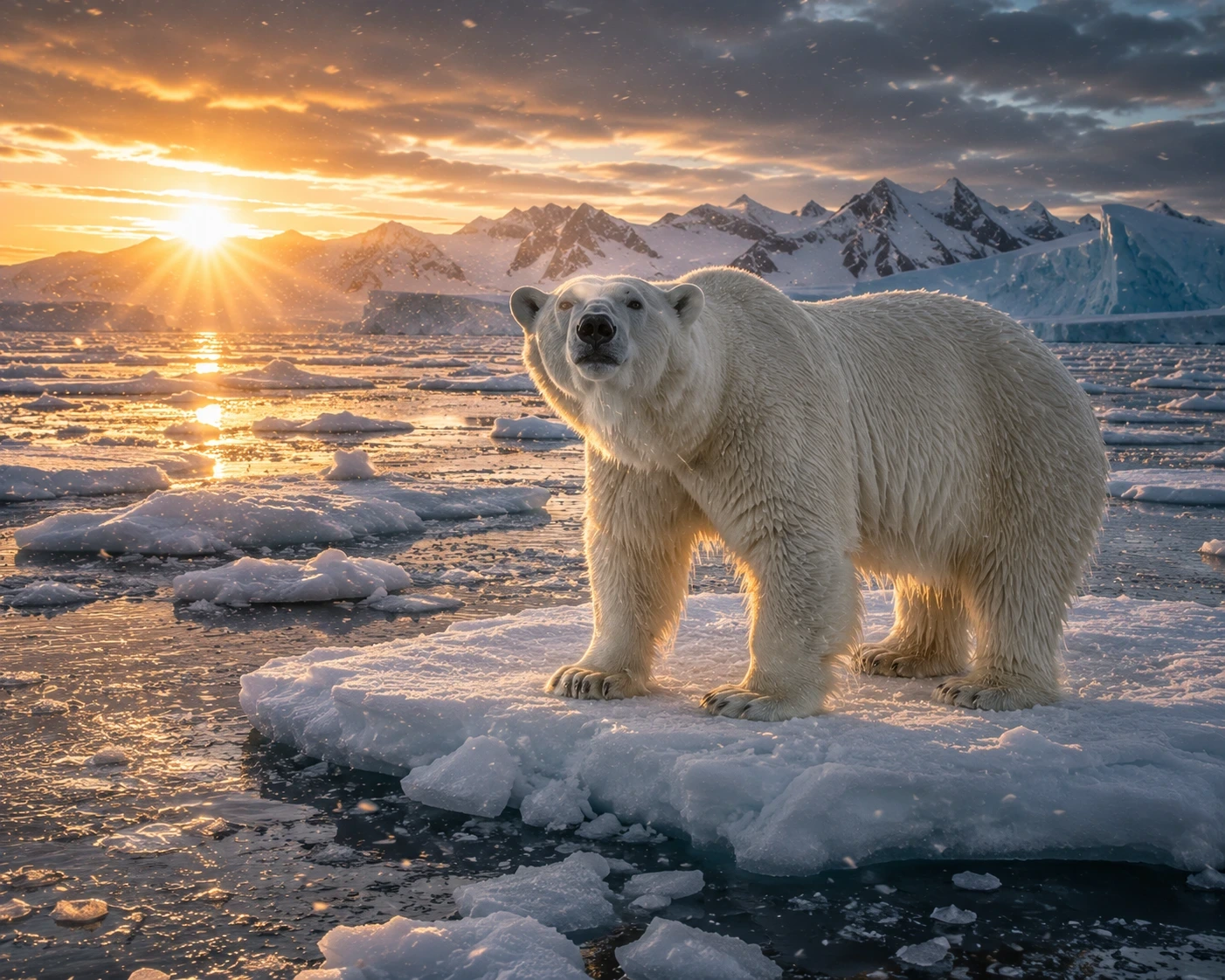
At the top of the world, where winter darkness can last for months and temperatures regularly plunge below −40°C (−40°F), one predator has mastered an environment that few mammals could survive.
The polar bear (Ursus maritimus) is the largest bear species on Earth and one of the Arctic's most iconic animals. Built for life on drifting sea ice, it has evolved into a powerful hunter capable of traveling hundreds of miles across one of the planet's harshest landscapes.
Every part of its body—from its enormous paws to its dense insulating fur—is designed for one purpose:
Survival in a frozen world.
The World's Largest Bear
Adult male polar bears, known as boars, typically weigh between 770 and 1,500 pounds (350–680 kilograms), although exceptionally large individuals can exceed 1,700 pounds (770 kilograms).
Females are considerably smaller, usually weighing 330–650 pounds (150–295 kilograms).
When standing on their hind legs, large males can reach nearly 10 feet (3 meters) tall.
Despite their enormous size, polar bears move with remarkable efficiency across snow, sea ice, and icy coastlines.
Their long neck, streamlined head, and muscular shoulders distinguish them from other bear species and help reduce resistance while swimming through Arctic waters.
A Marine Mammal That Lives on Ice
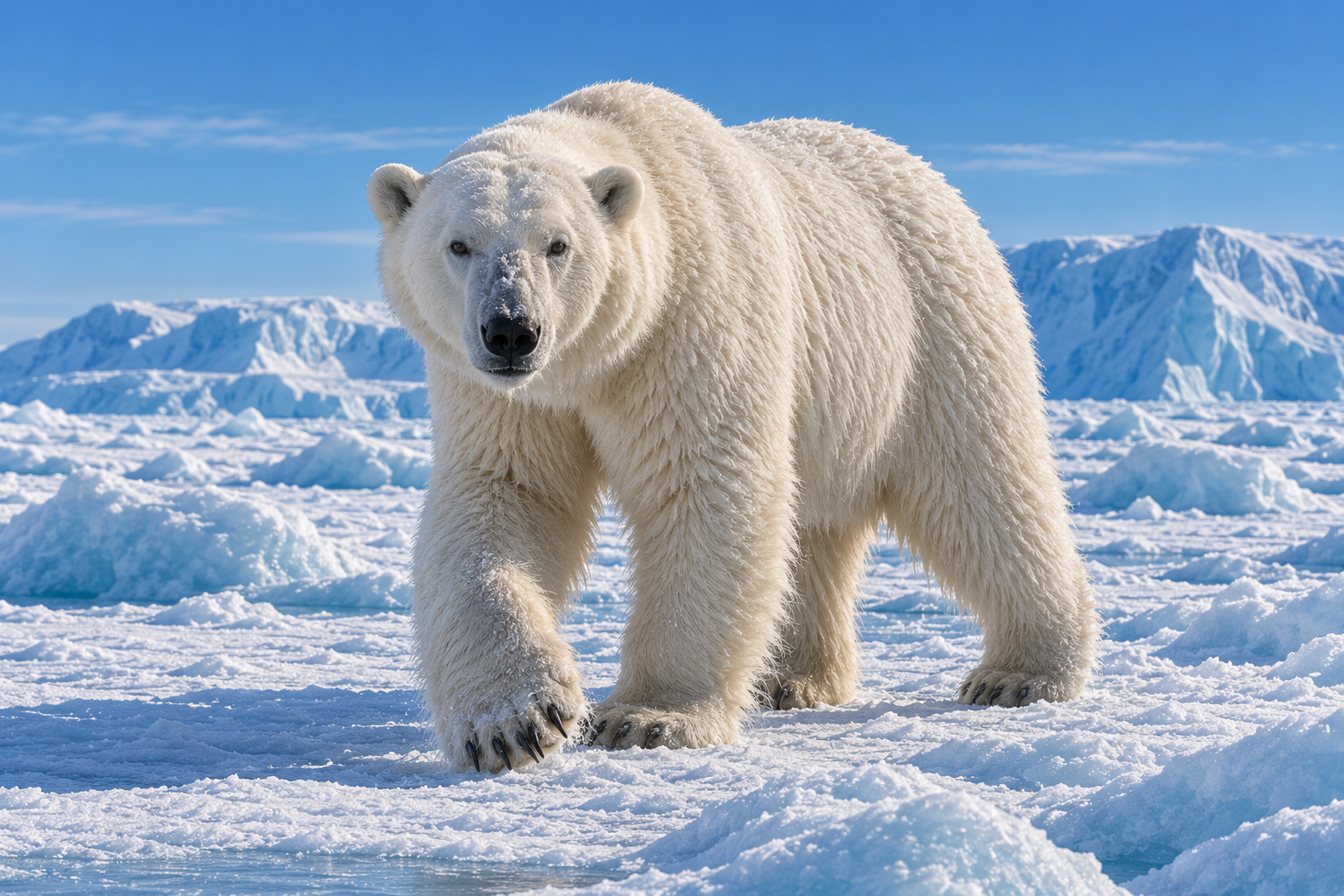
Although they spend much of their time on frozen sea ice, polar bears are officially classified as marine mammals.
Unlike brown bears or black bears, their lives are closely tied to the Arctic Ocean.
Sea ice acts as their hunting platform, travel route, resting place, and, in many regions, their primary home.
Without stable sea ice, reaching seals—their most important food source—becomes far more difficult.
For a polar bear, protecting sea ice is the same as protecting its habitat.
Where Do Polar Bears Live?
Polar bears inhabit the Arctic regions surrounding the North Pole, including parts of:
- Canada
- Alaska (United States)
- Greenland
- Norway (Svalbard)
- Russia
Scientists recognize 19 subpopulations spread across the Arctic, each adapted to local sea ice conditions.
Some populations remain on ice for most of the year, while others are forced onto land during the warmer months as seasonal ice melts.
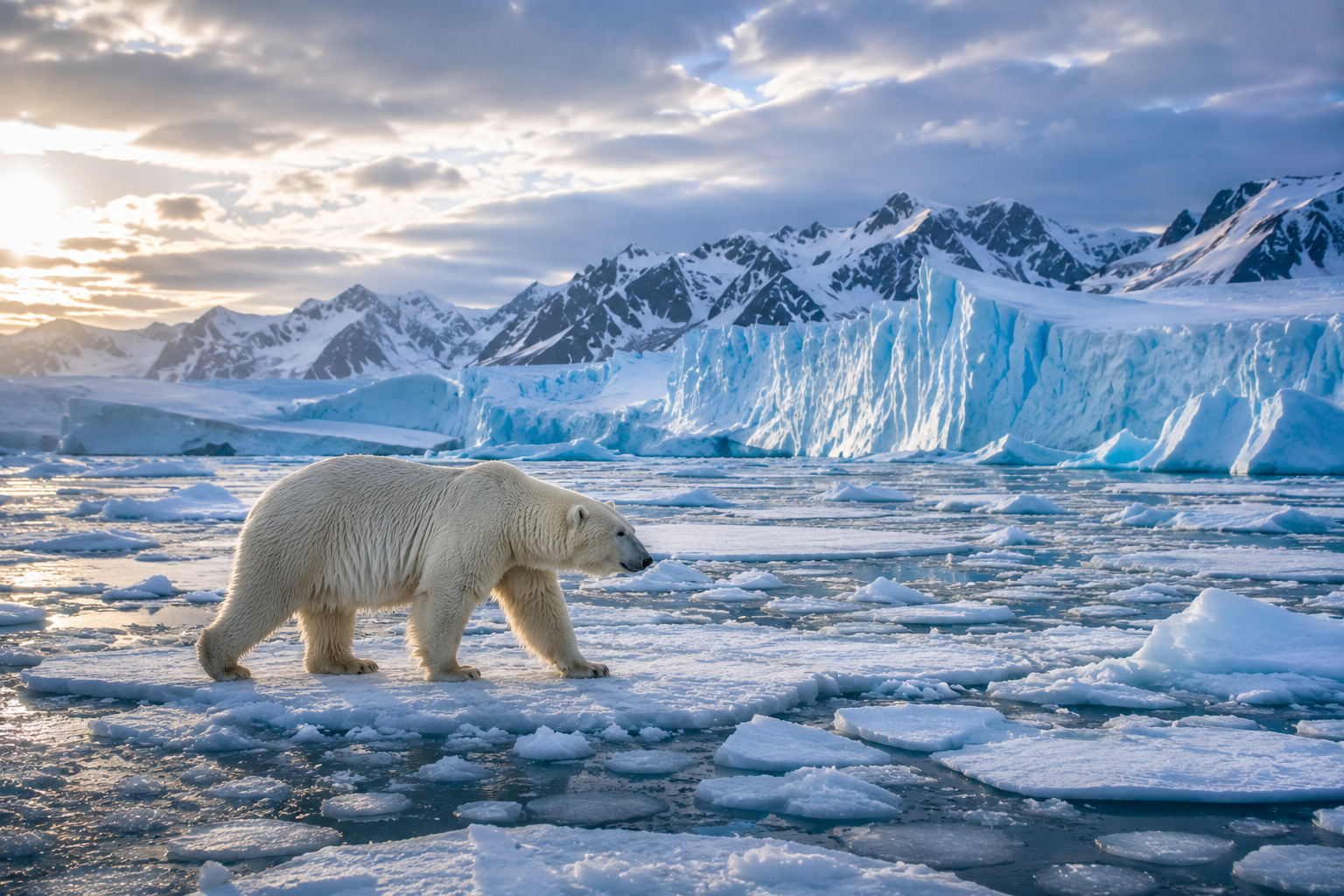
The Arctic Home of the Polar Bear
More Than a Symbol of the Arctic
To many people, the polar bear represents wilderness, strength, and resilience.
For scientists, however, it represents something even more important.
Because polar bears depend almost entirely on sea ice, changes in their population provide valuable insight into the health of the Arctic ecosystem.
When sea ice changes, polar bears are often among the first animals to feel the effects.
Their future is closely linked to the future of the Arctic itself.
Transition
Living in one of Earth's coldest environments requires extraordinary adaptations.
From transparent fur and black skin to paws built like natural snowshoes, every feature of a polar bear's body has evolved for survival.
In the next chapter, we'll explore the remarkable adaptations that make polar bears the undisputed masters of the frozen Arctic.
Chapter 2
Engineered for Extreme Cold
Surviving the Arctic requires far more than thick fur.
Polar bears have evolved an entire collection of adaptations that allow them to conserve heat, travel across unstable sea ice, and hunt in freezing water.
Every part of their body has been shaped by one goal:
Keeping warm while using as little energy as possible.
Fur That Isn't Actually White
One of the biggest misconceptions about polar bears is that their fur is white.
In reality, each hair is transparent and hollow.
These hollow hairs scatter sunlight, giving the coat its familiar white appearance while blending perfectly with snow and ice.
Beneath the fur lies black skin, which absorbs the sun's heat more efficiently whenever sunlight reaches the body.
Together, transparent fur and dark skin create a highly effective natural insulation system.
Built-In Winter Insulation
Underneath the skin is a thick layer of fat called blubber.
This layer can reach 4 inches (10 centimeters) in thickness and performs two vital functions:
- It traps body heat in freezing temperatures.
- It provides stored energy during long periods without food.
Combined with dense fur, this insulation allows polar bears to remain comfortable even after swimming through icy Arctic waters.
Giant Paws Made for Ice
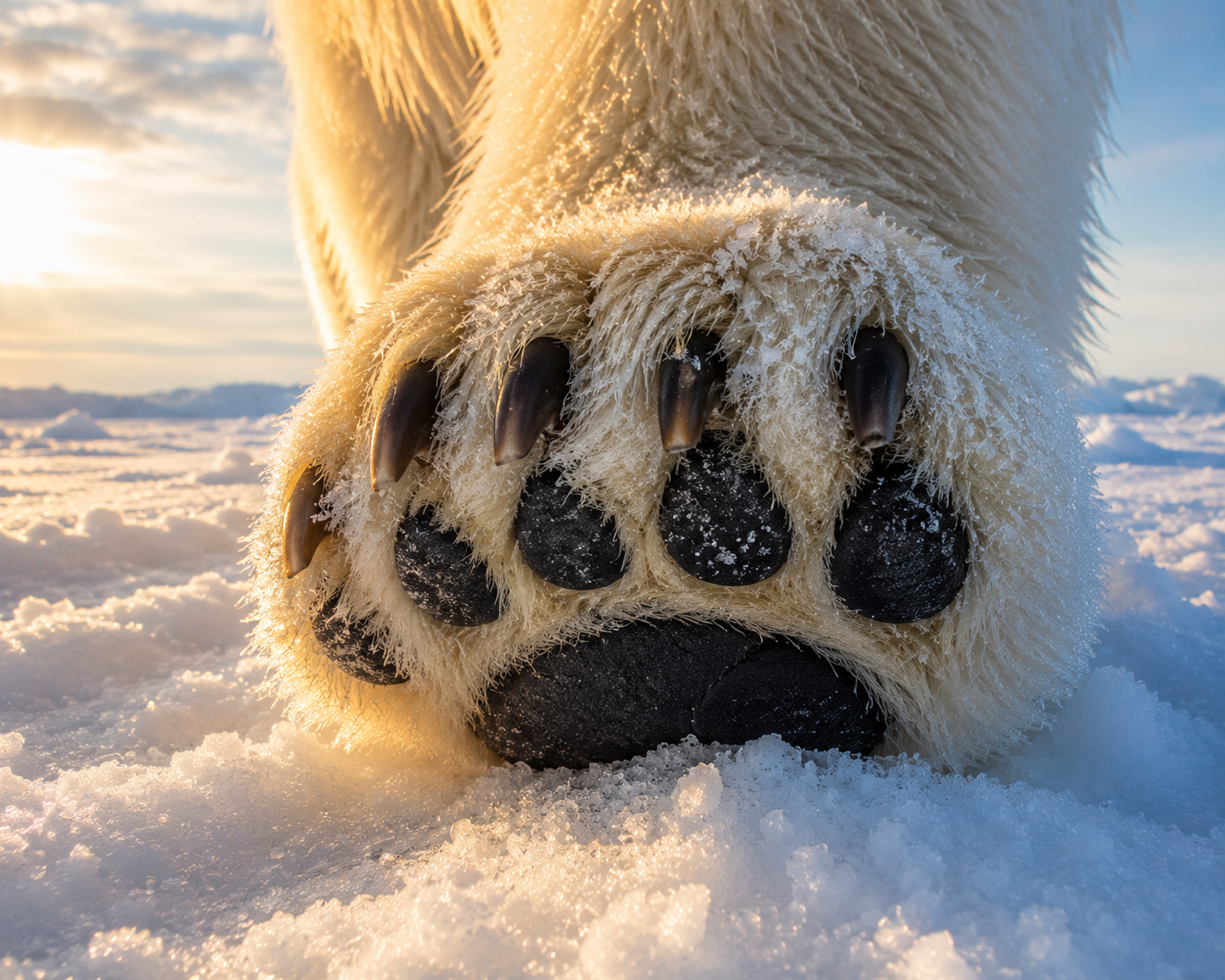
A polar bear's front paw can measure up to 12 inches (30 centimeters) across.
These oversized paws act like natural snowshoes, spreading the bear's weight over soft snow and thin ice.
The bottoms of the paws are covered with rough black pads that increase grip, while dense fur between the toes improves insulation and traction on slippery surfaces.
Long, powerful claws help the bear climb ice ridges, grip prey, and maintain stability on frozen terrain.
Inside the Polar Bear
A Powerful Arctic Swimmer
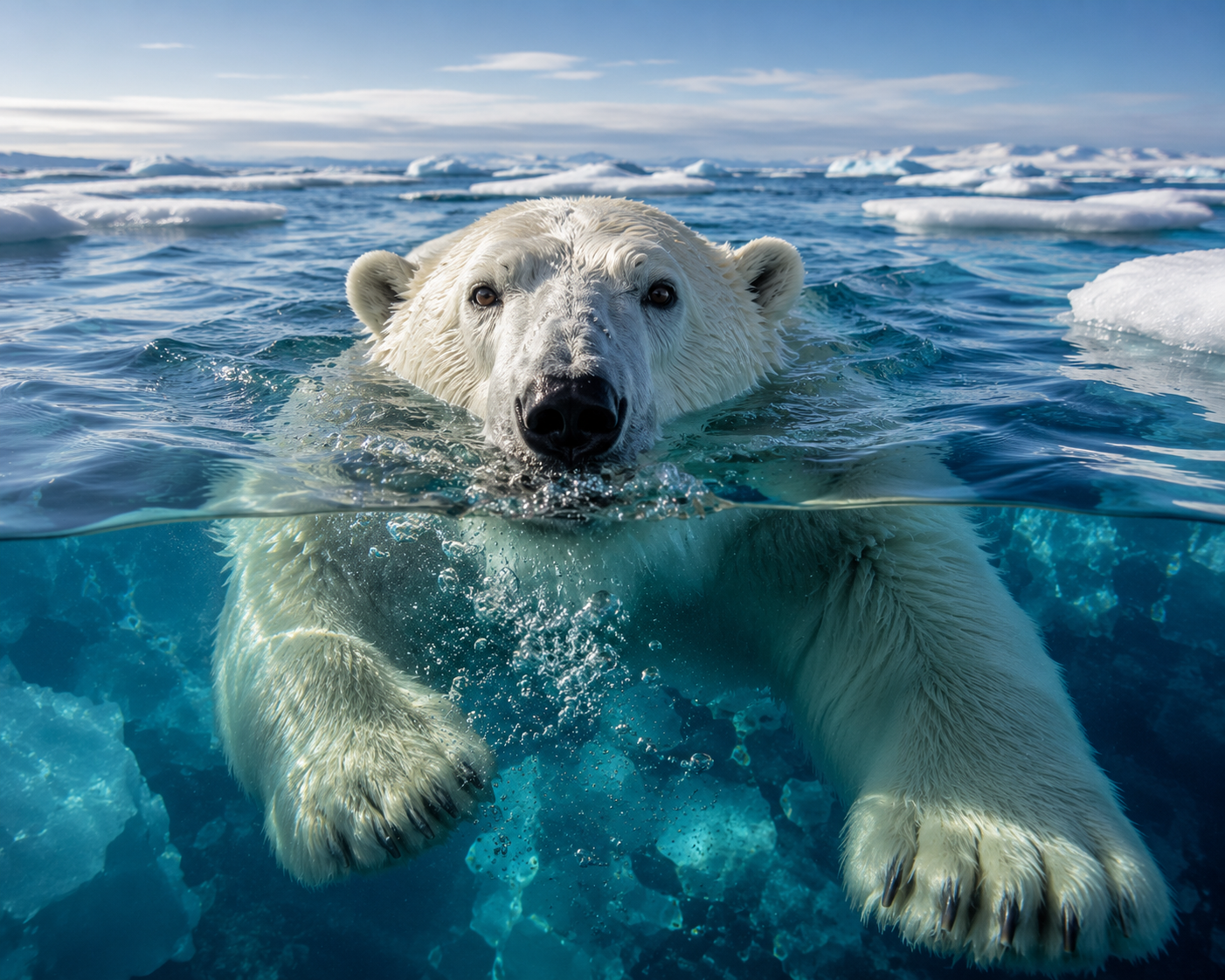
Unlike most bears, polar bears are excellent swimmers.
Their large front paws act as powerful paddles, while the hind legs function as rudders for steering.
Individuals have been recorded swimming more than 60 miles (100 kilometers) without reaching land or sea ice, although such journeys require enormous amounts of energy.
As sea ice continues to disappear in some regions, these long-distance swims are becoming more common—and more dangerous, especially for females with cubs.
The Nose That Finds Seals
A polar bear's eyesight and hearing are excellent, but its sense of smell is extraordinary.
It can detect the scent of a seal breathing hole from over half a mile (1 kilometer) away under favorable conditions.
This remarkable ability allows the bear to locate prey hidden beneath thick snow or sea ice long before it becomes visible.
For an Arctic predator, smell is often the difference between a successful hunt and days without food.
Every Adaptation Has a Purpose
Nothing about a polar bear is accidental.
Its transparent fur provides camouflage, black skin absorbs heat, blubber stores energy, enormous paws support movement across ice, and an exceptional sense of smell helps locate prey in a vast frozen landscape.
Together, these adaptations have made the polar bear one of the most specialized mammals on Earth.
Transition
Even the best adaptations are useless without food.
The Arctic offers few hunting opportunities, meaning every successful meal matters.
In the next chapter, we'll discover how polar bears hunt seals with extraordinary patience, precision, and power—and why they are considered the undisputed apex predators of the Arctic.
Chapter 3
The Silent Hunter of the Arctic
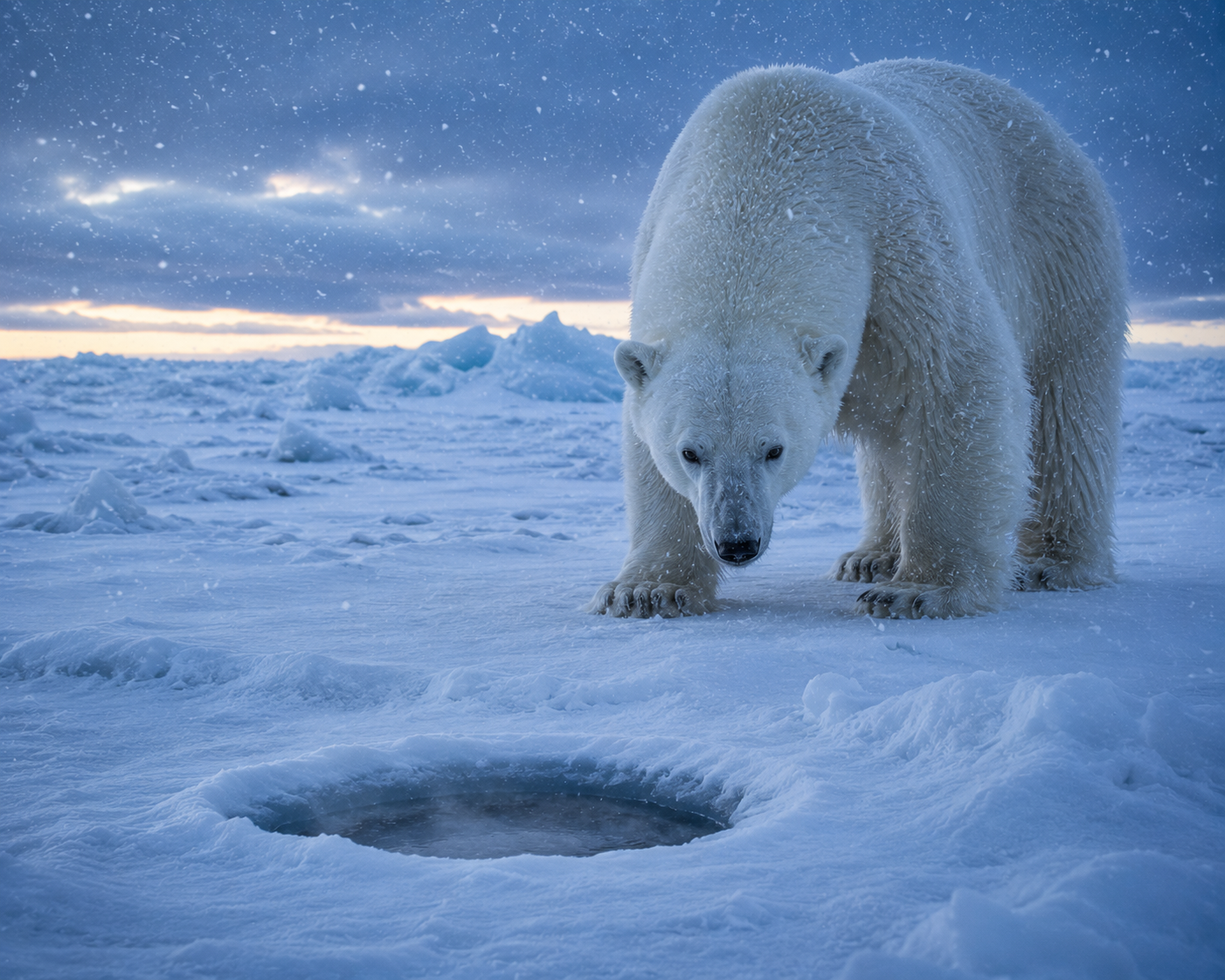
The Arctic is one of the most food-scarce environments on Earth.
Unlike African savannas or tropical forests, prey is difficult to find and even harder to catch.
A polar bear cannot afford to waste energy chasing every opportunity.
Instead, it has perfected one of nature's most patient hunting strategies.
Sometimes, a bear will stand motionless beside a single seal breathing hole for hours, waiting for one moment that may last less than a second.
Why Seals Are the Perfect Prey
Polar bears rely primarily on ringed seals and bearded seals.
These marine mammals are exceptionally rich in fat, providing the high-calorie meals needed to survive the Arctic's extreme cold.
A single adult seal can provide enough energy to sustain a polar bear for several days, making every successful hunt critically important.
Young bears often learn that success depends more on patience than speed.
The "Still Hunt"
The most famous hunting method is known as the still hunt.
Seals spend much of their lives beneath thick sea ice but must return regularly to small breathing holes to inhale fresh air.
Polar bears locate these hidden openings using their extraordinary sense of smell.
Once a breathing hole is found, the bear waits silently.
There is no movement.
No sound.
No warning.
The instant the seal surfaces, the bear strikes with explosive speed, using powerful forelimbs to pull its prey onto the ice before delivering a fatal bite.
It is a strategy refined over hundreds of thousands of years.
Chasing Prey Across the Ice
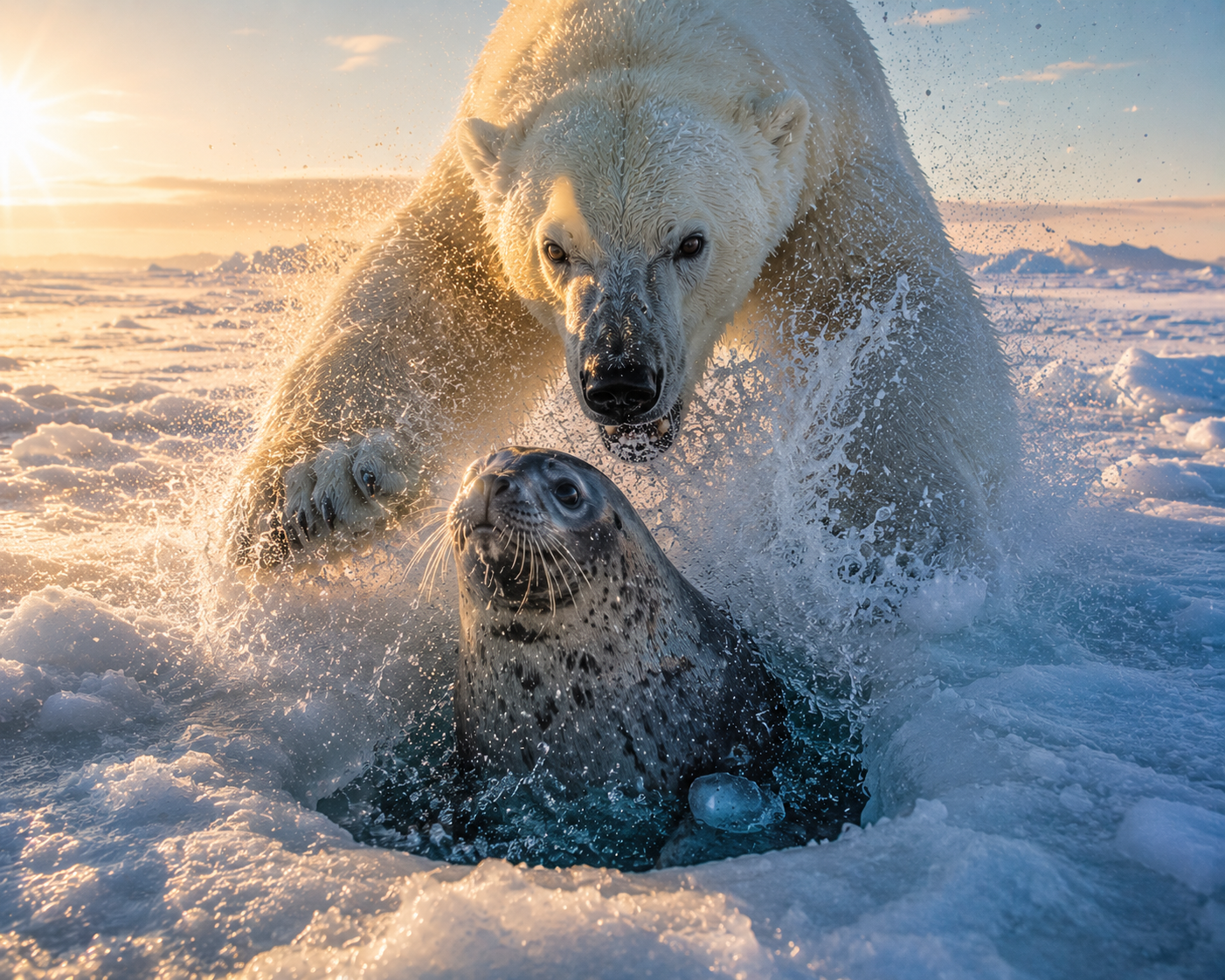
Although polar bears can run at speeds of up to 25 mph (40 km/h) over short distances, they rarely rely on long pursuits.
Their massive bodies consume enormous amounts of energy, making extended chases inefficient.
Instead, they use the landscape to their advantage.
Pressure ridges, drifting ice, and snow-covered terrain help conceal their approach until they are close enough to launch a sudden attack.
Every movement is calculated to conserve energy while maximizing the chance of success.
Dangerous to Humans?
Polar bears are among the few animals that may occasionally view humans as potential prey, particularly when food is scarce.
Unlike most bear species, they do not always retreat from people.
In remote Arctic regions, researchers and local communities carry deterrents and maintain strict safety measures because an encounter with a hungry polar bear can become extremely dangerous.
Fortunately, attacks remain rare due to the low human population across most of the Arctic.
Experts recommend never approaching a wild polar bear and always respecting safety guidelines in polar bear habitat.
Polar Bear Hunting Sequence
An Opportunistic Predator
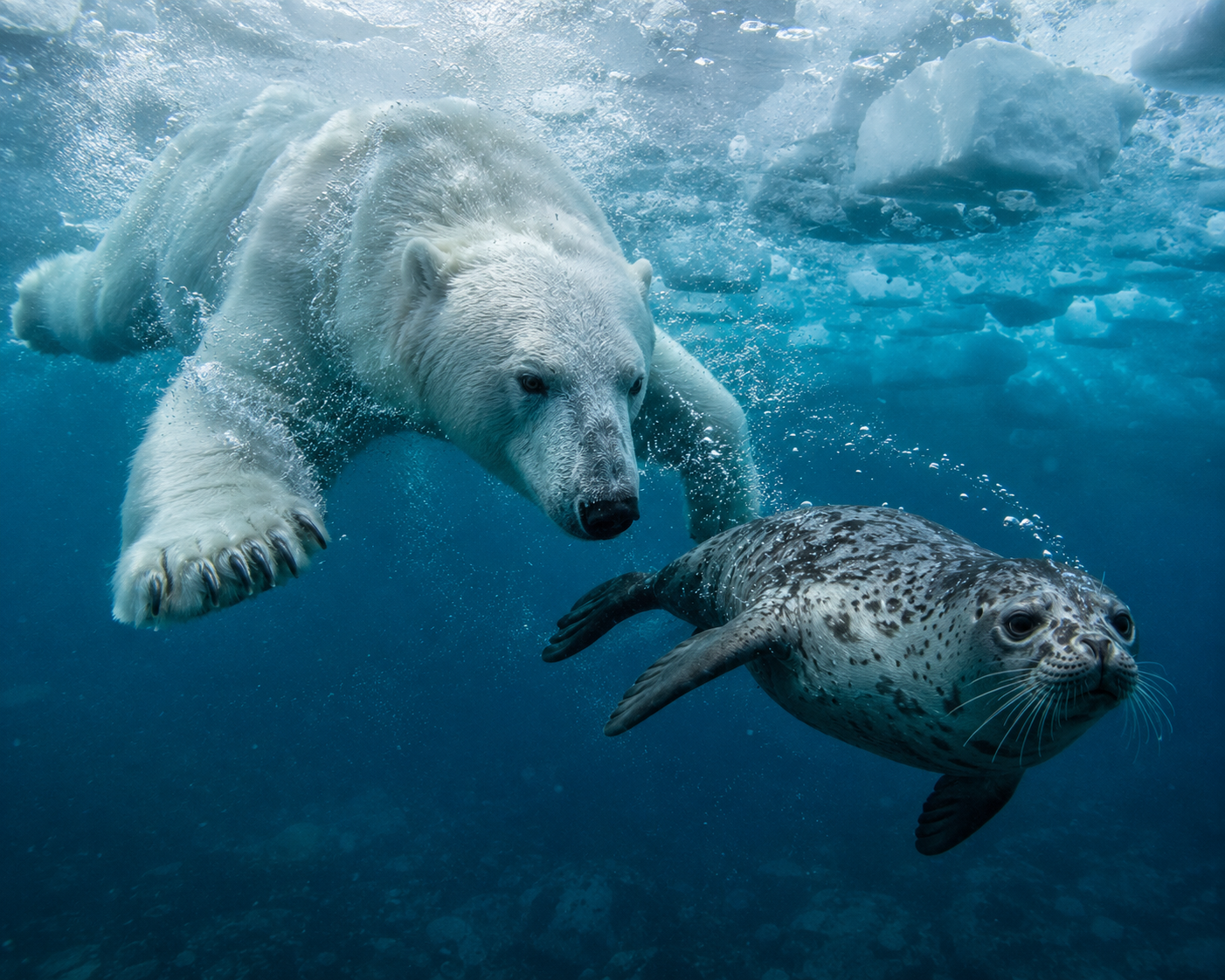
Although seals are their preferred prey, polar bears will take advantage of almost any available food.
Their diet may also include:
- Whale carcasses washed ashore
- Walrus calves
- Birds and their eggs
- Fish
- Arctic foxes
- Reindeer on occasion
- Berries and vegetation in limited amounts during summer
However, these foods cannot replace the energy provided by seals.
Without access to sea ice, finding enough high-fat prey becomes increasingly difficult.
Success Depends on Patience
Movies often portray polar bears as relentless hunters racing across the ice.
Reality is very different.
A successful polar bear spends far more time waiting than chasing.
Its greatest hunting weapon is not speed or strength.
It is the discipline to remain perfectly still until the exact moment when patience turns into action.
Transition
Even the Arctic's greatest hunter begins life as a tiny cub weighing little more than a guinea pig.
In the next chapter, we'll explore how polar bear mothers raise their cubs, the challenges young bears face, and why the first years of life are the most dangerous of all.
Chapter 4
From Tiny Cubs to Arctic Giants
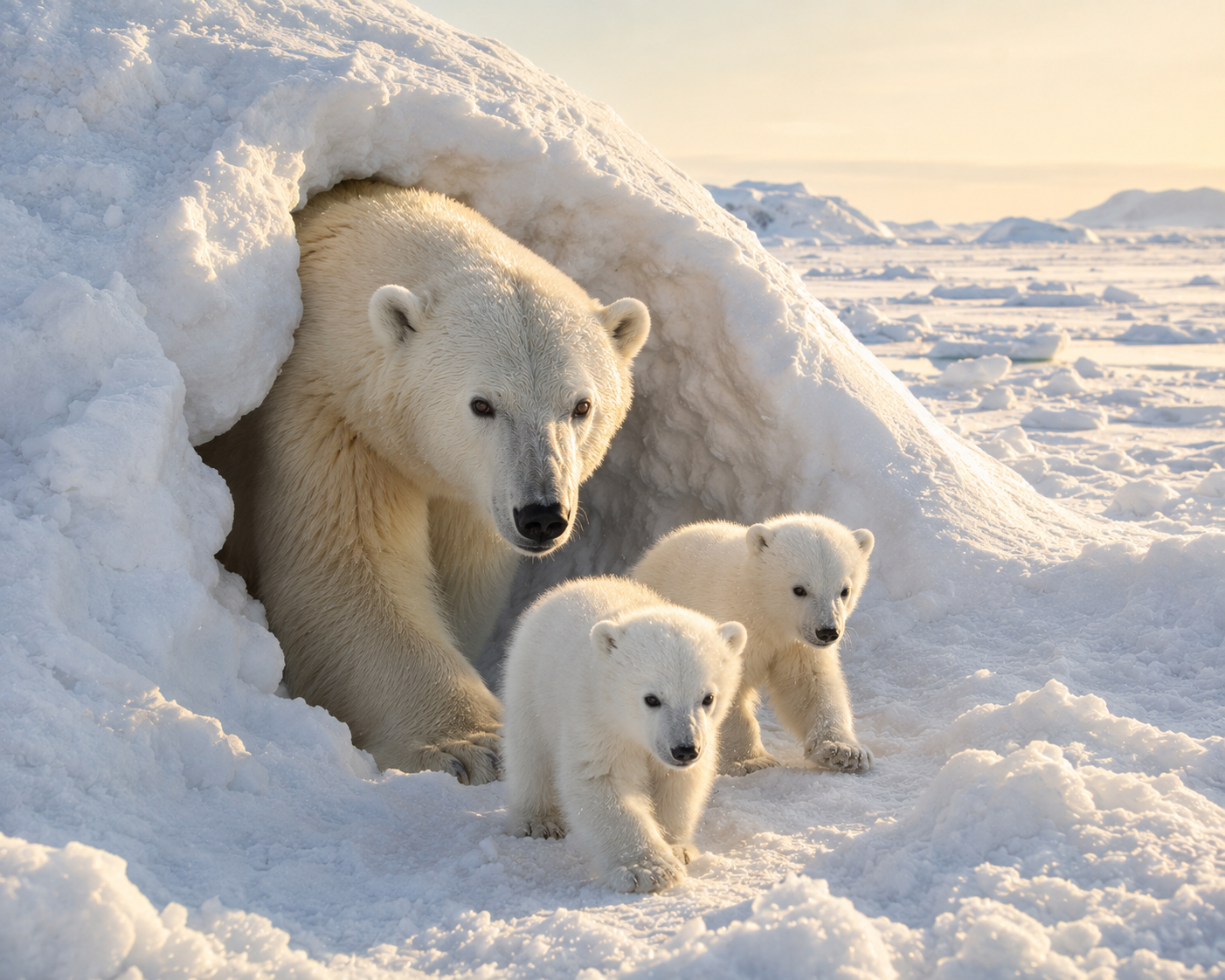
Every polar bear begins life in one of the safest places in the Arctic—a snow den hidden beneath thick layers of snow.
While adult males spend winter roaming across the sea ice, pregnant females leave the coast in autumn to dig dens into deep snowdrifts.
Inside these natural shelters, protected from fierce Arctic winds, they wait for the arrival of their cubs.
One of the Smallest Bear Cubs
Despite becoming the world's largest bear, a newborn polar bear starts life incredibly small.
Most cubs weigh only about 1 pound (0.5 kilograms) at birth—less than many domestic cats.
They are born:
- Blind
- Nearly hairless
- Unable to regulate body temperature
- Completely dependent on their mother
For several months, the mother remains inside the den, surviving entirely on stored body fat while nursing her cubs with rich, high-fat milk that helps them grow rapidly.
A Mother's Extraordinary Sacrifice
Few mammals invest as much energy in raising young as a female polar bear.
Before entering the den, she spends months building fat reserves through successful seal hunts.
Once inside, she may go up to eight months without eating, drinking, or hunting while giving birth and caring for her cubs.
During this period, she loses a significant portion of her body weight.
Every ounce of stored energy is devoted to keeping her cubs alive.
Life Cycle of a Polar Bear
Learning to Survive
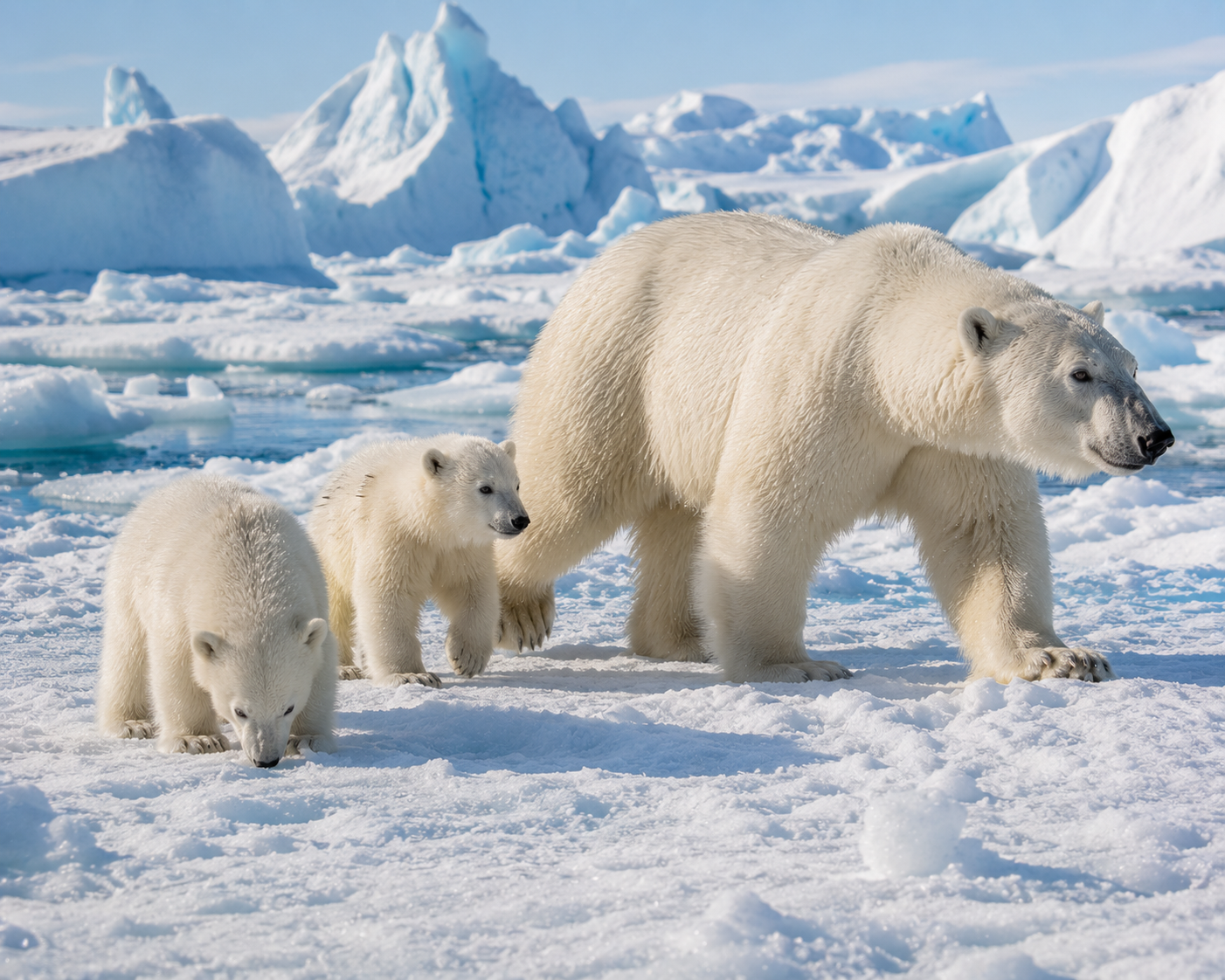
When the family finally leaves the den in spring, the cubs face an entirely new world.
Over the next two to three years, their mother teaches them the skills needed to survive in one of Earth's harshest environments.
They learn how to:
- Recognize safe sea ice
- Detect seal breathing holes
- Swim between ice floes
- Avoid dangerous thin ice
- Conserve energy during long journeys
Young cubs spend much of this time watching and copying their mother's behavior.
Every lesson increases their chances of surviving adulthood.
A Dangerous Childhood
Life in the Arctic is far from easy.
Many cubs never reach adulthood due to challenges such as:
- Food shortages
- Severe weather
- Thin or unstable sea ice
- Starvation
- Adult male polar bears, which may occasionally kill cubs
As sea ice disappears earlier each year in some regions, mothers must travel farther to find seals, making it even harder to provide enough food for their growing cubs.
The first years of life remain the most vulnerable stage of a polar bear's existence.
Built for Independence
By the age of two to three years, young bears leave their mother and begin life on their own.
From this point onward, survival depends entirely on the skills learned during childhood.
A successful hunt means another week of life.
A failed hunt may mean days—or even weeks—without food.
For a young polar bear, independence marks the beginning of its greatest challenge.
More Than Strong Mothers
Polar bear mothers do more than protect their cubs.
They pass on generations of survival knowledge.
Without these lessons, even an animal perfectly adapted to the Arctic would struggle to survive.
In a landscape where every mistake can be fatal, experience is just as valuable as strength.
Transition
For thousands of years, these remarkable adaptations allowed polar bears to thrive across the frozen Arctic.
Today, however, the greatest threat they face is not another predator—but the rapid transformation of the very sea ice on which their lives depend.
In the final chapter, we'll explore how climate change is reshaping the Arctic and what the future may hold for the world's largest bear.
Chapter 5
A Future on Thin Ice
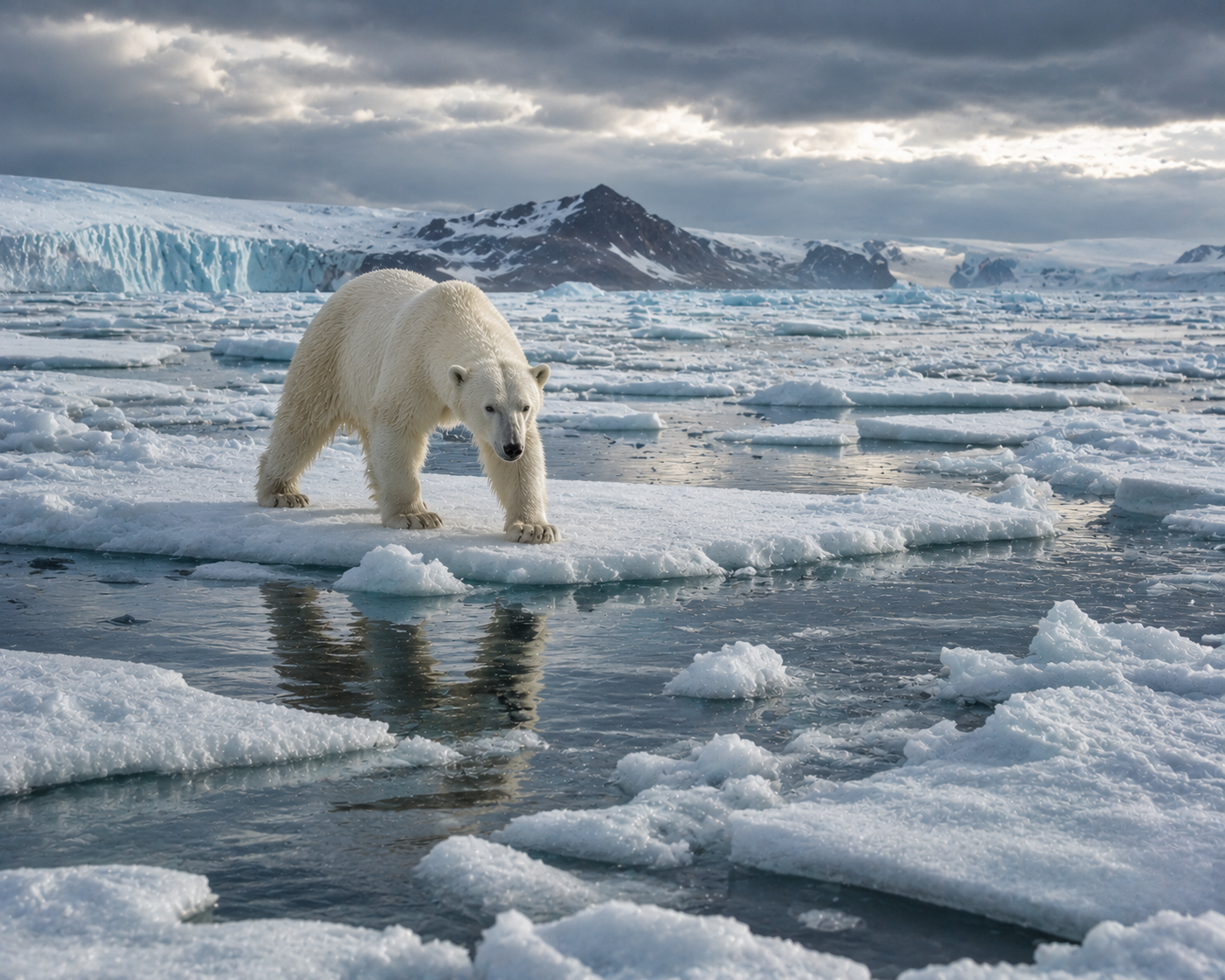
For hundreds of thousands of years, polar bears have survived ice ages, shifting climates, and dramatic changes across the Arctic.
Today, however, they face a challenge unlike any in their evolutionary history.
The greatest threat to polar bears is not another predator.
It is the gradual disappearance of the sea ice that supports every aspect of their lives.
Without stable sea ice, finding food becomes increasingly difficult, forcing bears to travel farther while expending more energy.
Why Sea Ice Matters
Sea ice is much more than frozen ocean water.
For a polar bear, it is a hunting platform, a travel route, and a resting place.
Ringed and bearded seals spend much of their lives beneath the ice, surfacing through breathing holes where polar bears wait in ambush.
As the ice melts earlier in spring and forms later in autumn, the hunting season becomes shorter.
With fewer opportunities to catch seals, bears must rely on stored fat for longer periods, increasing the risk of starvation.
Climate Change and Polar Bears
The Arctic is warming nearly four times faster than the global average, making it one of the fastest-changing regions on Earth.
Longer ice-free seasons mean:
- Less time to hunt seals
- Greater energy spent traveling and swimming
- Lower survival rates for cubs
- Reduced body condition in adults
- Increased encounters with human settlements as bears search for food
Scientists continue to monitor polar bear populations closely because changes in their health often reflect broader changes occurring throughout the Arctic ecosystem.
The Arctic Survival Network
Conservation Brings Hope
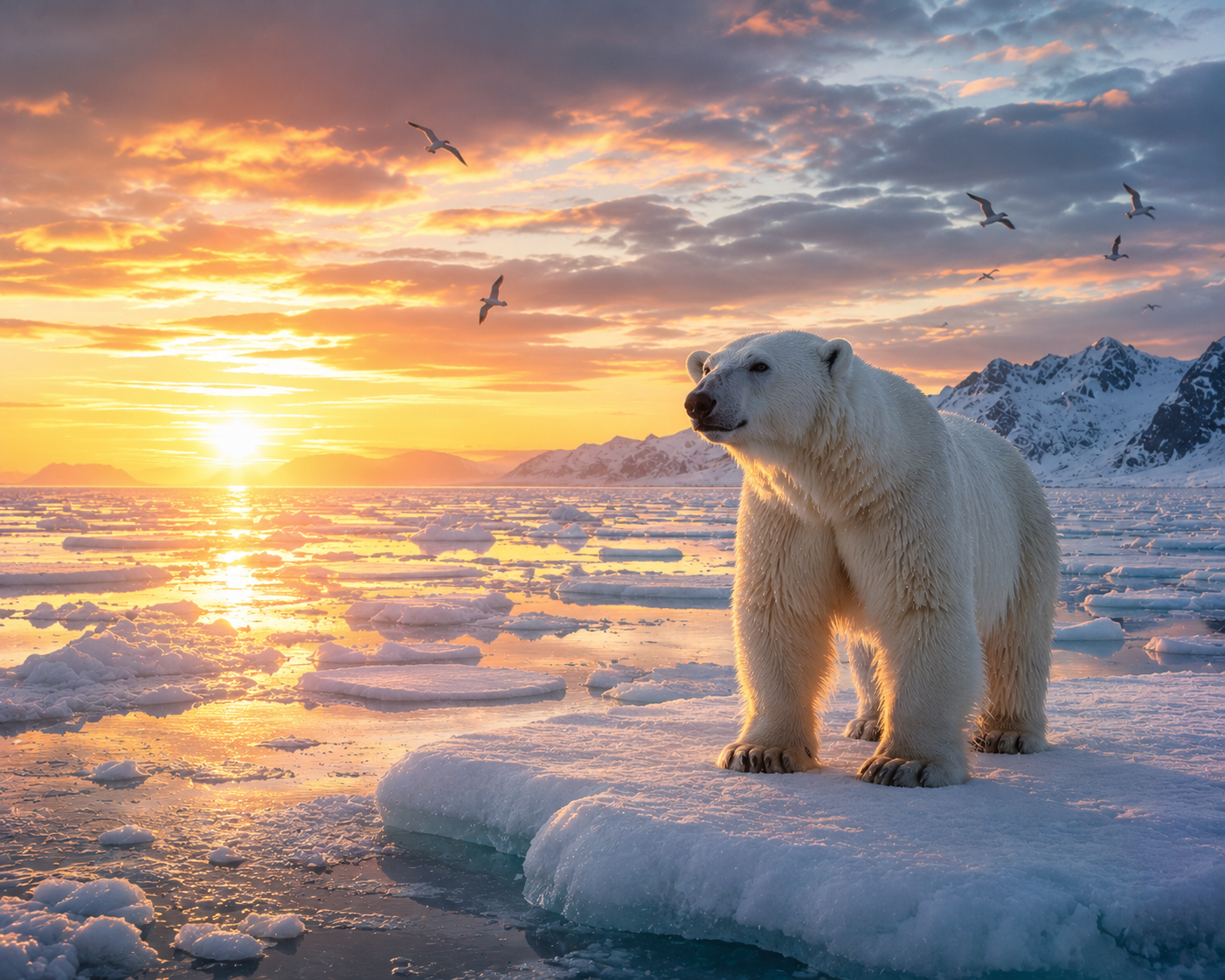
Despite the challenges, there are reasons for optimism.
Polar bears are protected under international agreements and national wildlife laws throughout much of their range.
Researchers use satellite collars, drones, camera traps, and satellite imagery to better understand how different populations respond to changing Arctic conditions.
Protected habitats, responsible tourism, and continued scientific research all contribute to conserving one of the world's most remarkable predators.
Safeguarding sea ice ultimately benefits countless Arctic species—not just polar bears.
More Than a Powerful Predator
Polar bears are often admired for their strength, but their greatest achievement is adaptation.
Transparent fur, black skin, powerful paws, exceptional swimming ability, and extraordinary patience have allowed them to flourish in one of the harshest environments on Earth.
Few mammals are so perfectly adapted to a single ecosystem.
Their survival story is one of evolution's greatest successes.
Final Reflection
Standing alone on the frozen Arctic Ocean, a polar bear represents far more than the world's largest bear.
It symbolizes resilience, patience, and the delicate balance of an ecosystem shaped by ice.
For countless generations, polar bears have followed the rhythm of freezing winters and drifting sea ice.
Whether future generations continue to witness this extraordinary hunter roaming the Arctic will depend on how well we protect the frozen world it calls home.
The future of the polar bear is inseparable from the future of the Arctic itself.
Key Takeaways
- Polar bears are the world's largest bear species and are classified as marine mammals.
- Their transparent fur, black skin, thick blubber, and giant paws are specialized adaptations for Arctic survival.
- Seals are their primary prey, and successful hunting depends on stable sea ice.
- Polar bears can swim long distances but rely on sea ice to conserve energy and hunt efficiently.
- Mothers invest years teaching cubs the survival skills needed in the harsh Arctic environment.
- Climate change and shrinking sea ice remain the greatest long-term challenges for polar bear populations.
- Conserving Arctic ecosystems helps protect polar bears and the diverse wildlife that depends on the frozen ocean.
Final Quote
"The polar bear has conquered one of Earth's harshest environments not through speed or numbers, but through extraordinary adaptation. Protecting the Arctic means protecting one of evolution's greatest masterpieces."
Frequently Asked Questions (FAQ)
1. Where do polar bears live?
Polar bears live throughout the Arctic, including Canada, Alaska (United States), Greenland, Norway (Svalbard), and Russia. They depend on sea ice for hunting, traveling, and raising their young.
2. Why are polar bears called marine mammals?
Although they give birth on land or sea ice, polar bears spend most of their lives on sea ice and rely on the Arctic Ocean to hunt seals. Because they depend on the marine environment for survival, they are classified as marine mammals.
3. What do polar bears eat?
Polar bears mainly eat ringed seals and bearded seals because they provide the high-fat diet needed to survive the Arctic cold. They may also feed on whale carcasses, walrus calves, birds, eggs, fish, and occasionally vegetation when food is scarce.
4. Why are polar bears white?
Polar bear fur is not actually white. Each hair is transparent and hollow, scattering sunlight to appear white. Their skin underneath is black, helping absorb heat from the sun.
5. How do polar bears stay warm in freezing temperatures?
Polar bears stay warm thanks to thick blubber, dense transparent fur, black heat-absorbing skin, and compact body features that reduce heat loss. These adaptations allow them to survive temperatures below −40°C (−40°F).
6. How do polar bears hunt seals?
Polar bears often use a technique called the still hunt. They wait patiently beside a seal's breathing hole and attack the instant the seal surfaces. They also stalk seals resting on sea ice and occasionally pursue them while swimming.
7. Are polar bears dangerous to humans?
Yes. Polar bears are among the few wild animals that may occasionally see humans as potential prey, especially when food is limited. However, attacks are extremely rare because very few people live within polar bear habitat. Maintaining a safe distance and following local safety guidelines greatly reduces the risk of encounters.
8. How fast can a polar bear run?
Despite their massive size, polar bears can sprint at speeds of up to 25 mph (40 km/h) over short distances. However, they rarely chase prey for long because running consumes a great deal of energy.
9. How far can polar bears swim?
Polar bears are exceptional swimmers and can travel more than 60 miles (100 kilometers) without reaching land or sea ice. Their large front paws act like paddles, while their hind legs help steer through icy water.
10. Why is climate change a threat to polar bears?
Climate change causes Arctic sea ice to melt earlier in spring and form later in autumn. With less sea ice available, polar bears have fewer opportunities to hunt seals, forcing them to travel farther and expend more energy while searching for food.
11. How long do polar bears live?
Wild polar bears typically live 20 to 30 years, although some individuals can live longer under favorable conditions. Cubs face the highest mortality rates during their first few years of life.
12. How many polar bears are left in the wild?
Scientists estimate there are approximately 22,000 to 31,000 polar bears living across 19 Arctic subpopulations. Population trends vary by region, with some remaining stable while others are declining due to shrinking sea ice and habitat changes.