How Spiders Build Silk Stronger Than Steel: Nature's Greatest Material.
(PART -1)
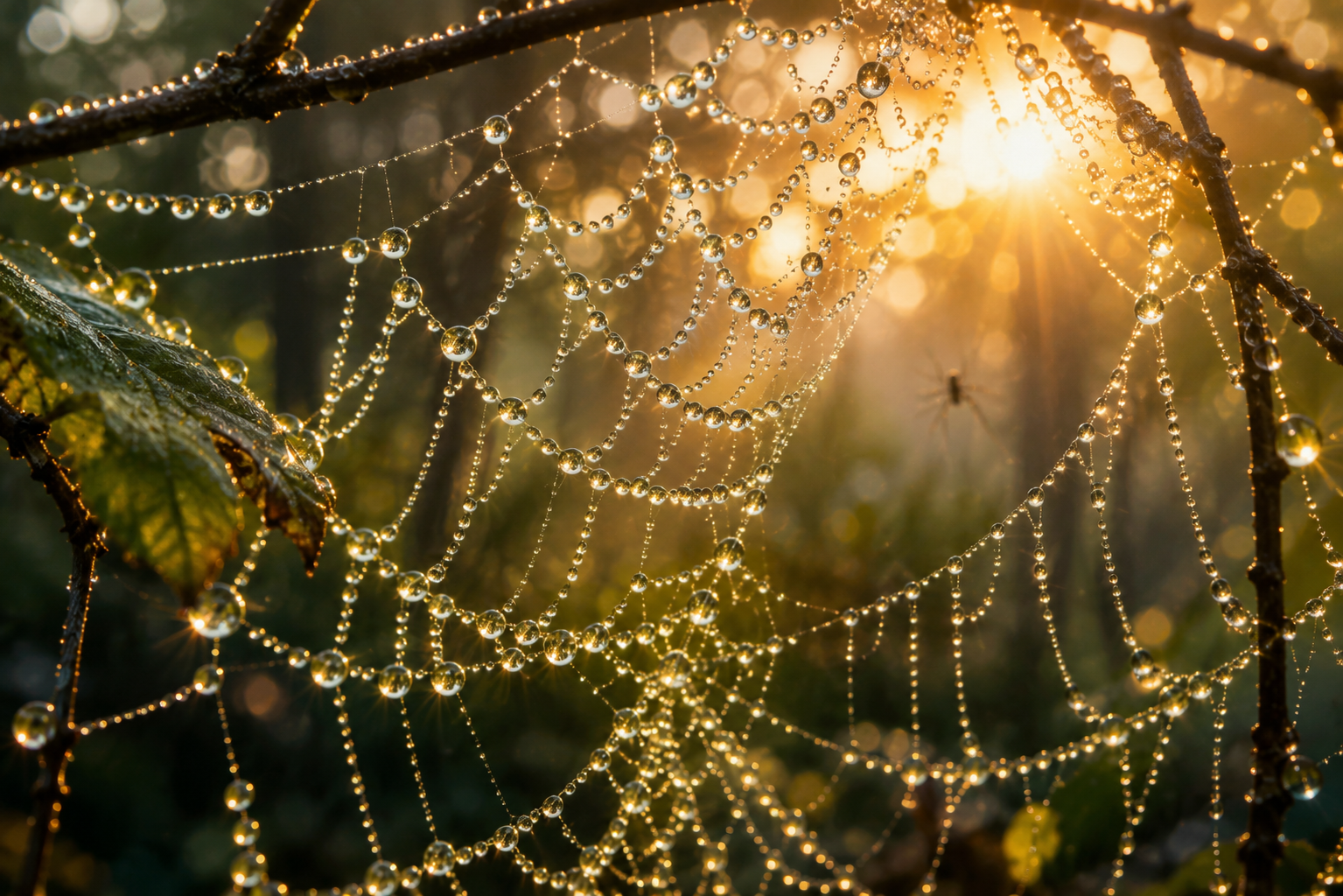
Walk through a garden early in the morning, and you might notice something magical.
Tiny drops of dew sparkle across a spider's web, turning an invisible trap into a masterpiece of nature. Most people admire its beauty for a moment before walking away.
But hidden within those delicate strands is one of the greatest engineering achievements on Earth.
The silk produced by a spider is so strong that scientists have spent decades trying to understand it. Pound for pound, certain types of spider silk are stronger than steel. At the same time, they are incredibly flexible, lightweight, and biodegradable — qualities that engineers struggle to combine in man-made materials.
Perhaps the most surprising part is that spiders accomplish this every single day using nothing more than their own bodies.
For millions of years, these tiny architects have quietly perfected a material that modern science is still trying to recreate.
More Than Just a Sticky Web
Ask someone what a spider web is for, and most people will give a simple answer:
"To catch insects."
That answer is only partly true.
Spider silk is far more than a hunting tool.
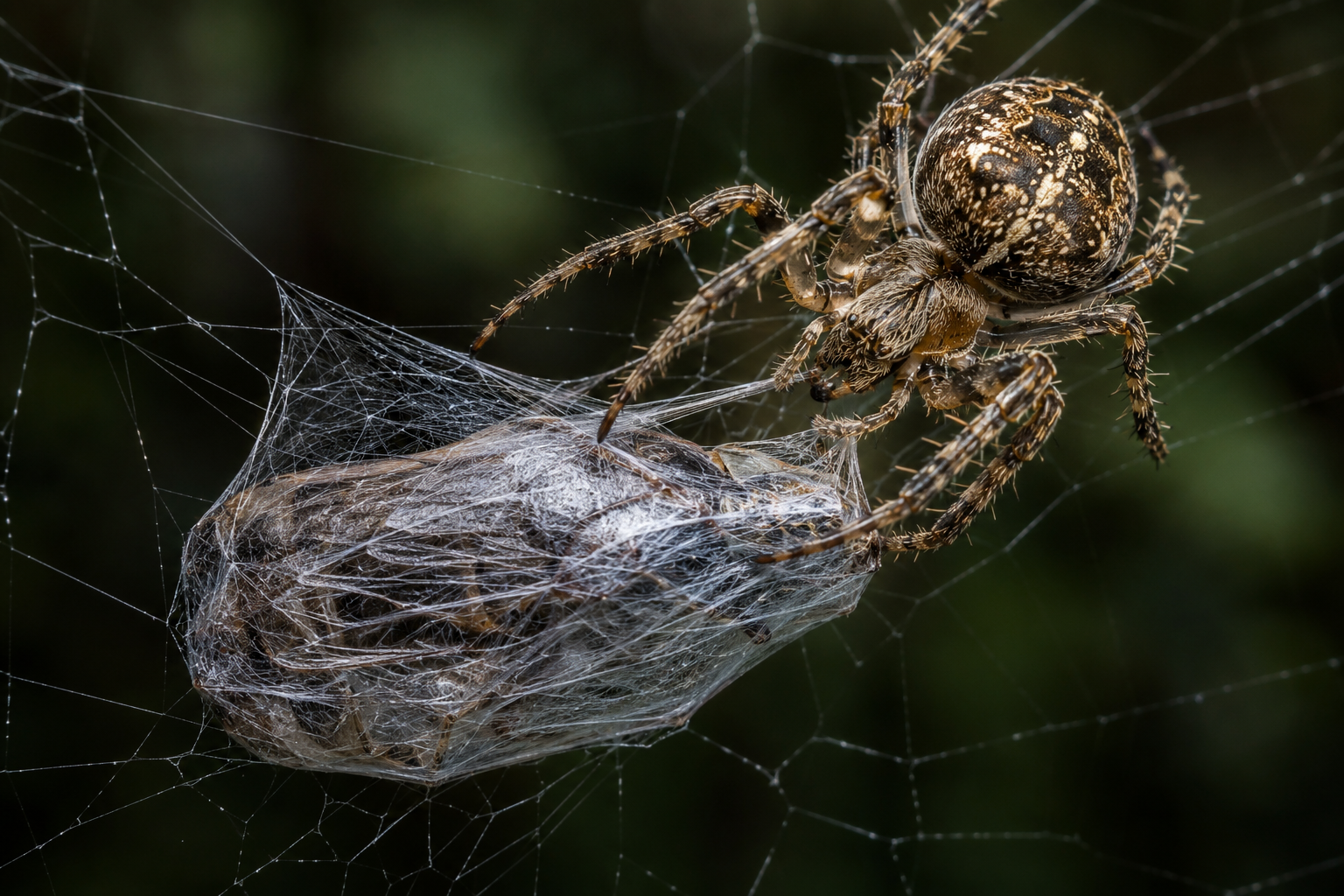
Some spiders use it to build homes high above the ground. Others create protective egg sacs to keep their young safe. Many wrap captured prey in silk before eating it later, while young spiders release silk into the wind to travel hundreds of kilometers through the air in a remarkable journey known as ballooning.
Even a spider's first step is often protected by a thin silk safety line, preventing it from falling.
To a spider, silk is a building material, a parachute, a lifeline, a nursery, a fishing net, and a hunting weapon—all produced from the same tiny body.
Nature's Strongest Fiber
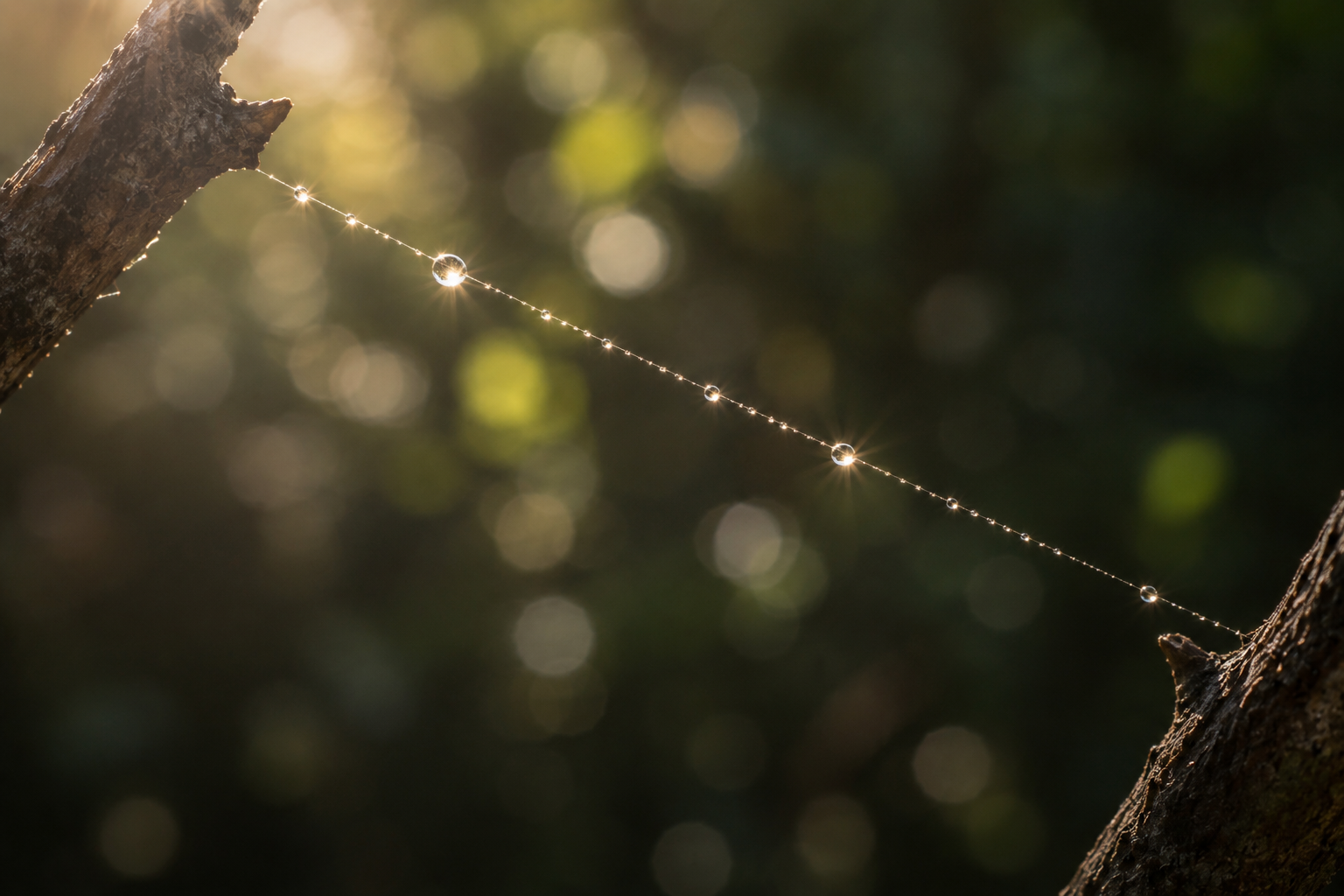
When scientists compare spider silk to steel, they don't mean a thin web could stop a steel beam.
The comparison is based on strength relative to weight.
Imagine holding two strands of equal weight—one made of steel and the other made of spider silk.
The spider silk can withstand greater stress before breaking.
That combination of strength and flexibility is incredibly rare.
Many strong materials, such as glass, break easily when bent.
Rubber stretches well but tears under heavy force.
Spider silk manages to do both.
It resists breaking while also stretching dramatically before snapping.
This remarkable balance allows spider webs to absorb the energy of fast-flying insects without shattering.
Instead of breaking instantly, the web stretches like a trampoline, slowing the insect until it becomes trapped.
It's a natural engineering solution that humans continue to study with fascination.
Inside a Spider's Silk Factory
The secret begins inside the spider's abdomen.
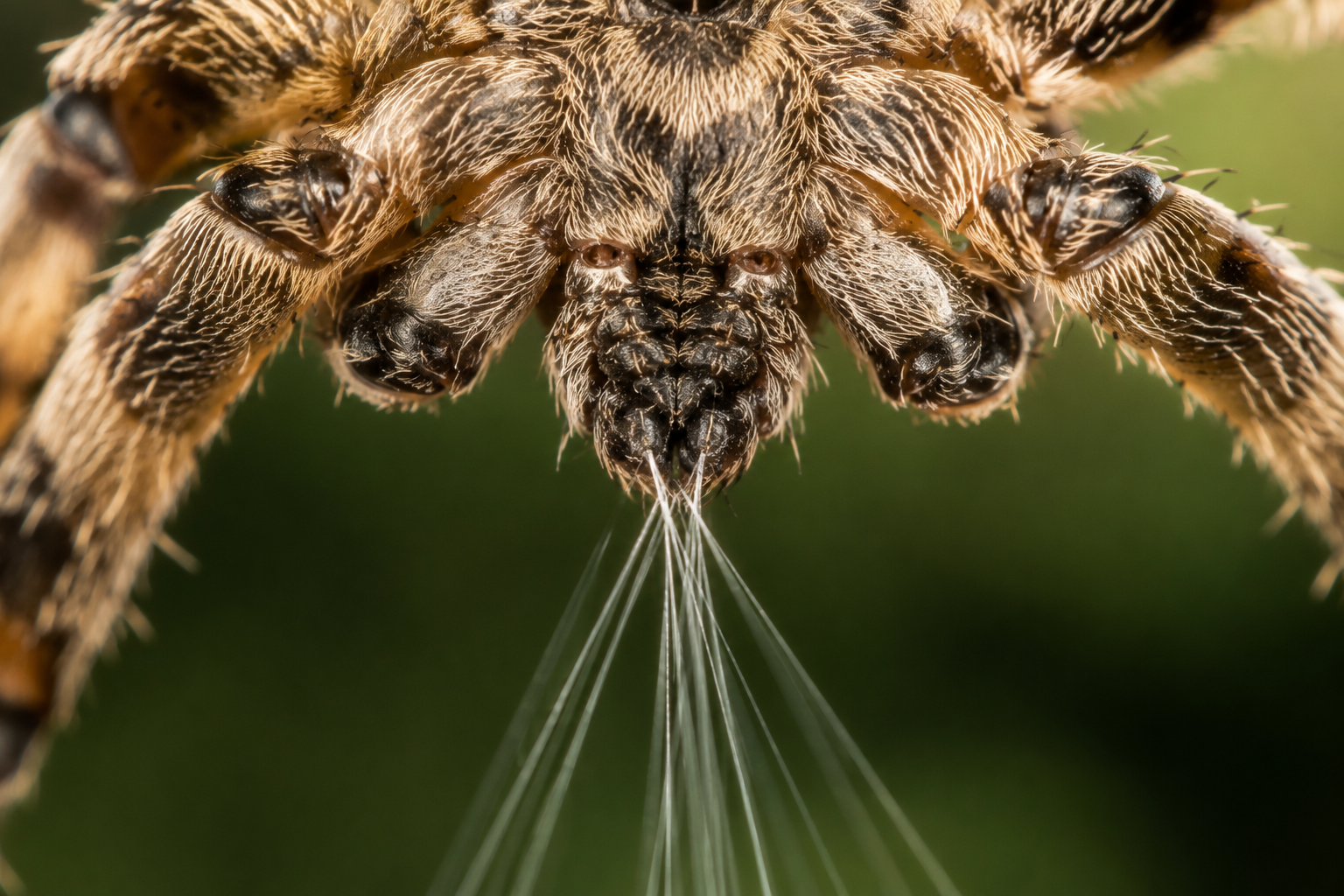
Rather than producing ready-made threads, spiders first create liquid silk proteins stored within specialized silk glands.
Different glands produce different kinds of silk, each designed for a specific purpose.
When the spider decides to spin a thread, this liquid protein travels through tiny organs called spinnerets, located at the rear of its body.
As the liquid passes through these microscopic structures, something extraordinary happens.
Chemical changes and carefully controlled pulling forces transform the liquid into an incredibly strong solid fiber almost instantly.
No factories.
No high temperatures.
No toxic chemicals.
Only water, proteins, and millions of years of evolution.
Scientists are amazed because spiders manufacture this advanced material at room temperature using remarkably little energy—something modern industries still struggle to achieve.
One Spider, Seven Different Silks
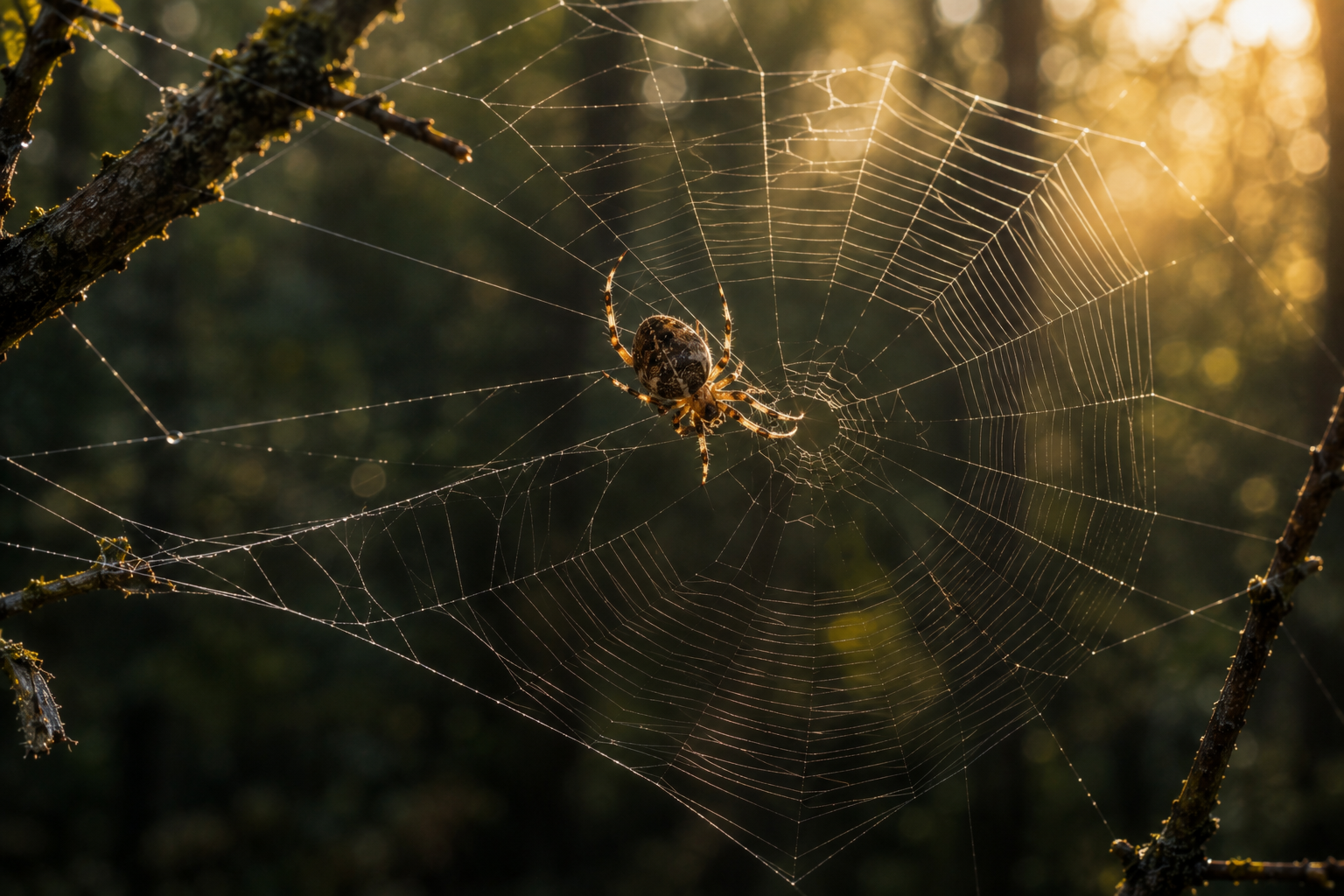
Here's a fact that surprises even many wildlife enthusiasts.
A spider doesn't produce just one kind of silk.
Some species can produce up to seven different types, each with its own unique properties.
One silk forms the strong frame of the web.
Another creates the sticky spiral used to trap insects.
Another wraps prey tightly so it cannot escape.
Others protect eggs or serve as draglines that prevent dangerous falls.
Imagine carrying seven different ropes in your backpack, each designed for a completely different job.
That's exactly what spiders do every day.
Their silk is not one material—it is an entire collection of specialized biological fibers.
(PART-2)
The Incredible Engineering Behind Spider Webs
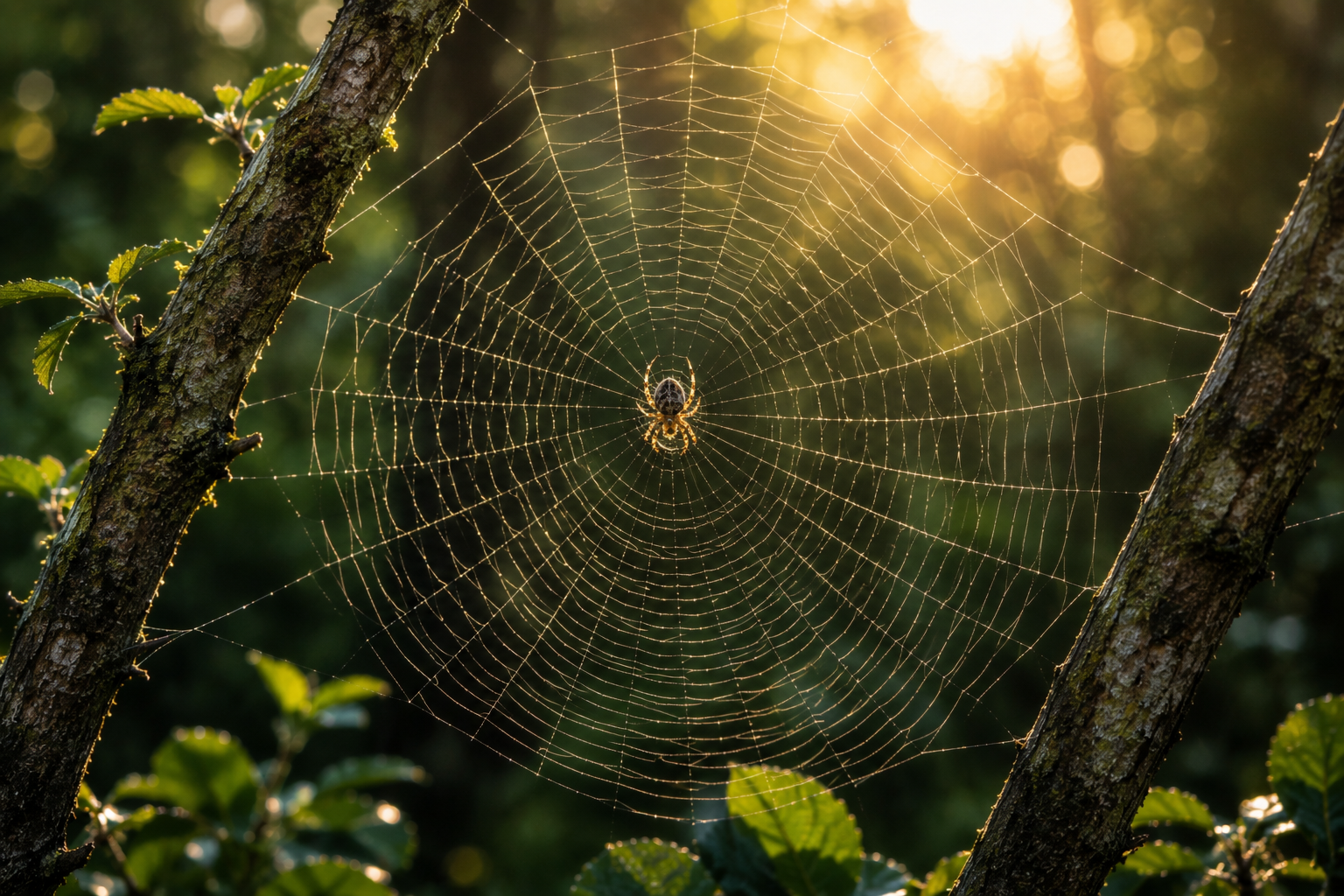
To the human eye, a spider web looks like a simple collection of thin threads.
In reality, it is a masterpiece of natural engineering.
Every strand has a purpose. The outer frame provides stability, radial lines act like the spokes of a bicycle wheel, and the sticky spiral is carefully woven to trap prey.
Building such a structure is far from random.
An orb-weaver spider usually starts by releasing a single strand of silk into the air. When the wind carries it to another branch, the spider carefully strengthens it before constructing the rest of the web. Working with remarkable precision, it creates a framework, adds support lines, and finally spins the sticky spiral that catches insects.
Perhaps the most impressive part is that spiders don't use rulers, measuring tapes, or blueprints.
Everything is guided by instinct refined through millions of years of evolution.
Many spiders even rebuild their webs almost every day, ensuring every trap remains strong and effective.
Nature has quietly perfected this engineering long before humans built the first bridge.
Why Insects Can't Escape
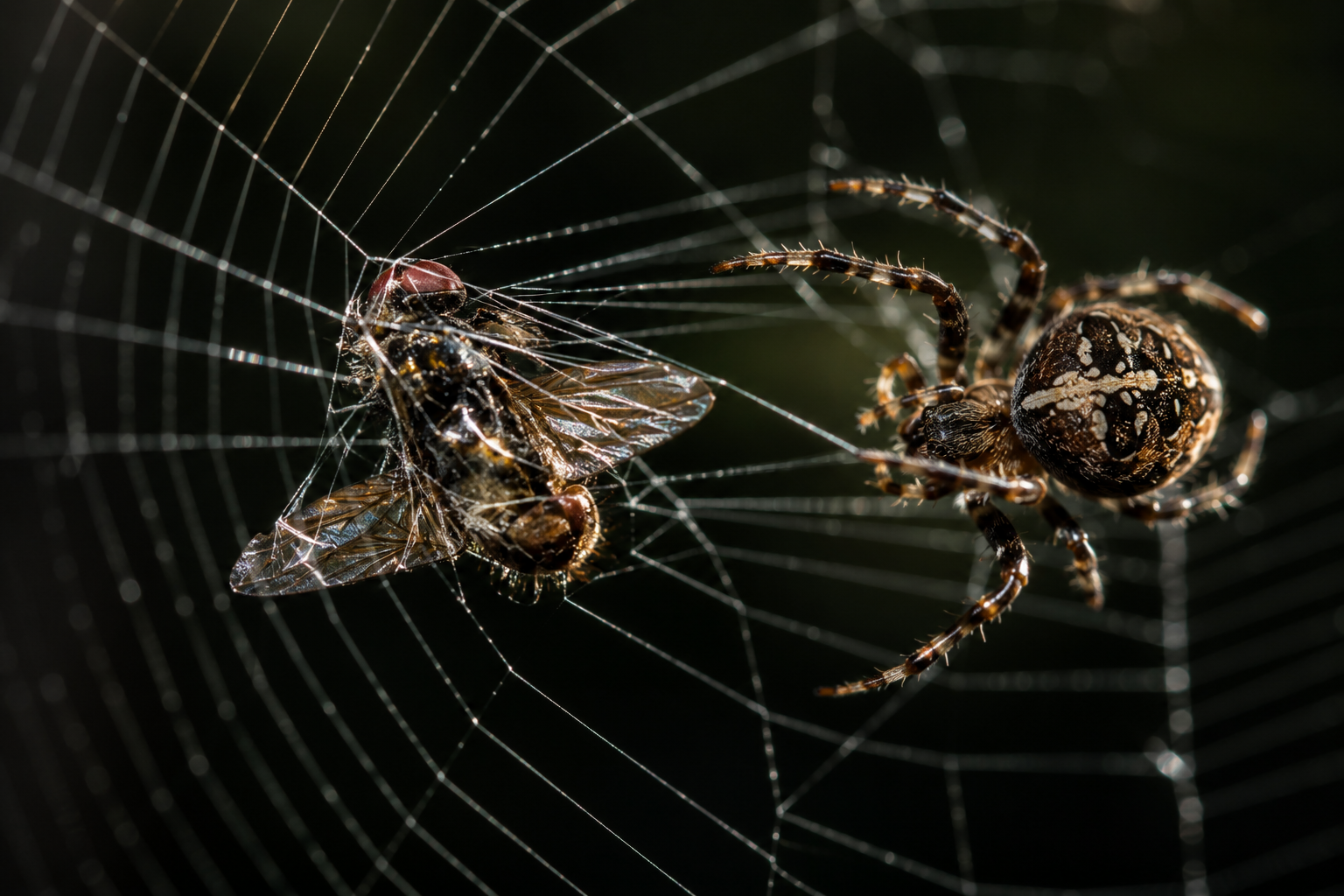
Imagine flying through the forest at full speed.
Suddenly, an almost invisible thread stretches across your path.
Within a fraction of a second, you're trapped.
For insects, this is exactly what happens.
The sticky spiral of a spider's web is coated with thousands of microscopic droplets of natural adhesive. These droplets cling to an insect's wings, legs, and body, making escape extremely difficult.
But the glue alone isn't responsible.
The web itself behaves like a suspension bridge.
Instead of snapping under pressure, it stretches and absorbs the energy of the impact. This flexibility prevents the insect from breaking through while giving the spider enough time to respond.
As the trapped insect struggles, it often becomes even more entangled.
The spider quickly senses tiny vibrations traveling through the silk, allowing it to identify the exact location of its prey without relying entirely on vision.
Within seconds, the spider reaches the insect and wraps it tightly in silk before delivering a venomous bite.
Every part of this process demonstrates extraordinary biological engineering.
Spider Webs Come in Many Designs
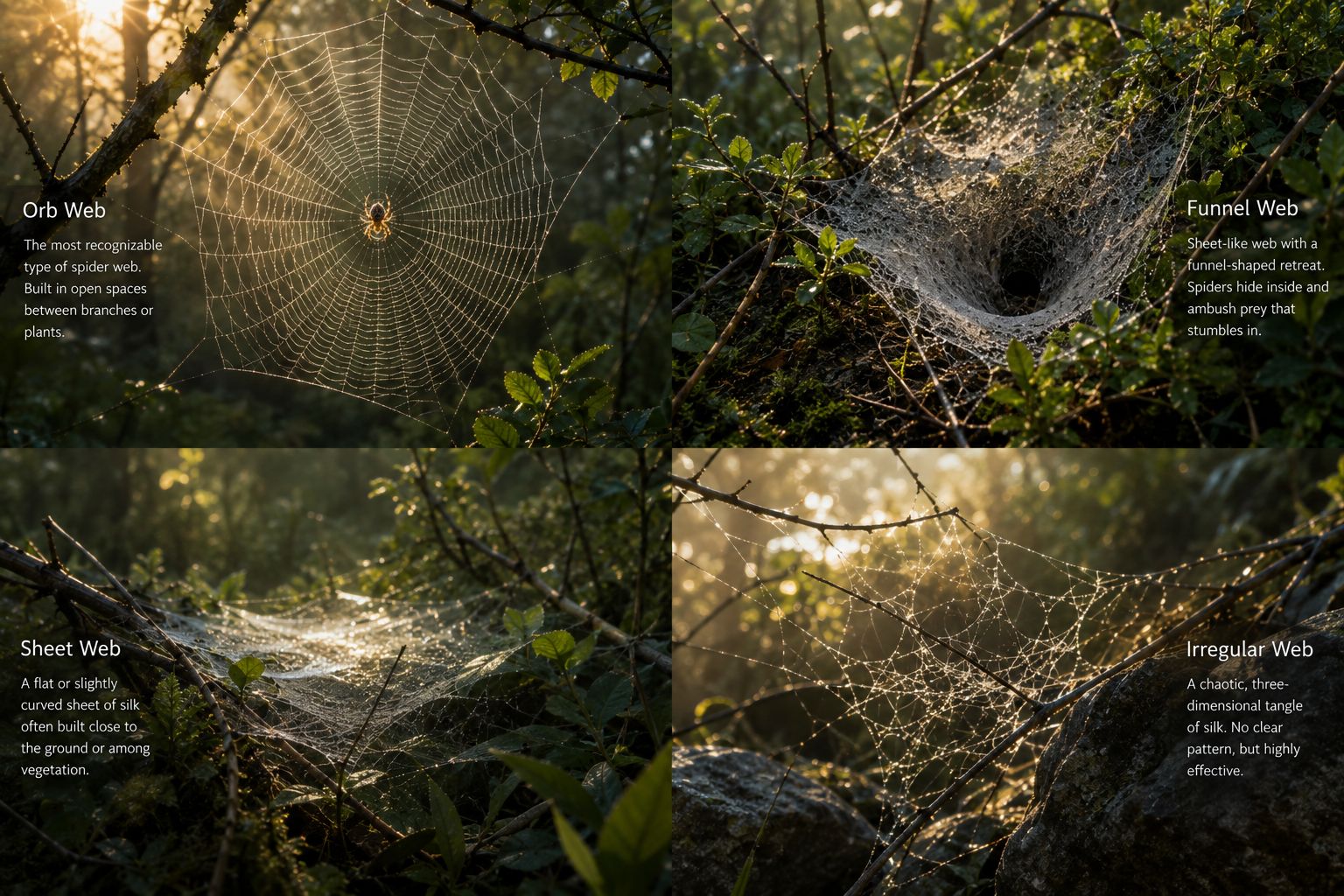
Not every spider builds the familiar circular web.
In fact, the spider world is filled with architects, each using a different design suited to its lifestyle.
Orb webs are the classic wheel-shaped webs often seen between tree branches and in gardens. They are highly efficient at catching flying insects.
Funnel webs resemble tunnels leading into a hidden retreat where the spider waits for prey to wander close.
Sheet webs form wide horizontal blankets of silk suspended above vegetation. When insects land, the spider attacks from below.
Cobwebs, built by house spiders, appear messy and irregular. Although they look untidy, they are surprisingly effective at trapping crawling insects.
Then there are triangle webs, bowl-shaped webs, and even spiders that abandon webs entirely, preferring to hunt like miniature predators.
Each web represents a different solution to the same challenge—finding food.
The Giant Webs of the Golden Orb-Weaver
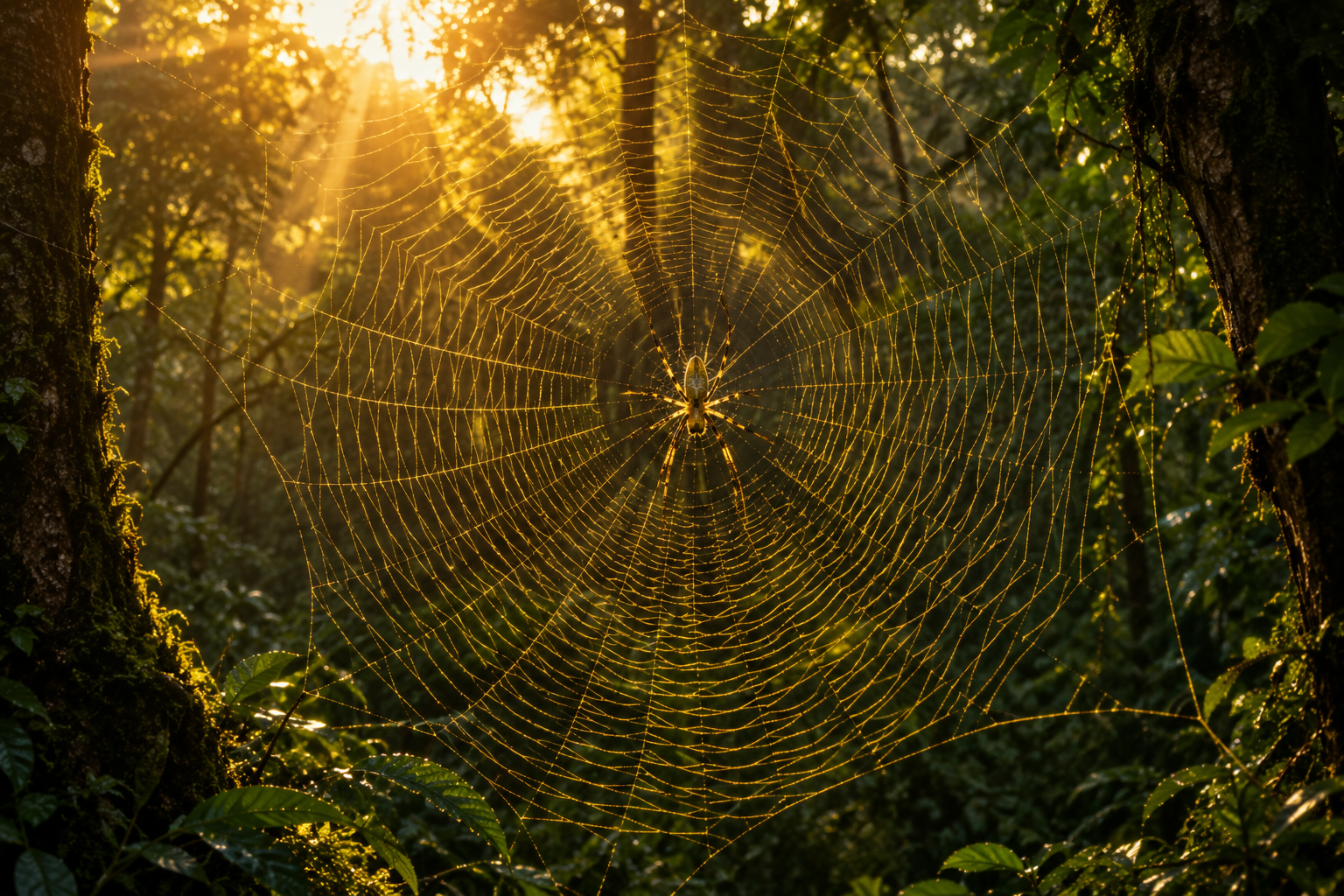
Among the thousands of spider species, few builders are as impressive as the golden orb-weaver.
These spiders create enormous webs that can stretch several meters between trees.
Their silk has a distinctive golden color that glows beautifully in sunlight, giving the web an almost magical appearance.
Unlike many spiders that rebuild their webs daily, golden orb-weavers often repair and expand the same web over long periods.
Some of their webs are so strong that they have been known to catch not only insects but also small birds, bats, and tree frogs that accidentally fly into them.
Fortunately, such events are rare, and insects remain their primary source of food.
Scientists have long studied golden orb-weaver silk because of its remarkable combination of strength, flexibility, and durability.
Even today, it remains one of the most fascinating natural materials ever discovered.
Can Humans Manufacture Spider Silk?
If spider silk is so extraordinary, why don't we simply collect it and use it?
The answer is surprisingly complicated.
Unlike silkworms, spiders are highly territorial and often cannibalistic.
Keeping thousands of them together on a farm would quickly become a disaster, as many would eat one another.
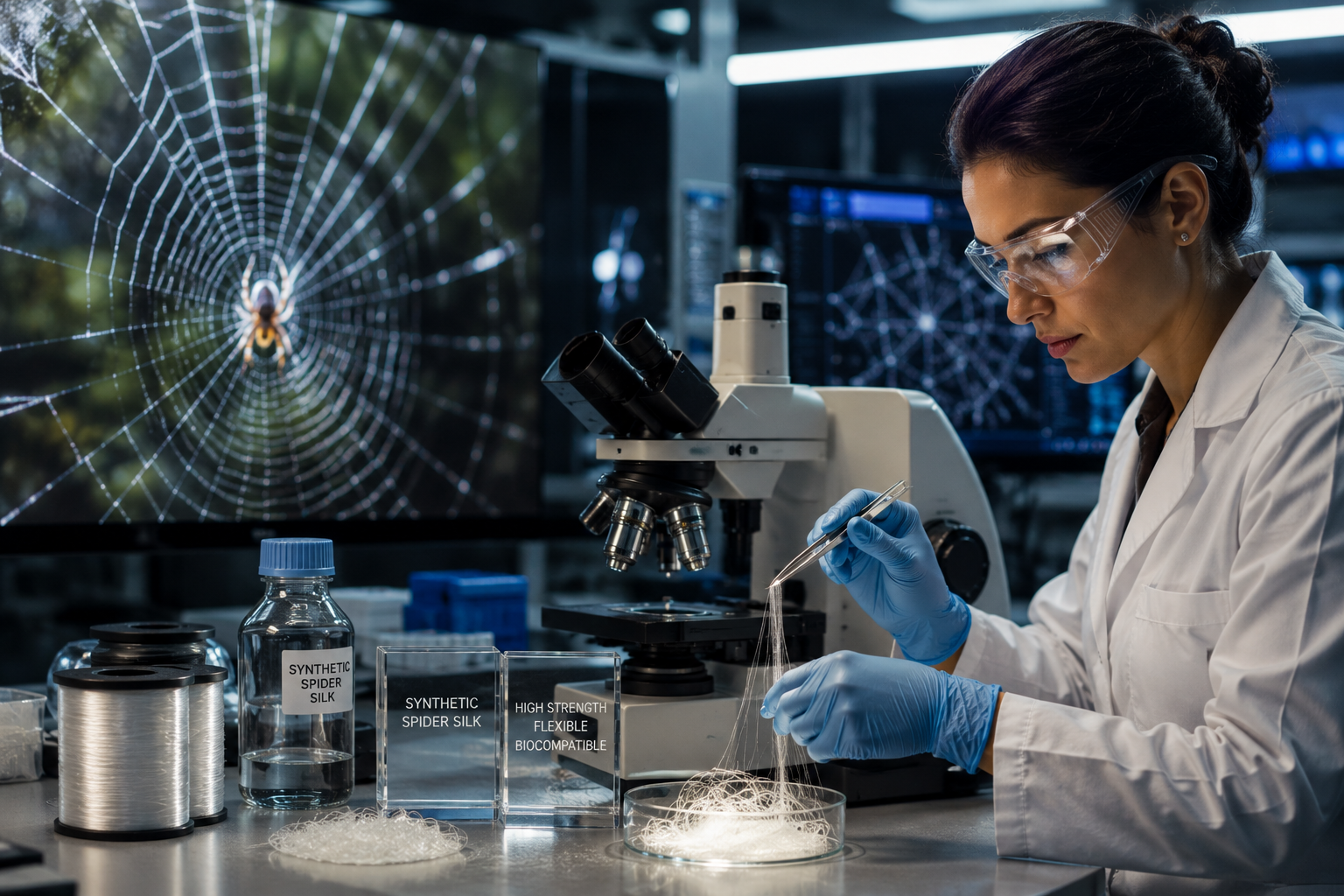
Instead, scientists have focused on recreating spider silk in laboratories.
Researchers have inserted spider silk genes into bacteria, yeast, plants, silkworms, and even goats. The goal is to produce silk proteins without relying on spiders themselves.
Although significant progress has been made, matching the exact quality of natural spider silk remains a major scientific challenge.
A spider produces its silk at room temperature using only water and proteins.
Modern laboratories, despite advanced technology, still struggle to copy this remarkable process perfectly.
Nature continues to outperform some of humanity's most sophisticated manufacturing techniques.
(PART-3)
Spider Silk Could Revolutionize Medicine
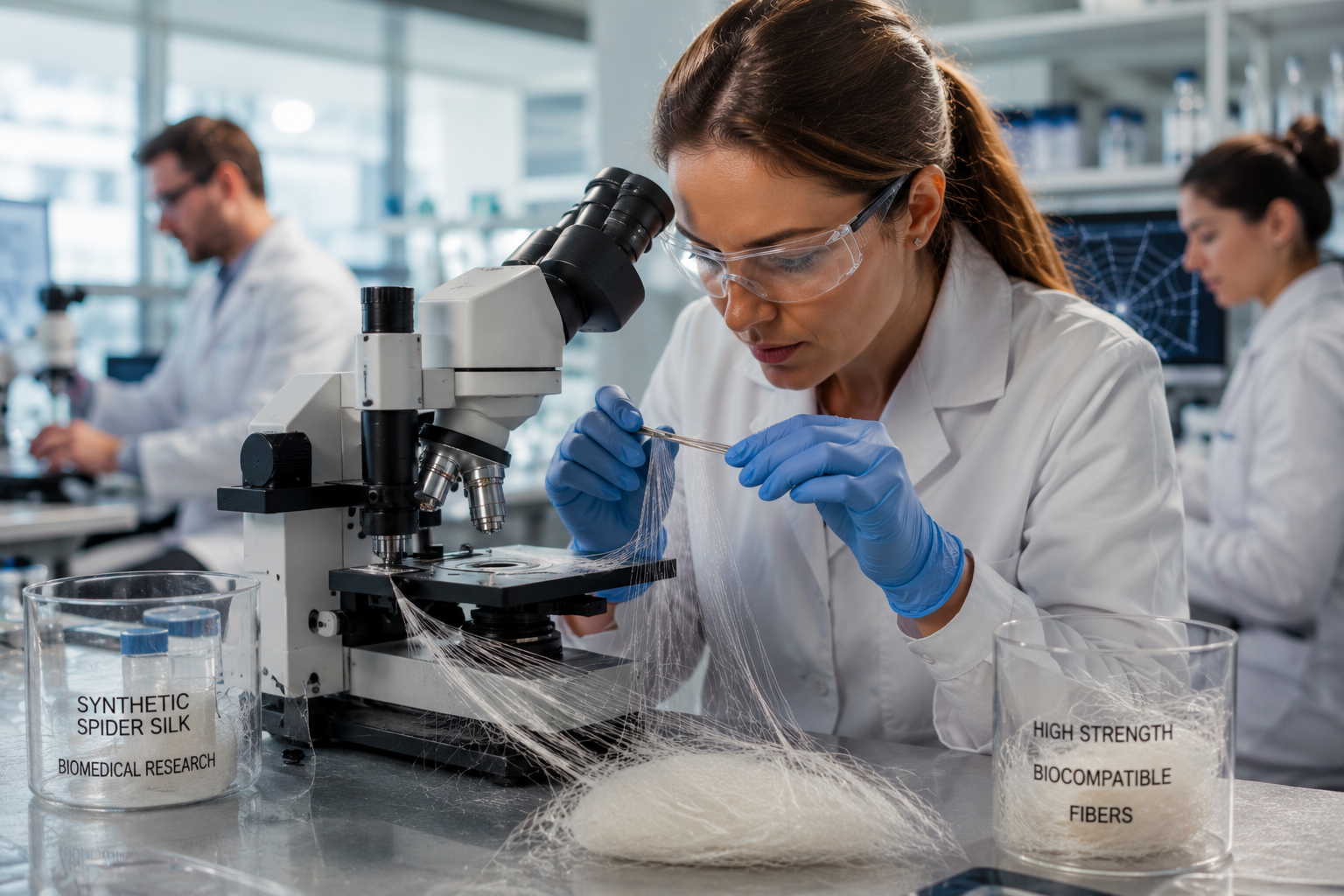
Spider silk has fascinated scientists for decades, not only because of its strength but also because of how the human body responds to it.
Unlike many synthetic materials, spider silk is lightweight, biodegradable, and biocompatible, meaning it is less likely to trigger harmful immune reactions. These qualities make it an exciting material for medical research.
Researchers are exploring whether artificial spider silk could one day be used to create:
- Surgical stitches that are both strong and naturally biodegradable.
- Artificial ligaments and tendons.
- Wound dressings that encourage faster healing.
- Scaffolds for growing human tissues in laboratories.
- Tiny tubes that help damaged nerves regenerate.
Although many of these technologies are still being developed, the possibilities are remarkable.
A material invented by spiders millions of years ago could one day help save human lives.
Could Spider Silk Be Used in Space?
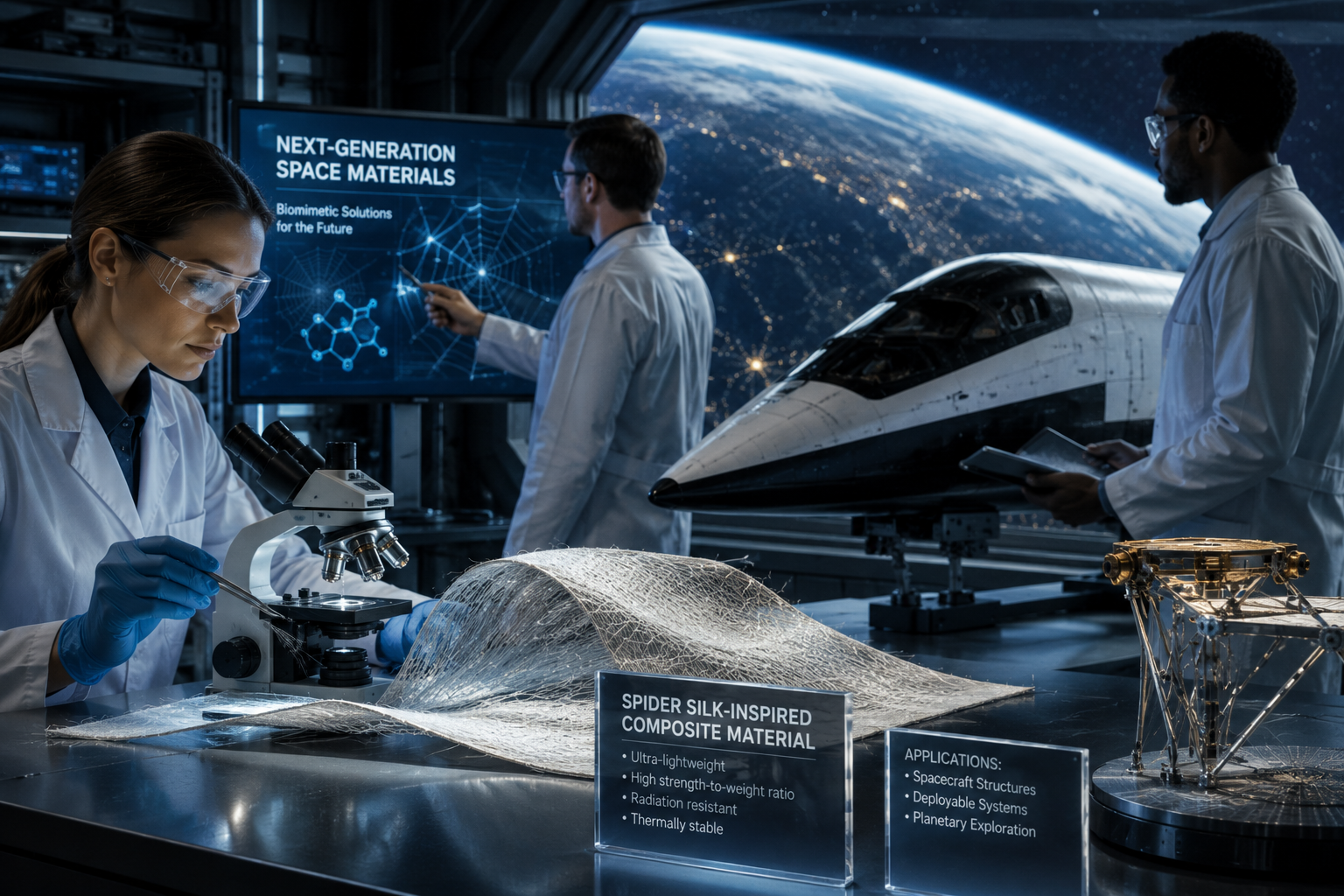
Spider silk isn't just attracting the attention of doctors.
Engineers and space researchers are also interested in its unique properties.
Future spacecraft and satellites require materials that are both incredibly strong and extremely lightweight. Every extra kilogram launched into space costs thousands of dollars, making weight one of the biggest engineering challenges.
Spider silk offers an unusual combination of toughness, flexibility, and low weight.
Scientists are investigating whether silk-inspired materials could be used in:
- Lightweight spacecraft components.
- Protective layers for astronauts.
- Advanced robotic systems.
- High-performance sports equipment.
- Next-generation body armor.
Natural spider silk itself may never be used directly in spacecraft, but the lessons it teaches could inspire entirely new classes of advanced materials.
Nature often provides the blueprint before humans develop the technology.
Amazing Spider Silk Facts
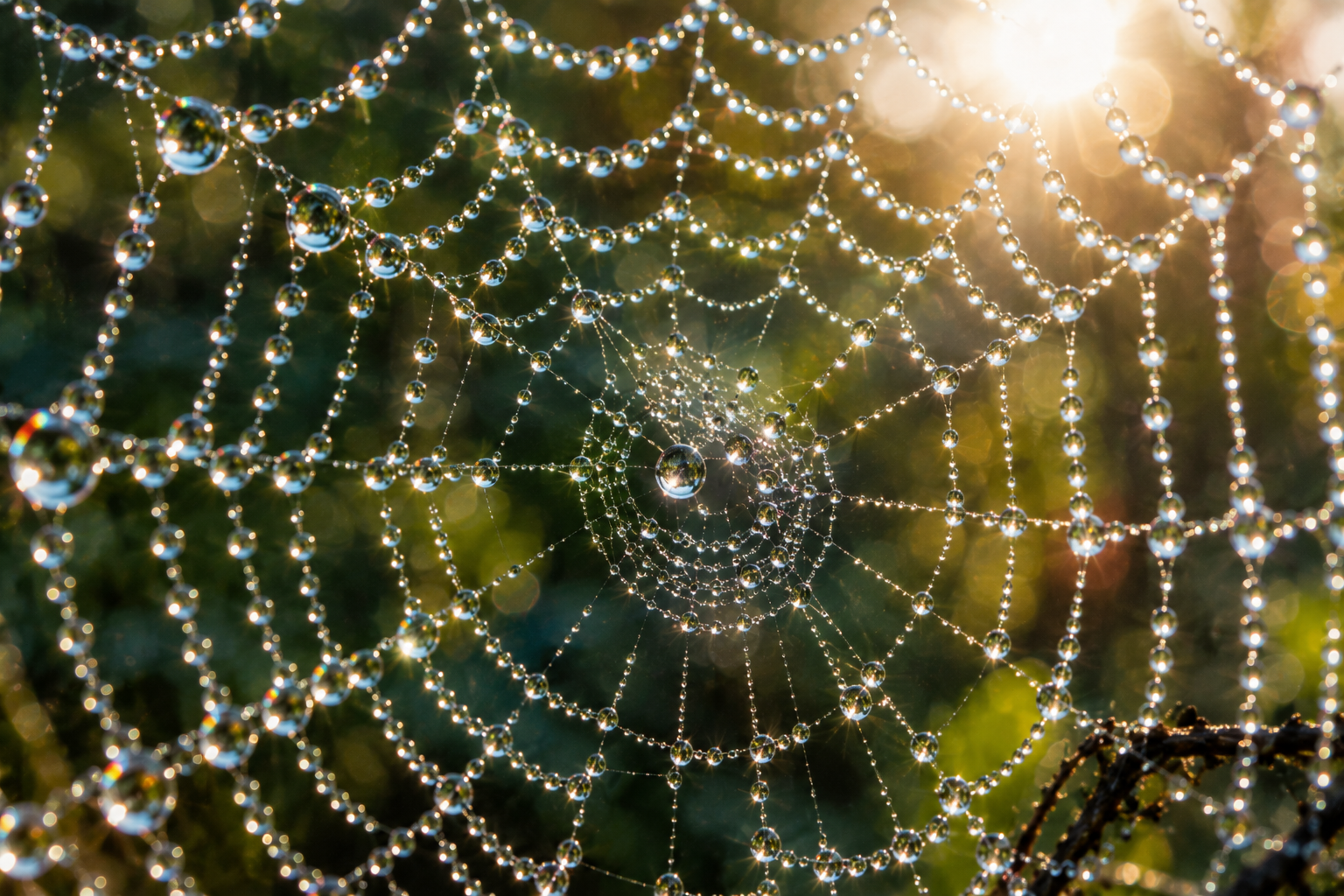
The more scientists study spider silk, the more surprising discoveries they make.
Here are some incredible facts that make spider silk one of nature's greatest inventions.
- Some spider silk can stretch up to five times its original length before breaking.
- A spider usually recycles its web by eating the old silk and using the proteins to spin a new one.
- Golden orb-weaver silk naturally shines with a beautiful golden color.
- Certain spiders use silk as a parachute, allowing young spiders to travel hundreds of kilometers by floating on the wind.
- Spider silk is stronger than steel for its weight, while remaining far more flexible.
- More than 50,000 spider species have been identified worldwide, and scientists continue discovering new ones.
- Different spider species produce silk with different chemical compositions and mechanical properties.
Despite decades of research, scientists believe there is still much to learn about these extraordinary fibers.
🕷️Nature's Tiny Engineer
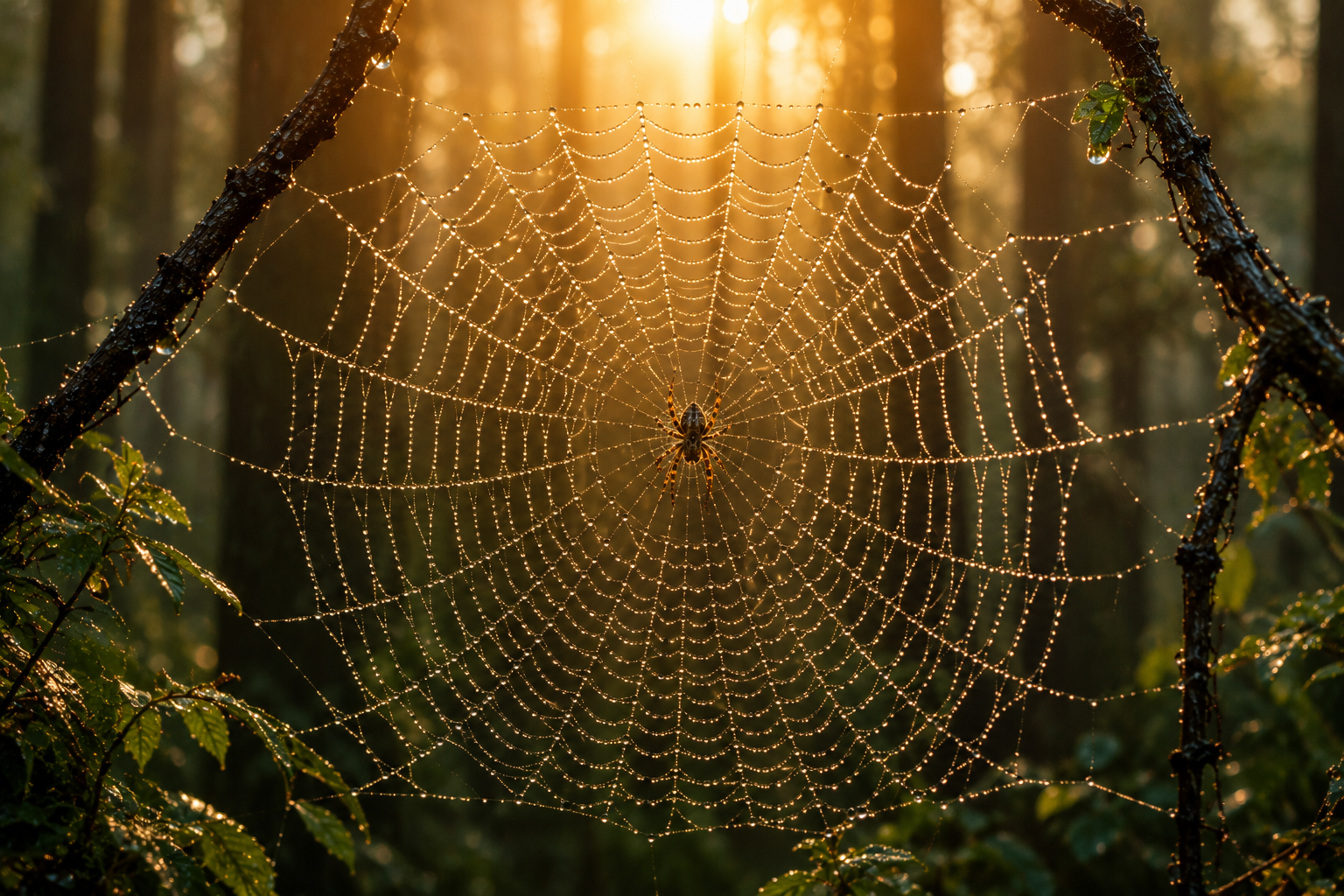
Spider silk is more than just the material behind a web—it's one of nature's greatest engineering achievements. Stronger than steel for its weight, incredibly flexible, and produced with remarkable efficiency, it continues to inspire scientists around the world.
The next time you spot a spider web glistening in the morning sun, take a closer look. What appears to be a fragile thread is actually the result of millions of years of evolution—a reminder that some of the world's greatest innovations come from its smallest creatures.
This ending is around 90–100 words, concise, memorable, and leaves readers with a sense of wonder without repeating earlier sections.