Welcome to the Coldest Place on Earth
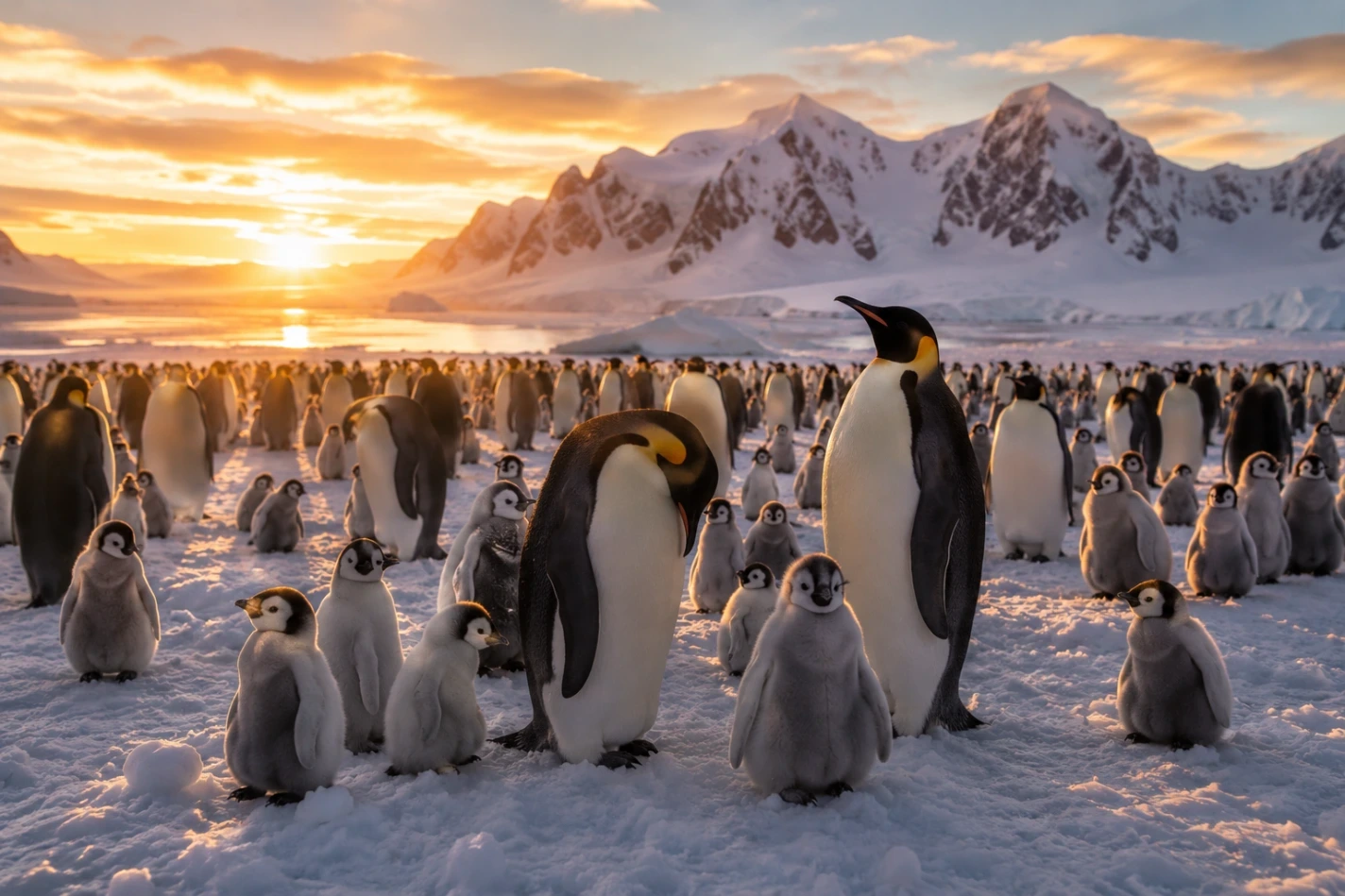
Imagine standing in a place where temperatures can fall below −60°C (−76°F) and icy winds race across the landscape at more than 190 km/h (120 mph).
The air is so cold that exposed skin can freeze in minutes.
Snow stretches to the horizon in every direction, and for months, the Sun barely rises above the horizon.
This is Antarctica, the coldest, driest, and windiest continent on Earth.
At first glance, it seems impossible that any animal could survive here.
Yet every year, one remarkable bird not only survives but raises its young in these unforgiving conditions.
That bird is the emperor penguin.
Among all penguin species, emperor penguins have mastered life in one of the harshest environments on the planet, proving that survival often depends on teamwork, patience, and extraordinary adaptation.
Meet the Emperor Penguin
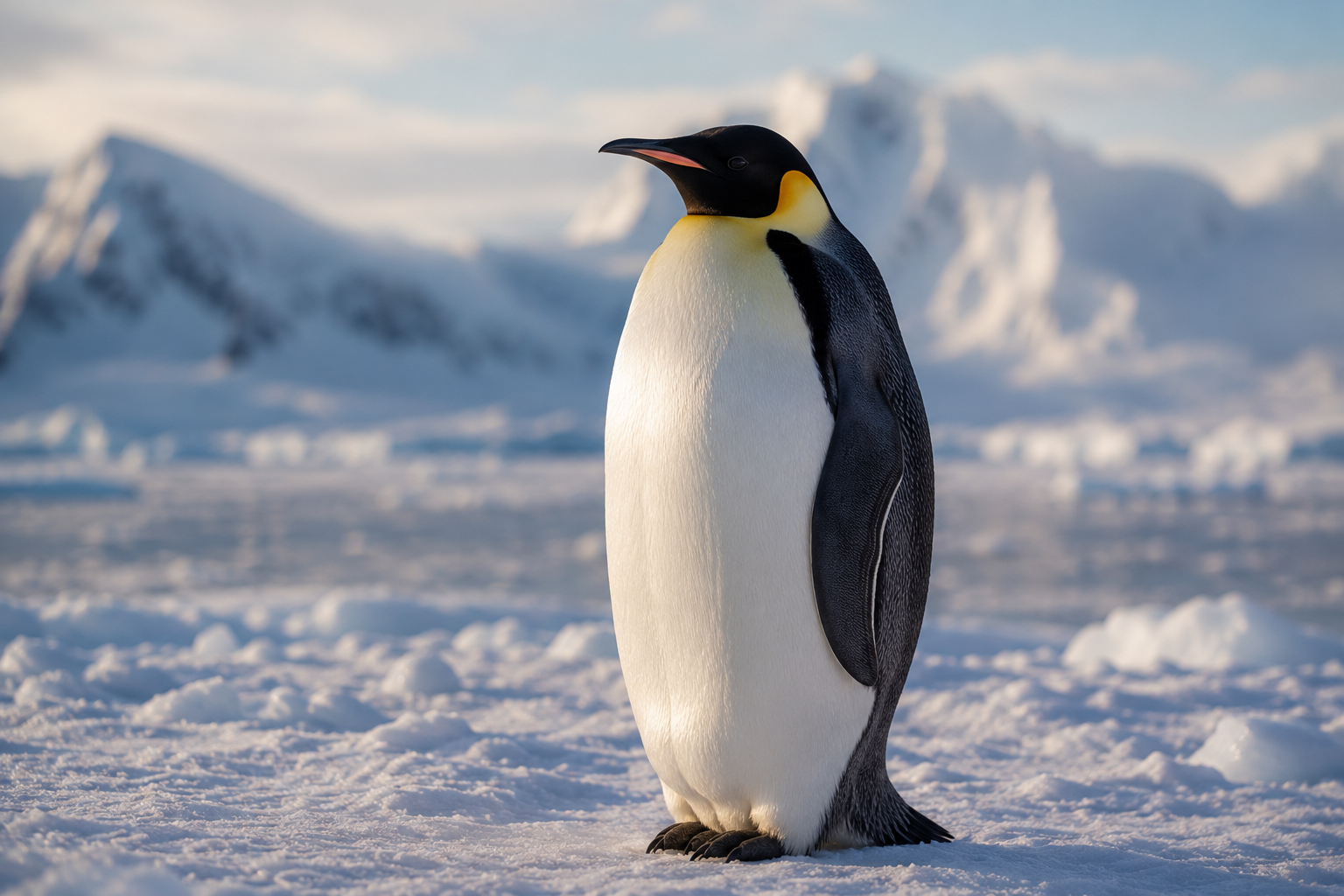
Standing up to 1.2 meters (4 feet) tall and weighing as much as 40 kilograms (88 pounds), the emperor penguin is the largest penguin species in the world.
Its sleek black-and-white feathers, bright yellow ear patches, and streamlined body make it instantly recognizable.
Unlike flying birds, emperor penguins have evolved into expert swimmers.
Their wings have transformed into powerful flippers that propel them effortlessly through icy waters, while their dense bones help them dive deep beneath the surface.
A thick layer of fat and thousands of tightly packed waterproof feathers trap heat close to the body, allowing them to survive temperatures that would be deadly for most animals.
Every feature of an emperor penguin is perfectly designed for life in Antarctica.
Why They Breed During the Antarctic Winter
Most birds choose spring or summer to raise their young.
Emperor penguins do exactly the opposite.
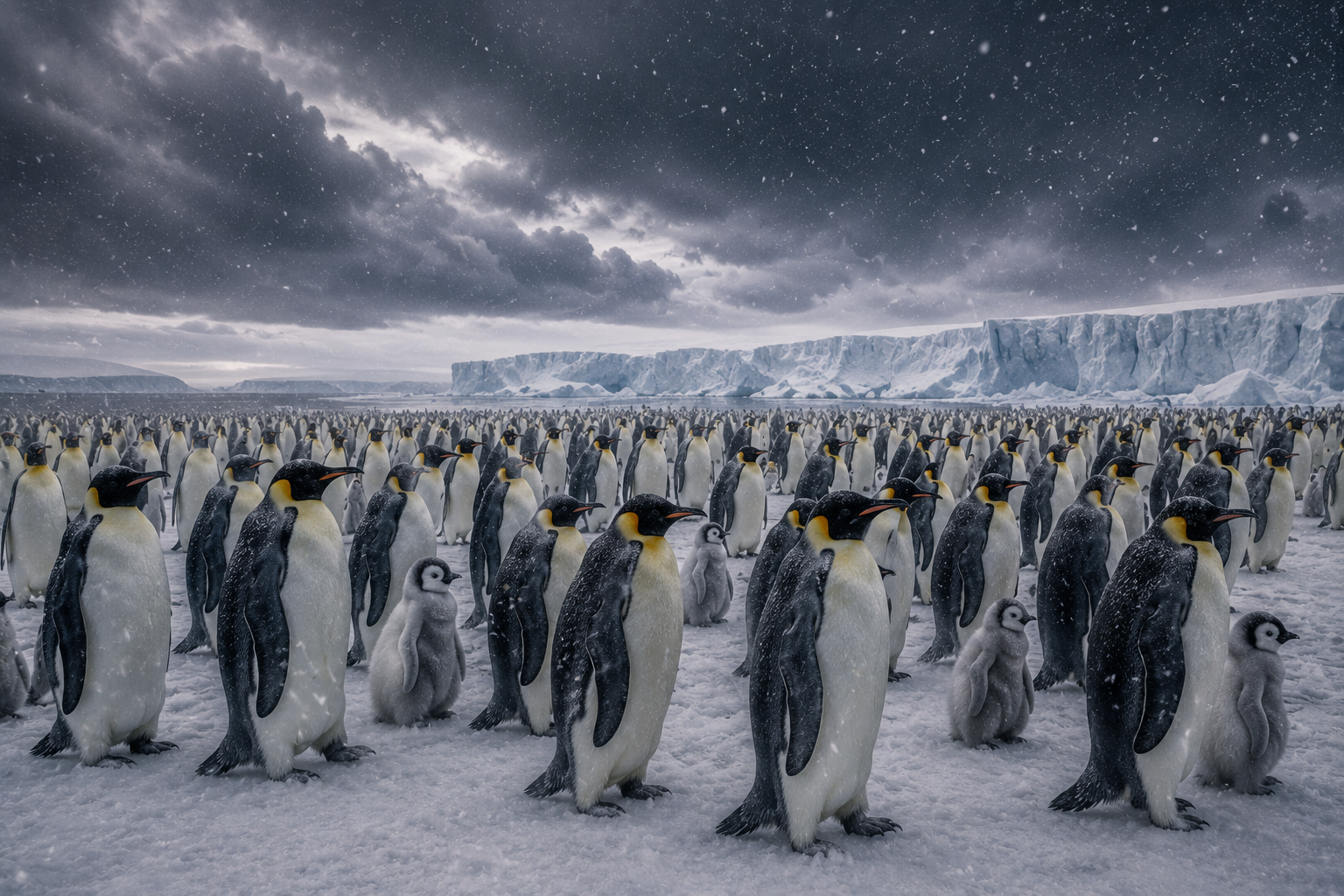
Each year, as Antarctica enters its freezing winter, thousands of emperor penguins begin an incredible journey across the sea ice toward their breeding grounds.
Why choose the harshest season?
Because by laying eggs during winter, the chicks hatch just as the Antarctic summer begins.
This timing gives young penguins the best chance to grow strong before the sea ice melts and winter returns.
Although this strategy exposes parents to months of freezing temperatures and powerful storms, it ensures that their chicks have access to abundant food when they need it most.
Nature has turned one of Earth's toughest seasons into the perfect nursery.
The Incredible Egg Balancing Act
After laying a single egg, the female emperor penguin performs an extraordinary transfer.
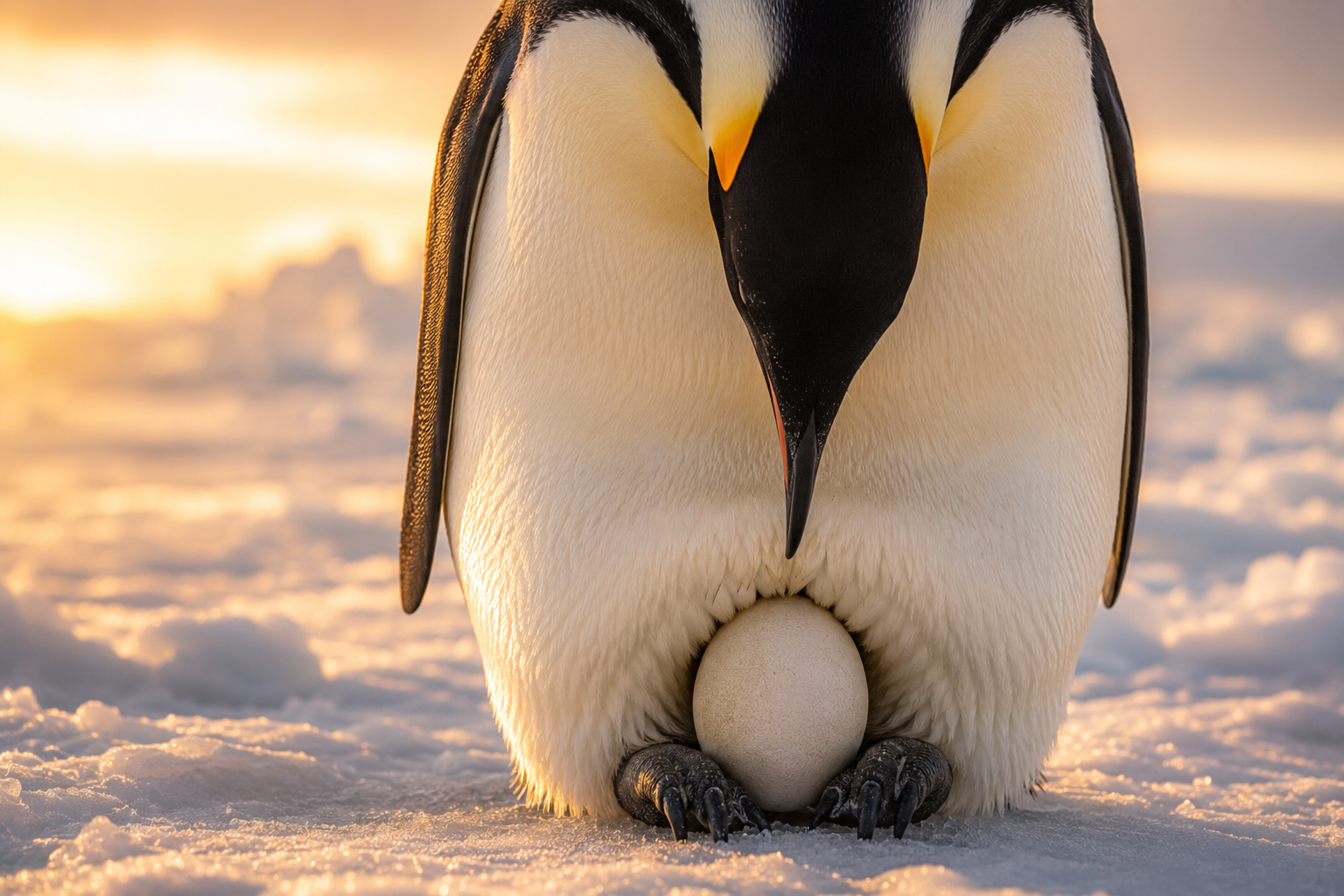
She carefully rolls the egg onto the feet of the waiting male.
The exchange takes only a few seconds, but it is one of the most delicate moments in the penguin's life.
If the egg touches the frozen ice for too long, the developing chick may not survive.
Once the transfer is complete, the father covers the egg with a warm fold of skin called a brood pouch, protecting it from the freezing Antarctic air.
Balanced carefully on his feet, the egg remains safe and warm for the next two months.
It is one of the most remarkable examples of parental care in the animal kingdom.
A Father's Long Winter Watch
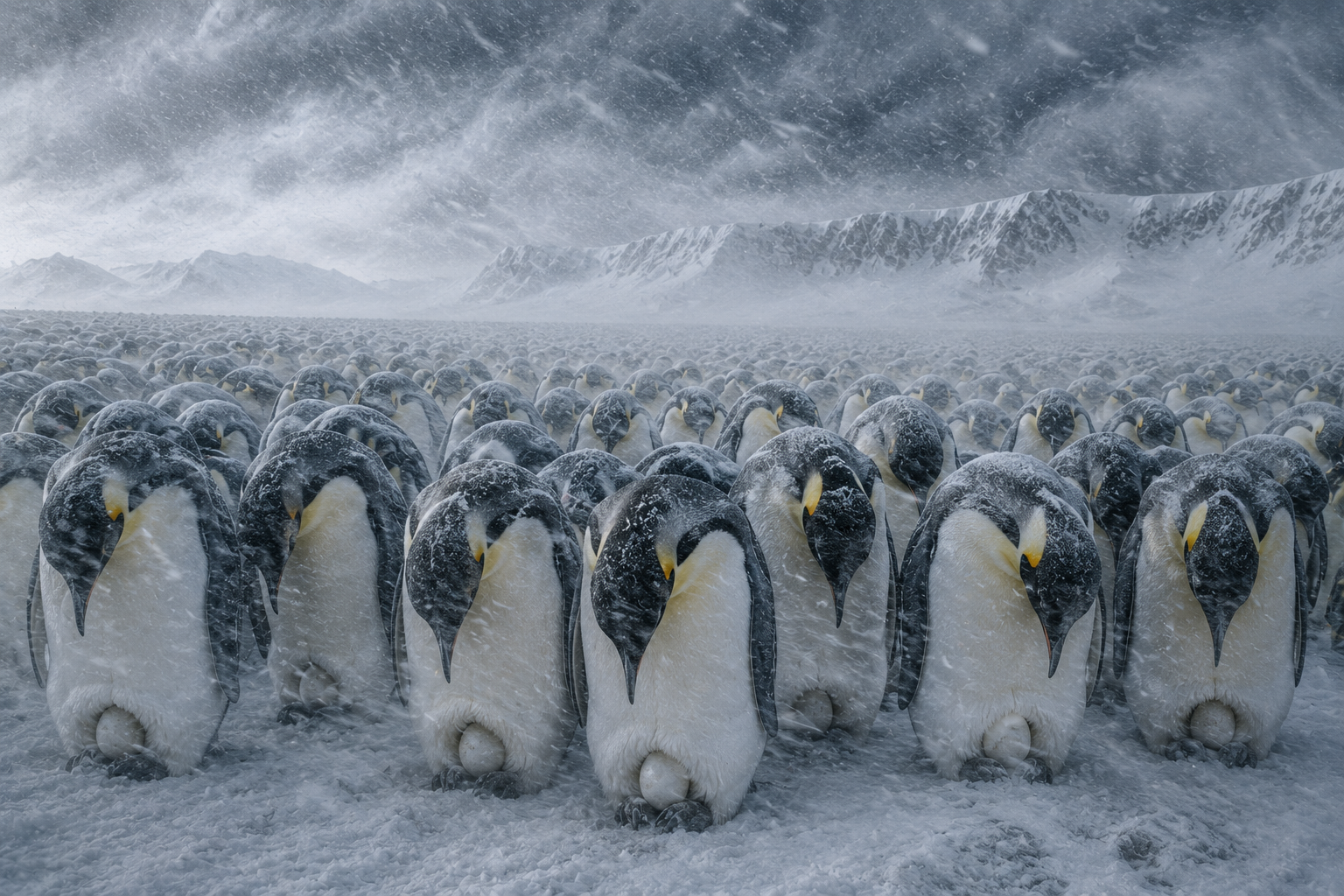
After handing over the egg, the female returns to the ocean to feed, often traveling more than 100 kilometers across the sea ice.
Meanwhile, the father begins one of nature's greatest endurance tests.
For around two months, he remains on the ice without eating, drinking, or leaving the egg.
During this time, he survives entirely on stored body fat while protecting his future chick from temperatures far below freezing.
Blizzards, darkness, and fierce winds become part of daily life.
Yet the fathers stand patiently, refusing to abandon their precious eggs.
Few parents in the animal kingdom make a sacrifice as great as the emperor penguin father.
Surviving Antarctica
The Power of the Penguin Huddle
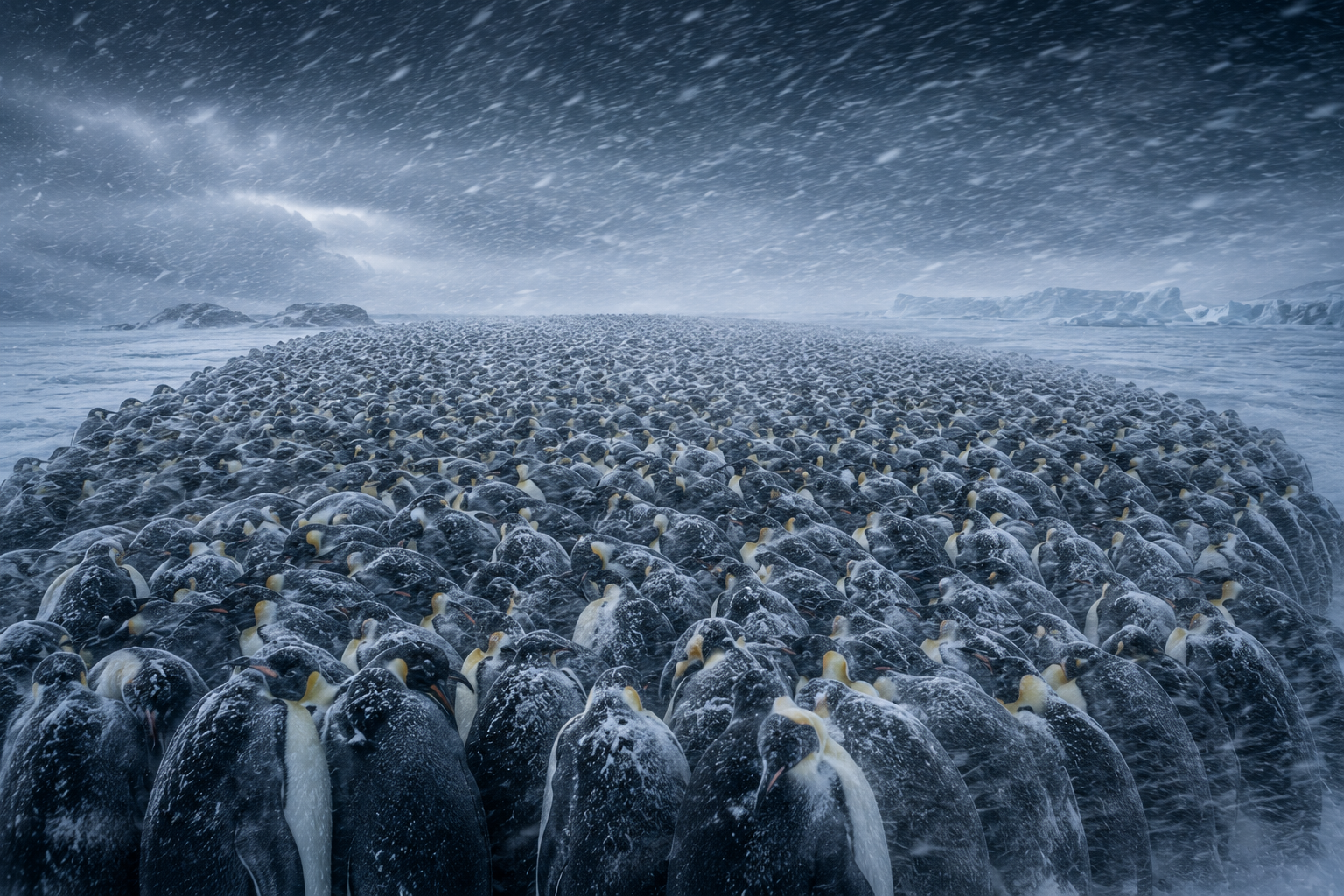
No animal can survive Antarctica's brutal winter alone.
When temperatures plunge below −60°C and icy winds roar across the frozen landscape, emperor penguins rely on one of nature's greatest survival strategies—the penguin huddle.
Thousands of penguins gather shoulder to shoulder, forming a tightly packed circle that shields individuals from the freezing wind.
Inside the huddle, temperatures can rise to around 20°C (68°F), creating a surprisingly warm refuge despite the deadly conditions outside.
The penguins constantly rotate positions.
Those exposed to the freezing wind slowly move toward the center, while warmer penguins take their turn on the outside. This continuous movement ensures that no individual remains in the cold for too long.
It's a remarkable example of teamwork, where the survival of every penguin depends on the group.
A Mother's Epic Journey Home
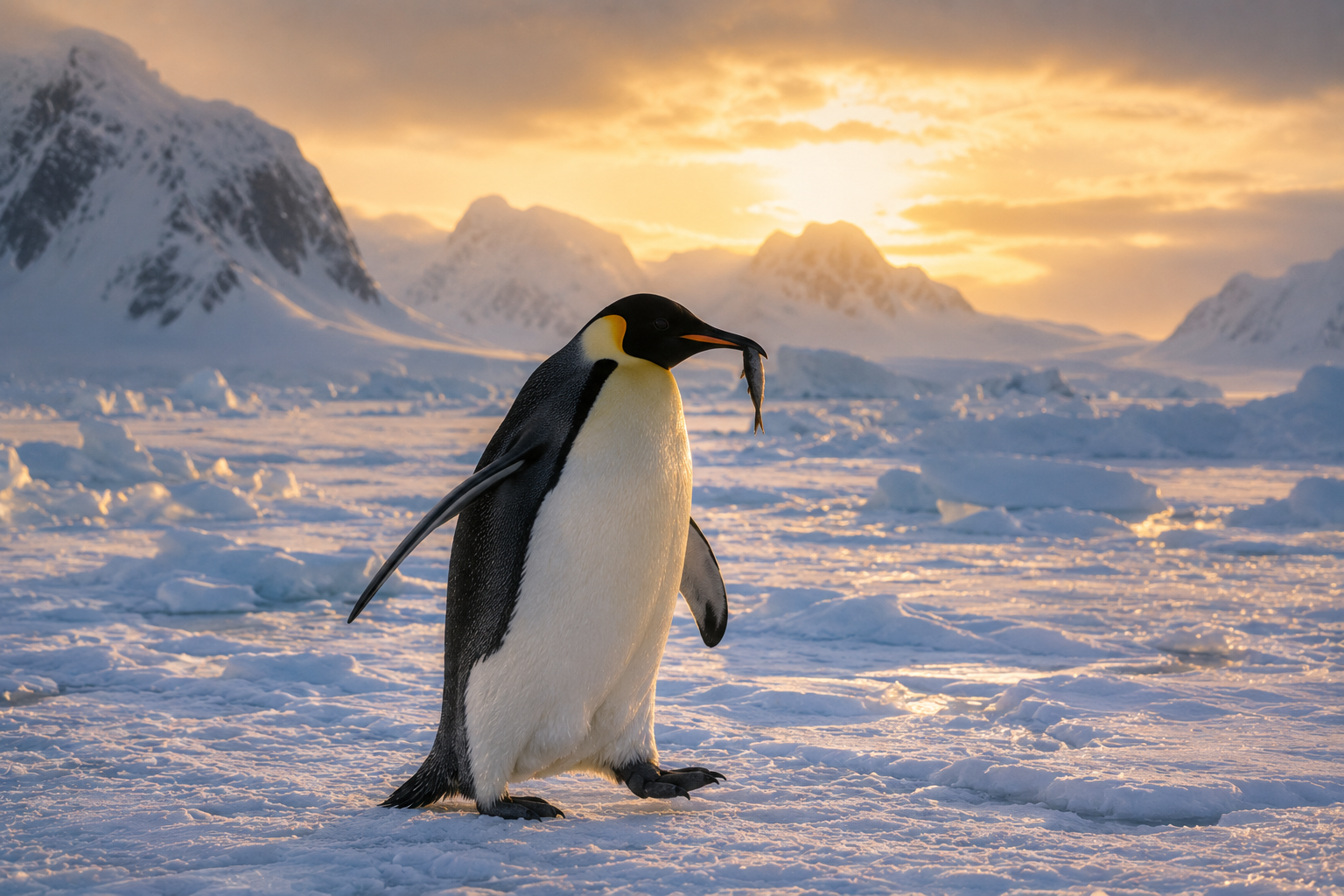
While the fathers protect their eggs, the mothers travel back to the ocean in search of food.
The journey can stretch more than 100 kilometers (62 miles) across frozen sea ice.
After reaching open water, the females spend weeks hunting fish, squid, and krill, rebuilding the energy they lost during egg-laying.
When the chicks are ready to hatch, the mothers return to the colony carrying food stored in their stomachs.
Finding their family among thousands of nearly identical penguins might seem impossible.
Yet each emperor penguin recognizes the unique calls of its mate and chick, allowing families to reunite even in enormous colonies.
It is one of nature's most remarkable family reunions.
Built for Life Beneath the Ice
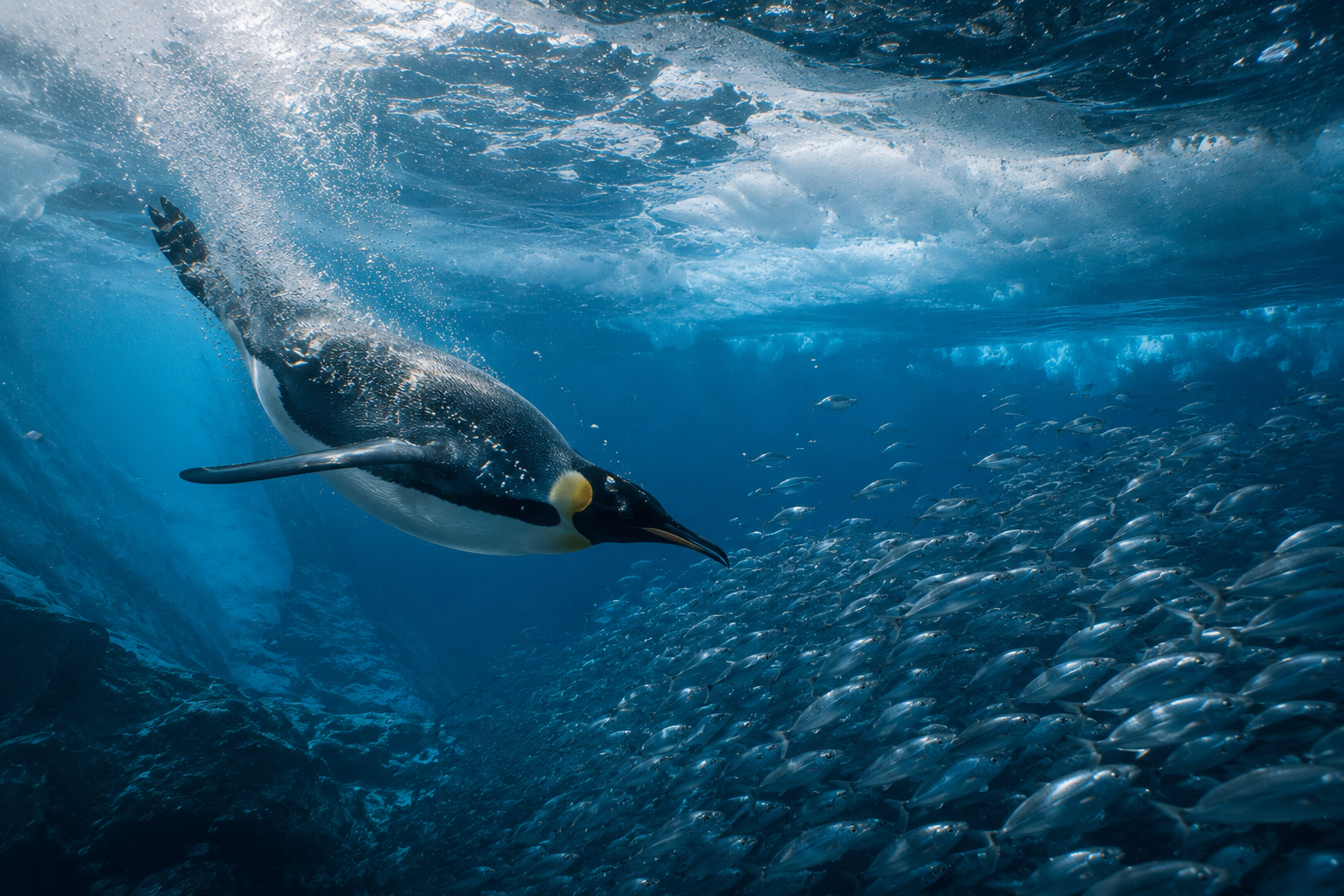
Emperor penguins are just as impressive in the water as they are on land.
Their streamlined bodies and powerful flippers allow them to swim gracefully through the icy Southern Ocean.
They can dive more than 500 meters (1,640 feet) below the surface and remain underwater for over 20 minutes, searching for fish, squid, and krill.
Special adaptations help them survive these deep dives.
Their bodies store extra oxygen in their muscles and blood, while their heart rate slows to conserve energy.
A thick layer of fat and waterproof feathers keeps them warm even in freezing water.
Few birds on Earth are better adapted to life in such an extreme marine environment.
Threats in a Changing Climate
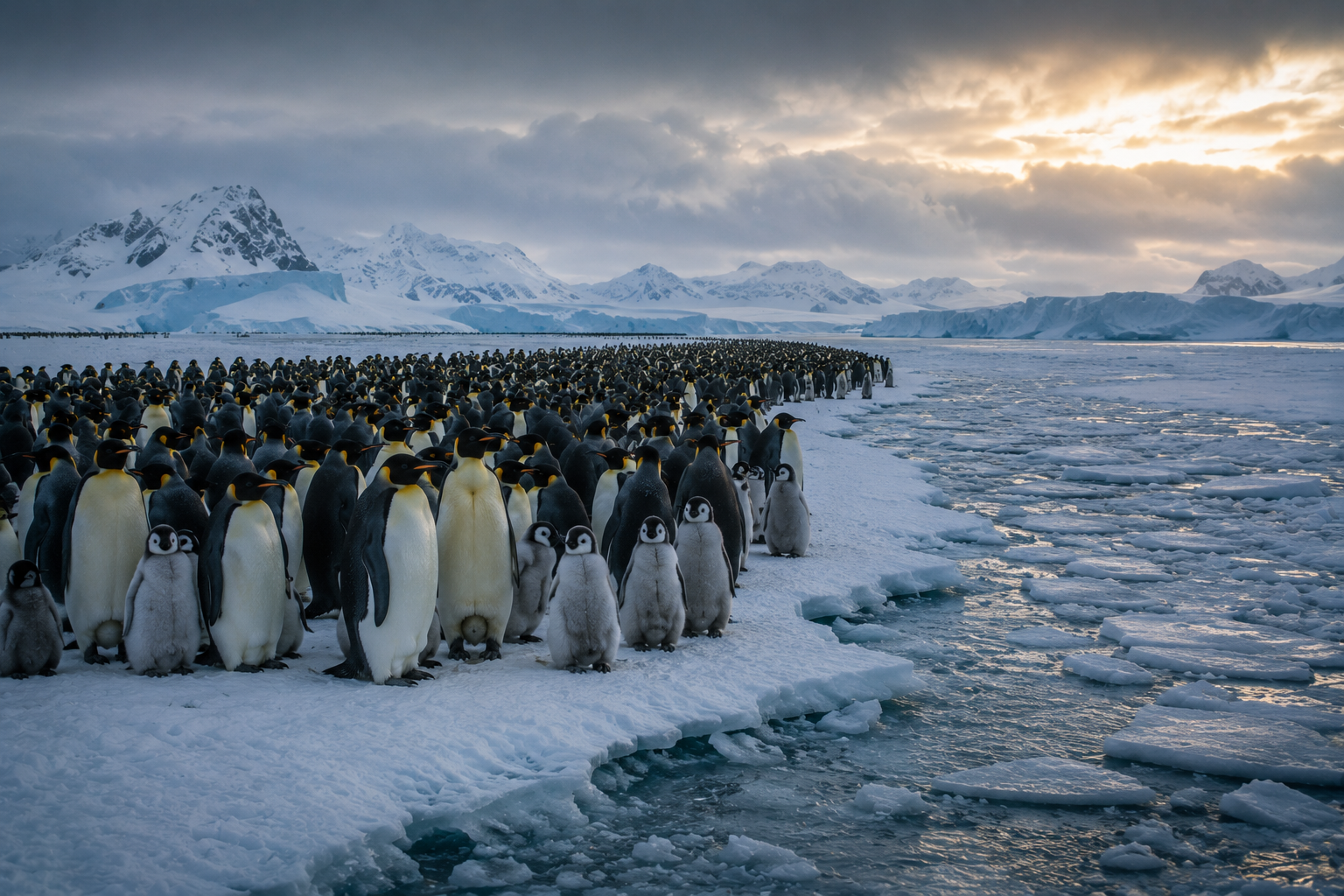
Although emperor penguins have survived Antarctica's harsh conditions for thousands of years, today's challenges are different.
One of the greatest threats is climate change.
As global temperatures rise, Antarctic sea ice is changing.
Sea ice provides the stable platform where emperor penguins breed, raise chicks, and rest between hunting trips.
If the ice breaks apart too early, chicks may enter the freezing ocean before their waterproof feathers have fully developed.
Changes in sea ice can also affect the availability of fish and krill, making it harder for adults to find enough food.
Scientists continue monitoring emperor penguin colonies to understand how these changes may affect their future.
Protecting Antarctica's unique environment is becoming increasingly important for the survival of these remarkable birds.
What Scientists Are Learning from Emperor Penguins
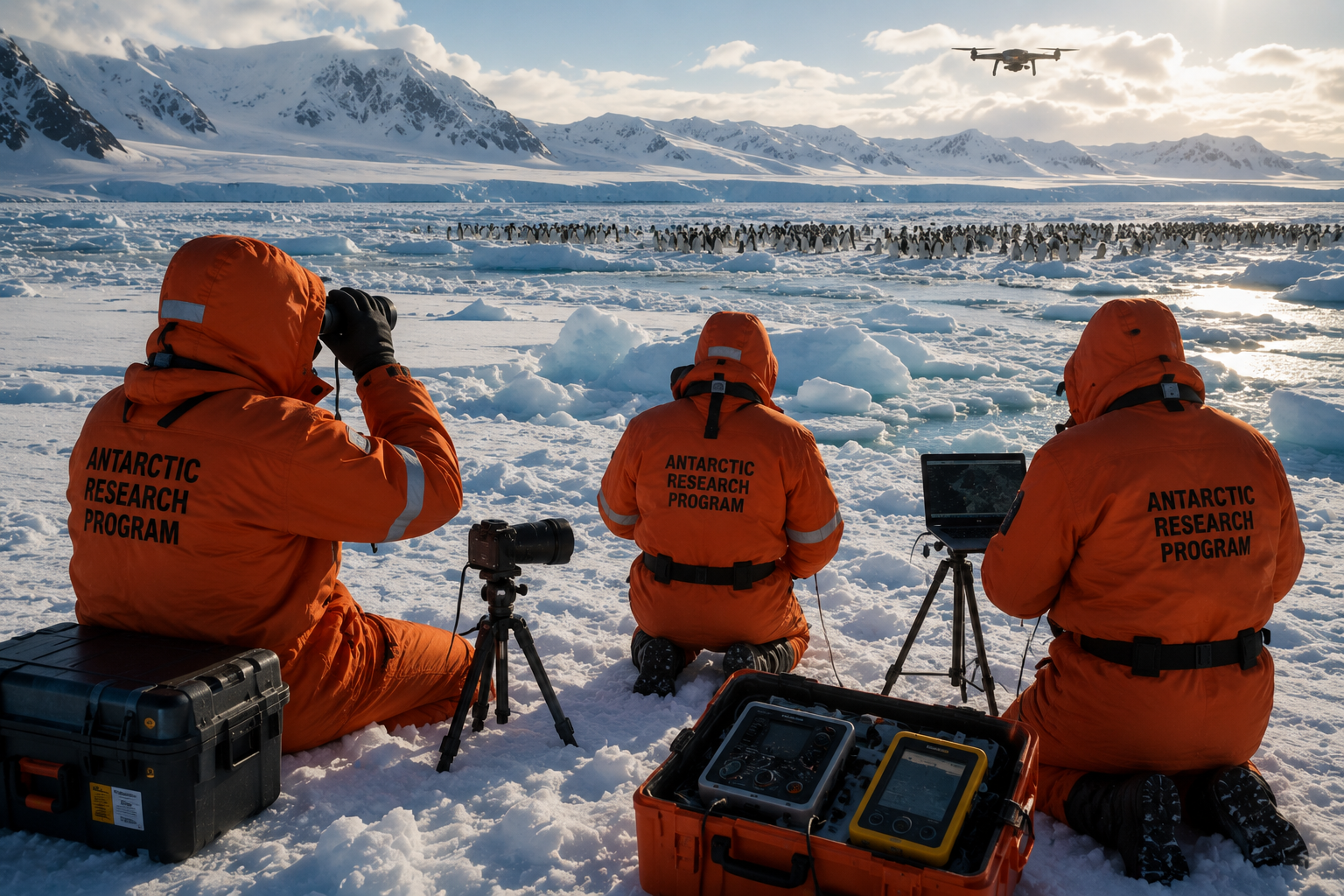
Every year, researchers travel to Antarctica to better understand emperor penguins and the changing world they inhabit.
Using satellite imagery, GPS tracking devices, drones, and carefully conducted field studies, scientists monitor migration routes, breeding success, and colony health.
These studies reveal how penguins respond to changing sea ice, shifting weather patterns, and food availability.
The knowledge gained doesn't just help protect emperor penguins.
It also provides valuable insights into the health of the Antarctic ecosystem and how climate change is affecting one of Earth's most remote environments.
By studying these remarkable birds, scientists gain a deeper understanding of our changing planet.
Amazing Emperor Penguin Facts
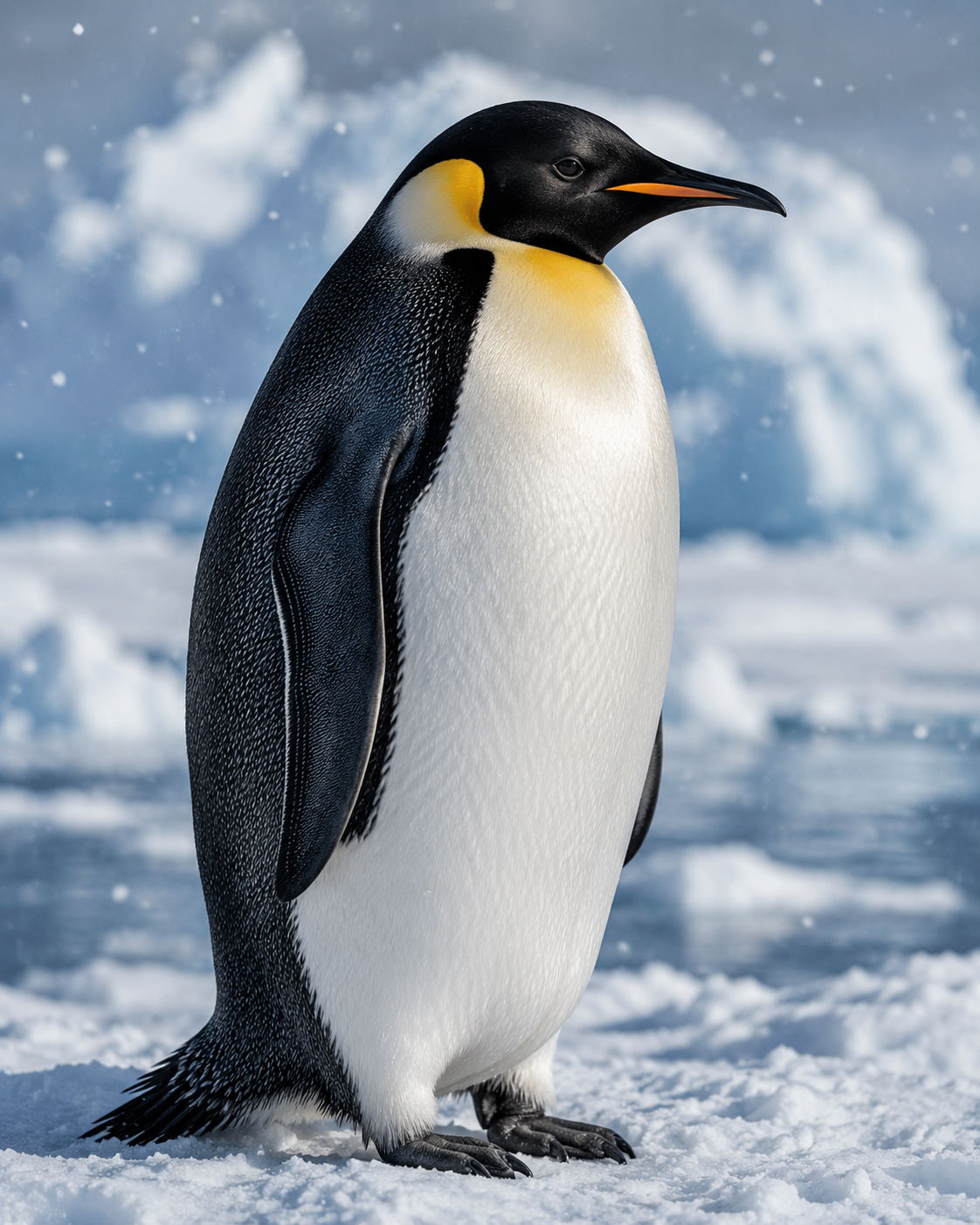
The emperor penguin is one of the most extraordinary birds on Earth. Every aspect of its life is adapted to survive one of the harshest environments on the planet.
Here are some incredible facts about these remarkable birds:
- 🐧 Emperor penguins are the largest penguin species, growing up to 1.2 meters (4 feet) tall.
- ❄️ They survive Antarctic winters where temperatures can fall below −60°C (−76°F).
- 🌊 They can dive to depths of over 500 meters (1,640 feet) in search of food.
- 🫁 Emperor penguins can remain underwater for more than 20 minutes on a single dive.
- 🥚 Males incubate the egg for about 65 days without eating, surviving entirely on stored body fat.
- 🤝 Thousands of penguins form tightly packed huddles to conserve heat during fierce blizzards.
- 👶 Emperor penguins produce only one chick each breeding season, making every successful hatch incredibly important.
- 🎵 Parents and chicks recognize one another through unique vocal calls, even in colonies of thousands.
These incredible adaptations allow emperor penguins to thrive where few other animals can survive.
The Kings of Antarctica
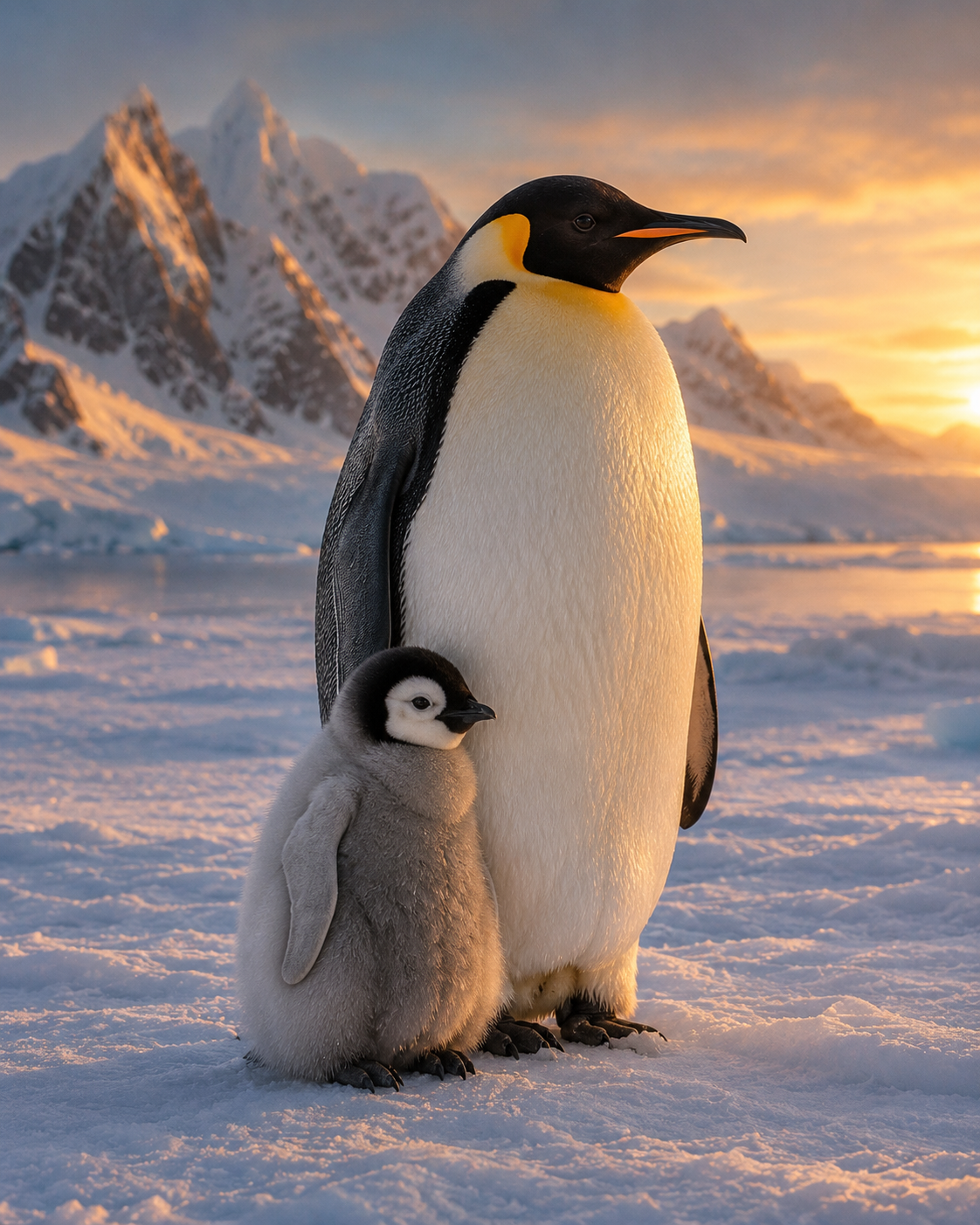
In a land of endless ice, powerful storms, and months of darkness, emperor penguins have mastered the art of survival.
Their story is one of patience, teamwork, and resilience. From fathers protecting a single egg through the long Antarctic winter to families reuniting after months apart, every stage of their lives reflects the remarkable ways nature adapts to even the harshest conditions.
The next time you see an emperor penguin, remember that behind its calm appearance lies one of the greatest survival stories in the animal kingdom—a true king of Antarctica.
FAQ-Frequently Asked Questions
1.How long can father emperor penguins go without eating?
Father emperor penguins can fast for up to 120 days while incubating the egg, surviving entirely on stored body fat and often losing nearly half their body weight.
2.How do emperor penguins keep their eggs warm?
The father balances the egg on his feet and covers it with a brood pouch — a warm fold of skin that keeps the egg at a steady temperature even in extreme cold.
3.Why do emperor penguins breed during the Antarctic winter?
Breeding in winter times the chicks' hatching to coincide with the start of Antarctic summer, giving them the best chance to grow before food becomes scarce again.
4.How does the penguin huddle work?
Thousands of penguins pack tightly together to block wind and share warmth, constantly rotating positions so no individual stays on the cold outer edge for too long.
5.How deep can emperor penguins dive?
Emperor penguins can dive over 500 meters (1,640 feet) and stay underwater for more than 20 minutes while hunting.
7.How do emperor penguin parents find their chicks in huge colonies?
Each penguin recognizes the unique vocal call of its mate and chick, allowing families to reunite even among thousands of nearly identical birds.