Chapter 1
Two Ancient Survivors: Meet the Crocodilians
Most people think crocodiles and alligators are simply different names for the same animal.
At first glance, the confusion is understandable.
Both have armored bodies, powerful tails, sharp teeth, and eyes that sit high on their heads. They spend much of their lives in the water and hunt using nearly identical ambush techniques.
Yet despite these similarities, they belong to different branches of the crocodilian family, each shaped by millions of years of evolution in different environments.
Learning to tell them apart is more than recognizing a different snout—it reveals how evolution can produce two highly successful predators from a common ancestor.
Survivors From Deep Time
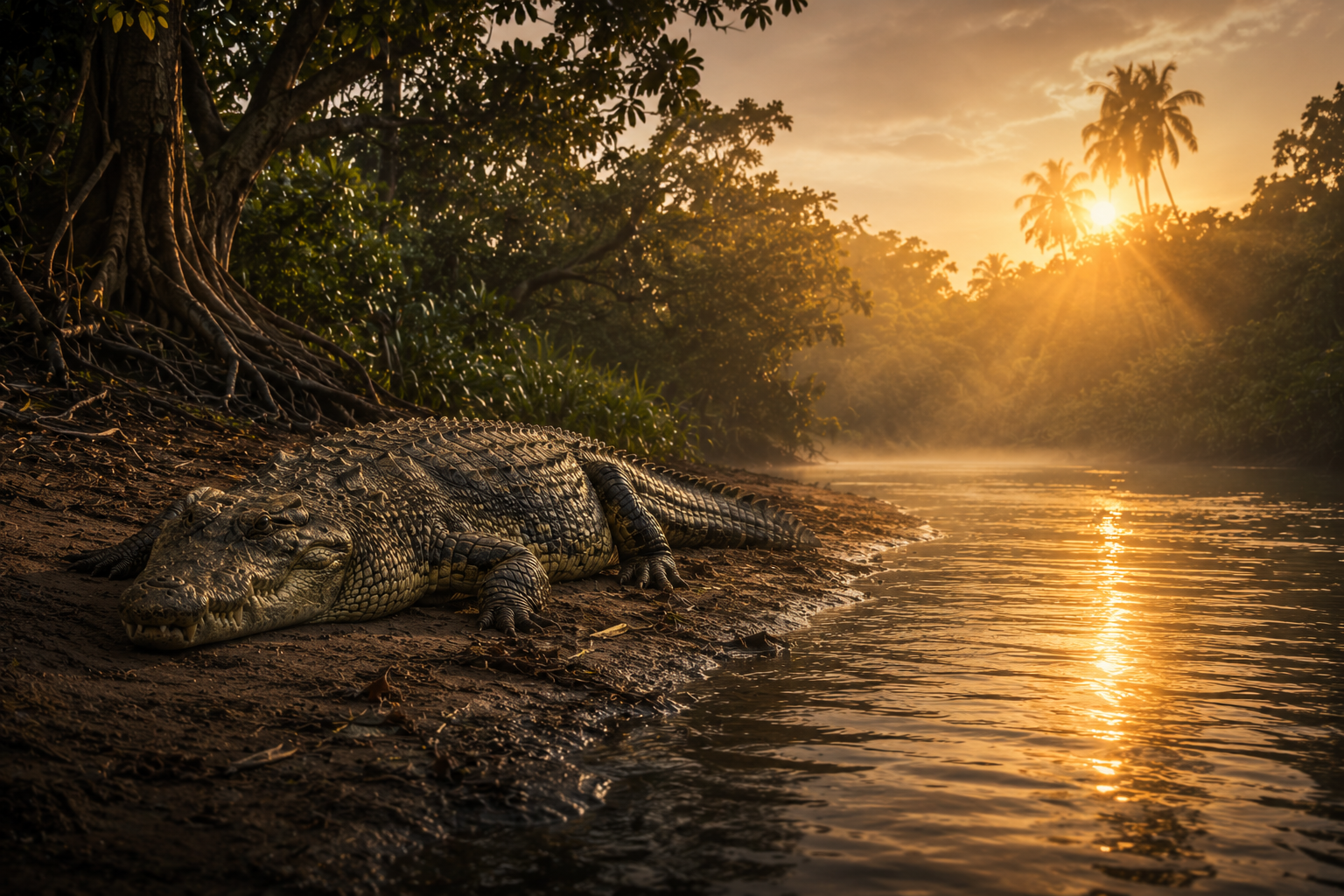
Long before humans appeared, giant reptiles ruled rivers, swamps, and coastlines across the planet.
Modern crocodiles and alligators belong to the order Crocodylia, a lineage that has remained remarkably successful for around 80–95 million years. While dinosaurs disappeared after the mass extinction 66 million years ago, crocodilians survived by adapting to changing climates and habitats.
Today's species are not living dinosaurs.
Instead, they are some of the closest surviving relatives of those ancient reptiles, preserving body designs that have changed very little over millions of years.
Their success is a reminder that evolution does not always reward change. Sometimes, an already effective design simply continues to work.
One Family, Different Branches
Although they share a distant ancestor, crocodiles and alligators followed different evolutionary paths.
Today, there are 24 living crocodilian species, divided into three main families:
- Crocodylidae – True crocodiles
- Alligatoridae – Alligators and caimans
- Gavialidae – Gharials
Among these, crocodiles and alligators are the species most people encounter or recognize, but they occupy different habitats and display unique physical adaptations.
Understanding those differences is the key to identifying them correctly.
The Crocodilian Family Tree
Why Are They So Often Confused?
Both reptiles share the same basic survival strategy.
They spend long periods almost completely submerged, exposing only their eyes and nostrils above the water while waiting for prey to approach. Their muscular tails provide explosive acceleration, and their jaws deliver one of the strongest bites in the animal kingdom.
Because these adaptations evolved long before humans existed, they remain highly effective today.
This is why crocodiles and alligators appear so similar at first glance.
The real differences become obvious only when you examine their anatomy, habitat, and behavior more closely.
What We'll Discover Next
Although crocodiles and alligators may look alike from a distance, their bodies reveal a surprising number of differences.
From the shape of their snouts and the position of their teeth to the types of water they inhabit, every feature tells part of their evolutionary story.
In the next chapter, we'll compare these two ancient reptiles feature by feature to learn how to identify them instantly in the wild
Chapter 2
Spot the Difference: Crocodile vs. Alligator
At first glance, crocodiles and alligators appear almost identical.
Both have armored bodies, muscular tails, powerful jaws, and eyes positioned high on their heads to watch for prey while remaining nearly invisible beneath the water's surface.
Yet biologists can identify them in seconds.
The clues are hidden in their anatomy.
Every difference—from the shape of the snout to the visibility of their teeth—reflects millions of years of adaptation to different environments.
The Shape of the Snout
The easiest feature to recognize is the snout.
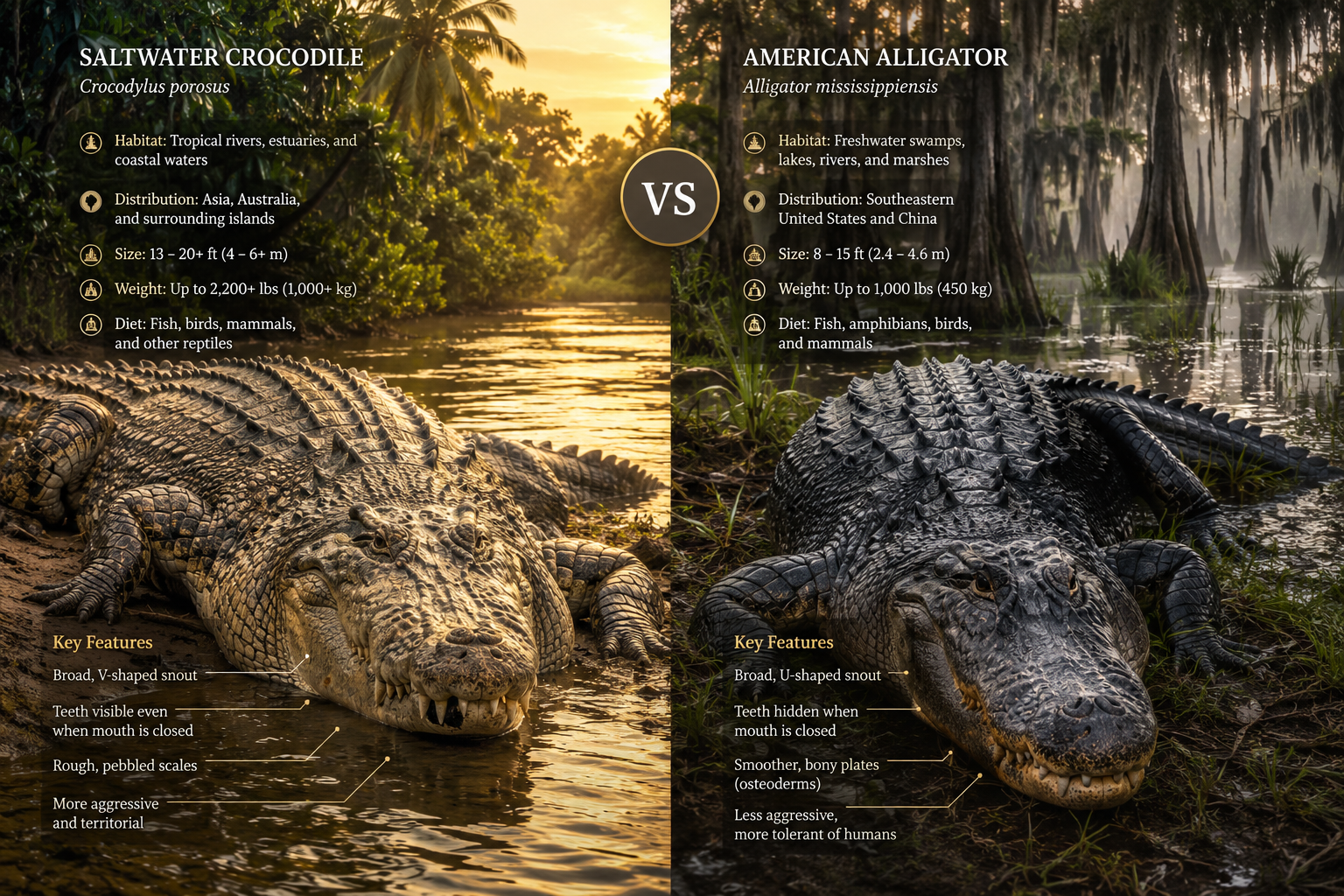
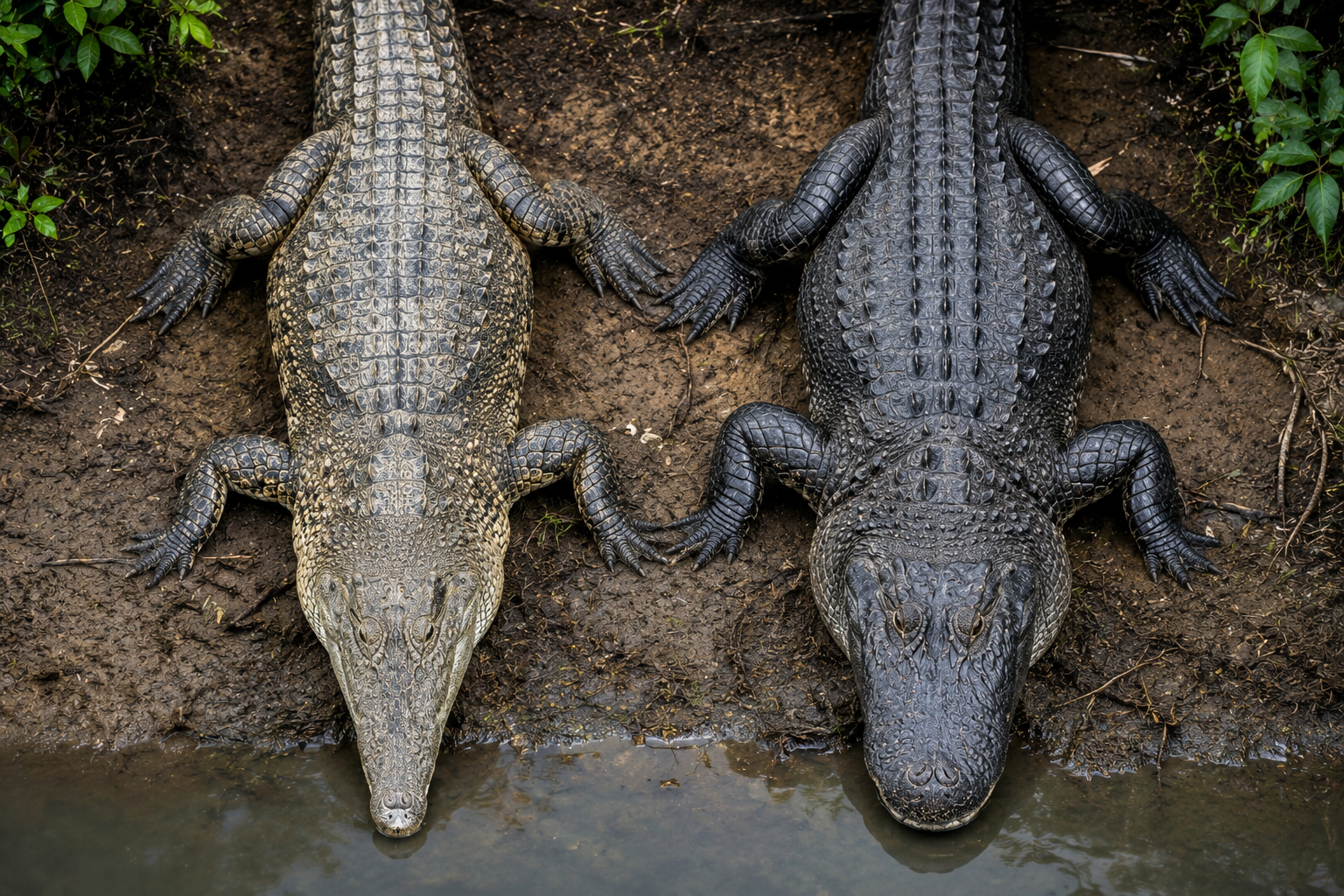
Crocodiles have a long, narrow, V-shaped snout that reduces water resistance when striking at fish and allows them to hunt efficiently in rivers, estuaries, and coastal environments.
Alligators, by contrast, have a broader, rounded U-shaped snout. This wider jaw provides greater crushing power, making it easier to crack the shells of turtles and other hard-shelled prey commonly found in freshwater habitats.
Neither design is better.
Each evolved for the food available in its environment.
The Teeth Tell the Story
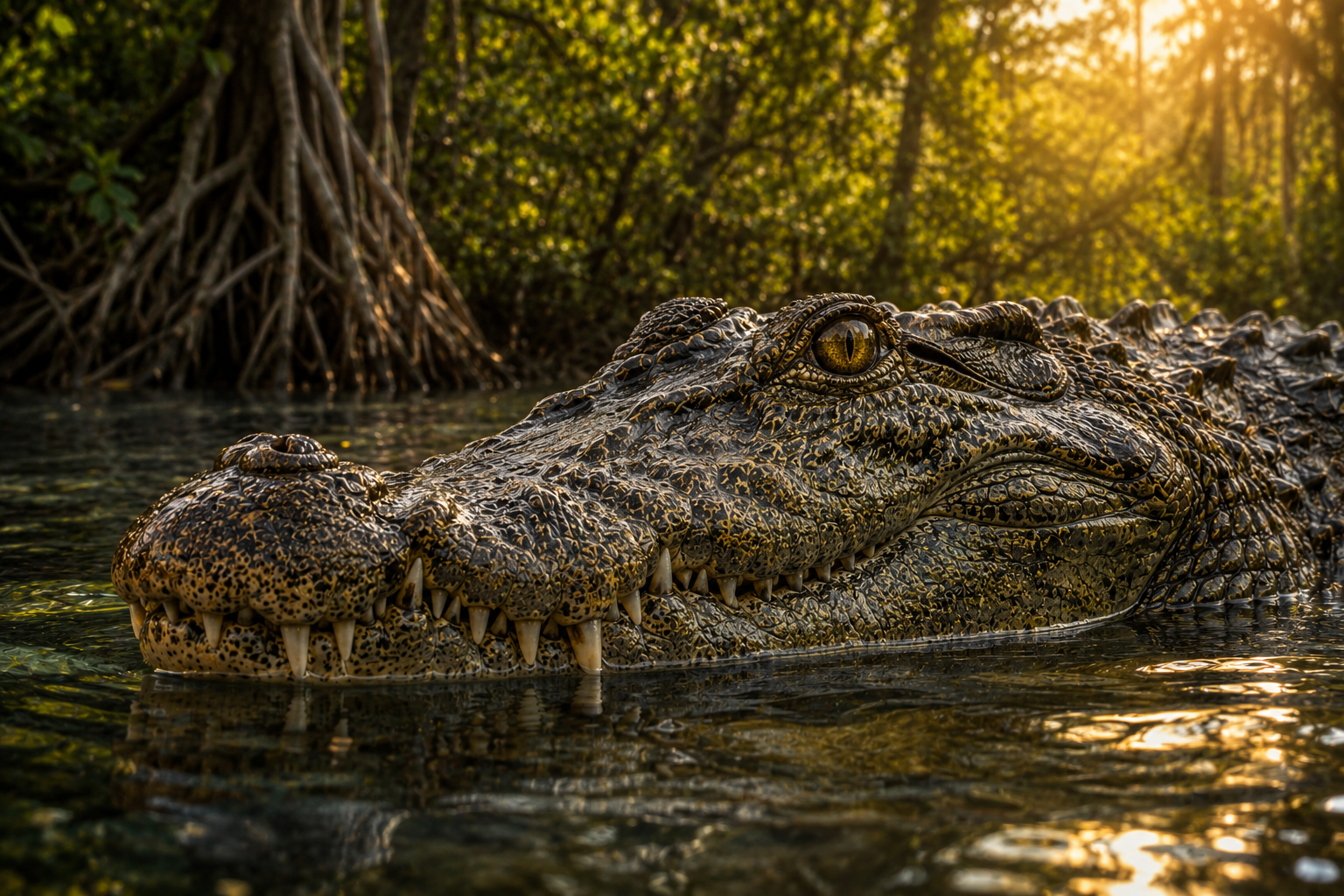
Even with its mouth closed, a crocodile reveals one of its most distinctive features.
The large fourth tooth in the lower jaw remains clearly visible because both jaws are nearly the same width.
An alligator's upper jaw is wider.
When its mouth closes, the lower teeth fit neatly inside the upper jaw, leaving only the upper row visible.
This simple difference is often enough for wildlife researchers to identify the species from a single photograph.
Crocodile vs. Alligator Anatomy Blueprint
Color and Body Shape
Although color can vary with age and habitat, crocodiles usually appear olive green, tan, or light brown, helping them blend into muddy rivers, mangroves, and coastal estuaries.
Alligators are generally dark gray to nearly black, a coloration that provides excellent camouflage in shaded freshwater swamps and marshes.
Their bodies also differ slightly.
Crocodiles tend to have a leaner, more streamlined appearance, while alligators often look broader and heavier through the head and shoulders.
These subtle differences become much easier to notice once you know what to look for.
Where They Live
Habitat provides another important clue.
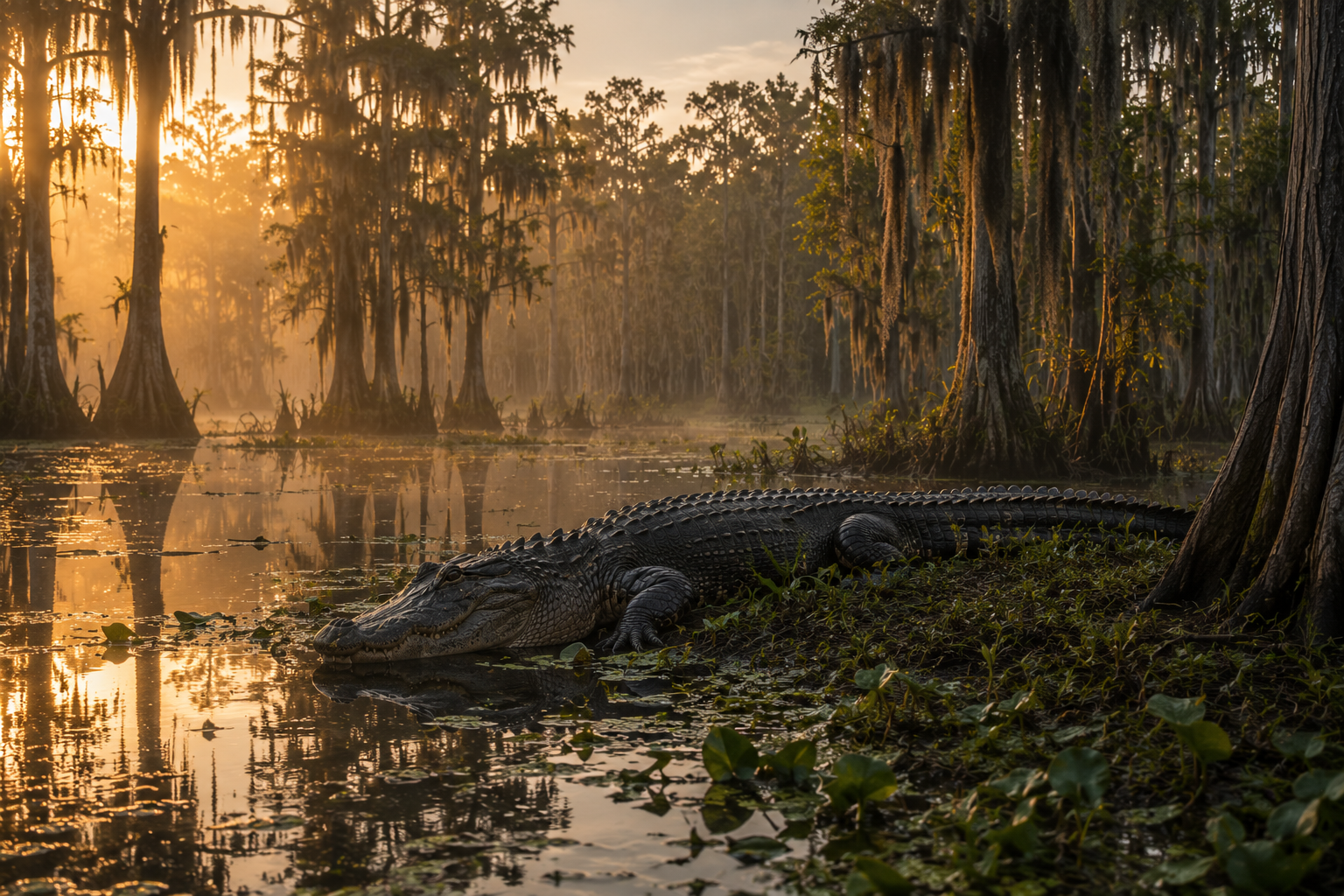
Most alligators spend their lives in freshwater environments such as swamps, marshes, lakes, rivers, and slow-moving wetlands.
Many crocodile species also live in freshwater, but several—including the saltwater crocodile—are capable of surviving in brackish estuaries and even the open sea.
Specialized salt glands located on their tongues allow crocodiles to remove excess salt from their bodies, making long journeys through coastal waters possible.
Alligators possess similar glands, but they are far less effective, limiting them primarily to freshwater habitats.
It's More Than Appearance
The differences between crocodiles and alligators are not cosmetic.
Their skulls, jaws, teeth, coloration, and physiology all reflect adaptations to different ecological niches.
Evolution has shaped each animal for success in its own world.
Understanding these features allows scientists to identify species quickly—and helps observers appreciate that two animals which seem almost identical actually represent distinct evolutionary paths.
Transition
Appearance is only part of the story.
The next question is far more impressive:
How do these ancient reptiles hunt with such extraordinary efficiency—and why do they remain among the most successful ambush predators on Earth?
Chapter 3
Masters of the Ambush: Built to Strike Without Warning
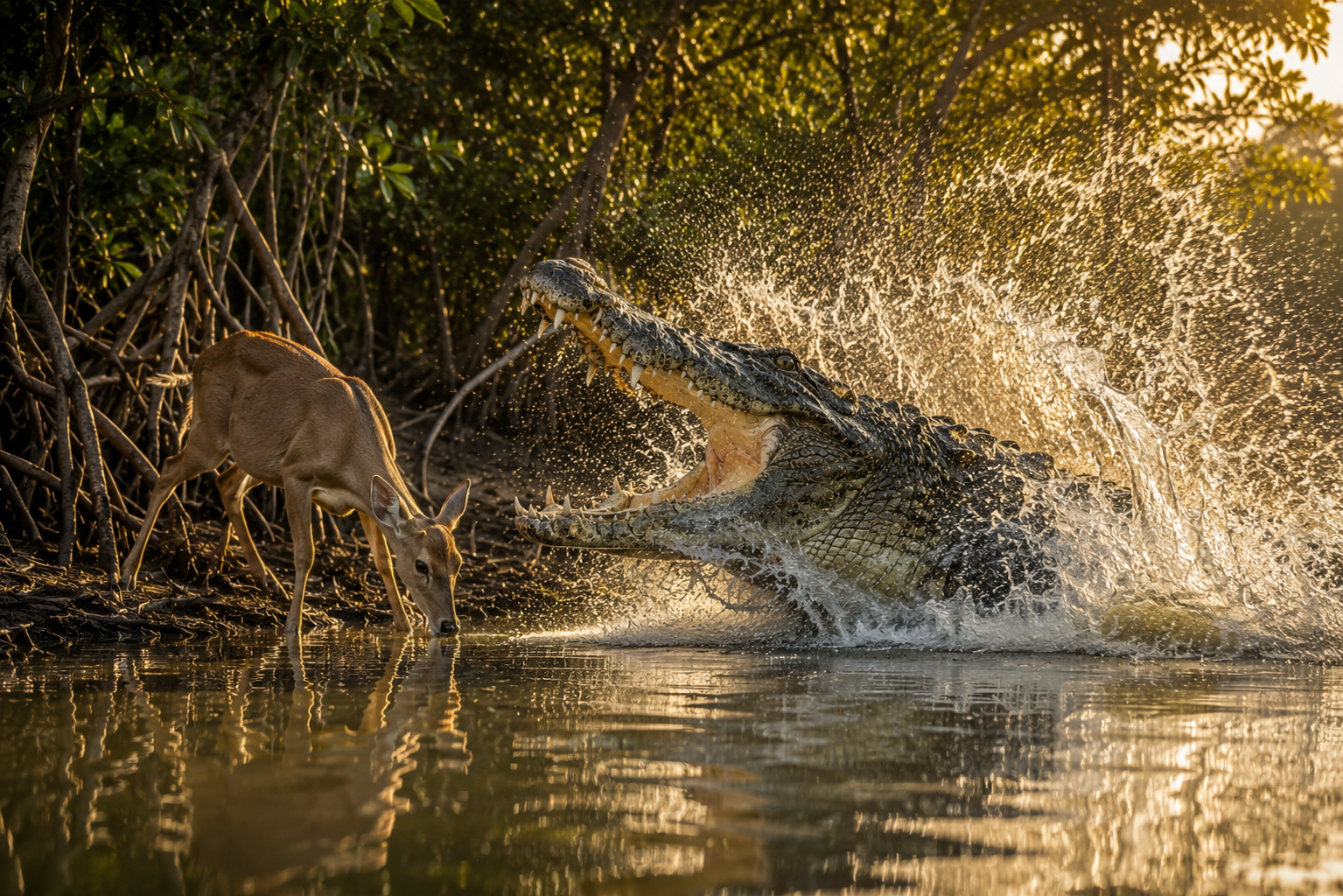
For hours, nothing moves.
Only two eyes and a pair of nostrils break the surface of the water. Beneath them lies nearly an entire body hidden from sight.
To a thirsty animal approaching the riverbank, the water appears calm.
In reality, one of nature's most efficient ambush predators is already measuring the distance to its next meal.
Unlike lions or wolves, crocodiles and alligators do not rely on endurance or long chases.
They depend on patience.
One perfectly timed attack is far more effective than wasting energy in pursuit.
A Hunter That Waits, Not Chases
Every successful ambush begins long before the strike.
Both crocodiles and alligators position themselves where prey naturally gathers—river crossings, muddy banks, swamp edges, or narrow channels used by fish and mammals.
Their eyes and nostrils sit on top of the head, allowing nearly the entire body to remain underwater while still watching and breathing.
This design lets them observe the world without revealing their presence.
When the distance is right, the attack begins.
Power in a Fraction of a Second
The explosive strike lasts only moments.
Driven by powerful tail muscles, the reptile launches forward with astonishing acceleration. Its jaws snap shut almost instantly, giving prey little chance to escape.
The famous bite force is not used to chew.
Instead, it is designed to grip with incredible strength.
Sharp teeth hold struggling prey securely while the powerful neck and body do the remaining work.
The Secret Weapon: Invisible Sensors
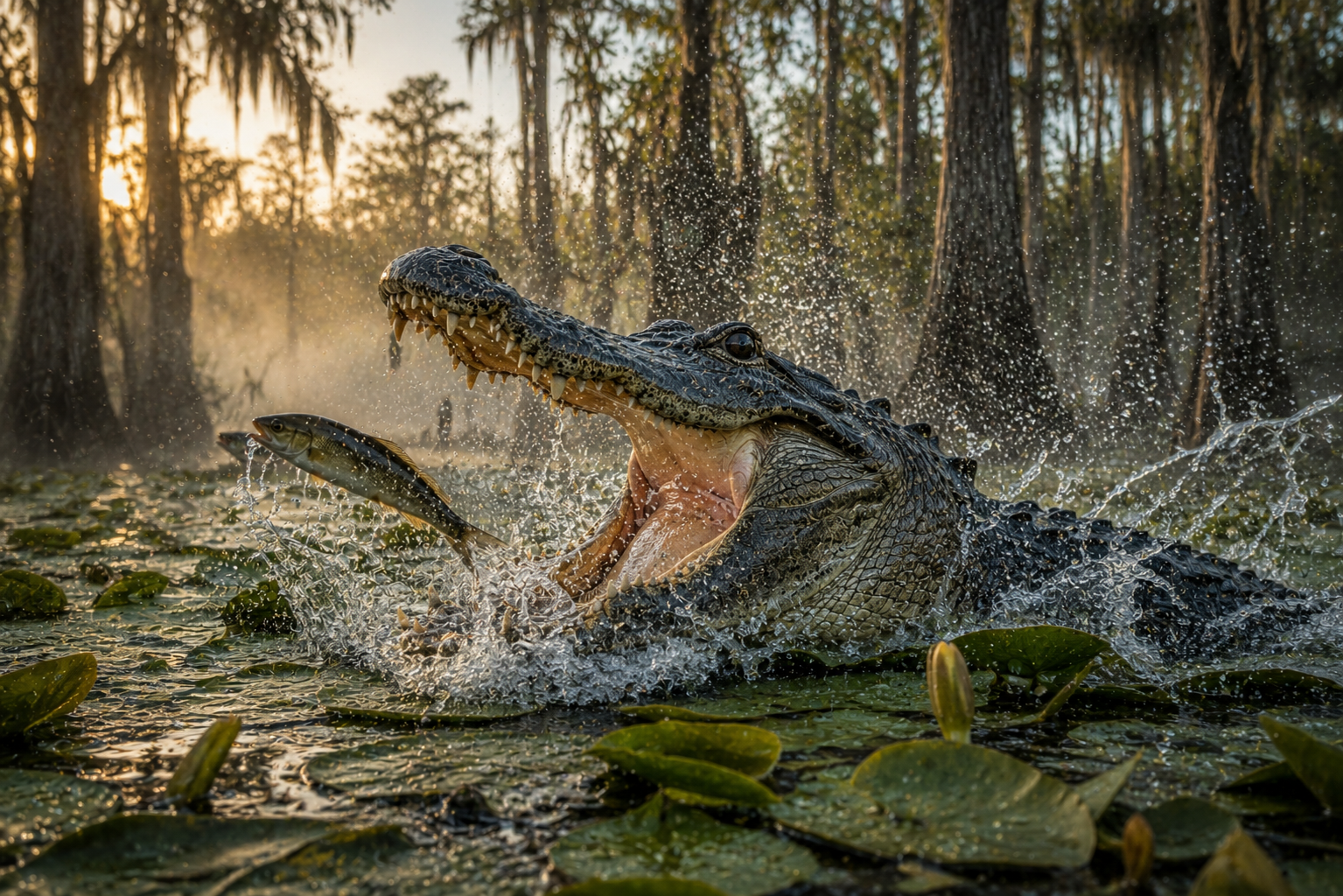
Vision alone does not make these reptiles exceptional hunters.
Tiny sensory organs scattered around their jaws can detect the smallest water disturbances.
A swimming fish.
A struggling bird.
Even gentle ripples created by movement nearby.
These pressure-sensitive receptors allow crocodiles and alligators to locate prey in darkness or muddy water where eyesight becomes less useful.
For nocturnal hunting, this hidden sensory system is one of their greatest advantages.
The Anatomy of a Perfect Ambush
Crocodile vs. Alligator Hunting Style
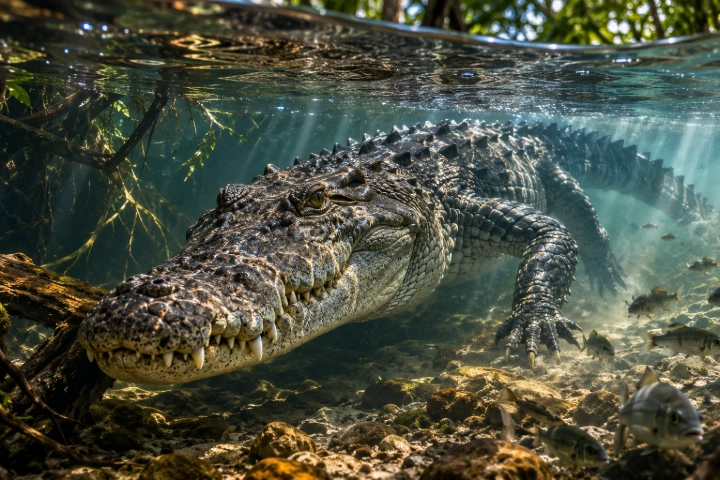
Although both predators use ambush tactics, their environments influence the prey they most often target.
Crocodiles frequently hunt fish, birds, reptiles, and large mammals that approach rivers or estuaries to drink. Larger species, such as the saltwater crocodile and Nile crocodile, are capable of taking surprisingly large prey when the opportunity arises.
Alligators usually hunt fish, turtles, snakes, amphibians, waterbirds, and medium-sized mammals found around freshwater wetlands. Their broader jaws are particularly effective for crushing hard-shelled prey like turtles.
Despite these differences, both predators rely on the same principle:
Remain unseen until the final second.
More Than Strength
People often describe crocodiles and alligators as powerful.
But their true advantage is efficiency.
They conserve energy by remaining motionless for long periods, strike only when success is likely, and allow millions of years of evolution to do the rest.
It is a strategy that has changed very little since prehistoric times—and one that continues to make crocodilians among the most successful predators on Earth.
Transition
Their hunting skills are extraordinary, but another question captures even more attention:
Which reptile is actually more dangerous—and which one should humans fear most?
Chapter 4
Which Is More Dangerous? Separating Myth from Reality
Whenever crocodiles or alligators appear in documentaries or news reports, one question almost always follows:
Which one is more dangerous?
The answer depends on the species, where it lives, and how people interact with it.
While both are powerful predators capable of causing serious injuries, their behavior toward humans is not identical.
Understanding the difference helps separate scientific fact from popular myths.
Whenever crocodiles or alligators appear in documentaries or news reports, one question almost always follows:
Which one is more dangerous?
The answer depends on the species, where it lives, and how people interact with it.
While both are powerful predators capable of causing serious injuries, their behavior toward humans is not identical.
Understanding the difference helps separate scientific fact from popular myths.
The World's Most Dangerous Crocodile
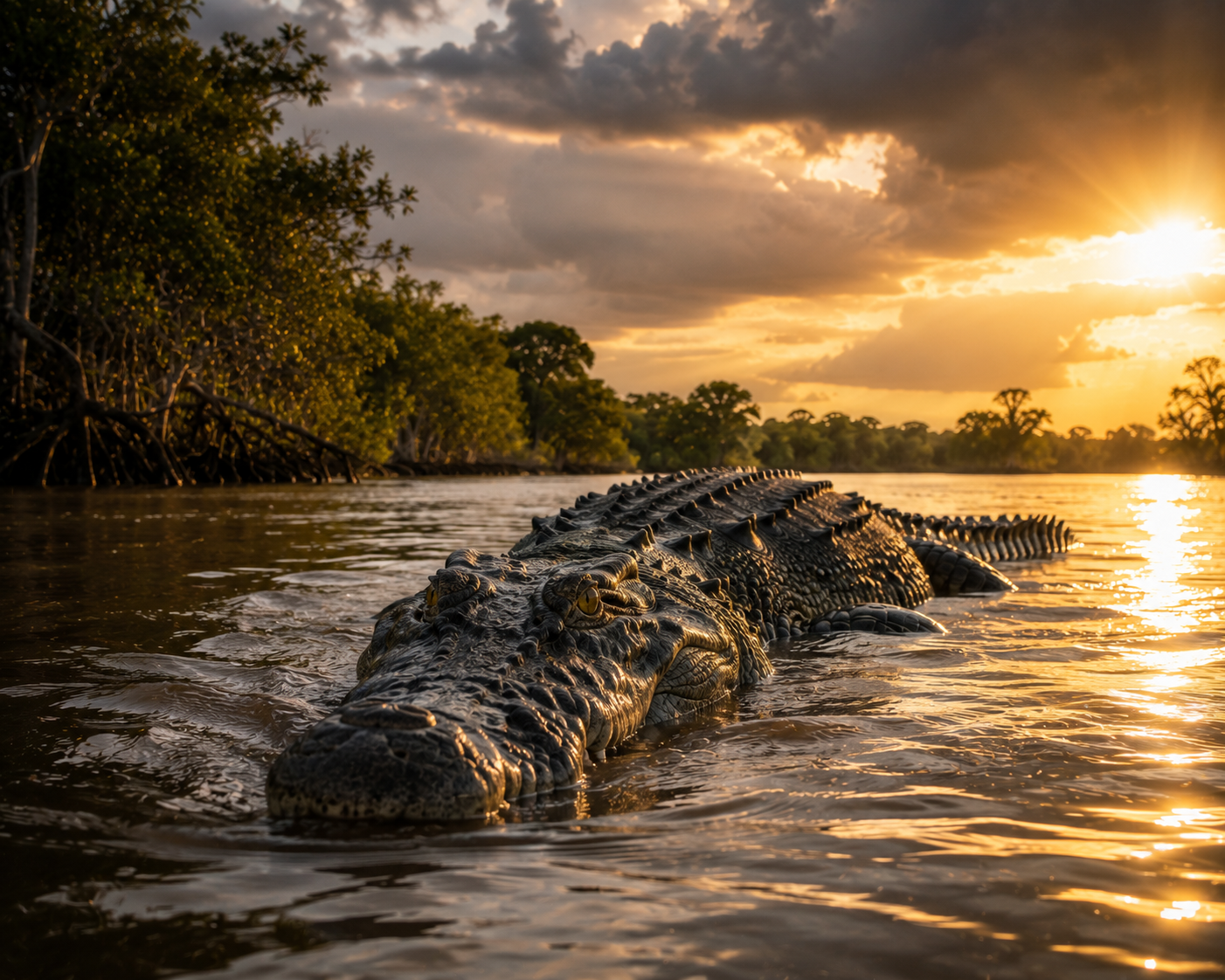
Among all living crocodilians, the saltwater crocodile (Crocodylus porosus) is widely considered the most dangerous.
Growing to lengths of more than 6 meters (20 feet) in exceptional cases and weighing over 1,000 kilograms (2,200 pounds), it is the largest living reptile on Earth.
Its immense size, territorial nature, and willingness to hunt large mammals make it responsible for more attacks on humans than any other crocodilian species.
Saltwater crocodiles are found across northern Australia, Southeast Asia, Papua New Guinea, and parts of India, often inhabiting rivers, estuaries, mangrove forests, and coastal waters.
Why Alligators Behave Differently
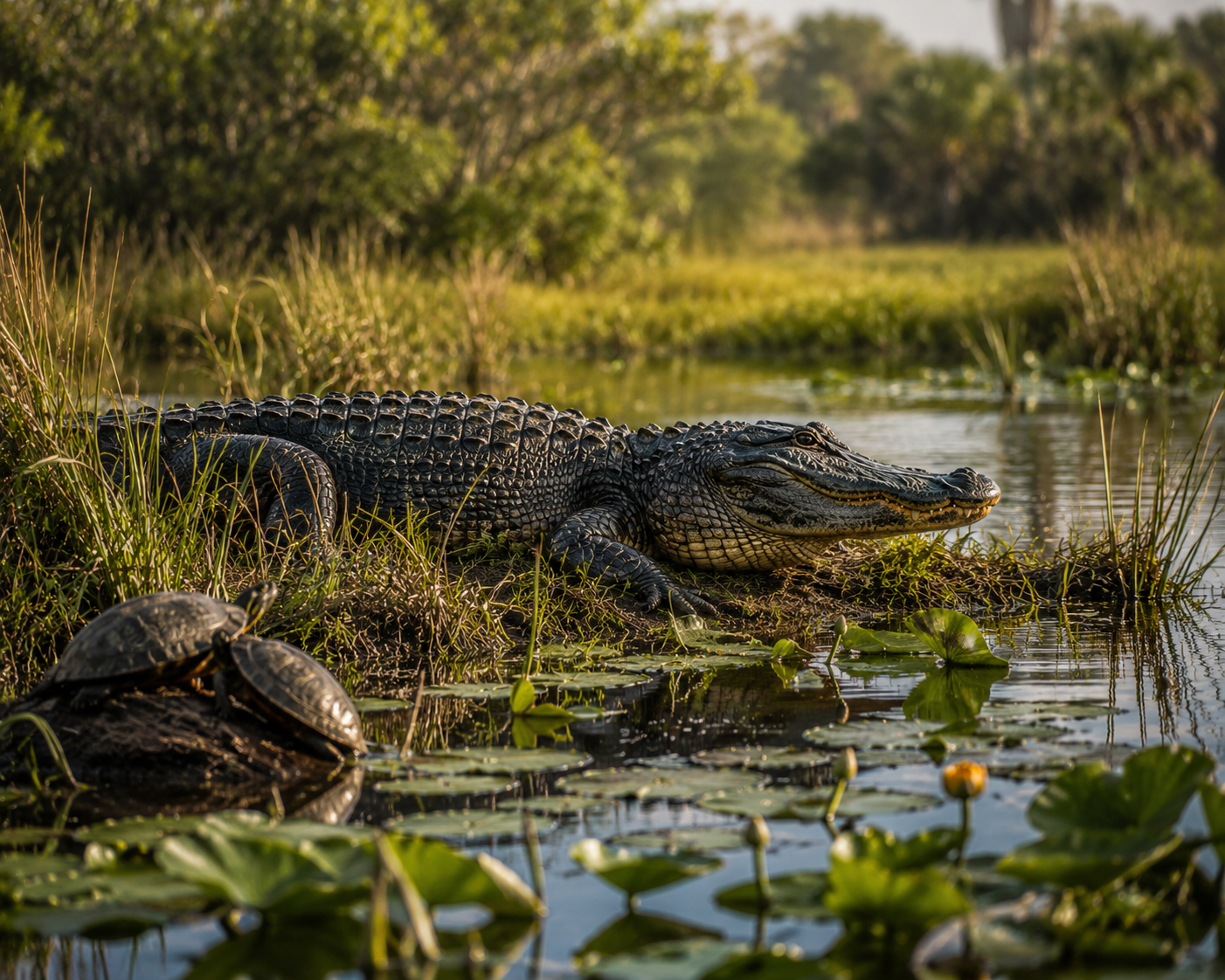
The American alligator has a very different reputation.
Although it is fully capable of defending itself and can be dangerous if provoked, it generally avoids humans whenever possible.
Most alligator encounters occur because people feed them, approach nests, or ignore safety warnings near freshwater habitats.
Wild alligators naturally prefer to retreat rather than confront something as large as a human.
This calmer temperament is one reason fatal attacks are considerably rarer than those involving large crocodile species.
Predator Comparison Dashboard
Respect, Not Fear
Respect, Not Fear
Despite their fearsome appearance, neither crocodiles nor alligators actively hunt humans as preferred prey.
Most incidents occur because people unknowingly enter their territory, swim in dangerous waters, feed wild animals, or ignore warning signs.
Wildlife experts recommend keeping a safe distance, avoiding the water at dawn or dusk in crocodile habitats, and never attempting to approach or feed these reptiles.
Simple precautions greatly reduce the risk of dangerous encounters.
Myth vs. Reality
Hollywood often portrays crocodilians as relentless "man-eaters."
Reality is more complex.
They are highly intelligent ambush predators that have survived for millions of years by conserving energy, avoiding unnecessary risks, and attacking only when the chances of success are high.
Humans are not a regular part of their natural diet.
The real danger comes when human activity overlaps with crocodilian habitat.
Strength Beyond the Bite
Although bite force often receives the most attention, survival depends on far more than powerful jaws.
Exceptional senses, patience, camouflage, explosive acceleration, and the ability to remain perfectly still for hours make crocodiles and alligators among the most efficient predators on the planet.
Their success is the result of an entire suite of adaptations working together—not just brute strength.
Transition
For millions of years, crocodiles and alligators have shaped rivers, swamps, and wetlands across the world.
Today, however, these ancient predators face a challenge unlike any in their evolutionary history.
In the final chapter, we'll explore how conservation, habitat protection, and coexistence are determining the future of Earth's last great crocodilians.
Chapter 5
Ancient Guardians of Wetlands: Why Crocodiles and Alligators Still Matter
For millions of years, crocodiles and alligators have shaped the wetlands they call home.
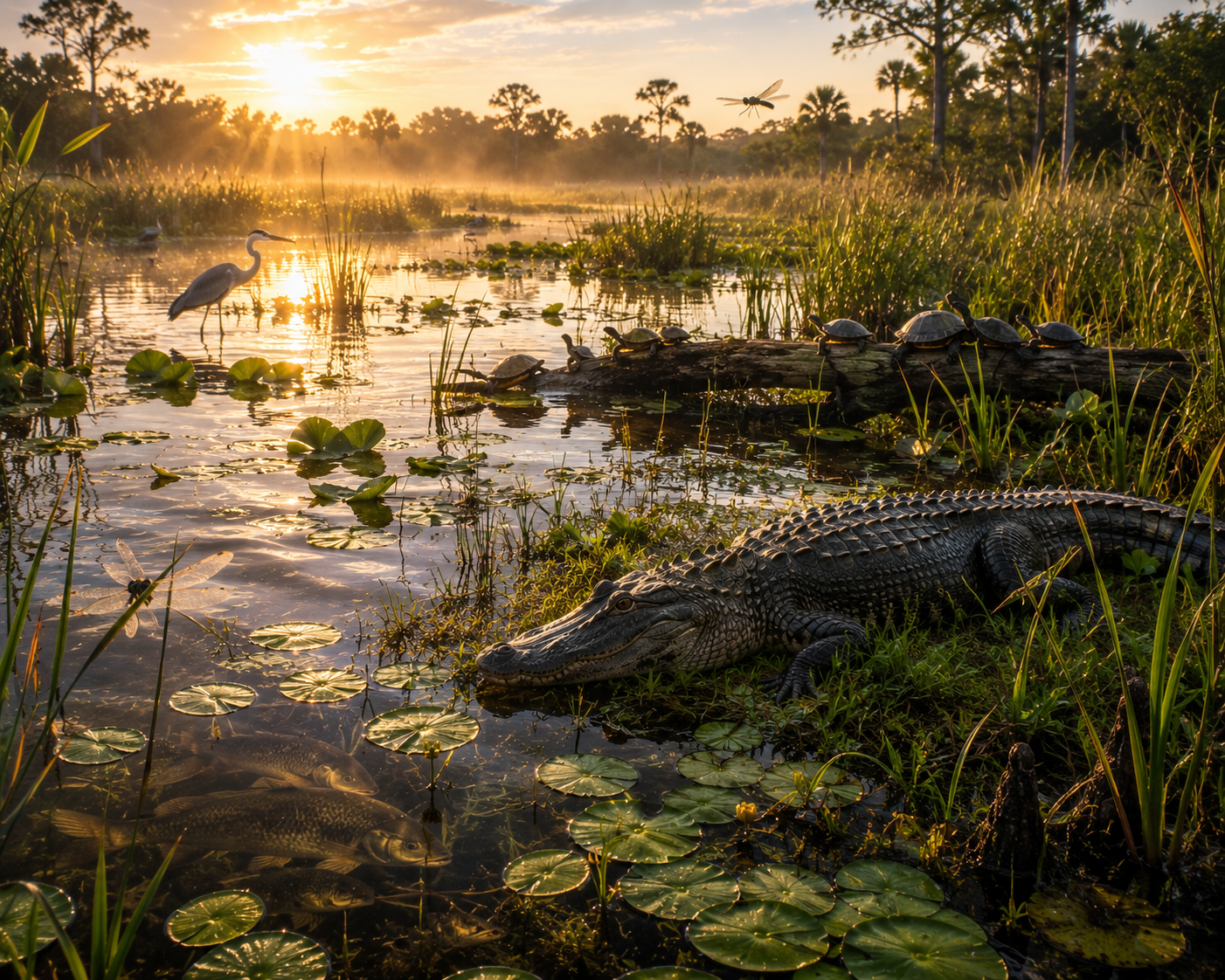
While they are often viewed only as powerful predators, their true importance lies in the balance they create. By regulating populations of fish, turtles, birds, and mammals, they prevent any single species from dominating the ecosystem.
Healthy wetlands are rarely defined by the number of predators they contain.
Instead, they are defined by the balance those predators help maintain.
Nature's Ecosystem Engineers
Crocodilians influence far more than the animals they hunt.
As they move through rivers and marshes, they create channels that improve water circulation. During dry seasons, many alligators dig shallow depressions known as "alligator holes."
These natural pools retain water long after surrounding wetlands begin to dry.
Fish, amphibians, turtles, insects, and countless other animals gather around these refuges, turning them into temporary islands of life until seasonal rains return.
A single alligator can unknowingly support hundreds of other organisms.
The Wetland Circle of Life
Threats in the Modern World
Although crocodilians have survived asteroid impacts and dramatic climatic changes, modern threats are unlike anything they faced in the past.
Today, habitat destruction remains their greatest challenge.
Wetlands are drained for agriculture, rivers are altered by dams, mangrove forests are cleared for coastal development, and pollution degrades freshwater ecosystems.
Illegal hunting has declined in many regions thanks to stronger protection laws, but habitat loss continues to reduce suitable breeding areas for many species.
The future of crocodilians depends as much on protecting wetlands as it does on protecting the animals themselves.
A Future Worth Protecting
Across the world, conservation programs are proving that recovery is possible.
The American alligator, once pushed close to extinction in parts of its range, is now considered one of the greatest wildlife conservation success stories. Strict legal protection, habitat restoration, and public education allowed populations to recover throughout much of the southeastern United States.
Other species continue to need protection.
The Philippine crocodile, Siamese crocodile, and several regional populations face ongoing threats from habitat loss and human activity.
Their survival depends on long-term conservation efforts that protect both the reptiles and the wetlands they inhabit.
More Than Living Fossils
People often describe crocodiles and alligators as "living fossils."
While their appearance has changed little over millions of years, they are far from primitive.
They are highly specialized predators with advanced sensory systems, complex parental care, remarkable environmental adaptations, and an ecological role that few other animals can replace.
Their continued existence is not simply a reminder of Earth's distant past.
It is evidence that some of nature's greatest designs remain just as successful today.
Final Reflection
Standing motionless in a river or marsh, a crocodile or alligator may appear unchanged by time.
Yet beneath that stillness lies one of evolution's greatest success stories.
For nearly one hundred million years, these ancient reptiles have endured shifting continents, changing climates, and the rise and fall of countless species.
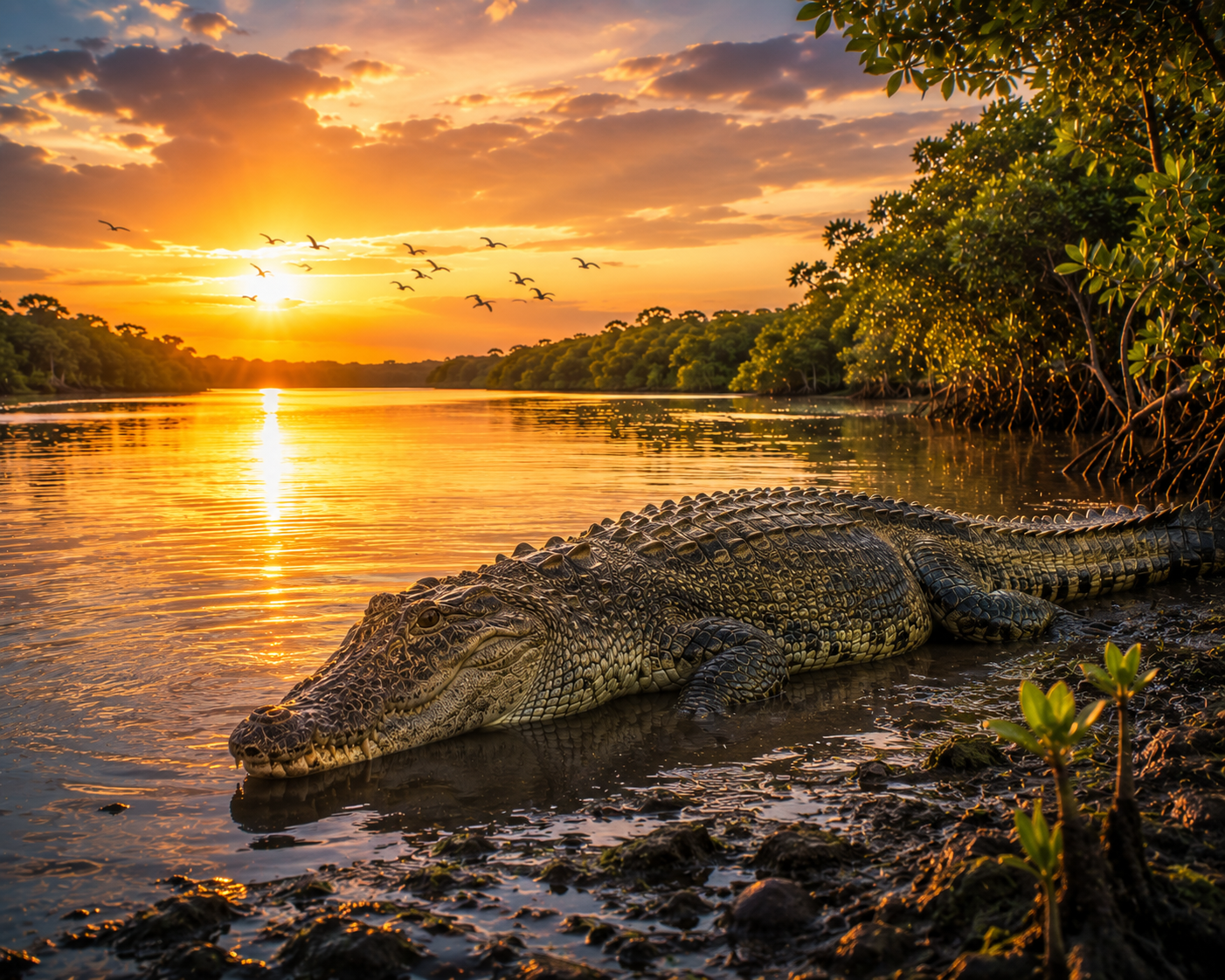
Whether gliding silently through a tropical estuary or resting in a quiet freshwater marsh, they continue to command the wetlands they helped shape.
Protecting crocodiles and alligators is about more than preserving remarkable predators.
It is about safeguarding the rivers, swamps, mangroves, and marshes that sustain thousands of other forms of life—including our own.
📌 Key Takeaways
- Crocodiles and alligators belong to different branches of the crocodilian family despite their similar appearance.
- Snout shape, teeth, habitat, and salt tolerance are the easiest ways to tell them apart.
- Both are highly specialized ambush predators with remarkable sensory adaptations.
- Crocodilians play a vital role in maintaining healthy wetland ecosystems.
- Conserving wetlands protects not only crocodiles and alligators but countless other species that depend on these habitats.
Frequently Asked Questions (FAQ)
1. What is the main difference between a crocodile and an alligator?
The easiest way to tell them apart is by their snout shape. Crocodiles have a long, narrow, V-shaped snout, while alligators have a broader, U-shaped snout. Crocodiles also show their lower teeth when their mouths are closed, whereas an alligator's lower teeth are hidden.
2. Which is more dangerous, a crocodile or an alligator?
Generally, crocodiles are considered more dangerous because many species are more aggressive and territorial. The saltwater crocodile and Nile crocodile are responsible for most serious attacks on humans, while American alligators usually avoid people unless provoked or fed.
3. Can crocodiles live in saltwater?
Yes. Saltwater crocodiles can live in freshwater, brackish water, and even the open ocean thanks to specialized salt glands that remove excess salt from their bodies. Alligators mainly live in freshwater because their salt glands are much less effective.
4. Where do alligators live?
Wild alligators are found primarily in the southeastern United States and eastern China. The American alligator inhabits freshwater swamps, marshes, rivers, lakes, and wetlands.
5. Which is bigger, a crocodile or an alligator?
On average, crocodiles grow larger than alligators. The saltwater crocodile is the largest living reptile, reaching lengths of more than 6 meters (20 feet) in exceptional cases. American alligators usually grow to around 3–4.5 meters (10–15 feet).
6. What do crocodiles and alligators eat?
Both are opportunistic carnivores. Their diet includes fish, birds, turtles, snakes, amphibians, crustaceans, and mammals. Larger crocodiles may hunt deer, wild pigs, and other large animals, while alligators commonly feed on fish, turtles, and medium-sized mammals.
7. How strong is a crocodile's bite?
Crocodiles have one of the strongest bite forces ever measured in the animal kingdom. A large saltwater crocodile can generate a bite force exceeding 3,700 pounds per square inch (psi), allowing it to grip prey with incredible power.
8. Why don't crocodiles chew their food?
Their teeth are designed for gripping and tearing rather than chewing. Crocodiles and alligators usually swallow small prey whole or tear large prey into manageable pieces using powerful twisting movements known as the "death roll."
9. Are crocodiles and alligators dinosaurs?
No. They are not dinosaurs, but they are close relatives. Crocodilians and dinosaurs evolved from a common ancestor millions of years ago, making crocodiles and alligators some of the closest living relatives of birds.
10. Why are crocodiles and alligators important to ecosystems?
As apex predators, they help maintain healthy populations of fish, reptiles, birds, and mammals. Alligators also create water-filled depressions called "alligator holes," which provide refuge for many species during dry seasons and support wetland biodiversity.
11. How long do crocodiles and alligators live?
Most crocodiles and alligators live between 35 and 70 years in the wild, depending on the species. With proper care in captivity, some individuals can live even longer.
12. Are crocodiles and alligators protected?
Many species are protected by national and international conservation laws. While the American alligator has recovered successfully, several crocodilian species—including the Philippine crocodile and Siamese crocodile—remain critically endangered due to habitat loss and human activities.