Chapter 1
Venus: Earth's Mysterious Twin
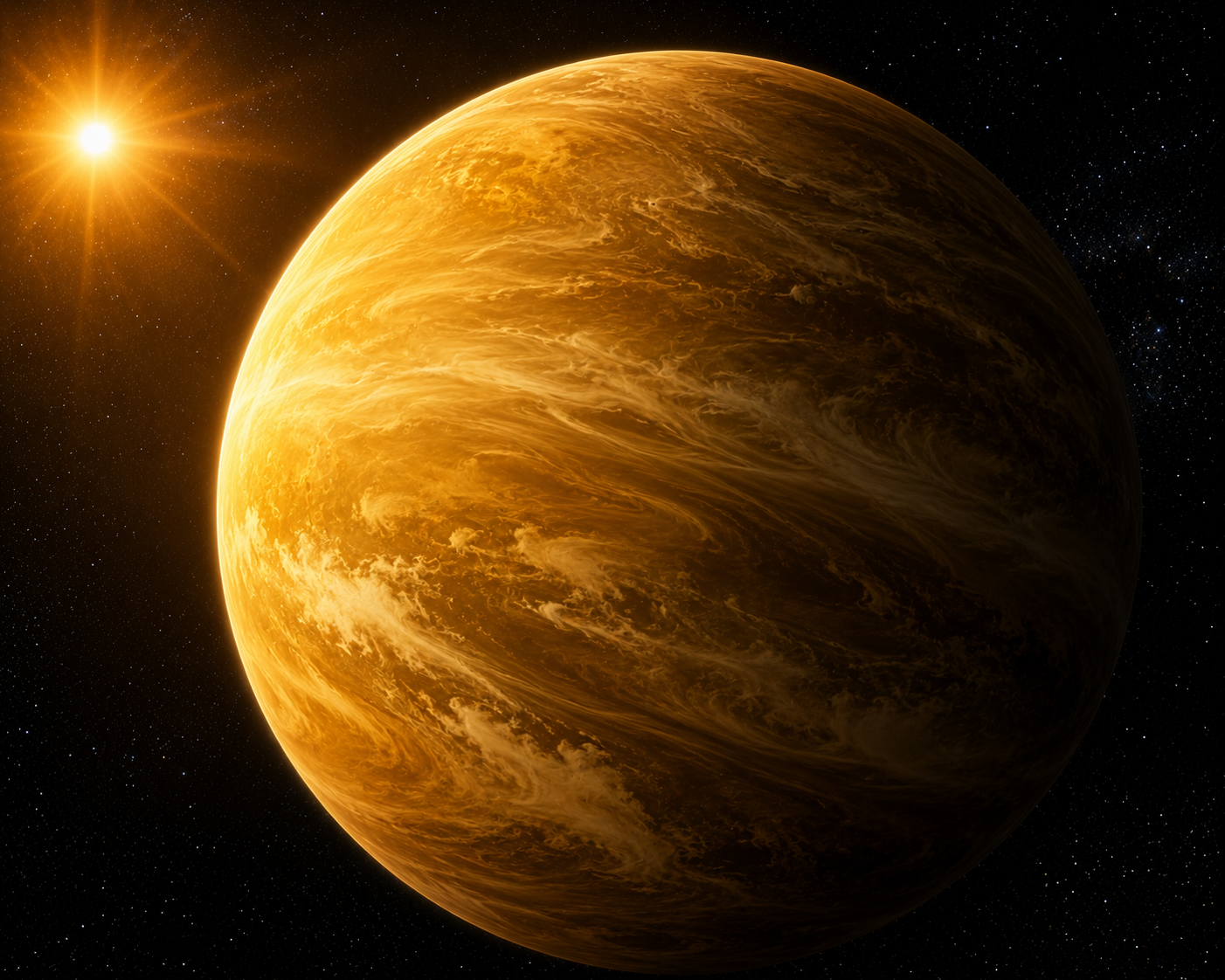
If Earth has a dangerous twin, it is not Mars.
It is Venus.
Almost identical to Earth in size, mass, and composition, Venus was once considered the planet most likely to resemble our own. Early astronomers imagined vast oceans hidden beneath its bright clouds and even speculated that life might exist there.
The truth turned out to be far more astonishing.
Beneath those beautiful golden clouds lies a world hot enough to melt lead, covered by crushing atmospheric pressure and toxic gases that make it the most hostile planet in the Solar System.
For planetary scientists, Venus is both a warning and a mystery—a world that shows how two similar planets can evolve into completely different environments.
Earth's Closest Planetary Twin
Venus is the second planet from the Sun, orbiting at an average distance of 67 million miles (108 million kilometers).
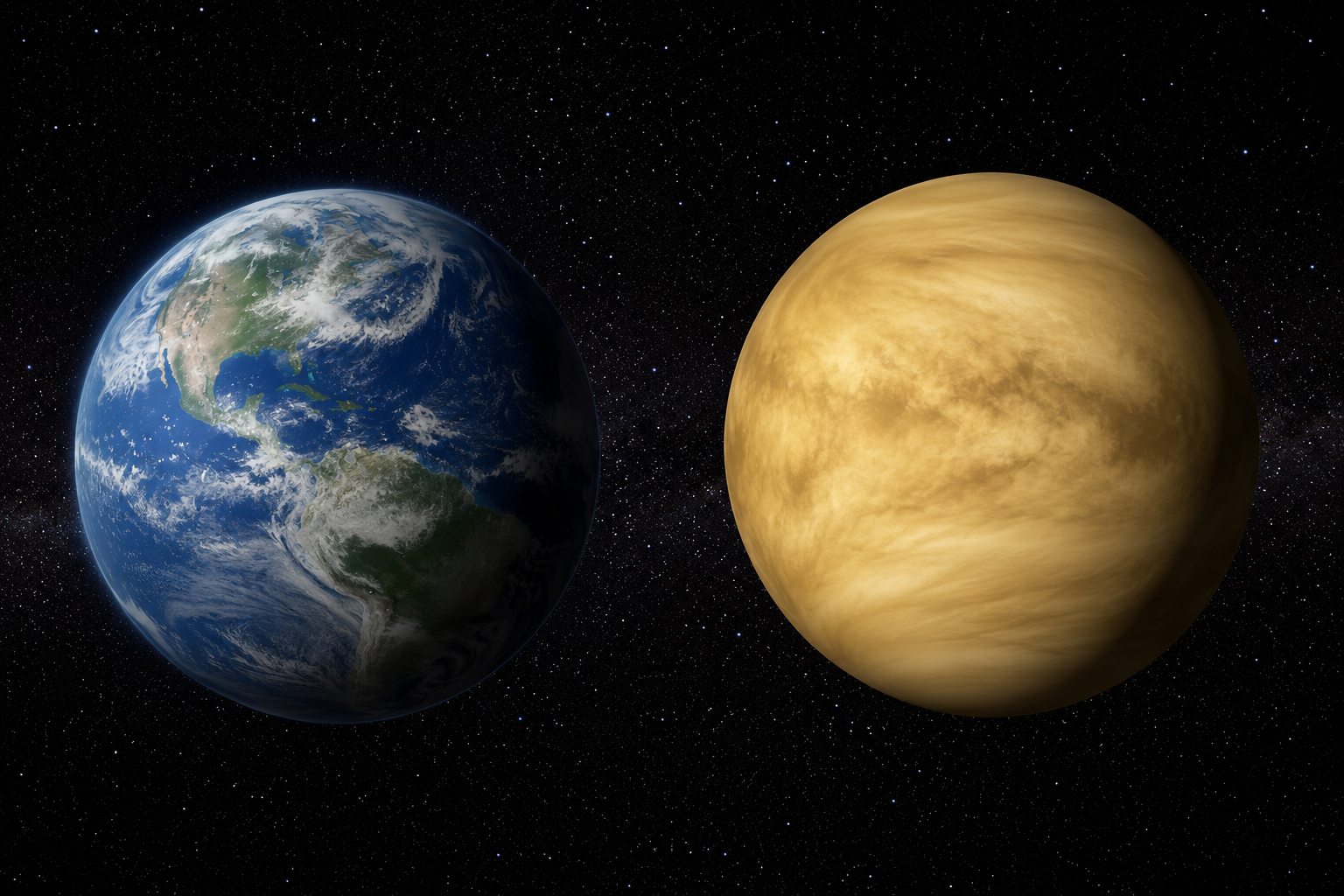
It is often called Earth's twin because the two planets are remarkably similar.
| Feature | Earth | Venus |
|---|
| Gravity | 9.8 m/s² | 8.87 m/s² |
| Type | Rocky Planet | Rocky Planet |
| Diameter | 12,742 km | 12,104 km |
At first glance, the similarities are striking.
Both planets formed from the same cloud of gas and dust about 4.5 billion years ago, and both possess rocky surfaces, metallic cores, and nearly the same size.
Yet their histories took dramatically different paths.
The Brightest Planet in Our Sky
After the Moon, Venus is the brightest natural object in Earth's night sky.
Its dense cloud cover reflects nearly 75% of the sunlight that reaches it, making the planet shine brilliantly before sunrise or after sunset.
Because it always appears close to the Sun, Venus is often called:
- 🌅 The Morning Star
- 🌇 The Evening Star
Despite these names, Venus is not actually a star.
It is a planet reflecting sunlight toward Earth.
For thousands of years, civilizations around the world observed Venus and associated it with myths, gods, and calendars long before people understood its true nature.
Hidden Beneath the Clouds
Unlike Mars or Mercury, Venus cannot be seen directly through ordinary telescopes.
Its entire surface is hidden beneath an incredibly thick atmosphere composed mostly of carbon dioxide and covered by dense clouds of sulfuric acid.
These clouds completely block visible light, preventing anyone from seeing the landscape below.
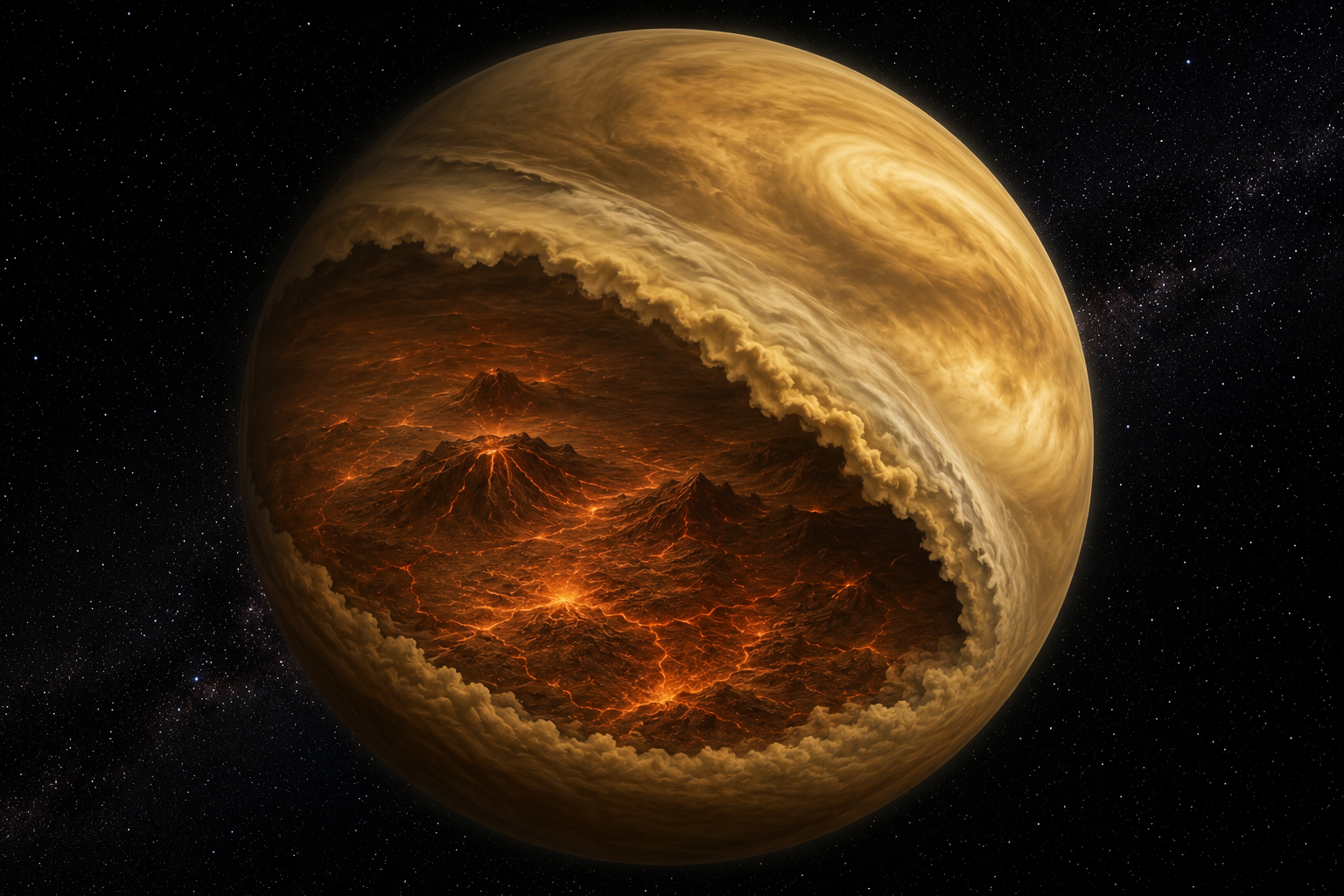
Only radar instruments carried by spacecraft have been able to map the hidden mountains, volcanoes, and vast plains lying beneath the clouds.
Until the arrival of space probes, no one knew what the surface of Venus actually looked like.
Venus at a Glance
A Planet That Changed Planetary Science
Today, Venus is far more than Earth's nearest planetary neighbor.
It is a natural laboratory for studying extreme climates, volcanic worlds, and the long-term effects of an uncontrolled greenhouse atmosphere.
Understanding why Venus became so different from Earth may help scientists predict how rocky planets evolve—not only in our Solar System but around distant stars as well.
The story of Venus is ultimately a story about planetary evolution, climate, and the delicate conditions that make Earth uniquely habitable.
Transition
From space, Venus appears calm and beautiful.
Beneath its brilliant clouds, however, lies the hottest planetary surface in the Solar System.
In the next chapter, we'll uncover why Venus is even hotter than Mercury, how its runaway greenhouse effect works, and why no human could survive on its surface.
Chapter 2
The Hottest Planet in the Solar System
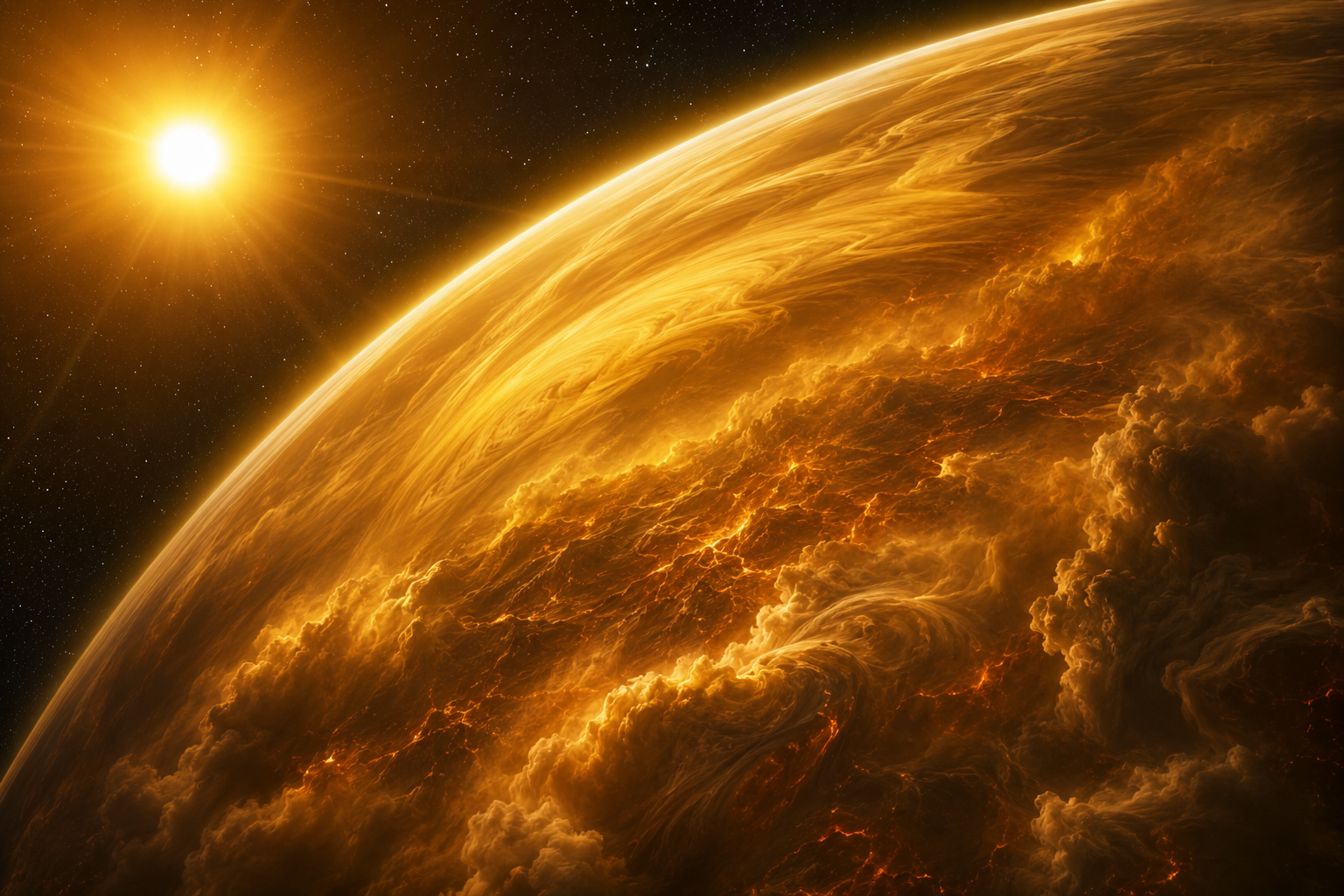
Although Mercury is much closer to the Sun, Venus is the hottest planet in the Solar System.
Its average surface temperature reaches 867°F (464°C)—hot enough to melt lead.
The reason has little to do with distance from the Sun.
Instead, the answer lies in one of the most powerful greenhouse effects known in the Solar System.
Why Is Venus Hotter Than Mercury?
Mercury has almost no atmosphere.
During the day, heat escapes easily into space once the Sun sets.
Venus is completely different.
Its atmosphere is made of about 96.5% carbon dioxide, a gas that efficiently traps heat.
Sunlight passes through the thick clouds and warms the surface.
The heated surface then releases infrared radiation.
Instead of escaping into space, that heat becomes trapped beneath the dense atmosphere, causing temperatures to rise continuously.
This process is called the runaway greenhouse effect.
It has turned Venus into a permanent planetary furnace.
A Crushing Atmosphere
The atmosphere of Venus is not only hot—it is incredibly heavy.
Surface pressure is about 92 times greater than Earth's atmospheric pressure.
That is roughly equivalent to the pressure experienced 3,000 feet (900 meters) below Earth's oceans.
A human standing on Venus would be crushed almost instantly without an extremely strong protective habitat.
Even many robotic spacecraft have survived only a short time before failing under the intense heat and pressure.
Clouds of Sulfuric Acid
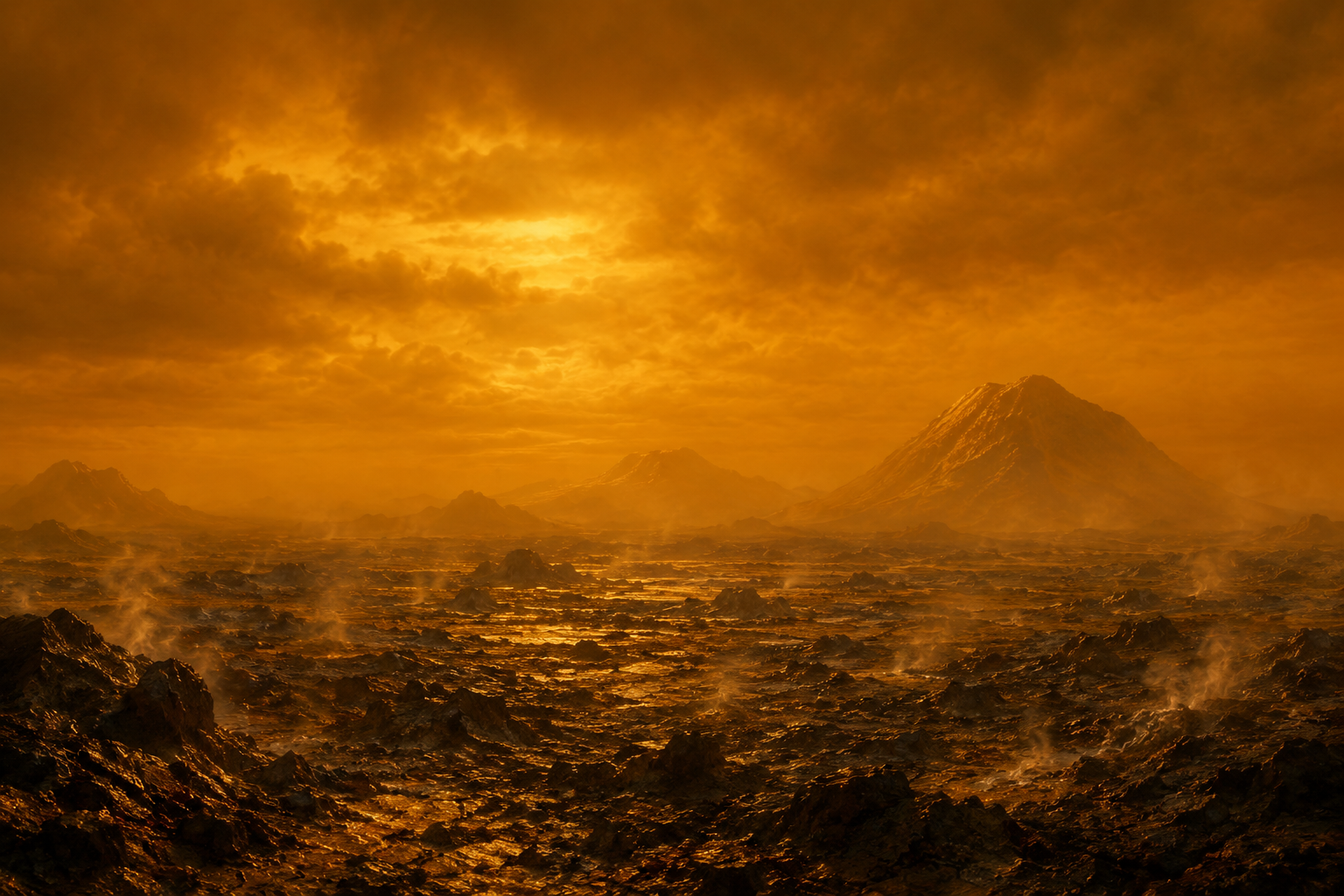
The bright clouds surrounding Venus are unlike anything found on Earth.
They consist mainly of sulfuric acid droplets, making the atmosphere highly corrosive.
Fortunately, this acid rain never reaches the ground.
As it falls toward the surface, the intense heat causes the droplets to evaporate long before they can land.
This creates a continuous cycle of acid cloud formation high above the planet while the surface remains completely dry.
Runaway Greenhouse Effect on Venus
A Planet Where Time Moves Slowly
Venus has another remarkable characteristic.
It rotates more slowly than any other planet in the Solar System.
One complete rotation takes 243 Earth days.
Even more unusual, Venus spins in the opposite direction compared with most planets.
This phenomenon, known as retrograde rotation, means that on Venus the Sun would appear to rise in the west and set in the east.
Because of this slow rotation, one day on Venus is actually longer than one Venus year, which lasts 225 Earth days.
An Environment Unlike Anywhere Else
Imagine standing on the surface of Venus.
You would experience:
- 🌡 Temperatures hot enough to melt lead.
- ☁ A sky hidden beneath thick yellow clouds.
- 🫧 Crushing atmospheric pressure.
- ☢ Almost no protection from corrosive atmospheric chemistry.
- 🌋 A landscape shaped by ancient volcanic activity.
No known life could survive under these conditions.
Yet studying this extreme environment helps scientists understand how planetary climates can change over billions of years.
Transition
Beneath Venus's thick clouds lies a hidden landscape filled with enormous volcanoes, vast lava plains, and towering mountains.
For decades, this mysterious surface remained invisible.
In the next chapter, we'll descend through the clouds to explore the volcanic world hidden beneath Venus's atmosphere and discover why scientists believe it may still be geologically active today.
Chapter 3
A Hidden World of Volcanoes and Lava Plains
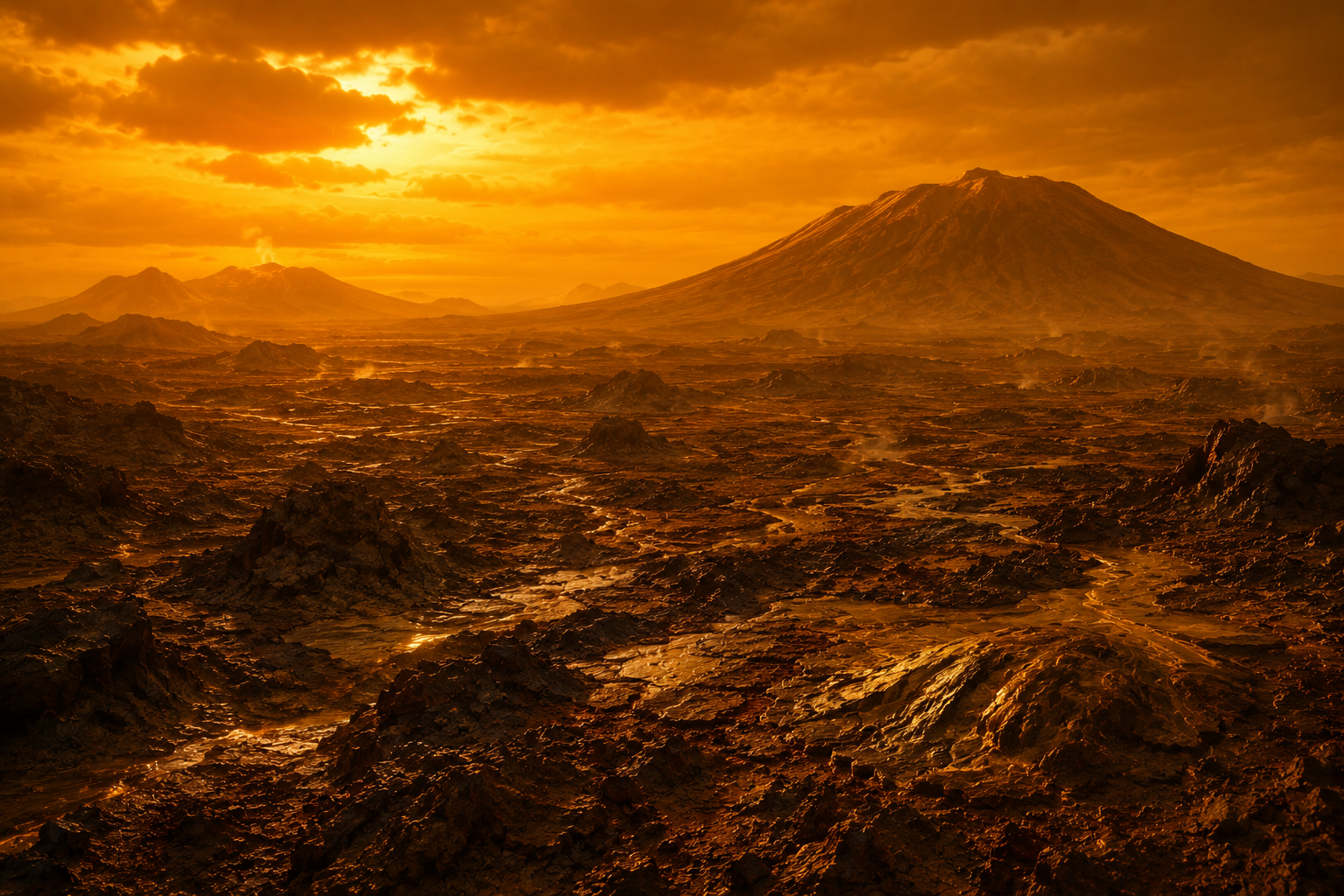
For centuries, the surface of Venus remained completely hidden beneath thick clouds.
Unlike the Moon or Mars, no telescope could reveal what lay below.
Everything changed when radar-equipped spacecraft began mapping the planet through its dense atmosphere.
What they discovered surprised scientists.
Instead of oceans or continents, Venus is a vast volcanic world shaped by immense lava flows, gigantic volcanoes, and rugged mountain ranges.
Today, it is considered one of the most geologically fascinating planets in the Solar System.
A Planet Covered by Lava
Nearly 80% of Venus's surface consists of broad volcanic plains formed by ancient lava.
Over billions of years, repeated eruptions flooded enormous regions, creating smooth landscapes that stretch for hundreds of miles.
Unlike Earth, where forests, rivers, and oceans constantly reshape the land, Venus preserves an almost endless rocky landscape.
The surface is dominated by:
- Vast lava plains
- Shield volcanoes
- Volcanic domes
- Deep fractures
- Rugged highlands
These features reveal a planet that was once extremely volcanically active—and may still be today.
More Volcanoes Than Any Other Planet
Scientists have identified more than 85,000 volcanoes on Venus, making it the most volcanic planet in the Solar System.
Most are relatively small, but hundreds are enormous shield volcanoes resembling those found in Hawaii.
Some rise several kilometers above the surrounding plains.
Recent observations suggest that at least some volcanoes may still be active, meaning Venus could remain a living planet beneath its thick atmosphere.
Although no eruption has been directly witnessed, changing volcanic vents and atmospheric chemistry strongly suggest ongoing geological activity.
Mountains Hidden Beneath the Clouds
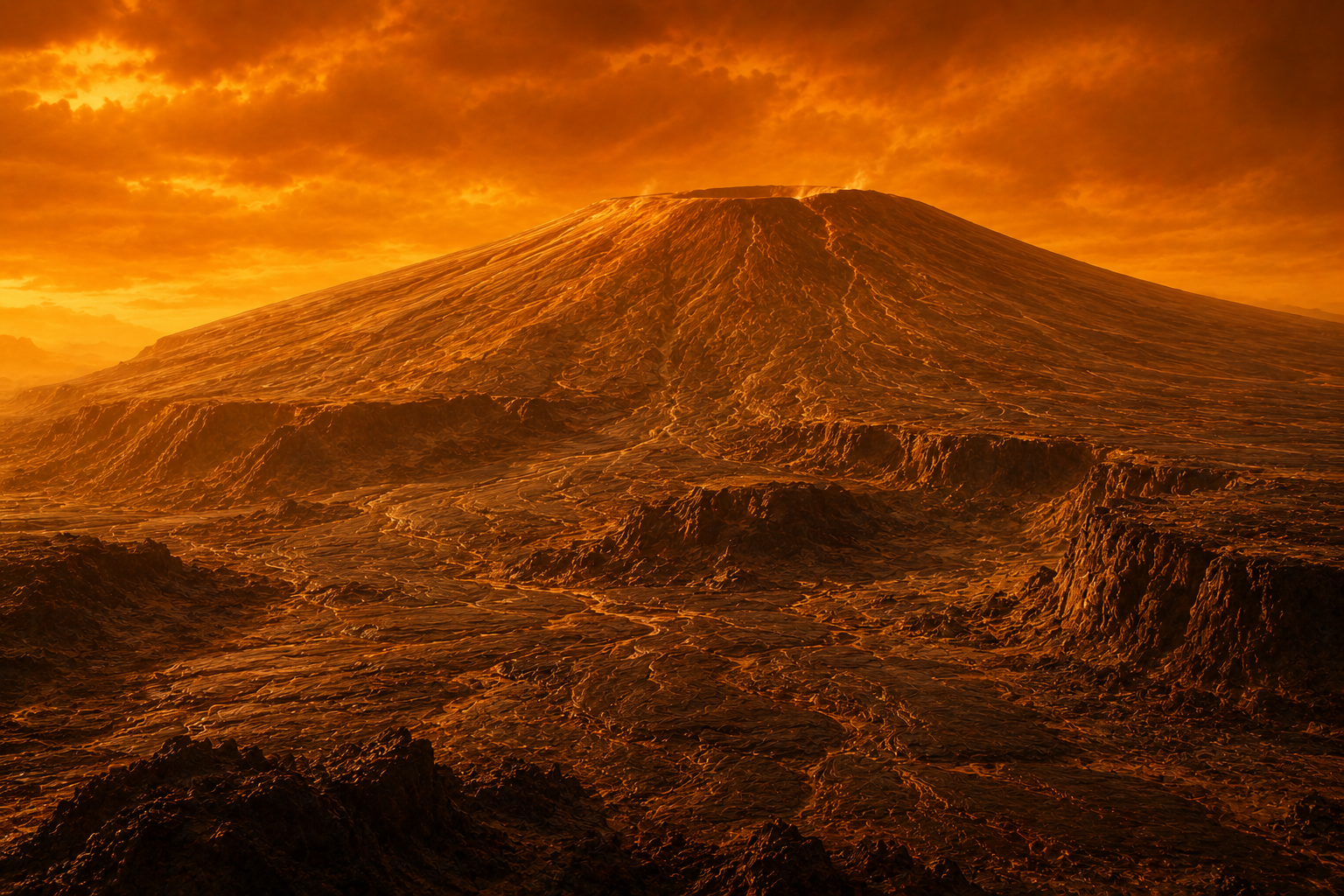
Mountains Hidden Beneath the Clouds
Although Venus lacks Earth's continents, it possesses impressive mountain ranges.
The tallest is Maxwell Montes, rising approximately 11 kilometers (6.8 miles) above the surrounding plains.
That is slightly higher than Mount Everest measured from sea level.
These mountains are believed to have formed through powerful geological forces deep within the planet rather than through plate collisions like those on Earth.
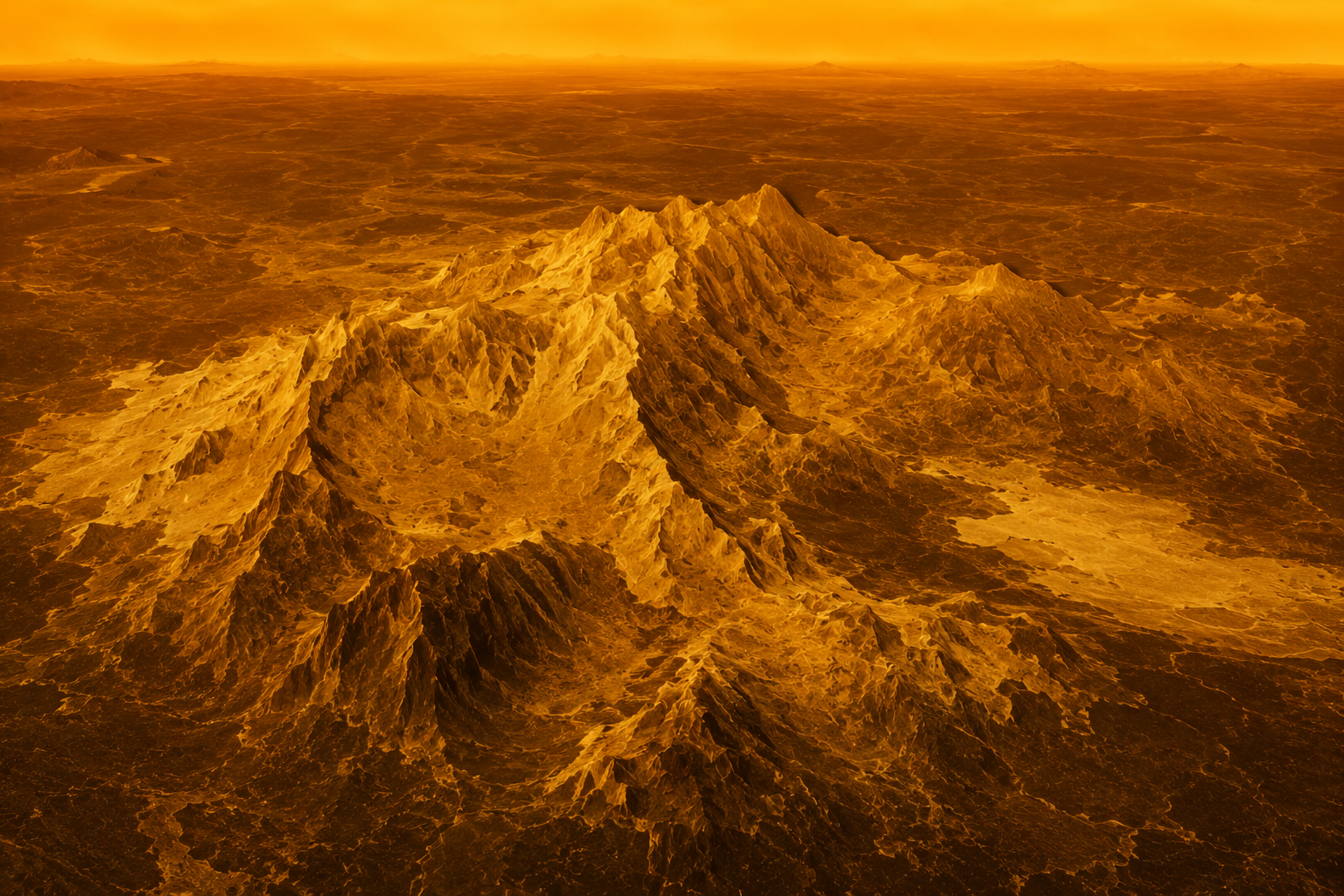
Radar images reveal steep slopes, rugged ridges, and complex terrain unlike anything visible from space through ordinary cameras.
The Hidden Surface of Venus
Why Venus Has No Plate Tectonics
Earth's crust is divided into moving tectonic plates that create earthquakes, mountains, and volcanoes.
Venus appears to be different.
Scientists have found no evidence of active global plate tectonics like those on Earth.
Instead, heat from the planet's interior may build up beneath the crust for millions of years before escaping through enormous volcanic eruptions.
This could explain why much of Venus appears to have been resurfaced by lava several hundred million years ago.
Exactly how Venus releases its internal heat remains one of planetary science's biggest unanswered questions.
A Planet Still Full of Mysteries
Even after decades of exploration, scientists still debate how active Venus truly is.
Questions remain unanswered:
- Are volcanoes erupting today?
- How often does the surface change?
- Why did plate tectonics never develop?
- Could Venus have once had oceans before its climate changed dramatically?
Future missions equipped with advanced radar systems and atmospheric probes hope to answer these questions and reveal whether Venus is still evolving beneath its permanent cloud cover.
Transition
Understanding Venus's surface required some of the toughest space missions ever attempted.
Extreme heat and crushing atmospheric pressure destroyed nearly every spacecraft that landed there.
In the next chapter, we'll explore the remarkable missions that survived Venus, the spacecraft exploring it today, and how they transformed our understanding of Earth's mysterious twin.
Chapter 4
Exploring Venus: The Toughest Planet to Visit
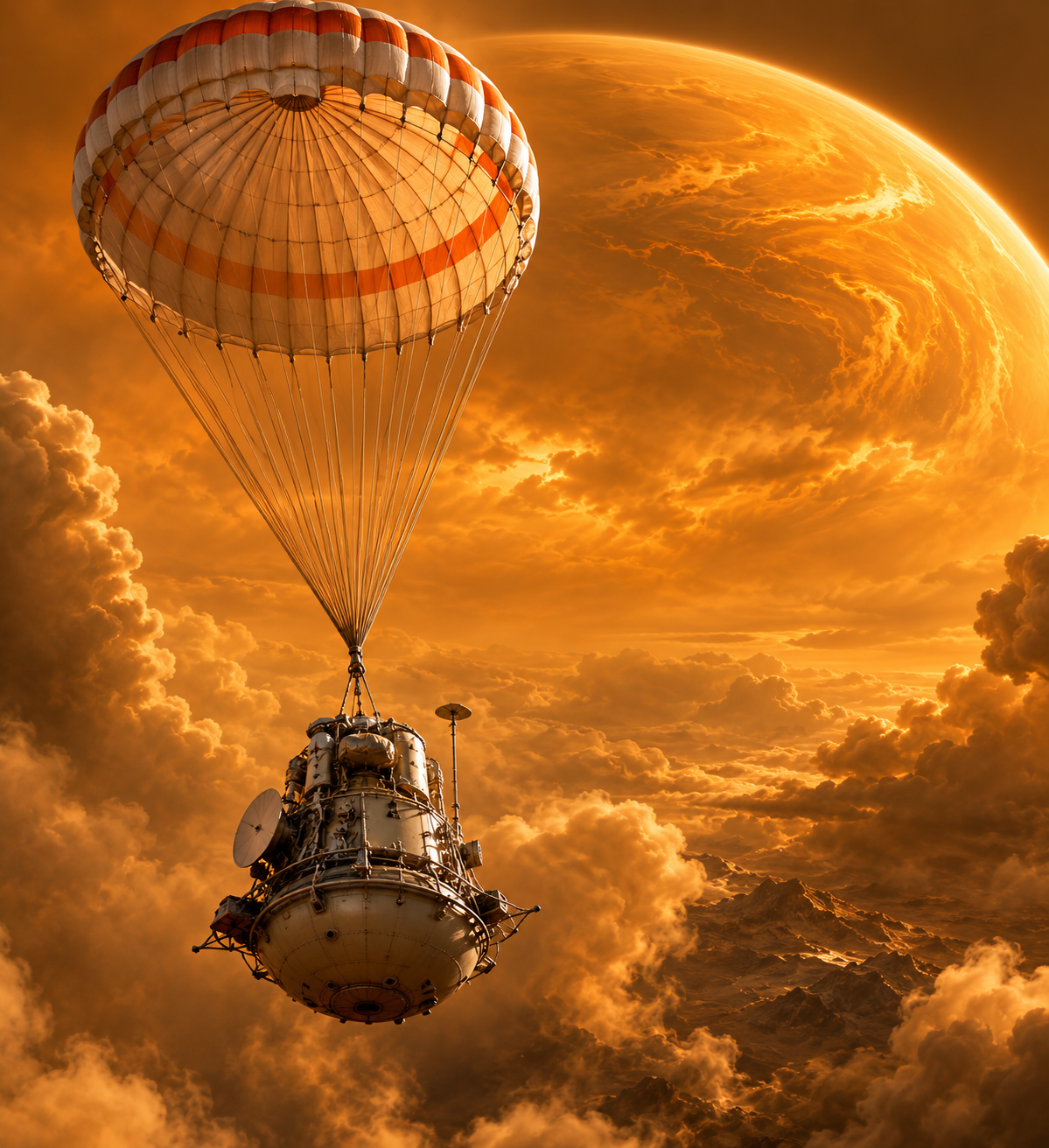
Venus is one of the most difficult planets ever explored.
Any spacecraft attempting to land must survive temperatures hot enough to melt lead, crushing atmospheric pressure, and corrosive sulfuric acid clouds.
For decades, many missions failed before reaching the surface.
Yet each success revealed a little more about one of the Solar System's greatest mysteries.
The Soviet Venera Missions
Between 1961 and 1984, the Soviet Union launched a series of spacecraft known as the Venera program.
These missions achieved several historic milestones.
The Venera spacecraft became the first to:
- Enter another planet's atmosphere.
- Successfully land on another planet.
- Transmit photographs from the surface of another planet.
- Analyze rocks directly on another world.
One of the most successful missions, Venera 13, landed in 1982 and survived for 127 minutes before the extreme environment destroyed it.
Its color photographs remain among the most famous images ever returned from Venus.
What the Landers Discovered
The Venera missions confirmed that Venus was nothing like the lush tropical world once imagined by scientists.
Instead, they found:
- A rocky volcanic landscape.
- Surface temperatures around 464°C (867°F).
- Atmospheric pressure about 92 times greater than Earth's.
- A sky glowing orange because of the thick atmosphere.
- Basaltic rocks similar to volcanic rocks found on Earth.
These discoveries completely changed humanity's understanding of Earth's neighboring planet.
Magellan: Mapping the Hidden Planet
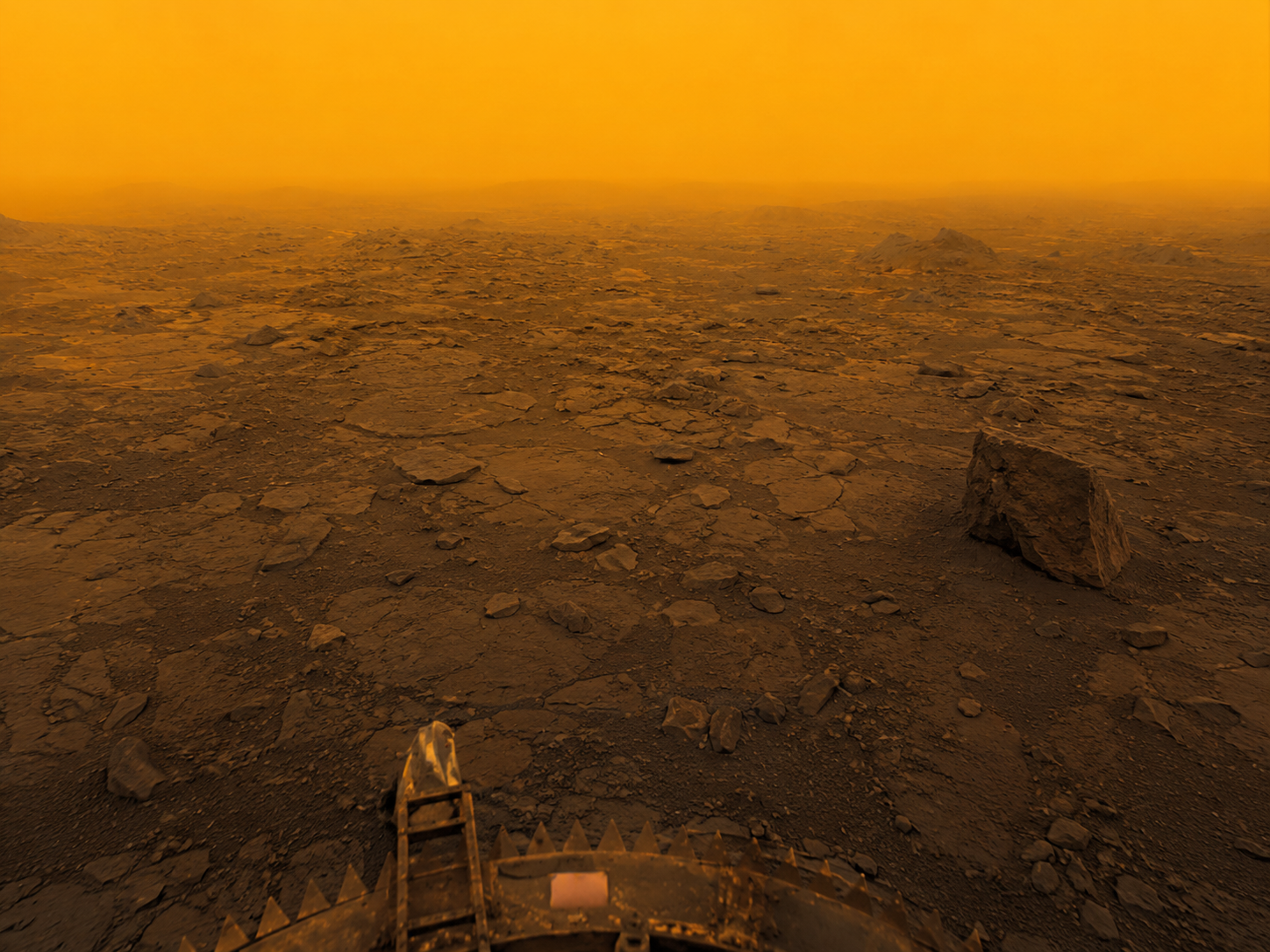
Although the Venera landers revealed what the surface looked like, they could observe only tiny areas.
NASA solved this problem with the Magellan spacecraft, launched in 1989.
Instead of using cameras, Magellan used radar to see through Venus's thick clouds.
During four years in orbit, it mapped more than 98% of the planet's surface, revealing:
- Giant shield volcanoes
- Vast lava plains
- Massive impact craters
- Mountain ranges
- Deep fractures across the crust
Magellan created the first nearly complete map of Venus and transformed planetary geology.
Timeline of Venus Exploration
Modern Missions Return to Venus
After years of limited exploration, Venus has once again become a priority for planetary scientists.
Several major missions are either operating or in development.
Akatsuki (Japan)
Launched by JAXA, Akatsuki studies Venus's atmosphere, cloud movement, and weather patterns from orbit.
DAVINCI (NASA)
Scheduled for launch in the coming years, DAVINCI will send a probe through Venus's atmosphere to study its chemistry and search for clues about whether the planet once had oceans.
VERITAS (NASA)
VERITAS will create the most detailed geological maps of Venus ever produced, searching for evidence of recent volcanic activity.
EnVision (European Space Agency)
EnVision will investigate Venus's interior, surface evolution, and interactions between the atmosphere and geology.
Together, these missions are expected to answer questions that have remained unsolved for decades.
Why Scientists Keep Returning
Venus is not explored simply because it is nearby.
Scientists believe it may hold the key to understanding why two nearly identical planets—Earth and Venus—followed completely different evolutionary paths.
Did Venus once have oceans?
When did its runaway greenhouse effect begin?
Are volcanoes still erupting today?
The answers could reshape our understanding of planetary evolution, climate change, and the habitability of rocky worlds across the universe.
Transition
Despite its extreme environment, scientists continue imagining future missions—and even the possibility of human exploration.
In the final chapter, we'll discover whether humans could ever live on or above Venus, why floating cities have been proposed, and what this extraordinary planet teaches us about the future of Earth.
Chapter 5
Could Humans Ever Live on Venus?
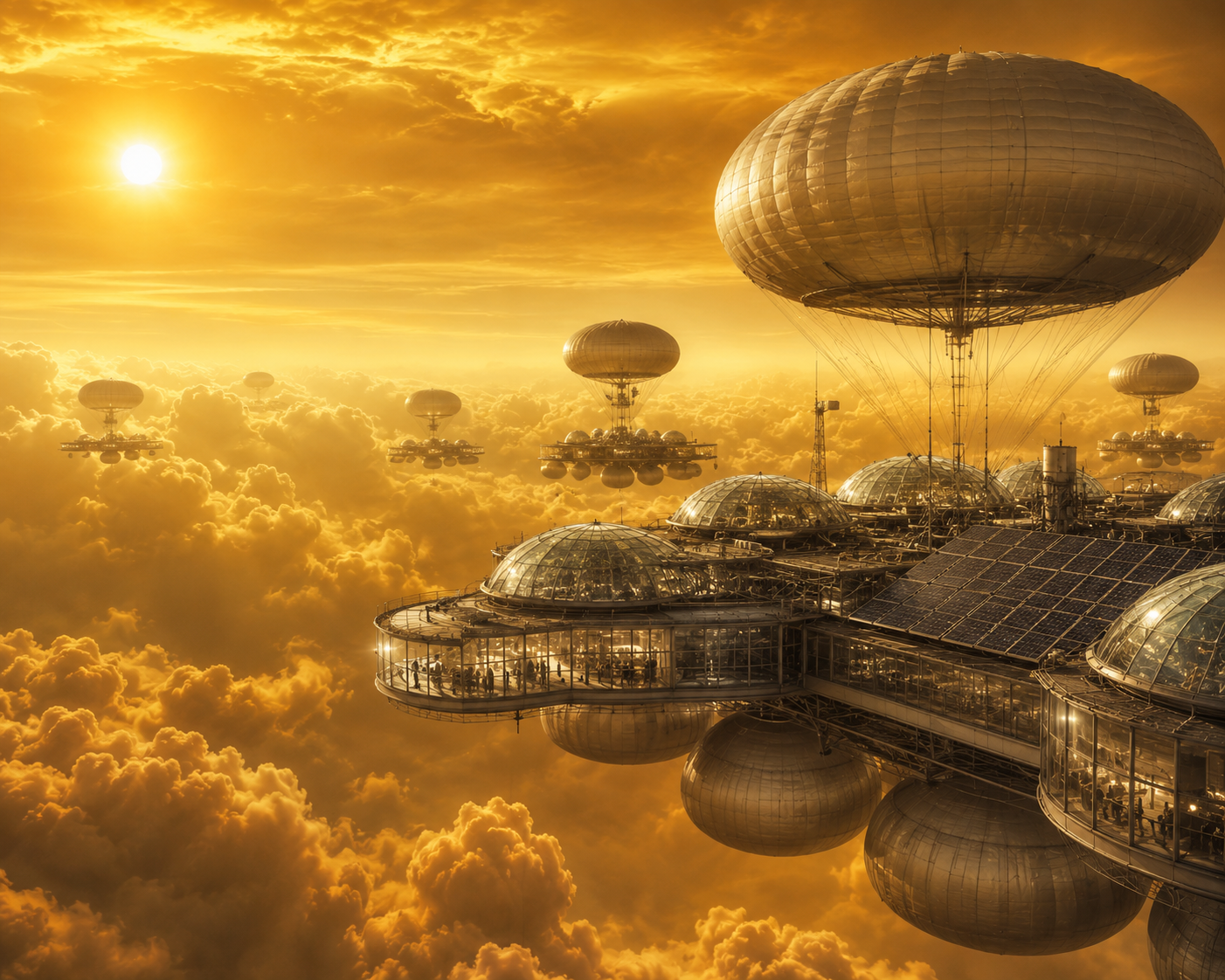
At first glance, Venus seems like the last place humans would ever visit.
Its surface is hot enough to melt lead, the atmospheric pressure is crushing, and toxic sulfuric acid clouds surround the planet.
Landing there is one of the greatest engineering challenges in planetary exploration.
Yet surprisingly, scientists believe there may be one region of Venus where humans could potentially survive—not on the surface, but high above it.
Why the Surface Is Almost Impossible
A human standing on Venus's surface would face multiple deadly hazards simultaneously.
These include:
- 🌡 Temperatures around 464°C (867°F).
- 🫧 Atmospheric pressure 92 times greater than Earth's.
- ☁ Clouds containing sulfuric acid.
- 🫁 No breathable oxygen.
- ☢ Intense heat that would quickly destroy most equipment.
Even the strongest spacecraft have survived only a short time after landing.
Current technology cannot support a permanent human base on the surface.
A Surprising Possibility Above the Clouds
Around 50–60 kilometers (31–37 miles) above Venus's surface, conditions become dramatically different.
At this altitude:
- Temperatures are similar to those on Earth.
- Atmospheric pressure is close to Earth's sea-level pressure.
- Gravity remains about 90% of Earth's gravity, making movement much easier than on the Moon or Mars.
Because of these relatively mild conditions, some scientists have proposed floating research stations supported by large balloons or airships.
This idea is known as the High Altitude Venus Operational Concept (HAVOC).
Although still theoretical, it demonstrates that Venus may not be completely inaccessible.
Could Humans Live on Venus?
What Venus Teaches Us
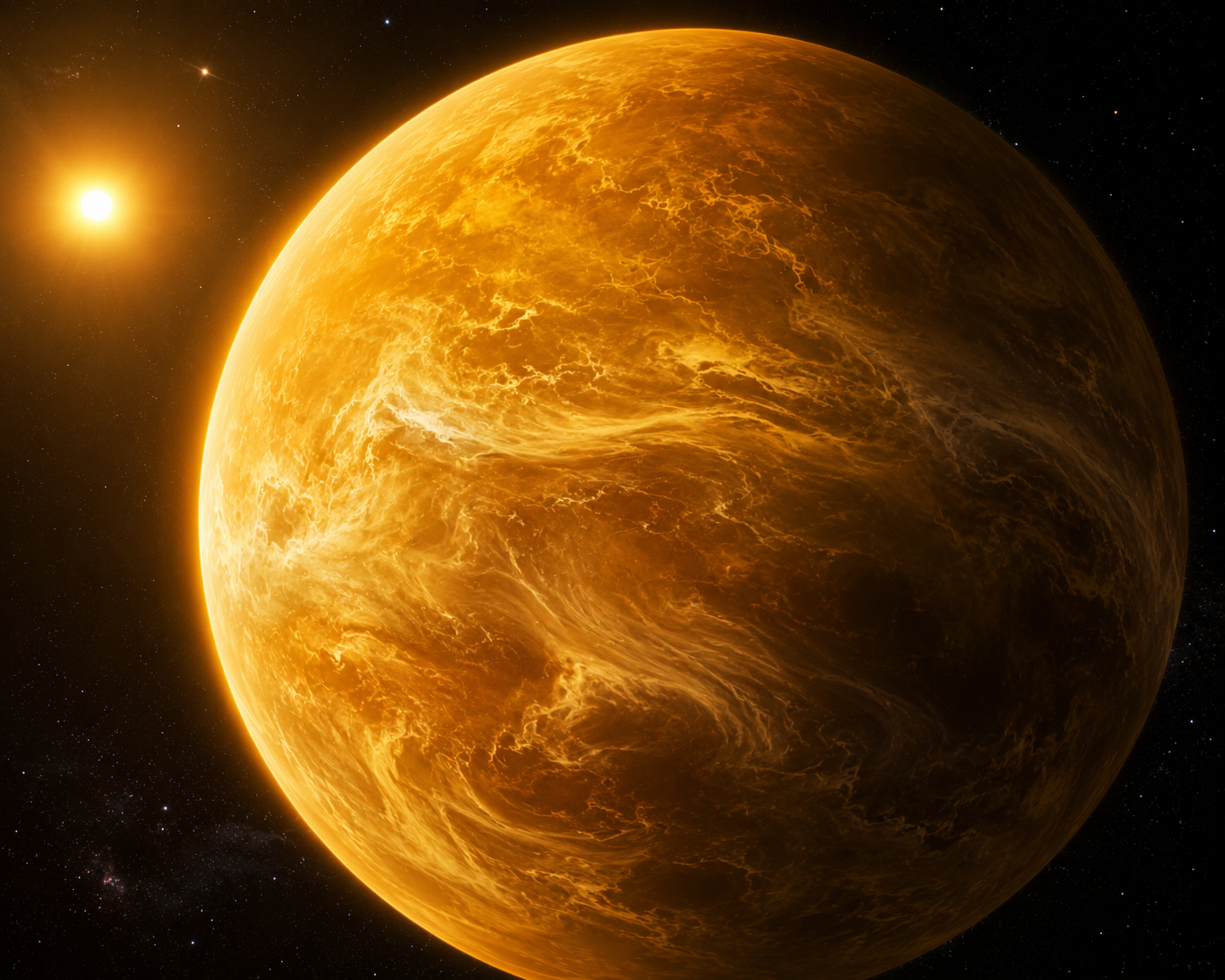
Venus is more than Earth's nearest planetary neighbor.
It is a powerful reminder that small differences during planetary evolution can produce dramatically different outcomes.
Billions of years ago, Earth and Venus may have shared many similarities.
Today, one supports millions of species and vast oceans.
The other has become a world of crushing pressure, toxic clouds, and relentless heat.
Studying Venus helps scientists understand how climates evolve, how greenhouse effects can transform planets, and what conditions make a world habitable.
More Than Earth's Evil Twin
Venus has earned its reputation as Earth's evil twin, but it is also one of the Solar System's greatest scientific treasures.
Its mysterious atmosphere, possible active volcanoes, unusual backward rotation, and hidden geological history continue to challenge everything we know about rocky planets.
Every new mission brings us closer to answering questions that have remained unsolved for generations.
Rather than simply being a hostile world, Venus has become a natural laboratory for understanding the past—and perhaps the future—of planetary climates.
Final Reflection
Bright enough to shine as the Morning Star and Evening Star, Venus has fascinated humanity since ancient times.
What once appeared to be a beautiful neighboring world is now recognized as one of the most extreme environments in the Solar System.
Yet beneath its thick clouds lie answers to some of astronomy's biggest questions.
As future spacecraft descend through its atmosphere and orbit high above its clouds, Venus will continue revealing how planets evolve—and why Earth became the remarkable world we call home.
Key Takeaways
- Venus is the second planet from the Sun and Earth's closest planetary twin in size.
- A runaway greenhouse effect makes Venus the hottest planet in the Solar System.
- Its atmosphere is composed mainly of carbon dioxide with clouds of sulfuric acid.
- More than 85,000 volcanoes have been identified on its surface.
- Soviet Venera missions, NASA's Magellan, and modern missions like Akatsuki, DAVINCI, VERITAS, and Envision have transformed our understanding of Venus.
- The surface is currently unsuitable for humans, but scientists have proposed floating habitats high in the atmosphere.
- Venus provides valuable insights into planetary evolution, climate change, and the conditions required for habitability.
Final Quote
"Venus reminds us that two worlds can begin almost alike yet end with completely different destinies. By understanding Earth's hottest neighbor, we gain a deeper appreciation for the fragile balance that makes our own planet habitable."
Frequently Asked Questions (FAQ)
1. What is Venus?
Venus is the second planet from the Sun and the sixth-largest planet in the Solar System. It is a rocky terrestrial planet often called Earth's twin because of its similar size, mass, and composition.
2. Why is Venus called Earth's twin?
Venus is called Earth's twin because it is almost the same size and has a similar internal structure. However, its environment is dramatically different, with extreme heat, crushing atmospheric pressure, and toxic clouds.
3. Why is Venus hotter than Mercury?
Although Mercury is closer to the Sun, Venus is hotter because its thick carbon dioxide atmosphere traps heat through a runaway greenhouse effect, raising surface temperatures to about 867°F (464°C).
4. What is Venus's atmosphere made of?
Venus's atmosphere is composed of approximately 96.5% carbon dioxide and 3.5% nitrogen, with thick clouds of sulfuric acid surrounding the planet.
5. Does Venus have volcanoes?
Yes. Scientists have identified more than 85,000 volcanoes on Venus, making it the most volcanic planet in the Solar System. Evidence suggests that some volcanoes may still be active today.
6. Why does Venus rotate backwards?
Venus rotates in the opposite direction of most planets, a motion called retrograde rotation. Scientists are still uncertain why this happened, but theories include massive ancient impacts or complex interactions within its atmosphere.
7. How long is a day on Venus?
A single day on Venus (one complete rotation) lasts 243 Earth days, while one Venus year lasts only 225 Earth days. This means a day on Venus is longer than its year.
8. Can humans live on Venus?
The surface of Venus is far too hostile for humans because of its extreme heat, crushing pressure, and toxic atmosphere. However, scientists have proposed future floating research stations about 50–60 kilometers (31–37 miles) above the surface, where temperatures and pressure are much more Earth-like.
9. Has anyone landed on Venus?
Yes. The Soviet Venera missions successfully landed on Venus during the 1970s and 1980s. They transmitted the first photographs and scientific data from the planet's surface before being destroyed by the harsh environment.
10. Why are scientists still studying Venus?
Scientists study Venus to understand how rocky planets evolve, why Venus experienced a runaway greenhouse effect, whether its volcanoes are still active, and whether it once had oceans. These discoveries also help scientists study Earth and Earth-like planets around other stars.
11. Can you see Venus from Earth?
Yes. Venus is the brightest planet visible from Earth and can often be seen shortly before sunrise or just after sunset. Because of its brilliant appearance, it is commonly called the Morning Star or the Evening Star, even though it is a planet, not a star.
12. What makes Venus unique in the Solar System?
Venus is unique because it is the hottest planet, rotates backwards, has a day longer than its year, possesses an atmosphere nearly 100 times denser than Earth's, and may still be volcanically active. These extraordinary characteristics make it one of the most fascinating worlds in planetary science.