Introduction: The Heart of Our Solar System
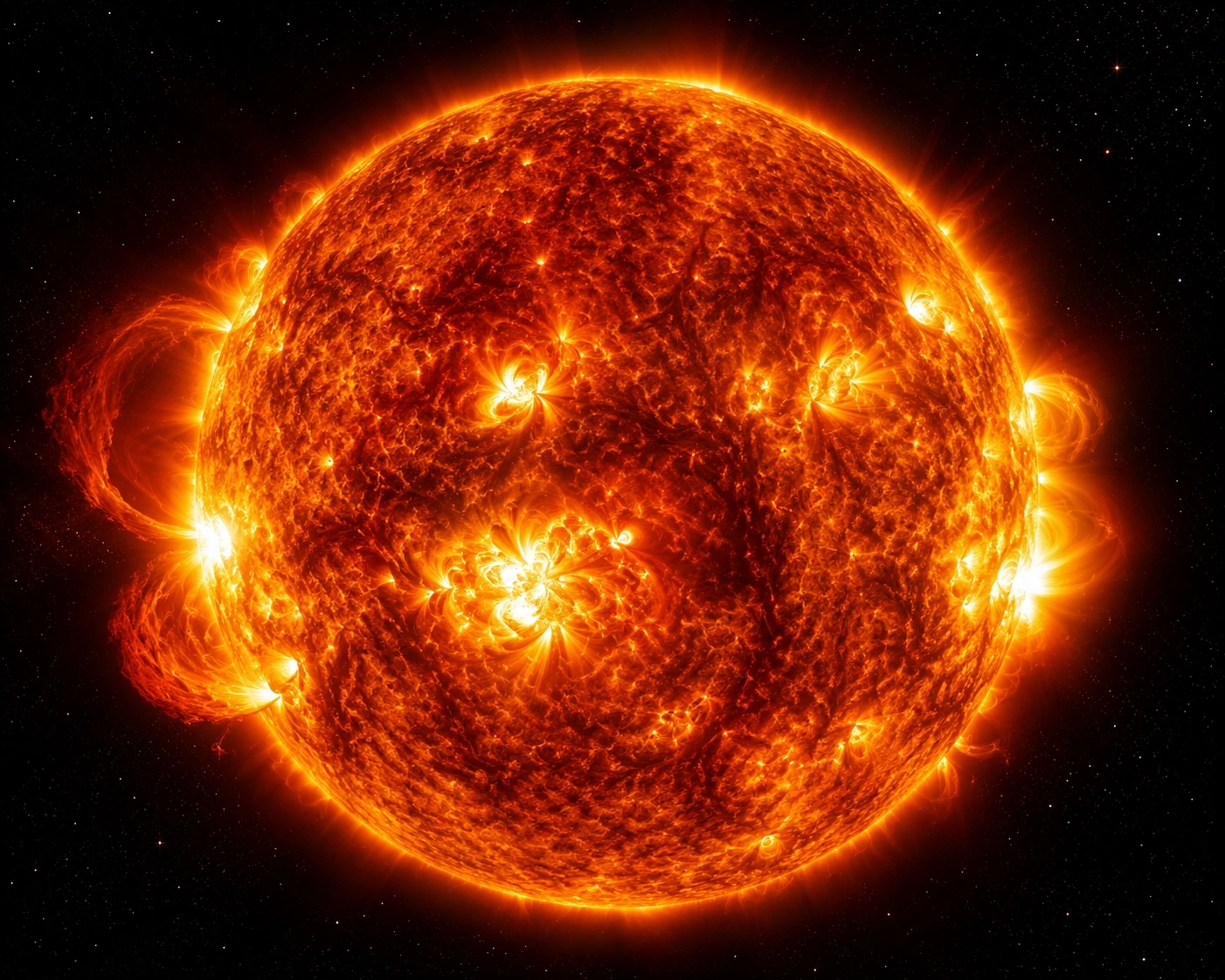
Every morning, it rises over the horizon, filling the world with warmth and light.
For most of human history, the Sun was seen as a symbol of life, worshipped by ancient civilizations and celebrated in myths across cultures. Yet behind its familiar glow lies something far more extraordinary.
The Sun is not a planet.
It is a star—a colossal sphere of superheated plasma so massive that it contains 99.8% of all the mass in the Solar System. Its gravity binds eight planets, countless moons, asteroids, comets, and billions of smaller objects into a single cosmic family.
Without the Sun, Earth would not exist as we know it.
Its energy powers our climate, drives the water cycle, fuels photosynthesis, and provides the conditions that allow life to flourish. Every breath we take, every plant that grows, and every ecosystem on our planet ultimately depends on the energy released from the Sun's blazing core.
Yet the Sun is far from peaceful.
Its surface erupts with enormous explosions, magnetic storms send charged particles racing through space, and massive arcs of glowing plasma stretch hundreds of thousands of kilometers above its surface. These powerful events can create dazzling auroras on Earth—but they can also disrupt satellites, communications, and electrical power grids.
Despite being the closest star to Earth, the Sun continues to surprise scientists.
Modern observatories and spacecraft constantly monitor its changing behavior, helping researchers understand not only our own star but also the billions of stars scattered throughout the Milky Way.
Studying the Sun means studying the very engine that made our Solar System possible.
Every sunrise is a reminder that the brightest object in our sky is also one of the universe's greatest natural wonders.
Chapter 1: The Birth of Our Star
How the Sun Was Born
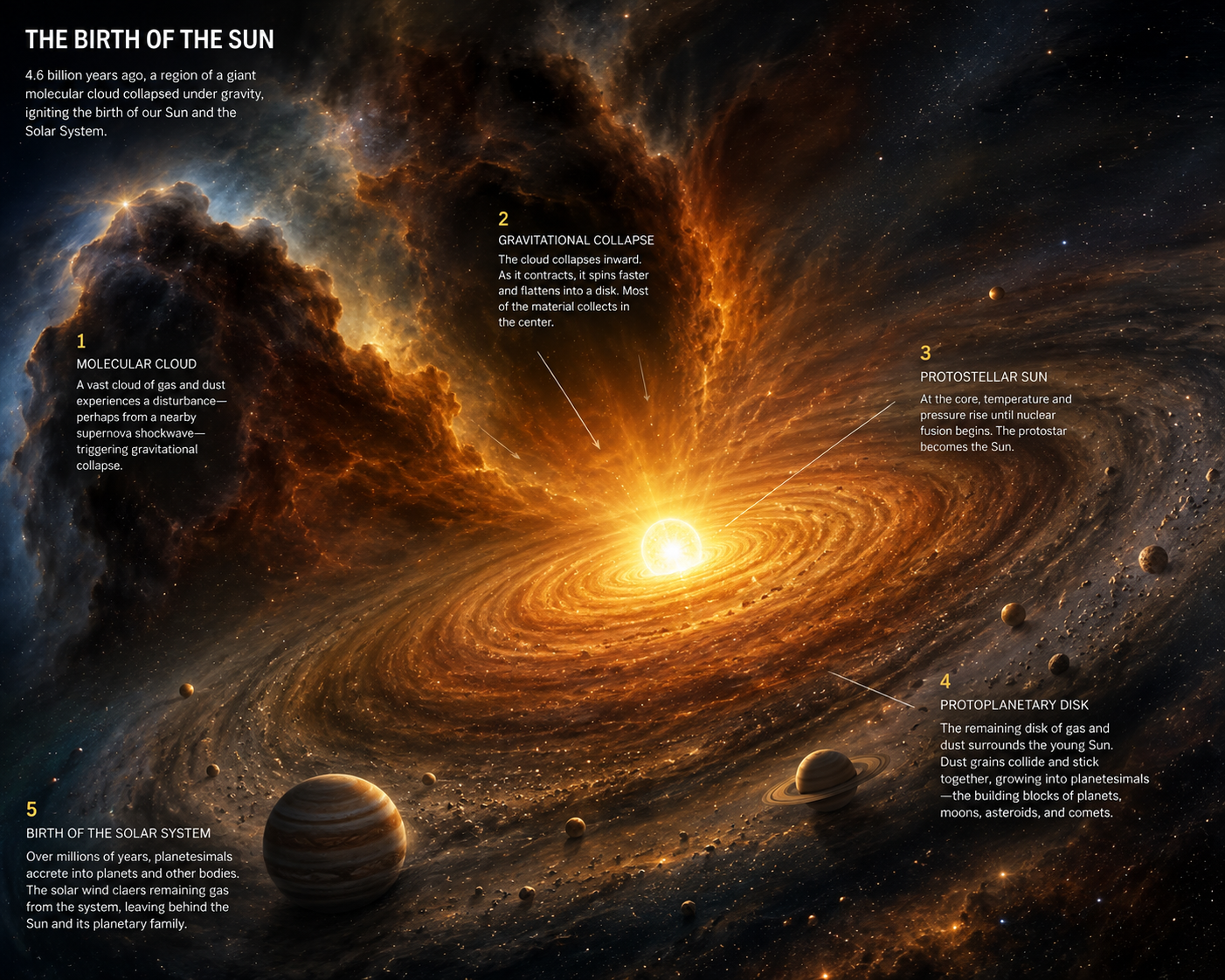
More than 4.6 billion years ago, long before Earth, the planets, or even the Moon existed, a vast cloud of gas and dust drifted through a quiet region of the Milky Way.
Known as a molecular cloud, this enormous nebula was composed mostly of hydrogen and helium—the same elements created shortly after the Big Bang.
For millions of years, the cloud remained stable.
Then something changed.
A nearby supernova explosion or another powerful gravitational disturbance likely compressed part of the cloud, causing it to collapse under its own gravity. As the material fell inward, it began spinning faster, forming a dense, glowing center surrounded by a rotating disk of gas and dust.
At the center, pressure and temperature increased relentlessly.
This growing object became the protostar that would eventually ignite into the Sun.
As gravity continued pulling material toward the center, the young Sun grew hotter and denser.
Eventually, the temperature in its core exceeded 15 million degrees Celsius (27 million degrees Fahrenheit).
At that unimaginable temperature, hydrogen atoms began colliding with such enormous force that they fused together, forming helium and releasing tremendous amounts of energy.
This process is called nuclear fusion.
It is the engine that powers every star in the universe.
The moment fusion became self-sustaining, the Sun truly came to life.
Brilliant radiation pushed outward while gravity pulled inward, creating a delicate balance that has remained stable for billions of years.
At the same time, the remaining material in the surrounding disk gradually formed the planets, moons, asteroids, and comets that make up the Solar System today.
Every world—including Earth—was born from the leftovers of the Sun's formation.
The Star That Built a Solar System
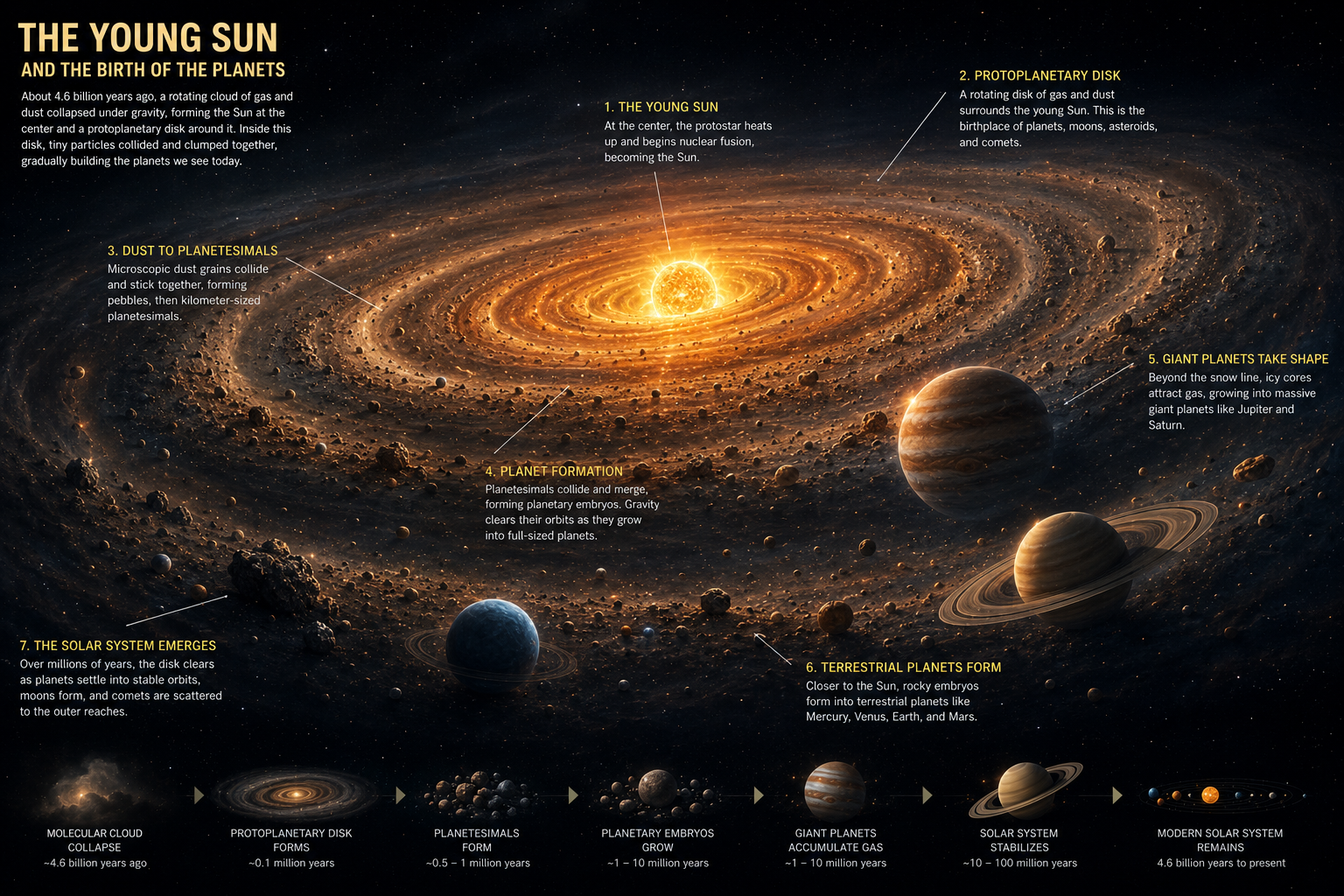
Although the Sun occupies only one place in the Solar System, its influence extends everywhere.
Its gravity controls the orbits of every planet, from tiny Mercury to distant Neptune. Even objects in the remote Kuiper Belt and the hypothetical Oort Cloud remain bound to the Sun's gravitational pull.
Its light travels across space at nearly 300,000 kilometers per second (186,000 miles per second), reaching Earth in about 8 minutes and 20 seconds.
Every second, the Sun converts about 600 million tons of hydrogen into helium, releasing enough energy to illuminate the entire Solar System.
Without this constant energy, Earth would become a frozen, lifeless world drifting through space.
The Sun is more than the largest object in our planetary system.
It is the reason the Solar System exists at all.
The Birth of the Sun
Transition to Chapter 2
From Earth, the Sun appears as a brilliant golden sphere.
But beneath its dazzling light lies an extraordinary structure of superheated plasma, where temperatures climb into the millions of degrees and energy begins a journey that can take thousands of years before finally escaping into space.
In the next chapter, we will travel deep inside the Sun to explore its hidden layers and discover how our nearest star produces the energy that sustains life on Earth.
Chapter 2: Inside the Sun — The Engine of Life
A Journey to the Center of a Star
Looking at the Sun from Earth, it appears as a smooth, glowing disk.
Its warm light feels gentle on our skin, and from a safe distance it seems almost peaceful. Yet beneath that brilliant surface lies an environment so extreme that nothing on Earth comes close to matching it.
There is no solid ground beneath the Sun's visible surface.
Instead, the Sun is an enormous sphere of superheated plasma—a state of matter in which atoms have been stripped of their electrons, creating a sea of electrically charged particles.
As we descend deeper into the Sun, temperatures rise dramatically, pressure becomes almost unimaginable, and the forces of nature operate on a scale that is difficult to comprehend.
At the very center lies the engine that has powered our Solar System for more than 4.6 billion years.
The Core: Where Stars Produce Light
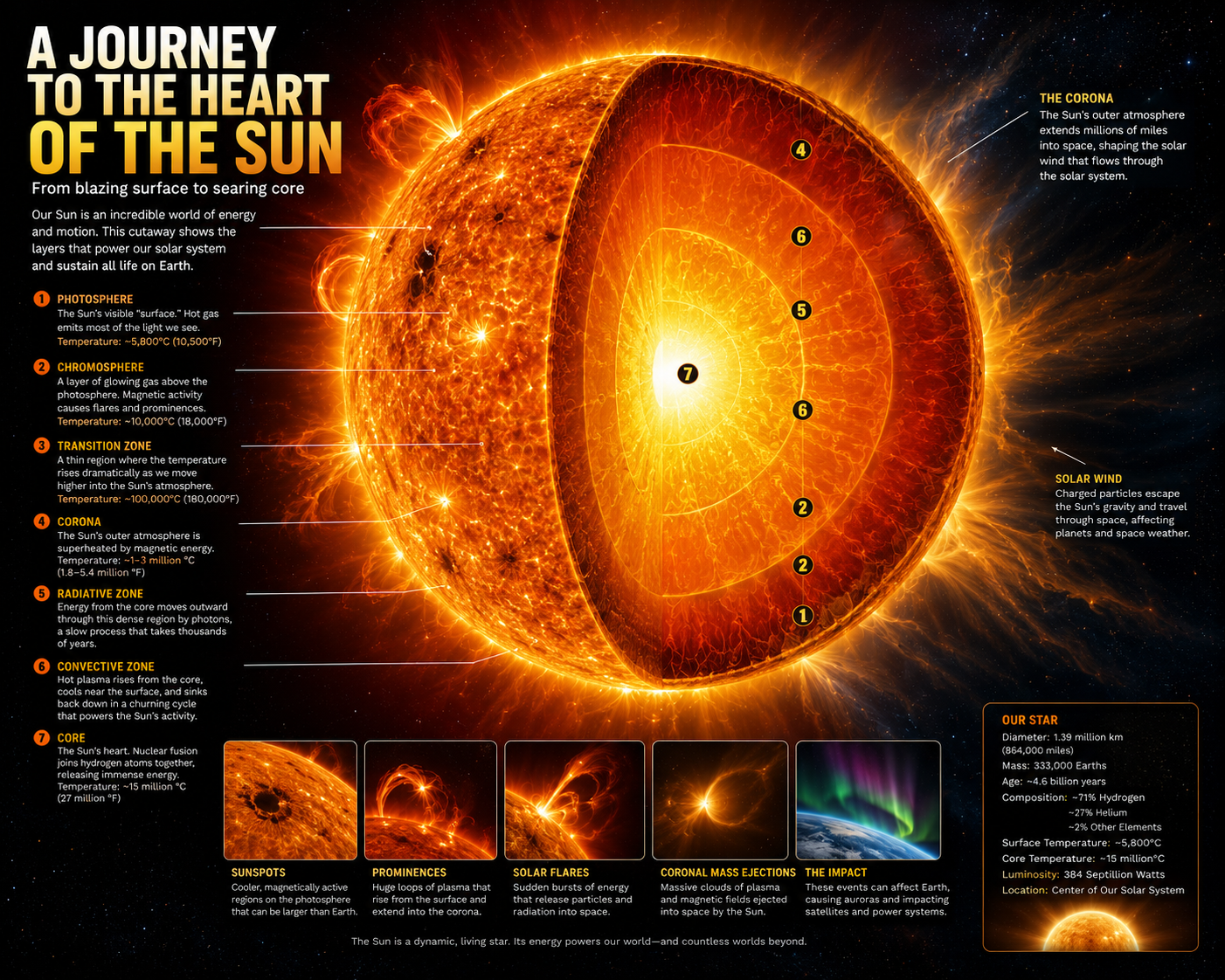
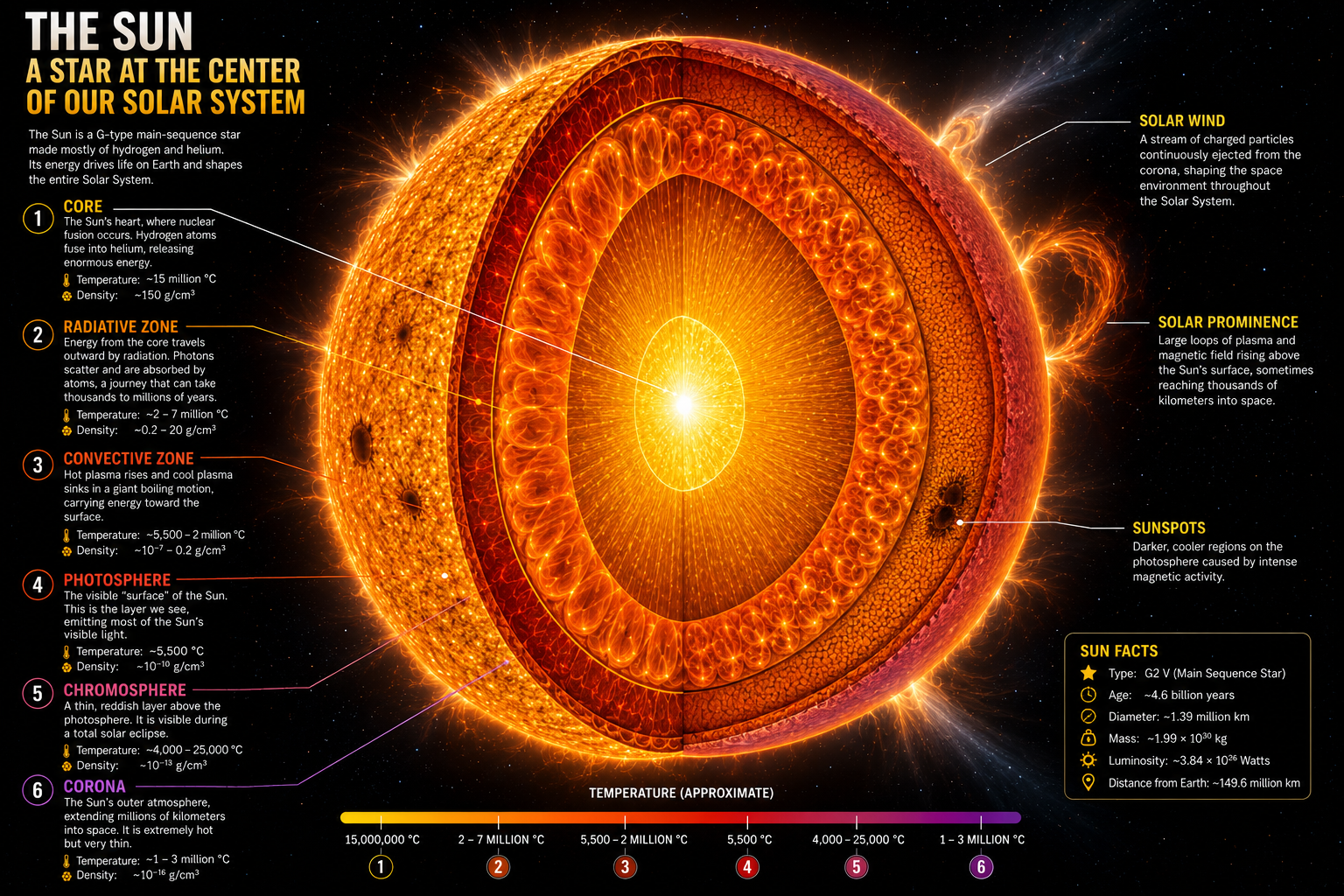
At the heart of the Sun is its core, extending roughly one-quarter of the way from the center.
Here, temperatures reach about 15 million°C (27 million°F), while the pressure is more than 250 billion times greater than Earth's atmospheric pressure.
Under these extraordinary conditions, hydrogen atoms collide with incredible force.
Normally, positively charged hydrogen nuclei repel one another. But inside the Sun's core, the immense pressure overcomes that repulsion, allowing them to fuse together.
This process—known as nuclear fusion—combines hydrogen into helium while converting a tiny fraction of mass directly into energy, as described by Albert Einstein's famous equation:
E = mc²
Although only a small amount of mass is converted during each reaction, the Sun performs this process on an enormous scale.
Every second, it transforms about 600 million tons of hydrogen into helium, releasing enough energy to power the entire Solar System.
Without this continuous fusion, the Sun would simply collapse under its own gravity.
A Photon's Surprisingly Long Journey
It may seem that sunlight produced in the Sun's core immediately travels into space.
The reality is far more remarkable.
The energy created by nuclear fusion begins as tiny packets of light called photons.
Instead of moving directly outward, these photons are constantly absorbed and re-emitted by countless particles inside the Sun. Each collision changes their direction, creating an almost endless random journey.
Scientists estimate that a single photon can take tens of thousands to hundreds of thousands of years to travel from the core to the Sun's visible surface.
Yet once it finally escapes into space, it reaches Earth in only 8 minutes and 20 seconds.
Every ray of sunlight warming your face today may have begun its journey before modern humans even existed.
Inside the Sun
The Radiative and Convective Zones
Surrounding the core is the radiative zone.
Here, energy slowly moves outward through radiation as photons bounce endlessly between densely packed particles. This region occupies much of the Sun's interior and acts as the first stage of the energy's long journey toward the surface.
Farther outward lies the convective zone, where conditions change dramatically.
Instead of radiation being the primary method of energy transport, enormous currents of hot plasma begin circulating like boiling water in a pot.
Hot plasma rises toward the surface, cools slightly, then sinks back down before heating again.
These giant convection cells constantly churn the Sun's outer layers, creating the dynamic surface patterns visible through powerful solar telescopes.
This endless cycle keeps fresh energy flowing toward the visible surface.
The Surface That Isn't Really a Surface
The bright layer we see from Earth is called the photosphere.
Although it appears solid, it is simply the level where the Sun becomes transparent enough for light to escape into space.
The photosphere has a temperature of about 5,500°C (9,900°F).
Across it, scientists observe a constantly shifting pattern known as granulation.
Each bright granule represents a rising column of hot plasma roughly the size of a country, while darker boundaries mark cooler material sinking back into the Sun's interior.
The entire surface is in constant motion.
Every minute, enormous amounts of energy rise from deep within the Sun, making it one of the most dynamic environments in the Solar System.
A Star Held Together by Balance
The Sun has remained stable for billions of years because two immense forces continuously oppose one another.
Gravity pulls inward, trying to compress the star into an ever-smaller sphere.
At the same time, the enormous energy produced by nuclear fusion pushes outward.
These opposing forces exist in a state known as hydrostatic equilibrium.
As long as this balance continues, the Sun will remain a stable star capable of supporting life on Earth.
If fusion weakened, gravity would begin to collapse the Sun.
If fusion became significantly stronger, the Sun would expand.
For billions of years, nature has maintained this extraordinary balance with astonishing precision.
Chapter 2 Summary
Deep inside the Sun lies one of the universe's greatest power plants. Nuclear fusion in its core continuously transforms hydrogen into helium, producing the energy that warms Earth and sustains every known form of life. That energy slowly travels through the Sun's interior before escaping from the glowing photosphere as sunlight.
Yet the Sun is far from calm.
Above its visible surface, powerful magnetic fields twist through blazing plasma, creating dark sunspots, towering prominences, violent solar flares, and massive eruptions capable of affecting planets millions of kilometers away.
In the next chapter, we will explore the Sun's dynamic atmosphere and discover why our nearest star is one of the most active objects in the Solar System.
Chapter 3: A Star That Never Sleeps
The Sun's Explosive Personality
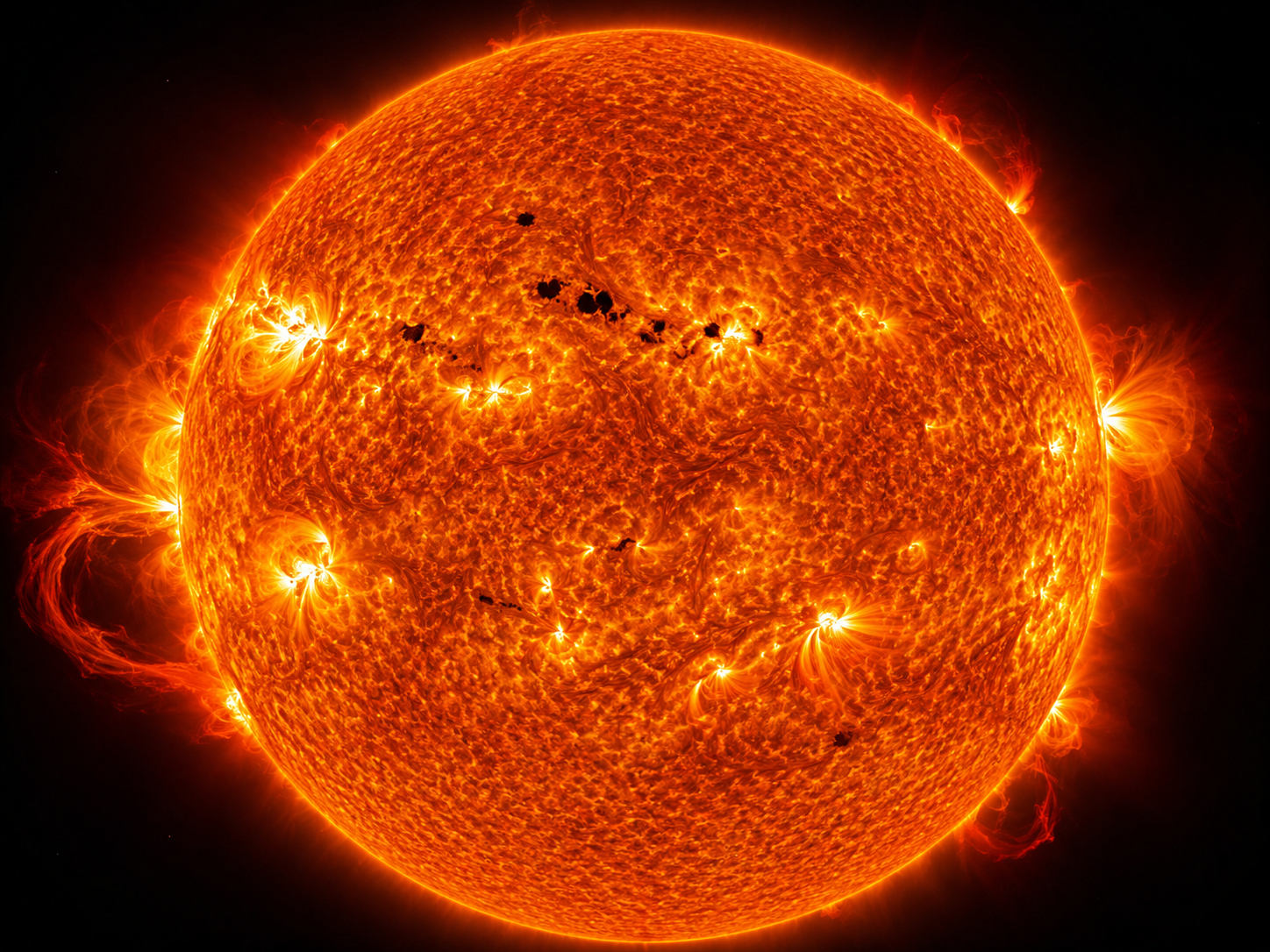
From Earth, the Sun appears calm.
Its bright golden disk rises and sets with remarkable consistency, giving the impression of a stable and unchanging star. But beyond the glowing surface visible to our eyes lies an atmosphere filled with constant motion.
Here, gigantic loops of plasma rise thousands of kilometers above the surface. Magnetic fields twist and snap with incredible force. Violent explosions release more energy in minutes than human civilization could produce in millions of years.
The Sun is not simply shining.
It is constantly erupting.
Sunspots: Dark Windows into a Hotter Story
One of the most recognizable features on the Sun is the sunspot.
At first glance, these dark patches appear cooler than the surrounding surface—and they are. While the photosphere averages about 5,500°C (9,900°F), sunspots are typically around 3,500–4,500°C (6,300–8,100°F).
That may sound strange.
How can something thousands of degrees hot appear dark?
The answer lies in contrast.
The surrounding surface is so incredibly bright that the slightly cooler sunspots look almost black by comparison. If a sunspot could be placed alone in the night sky, it would still shine brighter than the full Moon.
Sunspots form where intense magnetic fields prevent hot plasma from rising normally from the Sun's interior.
Some survive only a few days.
Others can persist for weeks while growing larger than Earth itself.
Their number rises and falls during an approximately 11-year solar cycle, a rhythm that influences the Sun's magnetic activity and space weather throughout the Solar System.
Solar Flares: Explosions Beyond Imagination
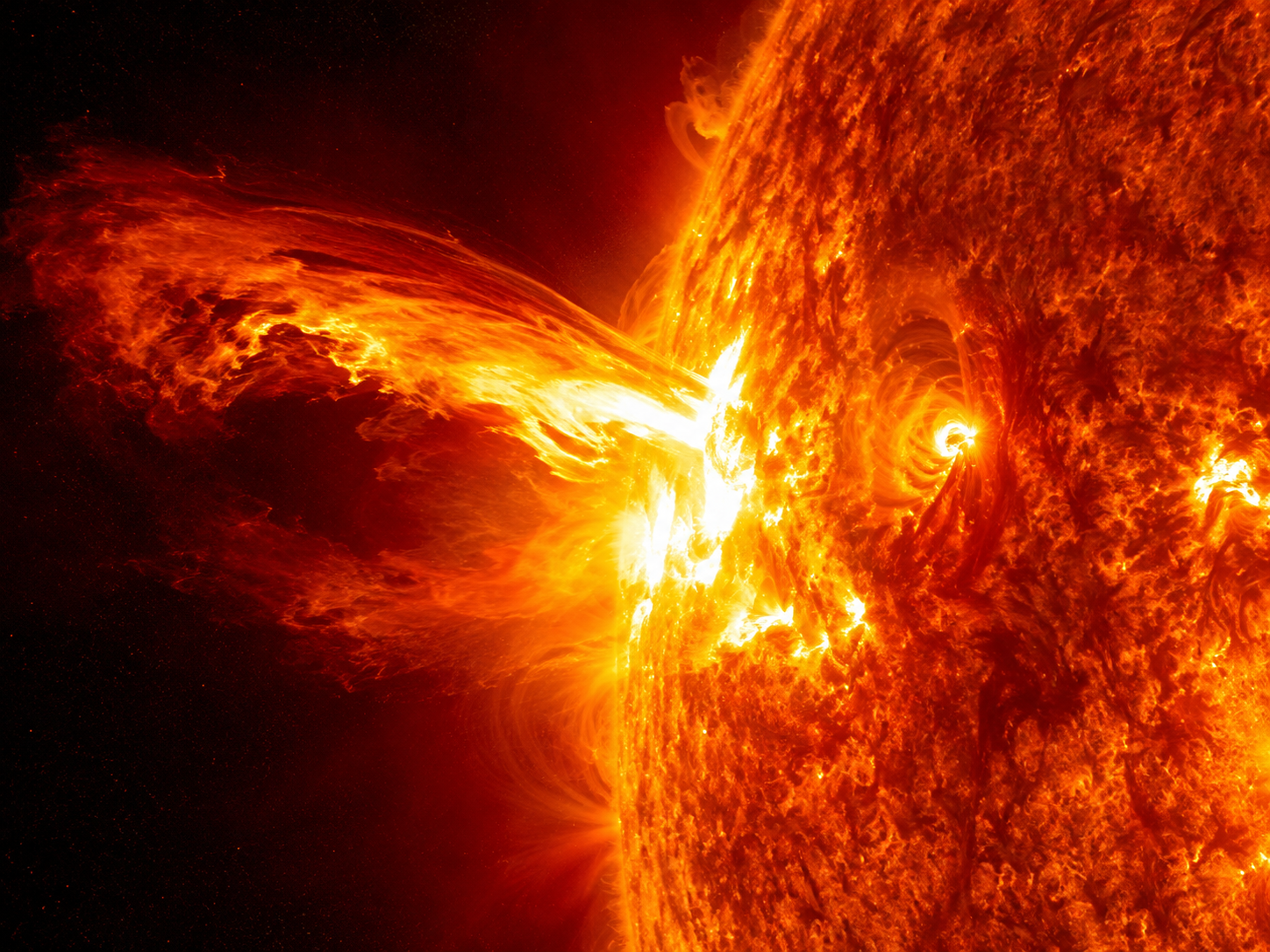
Sometimes the Sun's tangled magnetic fields become so stressed that they suddenly snap and reconnect.
When this happens, an enormous burst of energy is released.
This event is known as a solar flare.
Within minutes, solar flares emit powerful X-rays, ultraviolet radiation, and high-energy particles that race through space at incredible speeds.
The largest flares release energy equivalent to billions of nuclear bombs exploding simultaneously.
Fortunately, Earth's atmosphere absorbs most of the harmful radiation before it reaches the surface.
Without that natural shield, life on our planet would face a far more hostile environment.
Solar Activity
Coronal Mass Ejections: Storms That Cross the Solar System
Even more powerful than solar flares are Coronal Mass Ejections (CMEs).
Instead of releasing mainly radiation, these eruptions launch billions of tons of charged plasma into space.
Traveling at speeds of up to 3 million kilometers per hour (about 1.9 million mph), CMEs can cross the distance between the Sun and Earth in as little as 15 to 18 hours, although many take two or three days.
When one of these solar storms strikes Earth, it collides with our planet's magnetic field.
Most of the time, Earth's magnetosphere safely deflects the incoming particles.
But during particularly powerful events, the effects can be dramatic.
Satellites may experience temporary disruptions, astronauts must seek additional protection from radiation, radio communications can be interrupted, and electrical power grids may become vulnerable to geomagnetic storms.
At the same time, these charged particles create one of nature's most beautiful spectacles—the auroras, also known as the Northern and Southern Lights.
The Sun's Invisible Atmosphere
Beyond the visible surface lies the corona, the Sun's outer atmosphere.
It stretches millions of kilometers into space and is normally invisible because the Sun's brilliant photosphere outshines it.
During a total solar eclipse, however, the Moon blocks the bright surface, revealing the corona as a glowing white halo surrounding the Sun.
One of the greatest mysteries in solar physics is its temperature.
The photosphere is about 5,500°C, yet the corona reaches more than one million degrees Celsius.
Logically, temperatures should decrease farther from the Sun's core.
Instead, the opposite happens.
Scientists are still investigating exactly how magnetic waves and energy released by tangled magnetic fields heat the corona to such extraordinary temperatures.
This puzzle—known as the coronal heating problem—remains one of the biggest unanswered questions in modern astrophysics.
Watching the Sun Up Close
For centuries, astronomers could study the Sun only from Earth.
Today, fleets of advanced spacecraft observe it continuously.
NASA's Parker Solar Probe has flown closer to the Sun than any spacecraft in history, passing through the outer corona to directly sample the solar environment.
Meanwhile, the Solar Dynamics Observatory (SDO) records high-resolution images around the clock, revealing constantly changing magnetic fields, eruptions, and surface activity.
Together with the European Space Agency's Solar Orbiter, these missions are transforming our understanding of how the Sun works and improving our ability to predict space weather before it reaches Earth.
Each new observation reveals that our nearest star is even more dynamic than scientists once imagined.
Chapter 3 Summary
The Sun is far more than a giant glowing sphere. It is an active star whose magnetic fields create sunspots, solar flares, towering prominences, and coronal mass ejections capable of influencing planets across the Solar System. Even today, many mysteries—such as the million-degree corona—remain unsolved.
Yet despite its explosive nature, the Sun is also the source of every sunrise, every season, and nearly every form of energy that supports life on Earth.
In the next chapter, we will discover how the Sun shapes our planet, influences the entire Solar System, and why its future will ultimately determine the fate of Earth itself.
Chapter 4: The Star That Shaped Our World
Every Breath Begins with the Sun

Take a deep breath.
The oxygen filling your lungs exists because plants use sunlight to perform photosynthesis, converting carbon dioxide and water into oxygen and energy. Every forest, every field, and every ocean ecosystem ultimately depends on the Sun.
Without its light, Earth would become a frozen, lifeless planet within a matter of weeks.
The Sun is far more than a bright object in our sky.
It is the engine that drives almost every natural process on our planet.
The Energy Behind Life
Every second, the Sun sends an enormous amount of energy toward Earth.
Only a tiny fraction reaches our planet, yet that small amount is enough to power the entire global climate system.
Sunlight warms land and oceans, creating differences in temperature that generate winds and weather patterns. It evaporates water from rivers, lakes, and oceans, beginning the water cycle that eventually returns as rain and snow.
Plants capture this solar energy through photosynthesis, forming the foundation of nearly every food chain on Earth.
Even the fossil fuels that power much of modern civilization are, in a sense, ancient sunlight stored by plants millions of years ago.
From the food we eat to the electricity generated by solar panels, the Sun remains Earth's primary source of energy.
The Sun's Invisible Shield—and Its Threats

The Sun constantly releases a stream of charged particles known as the solar wind.
Traveling through space at hundreds of kilometers per second, this invisible flow extends far beyond the planets, creating a vast protective bubble around the Solar System called the heliosphere.
Earth is protected from most of these particles by its magnetic field, which acts like an invisible shield.
When solar wind particles collide with our planet's magnetosphere, they are guided toward the poles, where they interact with gases in the upper atmosphere.
The result is one of nature's most spectacular displays.
The Aurora Borealis in the Northern Hemisphere and the Aurora Australis in the Southern Hemisphere paint the night sky with shimmering curtains of green, red, and purple light.
Yet the Sun's power has another side.
During periods of intense solar activity, powerful coronal mass ejections can temporarily disrupt satellites, GPS navigation, radio communications, and even electrical power systems on Earth.
Understanding these solar storms has become increasingly important in our technology-dependent world.
How the Sun Affects Earth
The Sun's Influence Across the Solar System
The Sun's reach extends far beyond Earth.
Its immense gravity keeps every planet in orbit, from scorching Mercury to distant Neptune. Even icy comets from the far reaches of the Solar System remain connected to the Sun through its gravitational pull.
The solar wind also shapes the space environment around every planet.
Mercury, lacking a thick atmosphere, is directly exposed to intense solar radiation. Mars, with only a weak magnetic field, has gradually lost much of its atmosphere over billions of years because of interactions with the solar wind.
Farther away, giant planets like Jupiter generate powerful magnetic fields that interact with solar particles, creating enormous auroras even larger than Earth's.
No matter where a planet or moon exists within the Solar System, the Sun continues to influence its environment.
It is the invisible force connecting every world.
The Future of Our Star
Although the Sun feels eternal, it is not immortal.
Today, it is approximately 4.6 billion years old, placing it around the middle of its stable lifetime.
For another five billion years, the Sun will continue converting hydrogen into helium within its core.
Eventually, however, that hydrogen will begin to run out.
Without enough fuel to maintain the balance between gravity and nuclear fusion, the Sun's core will contract while its outer layers expand dramatically.
It will become a Red Giant.
During this stage, the Sun will grow so large that it is expected to engulf Mercury and Venus. Whether Earth survives physically remains uncertain, but even if it does, the intense heat will almost certainly boil away the oceans and make the planet completely uninhabitable.
After shedding its outer layers into space, the remaining core will become a White Dwarf—a small, incredibly dense stellar remnant that will slowly cool over trillions of years.
Even stars have lifecycles.
The Sun's story, like every star's, has a beginning, a long period of stability, and eventually an end.
Chapter 4 Summary
The Sun is the foundation of life on Earth and the force that governs the entire Solar System. Its energy powers our climate, drives photosynthesis, creates weather, and sustains every ecosystem. At the same time, its magnetic activity influences space weather, auroras, satellites, and modern technology.
Yet one question remains.
What have we learned by studying our nearest star, and why does the Sun continue to be one of the most important objects in all of astronomy?
In the final chapter, we will explore the Sun's lasting legacy, humanity's quest to understand it, and why this ordinary-looking star is one of the greatest reasons life exists anywhere we know.
Chapter 5: The Legacy of Our Star
An Ordinary Star That Changed Everything
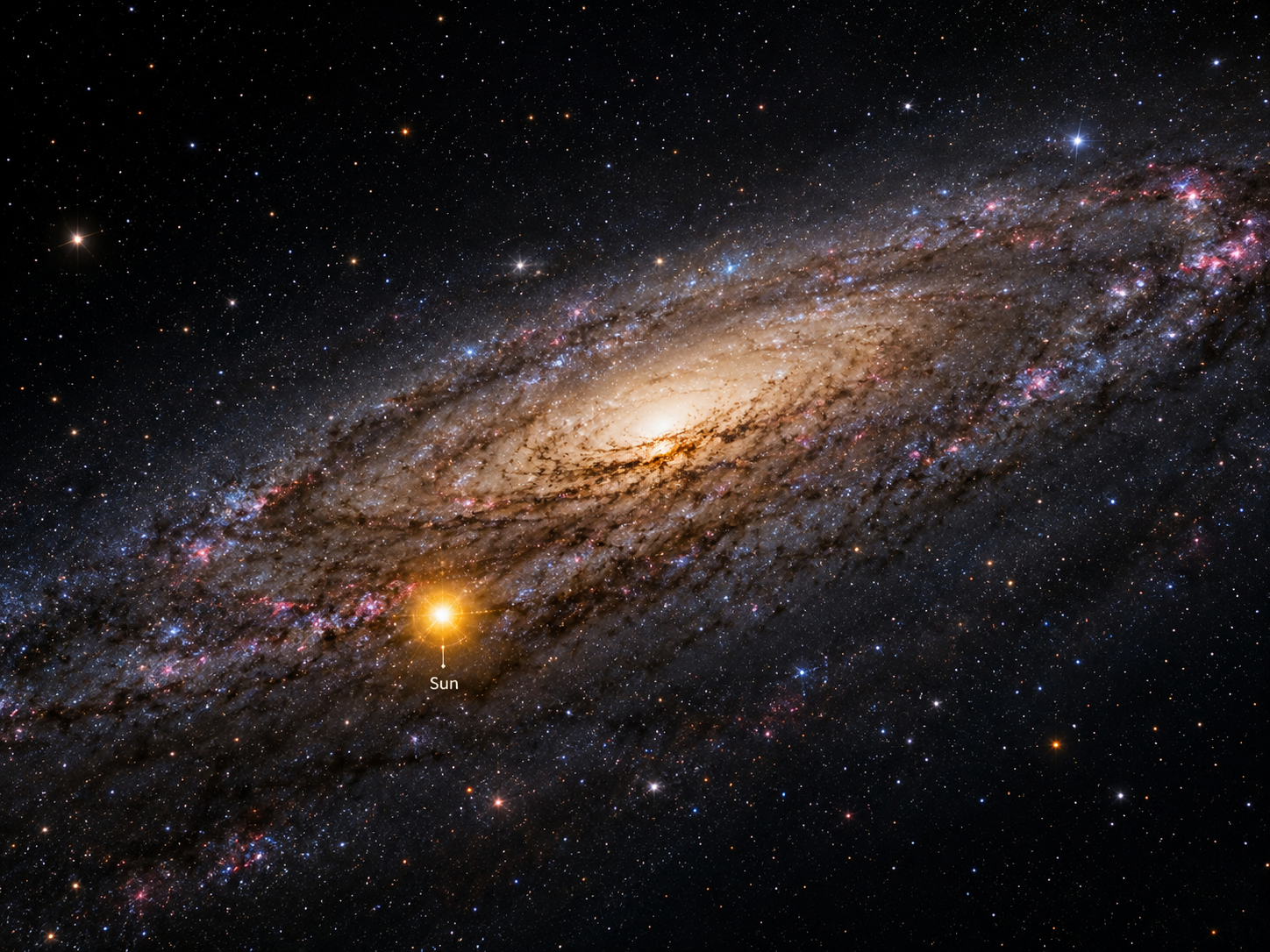
When we look at the night sky, the universe appears filled with countless stars.
Astronomers estimate that the Milky Way Galaxy alone contains 100 to 400 billion stars, and the observable universe holds hundreds of billions of galaxies.
Among this unimaginable number of stars, the Sun is not especially large, exceptionally bright, or particularly rare.
It is considered a G-type main-sequence star, often called a yellow dwarf.
Yet for us, it is the most important star in the universe.
Without the Sun, Earth would never have formed into the life-supporting world we know today. Every mountain, ocean, forest, and living creature owes its existence to the energy produced inside this ordinary star.
Sometimes, the universe's greatest wonders are not the rarest ones—but the ones closest to home.
Learning from Our Nearest Star
Because the Sun is so close compared with every other star, it serves as a natural laboratory for understanding stellar physics.
Every discovery made about the Sun helps scientists explain how stars are born, how they generate energy, how they evolve, and how they eventually die.
Processes first studied on the Sun—such as nuclear fusion, magnetic fields, plasma dynamics, and stellar activity—have become fundamental to modern astrophysics.
The Sun also helps astronomers interpret observations of distant stars whose surfaces can never be photographed in similar detail.
In many ways, understanding the Sun means understanding stars throughout the universe.
Humanity's Journey Toward the Sun
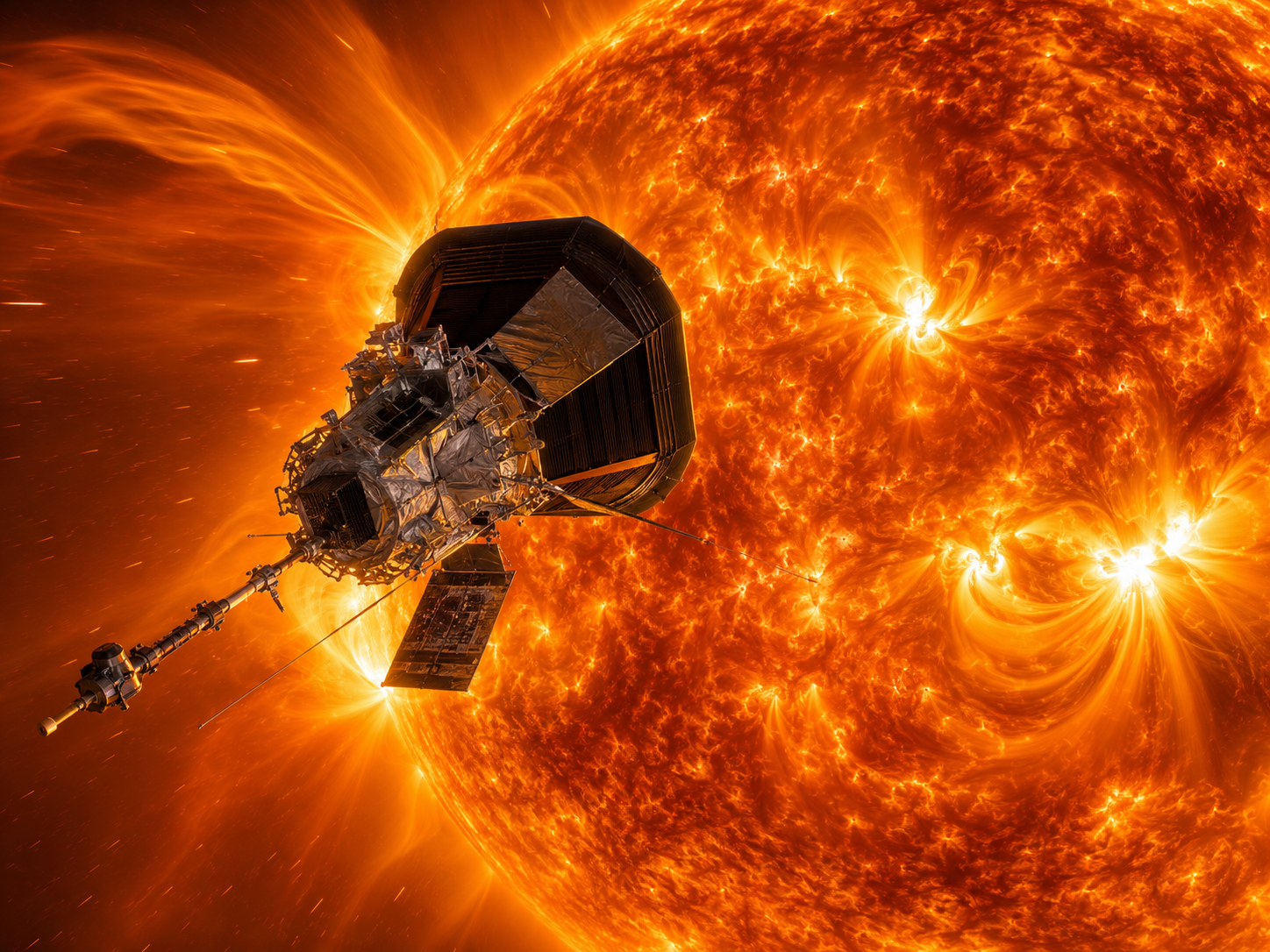
For thousands of years, humans could only observe the Sun from Earth.
Today, sophisticated spacecraft study it from space with extraordinary precision.
NASA's Parker Solar Probe has become the closest spacecraft ever to the Sun, repeatedly flying through its outer atmosphere to investigate the origin of the solar wind and the mysterious heating of the corona.
Meanwhile, the European Space Agency's Solar Orbiter photographs regions of the Sun that have never been observed in such detail, including views of its poles.
Together with missions like the Solar Dynamics Observatory (SDO), these spacecraft continuously monitor solar activity, helping scientists improve forecasts of space weather that can affect satellites, astronauts, navigation systems, and electrical infrastructure on Earth.
Every mission reveals that even our nearest star still holds countless unanswered questions.
The Sun Compared with Earth
The Star That Connects Every Planet
Throughout this series, we have explored the incredible diversity of the Solar System.
Mercury survives beneath scorching sunlight.
Venus hides beneath crushing clouds.
Earth supports life.
Jupiter dominates with immense gravity.
Saturn amazes with magnificent rings.
Uranus rotates on its side.
Neptune unleashes the fastest winds ever discovered.
Despite their extraordinary differences, every one of these worlds shares the same center.
The Sun.
Its gravity keeps every planet in orbit.
Its light reaches each world, although with decreasing intensity as distance increases.
Its formation created the materials from which every planet, moon, asteroid, and comet eventually emerged.
The Solar System is not simply a collection of planets.
It is a family bound together by a single star.
Looking Toward the Future
Humanity's relationship with the Sun continues to evolve.
As technology advances, scientists are learning to predict solar storms more accurately, develop spacecraft capable of surviving extreme heat, and understand how stars influence the habitability of planets around distant suns.
Future missions may solve mysteries that remain unanswered today.
Why is the Sun's corona millions of degrees hotter than its surface?
How exactly are solar magnetic fields generated?
Can long-term solar activity influence planetary climates more than we currently understand?
Each new discovery not only expands our knowledge of the Sun but also helps us better understand the countless stars scattered across the universe.
The story of the Sun is far from over.
It is a story that continues every single day.
Conclusion: The Star That Made Life Possible
The Sun is far more than the bright object that lights our days.
It is a giant sphere of plasma powered by nuclear fusion, producing the energy that has sustained Earth for billions of years. Its gravity created the Solar System, its light supports every known ecosystem, and its magnetic activity shapes the space environment around every planet.
Although it is only one ordinary star among billions, it holds an extraordinary place in our lives.
Every sunrise carries energy that began deep inside the Sun's core thousands—or even hundreds of thousands—of years ago before finally escaping into space and reaching Earth in just over eight minutes.
That same light has guided explorers across oceans, inspired ancient civilizations, powered modern technology, and made life itself possible.
The Sun reminds us that the greatest force shaping our existence is not hidden in the distant reaches of the universe.
It shines above us every single day.
Frequently Asked Questions About the Sun
1. What is the Sun?
The Sun is the star at the center of our Solar System. It is a massive sphere of hot plasma powered by nuclear fusion, providing the light, heat, and energy that make life on Earth possible.
2. How old is the Sun?
Scientists estimate the Sun is about 4.6 billion years old. It is currently in the main-sequence stage of its life and is expected to remain stable for another 5 billion years.
3. How big is the Sun?
The Sun has a diameter of about 1.39 million kilometers (864,000 miles), making it 109 times wider than Earth. More than 1.3 million Earths could fit inside its volume.
4. What is the Sun made of?
The Sun is composed mainly of hydrogen (about 74%) and helium (about 24%), with small amounts of heavier elements such as oxygen, carbon, neon, and iron.
5. How does the Sun produce energy?
The Sun generates energy through nuclear fusion in its core. During this process, hydrogen atoms fuse to form helium, releasing enormous amounts of energy as light and heat.
6. How long does sunlight take to reach Earth?
Sunlight travels from the Sun to Earth in about 8 minutes and 20 seconds, covering a distance of approximately 150 million kilometers (93 million miles).
7. What are sunspots?
Sunspots are cooler, darker regions on the Sun's surface caused by intense magnetic fields. They are often associated with increased solar activity, including solar flares and coronal mass ejections.
8. What is a solar flare?
A solar flare is a powerful explosion caused by the sudden release of magnetic energy on the Sun. Solar flares emit intense radiation that can affect satellites, radio communications, and space missions.
9. What is the solar wind?
The solar wind is a continuous stream of charged particles flowing from the Sun into space. When these particles interact with Earth's magnetic field, they can produce beautiful auroras and, during strong solar storms, may also disrupt satellites and power systems.
10. Will the Sun ever die?
Yes. In about 5 billion years, the Sun will expand into a Red Giant, likely engulfing Mercury and Venus. It will then shed its outer layers and eventually become a White Dwarf, ending its life as a small, dense stellar remnant.