⭐ Chapter 1 — The Question That Changed Humanity
⬇
A Question as Old as Civilization
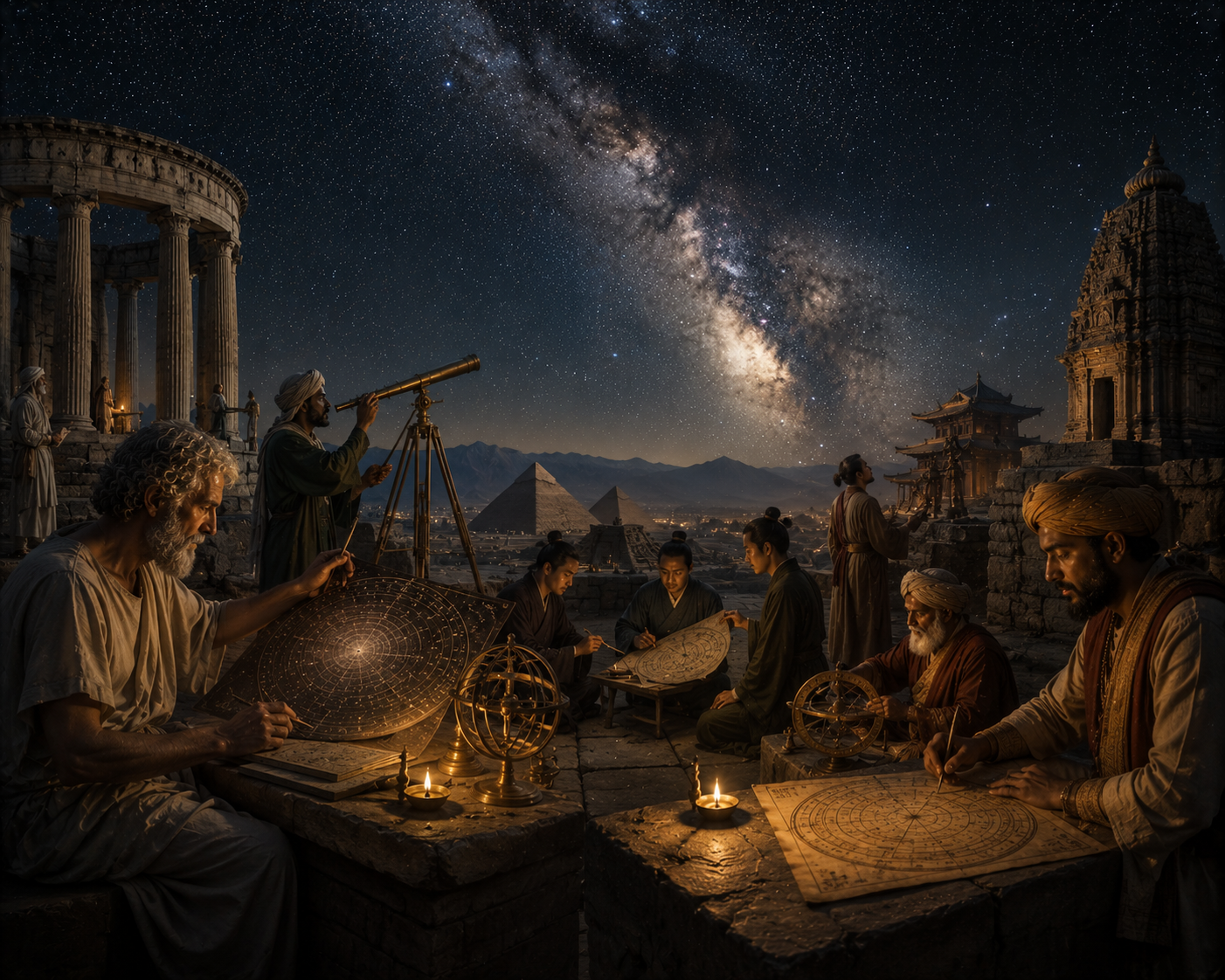
Long before the invention of telescopes...
Long before rockets carried humans into space...
Long before scientists understood that Earth was only one planet orbiting an ordinary star...
People looked into the night sky and wondered.
What are those distant lights?
Could someone be living there?
The question appeared in different forms across civilizations separated by thousands of kilometers and hundreds of years.
Ancient philosophers in Greece imagined countless worlds beyond our own.
Chinese astronomers carefully mapped the heavens, believing the skies held profound mysteries.
Indian scholars described an immense cosmos far larger than human imagination.
Without modern science, they had no evidence.
Only curiosity.
Yet curiosity has always been humanity's greatest engine of discovery.
Every major journey in history began with a simple question.
This one may be the greatest of them all.
⬇
A Universe Larger Than Anyone Imagined
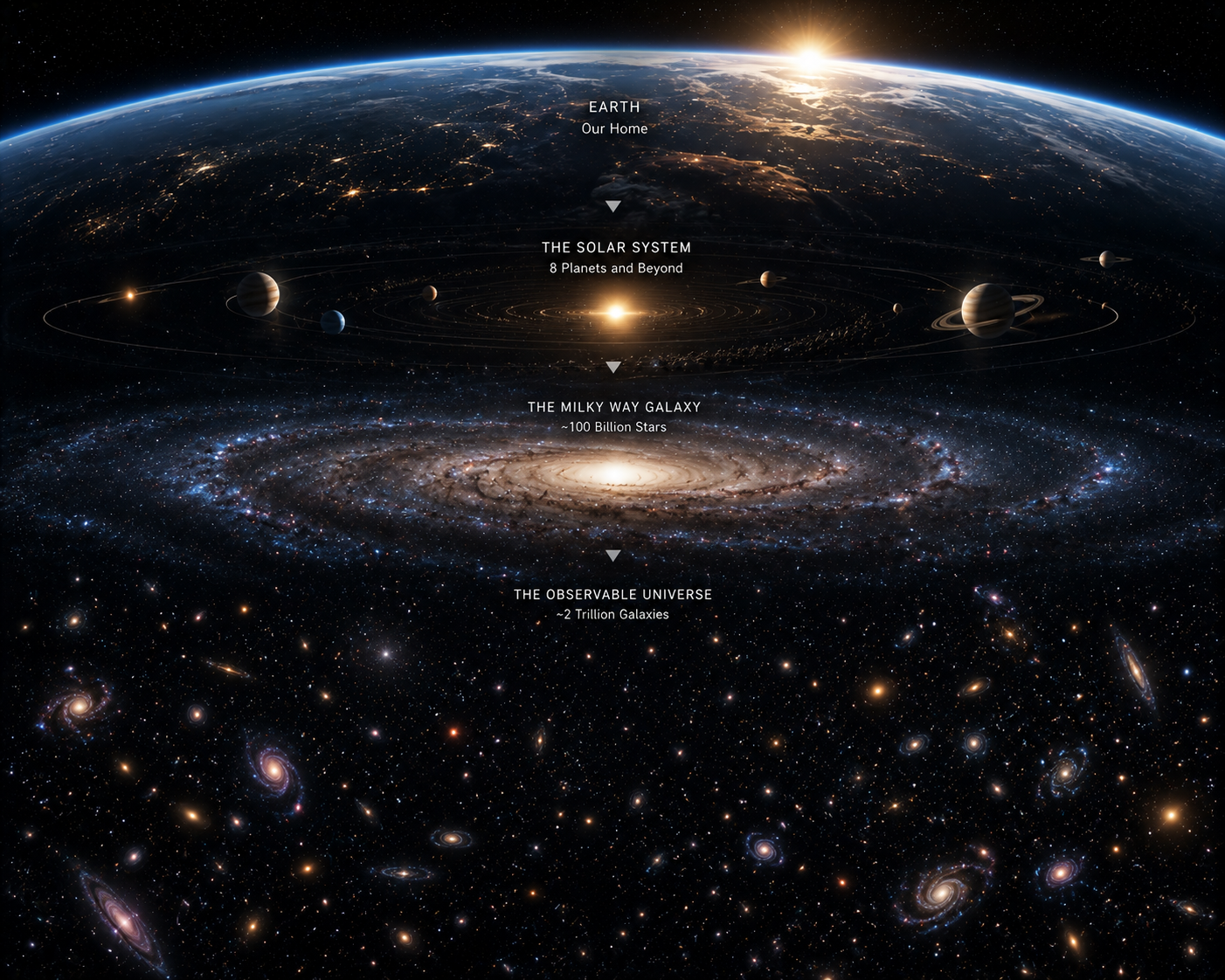
For centuries, humanity believed the stars were distant lights attached to a celestial sphere surrounding Earth.
Today we know something far more astonishing.
Our Sun is only one star among roughly 100 to 400 billion stars in the Milky Way.
And the Milky Way itself is only one galaxy among hundreds of billions in the observable universe.
Around many of those stars are planets.
Some are scorching worlds covered in lava.
Others are frozen balls of ice.
Some are giant gas planets many times larger than Jupiter.
And some may be rocky worlds with oceans, clouds, and conditions surprisingly similar to Earth's.
The numbers are almost impossible to comprehend.
If even a tiny fraction of those planets can support life...
The universe could be filled with living worlds.
⬇
The Silence Between the Stars
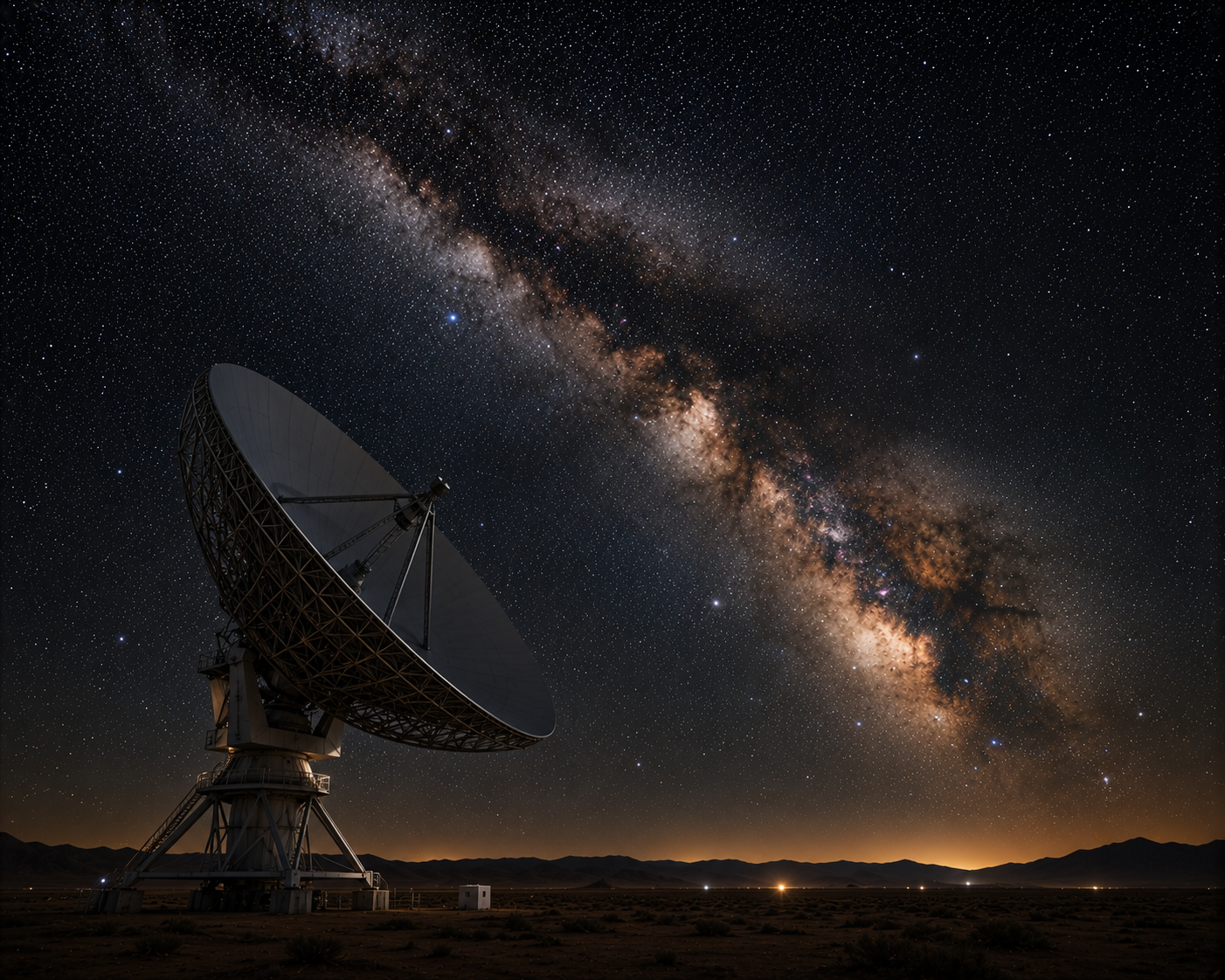
Despite decades of exploration...
We have not found a single confirmed sign of life beyond Earth.
No cities.
No spacecraft.
No unmistakable radio message.
Only silence.
But silence does not necessarily mean emptiness.
The nearest star beyond our Sun, Proxima Centauri, is more than 4.2 light-years away.
With today's spacecraft, reaching it would take tens of thousands of years.
The universe is so vast that even if intelligent civilizations exist, they may simply be too far away for easy communication.
Imagine standing on opposite sides of an enormous ocean, calling out without knowing anyone is listening.
That may be our current situation in the cosmos.
We have only just begun searching.
⬇
The Beginning of a New Search
For most of human history, asking whether we were alone was philosophy.
Today...
It has become science.
Powerful telescopes discover new planets almost every week.
Spacecraft explore worlds that may hide underground oceans.
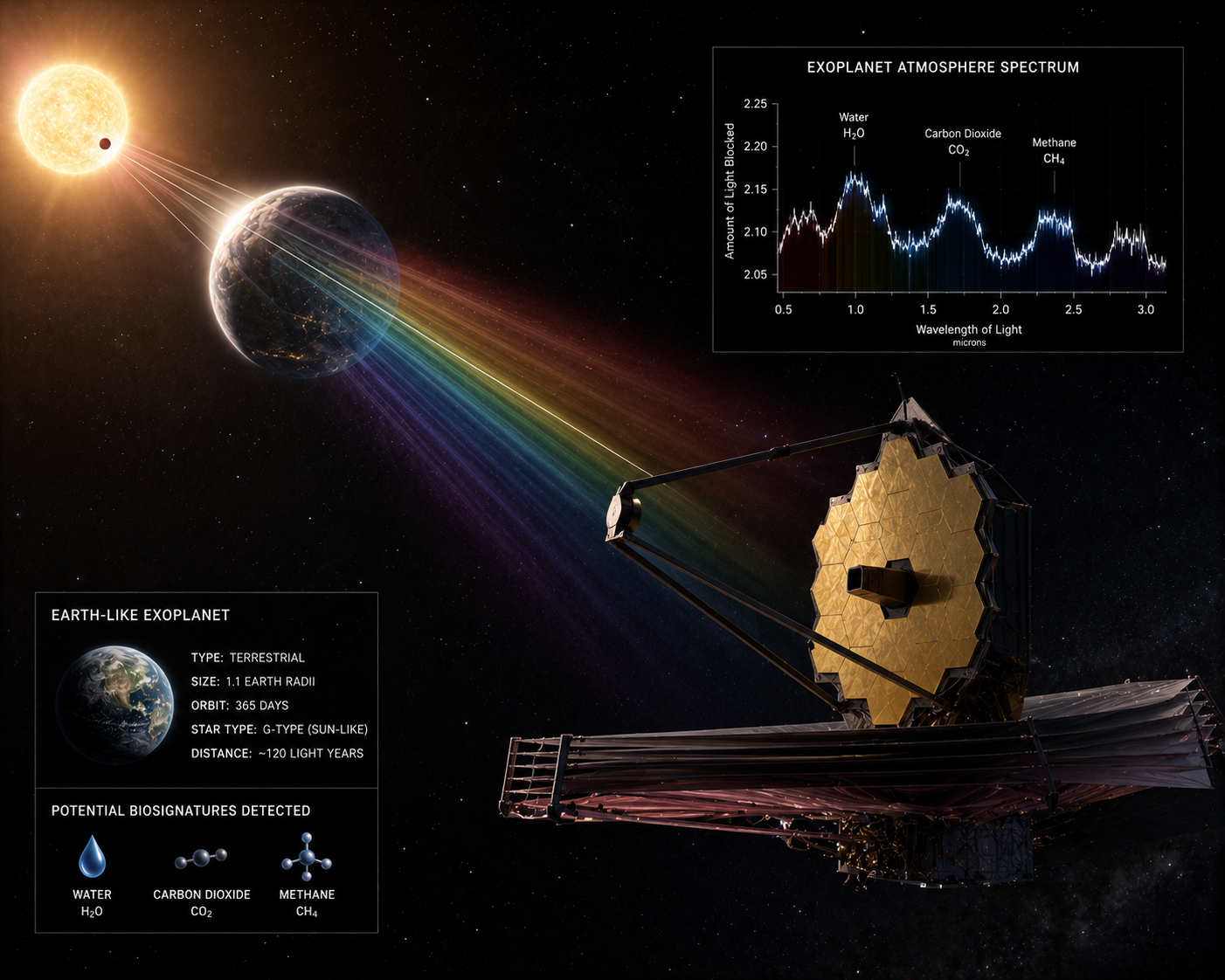
Scientists study the atmospheres of distant planets, searching for gases that could indicate biological activity.
For the first time in history, humanity possesses the technology to investigate one of its oldest questions.
We may not know the answer yet.
But we have finally begun looking.
And every discovery brings us one step closer.
🌌 Chapter 2 — Where Could Alien Life Exist?
⬇
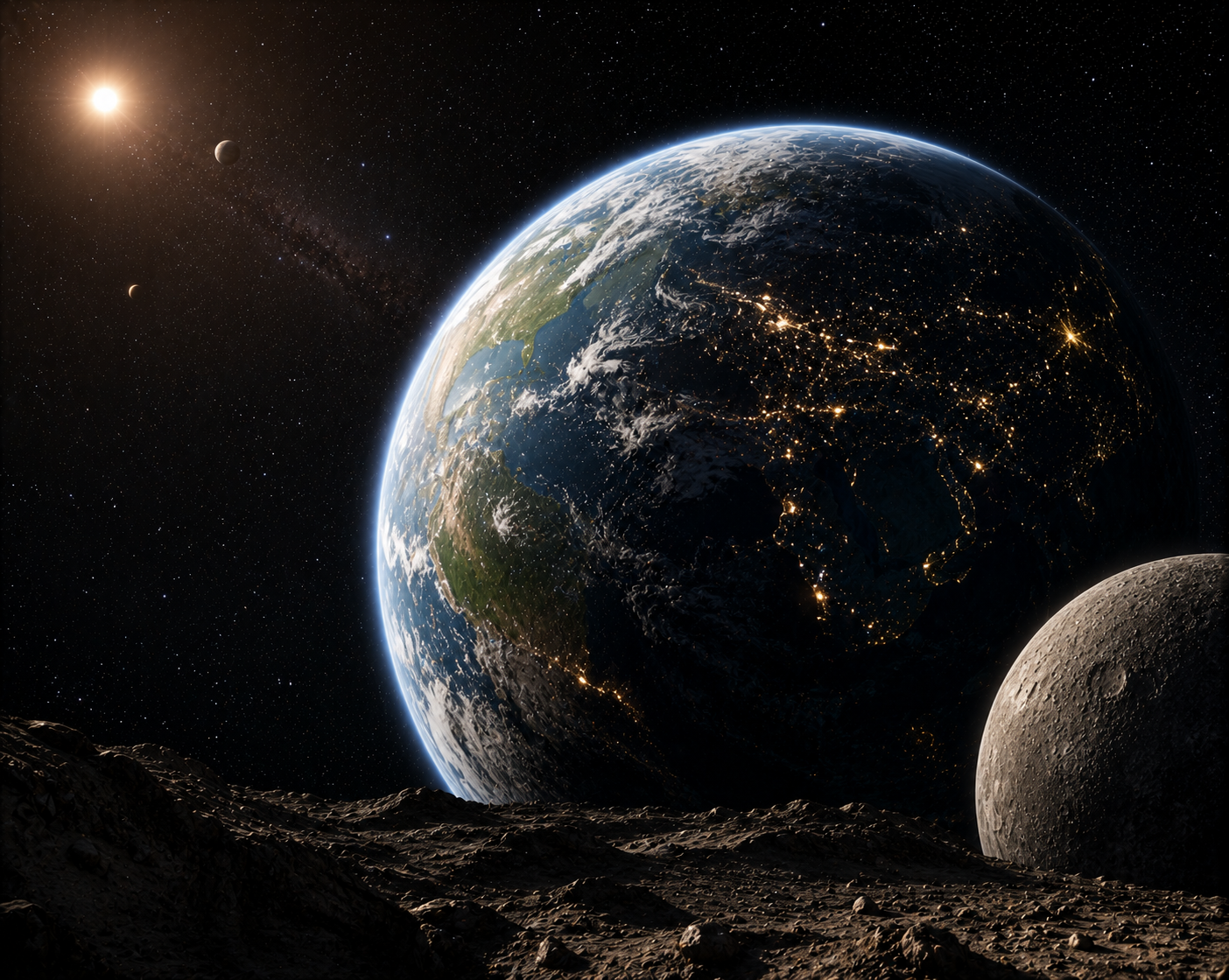
Searching for Another Earth
If life exists somewhere in the universe...
Where should we begin looking?
For centuries, the answer was simple.
"We don't know."
Today, science offers a much better response.
"We know where to start."
Life as we understand it depends on a few essential ingredients.
Liquid water.
A stable source of energy.
The right chemical elements.
Enough time for life to evolve.
Instead of searching every planet in the universe, astronomers focus on worlds where these conditions might exist.
The search is no longer random.
It has become a scientific investigation.
⬇
The Goldilocks Zone
Not every planet can support life.
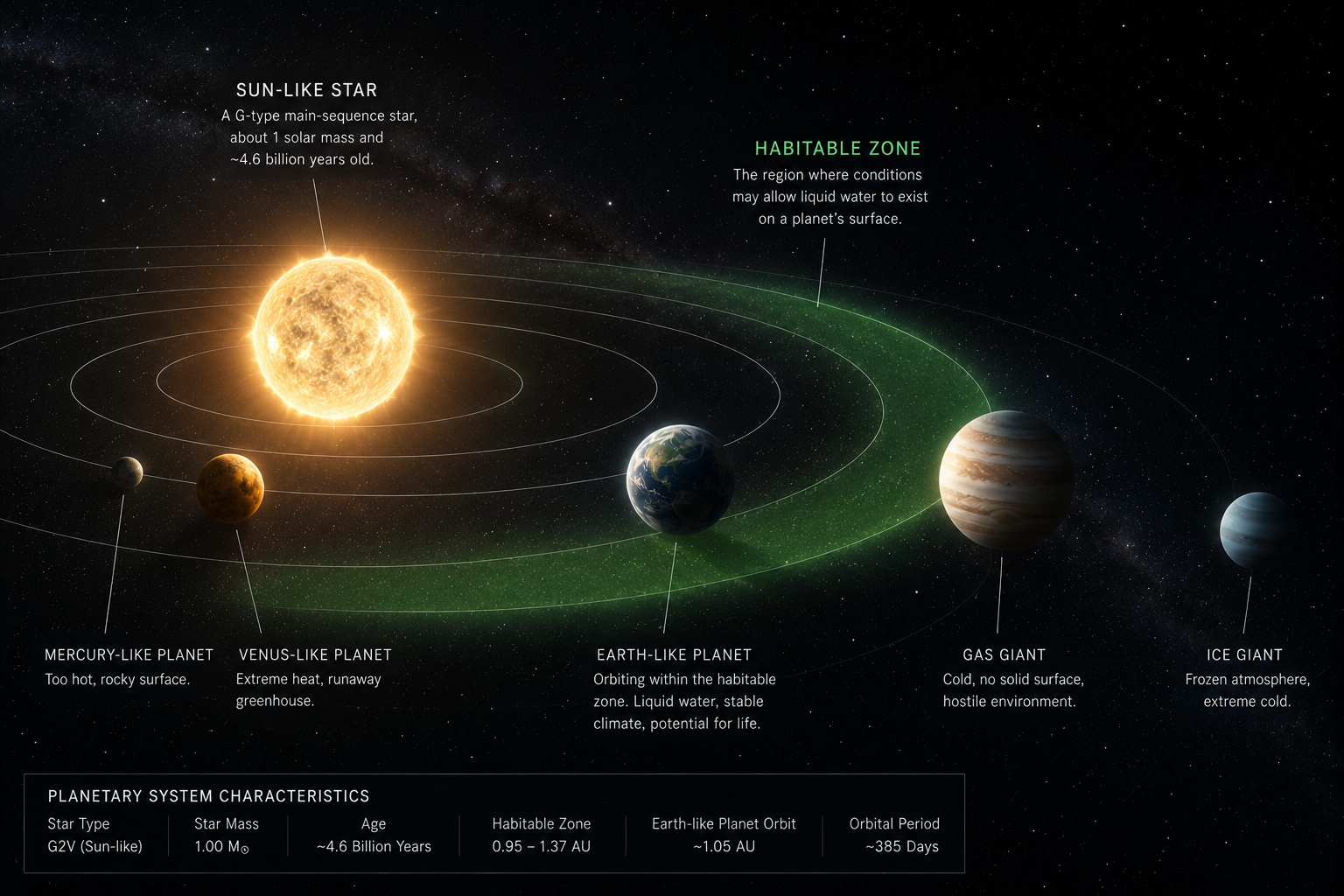
Some orbit so close to their stars that their surfaces become hot enough to melt rock.
Others are so distant that any water instantly freezes into ice.
Scientists call the narrow region where temperatures may allow liquid water to exist the Habitable Zone, often nicknamed the Goldilocks Zone.
Like the famous fairy tale, the conditions must be not too hot, not too cold—but just right.
Earth lies comfortably within our Sun's habitable zone.
Mars sits near its outer edge.
Venus, although similar in size to Earth, lies too close to the Sun and became an inferno.
Finding another planet inside this zone does not prove life exists.
But it gives scientists one of the best places to begin searching.
⬇
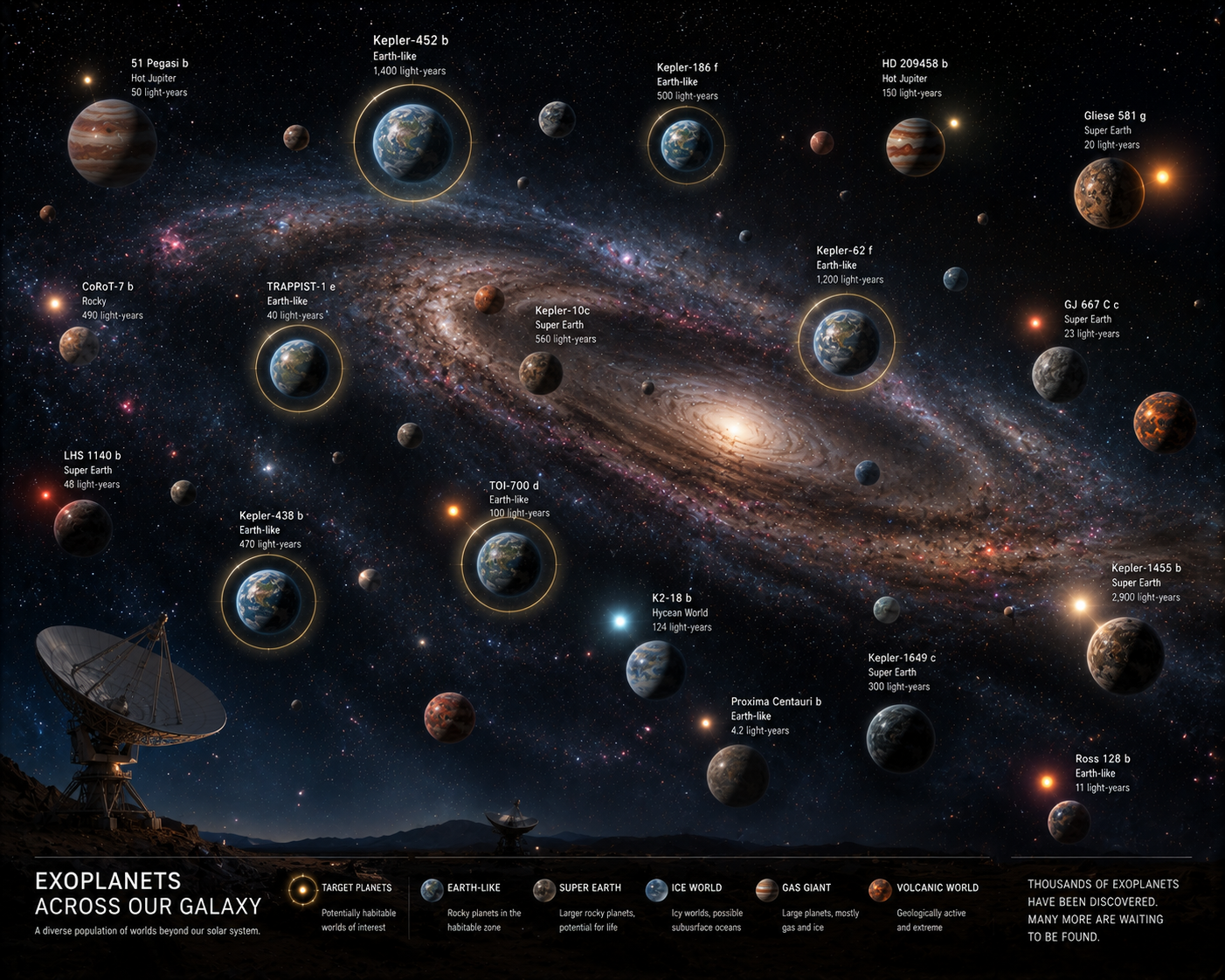
Thousands of New Worlds
Just a few decades ago, humanity knew of only the planets in our own Solar System.
Today, astronomers have confirmed more than 5,000 exoplanets orbiting distant stars.
Some are larger than Jupiter.
Others are smaller than Earth.
Some complete an orbit in only a few days.
Others take centuries.
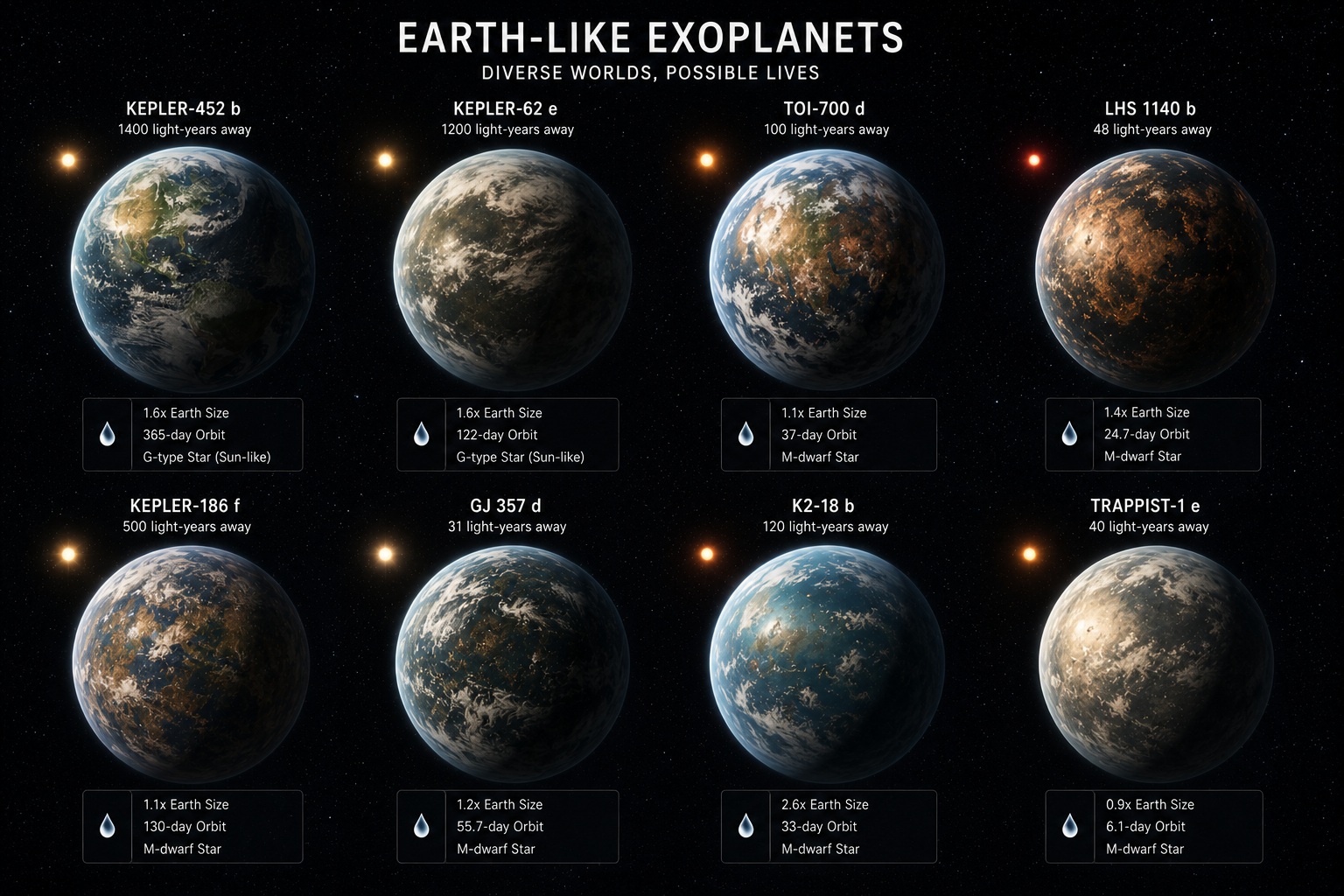
Among them are rocky planets remarkably similar in size to Earth.
One famous example is Proxima Centauri b, the nearest known exoplanet orbiting within the habitable zone of another star.
Although we cannot yet visit these distant worlds, powerful telescopes allow scientists to study their size, mass, temperature, and even parts of their atmospheres.
Every new discovery expands our understanding of where life might exist.
⬇
Perhaps We Don't Need to Leave Our Solar System
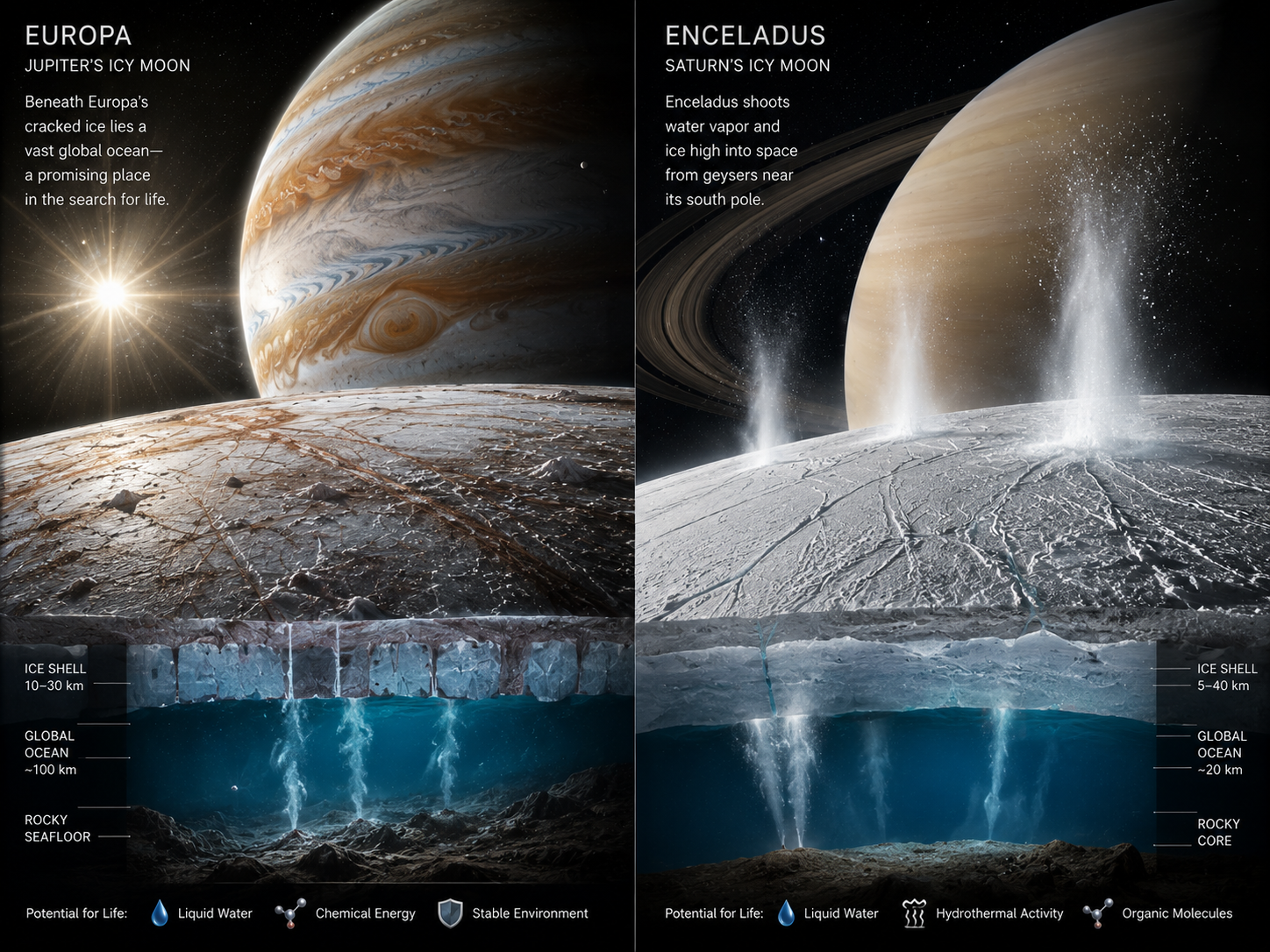
The search for life is not limited to distant stars.
Some of the most promising places may exist surprisingly close to home.
Jupiter's moon Europa hides a vast ocean beneath a thick shell of ice.
Saturn's moon Enceladus shoots enormous plumes of water vapor into space from its frozen surface.
These hidden oceans contain liquid water, organic molecules, and possible energy sources—three ingredients that scientists consider important for life.
On Earth, living organisms thrive near deep-sea hydrothermal vents without any sunlight at all.
If similar environments exist beneath Europa's or Enceladus's icy crust, simple microbial life could potentially survive there.
No evidence of life has yet been found on either moon.
But both remain among the most exciting targets in the search for life beyond Earth.
⬇
The Universe Is Full of Possibilities
The universe has taught humanity an important lesson.
Every time we believed Earth was unique...
We discovered countless worlds unlike anything we had imagined.
Thousands of planets.
Hidden oceans beneath frozen moons.
Rocky worlds orbiting distant stars.
Each discovery reminds us that nature is often more creative than our expectations.
Somewhere among these countless worlds...
Life may already exist.
The challenge is finding it.
🔭 Chapter 3 — How Scientists Search for Alien Life
⬇
Listening to the Universe
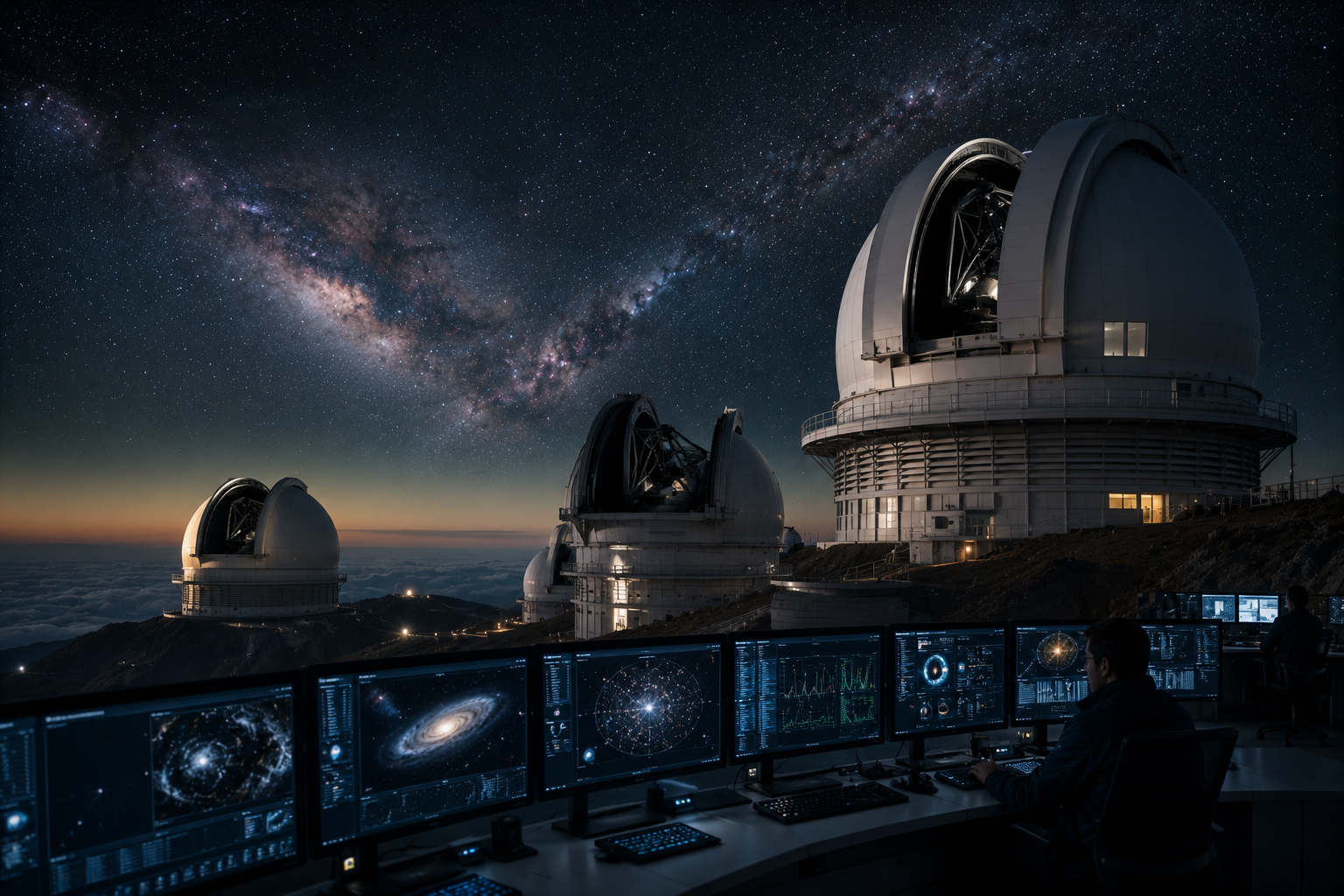
For thousands of years, humanity searched the skies with nothing more than its eyes.
Today, our search is carried out by giant observatories, robotic spacecraft, and powerful space telescopes capable of detecting planets hundreds of light-years away.
The goal is no longer simply to discover new worlds.
It is to answer a far more profound question.
Does life exist beyond Earth?
Scientists cannot travel to distant planets.
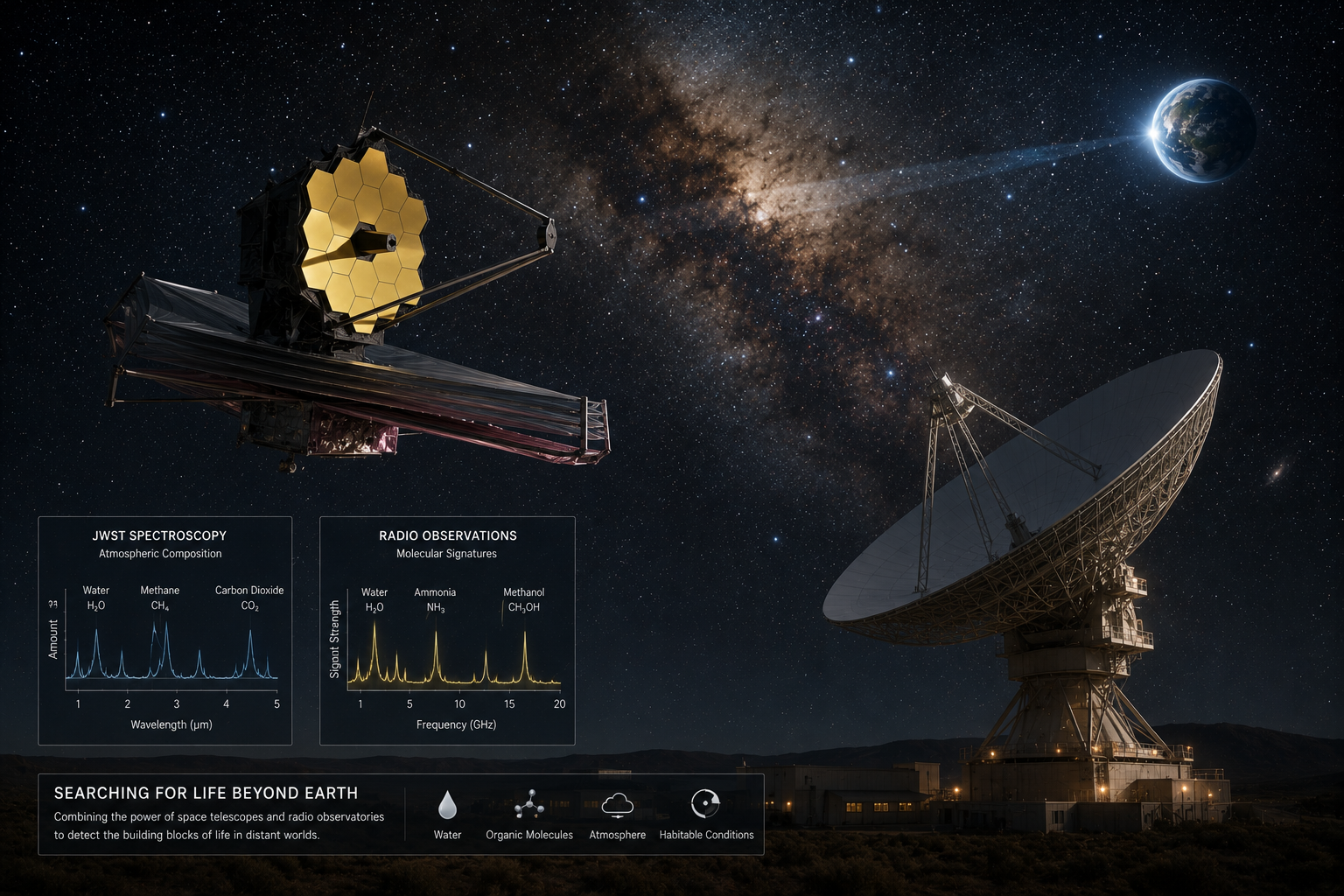
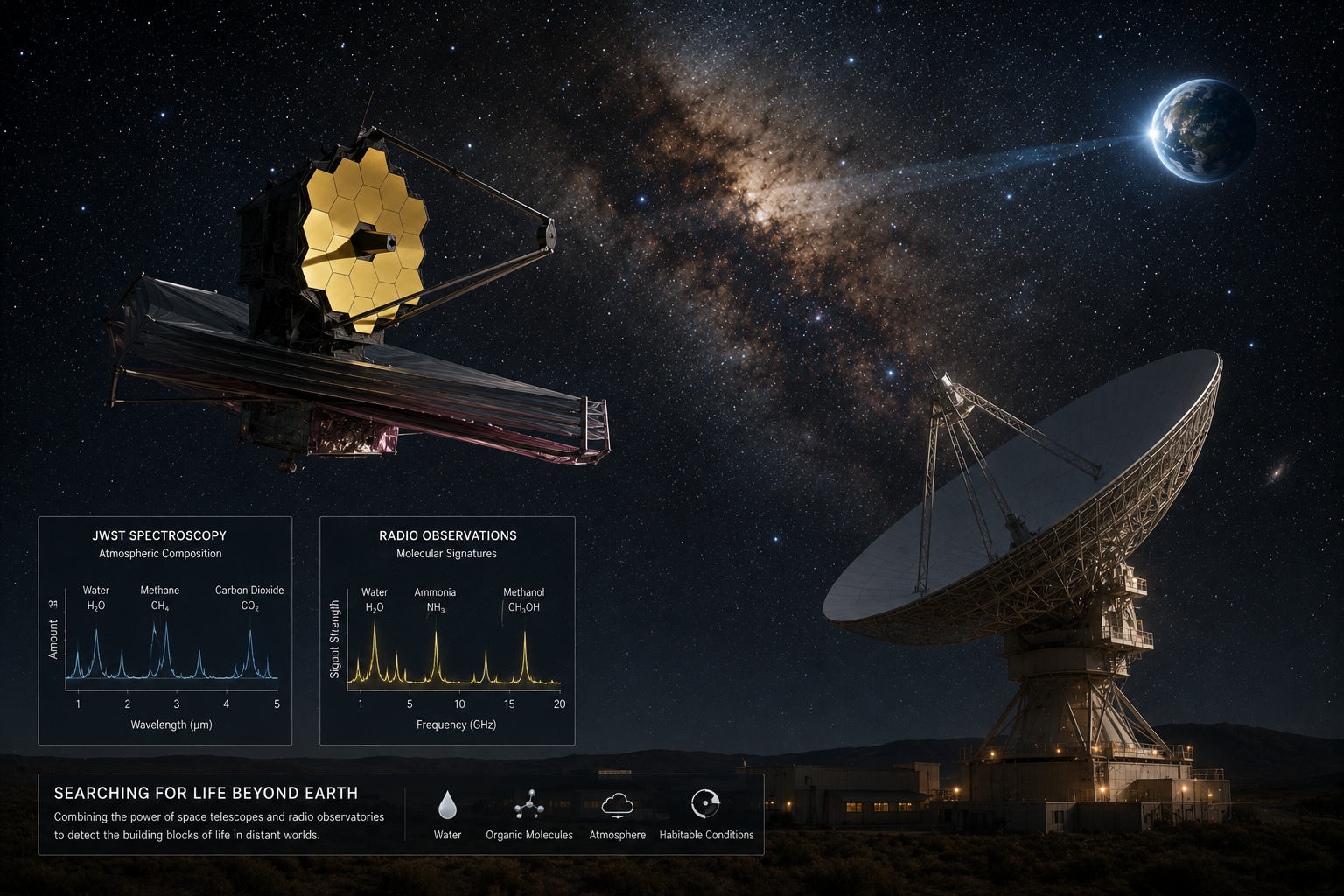
Instead, they search for tiny clues hidden in light, radio waves, and the chemistry of alien atmospheres.
The universe rarely reveals its secrets directly.
It whispers them.
⬇
Reading the Atmosphere of Another World
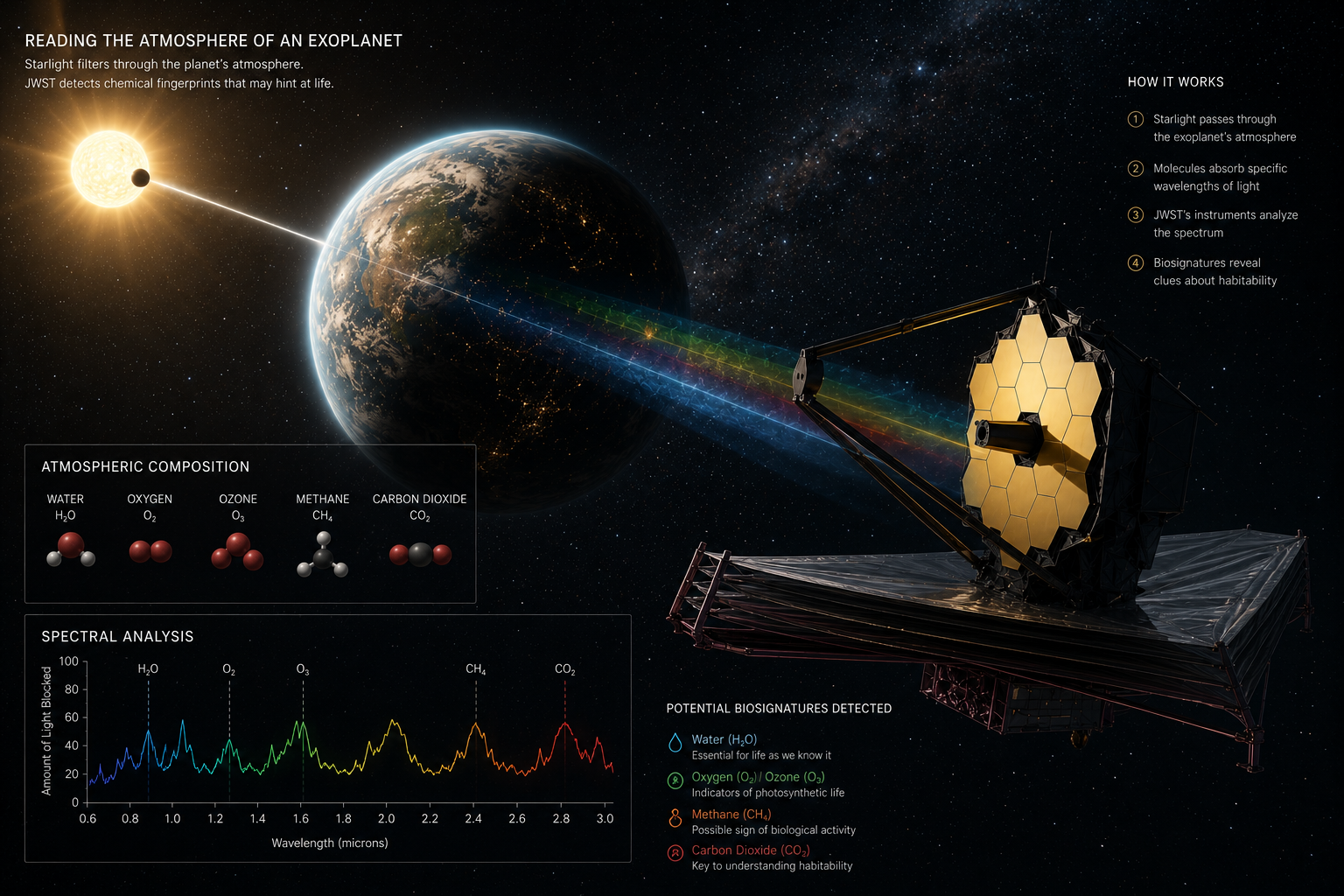
Imagine standing on a distant planet.
Every breath you take changes the atmosphere around you.
Life leaves fingerprints.
On Earth, plants continuously release oxygen.
Living organisms also produce gases such as methane.
From hundreds of light-years away, these gases can slightly change the starlight passing through a planet's atmosphere.
As an exoplanet crosses in front of its star, a tiny fraction of the star's light filters through its atmosphere before reaching our telescopes.
By separating that light into different wavelengths, astronomers can identify specific gases.
These chemical signatures are known as biosignatures.
A biosignature does not prove life exists, because some gases can also be produced by natural geological processes.
However, a combination of gases—such as abundant oxygen existing alongside methane—could become one of the strongest clues that biological activity is occurring on another world.
This is one of the reasons the James Webb Space Telescope has become such an important tool in the search for alien life.
⬇
Listening for an Intelligent Civilization
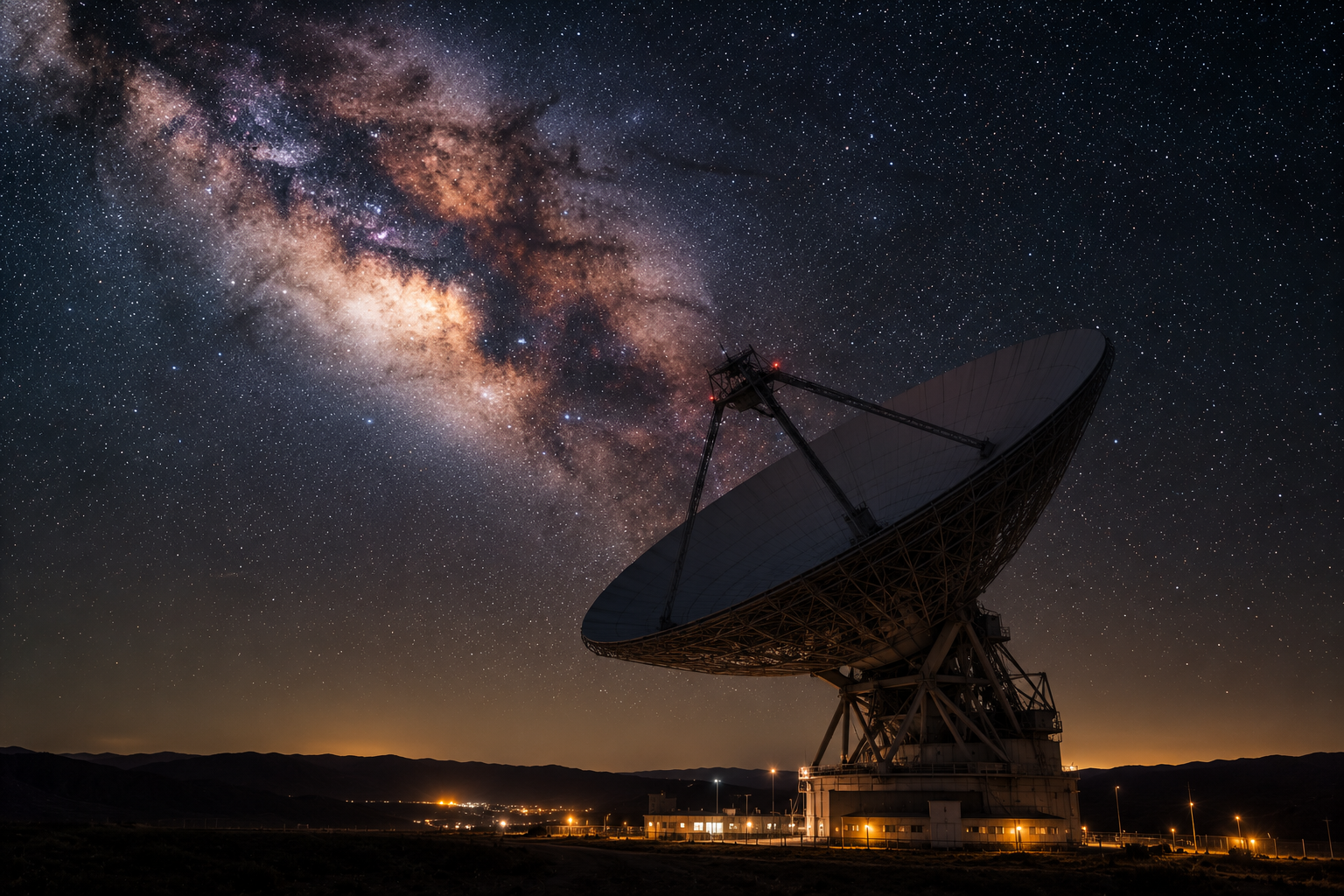
Not every search focuses on planets.
Some scientists search for something entirely different.
Signals.
If another advanced civilization exists, it may use radio communication, just as humanity has for more than a century.
Projects such as the Search for Extraterrestrial Intelligence (SETI) use enormous radio telescopes to listen for unusual signals that cannot easily be explained by natural cosmic phenomena.
Every day, these observatories monitor millions of frequencies across the sky.
So far, no confirmed artificial signal has ever been detected.
There have been intriguing observations over the years, but each has ultimately lacked enough evidence to confirm an extraterrestrial origin.
The silence continues.
But the search has never stopped.
⬇
Robots Exploring Our Cosmic Neighborhood
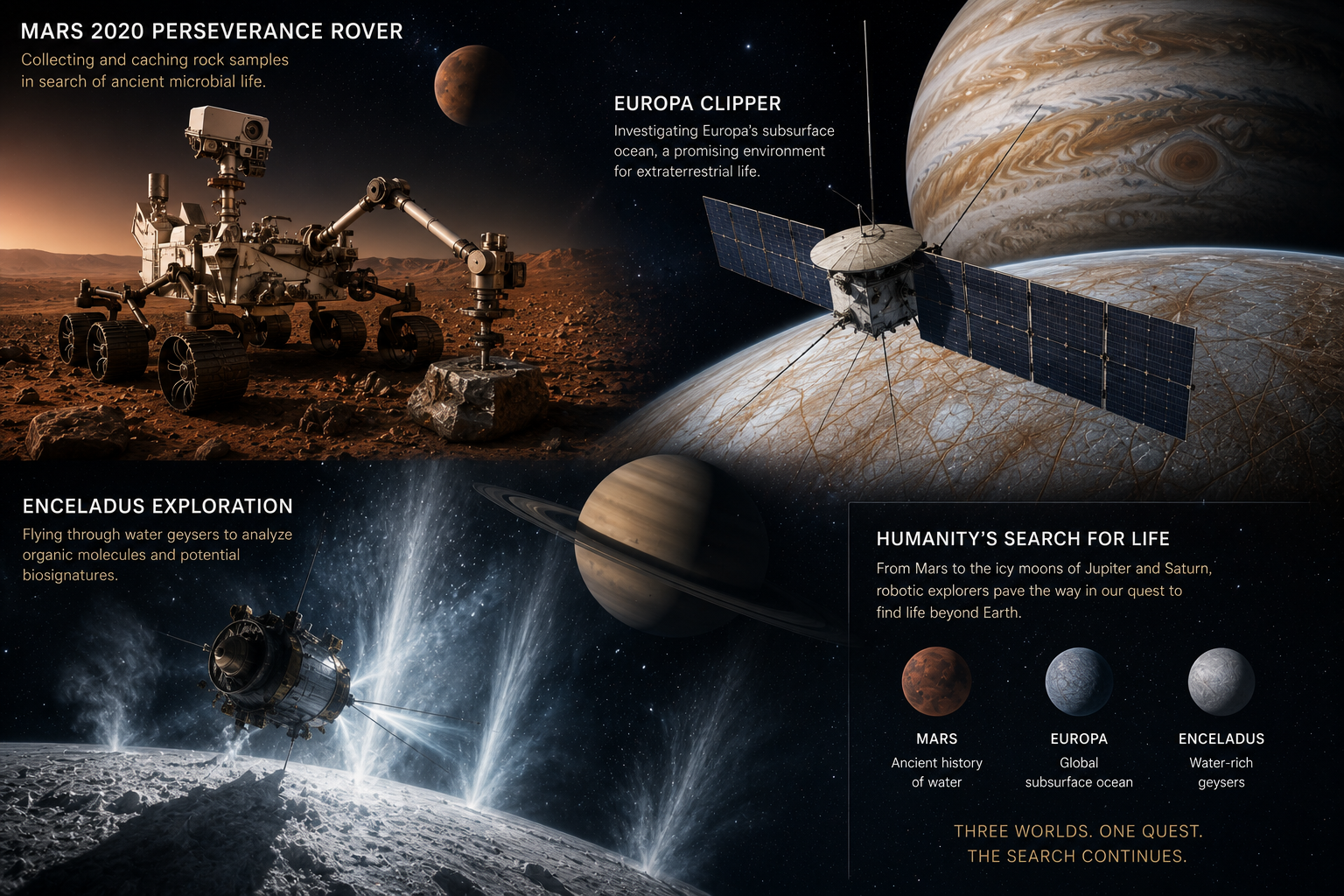
Sometimes the best place to search is much closer than distant stars.
Robotic explorers continue investigating Mars for evidence of ancient microbial life.
Future missions are planned to study Europa's hidden ocean and Enceladus's icy geysers.
These spacecraft carry laboratories capable of analyzing rocks, ice, water, and organic molecules with extraordinary precision.
Unlike distant exoplanets, these nearby worlds may eventually allow scientists to collect direct samples.
If life exists anywhere within our Solar System, these missions may provide humanity's first clear answer.
⬇
Every Discovery Brings Us Closer
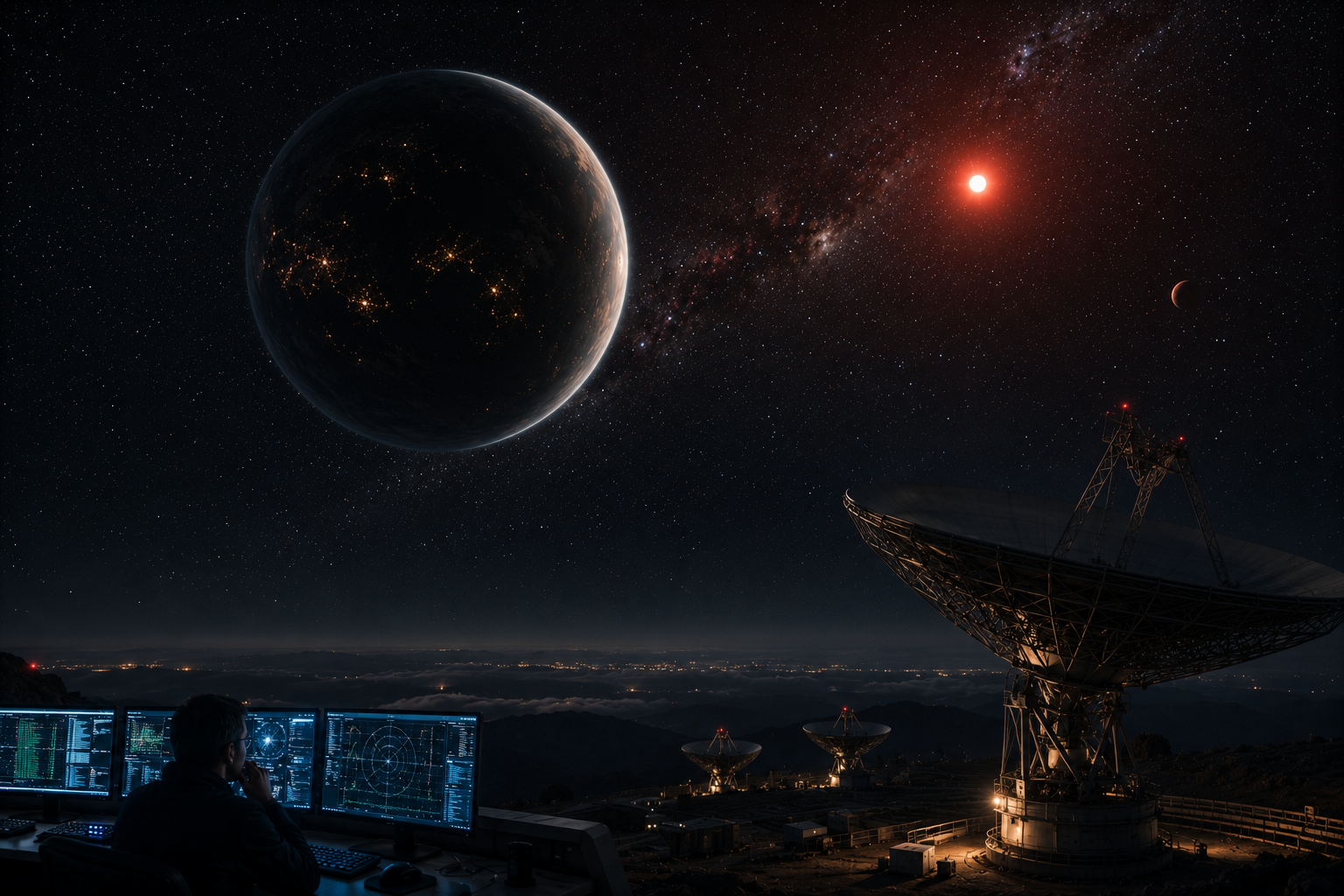
The search for alien life is unlike any scientific investigation in history.
There may be no answer tomorrow.
Perhaps not even within our lifetime.
Yet every newly discovered planet, every atmospheric measurement, and every mission to another world brings humanity one step closer to understanding its place in the universe.
Science is built on patience.
The greatest discoveries often come only after decades of careful observation.
One day, a telescope may detect an unmistakable biosignature.
A rover may discover fossilized microbes beneath Martian rocks.
Or a radio telescope may receive a signal that cannot be explained by nature.
When that moment arrives...
Human history will change forever.
👽 Chapter 4 — If We Found Alien Life Tomorrow

⬇
The Announcement That Would Change History

Imagine waking up tomorrow morning.
You check the news.
Every television channel.
Every website.
Every phone notification.
One headline appears everywhere.
"Scientists Confirm the First Evidence of Life Beyond Earth."
For thousands of years, humanity has wondered whether we are alone.
In a single moment...
That question would finally have an answer.
It would become one of the greatest discoveries in human history.
Perhaps even greater than landing on the Moon.
Because it would prove that life is not unique to Earth.
The universe has learned how to create life at least twice.
⬇
What If It Were Only Microbes?
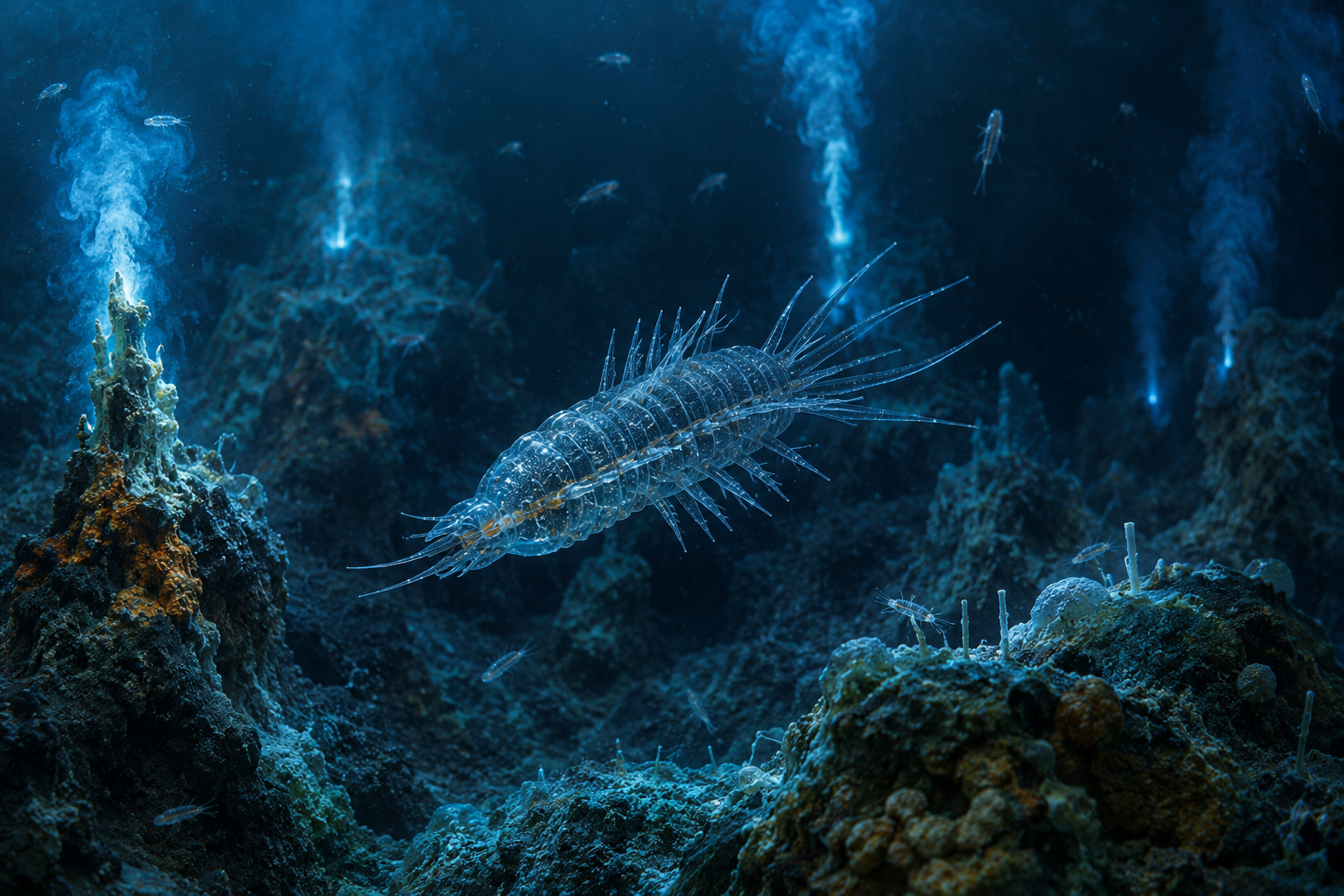
When people imagine alien life, they often picture intelligent civilizations.
But the first discovery is far more likely to be something much smaller.
A single microscopic organism.
Perhaps hidden beneath the icy ocean of Europa.
Perhaps frozen beneath the surface of Mars.
Or drifting through the underground sea of Enceladus.
At first glance...
A tiny microbe may seem disappointing.
But scientifically, it would be revolutionary.
It would prove that biology is not exclusive to Earth.
Life could emerge wherever the right conditions exist.
That single organism would completely transform biology, astronomy, and our understanding of the universe.
Sometimes the smallest discoveries create the biggest revolutions.
⬇
What If the Signal Came from an Intelligent Civilization?
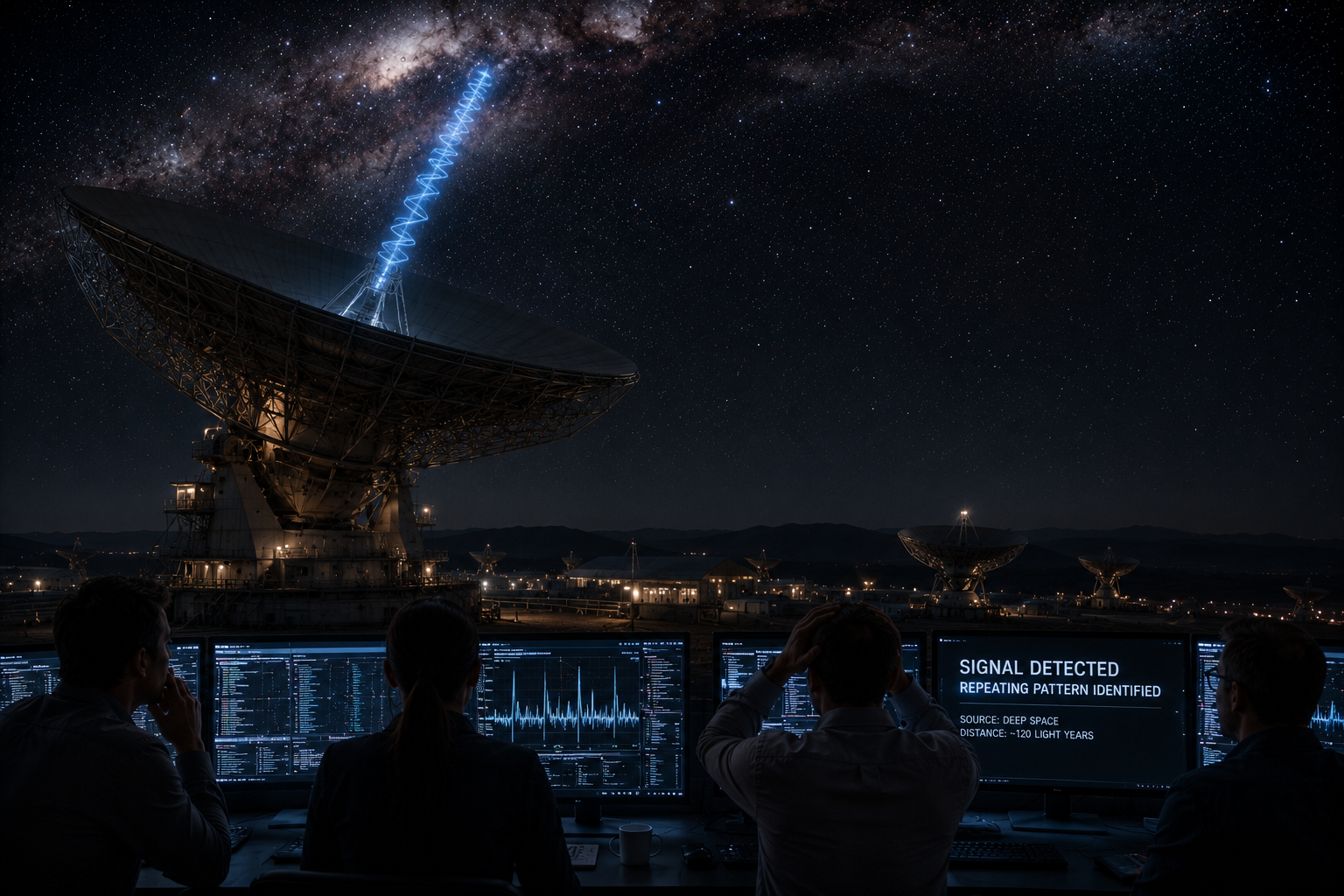
Now imagine something even more extraordinary.
A radio telescope detects a signal.
It is unlike any natural source ever observed.
The pattern repeats.
It contains mathematics.
Prime numbers.
Complex sequences.
Information that nature cannot easily produce.
Scientists around the world verify the discovery.
The conclusion becomes unavoidable.
Another intelligent civilization exists.
Not a rumor.
Not science fiction.
A confirmed fact.
Humanity would immediately face questions no generation has ever answered.
Who are they?
How far away are they?
Are they older than us?
Do they know we exist?
Can we reply?
The discovery would not only reshape science.
It would reshape philosophy, religion, politics, and our understanding of our place in the cosmos.
⬇
Would We Ever Meet Them?
Movies often imagine alien spacecraft arriving above Earth's cities.
Reality would almost certainly be very different.
The universe is unimaginably vast.
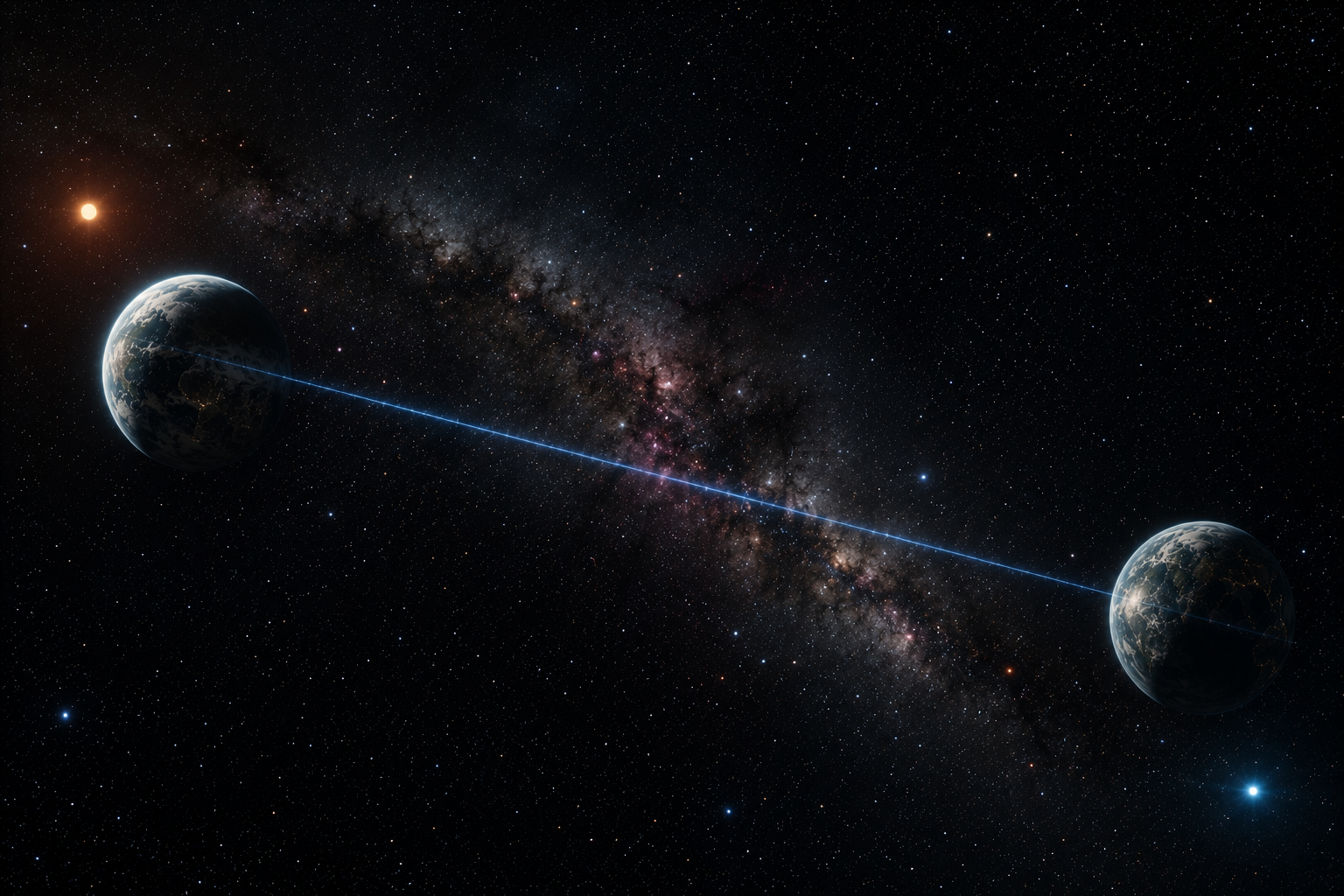
Even if another civilization exists, it could be hundreds, thousands, or millions of light-years away.
A message traveling at the speed of light might take centuries—or even millennia—to arrive.
A reply could take just as long.
The first contact between civilizations may not happen face to face.
It may happen through patient conversations carried by light itself.
Across generations.
Across the emptiness of space.
⬇
One Discovery, One Humanity
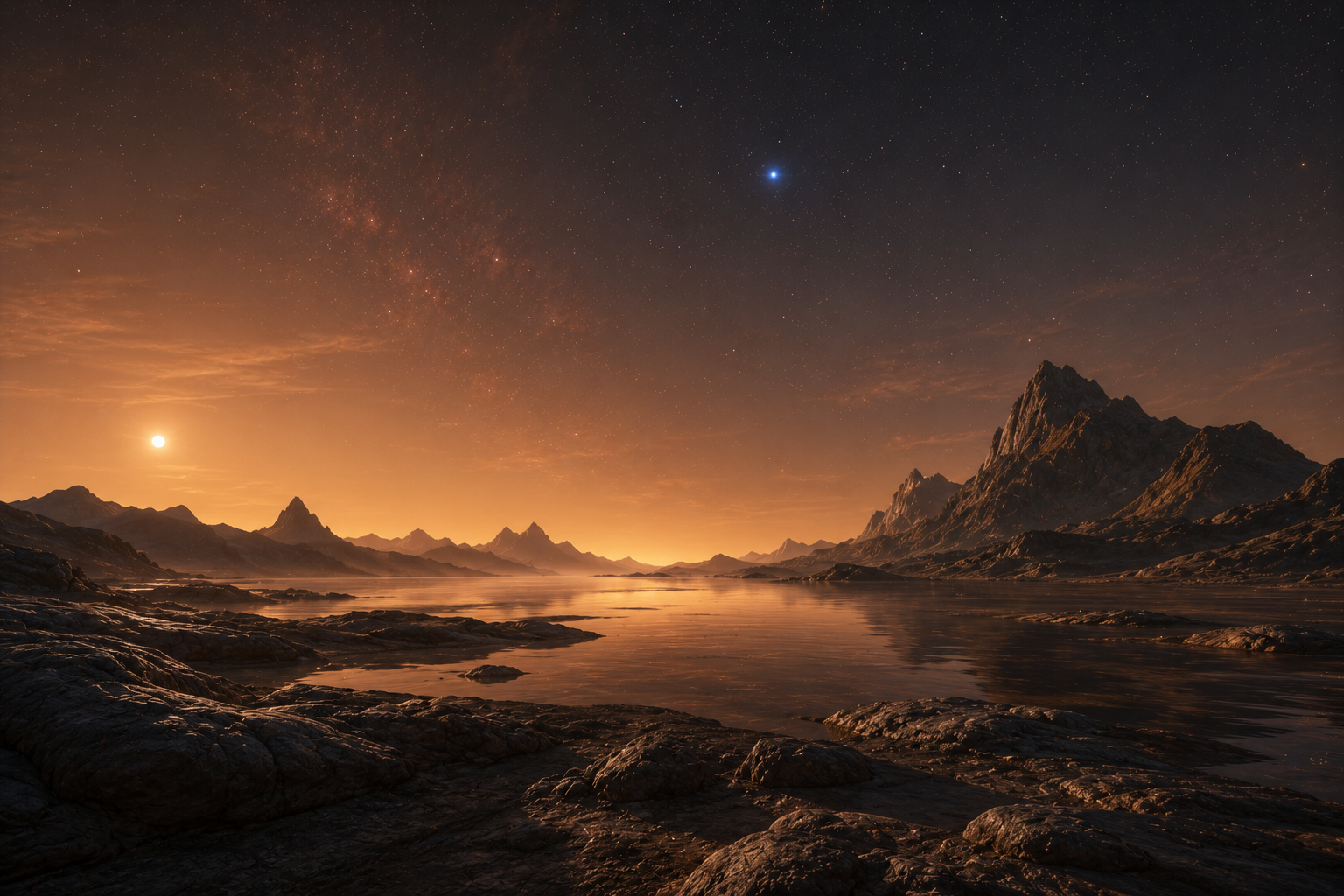
The discovery of alien life would belong to no single country.
No single scientist.
No single generation.
It would belong to everyone.
For centuries, humans have divided themselves by borders, languages, and cultures.
Yet from another world...
Earth would appear as a single pale blue planet.
Finding life elsewhere might remind us that before we are citizens of nations...
We are citizens of Earth.
Sometimes it takes looking outward...
To better understand ourselves.
🌌 Chapter 5 — Perhaps We Are Not Alone
⬇
The Great Silence
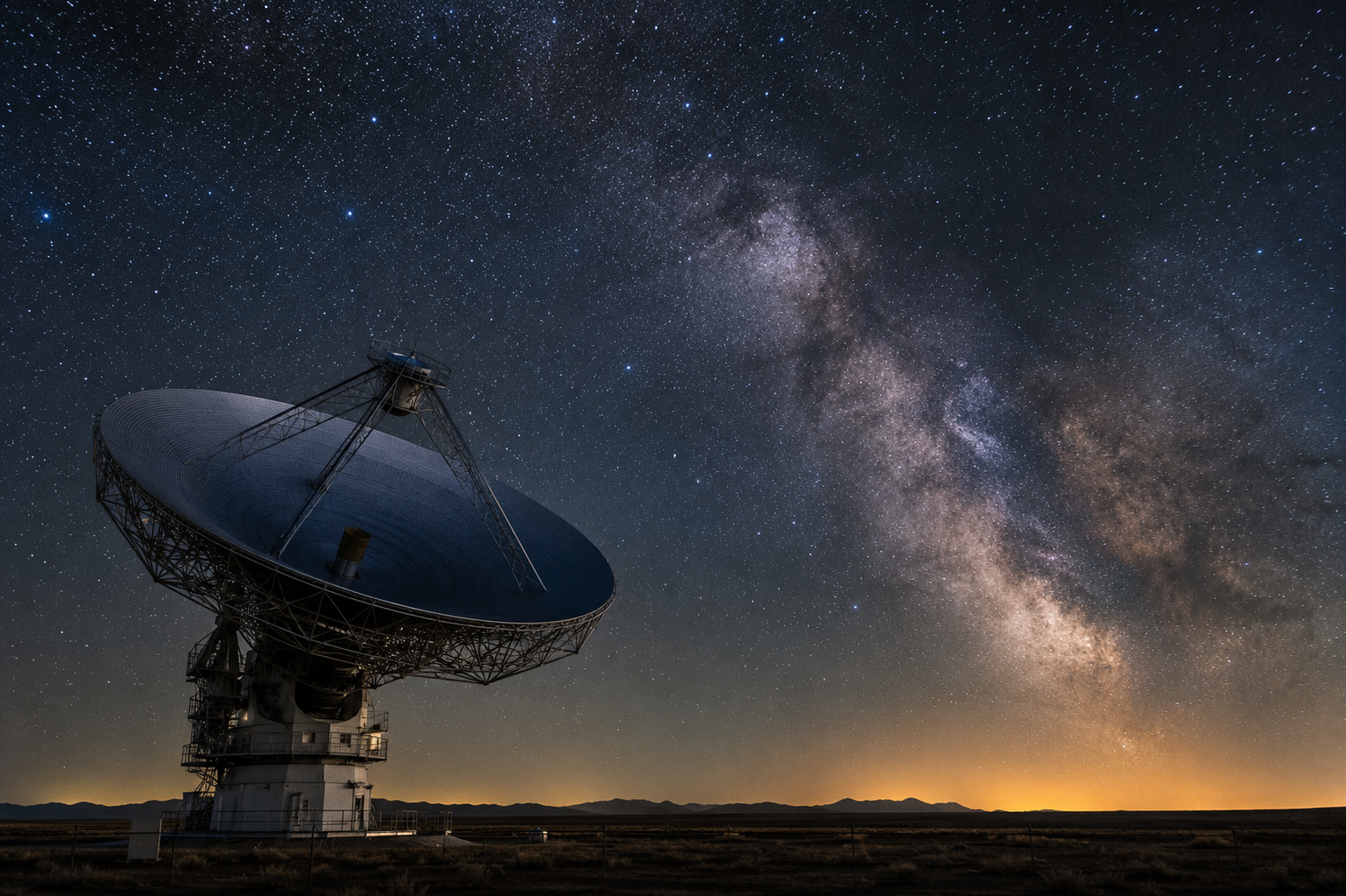
After decades of searching...
The universe has remained silent.
Thousands of planets have been discovered.
Powerful telescopes continue scanning distant stars.
Radio observatories listen day and night.
Spacecraft explore nearby worlds.
Yet no confirmed evidence of extraterrestrial life has ever been found.
Does this mean we are alone?
Not necessarily.
It may simply mean that the universe is far larger, older, and more challenging to explore than we once imagined.
Perhaps intelligent civilizations are separated by such enormous distances that they never have the opportunity to meet.
Or perhaps...
We have only just begun searching.
In cosmic terms, humanity has been listening for barely a moment.
⬇
The Drake Equation
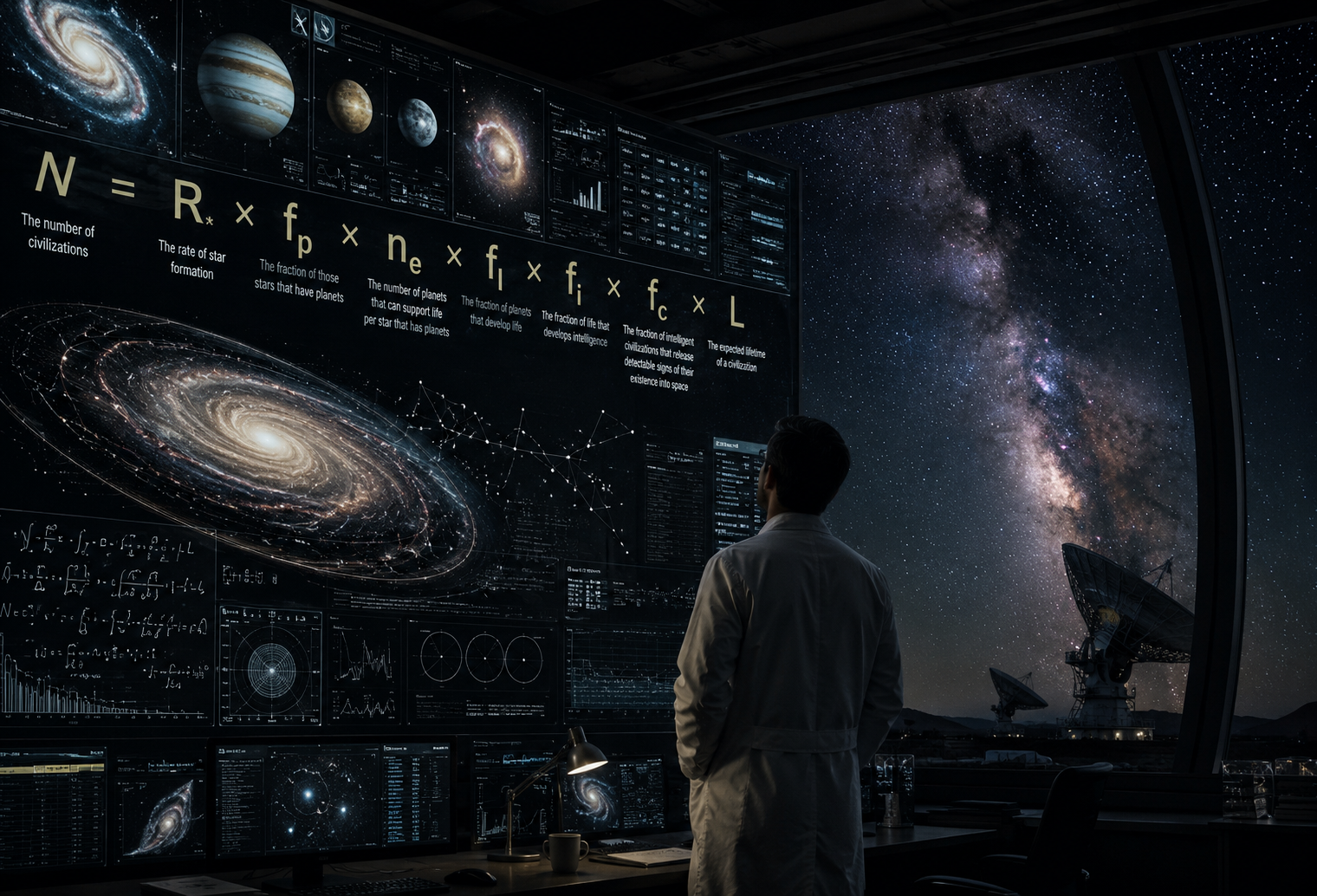
In 1961, astronomer Frank Drake proposed an equation—not to calculate the exact number of alien civilizations, but to guide scientific thinking.
The Drake Equation considers factors such as:
- How many stars form each year.
- How many of those stars have planets.
- How many planets could support life.
- How often life actually begins.
- How often intelligent civilizations emerge.
- How long such civilizations survive.
The equation does not provide a single answer.
Instead, it reminds us how many unknowns still exist.
As astronomers discover more planets and learn more about the universe, each discovery helps refine these possibilities.
⬇
The Fermi Paradox
If the universe contains hundreds of billions of stars...
And countless potentially habitable planets...
Then a simple question arises.
Where is everybody?
This puzzle is known as the Fermi Paradox.
Scientists have proposed many possible explanations.
Perhaps intelligent life is extremely rare.
Perhaps civilizations are separated by impossible distances.
Perhaps advanced societies communicate in ways we have not yet discovered.
Or perhaps they simply have no reason to contact us.
At present, none of these ideas has been proven.
The paradox remains one of the greatest unsolved mysteries in modern science.
Sometimes, the most fascinating questions are those that still have no answer.
⬇
Amazing Facts
- 🌌 The observable universe contains hundreds of billions of galaxies.
- ⭐ Our Milky Way alone contains roughly 100–400 billion stars.
- 🪐 More than 5,000 exoplanets have been confirmed, with thousands more candidates under study.
- 💧 Europa and Enceladus both contain global oceans beneath their icy surfaces.
- 🔭 Modern telescopes can analyze the atmospheres of planets located hundreds of light-years away.
- 📡 Humanity has been searching for radio signals from extraterrestrial civilizations for only a few decades—a tiny fraction of cosmic history.
⬇
AtlasNova Perspective
Every generation has believed it understood the universe.
Then the universe surprised us.
We once believed Earth was the center of everything.
We discovered it was one planet orbiting one ordinary star.
We believed our Solar System was unique.
We discovered thousands of others.
Today, we ask whether life exists elsewhere.
Perhaps the answer is waiting among the stars.
Or perhaps it lies beneath the frozen ice of a nearby moon.
Whatever the answer may be, the search itself has already changed us.
It has taught us humility.
Patience.
And a deeper appreciation for our own world.
⬇
One Last Look at the Sky
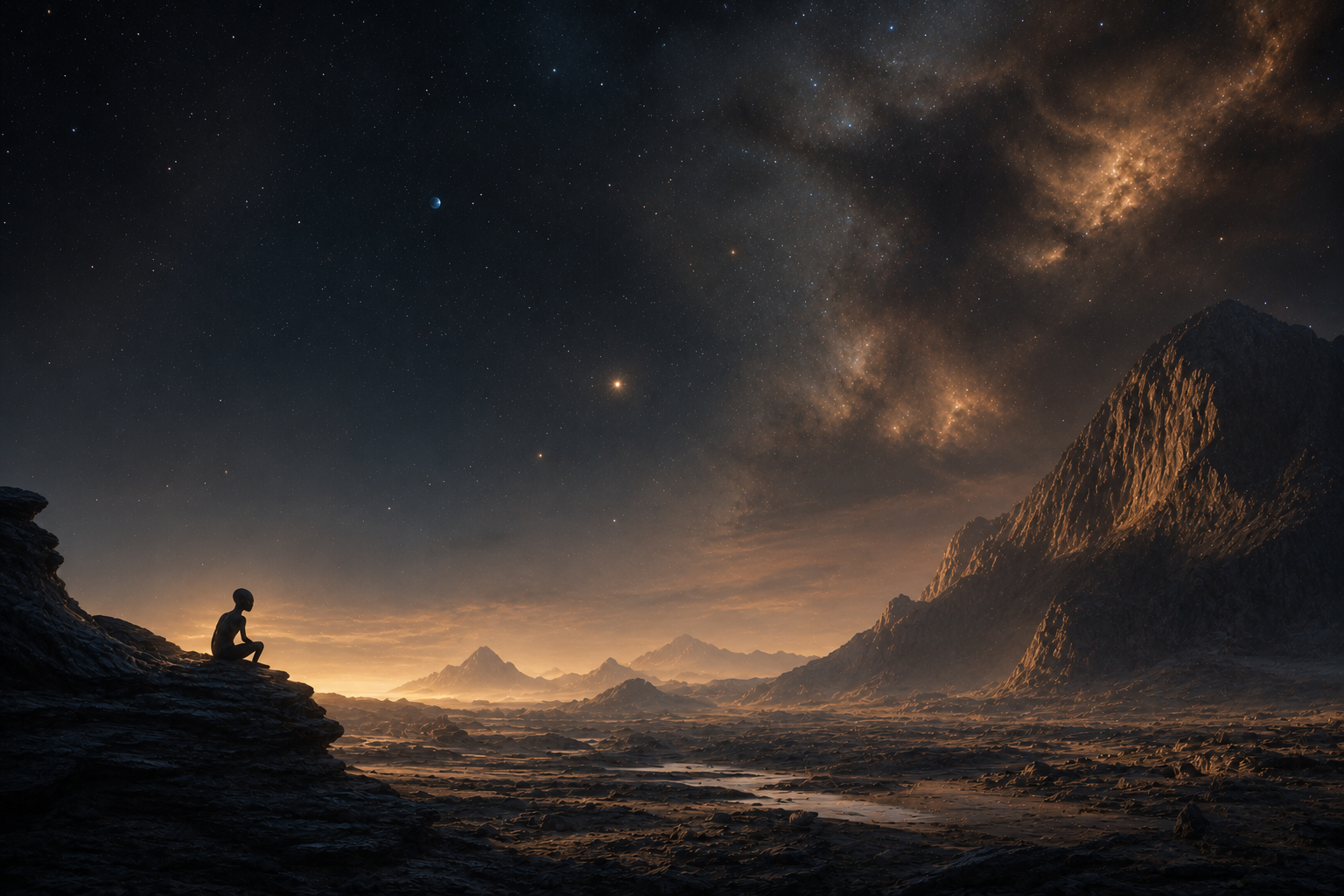
Tonight, somewhere on Earth, millions of people will look up at the stars.
Most will see only tiny points of light.
But hidden among them are planets we have never visited.
Worlds we have never touched.
Possibilities we have only begun to imagine.
Perhaps one of those distant worlds is home to oceans.
Mountains.
Clouds.
Or even a civilization asking the same timeless question.
"Are we alone?"
We do not yet know the answer.
But every telescope we build...
Every spacecraft we launch...
And every discovery we make...
Brings humanity one step closer.
Until that day arrives, the universe continues to invite us to explore, to question, and to wonder.
Perhaps the greatest discovery in history is still waiting beyond the next star.