Chapter 1
Mercury: The Closest Planet to the Sun
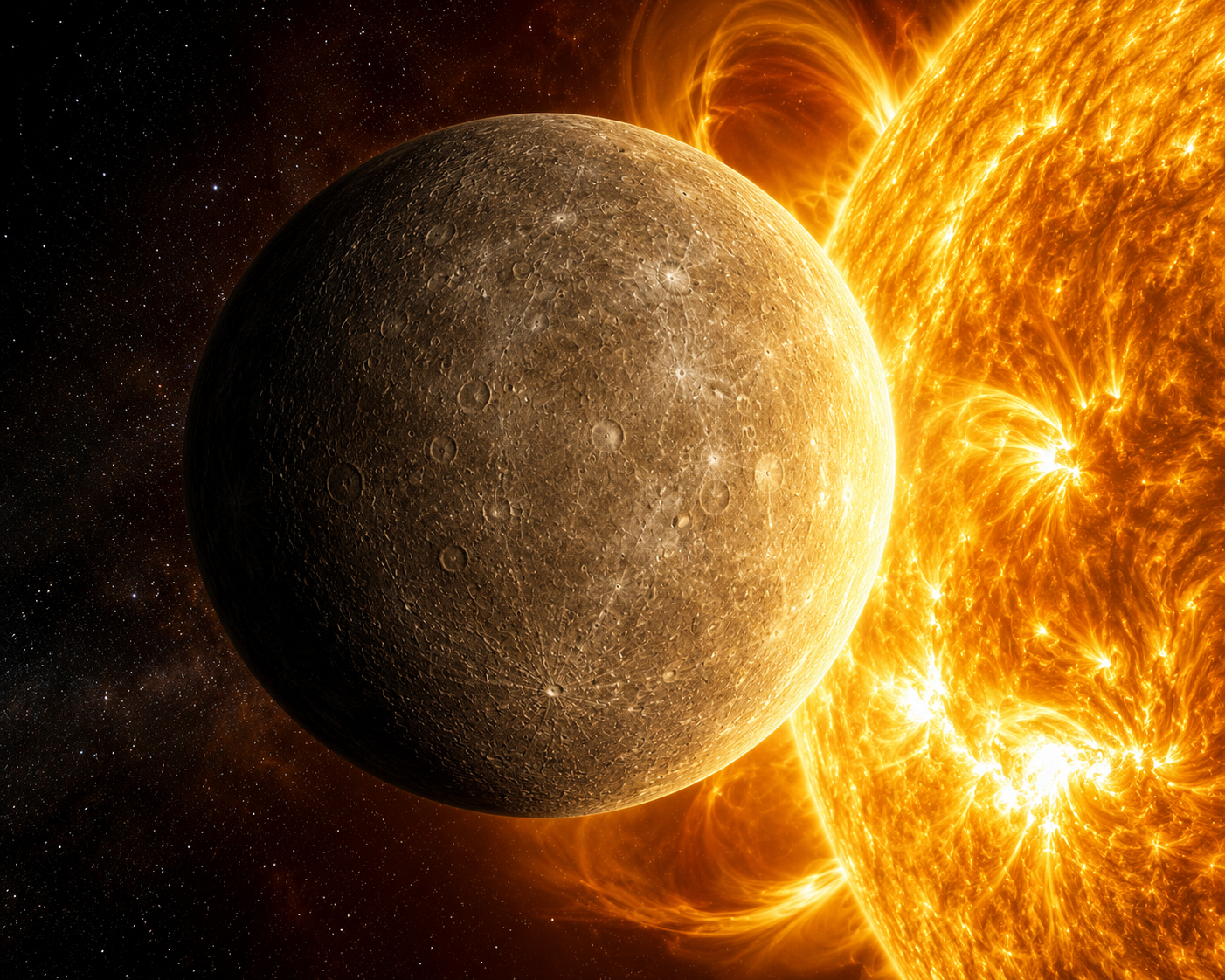
At just 36 million miles (58 million kilometers) from the Sun, Mercury is the closest planet in our Solar System.
This small, rocky world completes an orbit around the Sun in only 88 Earth days, making it the fastest-moving planet known.
Despite its proximity to the Sun, Mercury remains one of the least explored planets. Its scorched surface, giant iron core, and surprising deposits of water ice have challenged scientists for decades.
Small in size but rich in mysteries, Mercury offers valuable clues about how the Solar System formed more than 4.5 billion years ago.
The Smallest Planet in the Solar System
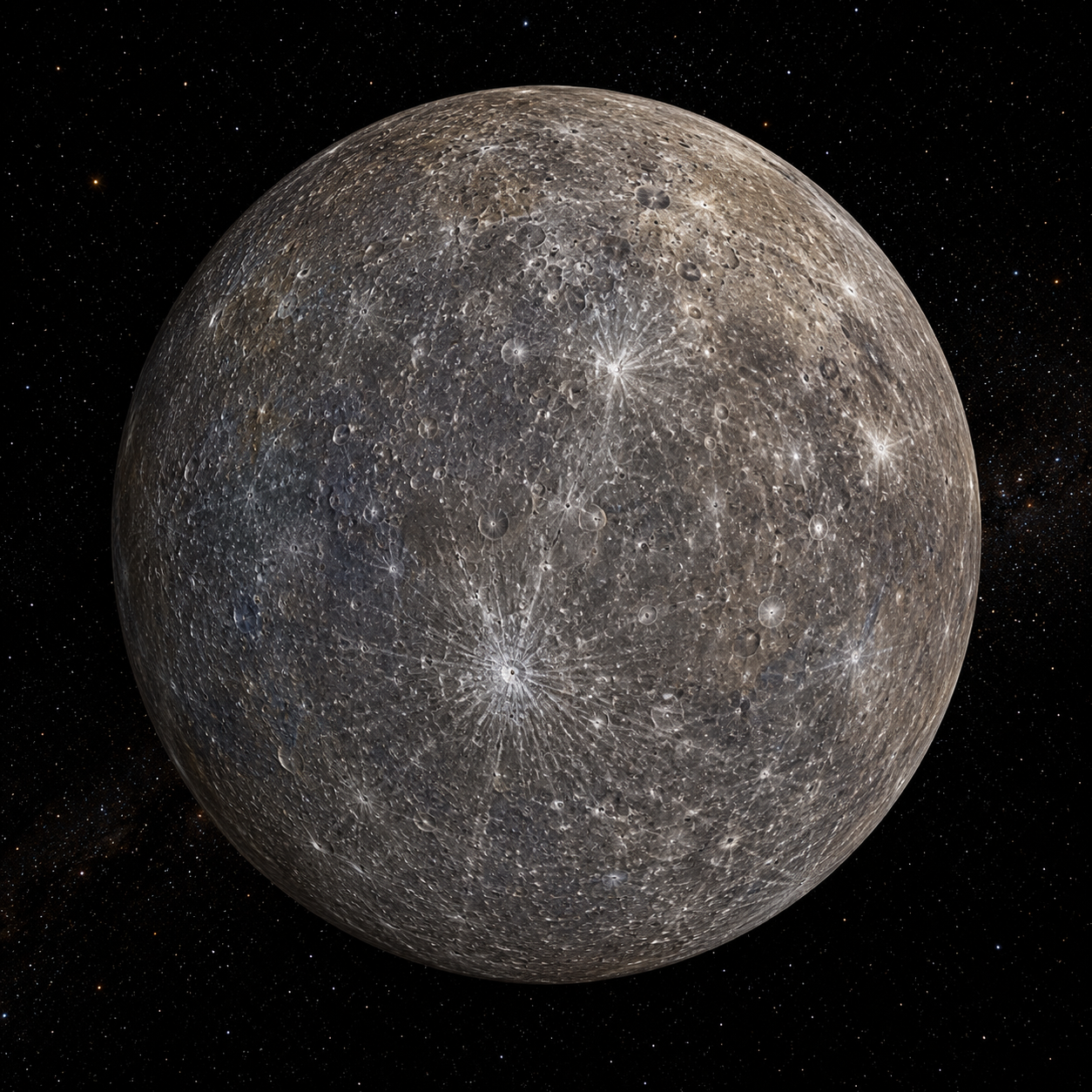
Mercury is the smallest planet orbiting the Sun, measuring about 3,032 miles (4,880 kilometers) in diameter.
For comparison, it is only slightly larger than Earth's Moon.
Although tiny, Mercury is incredibly dense. Nearly 70% of its mass consists of metal, giving the planet an enormous iron-rich interior unlike any other terrestrial planet.
This oversized metallic core has fascinated planetary scientists for decades and remains one of Mercury's defining characteristics.
Why Isn't Mercury the Hottest Planet?
Many people assume Mercury must be the hottest planet because it is closest to the Sun.
Surprisingly, that title belongs to Venus.
Mercury has almost no atmosphere to trap heat.
As a result, temperatures swing dramatically between day and night:
- ☀ Daytime: up to 800°F (430°C)
- 🌑 Nighttime: as low as −290°F (−180°C)
These extreme temperature changes make Mercury one of the most hostile environments in the Solar System.
A Planet That Defies Expectations
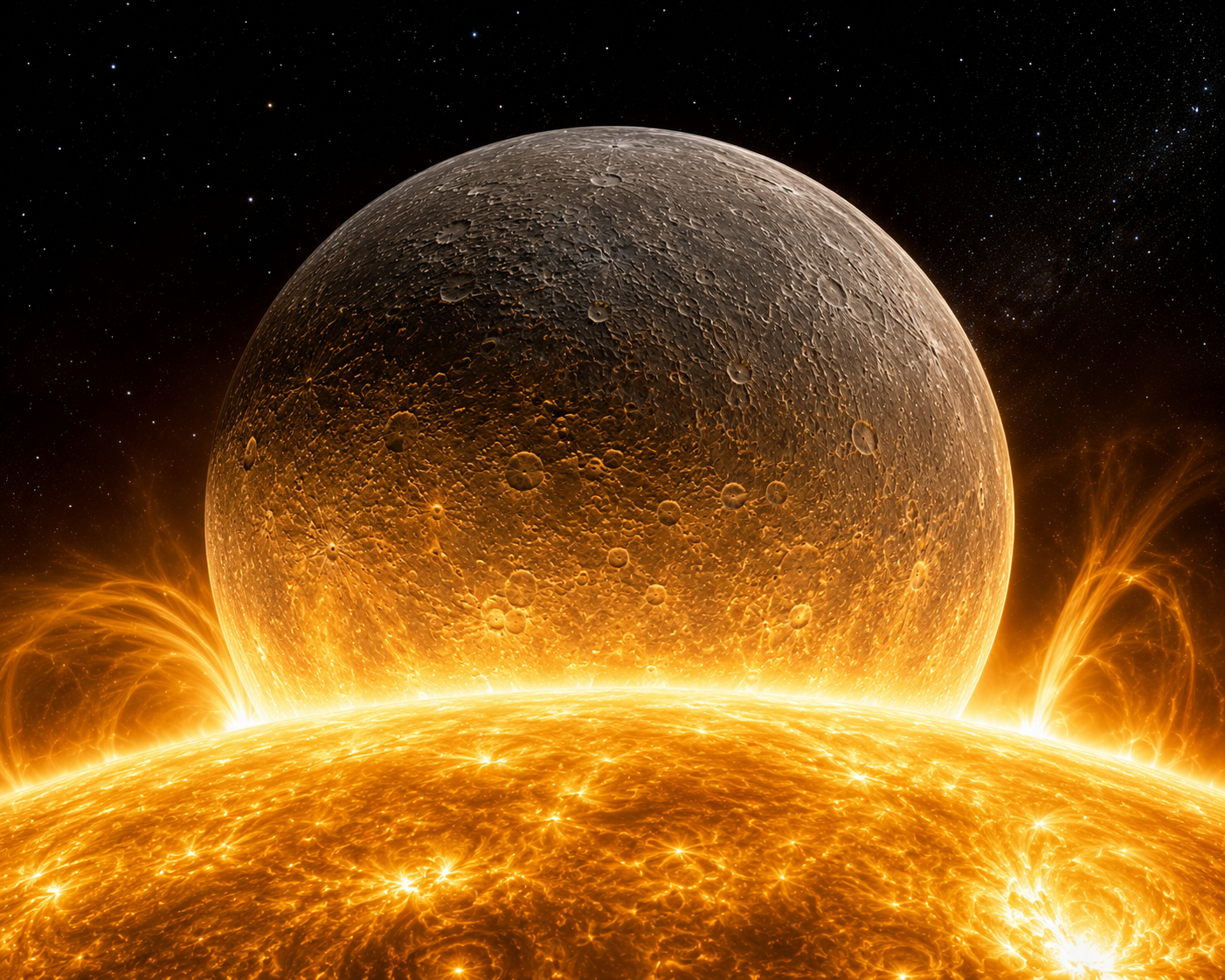
Mercury appears calm from space, but its surface tells a story of violent impacts and ancient geological activity.
Towering cliffs stretch for hundreds of miles, enormous impact basins scar the landscape, and volcanic plains reveal that the planet was once far more active than it is today.
Its gray appearance resembles Earth's Moon, yet Mercury is a completely different world with its own unique history and internal structure.
Mercury at a Glance
More Than Just the Closest Planet
Mercury is often overlooked because it is small and difficult to observe from Earth.
Yet it is one of the most scientifically important worlds in the Solar System.
Its giant metallic core, ancient, cratered surface, weak magnetic field, and extreme environment make it a natural laboratory for studying how rocky planets evolve.
Every mission to Mercury brings scientists closer to understanding not only this remarkable planet, but also the origins of Earth and its neighboring worlds.
Transition
Mercury may be the smallest planet, but its environment is among the most extreme in the Solar System.
In the next chapter, we'll explore a world where one side can melt lead, the other freezes in darkness, and a single day lasts longer than an entire year.
Chapter 2
A World of Fire and Ice
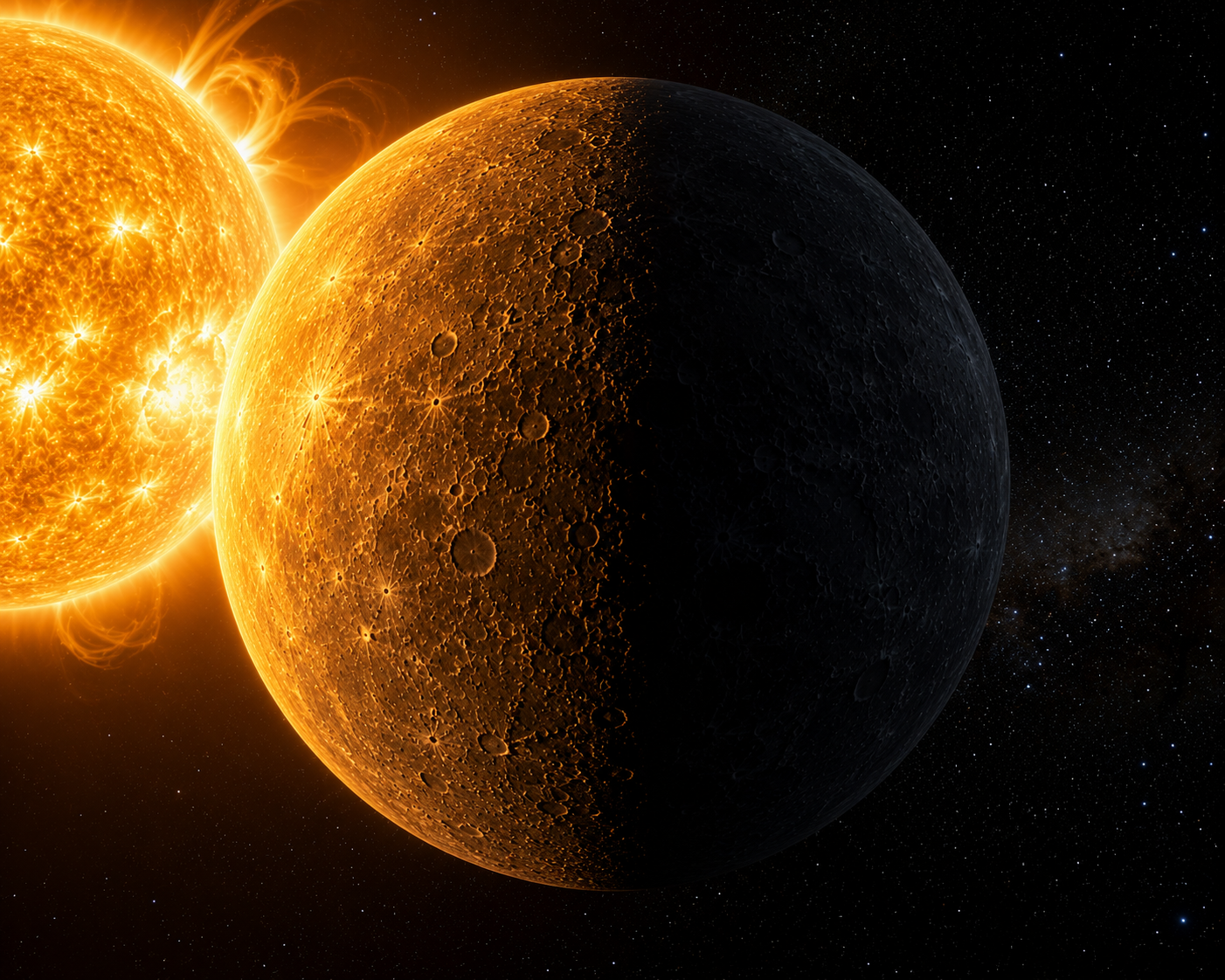
Mercury experiences some of the most extreme temperature changes anywhere in the Solar System.
When the Sun shines directly overhead, the rocky surface becomes hot enough to melt lead.
Yet only a few hundred miles away, regions in permanent darkness remain colder than Antarctica.
Few worlds demonstrate such dramatic contrasts.
Hotter Than an Oven, Colder Than Antarctica
Because Mercury has almost no atmosphere, there is nothing to trap or distribute heat.
As sunlight strikes the surface, temperatures can climb to nearly 800°F (430°C).
Once the Sun sets, that heat escapes rapidly into space, causing temperatures to plunge to around −290°F (−180°C).
Unlike Earth, there are no clouds, winds, or weather systems to balance these extremes.
Each day brings a cycle of intense heating followed by deep freezing.
A Day Longer Than a Year
One of Mercury's strangest characteristics is the relationship between its rotation and its orbit.
The planet completes one orbit around the Sun in just 88 Earth days.
However, it rotates very slowly.
As a result:
- 🗓 One Mercury year = 88 Earth days
- ⏰ One Mercury day (sunrise to sunrise) = 176 Earth days
In other words, a single day on Mercury lasts twice as long as its entire year.
This unusual rhythm creates incredibly long periods of daylight followed by equally long nights.
A Sky Unlike Any Other
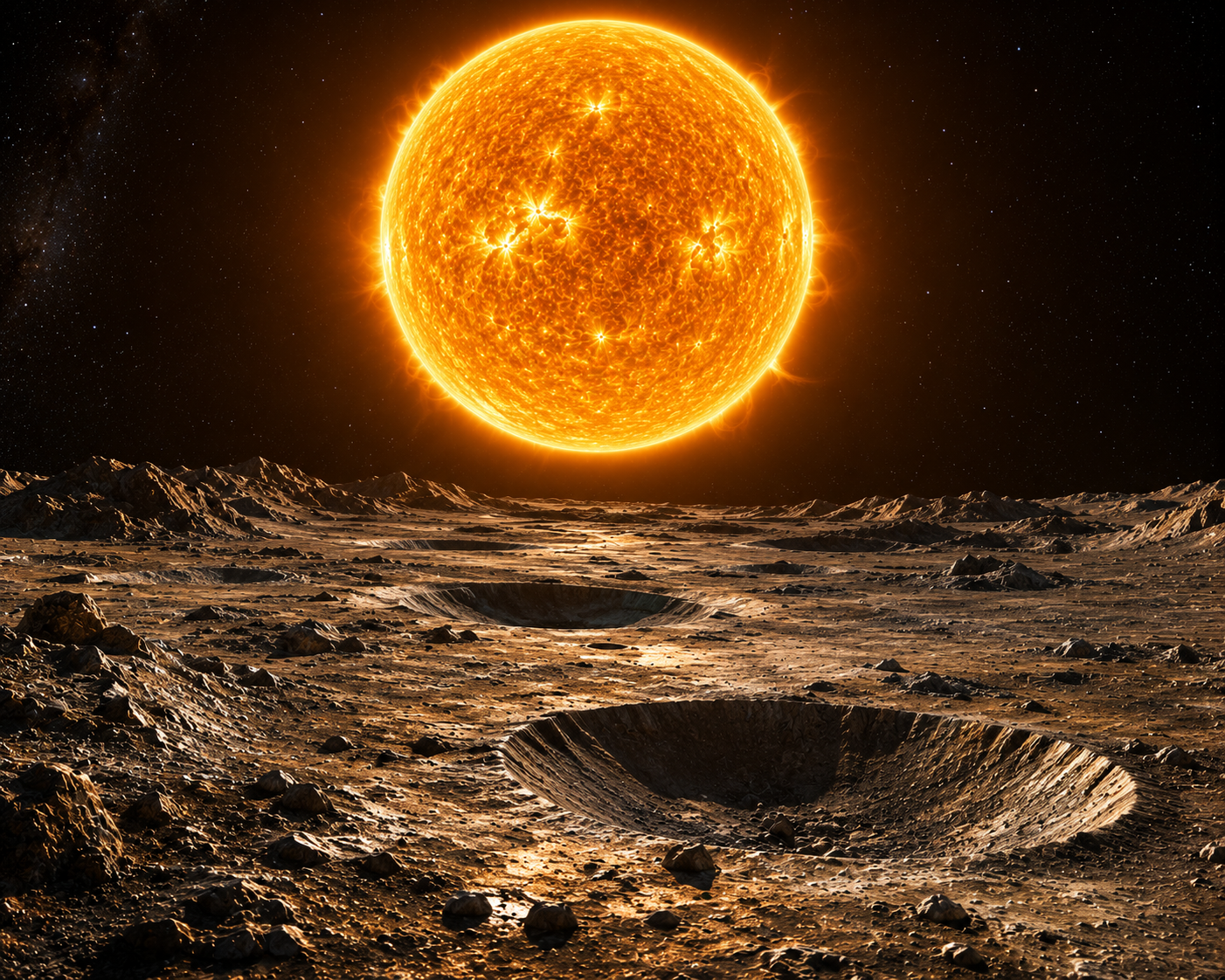
Standing on Mercury would feel completely alien.
The sky would remain permanently black, even during the brightest daytime, because the planet lacks an atmosphere to scatter sunlight.
Above the horizon, the Sun would appear more than three times larger than it does from Earth and shine over six times brighter.
In some parts of Mercury's orbit, the planet's motion creates an extraordinary illusion where the Sun appears to slow down, reverse direction briefly, and then continue across the sky.
No other planet offers such a strange sunrise.
Mercury's Extreme Environment
Ice Hidden in Eternal Darkness
One of Mercury's greatest scientific surprises is that water ice exists on the planet closest to the Sun.
Near the north and south poles, some deep craters never receive direct sunlight.
These permanently shadowed regions remain cold enough for ice to survive for billions of years.
Radar observations and NASA's MESSENGER spacecraft confirmed that these hidden craters contain substantial deposits of water ice beneath a thin layer of dark, insulating material.
It is one of the Solar System's most unexpected discoveries.
A Planet of Extremes
Mercury combines seemingly impossible conditions.
It is the closest planet to the Sun, yet it contains frozen water.
It experiences blistering daytime heat and freezing nights.
Its year is shorter than its day.
These remarkable extremes make Mercury one of the most unusual and scientifically valuable planets ever explored.
Transition
Mercury's harsh environment is only part of its story.
Beneath its cratered surface lies an enormous metallic heart that has puzzled scientists for decades.
In the next chapter, we'll uncover Mercury's giant iron core, mysterious magnetic field, and the ancient impacts that shaped the smallest planet in our Solar System.
Chapter 3
Inside Mercury: A Planet with a Giant Iron Heart
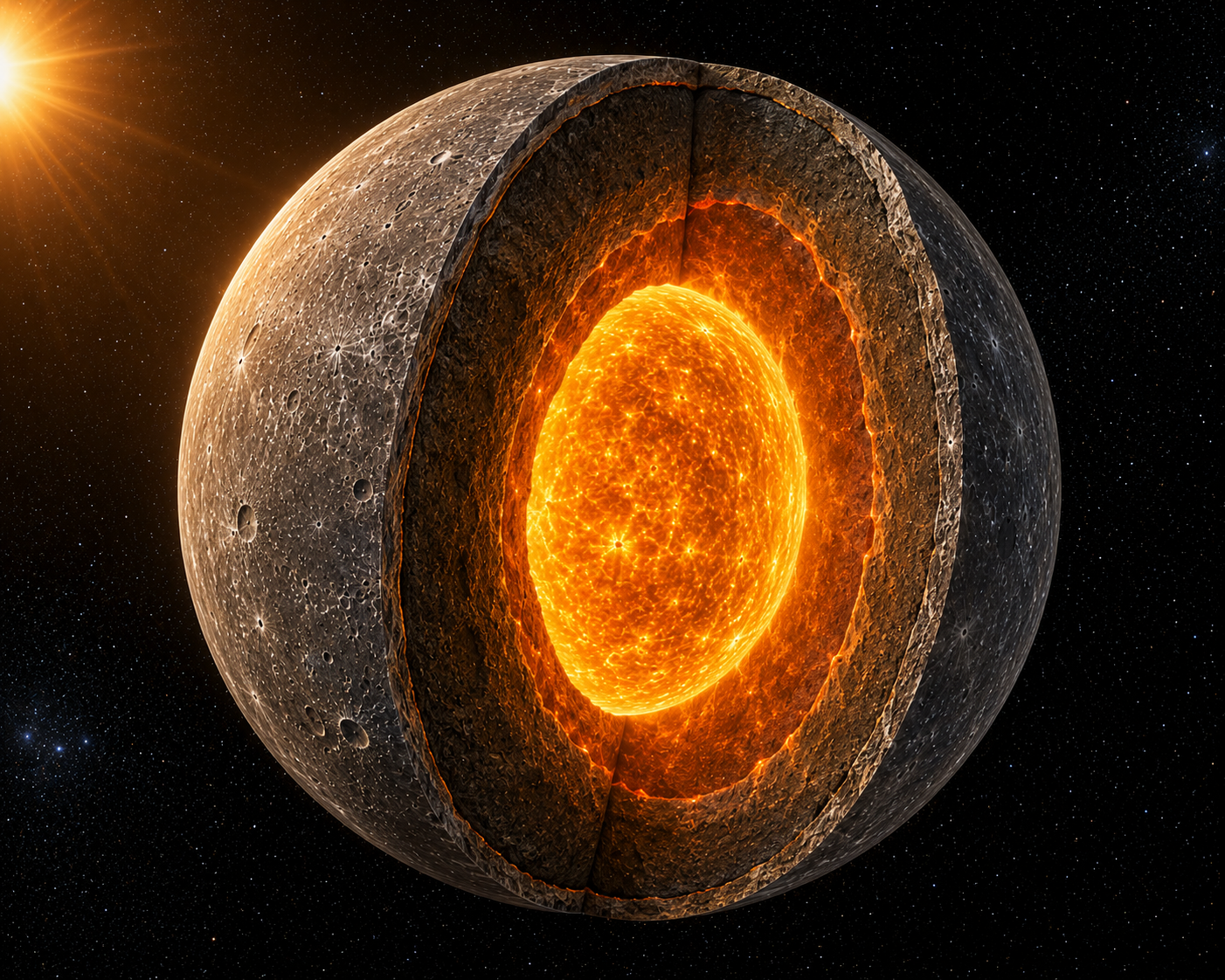
From a distance, Mercury looks like a small gray world covered in craters.
Hidden beneath that ancient surface, however, lies one of the Solar System's biggest surprises.
Unlike Earth, where the metallic core occupies about half the planet's diameter, Mercury's iron core makes up nearly 85% of its diameter.
It is the largest core relative to the size of any planet in the Solar System.
Scientists are still investigating why Mercury contains so much metal.
One leading theory suggests that billions of years ago, a colossal collision stripped away much of the planet's outer rock, leaving behind the dense metallic interior we see today.
A Planet That Is Still Shrinking
Mercury has not remained the same size throughout its history.
As its enormous core slowly cooled over billions of years, the entire planet contracted.
This gradual shrinking caused the crust to wrinkle and crack, creating enormous cliffs known as lobate scarps.
Some of these cliffs stretch for hundreds of miles and rise more than 1 mile (1.6 kilometers) above the surrounding landscape.
They provide clear evidence that Mercury is a planet still changing long after its formation.
Inside Mercury
Reading Mercury's Geological History
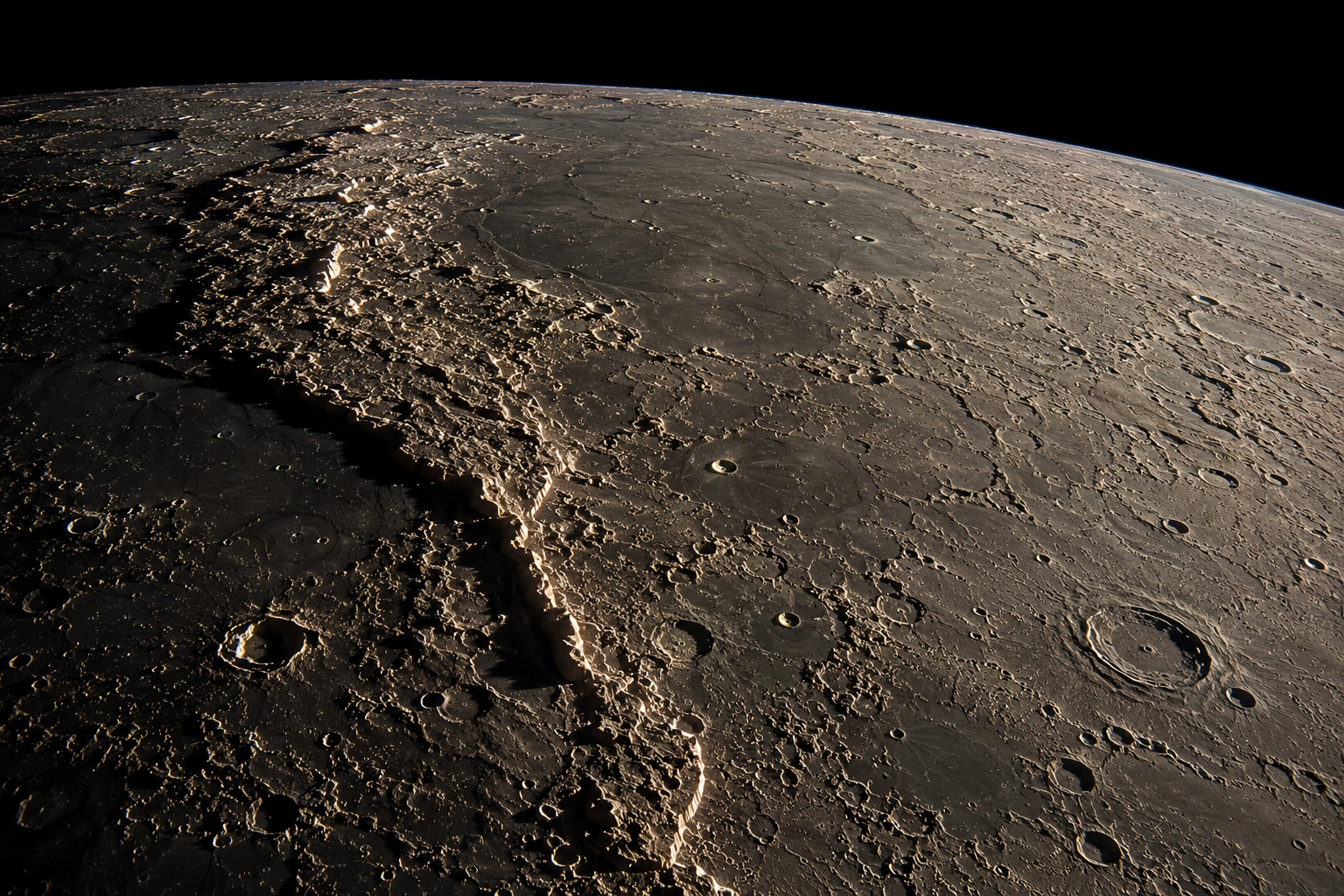
Every cliff, crater, and plain on Mercury preserves a chapter of the Solar System's past.
Unlike Earth, where wind, rain, rivers, and plate tectonics constantly reshape the landscape, Mercury has almost no erosion.
As a result, geological features formed billions of years ago remain remarkably well preserved.
For planetary scientists, Mercury acts like a time capsule, preserving evidence from the earliest stages of planetary formation.
Studying its surface helps researchers understand how the rocky planets—including Earth—evolved over billions of years.
A Window into the Early Solar System
Mercury may be the smallest planet, but it answers some of astronomy's biggest questions.
Its oversized iron core, ancient impact scars, shrinking crust, and unexpected magnetic field continue to challenge existing theories of planetary formation.
Each new discovery reveals that this seemingly simple world is far more complex than anyone once imagined.
Transition
For centuries, Mercury remained one of the least understood planets because observing it from Earth is extremely difficult.
Everything changed when spacecraft finally reached this mysterious world.
In the next chapter, we'll follow the remarkable missions that mapped Mercury, uncovered its hidden ice, and continue to reveal new secrets today.
Chapter 4
Exploring Mercury: The Missions That Changed Everything
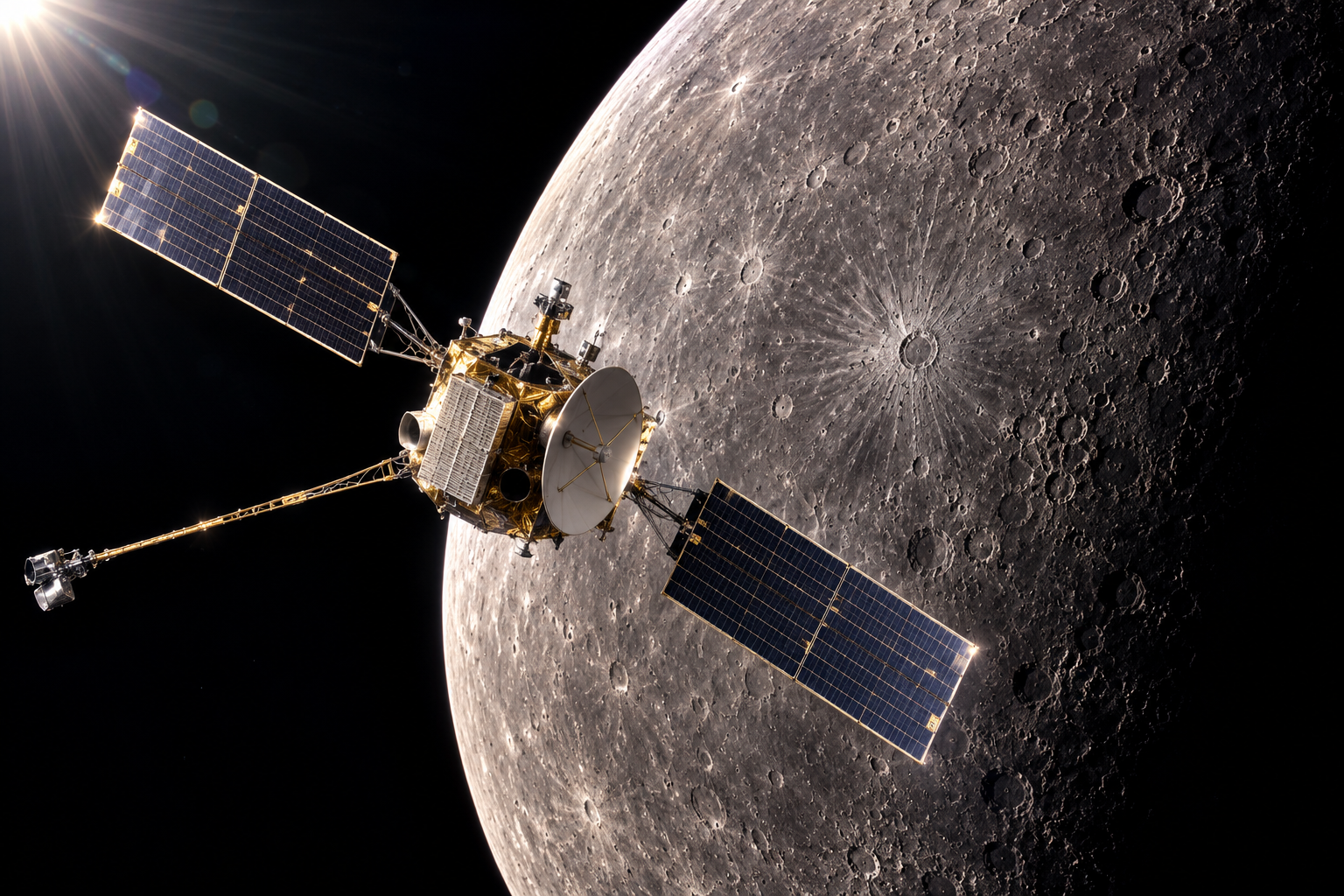
For thousands of years, Mercury remained one of the most mysterious planets in the Solar System.
Its close proximity to the Sun makes it difficult to observe from Earth, as it is often hidden in the Sun's intense glare.
Everything changed in the 20th century when spacecraft finally visited this small, rocky world.
Each mission revealed discoveries that completely transformed our understanding of Mercury.
Mariner 10: Humanity's First Visit
Launched by NASA in 1973, Mariner 10 became the first spacecraft to reach Mercury.
Using the gravity of Venus as a slingshot, it flew past Mercury three times between 1974 and 1975.
Its discoveries included:
- The first close-up images of Mercury.
- Thousands of previously unknown impact craters.
- Evidence of enormous cliffs across the surface.
- The unexpected discovery of Mercury's magnetic field.
However, Mariner 10 photographed only about 45% of the planet, leaving more than half of Mercury completely unexplored.
MESSENGER: Revealing Mercury's Secrets
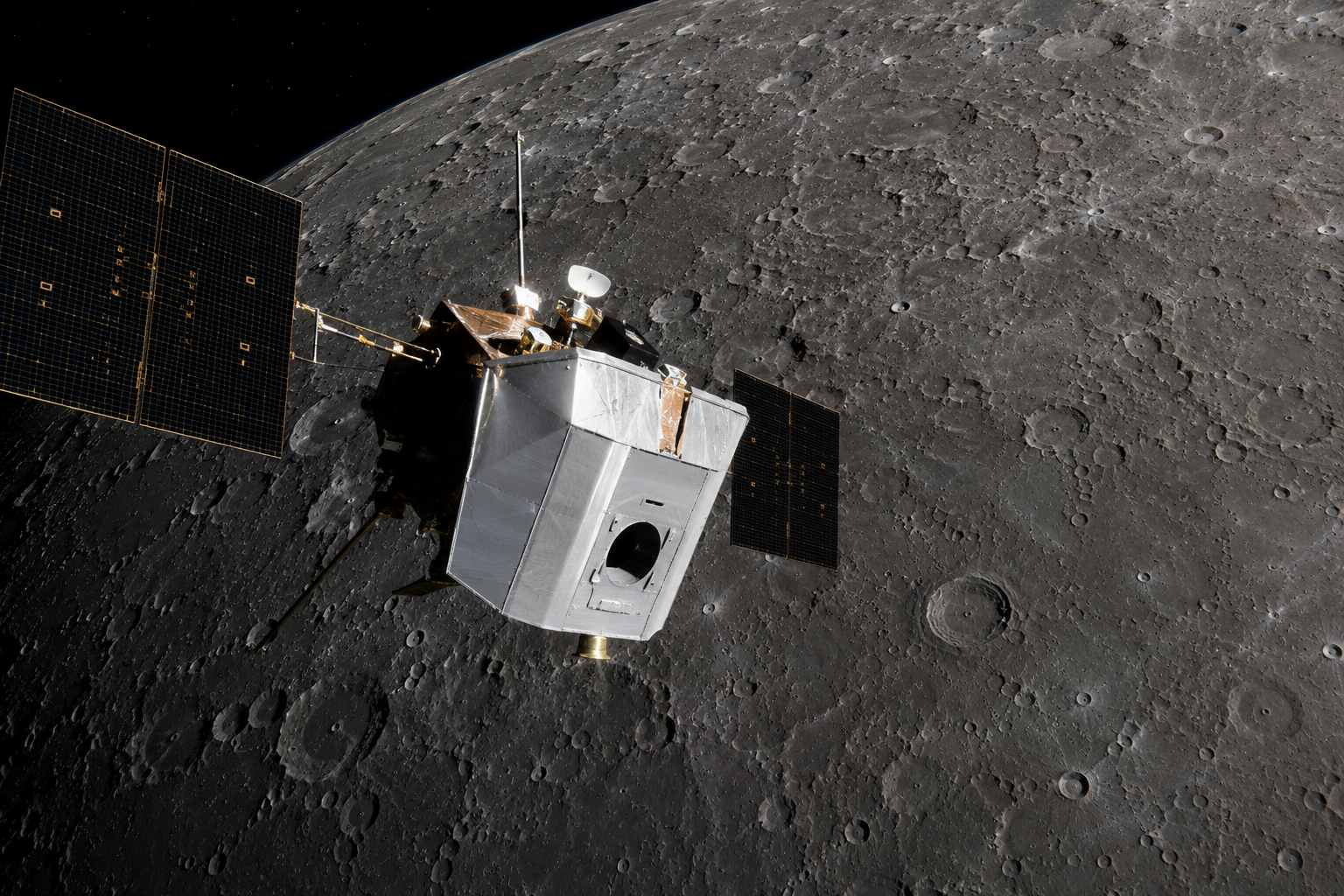
In 2004, NASA launched the MESSENGER mission to explore Mercury in unprecedented detail.
After a journey of nearly seven years, the spacecraft entered Mercury's orbit in 2011, becoming the first spacecraft ever to orbit the planet.
During four years of exploration, MESSENGER completely transformed our understanding of Mercury.
Among its major discoveries were:
- A complete global map of the planet.
- Confirmation of water ice hidden inside permanently shadowed polar craters.
- Evidence of ancient volcanic activity.
- A much larger iron core than scientists expected.
- Detailed measurements of Mercury's magnetic field.
When its fuel was exhausted in 2015, MESSENGER deliberately impacted Mercury's surface, ending one of NASA's most successful planetary missions.
Mercury Exploration Timeline
BepiColombo: The Next Generation Mission
Mercury is still revealing new mysteries.
In 2018, the European Space Agency (ESA) and the Japan Aerospace Exploration Agency (JAXA) launched BepiColombo, the most advanced mission ever sent to Mercury.
Unlike previous missions, BepiColombo consists of two scientific orbiters working together.
Its objectives include:
- Studying Mercury's interior.
- Investigating its magnetic field.
- Measuring interactions with the solar wind.
- Understanding how the planet formed and evolved.
After multiple gravity-assist flybys of Earth, Venus, and Mercury, the spacecraft is expected to begin its full scientific mission after entering Mercury's orbit.
Why Mercury Is Still Worth Exploring
Mercury may appear small and lifeless, but it holds important clues about the formation of rocky planets.
Scientists continue studying Mercury because it helps answer questions such as:
- Why does it have such a massive iron core?
- How did water ice survive so close to the Sun?
- Why does it still have a magnetic field?
- What can it teach us about the early Solar System?
Every new observation helps improve our understanding not only of Mercury, but also of Earth and the other rocky planets.
Transition
Mercury may never become a destination for human explorers, but its discoveries continue to reshape planetary science.
In the final chapter, we'll examine whether humans could ever survive on Mercury, why scientists continue studying it, and what this remarkable planet teaches us about our place in the Solar System.
Chapter 5
Could Humans Ever Live on Mercury?
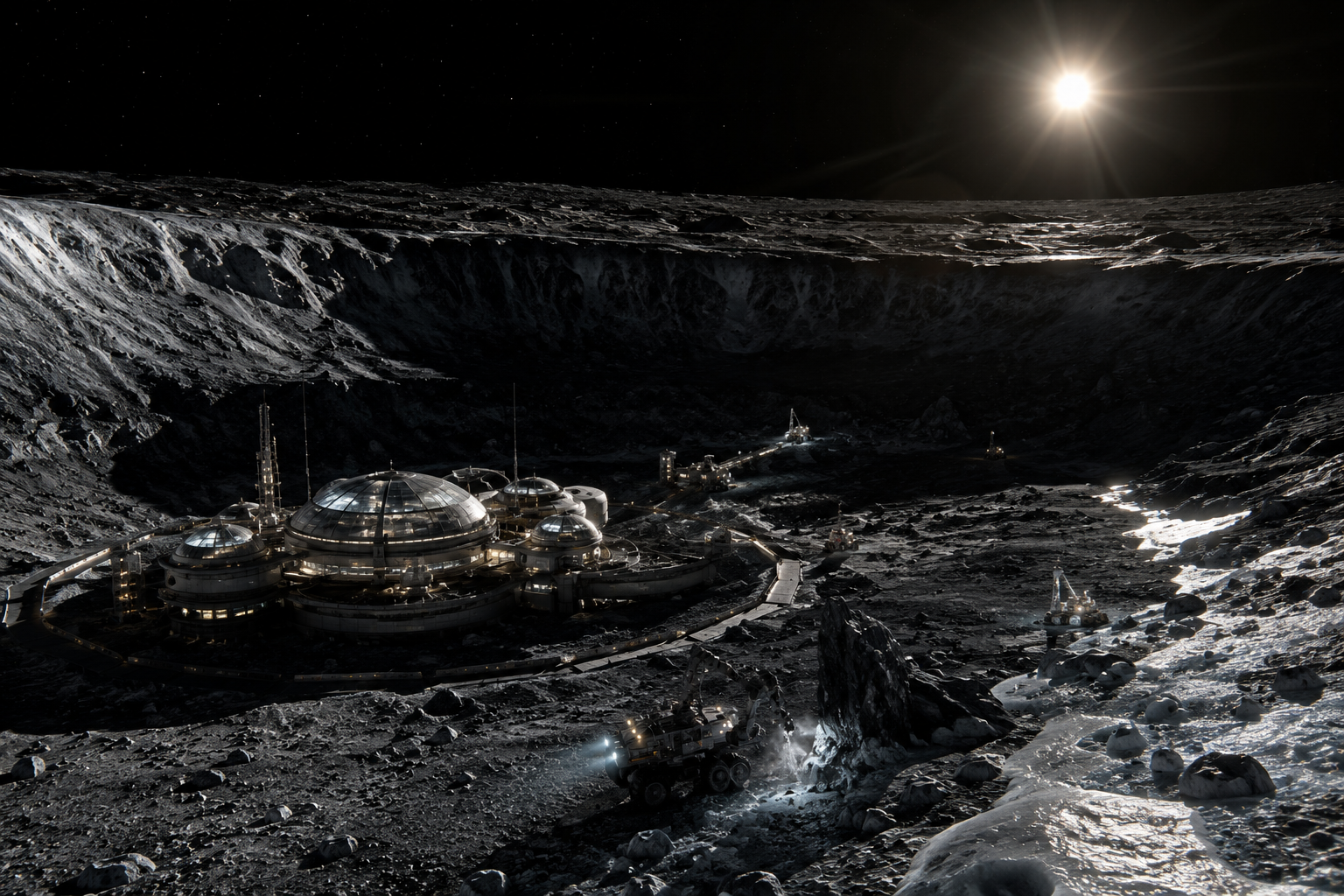
Mercury is one of the most hostile places in the Solar System.
Its scorching daytime temperatures, freezing nights, intense solar radiation, and lack of a breathable atmosphere make long-term human survival extraordinarily difficult.
Unlike the Moon or Mars, Mercury offers almost no natural protection from the harsh environment of space.
For now, human exploration remains a concept for the future rather than a realistic mission.
Why Living on Mercury Would Be So Difficult
A human settlement on Mercury would face challenges unlike those on any other planet.
Scientists would need to overcome:
- ☀ Surface temperatures reaching 800°F (430°C)
- ❄ Nighttime temperatures dropping to −290°F (−180°C)
- ☢ Intense solar radiation
- 🌬 Almost no atmosphere
- 🫁 No breathable oxygen
- 🌍 Gravity only 38% of Earth's
Any habitat would require heavy radiation shielding, reliable life-support systems, and constant temperature control to keep astronauts safe.
Could Mercury's Poles Become Future Research Sites?
Surprisingly, the most promising locations are not the scorching equator but the permanently shadowed craters near Mercury's poles.
These regions never receive direct sunlight and contain confirmed deposits of water ice.
Water could potentially provide:
- Drinking water
- Oxygen for breathing
- Hydrogen for rocket fuel
Although building a research station there would still be extremely challenging, the discovery of polar ice has made Mercury slightly more interesting as a future destination for robotic exploration.
Can Humans Survive on Mercury?
Why Mercury Still Matters
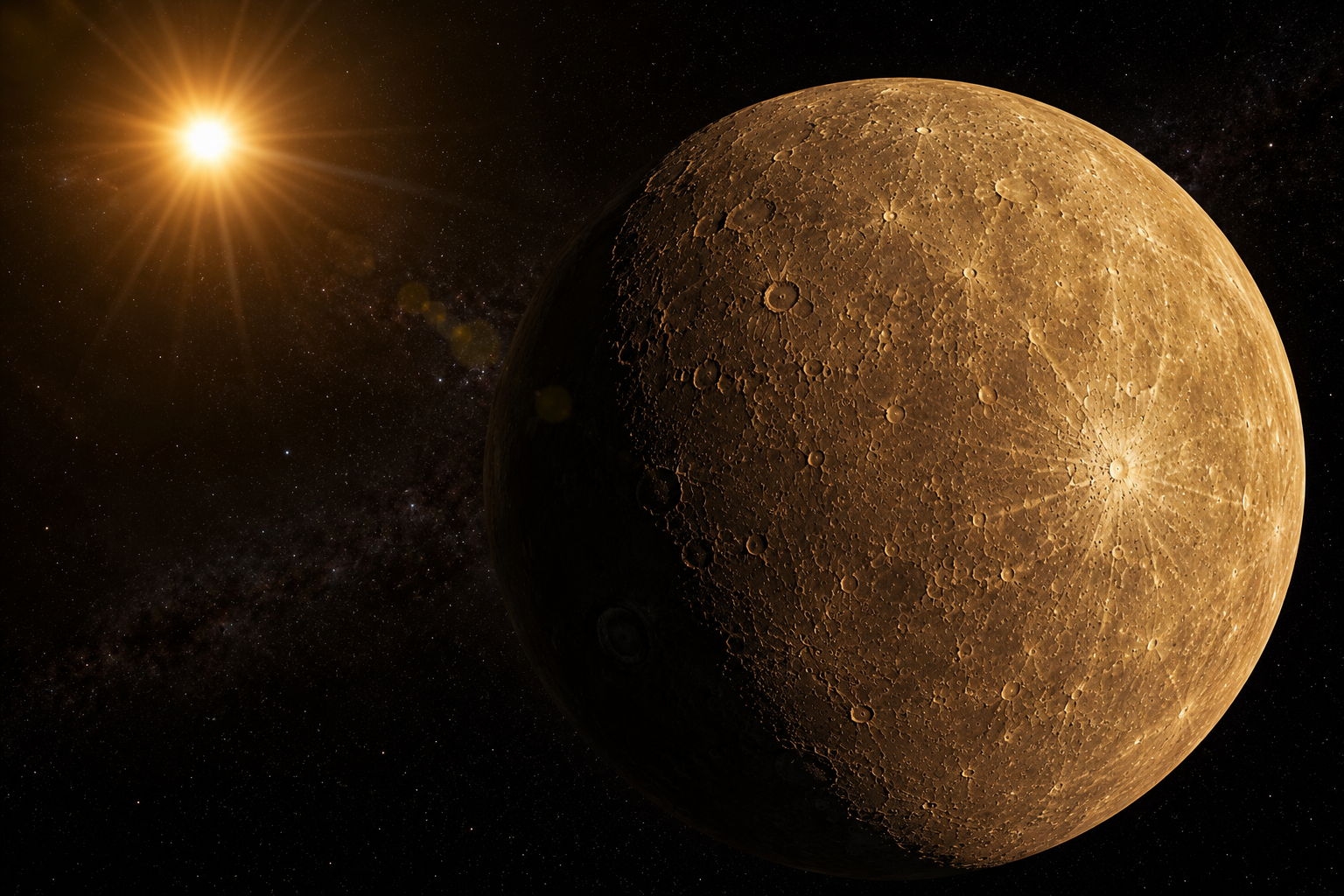
Mercury may seem like a quiet, lifeless planet, but it plays an important role in helping scientists understand how rocky planets form and evolve.
Its enormous iron core, ancient cratered surface, shrinking crust, and unexpected magnetic field make it unlike any other world in the Solar System.
Each spacecraft that visits Mercury provides new clues about the earliest history of our planetary neighborhood.
In many ways, studying Mercury is like looking back billions of years to the birth of the Solar System.
More Than the Closest Planet
Mercury is often overshadowed by larger and more colorful planets, yet it remains one of the most fascinating worlds ever explored.
It is a planet where:
- A single day lasts longer than a year.
- Water ice survives near the Sun.
- Giant cliffs reveal a planet that is still shrinking.
- A massive iron core continues to generate a magnetic field.
These extraordinary characteristics prove that even the smallest planet can hold some of the biggest scientific mysteries.
Final Reflection
Mercury reminds us that size does not determine importance.
Though it is the smallest planet in our Solar System, it has transformed our understanding of planetary evolution, geology, and the violent processes that shaped the early Solar System.
From its blazing days and freezing nights to its hidden ice and giant metallic heart, Mercury continues to challenge expectations and inspire exploration.
As future missions uncover more of its secrets, this remarkable world will remain a key chapter in humanity's journey to understand the planets that orbit our Sun.
Key Takeaways
- Mercury is the closest and smallest planet in the Solar System.
- It completes one orbit around the Sun in 88 Earth days, while one solar day lasts 176 Earth days.
- The planet experiences extreme temperatures because it has almost no atmosphere.
- Mercury possesses the largest iron core relative to its size of any planet.
- Water ice exists inside permanently shadowed craters near its poles.
- NASA's Mariner 10 and MESSENGER, along with ESA/JAXA's BepiColombo, have revolutionized our understanding of Mercury.
- Although human settlement is currently impractical, Mercury remains one of the Solar System's most scientifically valuable worlds.
Final Quote
"Mercury may be the smallest planet, but its ancient surface, giant iron heart, and remarkable extremes continue to reveal some of the greatest secrets of our Solar System."
Frequently Asked Questions (FAQ)
1. What is Mercury?
Mercury is the smallest and closest planet to the Sun in our Solar System. It is a rocky terrestrial planet known for its heavily cratered surface, enormous iron core, and extreme temperature differences.
2. Why isn't Mercury the hottest planet?
Although Mercury is the closest planet to the Sun, Venus is actually the hottest. Mercury has almost no atmosphere to trap heat, so temperatures drop dramatically after sunset, while Venus's thick atmosphere creates an intense greenhouse effect.
3. How long is a day on Mercury?
A single solar day on Mercury (from one sunrise to the next) lasts 176 Earth days, while one Mercury year lasts only 88 Earth days. This means a day on Mercury is twice as long as its year.
4. Does Mercury have an atmosphere?
Mercury does not have a true atmosphere like Earth. Instead, it has a very thin exosphere made of oxygen, sodium, hydrogen, helium, and potassium atoms. It is too thin to trap heat or support life.
5. Is there water on Mercury?
Yes. Scientists have discovered water ice inside permanently shadowed craters near Mercury's north and south poles. These regions never receive direct sunlight, allowing ice to survive despite the planet's proximity to the Sun.
6. Why is Mercury covered in so many craters?
Mercury has almost no atmosphere, so meteoroids strike its surface without burning up. Since there is also very little erosion, ancient impact craters remain preserved for billions of years.
7. Can humans live on Mercury?
With current technology, living on Mercury is not practical. Extreme temperatures, intense solar radiation, and the lack of a breathable atmosphere make human survival extremely difficult. Any future research stations would likely need to be built inside permanently shadowed polar craters.
8. What is Mercury's giant iron core?
Mercury has the largest iron core relative to its size of any planet in the Solar System. The core occupies about 85% of the planet's diameter, helping generate Mercury's weak magnetic field.
9. Has anyone landed on Mercury?
No. No spacecraft has ever landed on Mercury. NASA's Mariner 10 flew past the planet, MESSENGER became the first spacecraft to orbit it, and the BepiColombo mission is continuing to study Mercury in greater detail.
10. How hot and cold does Mercury get?
Mercury experiences some of the most extreme temperatures in the Solar System:
- Daytime: Up to 800°F (430°C)
- Nighttime: Down to −290°F (−180°C)
These dramatic changes occur because Mercury has almost no atmosphere to retain heat.
11. Why is Mercury important to scientists?
Mercury provides valuable clues about the formation of rocky planets. Its oversized iron core, ancient, cratered surface, shrinking crust, magnetic field, and polar ice deposits help scientists better understand the early history and evolution of our Solar System.
12. Can you see Mercury from Earth?
Yes. Mercury can sometimes be seen with the naked eye shortly after sunset or just before sunrise. Because it always stays close to the Sun in the sky, it is one of the most difficult planets to observe from Earth.