Introduction
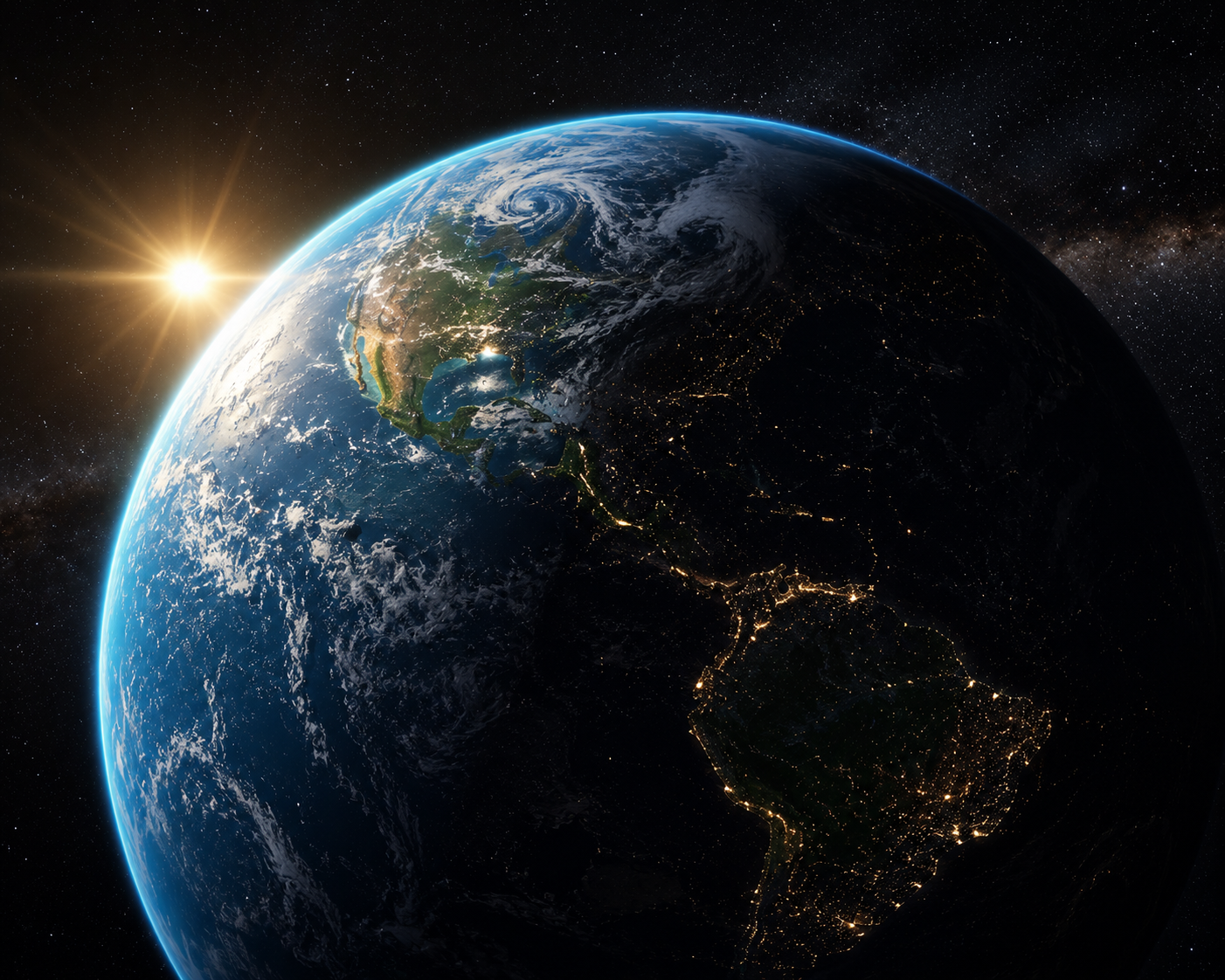
Imagine standing on the Moon and looking back at a tiny blue marble suspended in the darkness of space. That pale sphere is Earth—the only world known to harbor life. Among billions of stars and countless planets, our home is a rare combination of rock, water, atmosphere, magnetic protection, and geological activity that has allowed life to flourish for over 3.5 billion years.
From towering mountain ranges to the deepest ocean trenches, from frozen polar ice caps to lush tropical rainforests, Earth is a planet of extraordinary diversity. Every cloud drifting across its skies, every wave crashing against its shores, and every forest breathing oxygen tells the story of a world that is constantly changing.
Yet Earth is not merely our home. It is a scientific marvel—a planet shaped by cosmic collisions, volcanic fire, flowing water, and the delicate balance of forces that make life possible. Understanding Earth is not just about learning where we live; it is about discovering why our world remains unlike any other planet humanity has explored.
Chapter 1: The Birth of a Blue World
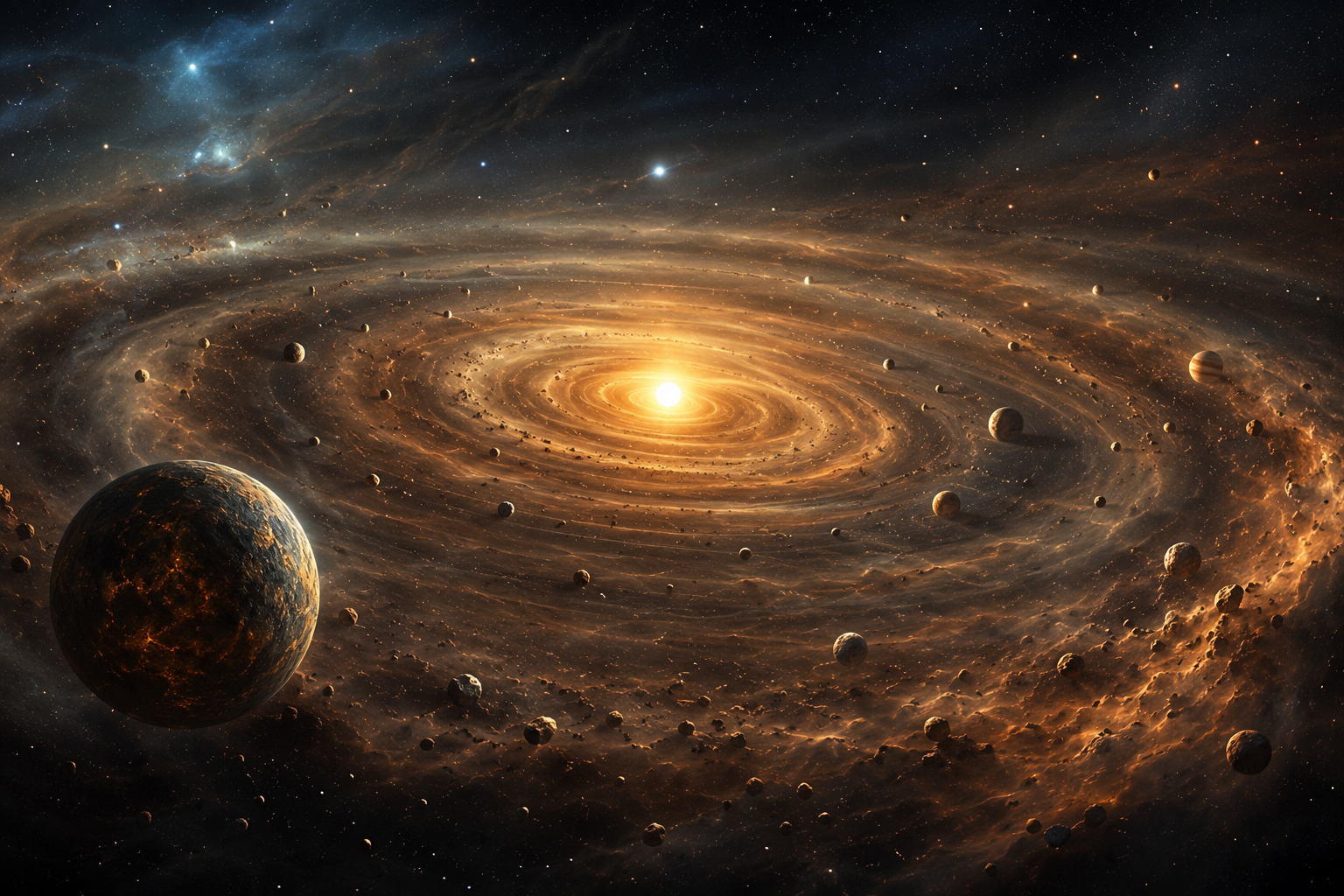
How Earth Was Born: From Cosmic Dust to a Living Planet
More than 4.54 billion years ago, our planet did not exist. There were no oceans, no mountains, no forests, and certainly no life. Instead, the region where Earth now orbits was filled with swirling clouds of gas, dust, and tiny fragments of rock left behind after the birth of the Sun.
Gravity slowly transformed this chaos into order.
As particles collided, they stuck together, forming larger rocks known as planetesimals. Over millions of years, these objects continued crashing into one another, growing into massive planetary embryos. One of these growing worlds would eventually become Earth.
But the young Earth looked nothing like the blue planet we know today. It was an inferno—a glowing sphere of molten rock constantly bombarded by asteroids and comets. Every collision released tremendous amounts of heat, keeping the surface hot enough to melt entire continents before they even existed.
At this stage, survival was impossible. Yet these violent beginnings were laying the foundation for one of the most extraordinary planets in the universe.
A World Forged by Fire
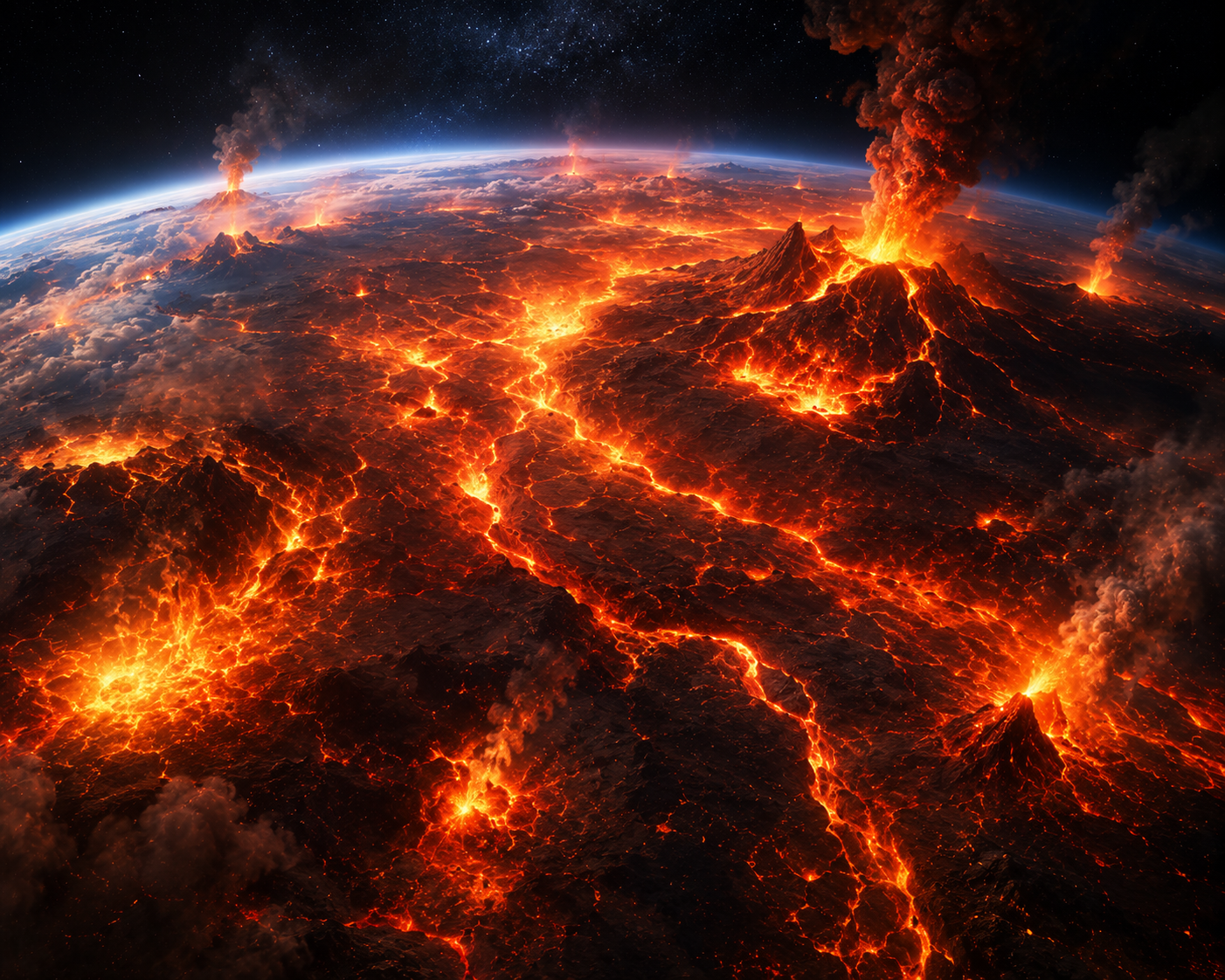
During Earth's first few hundred million years, the planet resembled a gigantic ocean of molten rock. Temperatures reached well above 1,500°C (2,732°F), hot enough to keep much of the surface in a liquid state.
Heavy elements such as iron and nickel gradually sank toward the center under the pull of gravity. Lighter materials floated upward, eventually forming the planet's outer layers. This process, known as planetary differentiation, created the basic structure Earth still has today: a metallic core surrounded by a rocky mantle and crust.
Deep beneath the surface, radioactive elements continued generating heat. Volcanoes erupted almost continuously, releasing enormous quantities of gases including water vapor, carbon dioxide, nitrogen, and sulfur compounds.
Although Earth's atmosphere was beginning to form, it was completely different from the oxygen-rich air we breathe today. In fact, a modern human would survive only seconds in that toxic environment.
Inside the Young Earth
The Collision That Changed Everything
Among the countless impacts that shaped the young Solar System, one collision stands above all others.
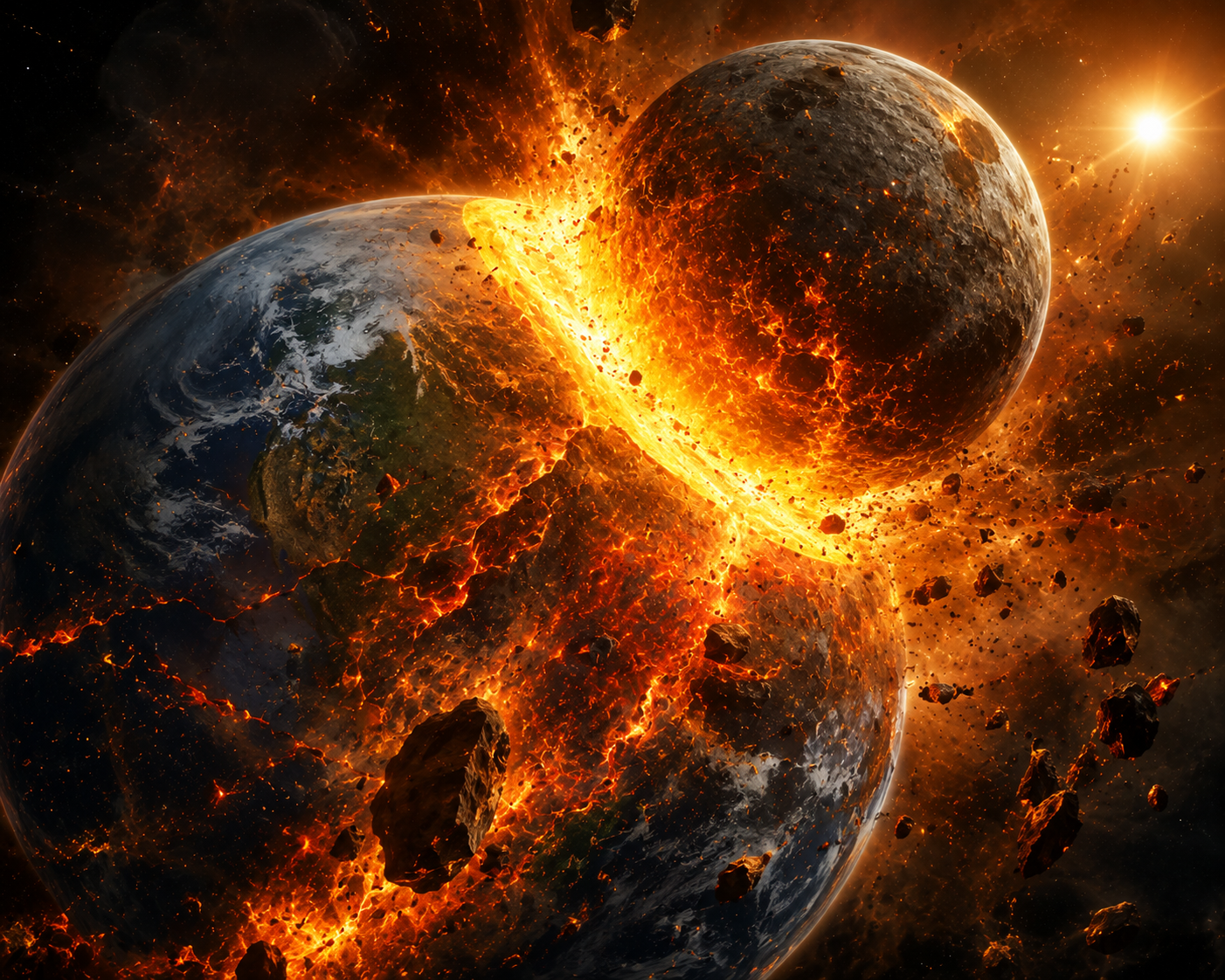
Scientists believe that roughly 4.5 billion years ago, a Mars-sized protoplanet—often called Theia—collided with the young Earth.
The impact was unimaginably powerful.
The collision blasted enormous amounts of molten rock into space, creating a vast ring of debris around the planet. Over time, gravity pulled this material together until it formed a single natural satellite.
That satellite became the Moon.
Today, the Moon stabilizes Earth's tilt, drives ocean tides, and has influenced our planet's climate for billions of years. Without this ancient collision, Earth might have been a dramatically different world—perhaps too unstable for complex life to evolve.
While researchers continue refining details of the giant impact hypothesis, it remains the leading scientific explanation for the Moon's origin.
Transition to Chapter 2
By the end of its first few hundred million years, Earth had survived relentless bombardment, cooled enough for its first crust to form, and gained a companion that would shape its future forever.
Yet the planet was still lifeless.
The next chapter explores how oceans appeared, how the atmosphere transformed, and how Earth gradually became the only known world capable of supporting life.
Chapter 2:
Why Earth Became the Only Known Living World
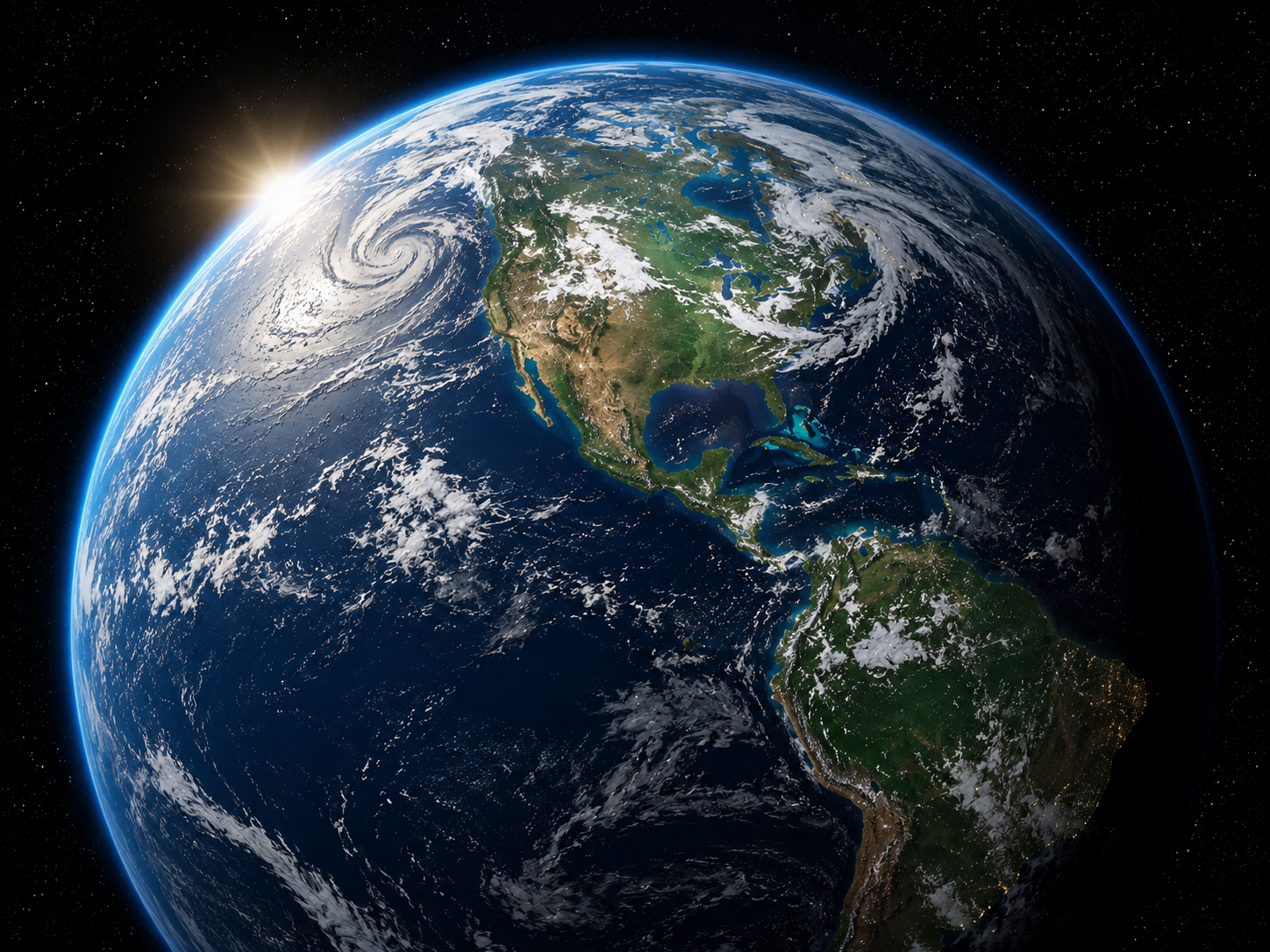
When viewed from space, Earth appears calm and peaceful—a brilliant blue sphere wrapped in delicate white clouds. But beneath this tranquil appearance lies one of the most dynamic planets in the Solar System.
Unlike Mercury, whose surface is scarred by ancient impacts, or Venus, where extreme heat has transformed the landscape into a volcanic furnace, Earth is constantly reinventing itself. Mountains rise, continents drift, volcanoes erupt, and oceans reshape coastlines every single day.
These forces may seem destructive, yet they are the very reason our planet has remained habitable for billions of years.
Earth is not simply a rocky planet. It is a world where geology, water, atmosphere, and magnetism work together in an extraordinary balance—one that has never been confirmed anywhere else in the universe.
A Planet with Layers
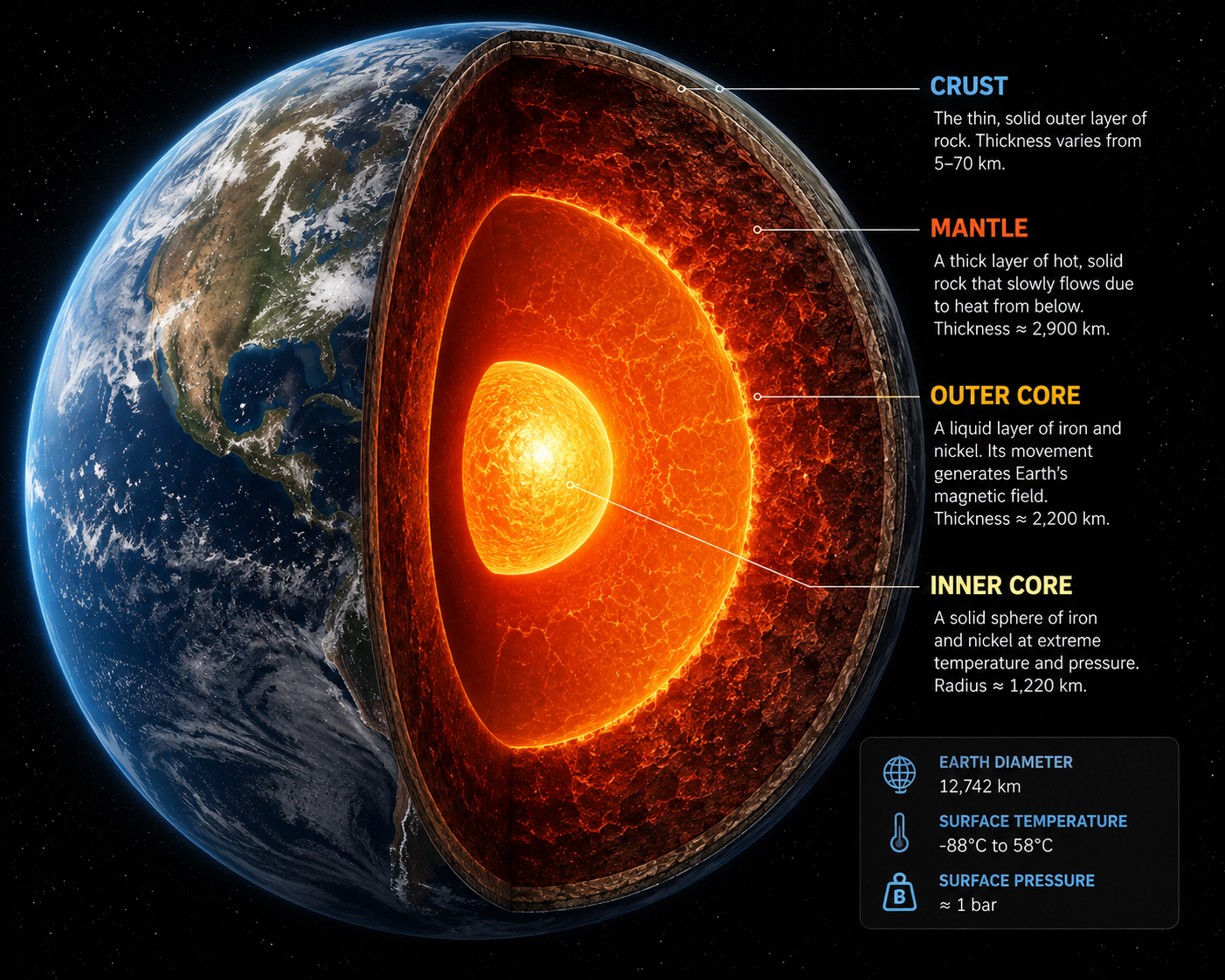
Although Earth appears solid beneath our feet, its interior is made of several distinct layers, each playing a vital role in keeping the planet alive.
At the center lies the inner core, a solid sphere composed primarily of iron and nickel. Despite temperatures reaching nearly 5,400°C (9,750°F)—comparable to the Sun's surface—the immense pressure keeps the metal in a solid state.
Surrounding it is the outer core, a vast ocean of molten iron. As this liquid metal moves, it generates powerful electric currents that create Earth's magnetic field.
Above the core lies the mantle, a thick layer of hot, slowly flowing rock extending nearly 2,900 kilometers (1,800 miles) beneath the surface. Although solid, the mantle behaves like an extremely slow-moving fluid over millions of years.
Finally, at the top is the crust—the thin outer shell on which every mountain, forest, desert, city, and ocean exists. Compared with the rest of the planet, the crust is astonishingly thin, yet it supports all known life.
These layers do far more than define Earth's structure. Together, they drive the geological engine that keeps the planet active.
Inside Earth
The Continents Never Stop Moving
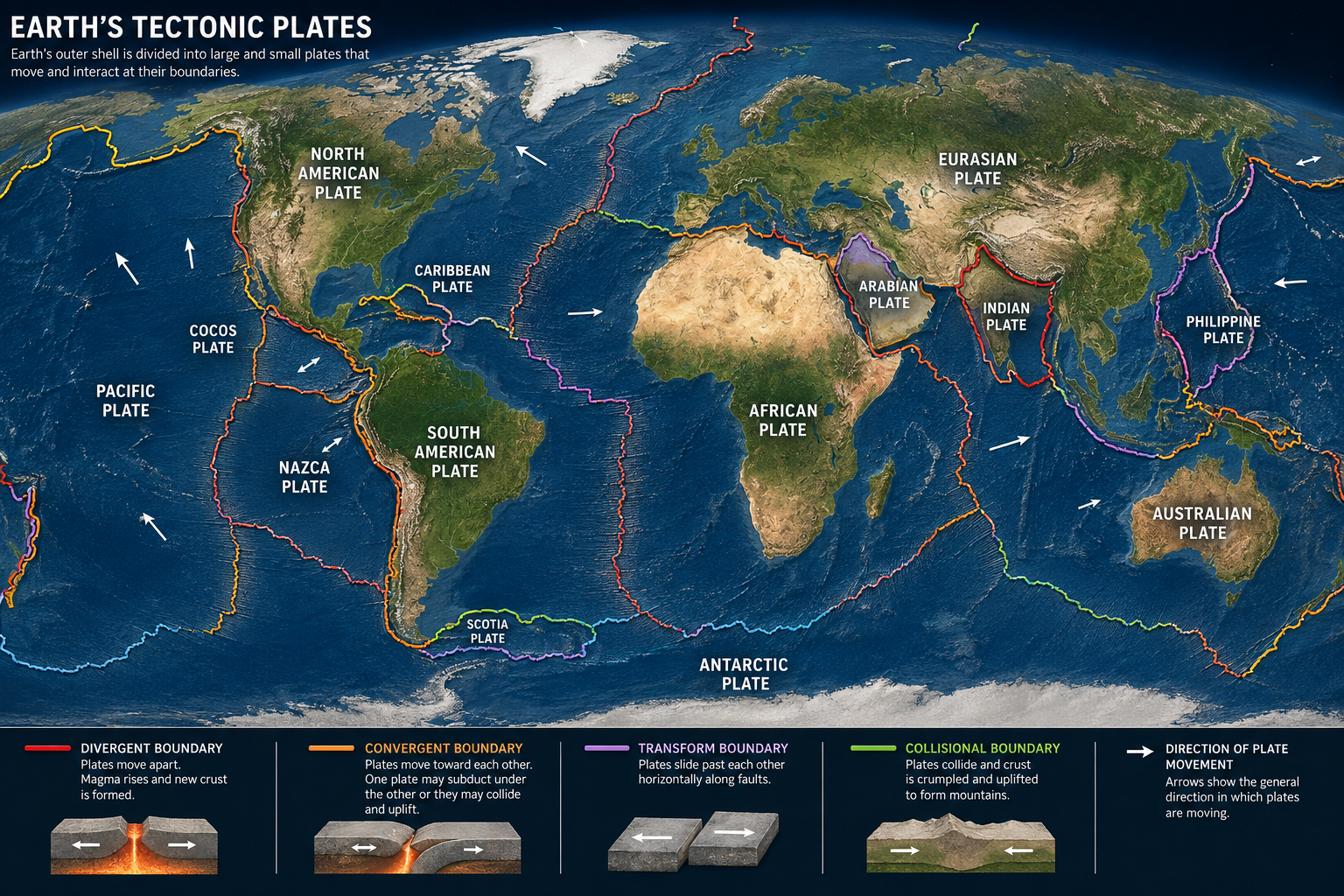
To human eyes, continents appear permanent. Yet they are constantly moving, carried by enormous slabs of rock called tectonic plates.
These plates float atop the slowly flowing mantle and drift at speeds of only a few centimeters each year—roughly the rate at which human fingernails grow. Over millions of years, however, these tiny movements reshape the entire planet.
When plates collide, towering mountain ranges such as the Himalayas are pushed upward. When they separate, new ocean floors form as molten rock rises from deep within the mantle. Where one plate sinks beneath another, powerful earthquakes and explosive volcanoes become common.
This continuous recycling of Earth's crust helps regulate the planet's climate by cycling carbon between the atmosphere, oceans, and interior. It also creates new landscapes and replenishes nutrients that support ecosystems across the globe.
No other known planet in the Solar System exhibits plate tectonics on the same global scale as Earth.
Oceans: Earth's Greatest Treasure
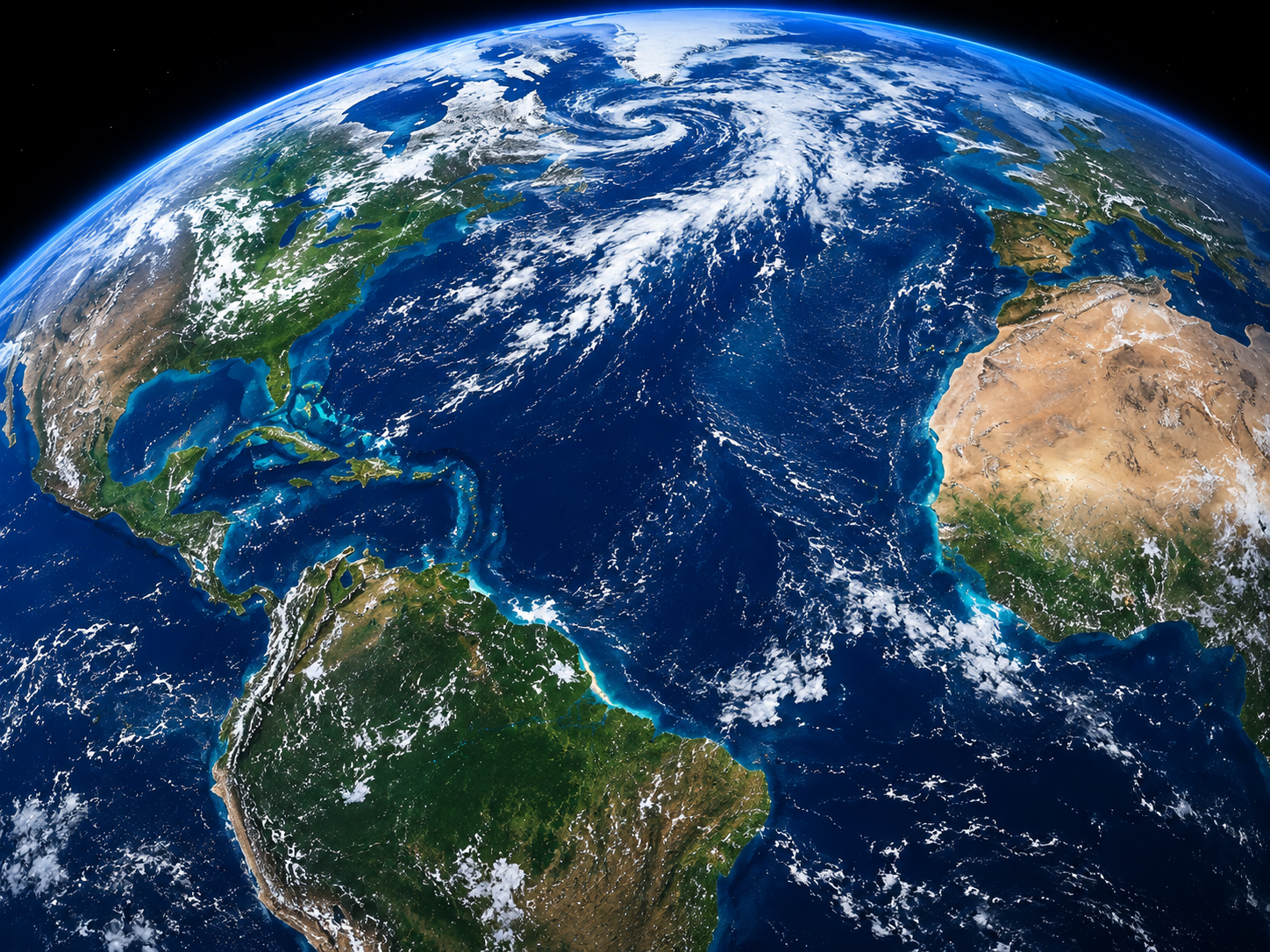
Seen from space, Earth's defining feature is not its continents—it is its water.
Around 71% of the planet's surface is covered by oceans, making Earth the only known world with vast, stable bodies of liquid water on its surface.
Scientists believe much of this water arrived through a combination of volcanic outgassing and water-rich asteroids that bombarded the young planet billions of years ago. As Earth gradually cooled, water vapor condensed into rain. For millions of years, relentless storms poured onto the hot surface, filling enormous basins that eventually became the first oceans.
These oceans transformed the planet.
They absorb and distribute heat around the globe, moderate climate, drive weather systems, and provide the environment where the earliest forms of life likely emerged. Even today, microscopic marine organisms produce a significant portion of the oxygen in Earth's atmosphere.
Without its oceans, Earth would resemble the barren worlds of Mars or Venus far more than the vibrant planet we know today.
Where Earth's Water Is Found
The Invisible Shield That Protects Life
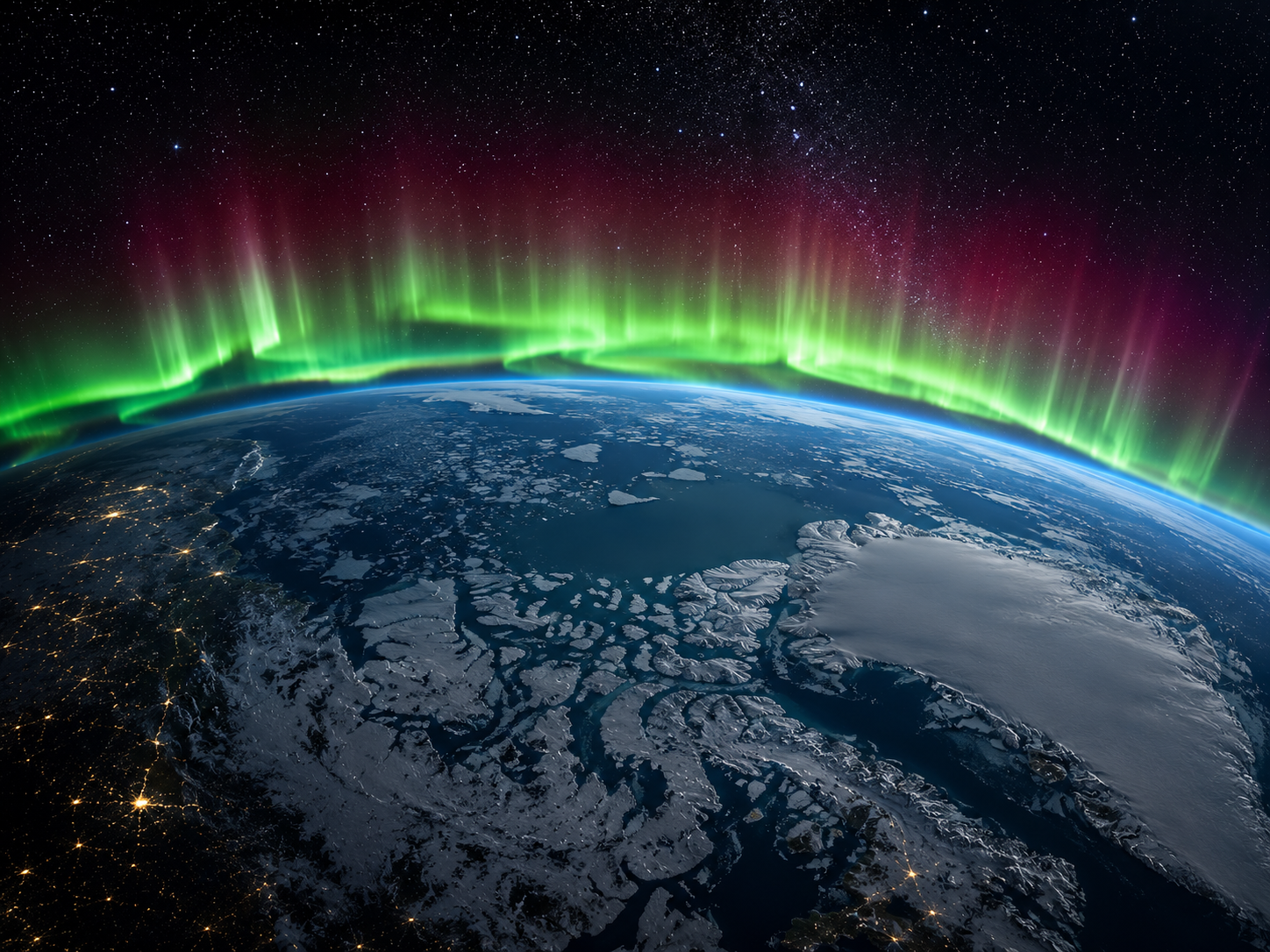
Every second, the Sun releases streams of charged particles known as the solar wind. Left unchecked, this constant bombardment can gradually strip away a planet's atmosphere.
Mars offers a striking example. After losing much of its magnetic field billions of years ago, its atmosphere was slowly eroded by the solar wind, leaving behind the cold, dry world we see today.
Earth avoided this fate.
The movement of molten iron within the outer core generates a powerful magnetic field that surrounds the planet, creating a protective region called the magnetosphere. This invisible shield deflects most harmful charged particles before they can reach the atmosphere.
Some particles become trapped near the poles, where they interact with atmospheric gases to produce one of nature's most spectacular displays—the aurora, known as the Northern and Southern Lights.
Together, the atmosphere and magnetic field act as Earth's protective armor, preserving the conditions that have allowed life to thrive for billions of years.
Chapter 2 Summary
Earth's ability to support life is not the result of a single fortunate circumstance. It is the product of countless interconnected systems working in harmony: a layered interior that powers plate tectonics, oceans that regulate climate, and a magnetic shield that protects the atmosphere from the harsh environment of space.
These features transformed Earth from a molten world into a stable, living planet.
But a habitable planet is only the beginning of the story.
In the next chapter, we will explore how simple microscopic organisms appeared in Earth's ancient oceans and, over billions of years, evolved into the astonishing diversity of life that now covers our planet.
Chapter 3:
How Earth Became a World Full of Life
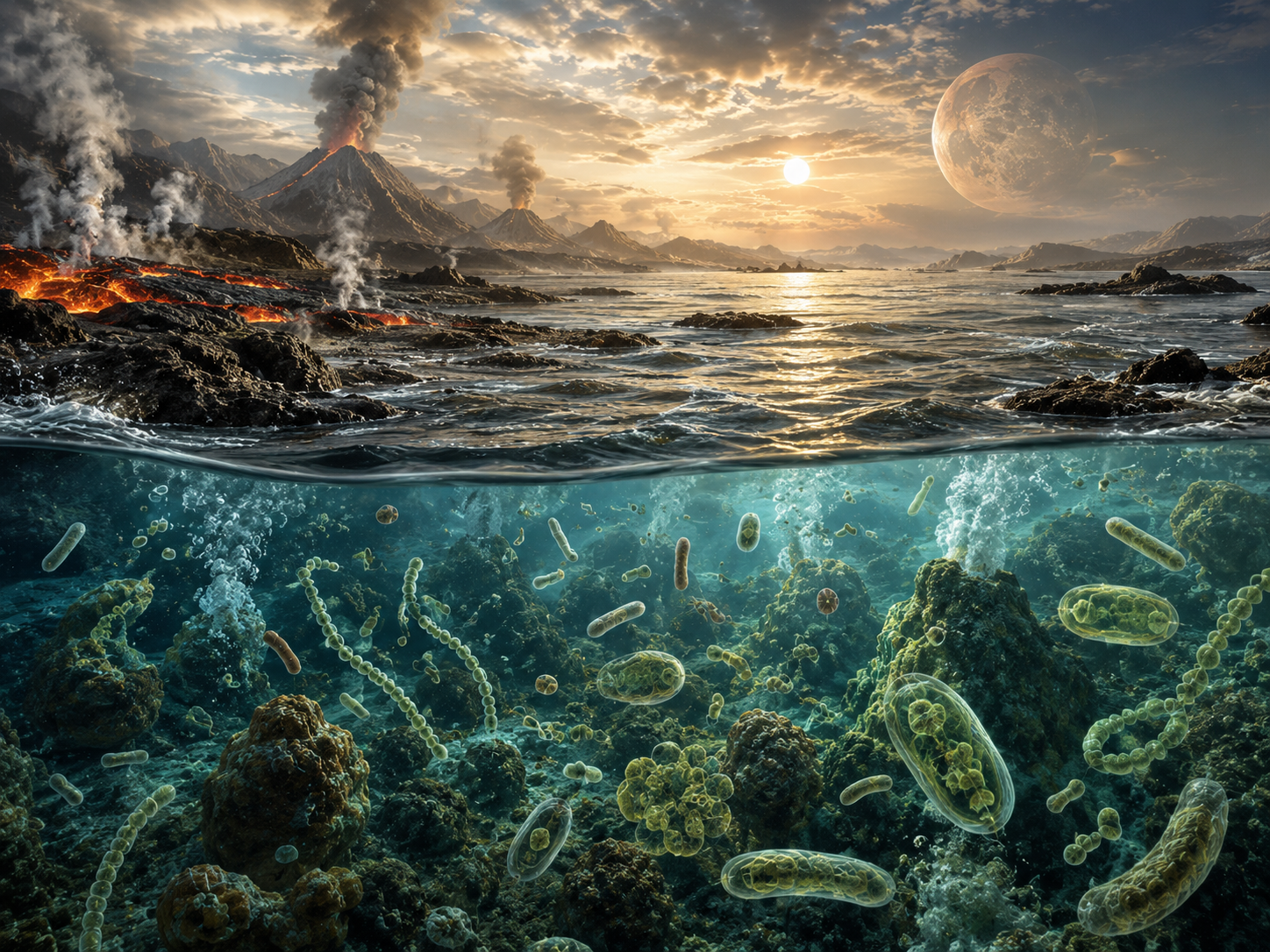
For nearly a billion years, Earth was a silent world.
Its volcanoes erupted relentlessly, meteorites crashed into the surface, and violent storms swept across an endless ocean. There were no forests, no animals, and no birds filling the sky with sound. Even the continents we know today had yet to take shape.
Yet hidden beneath the waves, something extraordinary was about to happen.
At some point more than 3.5 billion years ago, simple microscopic organisms emerged in Earth's ancient oceans. Scientists still debate exactly how life began, but whether it started near deep-sea hydrothermal vents, in shallow tidal pools, or through another process, one fact is clear—Earth became the only known planet where life successfully took hold.
Those tiny organisms would become the ancestors of every tree, whale, eagle, flower, dinosaur, and human that has ever lived.
The Great Oxygen Revolution
The earliest forms of life were remarkably simple. They survived without oxygen, drawing energy from chemicals in their surroundings. For hundreds of millions of years, these microscopic organisms quietly dominated Earth's oceans.
Then evolution produced one of the most important organisms in our planet's history—cyanobacteria.
Unlike earlier microbes, cyanobacteria used sunlight to produce energy through photosynthesis, releasing oxygen as a byproduct. At first, this oxygen reacted with dissolved iron in the oceans, forming vast deposits of iron-rich rocks that still exist today.
Eventually, the oceans could absorb no more.
Oxygen began accumulating in the atmosphere during an event known as the Great Oxygenation Event, approximately 2.4 billion years ago. Although this dramatic environmental change caused the extinction of many oxygen-intolerant organisms, it also transformed Earth forever.
An oxygen-rich atmosphere allowed more complex cells to evolve, paving the way for plants, animals, and eventually intelligent life. Without this biological revolution, Earth would likely still be inhabited only by microscopic organisms.
The air we breathe today is the direct result of countless generations of ancient microbes that slowly reshaped the planet over billions of years.
The Evolution of Life
From Tiny Cells to a Planet of Giants
Life did not become complex overnight. Evolution unfolded over immense stretches of time, with countless species appearing, adapting, and disappearing.
Around 541 million years ago, Earth's oceans experienced an extraordinary burst of biological diversity known as the Cambrian Explosion. Within a relatively short geological period, many of the major groups of animals appeared, each experimenting with new body plans, shells, eyes, and methods of survival.
Life gradually expanded beyond the oceans. Plants colonized the land, followed by insects, amphibians, reptiles, mammals, and birds. Massive dinosaurs ruled the planet for more than 160 million years before a catastrophic asteroid impact ended their reign approximately 66 million years ago.
Their disappearance opened ecological opportunities for mammals, allowing them to diversify and eventually dominate many environments. Much later, one branch of these mammals evolved into a species capable of studying the very planet that created it.
Humans have existed for only a tiny fraction of Earth's history, yet in that brief moment we have explored every continent, reached the Moon, and begun searching for life beyond our own world.
A Planet of Extraordinary Diversity
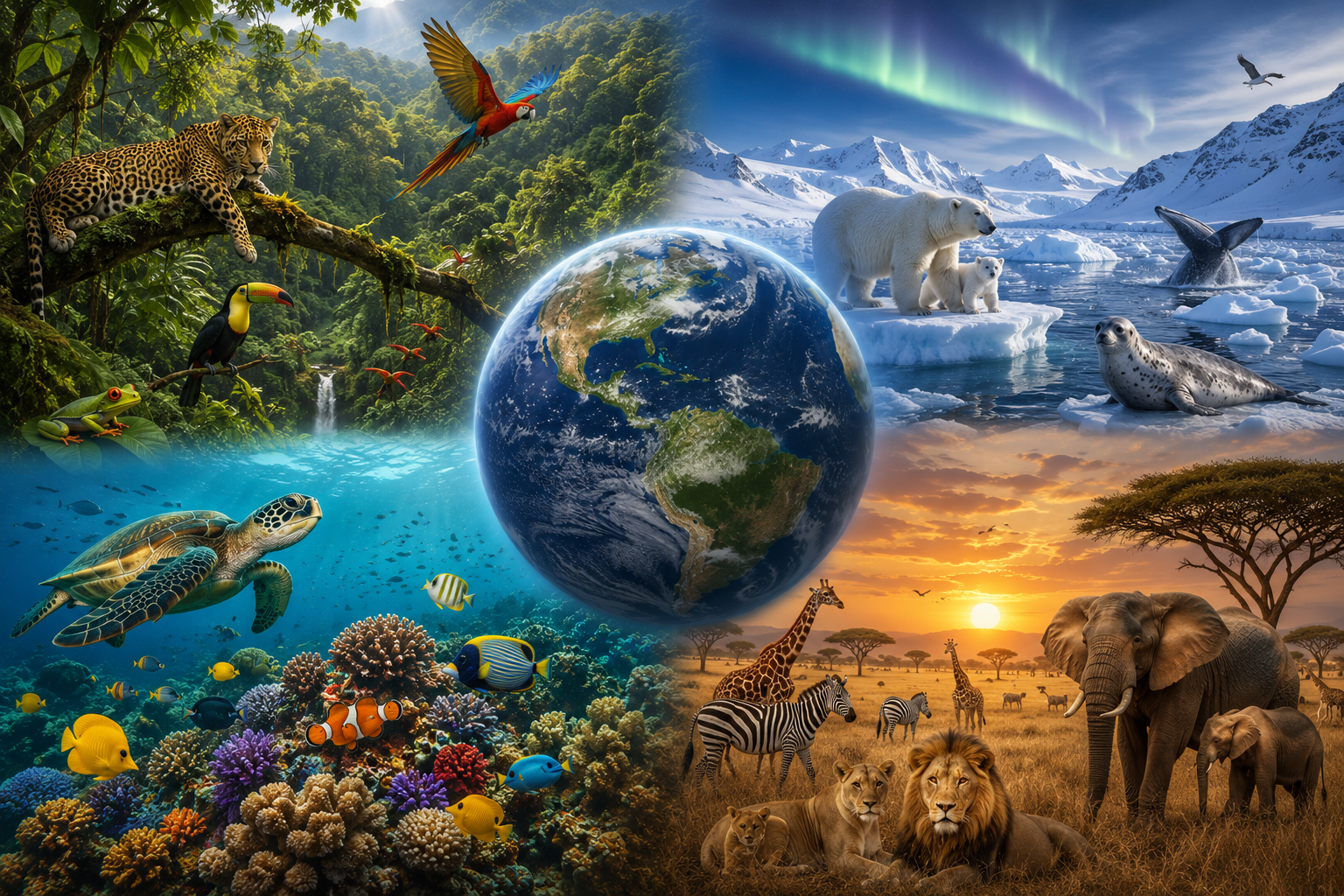
Today, Earth is home to an astonishing variety of life.
Scientists have identified more than 2 million species, while millions more are believed to remain undiscovered. From microscopic bacteria hidden beneath Antarctic ice to giant blue whales roaming the oceans, life has adapted to almost every environment the planet offers.
Towering rainforests recycle enormous amounts of carbon and produce oxygen that supports global ecosystems. Coral reefs, often called the "rainforests of the sea," shelter thousands of marine species within a relatively small area. Vast deserts survive with minimal rainfall, while polar regions endure months of freezing darkness and intense cold.
Every ecosystem is connected through a delicate balance of energy, water, nutrients, and countless interactions among living organisms. Even the smallest changes can ripple across entire food webs.
Earth's biodiversity is not simply beautiful—it is essential. It regulates climate, enriches soils, pollinates crops, purifies water, and sustains the natural systems upon which all life depends.
Chapter 3 Summary
Earth's greatest achievement is not its mountains, oceans, or atmosphere—it is life itself.
Over billions of years, simple microscopic organisms transformed a barren world into a vibrant planet overflowing with ecosystems, species, and complex biological relationships. Every living thing, from the smallest bacterium to the largest whale, is part of an unbroken evolutionary story stretching back to Earth's earliest oceans.
As remarkable as life is, our planet does not exist in isolation.
In the next chapter, we will leave the surface behind and view Earth from space, exploring how its orbit, the Moon, and its place within the Solar System have shaped the world we call home.
Chapter 4:
The Blue World Among the Planets
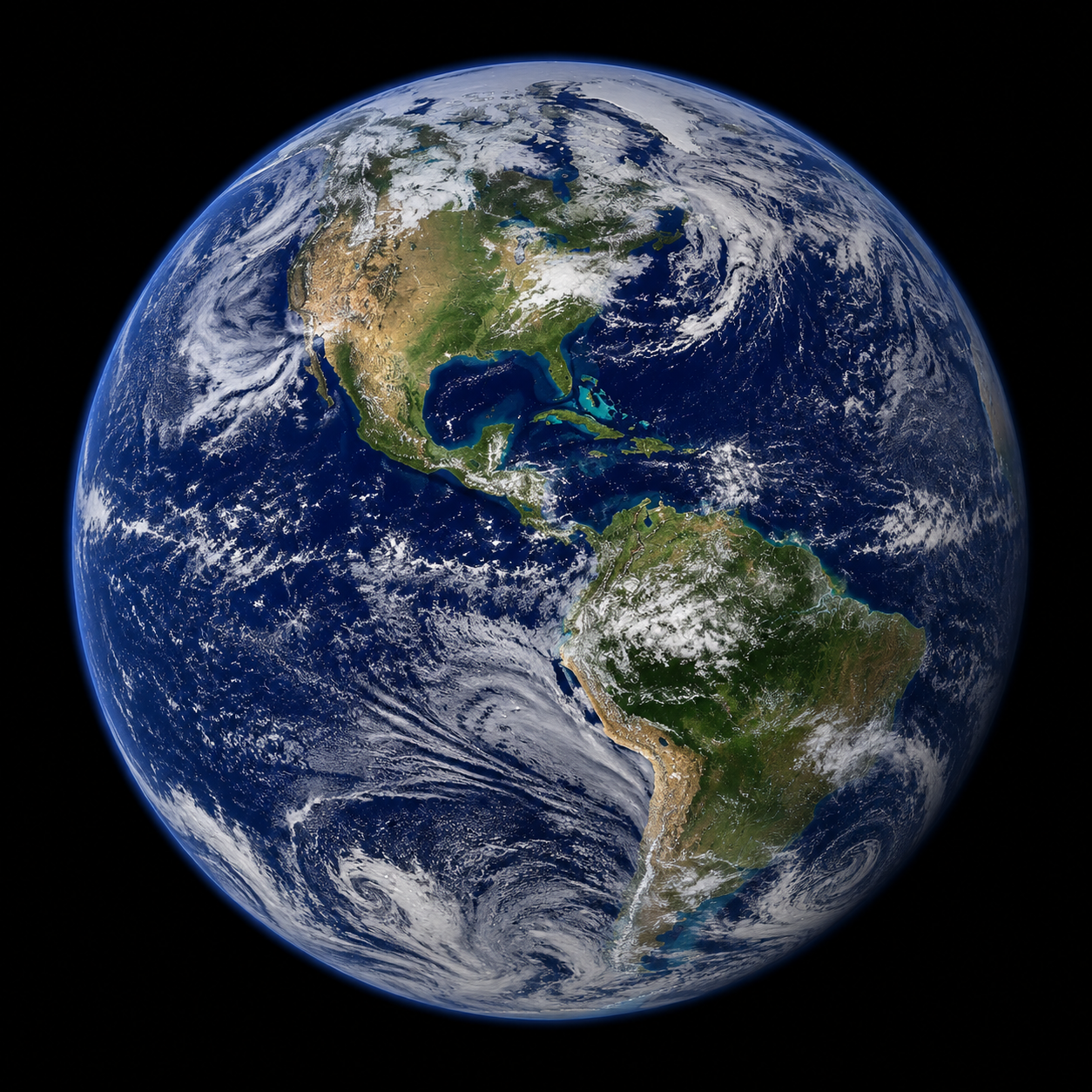
From the ground, Earth feels limitless. Oceans stretch beyond the horizon, mountains rise into the clouds, and forests seem to continue forever. But the moment astronauts leave our planet behind, a remarkable truth becomes impossible to ignore.
Earth is incredibly small.
Seen from space, our entire world becomes a brilliant blue sphere only 12,742 kilometers (7,918 miles) across, silently orbiting the Sun at nearly 107,000 kilometers per hour (66,500 mph). Every continent, every civilization, every language, and every chapter of human history exists on this single planet.
Against the endless darkness of space, Earth is not just another world—it is a rare oasis of color and life.
The Perfect Place in the Solar System
Earth occupies a special position around the Sun, often called the habitable zone or Goldilocks Zone. At an average distance of about 150 million kilometers (93 million miles), it receives just enough solar energy to keep water in its liquid form.
If Earth were significantly closer to the Sun, increasing temperatures could trigger a runaway greenhouse effect similar to Venus. If it orbited much farther away, the planet might become a frozen world resembling Mars.
Of course, distance alone does not explain Earth's habitability. The atmosphere, oceans, magnetic field, and active geology all work together to maintain a relatively stable climate. Together, these systems create conditions that have allowed life to flourish for billions of years.
Among the eight planets of our Solar System, Earth remains the only one known to possess this unique combination of characteristics.
The Moon: Earth's Silent Partner
Every night, the Moon reminds us that Earth is not alone.
Although it appears peaceful in the sky, the Moon has shaped our planet in profound ways since its formation over 4.5 billion years ago.
Its gravitational pull creates the ocean tides that influence coastal ecosystems around the world. More importantly, the Moon helps stabilize Earth's axial tilt. Without this stabilizing effect, the planet's rotation could vary dramatically over millions of years, leading to extreme and unpredictable climate changes.
The Moon has also become humanity's first destination beyond Earth. The footprints left during the Apollo missions remain undisturbed on its surface, preserved by the absence of wind and rain.
Its presence is a reminder that one ancient collision not only created our nearest celestial neighbor but also helped make Earth's long-term stability possible.
Earth Compared with Mercury, Venus, and Mars
A Planet That Never Stops Moving
Although Earth seems steady beneath our feet, it is in constant motion.
The planet rotates once every 24 hours, producing the familiar cycle of day and night. At the same time, it travels around the Sun once every 365.25 days, creating the rhythm of the seasons.
Earth's axis is tilted by about 23.5 degrees, causing different parts of the planet to receive varying amounts of sunlight throughout the year. This simple tilt is responsible for the changing seasons experienced across much of the world.
Beyond its journey around the Sun, Earth is carried through the Milky Way Galaxy as the Solar System orbits the galactic center at an astonishing speed of roughly 828,000 kilometers per hour (514,000 mph). Even while standing perfectly still, every person on Earth is traveling through space at extraordinary speeds.
Yet despite all this motion, the balance of gravity and orbital mechanics keeps our planet remarkably stable.
The Fragile Blue Dot
Perhaps no image has changed humanity's perspective more than the photographs of Earth taken from deep space.
From millions—or even billions—of kilometers away, the planet becomes nothing more than a tiny point of light suspended in darkness. Borders disappear. Continents blur together. The conflicts and divisions that dominate human history become invisible.
What remains is a single, fragile world carrying every known living organism through the vastness of space.
Modern satellites now watch over Earth every day, tracking weather systems, mapping forests, measuring shrinking glaciers, monitoring ocean currents, and helping scientists understand how our planet is changing. Looking back from space has not only revealed Earth's beauty—it has also shown how interconnected and delicate its systems truly are.
For astronauts, one experience is almost universal. Seeing Earth from orbit often inspires a profound appreciation for its uniqueness, a feeling sometimes called the Overview Effect. It is the realization that, in the known universe, this blue planet is the only home humanity has ever had.
Chapter 4 Summary
Earth's place in the Solar System is neither random nor ordinary. Its distance from the Sun, its partnership with the Moon, its stable orbit, and the delicate balance of natural systems have allowed life to thrive for billions of years.
From space, our planet appears both magnificent and fragile—a small blue world surrounded by an immense cosmic ocean.
In the final chapter, we will look ahead to Earth's future, exploring the challenges it faces, the changes that lie ahead, and what the next billions of years may hold for our extraordinary home.
Chapter 5:
The Next Chapter of Our Planet's Story
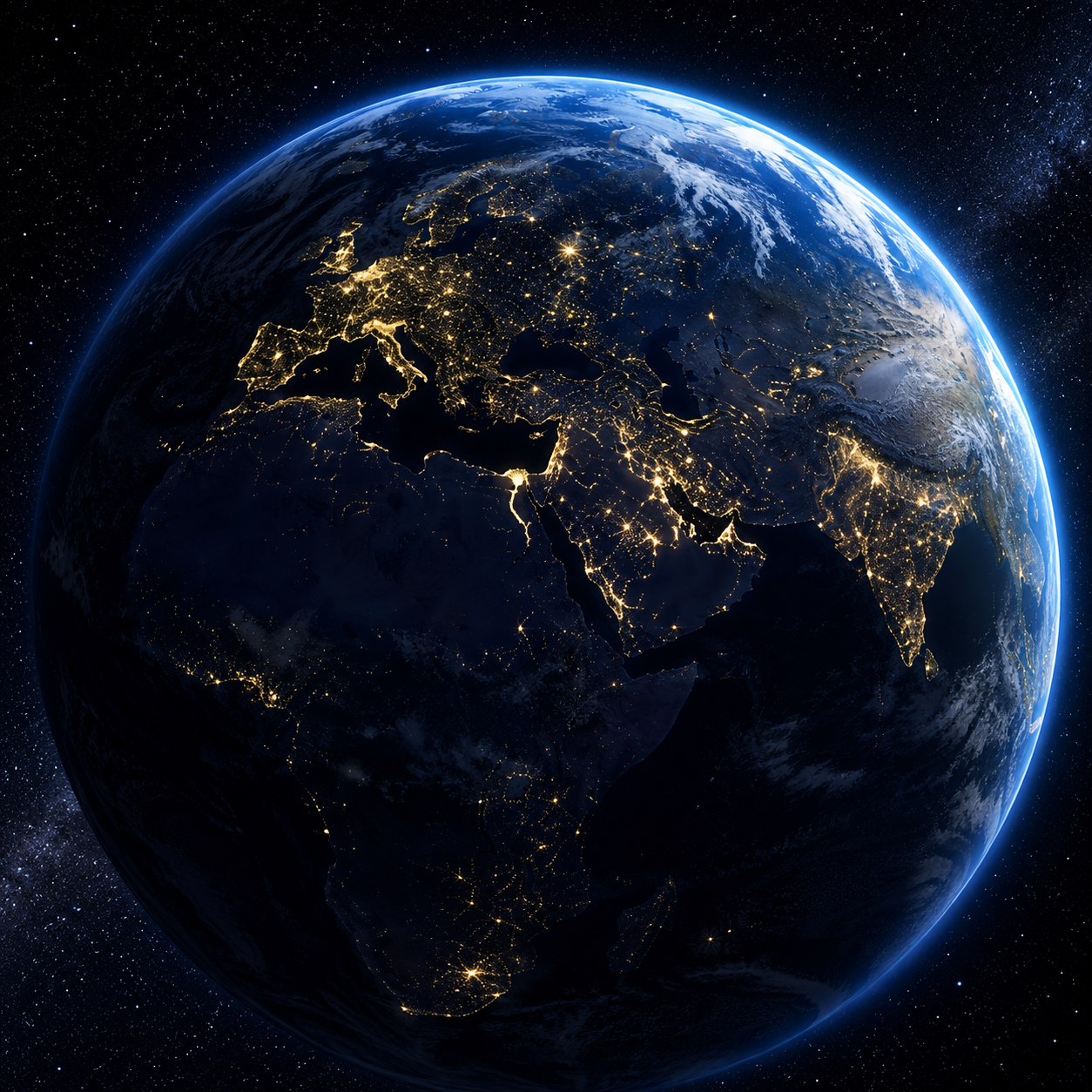
For more than 4.5 billion years, Earth has survived events that could have destroyed countless other worlds.
It endured colossal asteroid impacts, global ice ages, super volcanic eruptions, shifting continents, and mass extinctions that erased nearly all life on multiple occasions. Yet each time, the planet changed, adapted, and continued its long journey through the cosmos.
Today, Earth stands at another turning point.
For the first time in its history, one species has gained the ability to influence the planet on a global scale. Human civilization has transformed landscapes, explored the deepest oceans, reached the Moon, and placed thousands of satellites into orbit. At the same time, our activities have also altered ecosystems, affected the climate, and accelerated the loss of biodiversity.
Earth's future will be shaped not only by natural forces, but also by the decisions humanity makes in the coming centuries.
A Planet That Never Stops Changing
Change has always been part of Earth's identity.
The continents continue to drift a few centimeters every year, slowly reshaping the planet's geography. Millions of years from now, today's oceans and mountain ranges will look completely different as tectonic plates continue their endless movement.
Deep beneath the surface, volcanoes will keep building new land while earthquakes remind us that Earth's interior remains active. The atmosphere will continue to evolve, and natural climate cycles will reshape environments across the globe.
These changes occur over timescales far beyond a human lifetime, yet they demonstrate an important truth: Earth has never been a static planet. It is a dynamic world whose landscapes are constantly being rewritten by geological processes.
The Challenges of the Modern Age
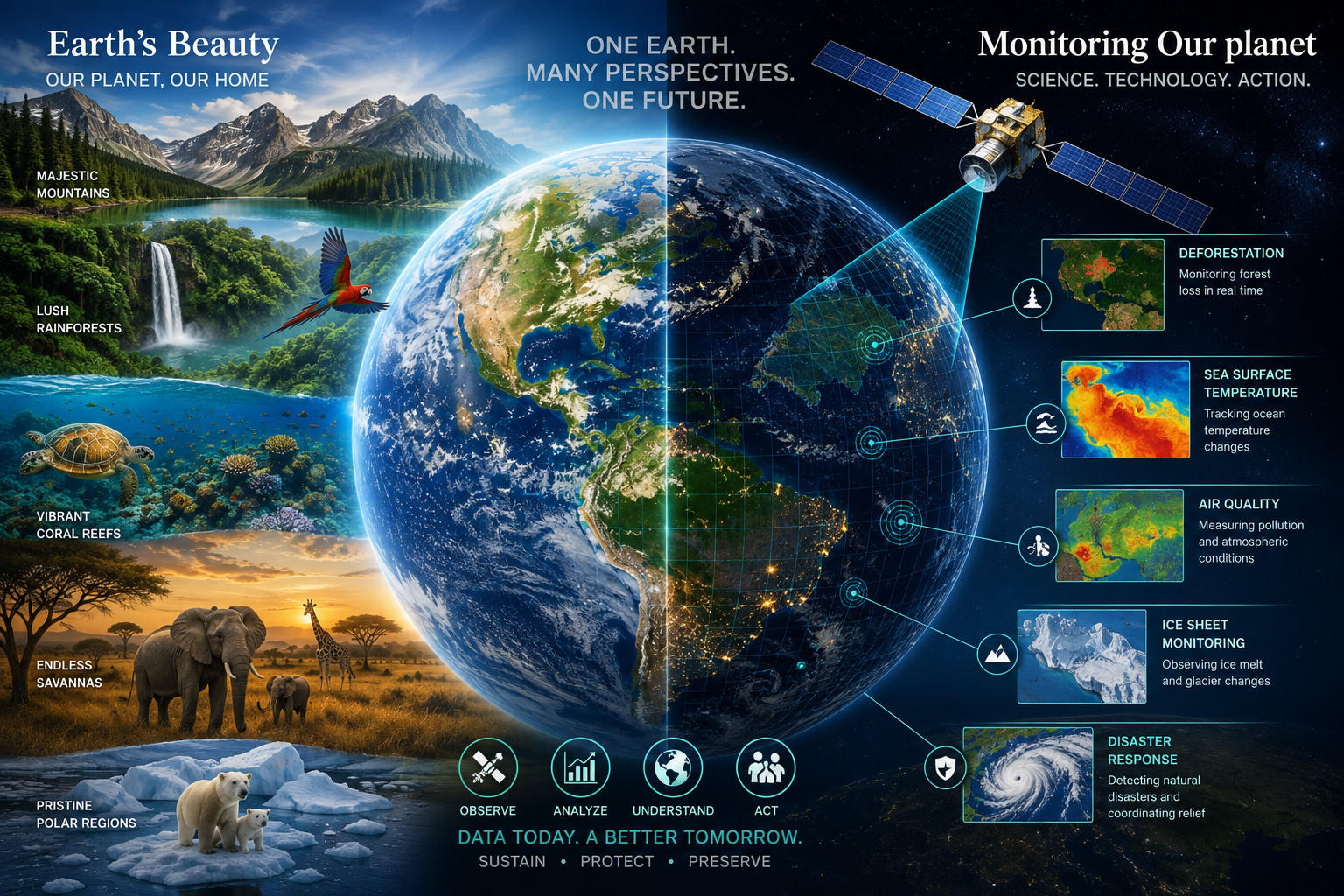
Although Earth has overcome immense natural disasters, many of today's challenges are unfolding much more rapidly.
Scientists closely monitor rising global temperatures, melting glaciers, changing rainfall patterns, stronger heatwaves, and the increasing pressure placed on ecosystems by human activity. Forests, coral reefs, wetlands, and countless species face growing environmental stress.
At the same time, advances in science and technology are improving our understanding of these changes. Earth-observing satellites provide continuous data about forests, oceans, polar ice, and atmospheric conditions, allowing researchers to track long-term trends with remarkable precision.
History has shown that Earth is resilient, but healthy ecosystems remain essential for the well-being of both wildlife and human societies. Protecting biodiversity, reducing pollution, and managing natural resources wisely are not simply environmental goals—they help preserve the stability of the planet that supports every known form of life.
Looking Billions of Years Ahead
Human history spans only a tiny fraction of Earth's existence, but the planet's story stretches far into the future.
In roughly 250 million years, the drifting continents may merge once again to form a new supercontinent, dramatically altering oceans, climates, and ecosystems.
Several billion years from now, an even greater transformation will begin. As the Sun ages, it will gradually become brighter and hotter. Increasing solar energy will eventually evaporate Earth's oceans and make the surface too hot for complex life to survive.
Farther into the future, the Sun will expand into a red giant, fundamentally changing the inner Solar System. Whether Earth is engulfed or survives as a scorched, lifeless world remains an area of scientific research, but its era as a habitable planet will eventually come to an end.
Yet compared with a human lifetime, these events lie almost unimaginably far away. For countless generations to come, Earth will remain humanity's only known home.
Why Earth Remains Extraordinary
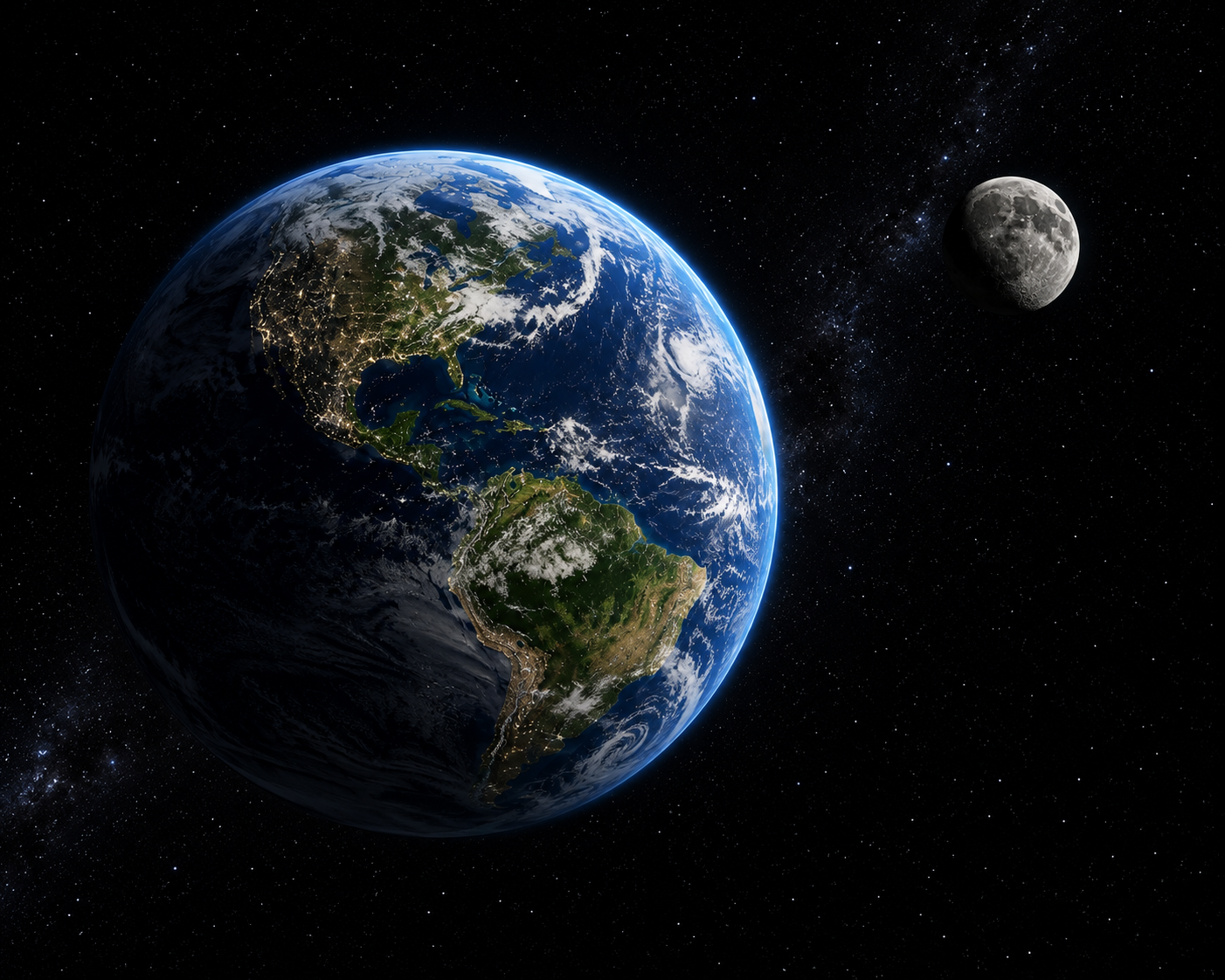
Astronomers have now discovered thousands of planets orbiting distant stars. Some are larger than Earth, some smaller, and a few may even exist within their own stars' habitable zones.
Despite these discoveries, no other world has been confirmed to possess oceans, a breathable atmosphere, active plate tectonics, a protective magnetic field, and a biosphere as rich and diverse as Earth's.
Every rainforest, every coral reef, every mountain range, and every living creature contributes to a planetary system unlike anything else currently known.
Perhaps one day humanity will discover another living world.
Until then, Earth remains the only confirmed planet in the universe where life has flourished on a global scale.
Conclusion: Our Home in the Cosmic Ocean
Among the countless stars scattered across the Milky Way and the billions of galaxies that fill the observable universe, Earth is, so far, unique.
It began as a molten sphere born from dust and violent collisions. Over billions of years, it cooled, formed oceans, built continents, generated a magnetic shield, and nurtured the evolution of life. Every forest, every ocean current, every breath of air, and every living species is the result of an extraordinary chain of events that has unfolded over nearly half the age of the Solar System.
When astronauts look back from orbit, they do not see nations or borders. They see a single blue world floating silently through the darkness—a planet whose thin atmosphere protects every person, every animal, and every ecosystem ever known.
Earth is more than our address in the universe. It is the only place where humanity has laughed, explored, created civilizations, and asked questions about the stars above.
As scientists continue searching for another Earth beyond our Solar System, one truth remains unchanged: the greatest wonder we have ever discovered is the world beneath our own feet.
FAQs Section
1. How old is Earth?
Earth is approximately 4.54 billion years old. Scientists determined its age by studying ancient rocks on Earth, Moon samples, and meteorites formed during the early Solar System.
2. Why is Earth the only known planet with life?
Earth has liquid water, a breathable atmosphere, a protective magnetic field, active plate tectonics, and a stable climate. Together, these conditions create an environment where life can survive and evolve.
3. How was the Moon formed?
The leading scientific theory suggests that a Mars-sized body called Theia collided with the young Earth about 4.5 billion years ago. Debris from the impact eventually combined to form the Moon.
4. What are Earth's main layers?
Earth consists of four primary layers:
- Crust
- Mantle
- Outer Core
- Inner Core
Each layer has unique properties that contribute to Earth's geological activity and magnetic field.
5. Why is Earth's magnetic field important?
Earth's magnetic field protects the planet from harmful charged particles carried by the solar wind. Without this protection, the atmosphere could gradually erode, making the planet far less suitable for life.
6. What percentage of Earth is covered by water?
Approximately 71% of Earth's surface is covered by water, while the remaining 29% consists of continents and islands.
7. Will Earth always support life?
No. Over billions of years, the Sun will become hotter, eventually making Earth too warm for liquid water and complex life. However, this process is expected to take billions of years.
8. Is Earth unique in the universe?
Earth is currently the only confirmed planet known to support life. Although thousands of exoplanets have been discovered, none have been confirmed to host life.
9.What is the Overview Effect?
It's a profound shift in perspective astronauts often describe after seeing Earth from space — a realization of the planet's fragility and the artificiality of human borders and divisions.
10.How fast does Earth travel through space?
Earth orbits the Sun at about 107,000 km/h, while the entire Solar System moves through the Milky Way at roughly 828,000 km/h.