The Planet That Captured Humanity's Imagination
(CHAPTER-1)
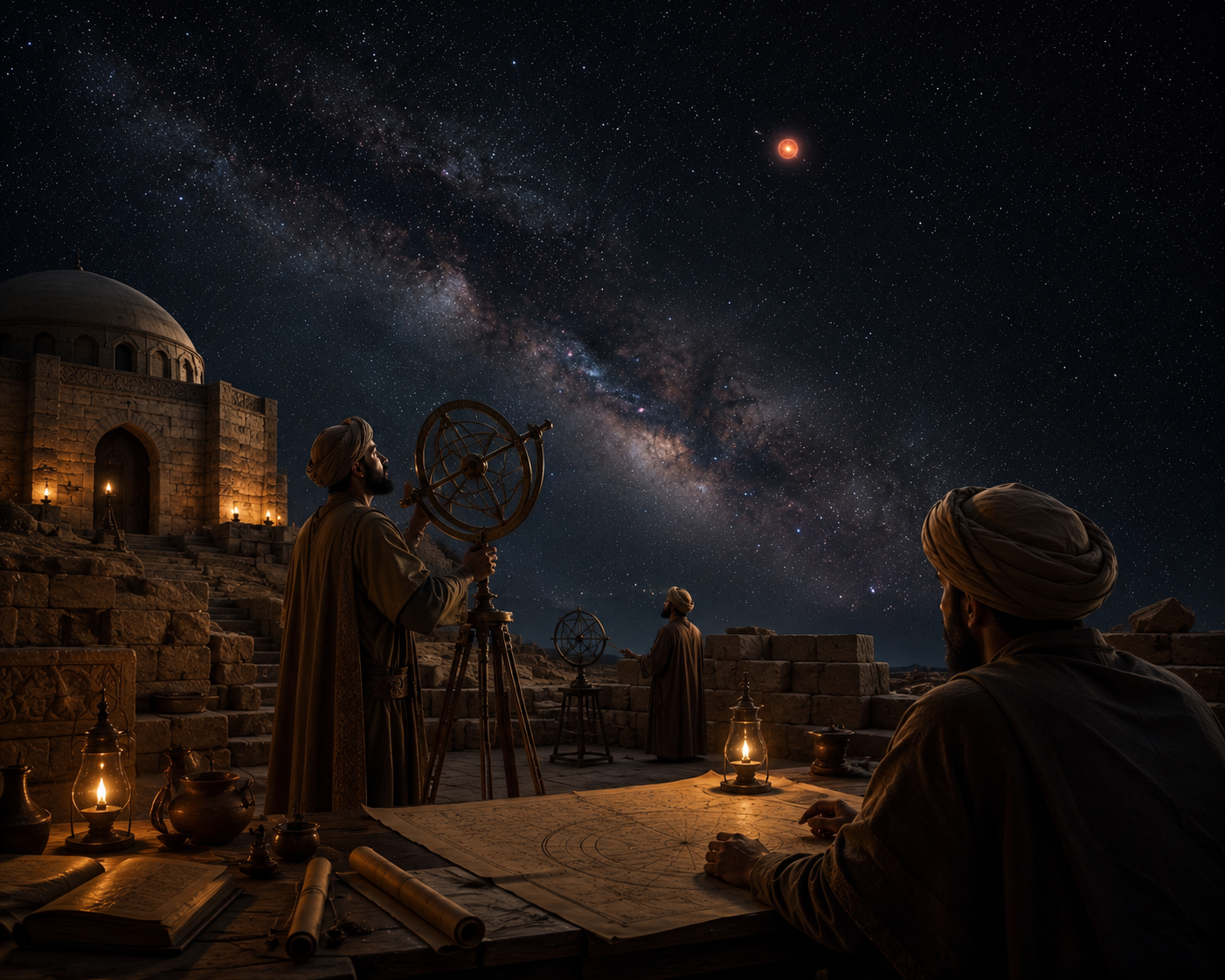
Long before rockets, satellites, or space agencies existed, there was a small red light wandering across the night sky.
Unlike the countless stars that remained fixed in their positions, this mysterious object slowly moved among the constellations. Ancient civilizations noticed its unusual motion thousands of years ago and gave it special meaning.
To the Romans, its blood-red color resembled war, so they named it Mars, after their god of battle.
The Greeks called it Ares for the same reason.
Ancient astronomers in China, India, Egypt, and Mesopotamia also carefully recorded its movements, believing it influenced kingdoms, seasons, and even the fate of civilizations.
For thousands of years, Mars remained nothing more than a distant point of light—a world that no one could ever reach.
Yet it never stopped capturing humanity's imagination.
⬇
From Myth to Science
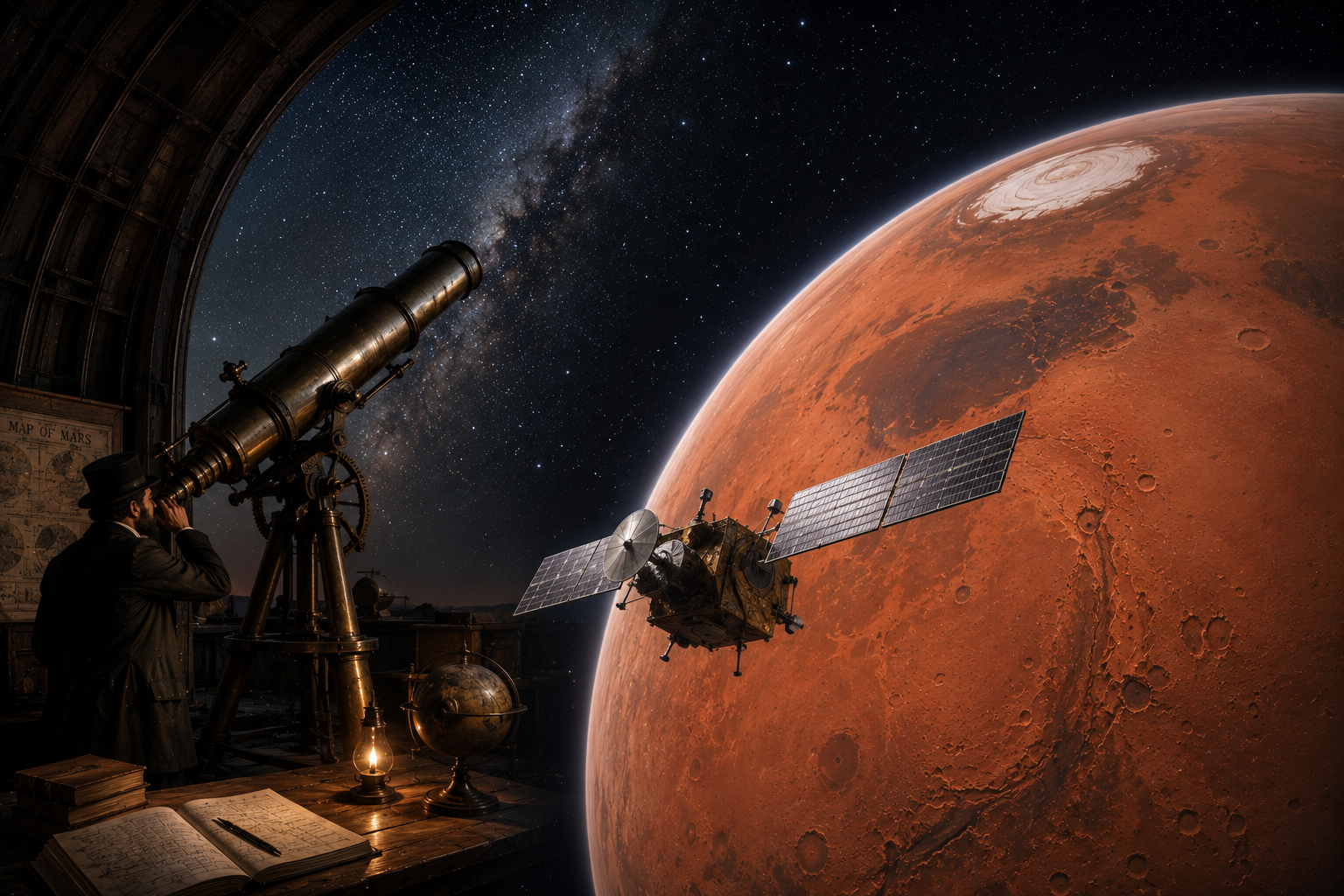
Everything changed when the telescope was invented.
For the first time, humanity could see Mars as more than a tiny red dot.
Scientists observed bright polar ice caps, changing seasons, and mysterious dark markings across its surface. In the late nineteenth century, some astronomers mistakenly believed they had discovered long, straight channels stretching across the planet.
These features became known as the Martian canals.
Although they were later proven to be optical illusions, the idea captured the world's imagination.
People began wondering:
Could an intelligent civilization really exist on Mars?
The question inspired novels, films, radio dramas, and generations of scientists.
Mars transformed from a distant world into a place people dreamed of visiting.
As technology improved, those dreams slowly became reality.
Robotic spacecraft flew past Mars.
Orbiters mapped its surface in astonishing detail.
Landers touched its dusty plains.
Rovers spent years exploring ancient riverbeds and rocky landscapes, searching for clues that water—and perhaps even life—once existed there.
With every mission, Mars became less mysterious.
But it also became more fascinating.
⬇
Why Mars?
The Solar System contains many extraordinary worlds.
Venus is hot enough to melt lead.
Jupiter has no solid surface.
Saturn's moon Titan hides lakes of liquid methane.
Europa may conceal a vast ocean beneath its icy crust.
So why do scientists keep returning to Mars?
Because among all the planets beyond Earth, Mars is the one that offers the greatest possibility for future human exploration.
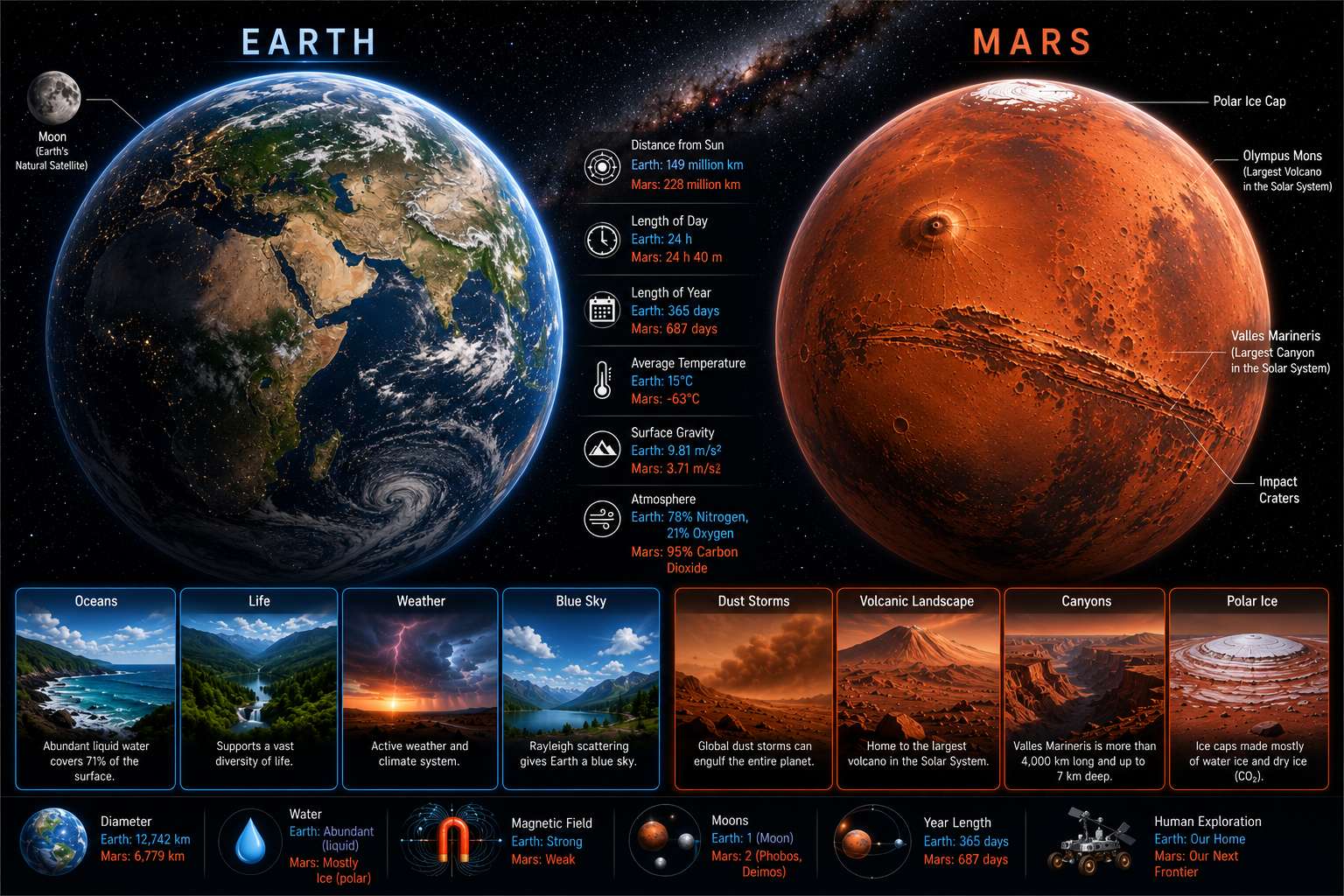
Its day lasts 24 hours and 37 minutes, remarkably similar to Earth's.
It has seasons, polar ice caps, weather, and enough sunlight to generate solar power.
Frozen water lies beneath its surface and inside its polar regions, offering a potential source of drinking water, oxygen, and even rocket fuel.
Mars is far from welcoming, but it is not completely alien.
In many ways, it is the closest thing our Solar System has to another Earth.
That is why every major space agency—and several private companies—see Mars not simply as another destination, but as humanity's next great frontier.
Yet dreaming about Mars is one thing.
Reaching it is another challenge entirely.
The journey will test both our technology and our determination.
And before anyone can build a home on Mars...
They first have to survive the voyage across millions of kilometers of empty space.
A Journey Across Millions of Kilometers (CHAPTER-2)
⬇
Leaving Earth Behind
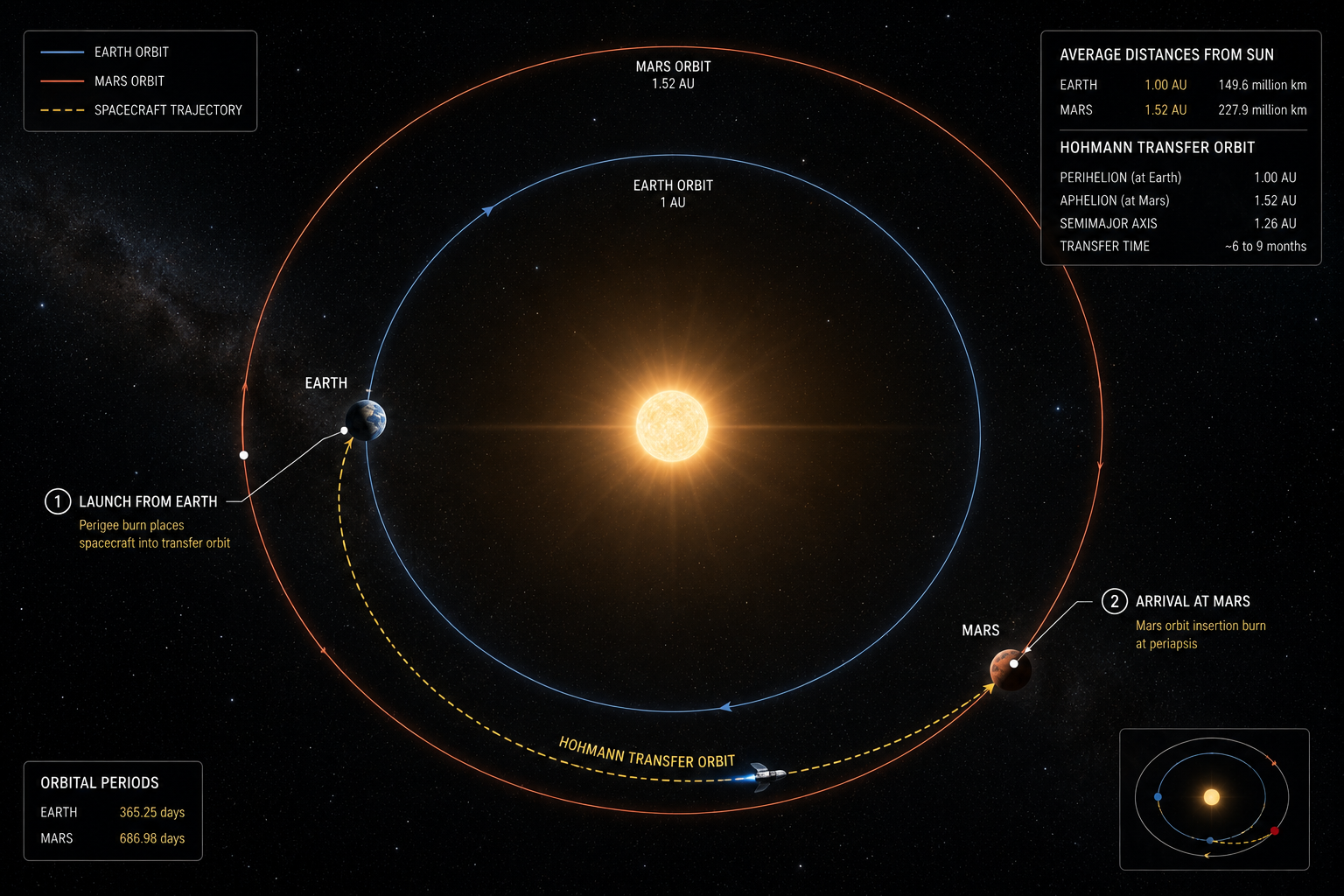
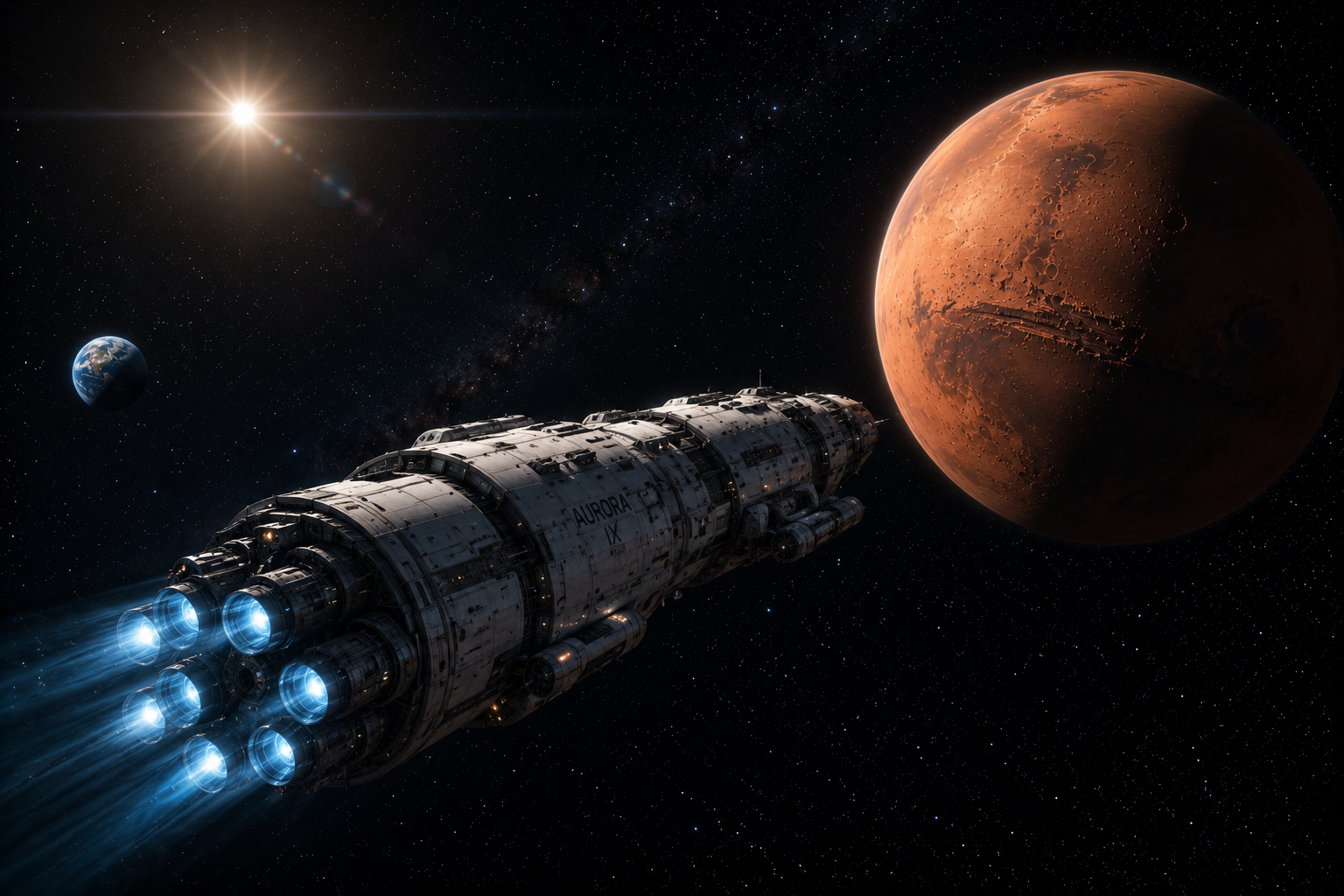
Standing on Earth, Mars often seems surprisingly close.
On a clear night, the Red Planet shines as a bright orange star among thousands of others, making it feel almost within reach.
But appearances can be deceiving.
Depending on where Earth and Mars are in their orbits around the Sun, the distance between them constantly changes. At their closest, they are about 54.6 million kilometers (33.9 million miles) apart. At their farthest, that distance stretches beyond 400 million kilometers (250 million miles).
There is no straight highway through space.
Both planets are moving at incredible speeds around the Sun, forcing spacecraft to follow carefully calculated paths rather than simply flying directly toward Mars.
For mission planners, every launch is like aiming at a moving target across the Solar System.
The timing has to be almost perfect.
Miss the launch window, and the opportunity disappears for more than two years.
⬇
The Long Voyage Through Deep Space
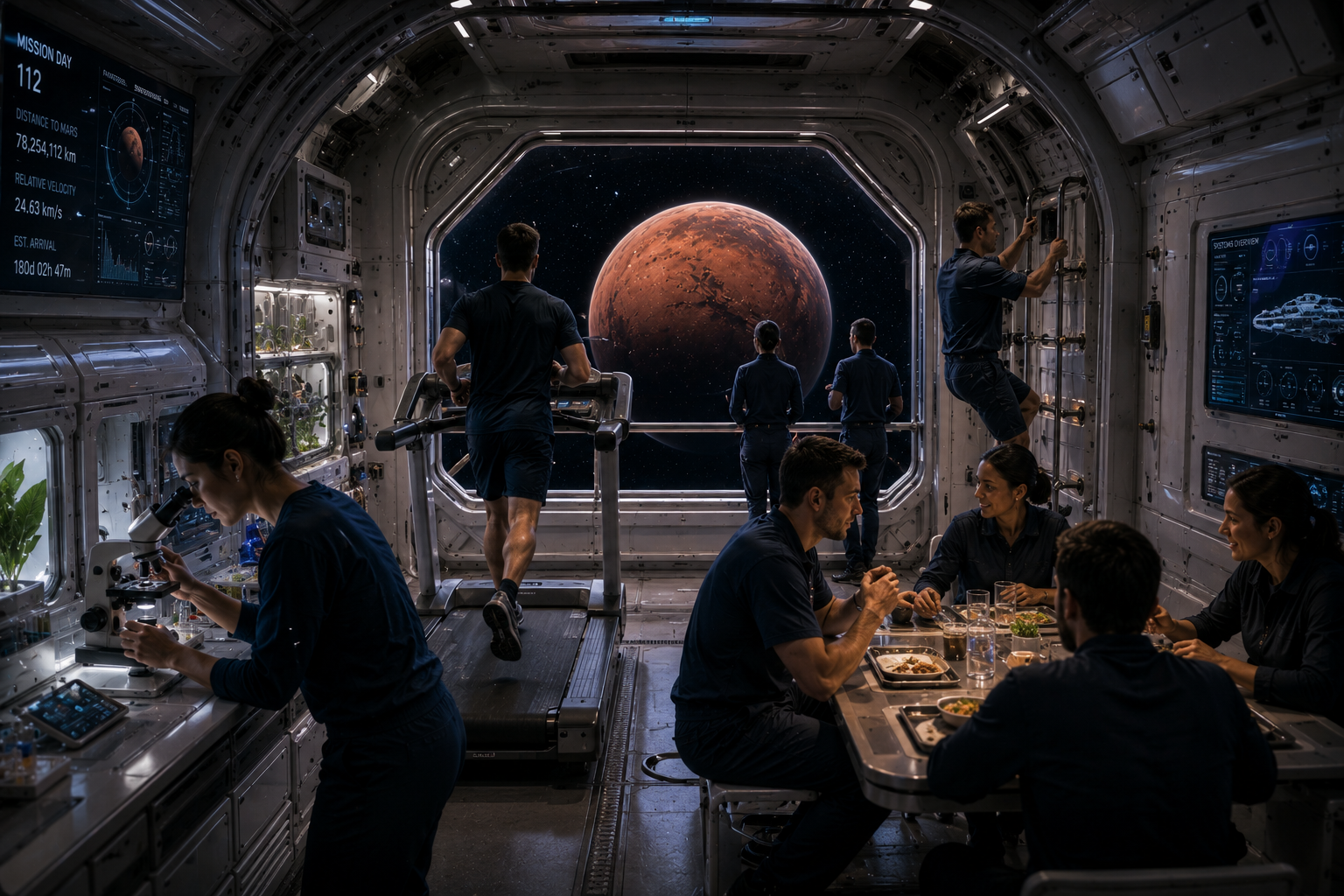
Even with today's most advanced technology, reaching Mars is not a quick journey.
Most missions take six to nine months, depending on the chosen flight path and the positions of the planets.
For astronauts, this means spending more than half a year inside a spacecraft no larger than a small apartment.
Outside the windows lies nothing but endless darkness.
There are no rescue stations.
No emergency hospitals.
No chance of turning back halfway through the mission.
Every system on board must continue working flawlessly for months, because millions of kilometers from Earth, even a small mechanical failure could become life-threatening.
The crew would also need to exercise every day to reduce the effects of low gravity, carefully manage food and water supplies, and maintain both their physical and mental health during one of the longest journeys ever attempted by humans.
Mars is not just far away.
It is profoundly isolated.
⬇
A Constant Threat Beyond Earth's Protection
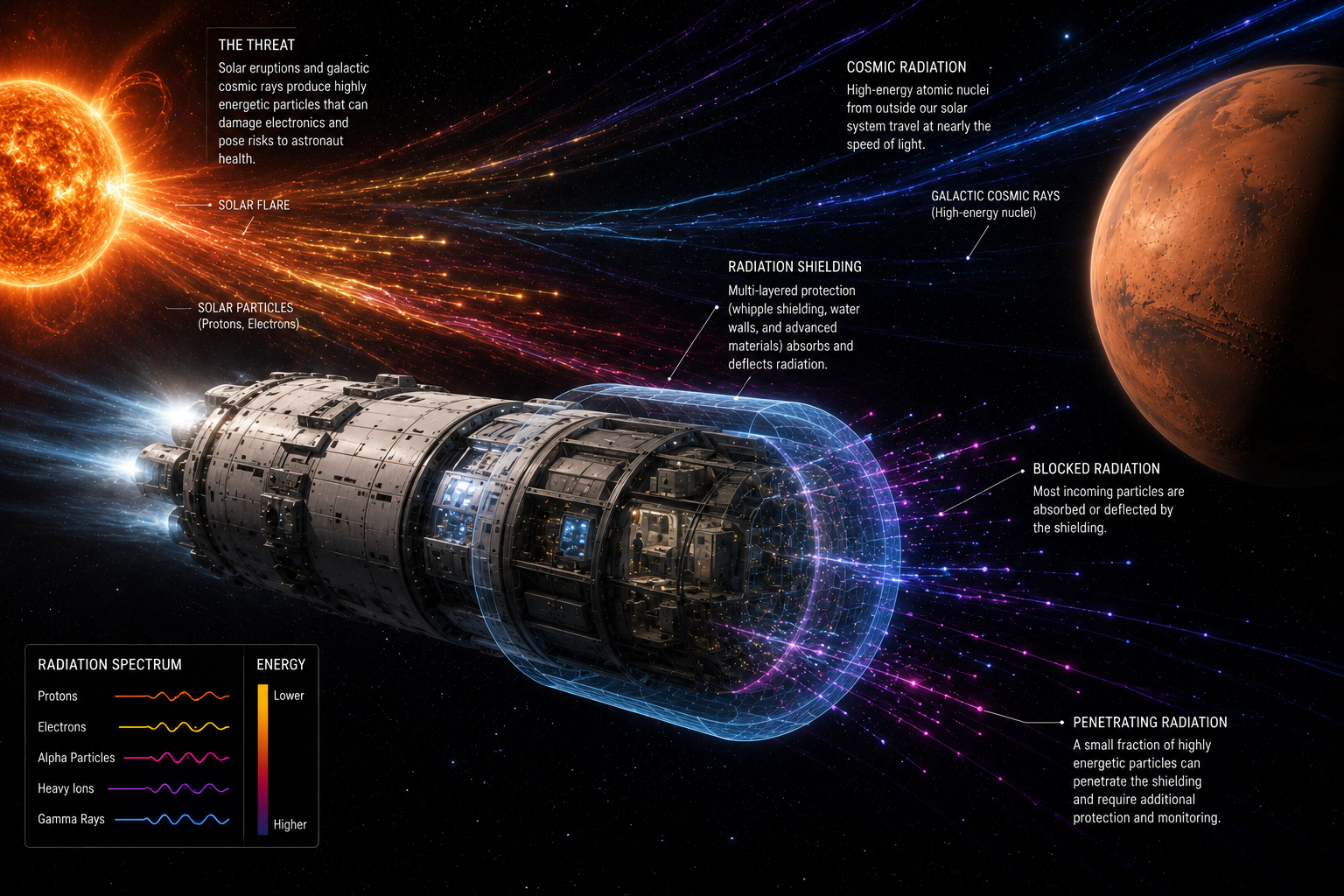
Earth quietly protects us every day.
Its thick atmosphere burns up countless meteoroids before they reach the surface, while its powerful magnetic field shields us from much of the harmful radiation streaming from the Sun and deep space.
Once astronauts leave Earth, much of that protection disappears.
Beyond our planet's magnetic shield, crews are exposed to cosmic rays and powerful bursts of solar radiation that can damage human cells and increase the risk of cancer and other health problems.
Scientists are developing better spacecraft shielding and advanced warning systems for solar storms, but radiation remains one of the greatest obstacles to sending humans safely to Mars.
Unlike a trip to the Moon, astronauts on a Mars mission would spend months continuously exposed to the harsh environment of deep space.
It is a challenge no human has faced before.
⬇
One Chance to Get It Right
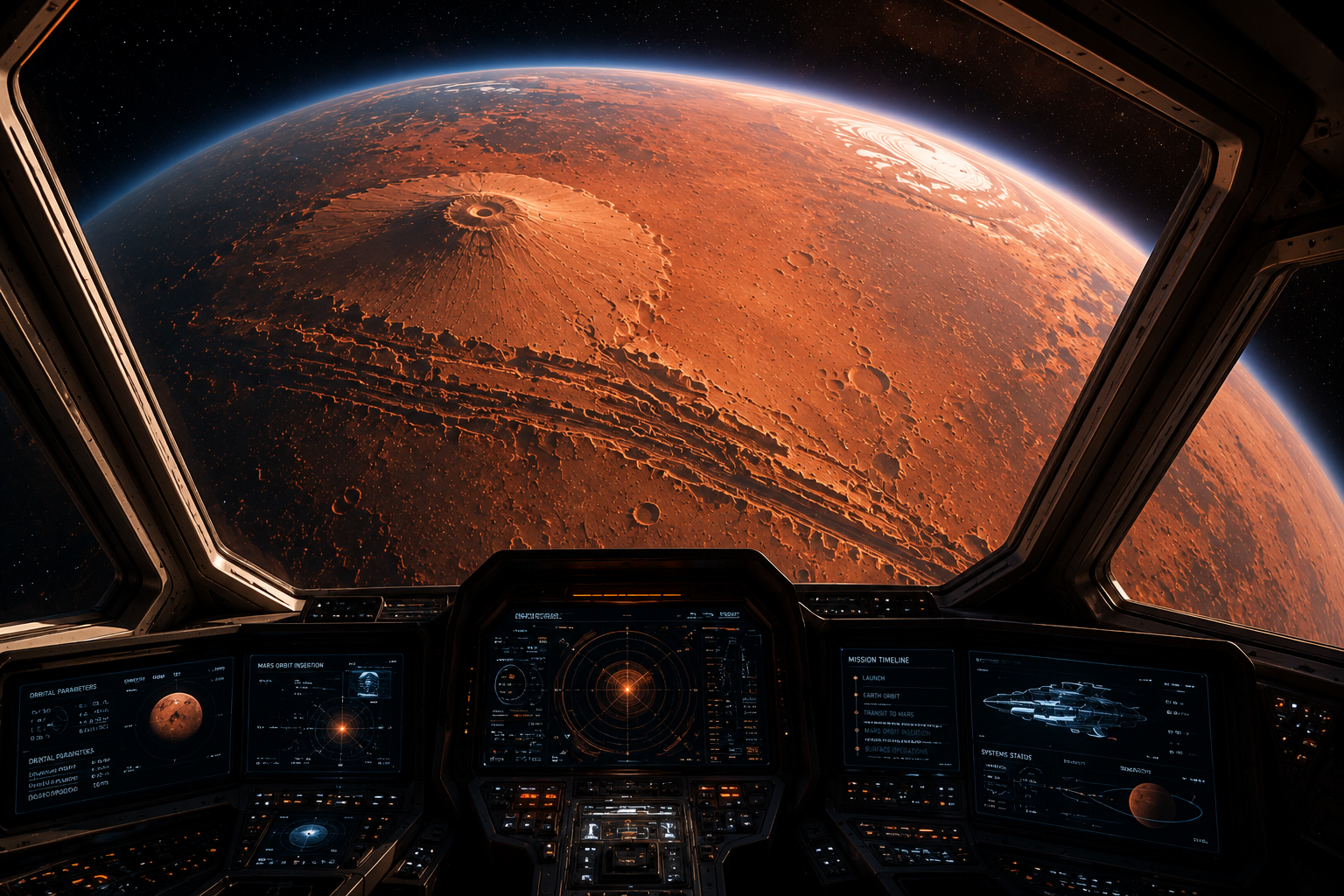
A mission to Mars is unlike any journey humanity has ever undertaken.
Communication with Earth can take anywhere from 5 to 20 minutes one way, depending on the distance between the planets. In an emergency, astronauts cannot simply call mission control and expect an immediate answer.
They must rely on their own training, teamwork, and decisions.
Every repair, every medical emergency, and every unexpected challenge must be handled millions of kilometers from home.
For the first explorers, Mars will not feel like a neighboring planet.
It will feel like another world entirely.
And after months of traveling through the silent emptiness of space, a small red planet will finally appear outside the spacecraft's windows.
The journey will be over.
But the greatest challenge will only just be beginning.
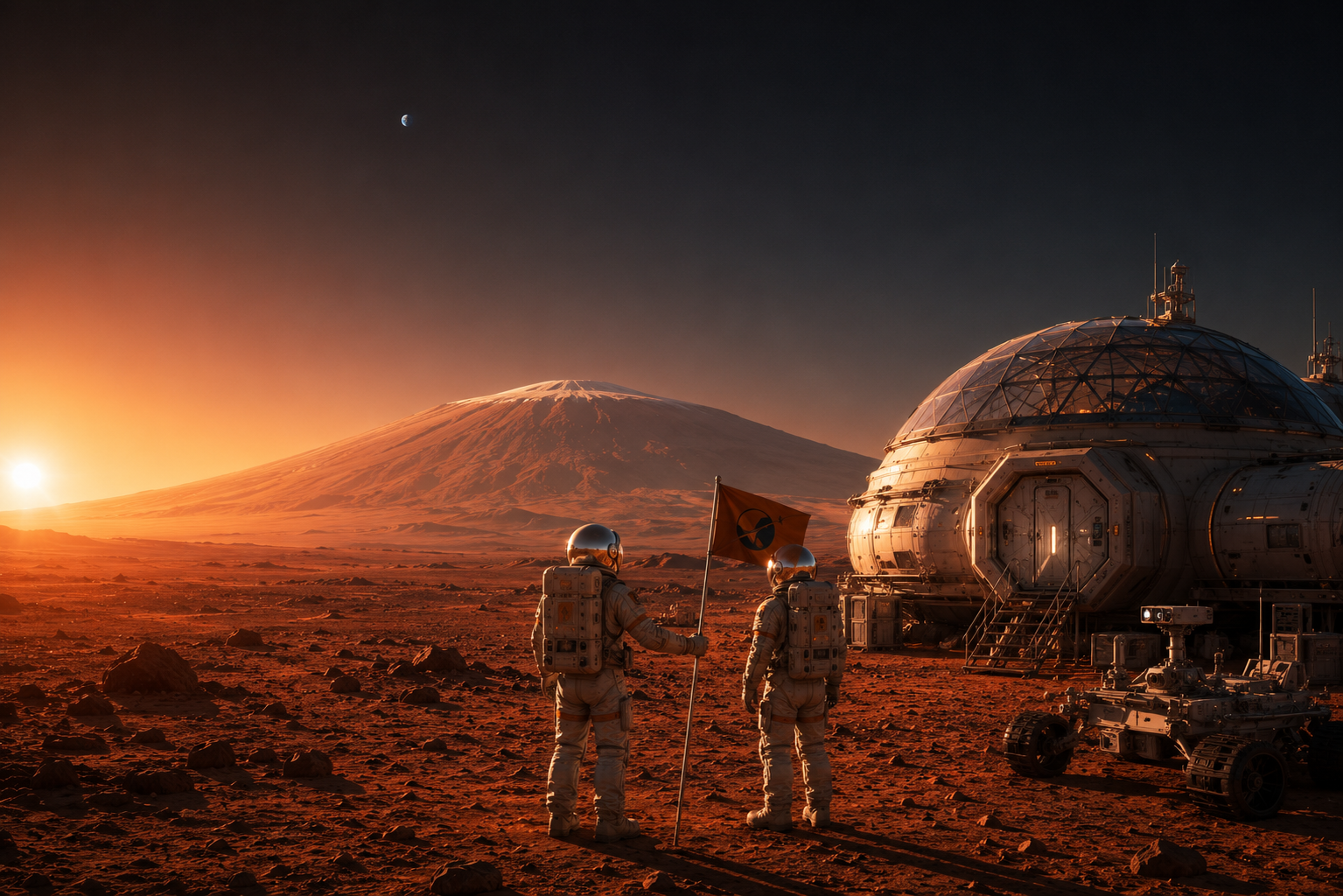
🏜️ Chapter 3 — Life on the Red Planet
⬇
The First Step Into Another World
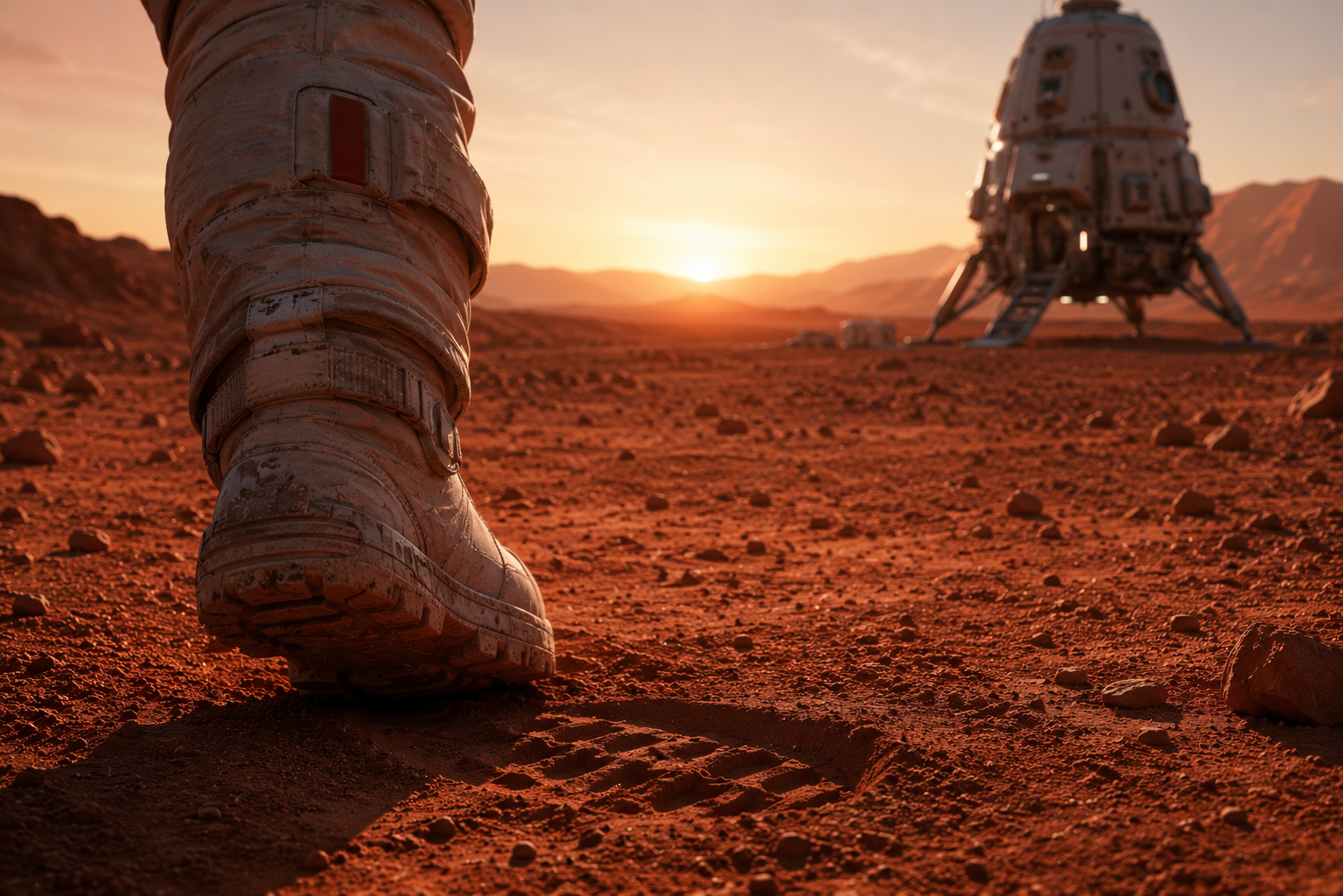
After months of traveling through deep space, the spacecraft finally descends through the thin Martian atmosphere.
Outside the window, the landscape looks both beautiful and unforgiving.
Endless plains of rust-colored dust stretch in every direction. Towering volcanoes rise higher than any mountain on Earth, while ancient canyons carve across the planet's surface like scars from a distant past.
The landing engines roar one final time.
Then...
Silence.
The hatch slowly opens.
An astronaut carefully places the first boot onto Martian soil.
It is a historic moment—not because humanity has conquered another world, but because for the first time, our species has taken a step toward living beyond Earth.
Yet Mars offers no welcome.
Every breath, every drop of water, and every degree of warmth must be brought or created by human technology.
Surviving here will demand far more than courage.
A Planet That Doesn't Want Us There
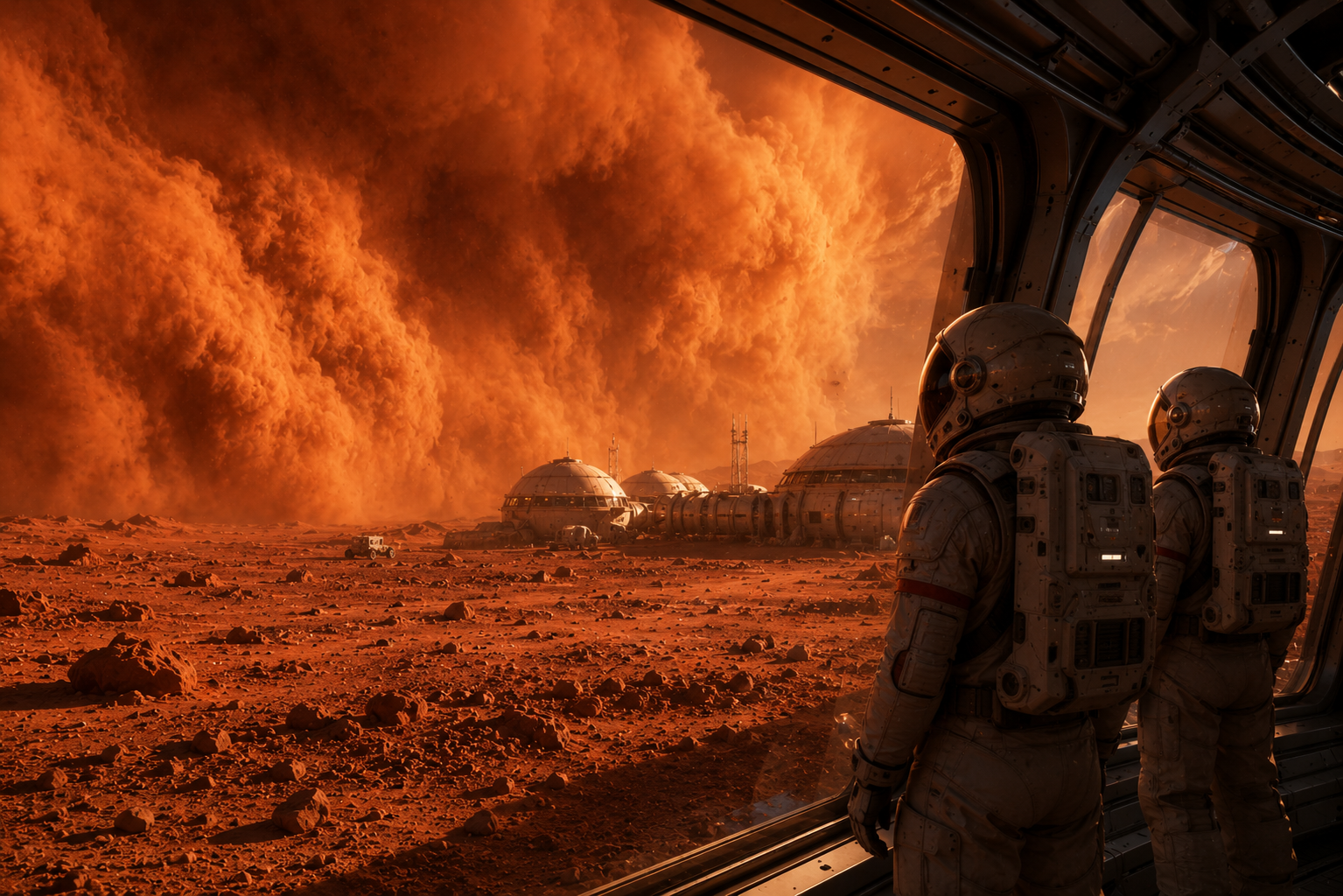
Although Mars is the most Earth-like planet in our Solar System, it remains an incredibly hostile place for human life.
Its atmosphere is more than 95% carbon dioxide, with almost no oxygen to breathe.
The atmospheric pressure is so low that liquid water cannot remain stable on the surface for long.
Without a pressurized spacesuit, a human would lose consciousness within seconds.
Temperatures regularly fall below –60°C, and winter nights near the poles can become even colder.
Adding to these dangers are powerful dust storms that can cover enormous regions of the planet. Some storms grow so large that they engulf nearly all of Mars, lasting for weeks or even months.
Unlike hurricanes on Earth, Martian dust storms are not known for extremely strong winds. Their greatest danger is the fine dust that settles into machinery, reduces sunlight reaching solar panels, and slowly wears down equipment.
Mars is beautiful.
But it is completely unforgiving.
Building a Home on an Alien World
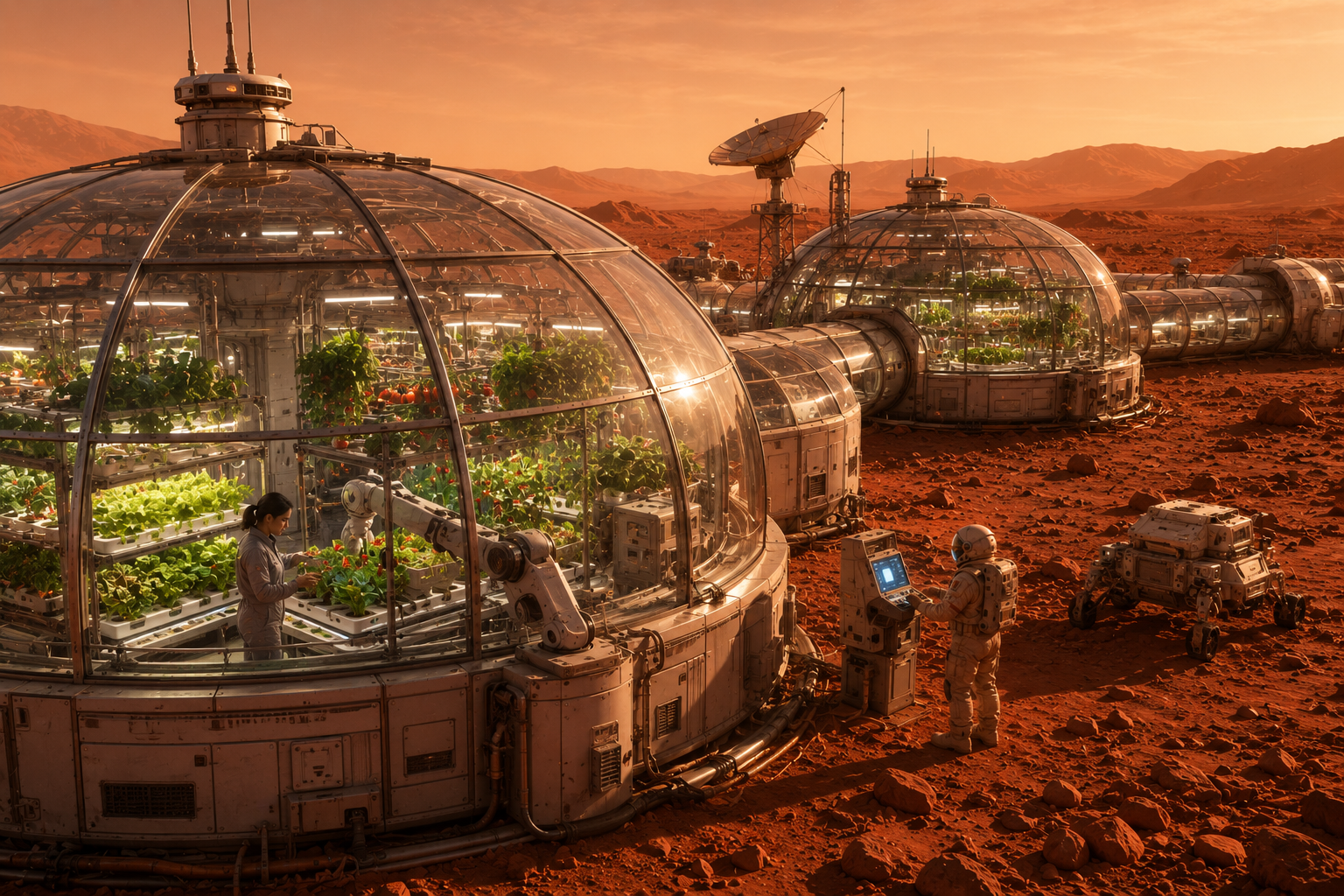
Living on Mars would mean creating a small piece of Earth in one of the harshest environments imaginable.
The first habitats would likely be airtight modules designed to maintain breathable air, comfortable temperatures, and protection from radiation.
Instead of ordinary houses, astronauts might live beneath thick layers of Martian soil or inside specially designed domes, using the planet itself as natural shielding against harmful cosmic radiation.
Water would become one of the colony's most valuable resources.
Fortunately, orbiters and rovers have confirmed that large amounts of water ice exist beneath the Martian surface and inside its polar ice caps.
Future explorers could melt this ice to produce drinking water, grow crops, generate oxygen, and even manufacture rocket fuel for future missions.
Every drop would matter.
Nothing could be wasted.
A New Way of Living
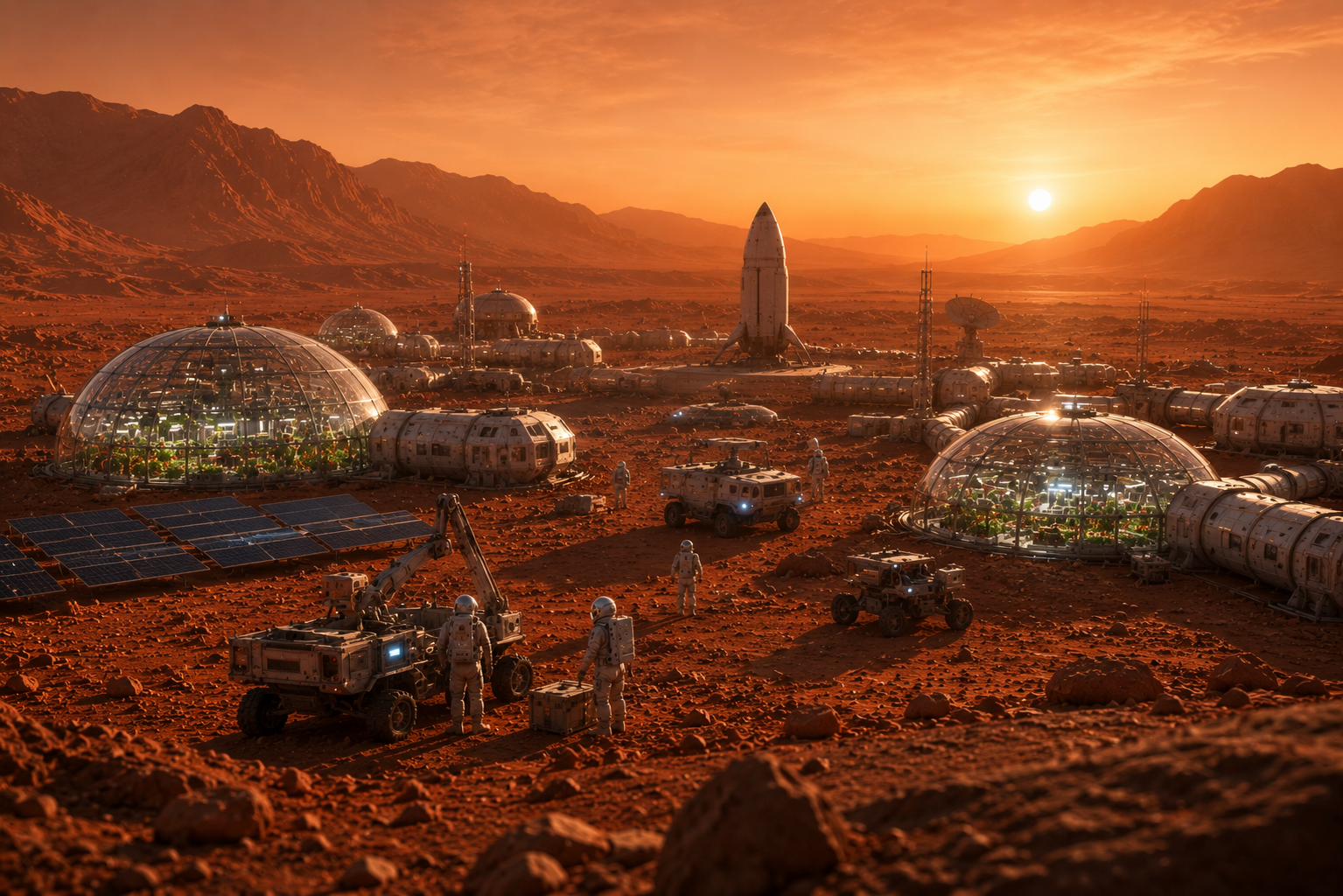
Life on Mars would be unlike anything humans have ever experienced.
A Martian day, known as a sol, lasts 24 hours and 39 minutes, making it surprisingly similar to an Earth day. That small difference would help astronauts maintain familiar daily routines.
But everything else would feel different.
Gravity on Mars is only about 38% of Earth's, meaning a person weighing 70 kilograms on Earth would feel as though they weighed only about 27 kilograms.
Walking, lifting equipment, and even simple movements would require time to adapt.
Stepping outside would always require a spacesuit.
Growing food would happen inside carefully controlled greenhouses.
Every breath of oxygen, every liter of water, and every watt of electricity would depend on technology working exactly as planned.
Mars would never become an easy place to live.
But with enough preparation, it could become a place where humans survive—and perhaps one day thrive.
The first settlers would not simply be explorers.
They would become pioneers of a new chapter in human history.
Chapter 4 — Building Humanity's Second Home
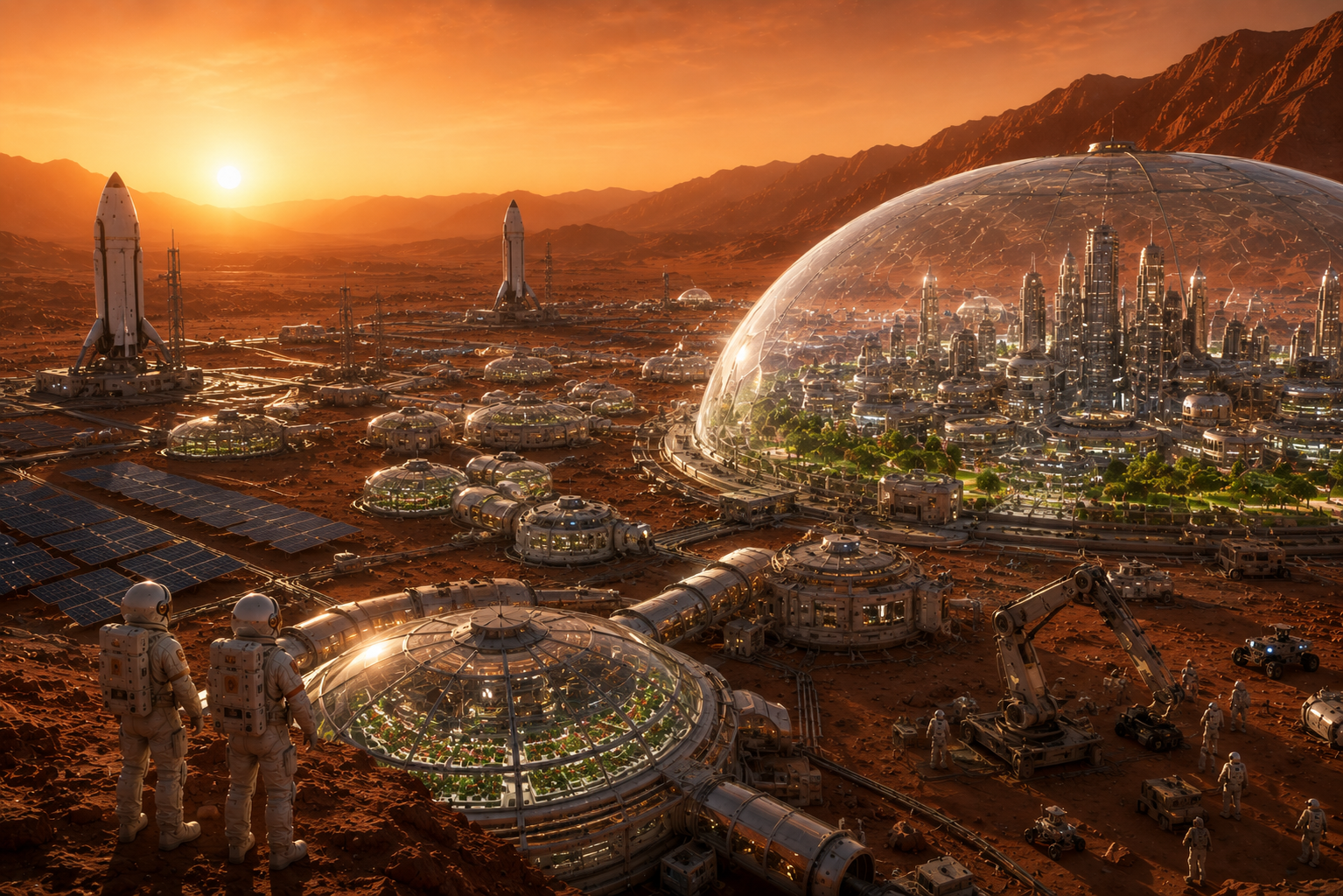
From Survival to Civilization
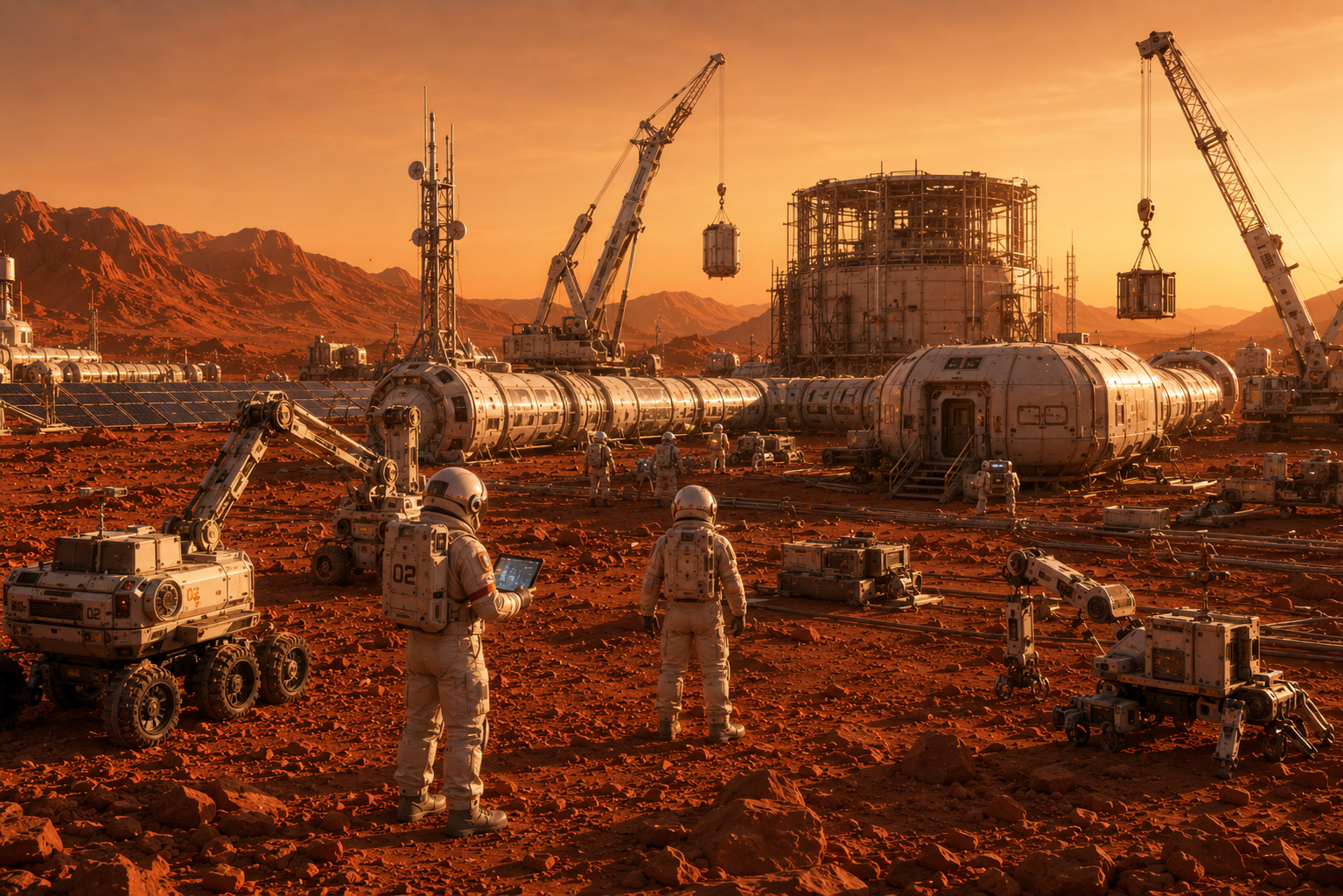
Landing on Mars would be an extraordinary achievement.
Surviving the first few months would be even greater.
But creating a permanent home?
That is an entirely different challenge.
A true colony is more than a collection of habitats.
It needs reliable food, clean water, energy, hospitals, schools, communication systems, transportation, and people capable of repairing everything when something goes wrong.
The first settlers would not simply be astronauts.
They would become builders, engineers, doctors, farmers, scientists, teachers, and mechanics—all working together to create the first human civilization beyond Earth.
Mars would not become home overnight.
It would be built one habitat, one greenhouse, and one generation at a time.
Powering an Entire Planetary Outpost
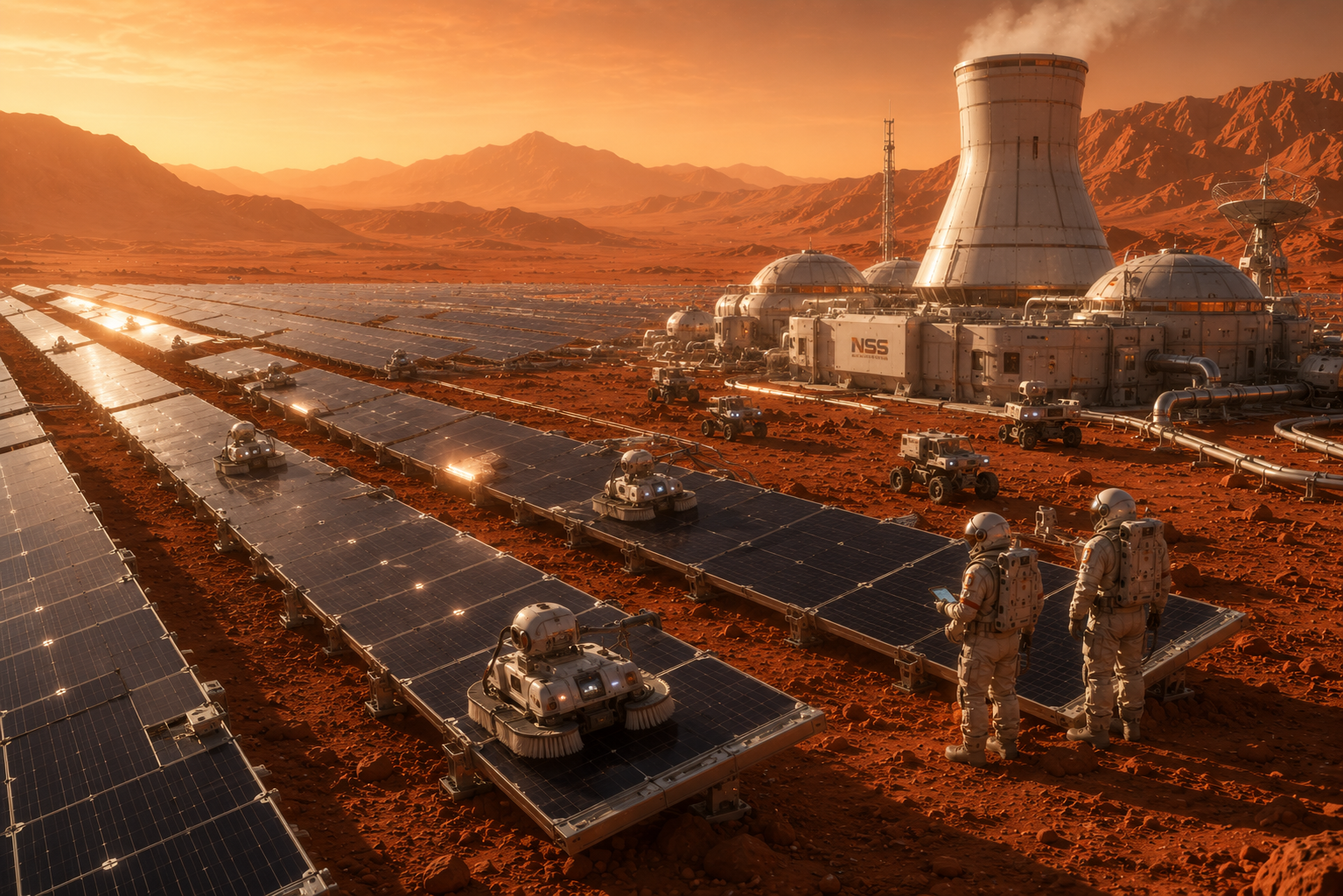
Every city needs electricity.
On Earth, energy flows almost unnoticed.
On Mars, it could determine whether people live or die.
Large fields of solar panels would likely provide most of the colony's electricity during normal conditions.
However, Mars presents a serious problem.
Dust.
Fine Martian dust slowly settles on solar panels, reducing their efficiency. During planet-wide dust storms, sunlight can become so weak that solar energy alone may not be enough.
For this reason, many scientists believe future Mars colonies will also rely on small nuclear reactors capable of producing continuous electricity regardless of weather.
With dependable power, settlers could generate oxygen, recycle water, grow food, heat habitats, and operate scientific equipment throughout the harsh Martian winters.
On Mars, electricity would be far more than a convenience.
It would be life itself.
Can We Build with Martian Soil?
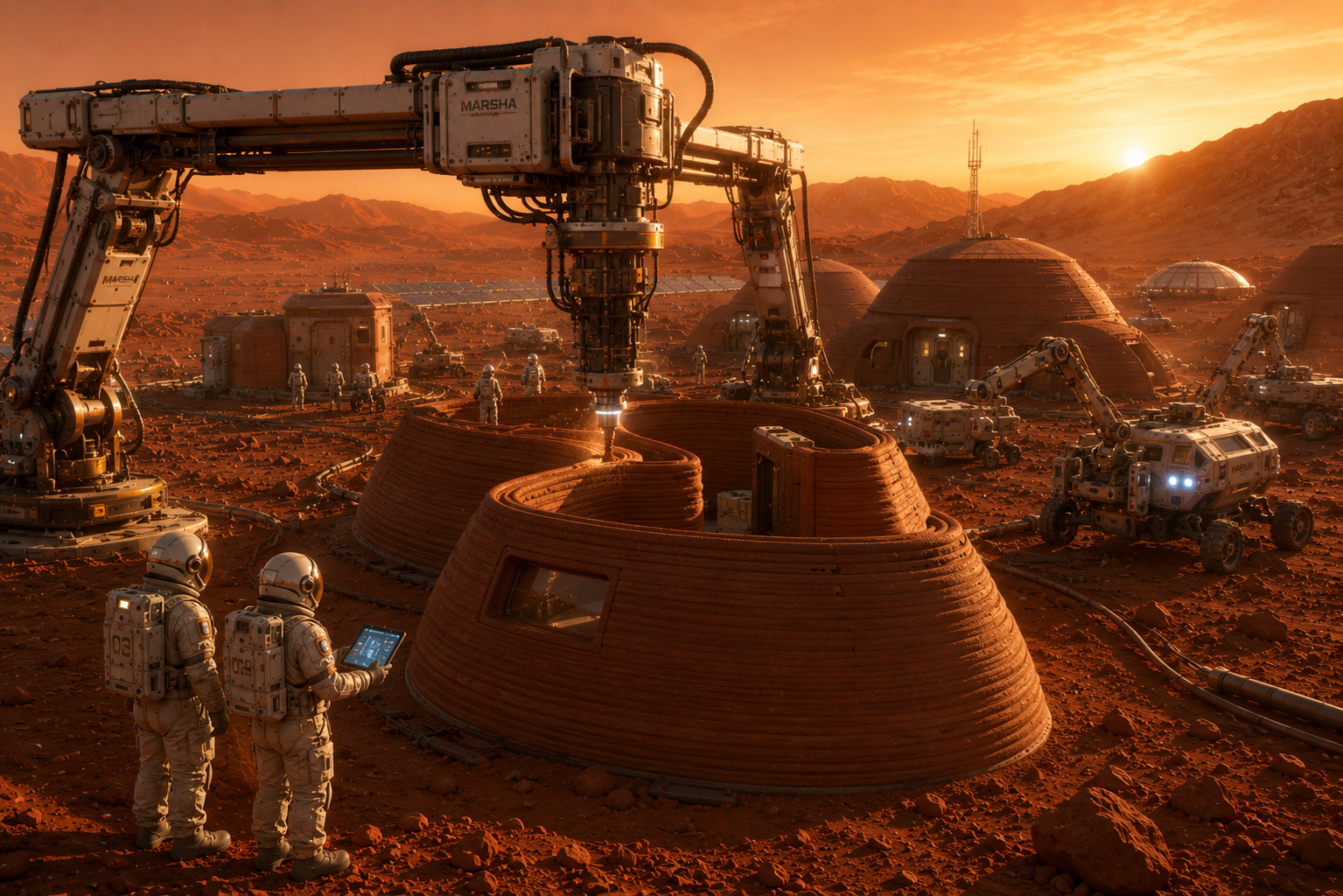
Transporting every brick, beam, and building material from Earth would be enormously expensive.
Instead, future settlers may build using the resources already available on Mars.
Scientists are studying ways to transform Martian soil, known as regolith, into strong construction materials.
Advanced 3D printers could use this local material to create homes, laboratories, storage facilities, and protective walls without relying on constant shipments from Earth.
Some concepts even propose burying habitats beneath layers of Martian soil to protect residents from harmful radiation and tiny meteorites.
The less humanity depends on Earth, the more successful a Mars colony will become.
Could We Ever Transform Mars?
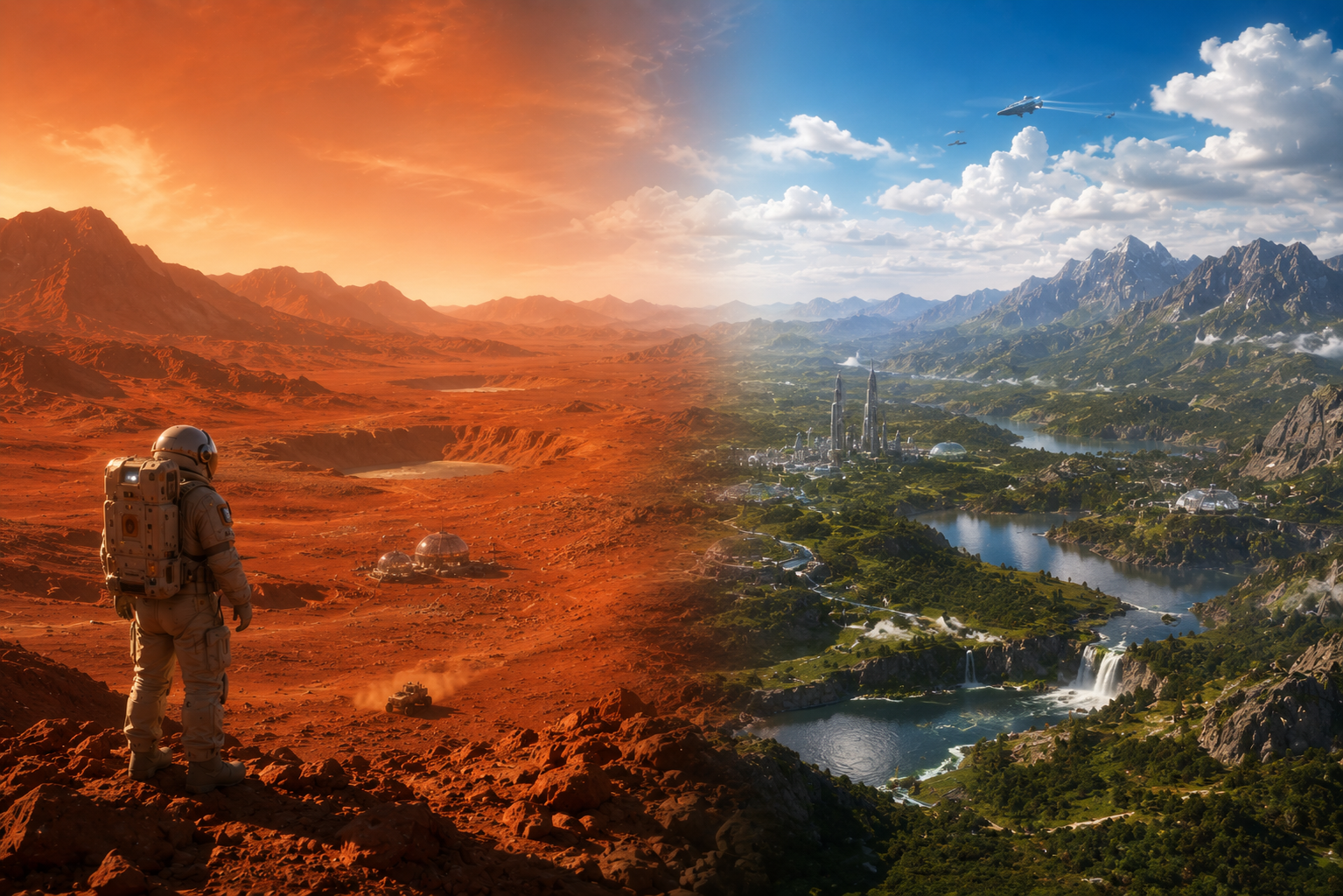
Some scientists imagine a future where Mars becomes warmer, wetter, and more Earth-like.
This ambitious idea is known as terraforming.
In theory, increasing the planet's temperature could release frozen carbon dioxide trapped beneath the surface, thickening the atmosphere and creating conditions more suitable for liquid water.
It sounds like science fiction.
But today's research suggests that transforming an entire planet would require technology far beyond our current capabilities—and perhaps resources that Mars simply does not possess.
For now, terraforming remains an idea for the distant future rather than an achievable engineering project.
The first generations of Martian settlers would almost certainly continue living inside protected habitats.
Mars may become our second home.
But it is unlikely to become a second Earth anytime soon.
A Future Worth Reaching
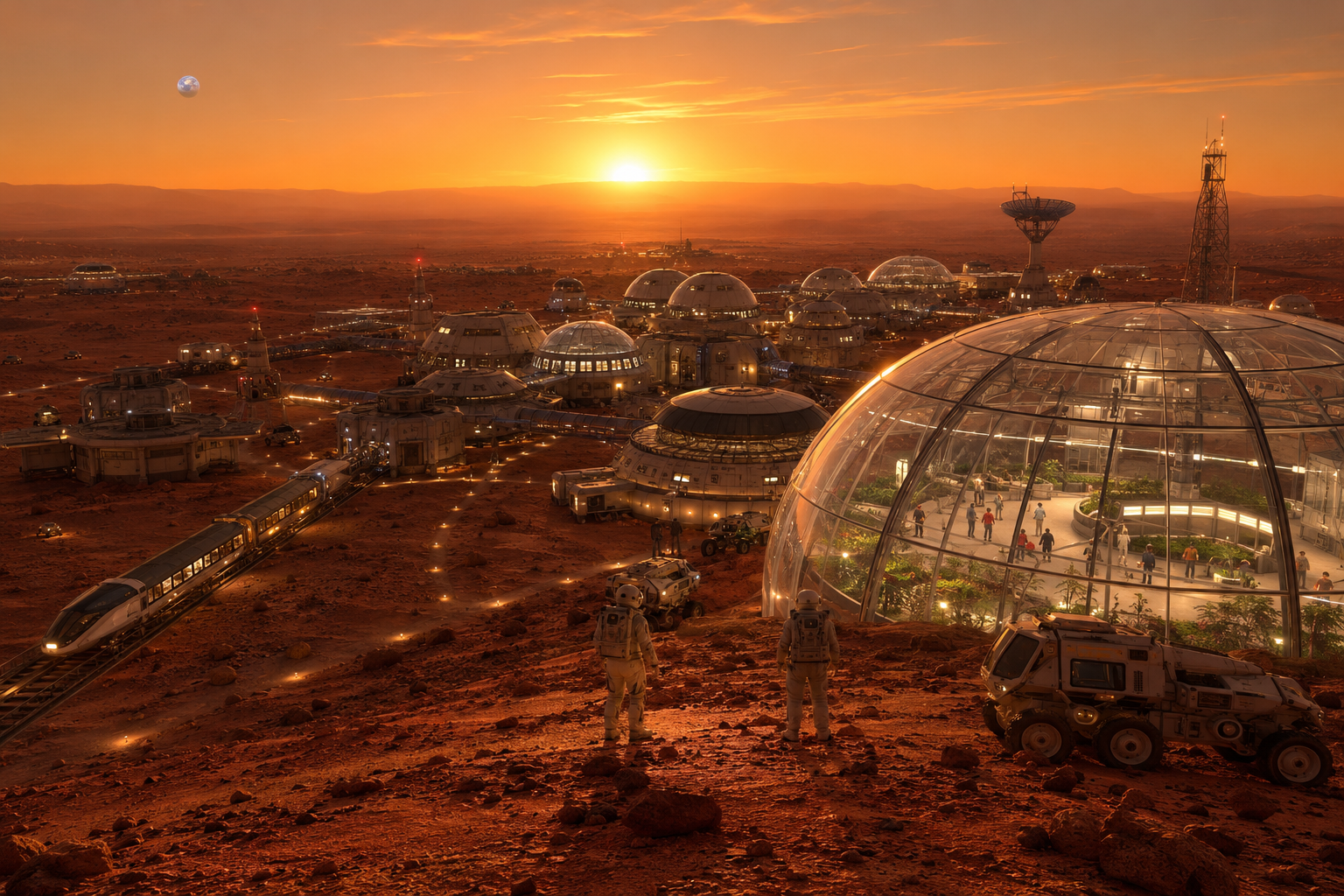
Building a civilization on Mars would demand decades of innovation, enormous investment, and the cooperation of nations around the world.
It would also require something even more important.
Patience.
The first colony would not resemble the thriving cities imagined in science fiction.
It would begin as a handful of habitats standing alone in an endless red desert.
Yet every great city in human history started with a single settlement.
If humanity succeeds on Mars, future generations may one day look back at those first small habitats as the birthplace of an entirely new chapter in our story.
The greatest construction project in history will not be building a city.
It will be building a future.
🌠 Chapter 5 — A New Chapter for Humanity
More Than Just Another Planet
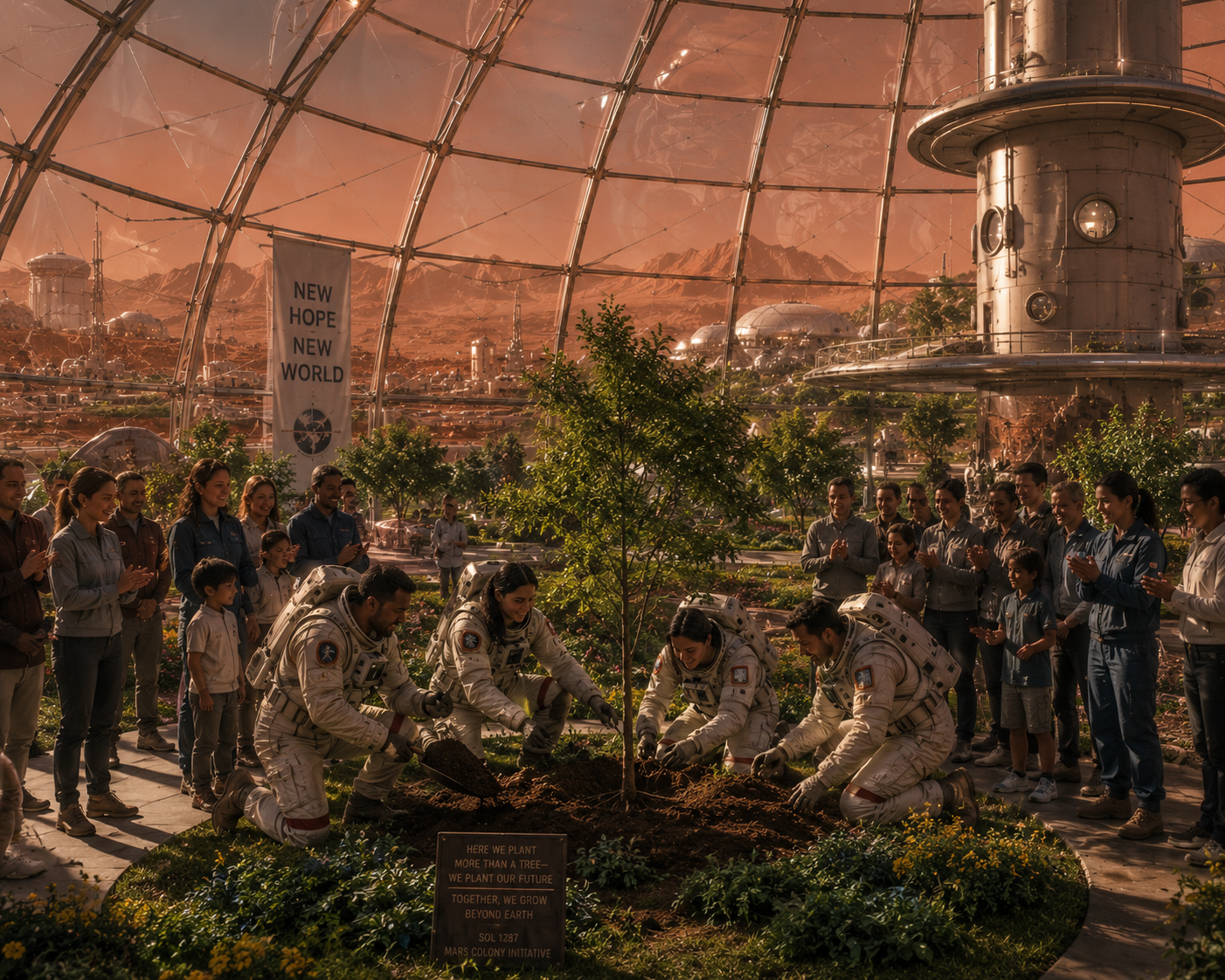
For thousands of years, humanity has expanded its horizons.
We crossed deserts, sailed across oceans, climbed the world's highest mountains, and eventually stepped onto the Moon.
Each journey changed the course of history.
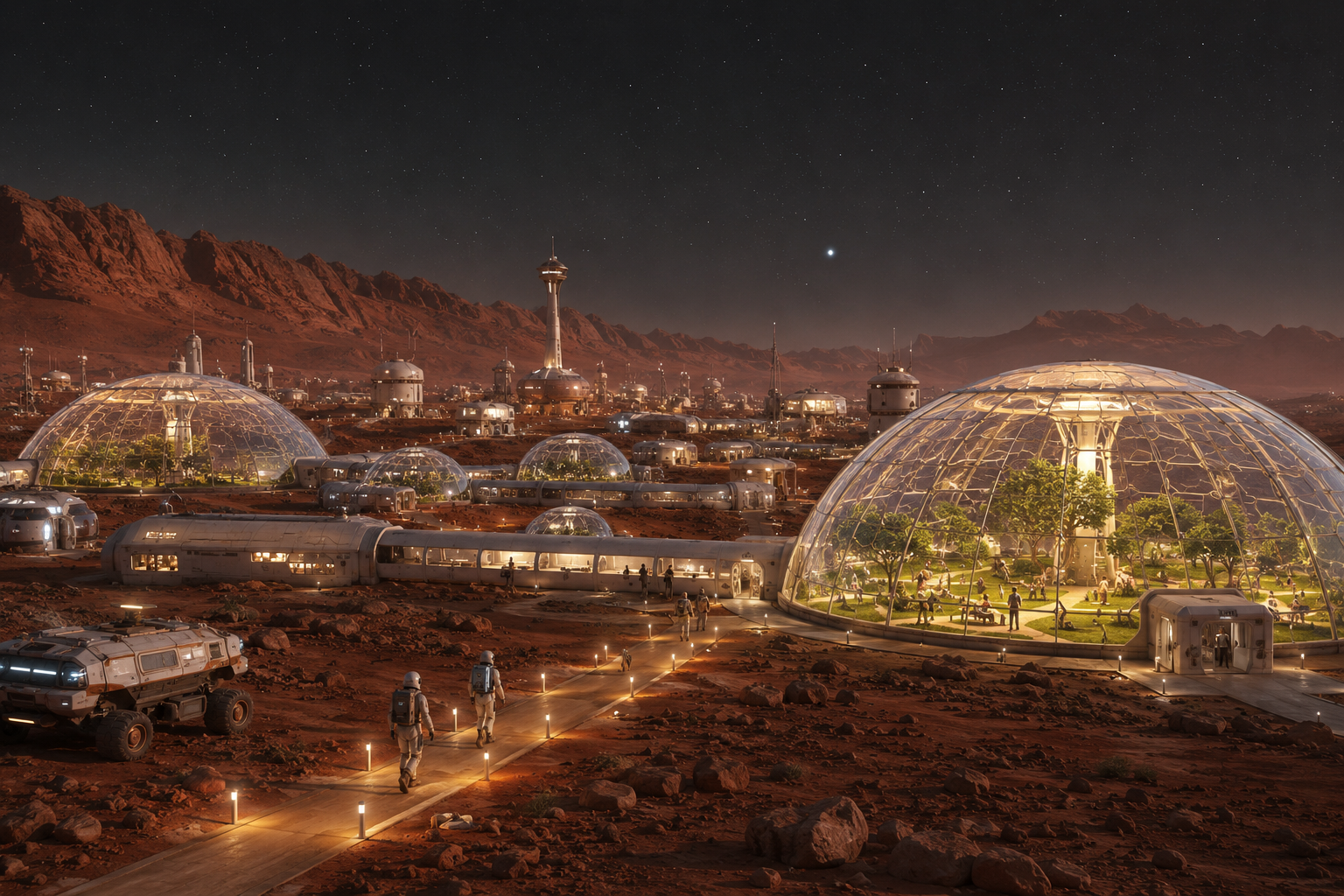
A permanent settlement on Mars would represent another leap—not just across space, but in the story of our species.
For the first time, humans would no longer be confined to a single planet.
Our future would exist in two worlds.
But reaching Mars is only the beginning.
The greater challenge is creating a society that can survive, grow, and one day thrive millions of kilometers away from Earth.
A World for Future Generations
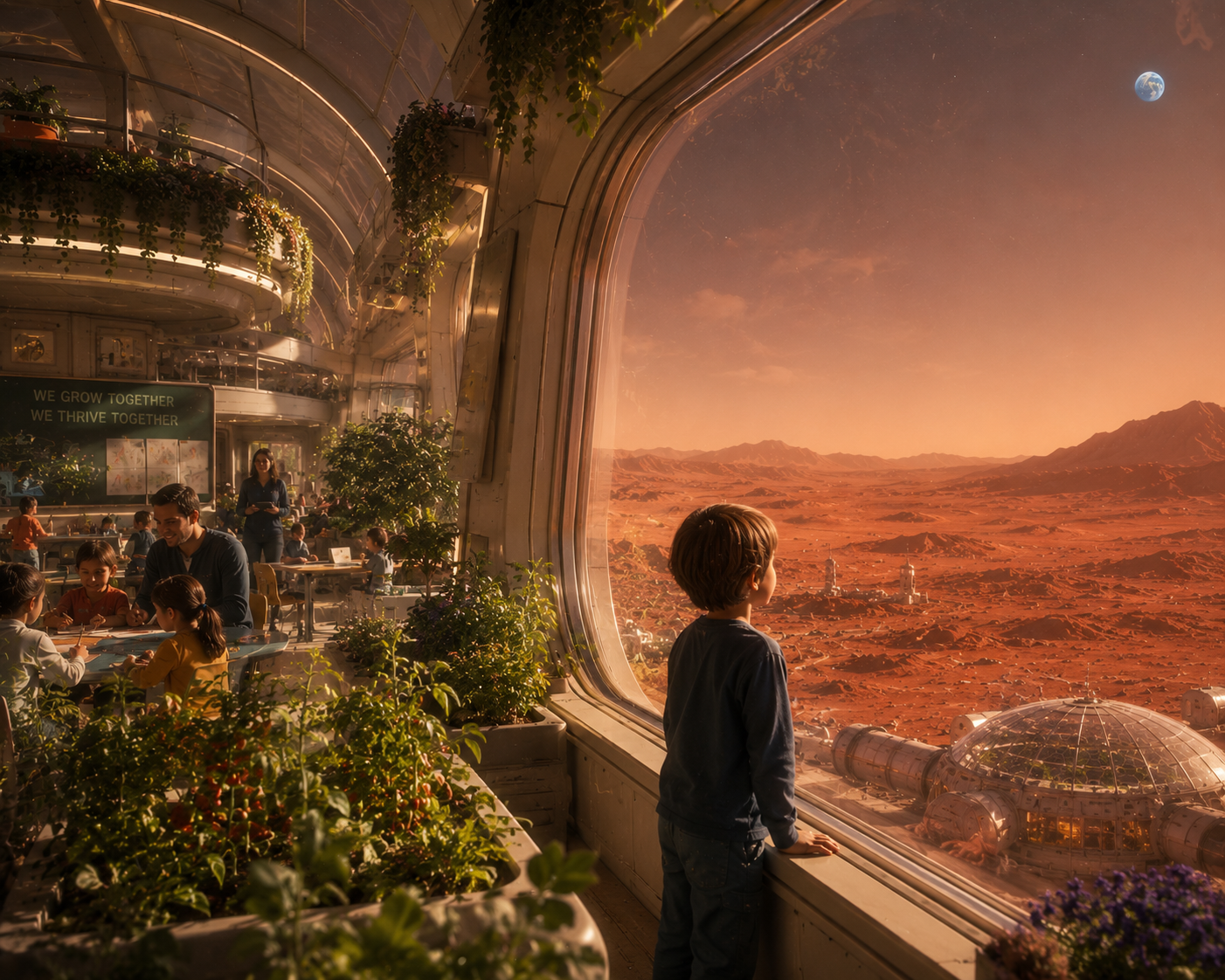
Imagine a child born on Mars.
They would grow up beneath a salmon-colored sky instead of Earth's blue one.
Their playgrounds would exist inside protected domes.
Outside, every journey would require a spacesuit.
Because Mars has only about 38% of Earth's gravity, they might run higher, jump farther, and experience a world unlike anything their ancestors knew.
Earth would not be the world they remember.
It would be the world they learned about in history books.
A tiny blue star in the Martian sky.
For that child, Mars wouldn't be a mission.
It would simply be home.
Could Mars Ever Become Independent?
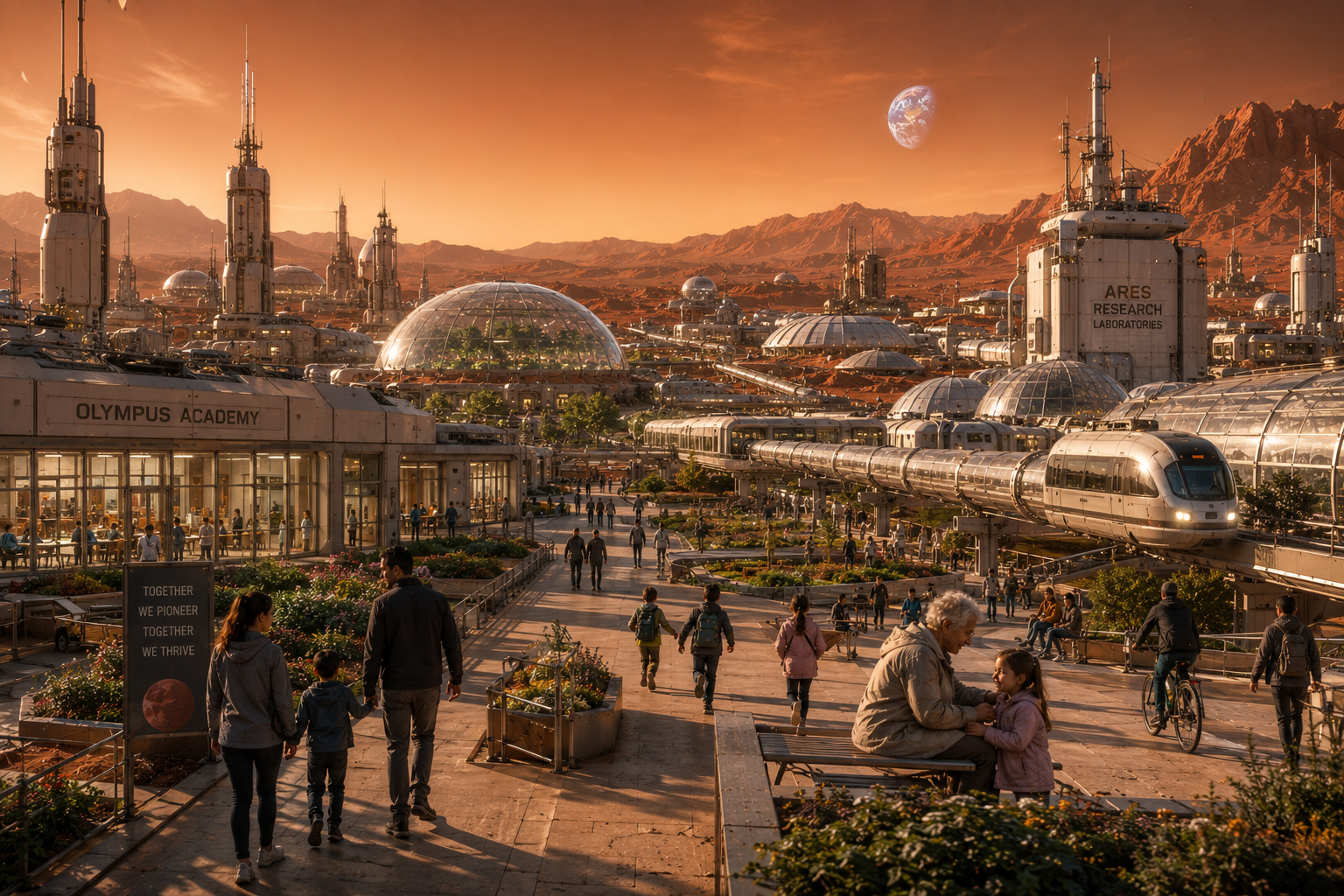
History suggests that distant settlements often develop their own identity over time.
If Mars one day supports thousands—or even millions—of people, its society may begin to evolve in ways that differ from Earth's.
Its calendar, traditions, architecture, and even daily routines could be shaped by a world where each year lasts 687 Earth days, sunlight is weaker, and life depends on advanced technology.
Future Martians may still consider Earth their ancestral home, but they could also see themselves as citizens of an entirely new civilization.
These questions belong not only to science, but also to philosophy and politics.
No one knows how such a future would unfold.
Yet it is fascinating to imagine.
Amazing Mars Facts
🔴 Mars is home to Olympus Mons, the largest volcano in the Solar System, standing about 22 kilometers (13.6 miles) high.
🌄 Valles Marineris is a canyon system over 4,000 kilometers long—far larger than Earth's Grand Canyon.
🧊 Mars contains vast reserves of frozen water beneath its surface and within its polar ice caps.
☀️ A Martian day (sol) lasts 24 hours and 39 minutes, making it surprisingly similar to an Earth day.
🛰️ More than 50 missions have been launched toward Mars, though not all were successful.
🚁 In 2021, NASA's Ingenuity helicopter became the first aircraft to achieve powered flight on another planet.
🌍 Earth and Mars align for the easiest launch opportunities roughly every 26 months.
AtlasNova Perspective
Mars is more than a destination.
It is a question.
A question about how far curiosity can carry us, how much risk we are willing to accept, and what it truly means to call a place home.
Every generation has looked toward a different horizon.
For our ancestors, it was the ocean.
For us, it may be another planet.
Whether humans build cities on Mars or never take that final step, the pursuit itself reflects one of our greatest qualities—the desire to explore places no one has ever lived before.
The Journey Has Only Just Begun
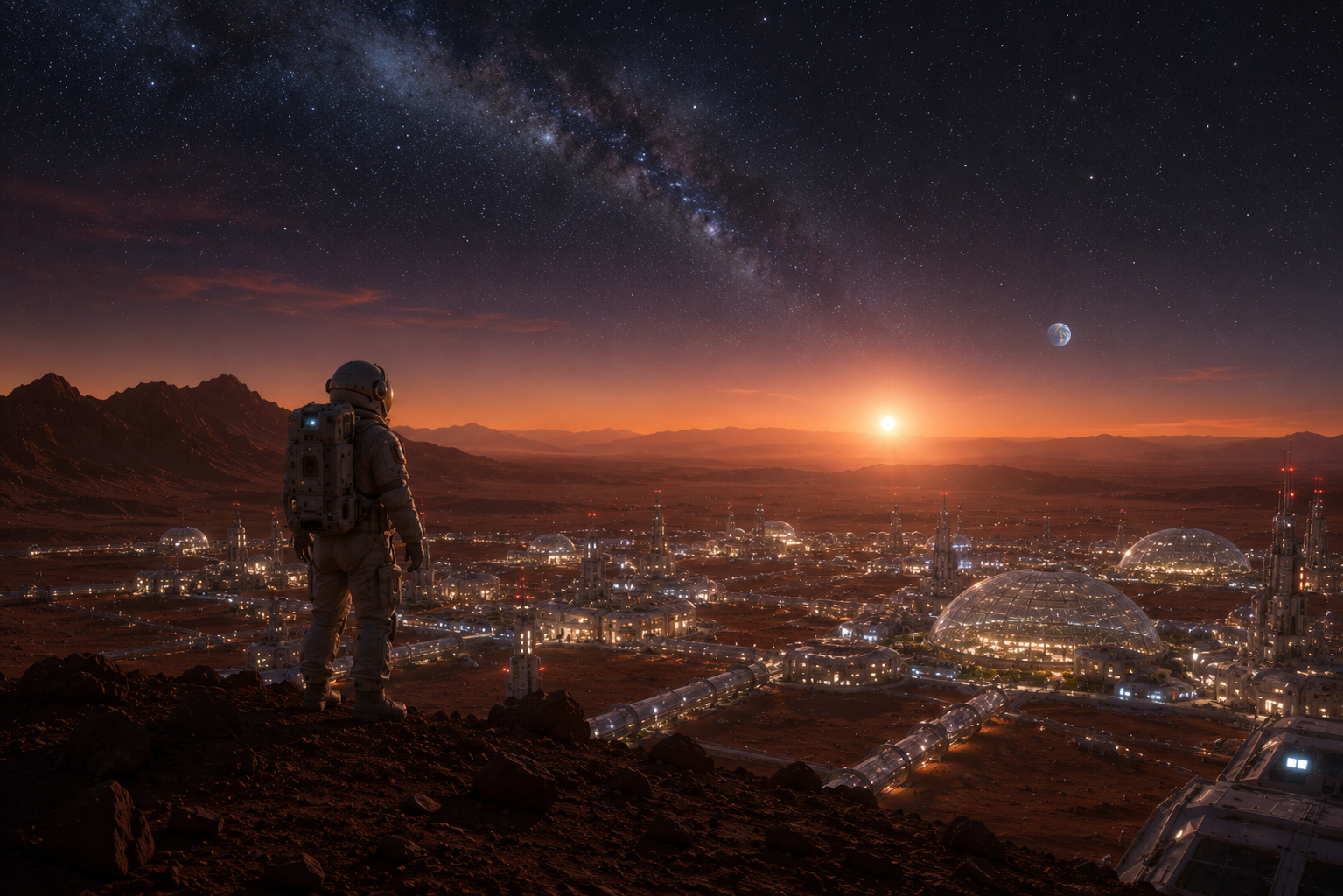
Today, Mars is a distant world explored by robotic spacecraft.
Tomorrow, it may welcome the first human footsteps.
Centuries from now, it could become a thriving outpost of civilization—or it may remain a reminder that not every dream is easy to achieve.
No one can predict the future with certainty.
But history has shown that humanity repeatedly transforms the impossible into reality.
The question is no longer whether Mars will continue to inspire us.
The question is whether one day, someone will stand beneath its dusty sky, look toward the tiny blue light of Earth, and quietly say:
"Home is where our story began... but not where it ended."
FAQ:
1. Could humans live on Mars right now?
No. Mars has a very thin atmosphere, extreme cold, radiation, and no breathable oxygen. Humans would need pressurized, protected habitats and reliable life-support systems.
2. Does Mars have water?
Yes. Scientists have found substantial amounts of water ice, especially in the polar regions and underground deposits.
3. Can humans breathe on Mars?
No. Mars' atmosphere is mostly carbon dioxide and is far too thin for humans to breathe.
4. Could plants grow on Mars?
Potentially, but not naturally in the open environment. Plants would need controlled conditions involving suitable pressure, temperature, water, nutrients, and protection from radiation.
5. How would humans get oxygen?
Oxygen could potentially be produced from Martian resources. NASA's MOXIE experiment successfully demonstrated producing oxygen from carbon dioxide in the Martian atmosphere.
6. Would humans need spacesuits all the time?
Outside a pressurized habitat, yes. Spacesuits would provide oxygen, pressure, thermal protection, and some protection from the harsh environment.
7. Is Mars too cold for humans?
Mars is extremely cold compared with Earth. Habitats would therefore need substantial heating and thermal insulation.
8. What about radiation?
Mars has a much thinner atmosphere and lacks Earth's strong global magnetic shield, leaving the surface more exposed to space radiation. Long-term settlements would need effective shielding.
9. Could humans make their own food on Mars?
Possibly, but growing food would require controlled agricultural systems. Early settlements would likely depend heavily on supplies brought from Earth.
10. Will humans eventually live permanently on Mars?
It is possible in principle, but a permanent self-sufficient settlement has not yet been demonstrated. Major challenges involving life support, radiation, energy, food, water, construction, and transportation still need to be solved.
11. Would Mars ever become like Earth?
Not with today's technology. Making Mars naturally Earth-like would require enormous changes to its atmosphere, climate, water availability, and radiation environment.
12. So, could humans really live on Mars?
Possibly—but only inside carefully engineered environments for the foreseeable future. Living on Mars would be very different from simply moving to another country on Earth.