Introduction
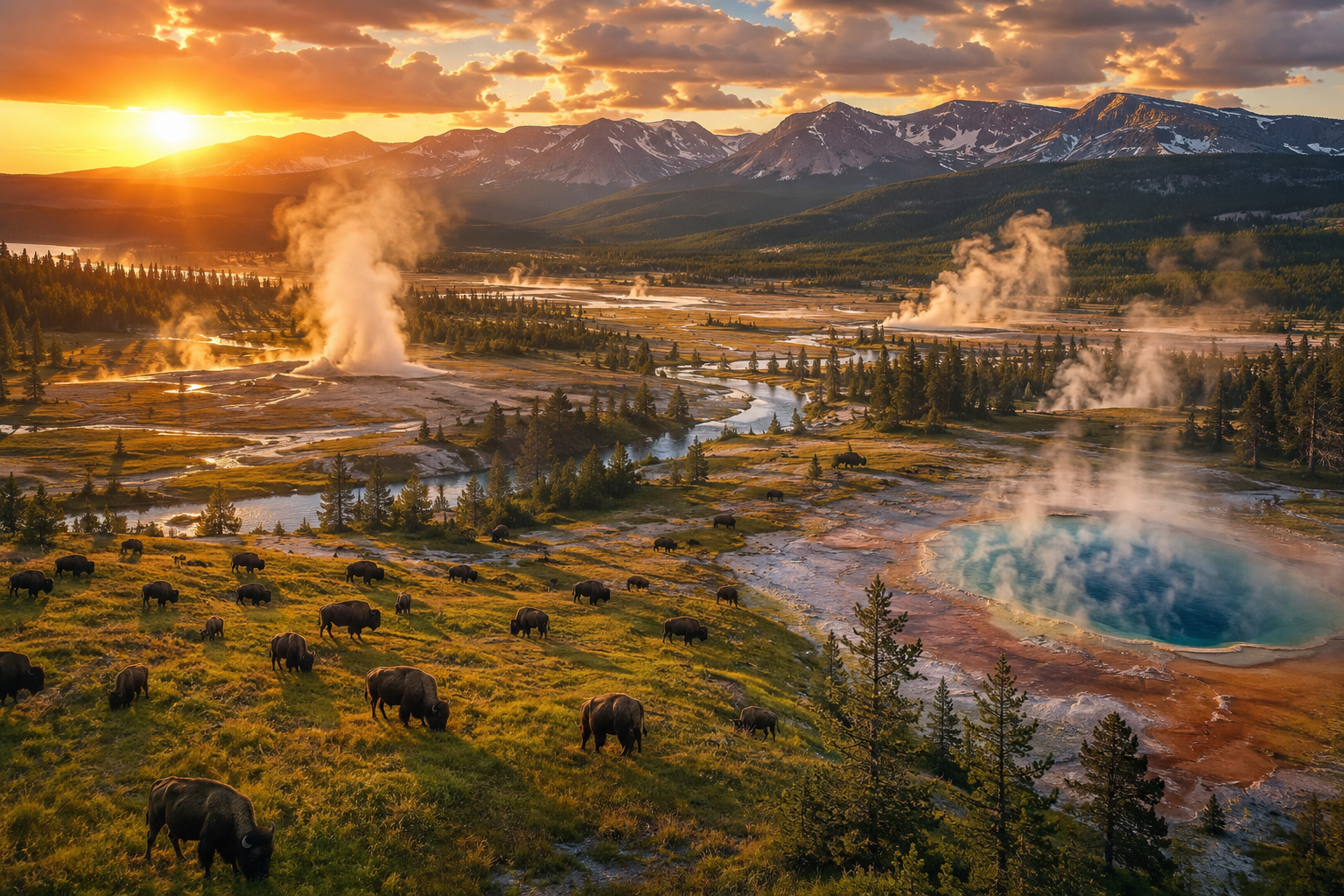
At sunrise, Yellowstone awakens in silence. Thin ribbons of steam drift across broad valleys, rivers reflect the first golden light of day, and herds of American bison move slowly through meadows that have remained wild for thousands of years. From a distance, it appears to be one of the most peaceful places on Earth.
Yet that calm is deceptive.
Hidden several kilometers beneath the forests, rivers, and mountains lies one of the planet's most remarkable geological systems—a vast reservoir of molten rock that continues to shape the landscape above it. Every plume of steam, every bubbling spring, and every eruption of a geyser is powered by heat rising from deep within the Earth. Yellowstone is not a dormant museum of nature; it is a landscape that is still evolving.
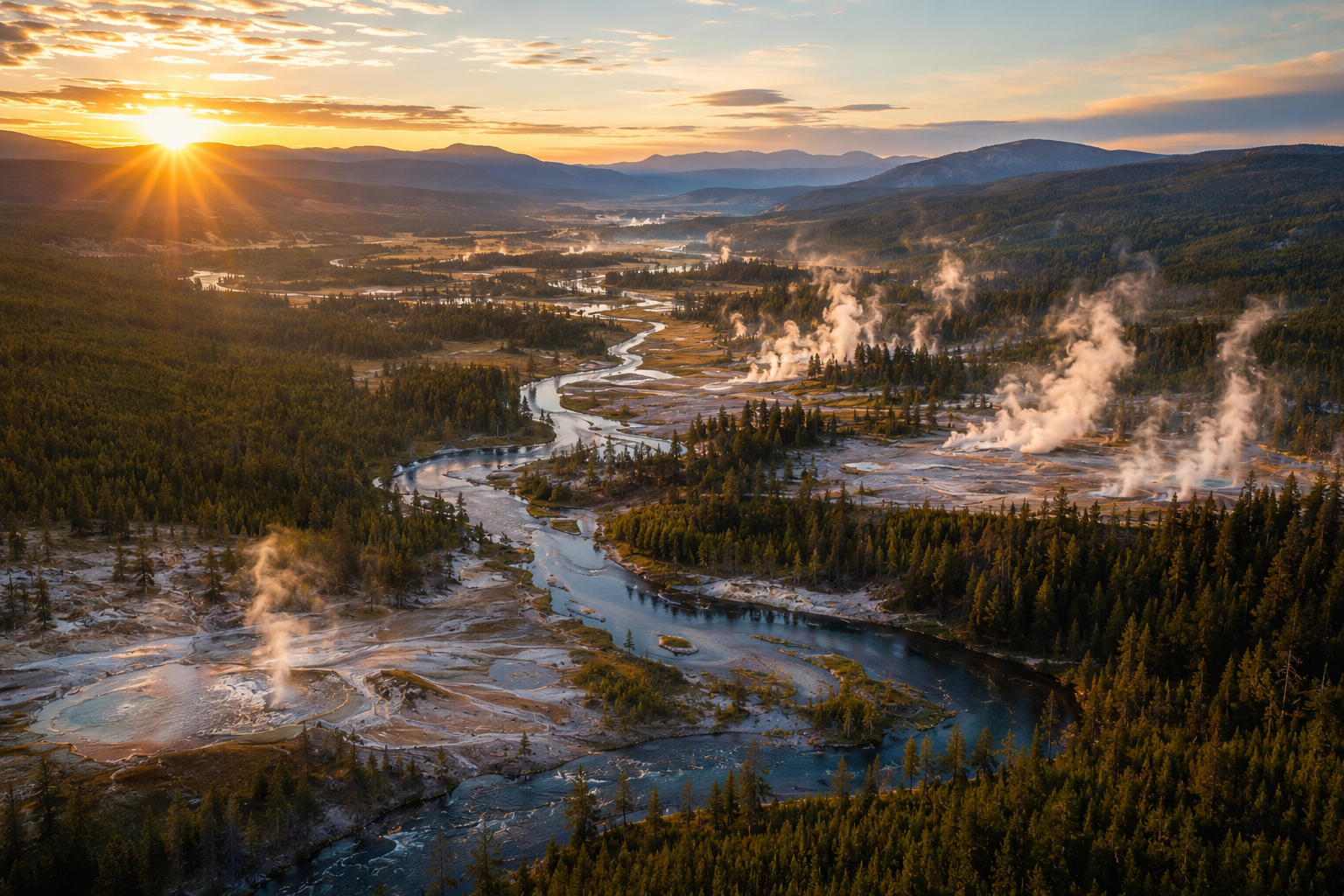
Yellowstone is famous for its spectacular geysers and brilliantly colored hot springs, but these features tell only part of the story. The park protects nearly 9,000 square kilometers of mountains, forests, lakes, rivers, canyons, and grasslands, making it one of the largest and most diverse protected ecosystems in North America. It is also home to the world's greatest concentration of geothermal features, with more than 10,000 hot springs, mud pots, fumaroles, and geysers shaped by an underground heat source unlike any other.
Life flourishes here in remarkable ways. Gray wolves patrol remote valleys, grizzly bears roam through forests, elk gather in open meadows, and bald eagles soar above winding rivers. Even the vivid colors of Yellowstone's famous hot springs come from microscopic organisms specially adapted to survive in extreme temperatures. In Yellowstone, geology and biology are inseparable—each has influenced the other for millions of years.
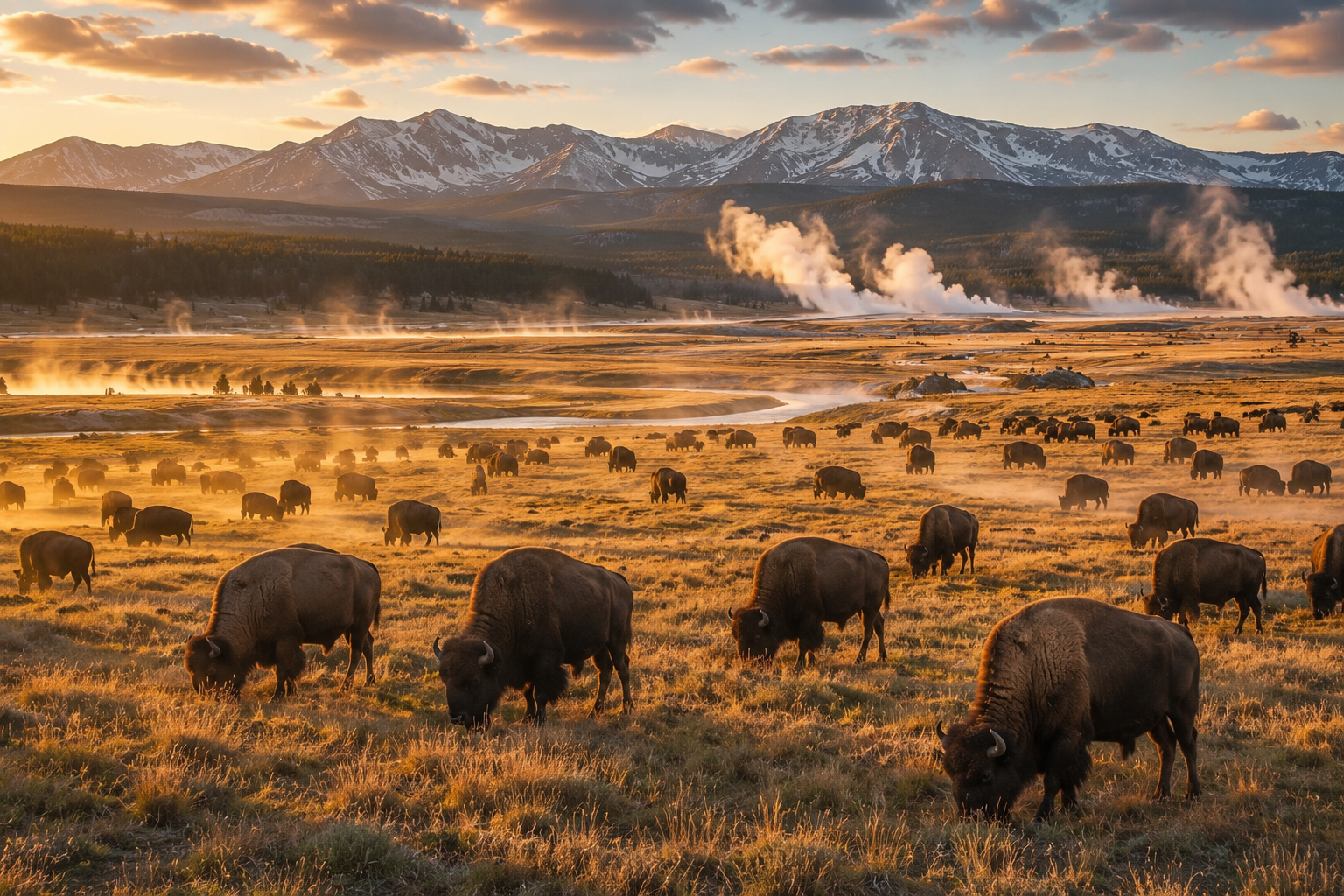
Today, Yellowstone attracts millions of visitors each year, yet its significance extends far beyond tourism. Scientists monitor its volcanic activity, study its unique ecosystems, and observe how wildlife responds to changing environmental conditions. Every discovery made here deepens our understanding of Earth's geological processes and the delicate balance that sustains life in one of the world's last great temperate wildernesses.
This is more than America's first national park.
It is a living landscape where fire, water, wildlife, and time continue to shape one another every single day.
Chapter 1 — Born from Fire🔥
"Long before wolves howled across its valleys or geysers sent boiling water into the sky, Yellowstone was shaped by one of the most powerful forces our planet has ever known."
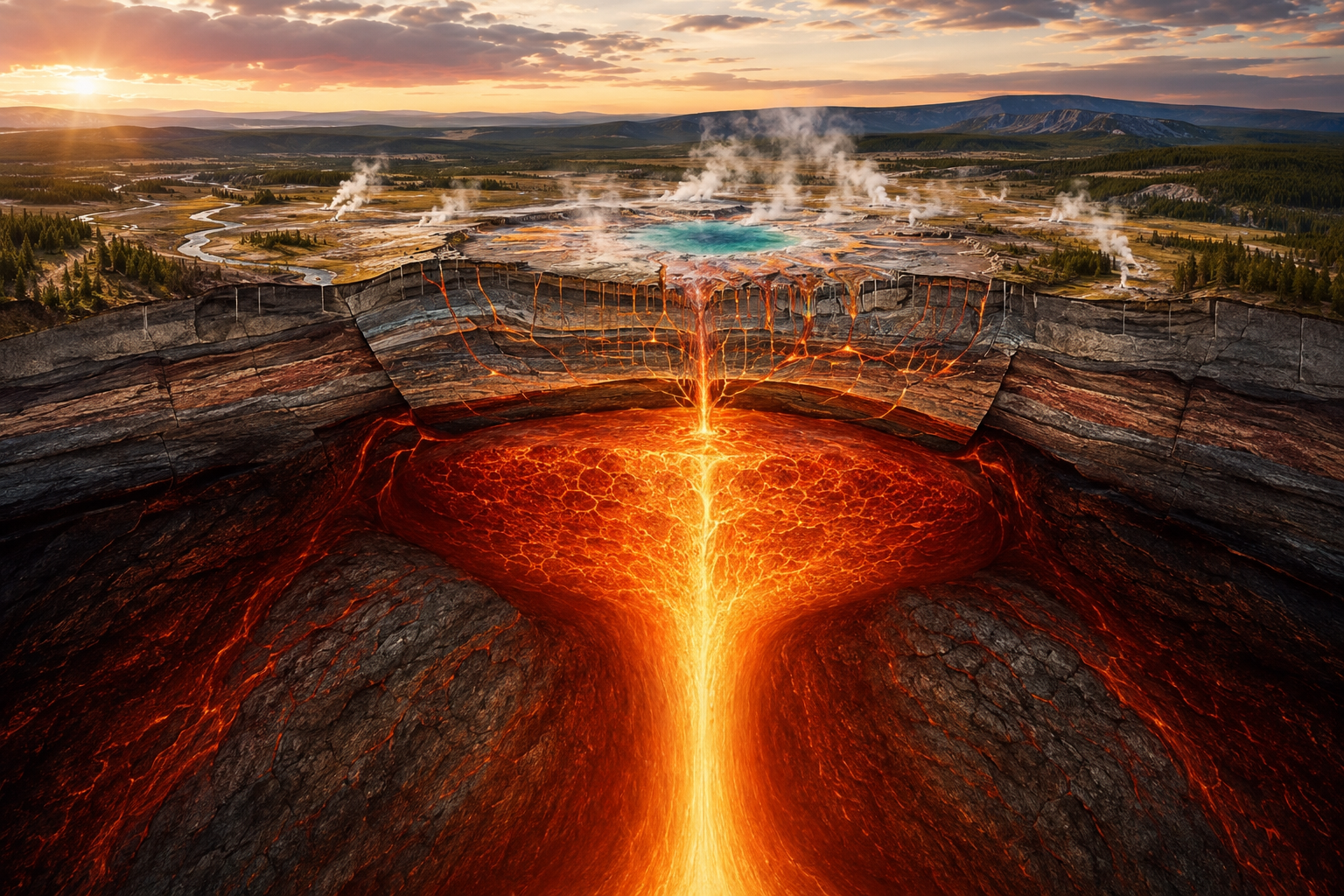
For millions of years, the land that would one day become Yellowstone looked nothing like the landscape we see today. There were no forests blanketing the mountains, no rivers winding through broad valleys, and certainly no famous geysers drawing visitors from around the world. Instead, beneath western North America, an immense plume of superheated rock slowly rose from deep within Earth's mantle. Invisible from the surface, this hotspot would eventually transform the region into one of the most extraordinary geological landscapes on the planet.
Unlike most volcanoes, which form where tectonic plates collide or separate, Yellowstone exists above a mantle hotspot—a relatively stationary column of intensely hot material rising from deep inside the Earth. As the North American Plate gradually drifted southwest over millions of years, the hotspot remained largely fixed. This movement left behind a chain of ancient volcanic calderas stretching across southern Idaho before reaching its present location beneath Yellowstone.
Around 2.1 million years ago, the hotspot produced one of the largest volcanic eruptions known in Earth's recent geological history. The explosion released an unimaginable volume of ash and volcanic material, blanketing large parts of North America. The eruption was so powerful that, after much of the underground magma chamber emptied, the land above collapsed into a vast depression known as a caldera.
Two more enormous eruptions followed approximately 1.3 million and 631,000 years ago, each reshaping the landscape in different ways. These eruptions were separated by hundreds of thousands of years, allowing forests, rivers, and wildlife to return before nature was transformed once again.
Today, the modern Yellowstone Caldera measures roughly 70 by 45 kilometers, making it one of the largest active volcanic systems on Earth. Although it is often called a "super volcano," the term describes the scale of its past eruptions rather than suggesting that another catastrophic eruption is imminent. Scientists continuously monitor the region using GPS stations, seismic sensors, satellite observations, and geothermal measurements, and there is currently no evidence that Yellowstone is approaching a super-eruption.
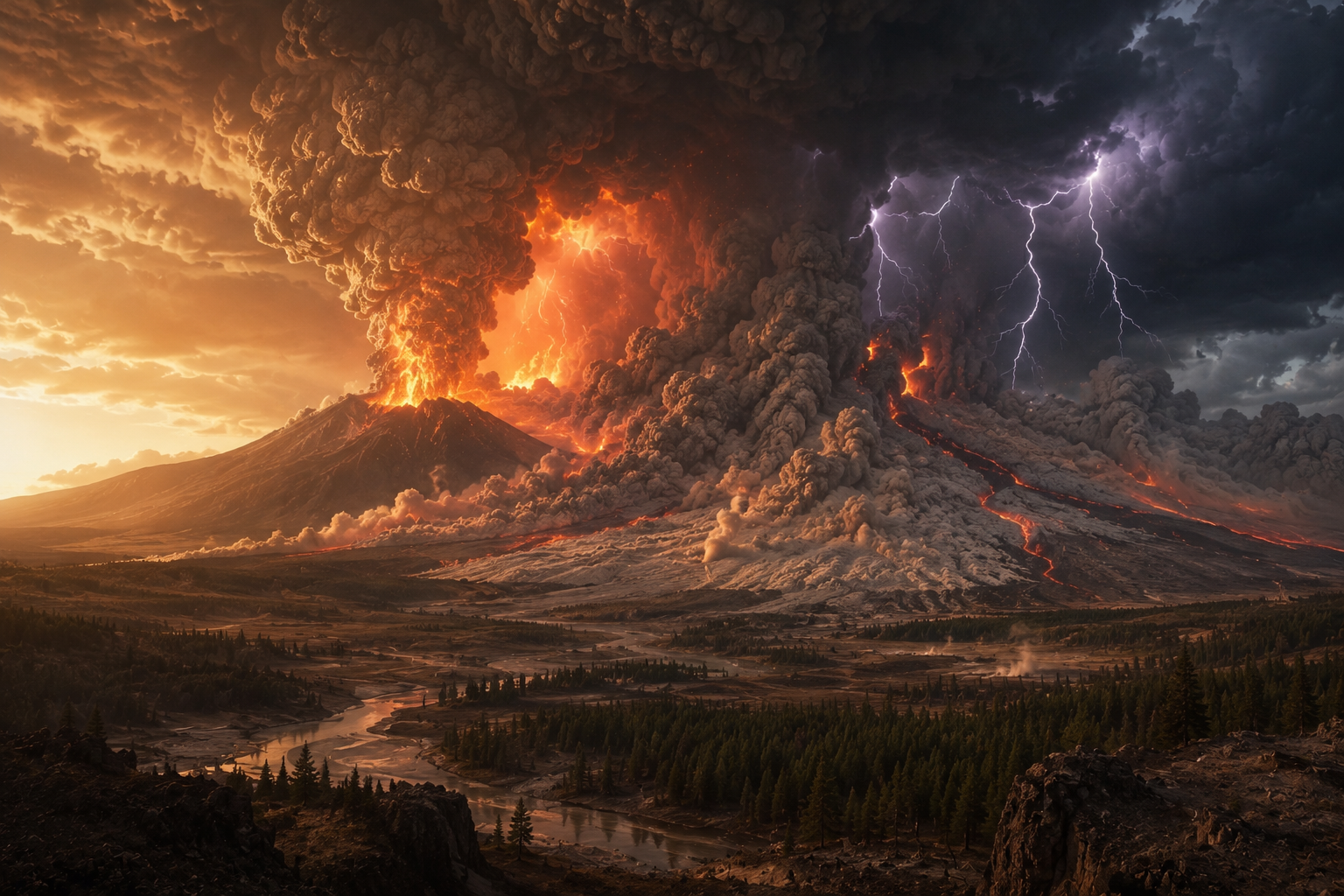
The volcanic activity that built Yellowstone did more than create dramatic scenery. It laid the foundation for everything that followed. Layers of volcanic rock shaped the mountains and valleys, while fractures in the Earth's crust allowed rainwater and melted snow to seep deep underground. There, the water is heated by the still-hot rocks before returning to the surface through cracks and vents. This continuous cycle powers the thousands of geothermal features that make Yellowstone unlike any other place on Earth.
Without its volcanic past, there would be no Old Faithful, no Grand Prismatic Spring, and no steaming valleys that seem to breathe with the pulse of the planet itself.
End of Chapter Reflection
The story of Yellowstone did not begin with wildlife or forests.
It began with fire.
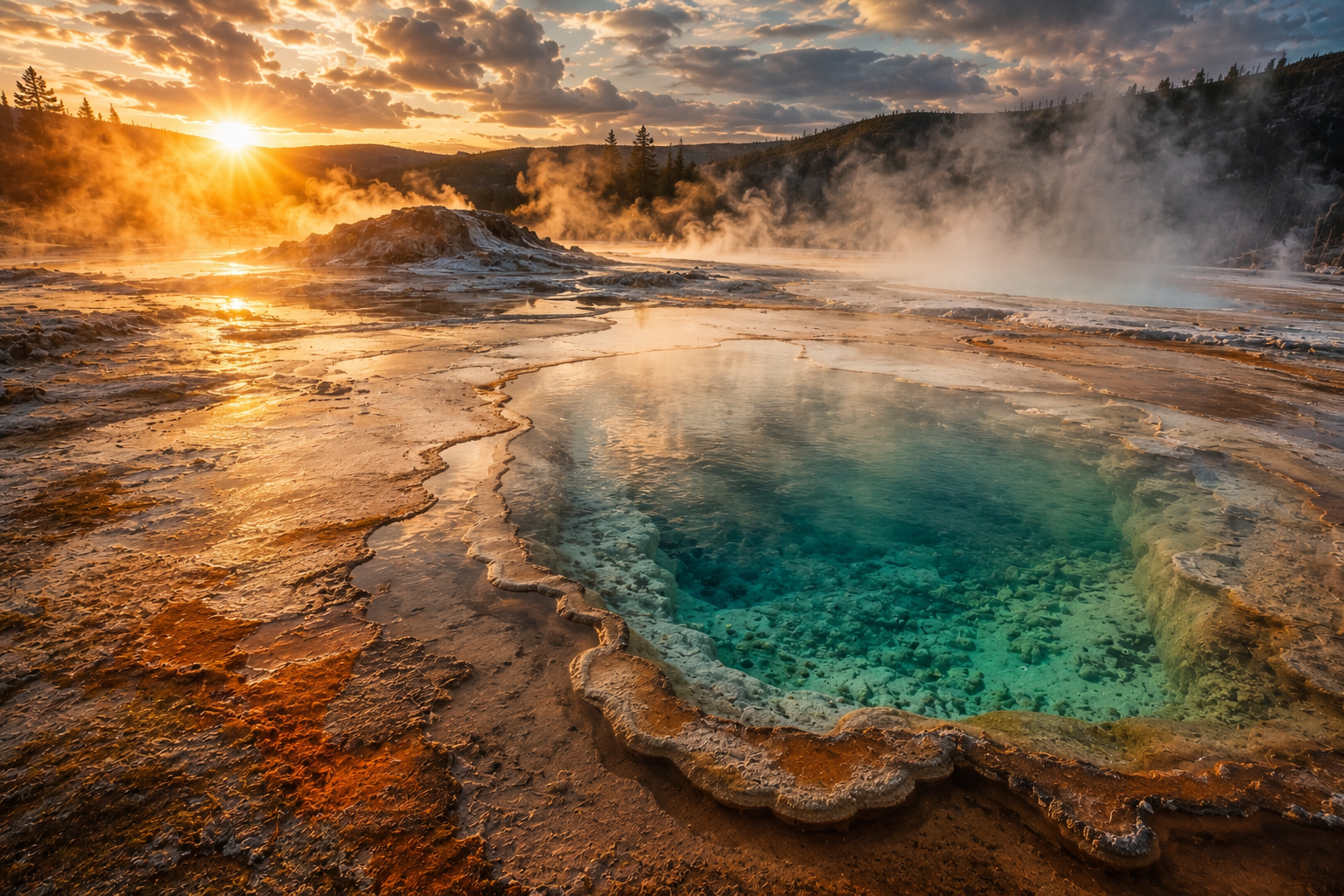
The immense forces hidden beneath the Earth's crust created a landscape unlike any other—a place where volcanic energy still shapes the surface long after the last great eruption faded into history. Every geyser, every hot spring, and every drifting cloud of steam is a quiet reminder that Yellowstone's story is still being written.
Chapter 2 – Where Earth Boils
"Yellowstone's greatest spectacle is not hidden beneath the Earth. It erupts before your eyes."
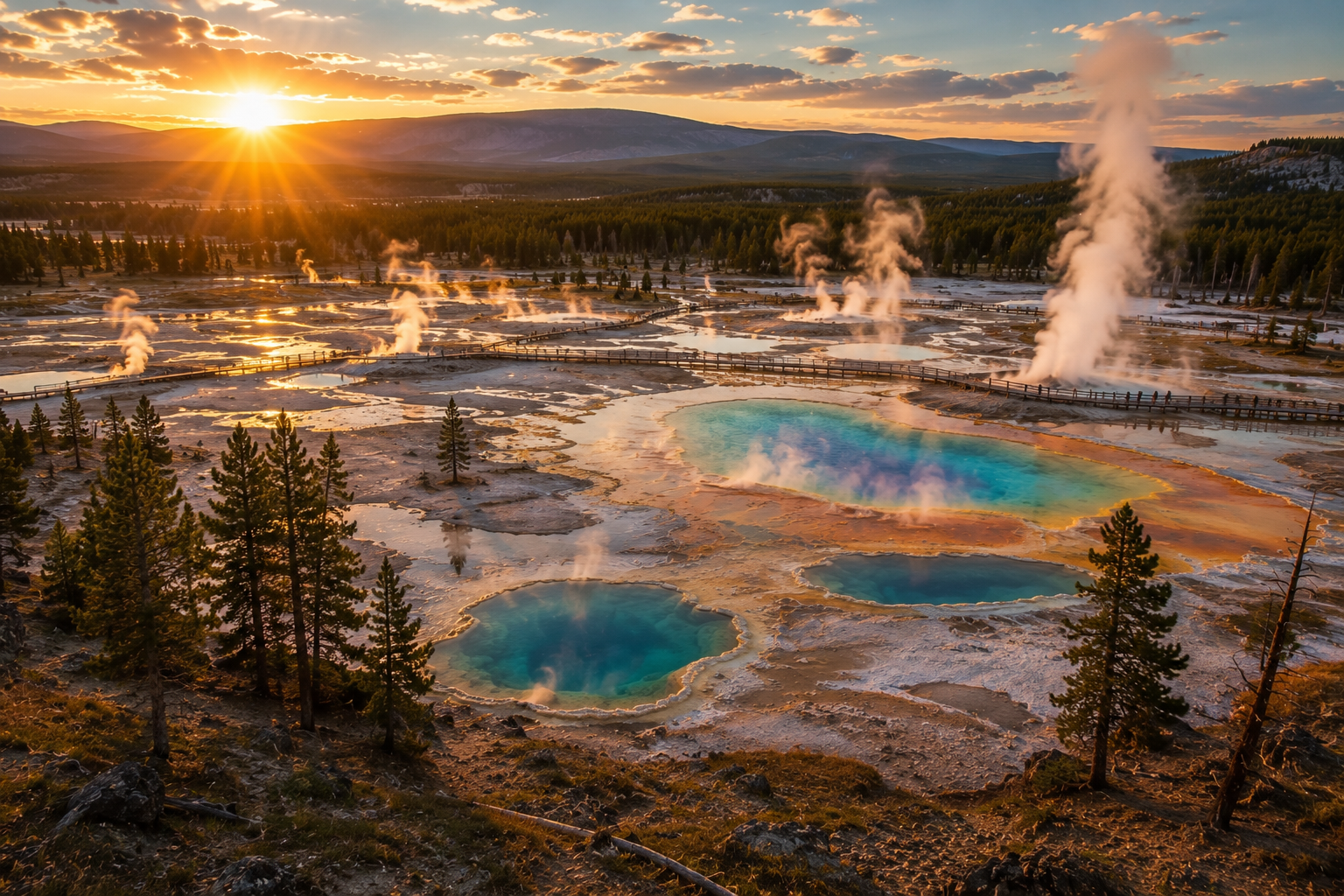
After uncovering the immense volcanic forces beneath Yellowstone, the journey now reaches the surface. Here, the invisible heat rising from deep underground creates one of the most extraordinary landscapes on Earth. Across valleys, forests, and mountain basins, water constantly bubbles, hisses, erupts, and flows in brilliant colors that seem almost impossible in nature.
No other place on Earth contains such a remarkable concentration of geothermal activity.
More than 10,000 geothermal features are scattered across Yellowstone, including geysers, hot springs, mud pots, and fumaroles. Together they transform the park into a living laboratory where Earth's internal heat is visible every single day.
The Science Behind Yellowstone's Geothermal Wonders
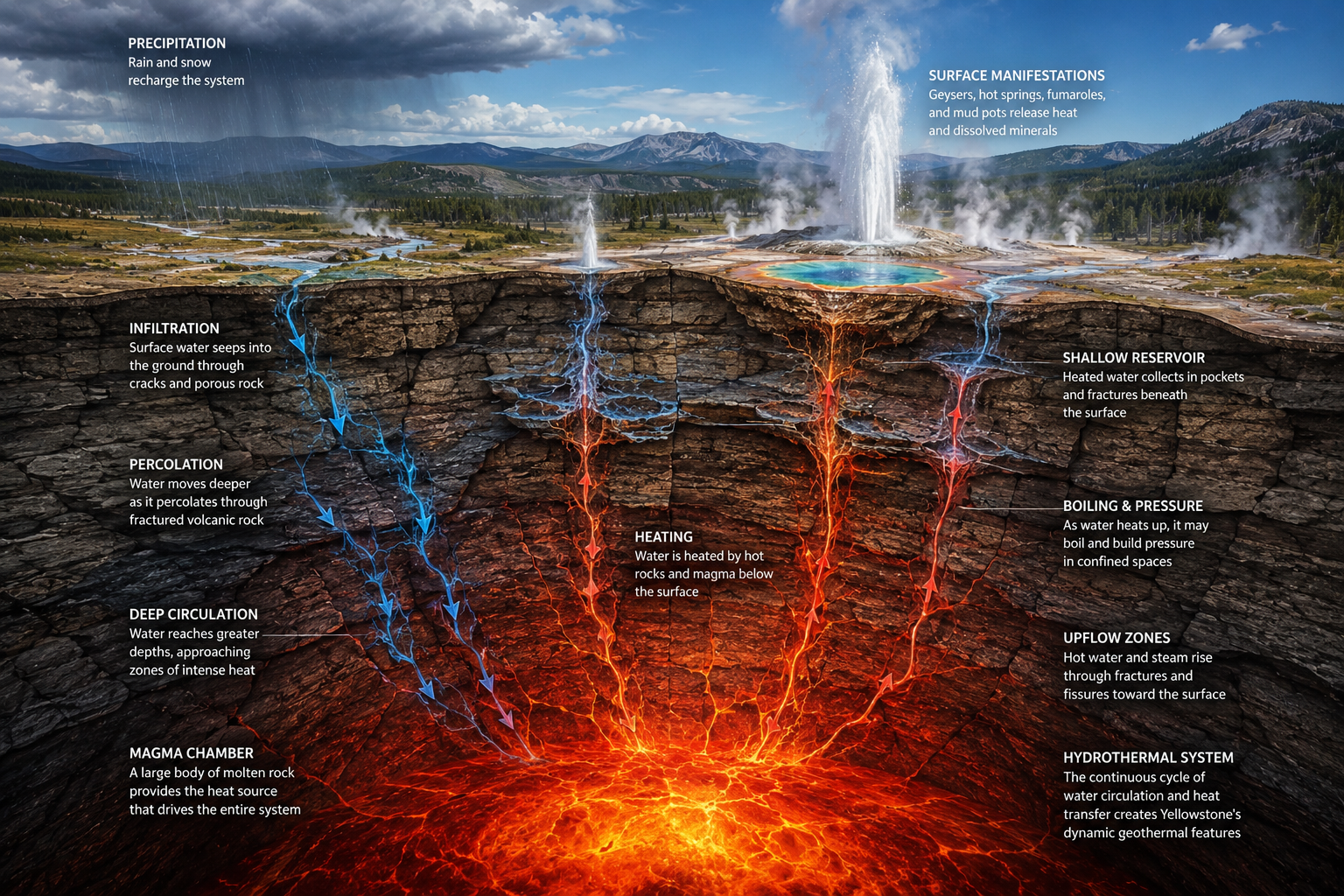
Every drop of rain and melting snow that falls across Yellowstone begins an incredible underground journey.
Water slowly seeps through cracks in volcanic rock, sometimes traveling several kilometers below the surface. As it descends, it encounters rocks heated by Yellowstone's underlying magma system. Temperatures rise dramatically, transforming cold groundwater into pressurized superheated water.
Eventually, that heated water searches for an escape.
Sometimes it rises quietly through mineral-rich pools. Sometimes it boils thick layers of mud. And sometimes, pressure builds until thousands of liters of water explode skyward in one of nature's most spectacular displays.
Yellowstone is quite literally powered by the Earth's internal heat.
Yellowstone Geothermal Facts
At a Glance
- 🌋 10,000+ geothermal features
- ⛲ 500+ active geysers
- 🌍 Around half of the world's active geysers
- 🌡️ Some hot springs exceed 90°C (194°F)
- 💧 Underground water may circulate for years before reaching the surface
Old Faithful: Nature's Most Famous Geyser
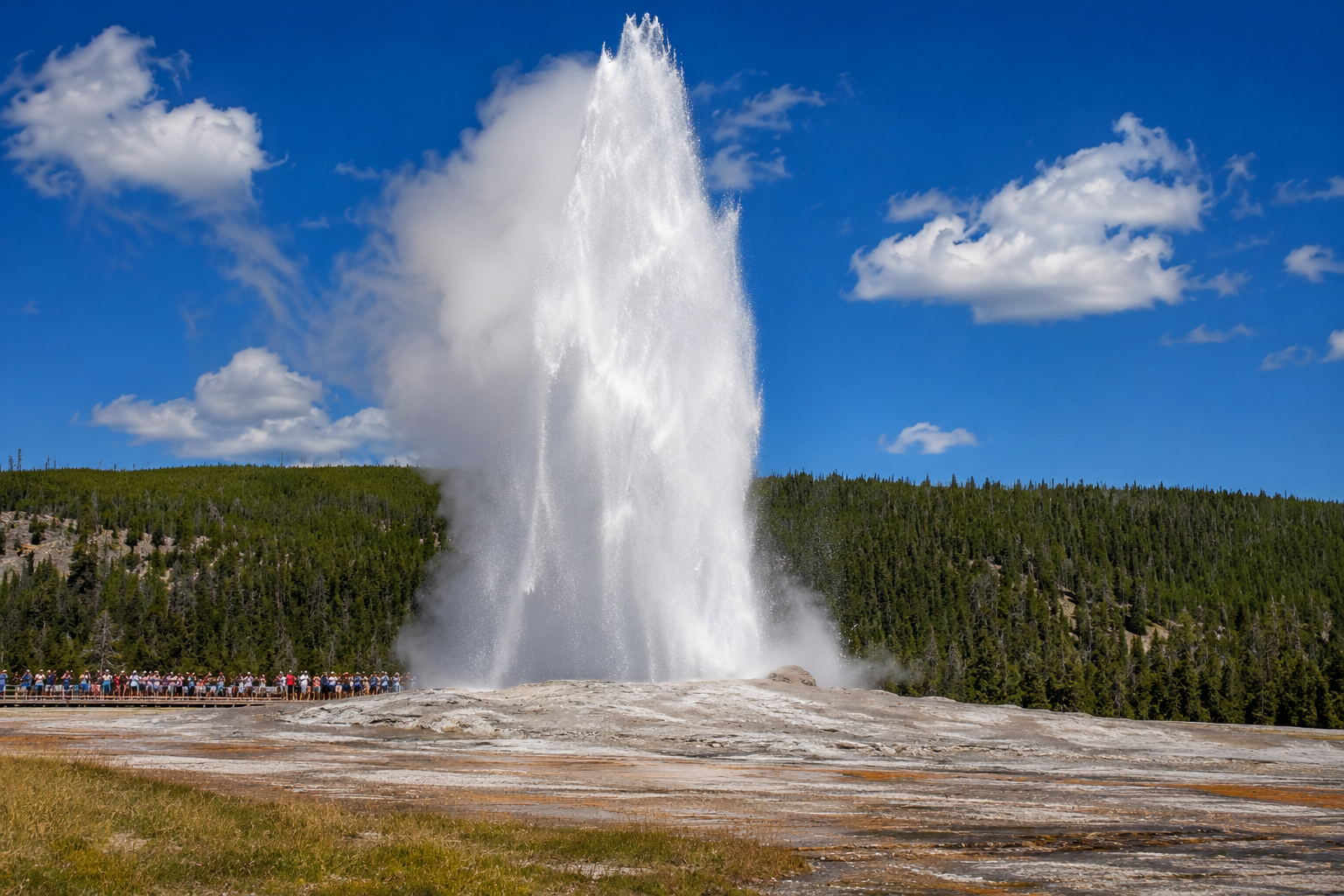
Among Yellowstone's hundreds of geysers, one has become an international symbol of the park.
Old Faithful earned its name because of its remarkably predictable eruptions. While the exact interval varies depending on the size of the previous eruption, it generally erupts every 60 to 110 minutes, sending thousands of liters of boiling water more than 30 to 55 meters (100–180 feet) into the air.
What makes Old Faithful extraordinary isn't that it is the tallest geyser—it isn't.
Its fame comes from its reliability.
Deep underground, a natural plumbing system slowly fills with superheated water. As pressure increases, part of the water suddenly flashes into steam, expanding with tremendous force and blasting the remaining water skyward in a spectacular eruption.
For more than a century, this cycle has fascinated scientists and visitors alike, offering one of the clearest demonstrations of Earth's hidden geothermal power.
Grand Prismatic Spring: Nature's Living Rainbow
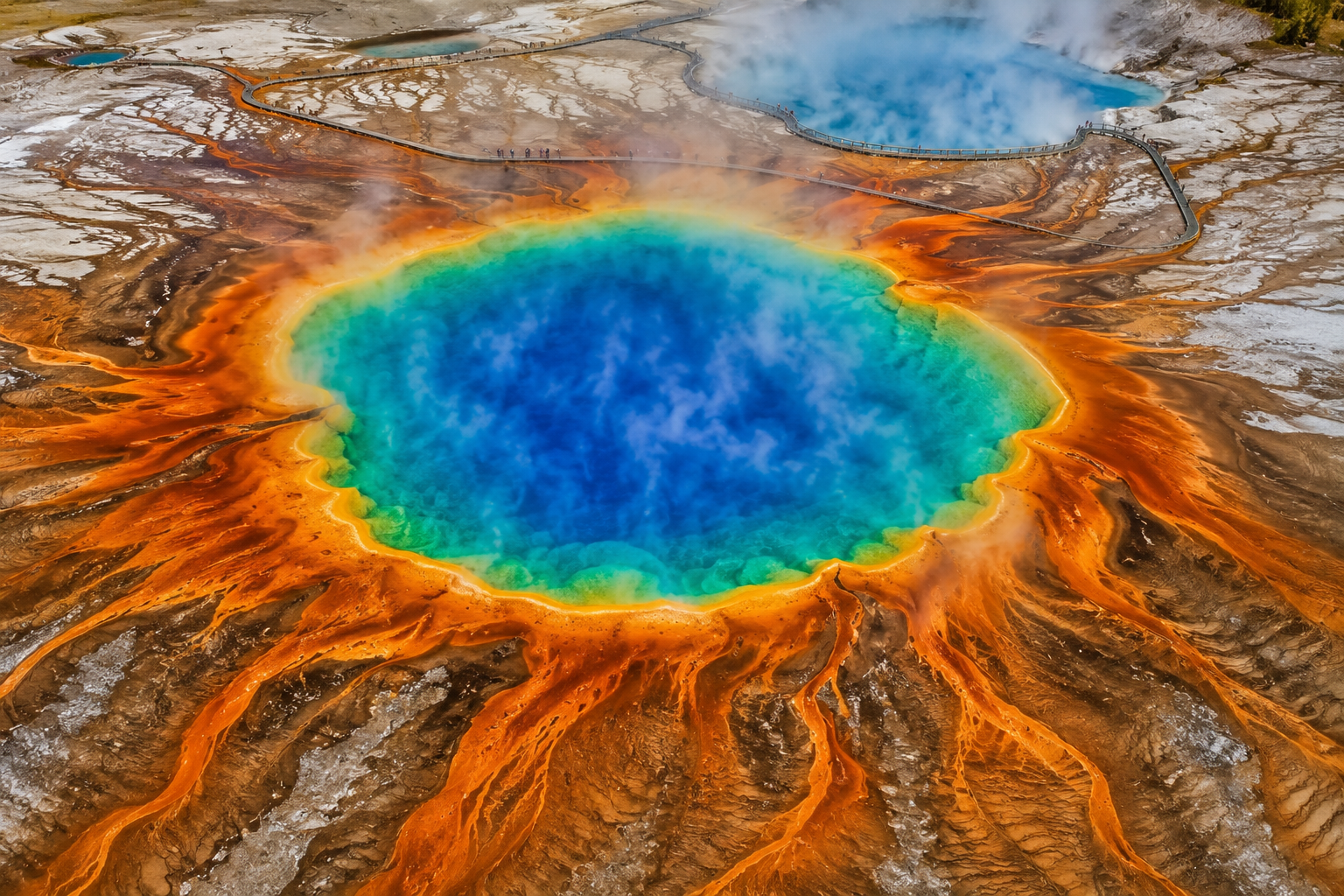
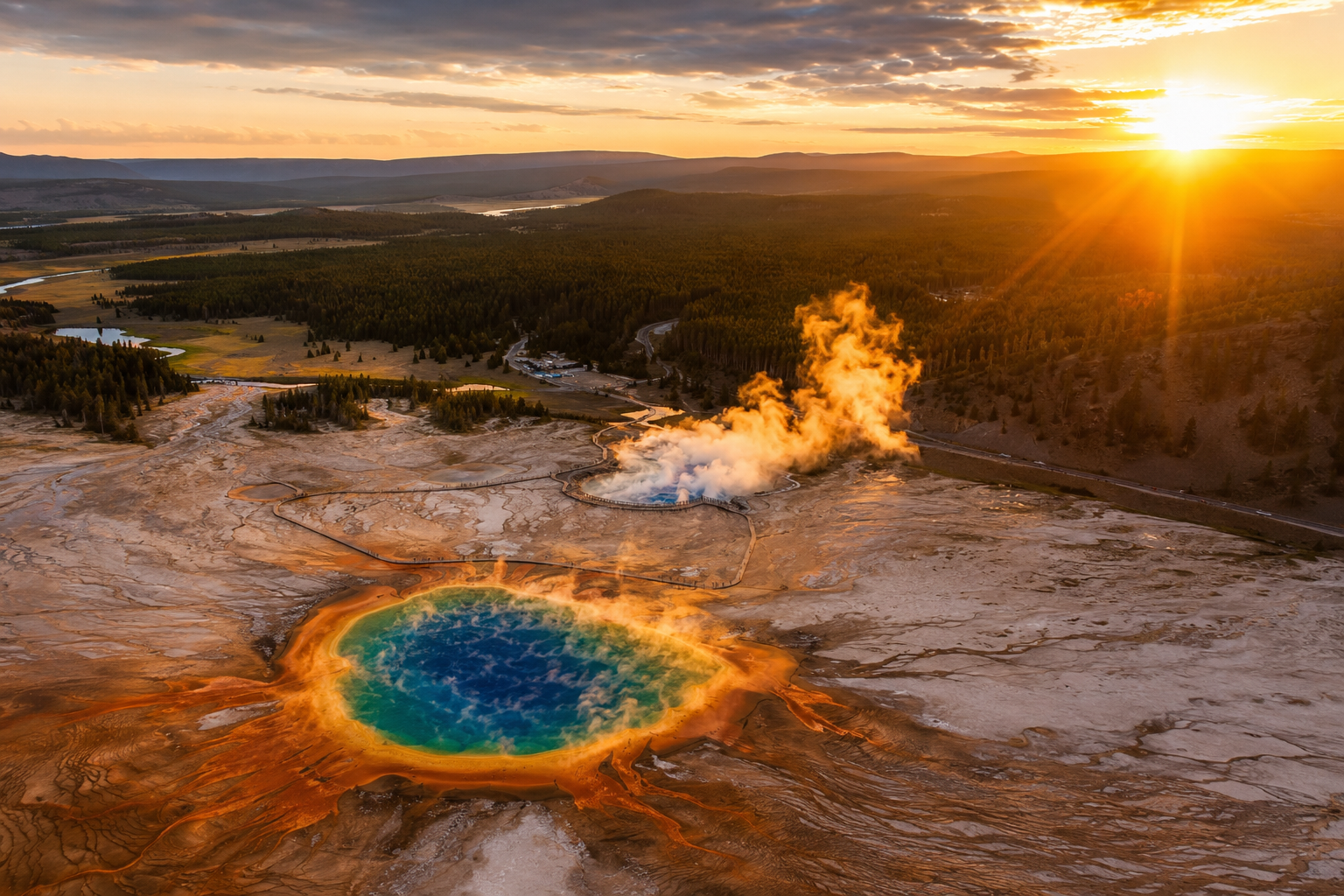
From ground level, Grand Prismatic Spring is breathtaking.
From the air, it becomes unforgettable.
At nearly 110 meters (370 feet) across, it is the largest hot spring in the United States and the third largest in the world. Its brilliant blue center gradually transitions into rings of green, yellow, orange, and deep red, creating a pattern that resembles a giant rainbow painted across the Earth.
The colors are not created by minerals alone.
They are produced by billions of heat-loving microorganisms known as thermophiles. Different species thrive at different temperatures, forming vibrant bands that shift with the changing seasons and water temperatures.
What appears to be abstract art is actually a living ecosystem.
End of Part 1 of Chapter 2
Yellowstone's geothermal features are more than beautiful landscapes—they are windows into the Earth's interior. Every eruption, every bubbling pool, and every plume of steam reveals the extraordinary forces still shaping our planet beneath the surface.
Next in Chapter 2: We'll explore mud pots, fumaroles, travertine terraces, and the remarkable microscopic life that survives in conditions once thought impossible, completing Yellowstone's geothermal story.
The Other Faces of Yellowstone's Geothermal World
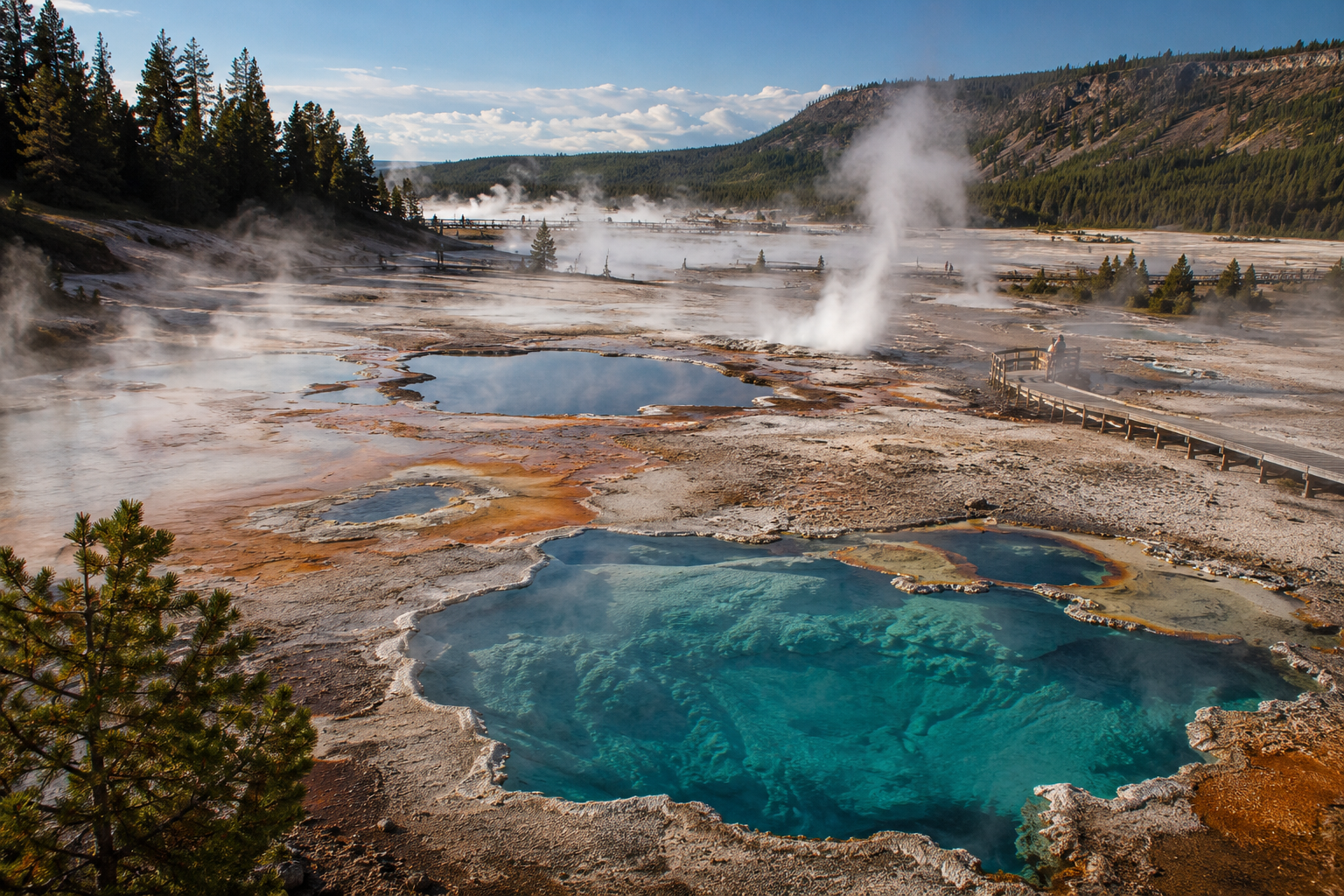
Old Faithful and Grand Prismatic Spring may be Yellowstone's most famous attractions, but they are only two chapters in a much larger geological story. Across the park, hundreds of lesser-known geothermal features reveal different ways that heat escapes from deep beneath the Earth's surface.
Each one offers a glimpse into the hidden forces still shaping Yellowstone today.
Mud Pots:
Boiling Earth in Motion
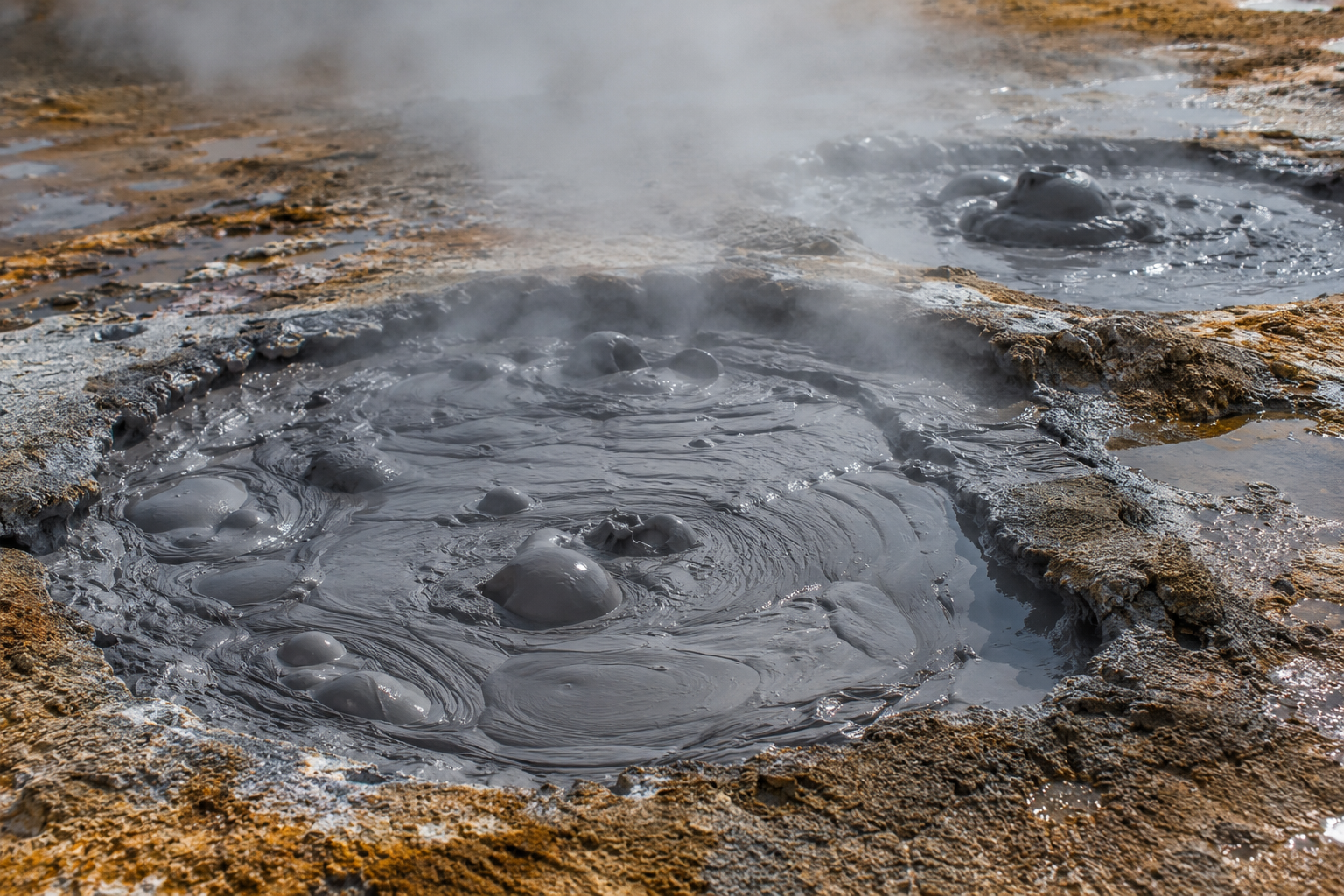
Not every geothermal feature erupts with dramatic columns of water.
In some areas, underground steam mixes with rainwater and volcanic ash to create thick, bubbling mud. The acidic water slowly dissolves surrounding rocks into fine clay, producing pools that continuously churn, splash, and release gases from below.
Each bubble is a reminder that Yellowstone's underground heat never rests.
Unlike the crystal-clear waters of hot springs, mud pots appear almost alive, their rhythmic bursts creating one of the park's most unusual landscapes.
Fumaroles: The Mountains That Breathe
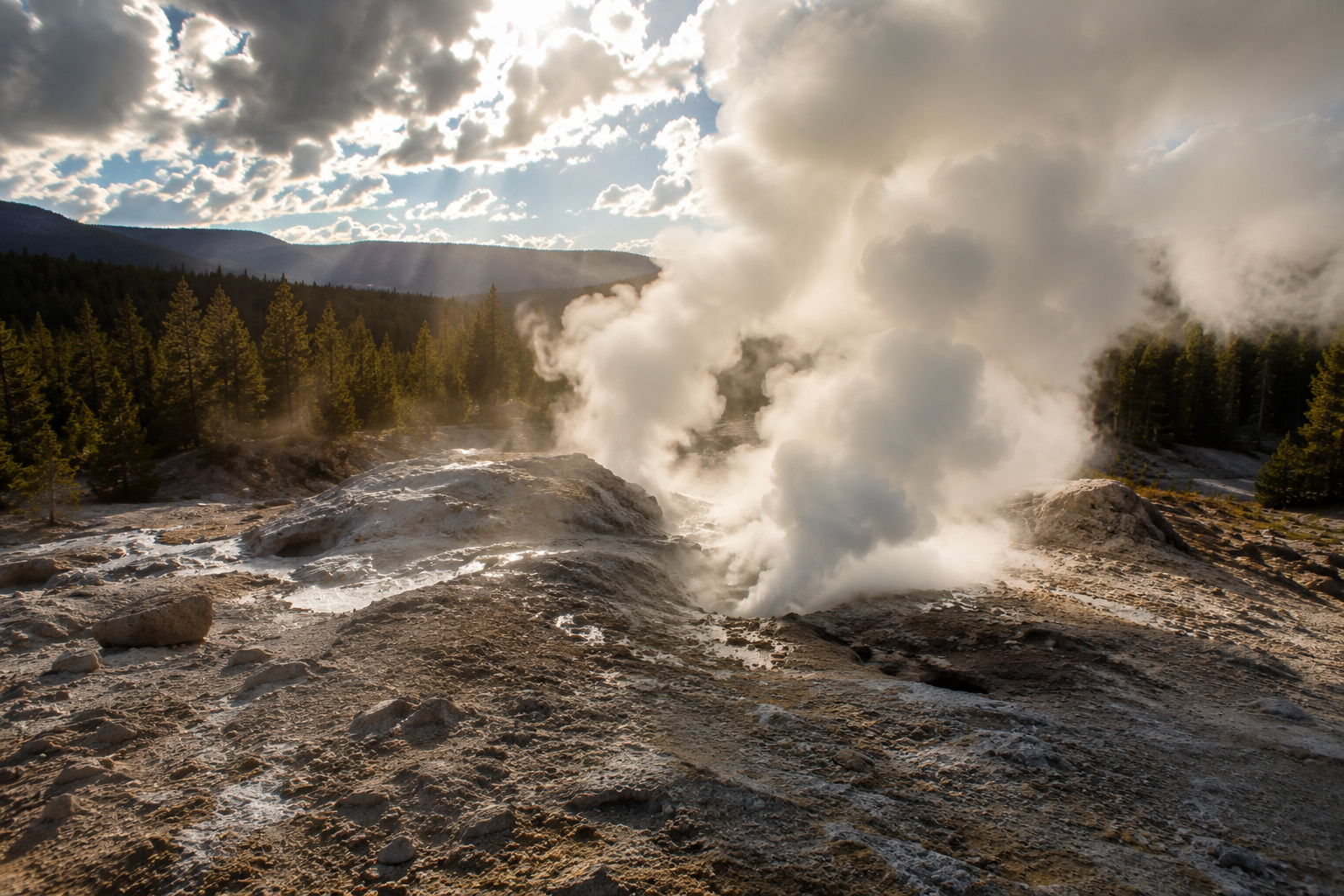
Some geothermal features contain very little water at all.
Instead, superheated steam escapes directly through narrow cracks in the ground, creating vents known as fumaroles. These openings release clouds of hot vapor mixed with volcanic gases, often producing the unmistakable smell of sulfur.
Standing nearby, visitors can hear a constant hissing sound as the Earth quietly releases pressure.
It feels as though the landscape itself is breathing.
Life Where Almost Nothing Should Survive
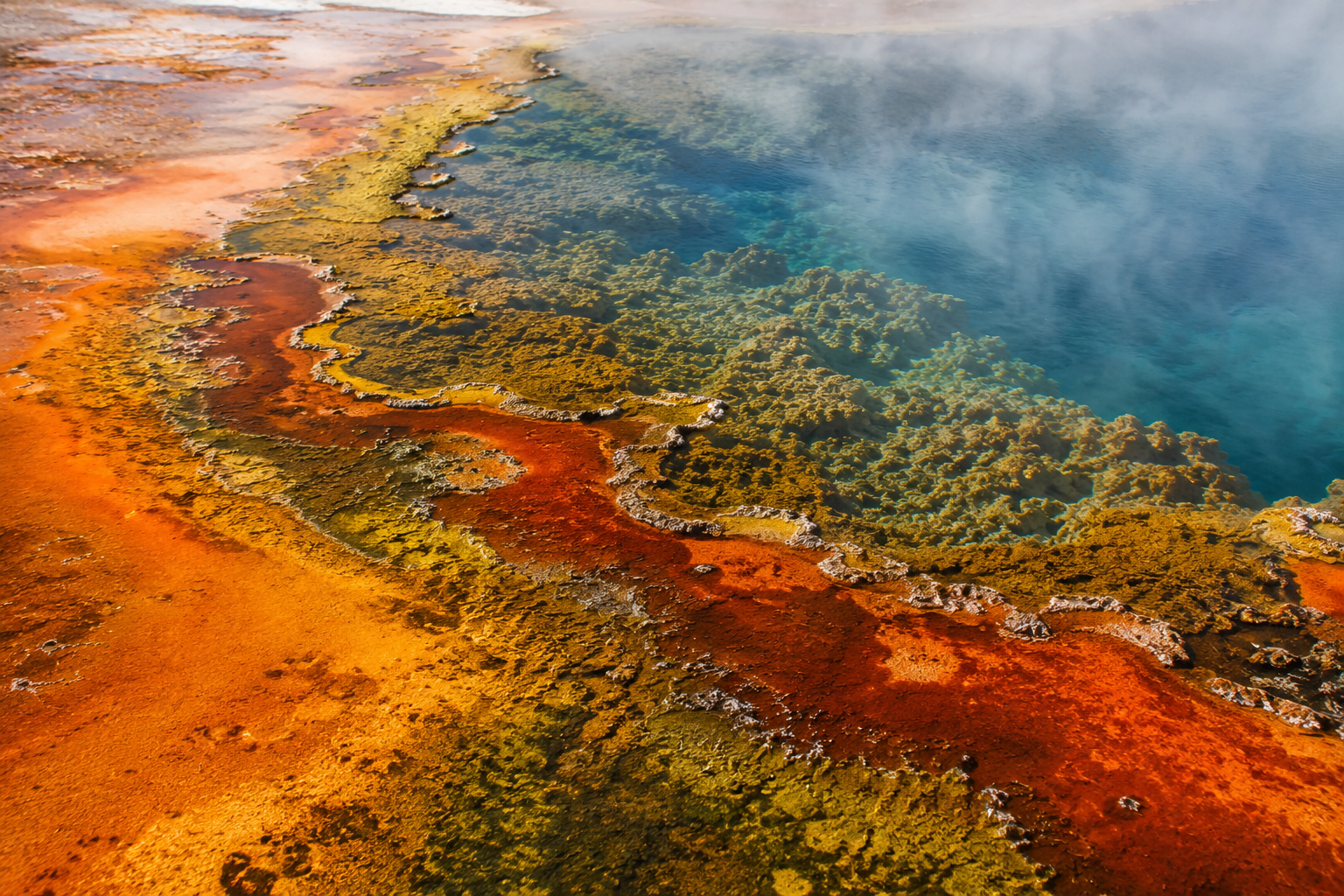
For many years, scientists believed that water approaching the boiling point was too extreme to support life.
Yellowstone proved otherwise.
Its hot springs are home to microscopic organisms called thermophiles, bacteria and archaea specially adapted to thrive in temperatures that would kill most forms of life. These microorganisms create the brilliant orange, yellow, green, and red bands surrounding many geothermal pools.
Their importance extends far beyond Yellowstone.
One heat-resistant enzyme discovered in these microbes revolutionized modern genetics by making the polymerase chain reaction (PCR) possible—a technique now used in medical diagnostics, forensic science, and biological research around the world.
One tiny organism living in a Yellowstone hot spring changed modern science.
👉Yellowstone Fact Box⭐
Did You Know?
The heat-resistant bacterium Thermus aquaticus, first discovered in Yellowstone, led to the development of PCR technology. Today, PCR is used worldwide in disease detection, DNA analysis, and scientific research.
Yellowstone's Living Laboratory
Yellowstone is far more than a scenic destination.
It is one of Earth's greatest natural laboratories.
Every geyser, hot spring, mud pot, and fumarole provides scientists with valuable clues about geothermal energy, volcanic activity, climate, and even the origins of life. Researchers from around the world continue to study these remarkable systems, knowing that each new discovery deepens our understanding of the dynamic planet we call home.
The steam drifting across Yellowstone's valleys is not simply beautiful.
It is evidence that our planet remains active, powerful, and endlessly fascinating.
Chapter 3 – The Kingdom of Wildlife
"Heat shaped Yellowstone's landscape. Life transformed it into one of Earth's greatest wildernesses."
The steam rising from Yellowstone's geysers tells the story of a restless planet. But beyond the geothermal basins, another story unfolds—one written not by fire and water, but by the countless living creatures that have adapted to this extraordinary environment.
Vast grasslands ripple beneath the wind. Dense conifer forests cloak the mountainsides. Crystal-clear rivers carve their way through valleys rich with nutrients carried by ancient volcanic soils. Together, these landscapes support one of the last nearly intact temperate ecosystems on Earth, where predators and prey continue a relationship that has existed for thousands of years.
Yellowstone is not simply a place where wildlife survives.
It is a place where nature still governs itself.
📊 Yellowstone Wildlife at a Glance
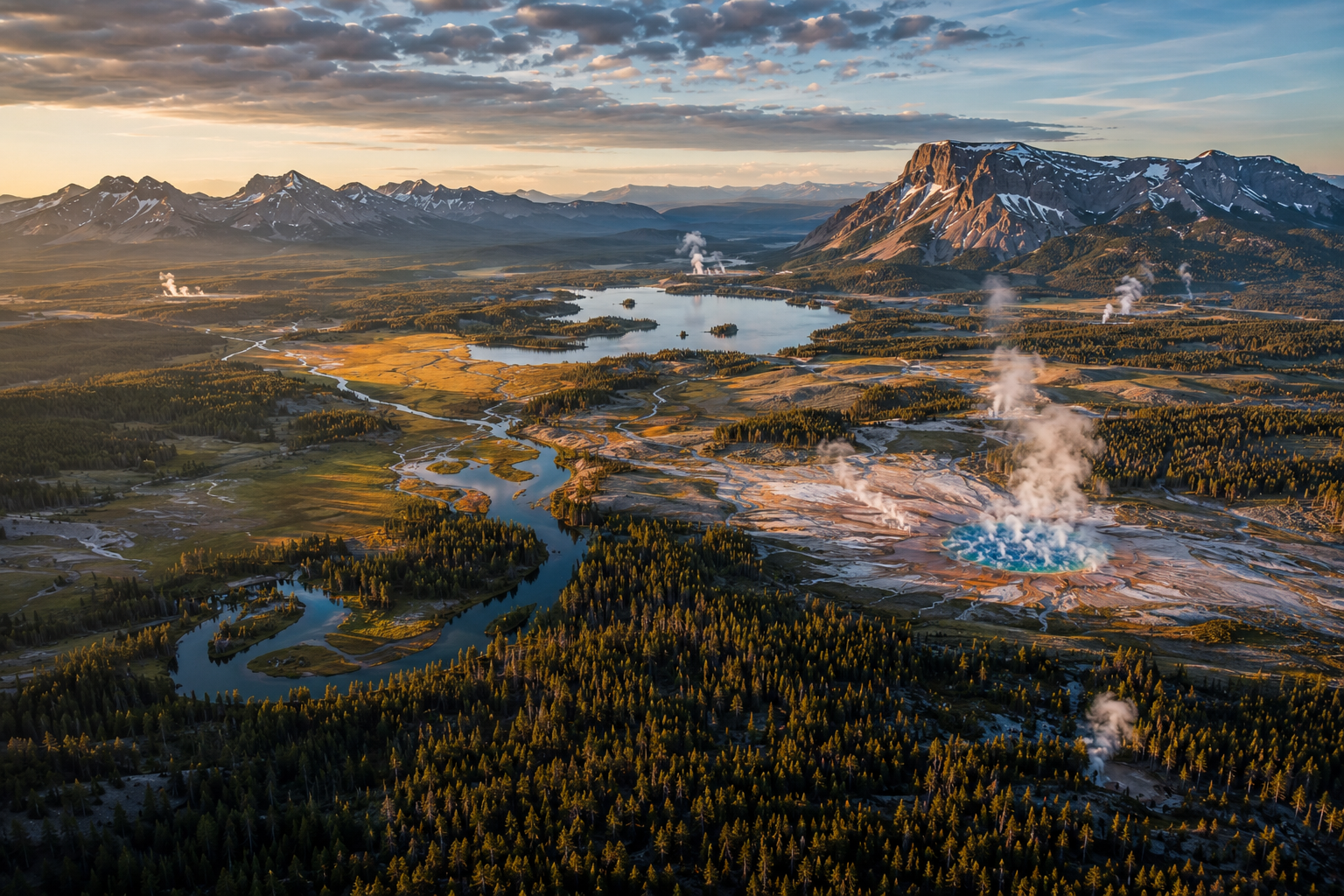
The Perfect Home for Wildlife
Yellowstone's wildlife exists because its landscapes are remarkably diverse.
Within the park, elevations range from broad river valleys to high mountain peaks, creating habitats that change dramatically over short distances. Open meadows provide grazing grounds for large herbivores, while dense forests offer shelter for bears, wolves, and countless smaller animals. Rivers and lakes support fish, otters, waterfowl, and amphibians, while alpine regions become seasonal refuges for species adapted to colder climates.
This variety of habitats allows hundreds of species to thrive within a single protected landscape.
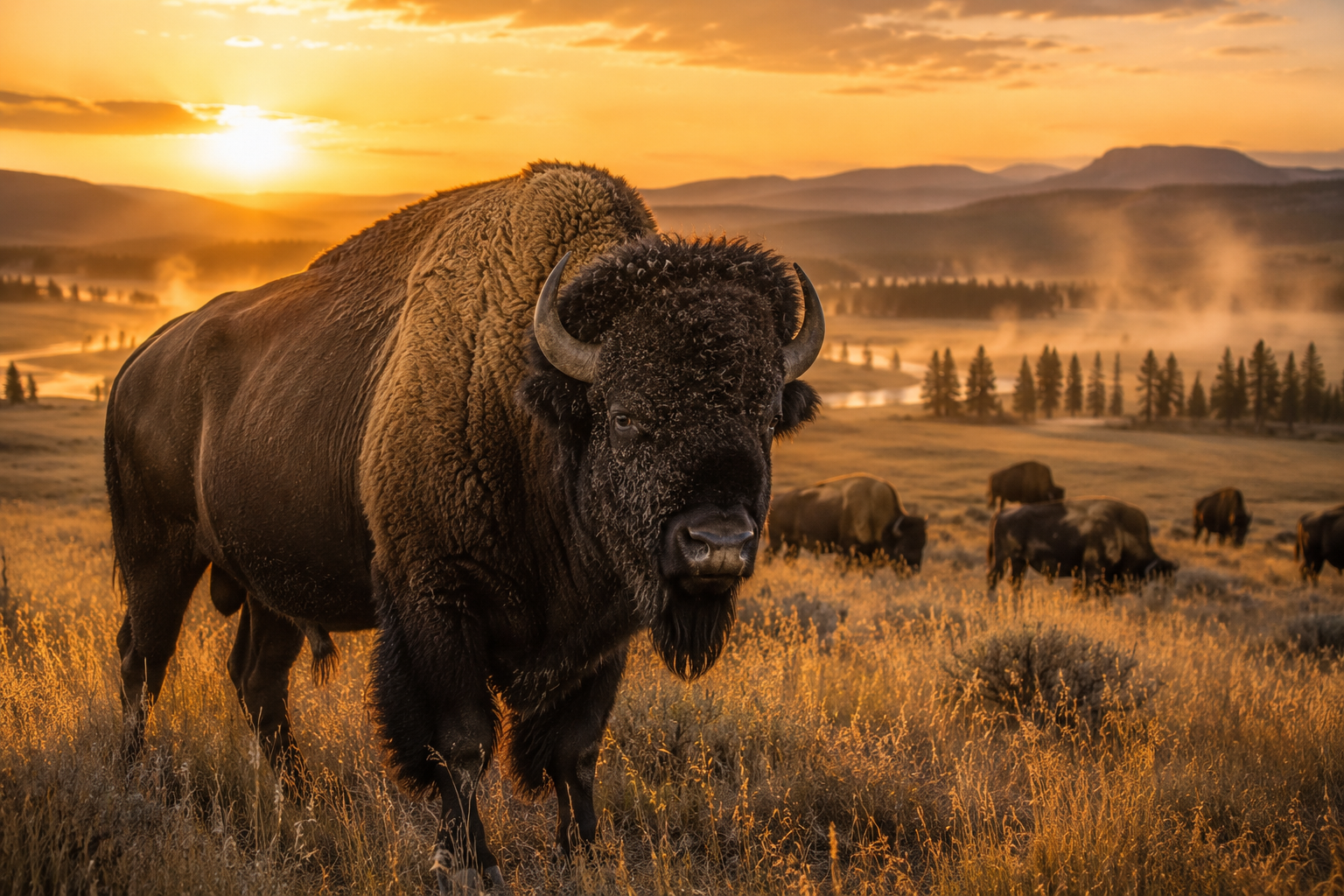
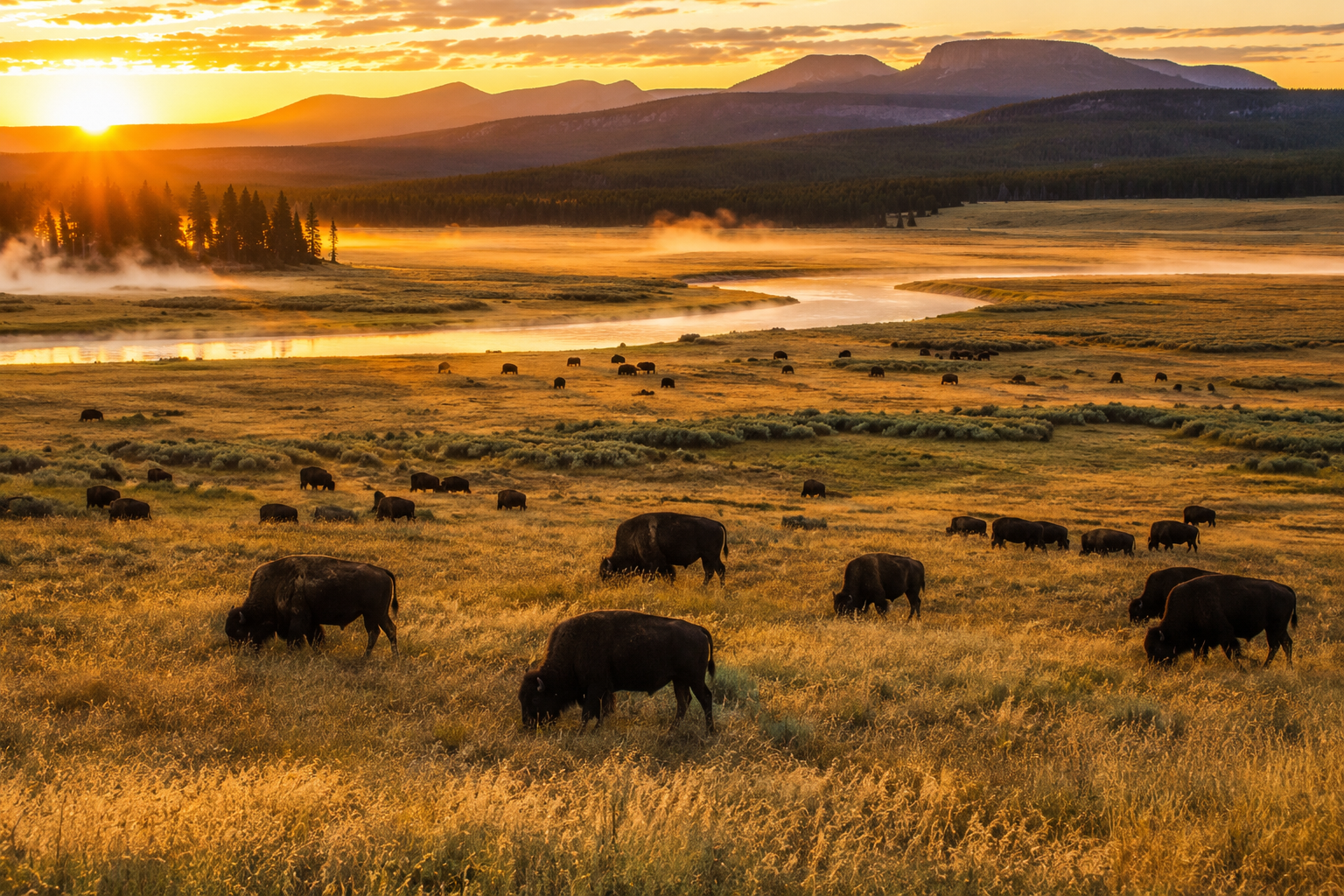
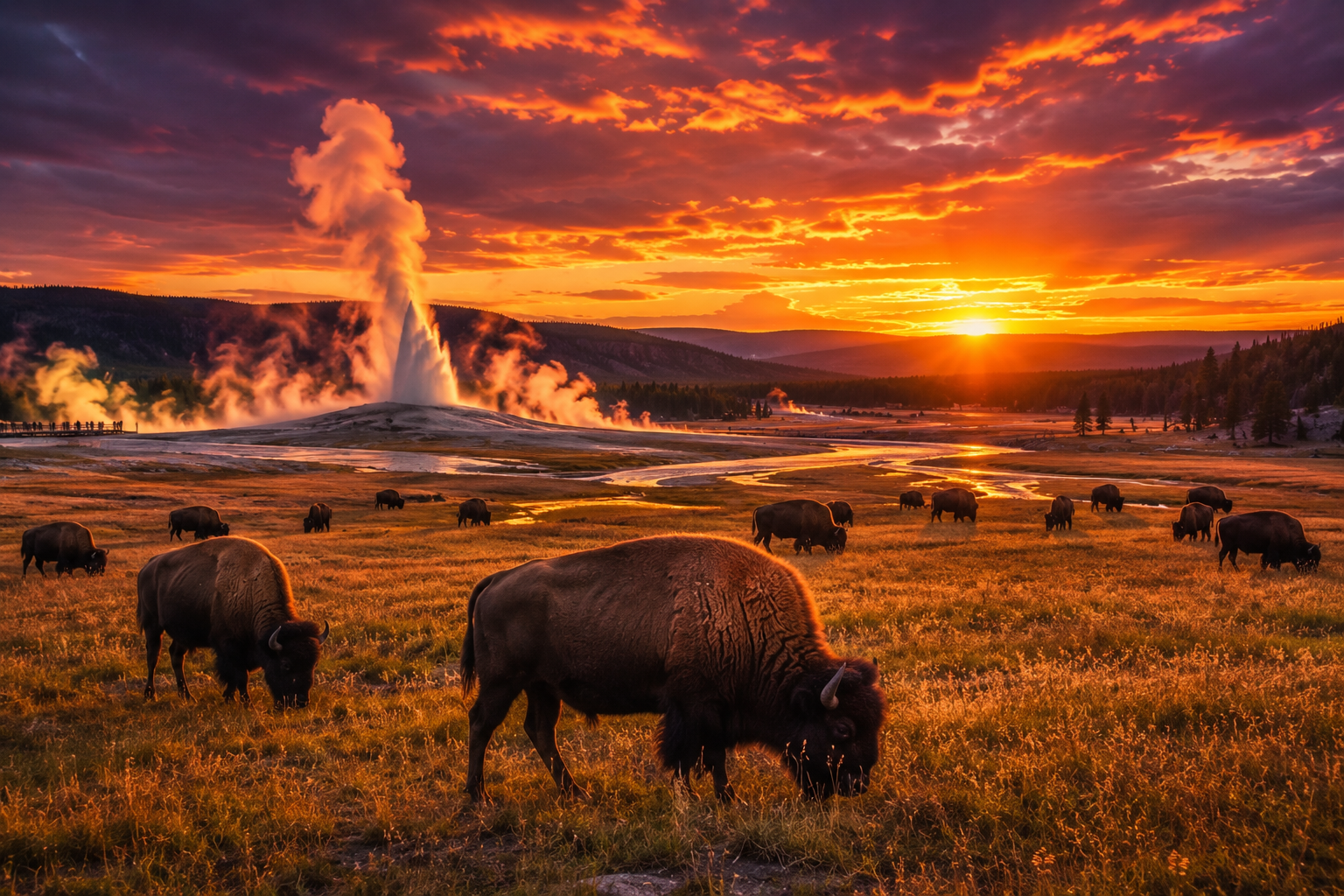
Standing more than 1.8 meters (6 feet) tall at the shoulder and weighing up to 900 kilograms (2,000 pounds), the American bison is the largest land mammal in North America.
Yet its greatest achievement is survival.
Around 10,000 years ago, millions of bison roamed the continent. By the late nineteenth century, relentless hunting had reduced their numbers to only a few hundred. Yellowstone became the last refuge for one of the continent's only continuously wild bison populations, helping save the species from extinction.
Today, thousands once again roam the park's valleys, following seasonal migrations that have remained largely unchanged for centuries.
Watching a herd move across Hayden or Lamar Valley is more than a wildlife encounter.
It is a glimpse into North America's ancient past.
🧠 Science Behind It
Why Are Bison So Important?
Bison are more than iconic animals—they are ecosystem engineers.
As they graze, they shape grassland vegetation, disperse seeds, and create habitats for insects and birds. Their movement across the landscape helps maintain healthy ecosystems, influencing everything from plant diversity to nutrient cycling.
Protecting bison means protecting the entire grassland community that depends on them.
Chapter Transition
The mighty bison may dominate Yellowstone's open valleys, but another animal silently watches from the forest's edge.
For decades, its haunting howl disappeared from these mountains.
When it finally returned, Yellowstone itself began to change.
The Gray Wolf: The Return of a Silent Hunter
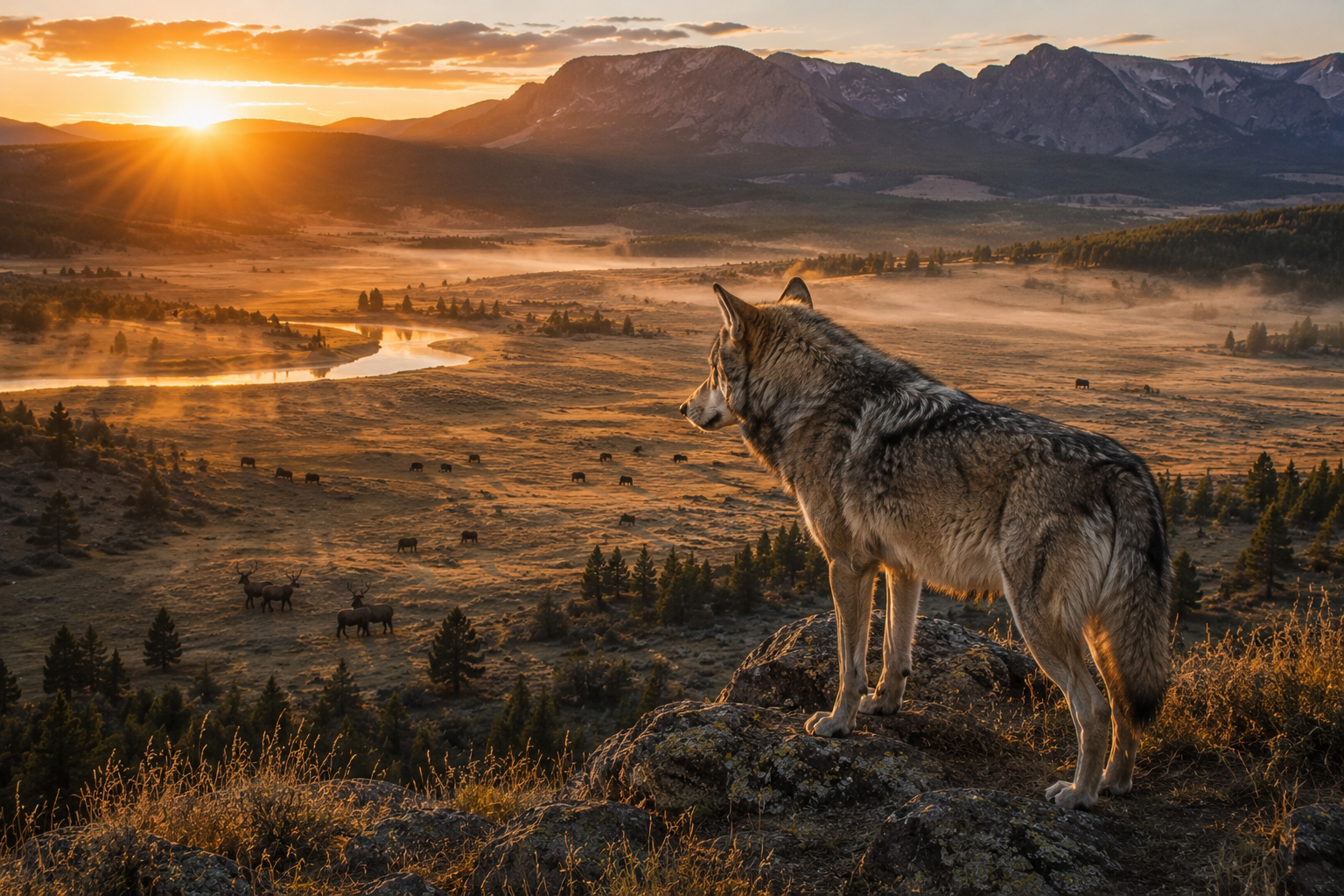
"In Yellowstone, the return of a single predator became one of the greatest conservation stories ever told."
For nearly seven decades, Yellowstone's forests were missing a voice that had echoed through these mountains for thousands of years—the haunting howl of the gray wolf.
By the 1920s, government predator-control programs and widespread hunting had eliminated wolves from the park. At the time, many believed removing predators would benefit both people and wildlife by allowing elk populations to grow.
For a while, it seemed like a success.
But nature had other plans.
Without wolves, elk numbers increased dramatically. Large herds spent longer periods grazing along rivers and streambanks, stripping young willow, aspen, and cottonwood trees before they could mature. As vegetation disappeared, beavers lost building materials, birds lost nesting habitats, and riverbanks became increasingly vulnerable to erosion.
Yellowstone remained beautiful.
But beneath the surface, its ecological balance had begun to unravel.
A Turning Point in Conservation
In 1995, wildlife managers reintroduced 14 gray wolves from Canada into Yellowstone National Park. Additional wolves followed the next year, marking one of the most closely monitored wildlife restoration projects in history.
The objective was simple:
Restore a native predator that had once been an essential part of Yellowstone's ecosystem.
Few expected just how profound the results would be.
How Wolves Changed Yellowstone
Instead of only reducing elk numbers, wolves changed how elk used the landscape.
More Than a Hunter
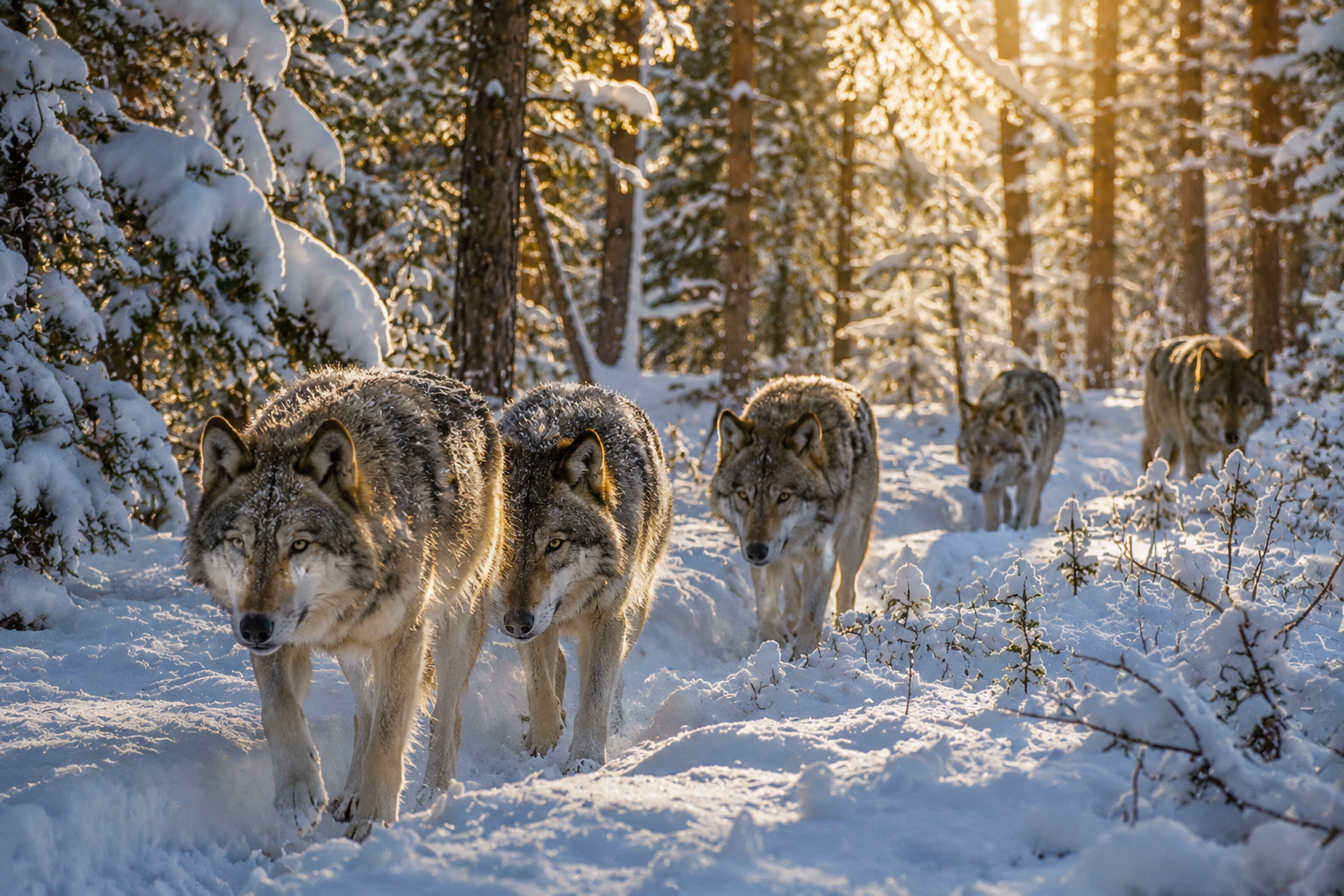
A wolf pack is a highly organized family.
Each member plays a role—from experienced adults leading hunts to younger wolves learning survival skills. Working together allows them to pursue large prey such as elk while minimizing risk and conserving energy.
This cooperation has made gray wolves one of the world's most successful social predators.
Yet wolves do far more than hunt.
Their presence influences where herbivores feed, how long they remain in one area, and even how forests regenerate over time. In Yellowstone, wolves are considered a keystone species because their influence extends far beyond their own population.
🧠 Science Behind It
Keystone Species
A keystone species has an impact on its ecosystem that is much greater than its population size would suggest.
When keystone species disappear, ecosystems often become less stable. When they return, natural processes can begin recovering.
Yellowstone's gray wolves are one of the world's best-known examples.
Yellowstone Wolf Facts
- 🐺 Reintroduced: 1995
- 🌲 Best place to observe: Lamar Valley
- 👥 Live in family packs with complex social structures
- 🌿 Ecological role: Keystone predator
Transition
As wolves patrol Yellowstone's valleys, another powerful predator roams the forests and mountain slopes.
Unlike wolves, it hunts mostly alone.
It is one of North America's largest land carnivores and a lasting symbol of the wild American West.
The Grizzly Bear: Yellowstone's Gentle Giant
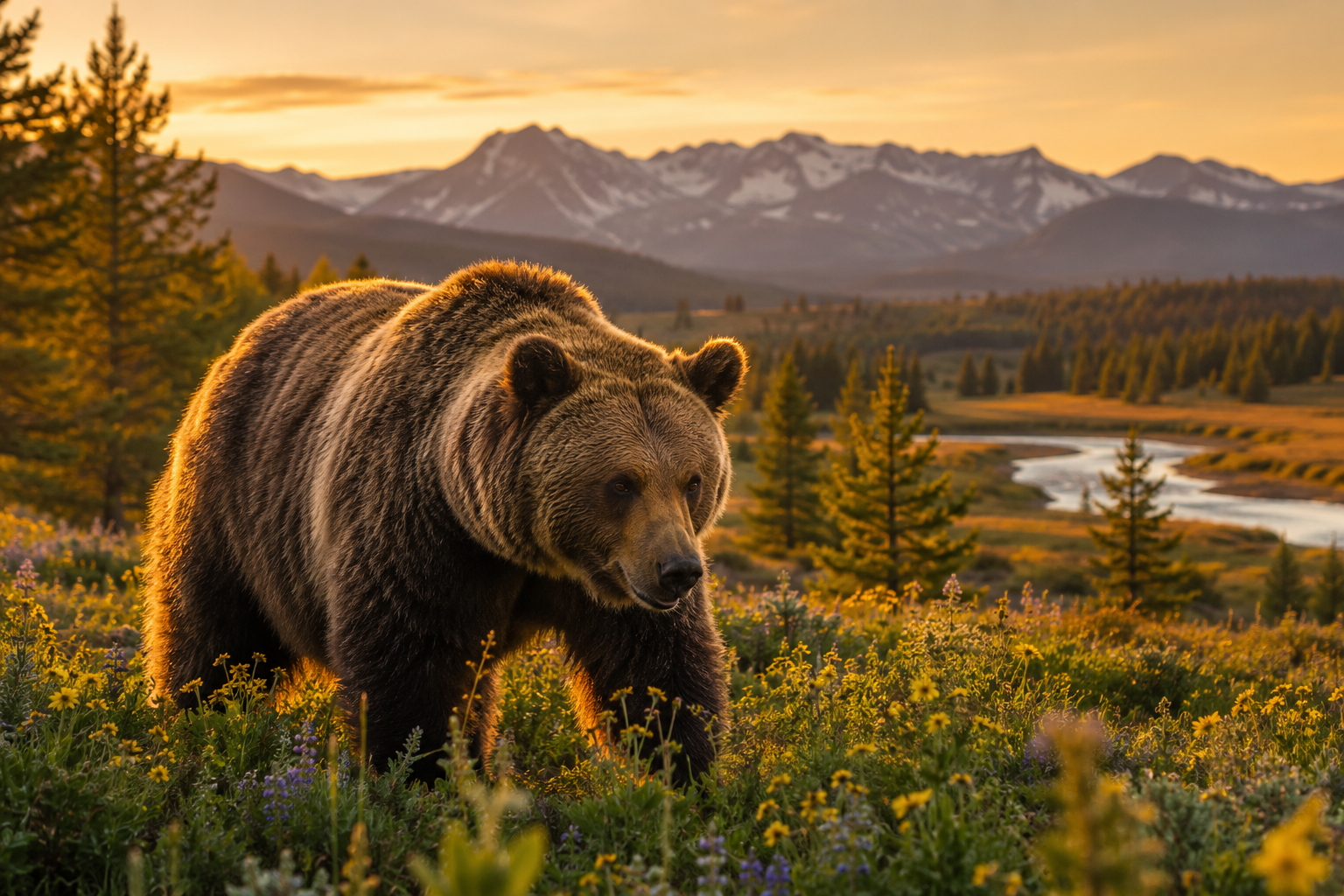
At first glance, a grizzly bear appears slow and peaceful as it wanders across Yellowstone's meadows. It lowers its head to search for roots, berries, or insects, seemingly unaware of the world around it.
Appearances can be deceiving.
An adult grizzly can weigh more than 360 kilograms (800 pounds) and sprint at speeds of up to 56 kilometers per hour (35 mph) over short distances. Despite their immense size, they are remarkably agile, capable of climbing steep slopes, swimming across rivers, and digging deep into the ground with powerful claws.
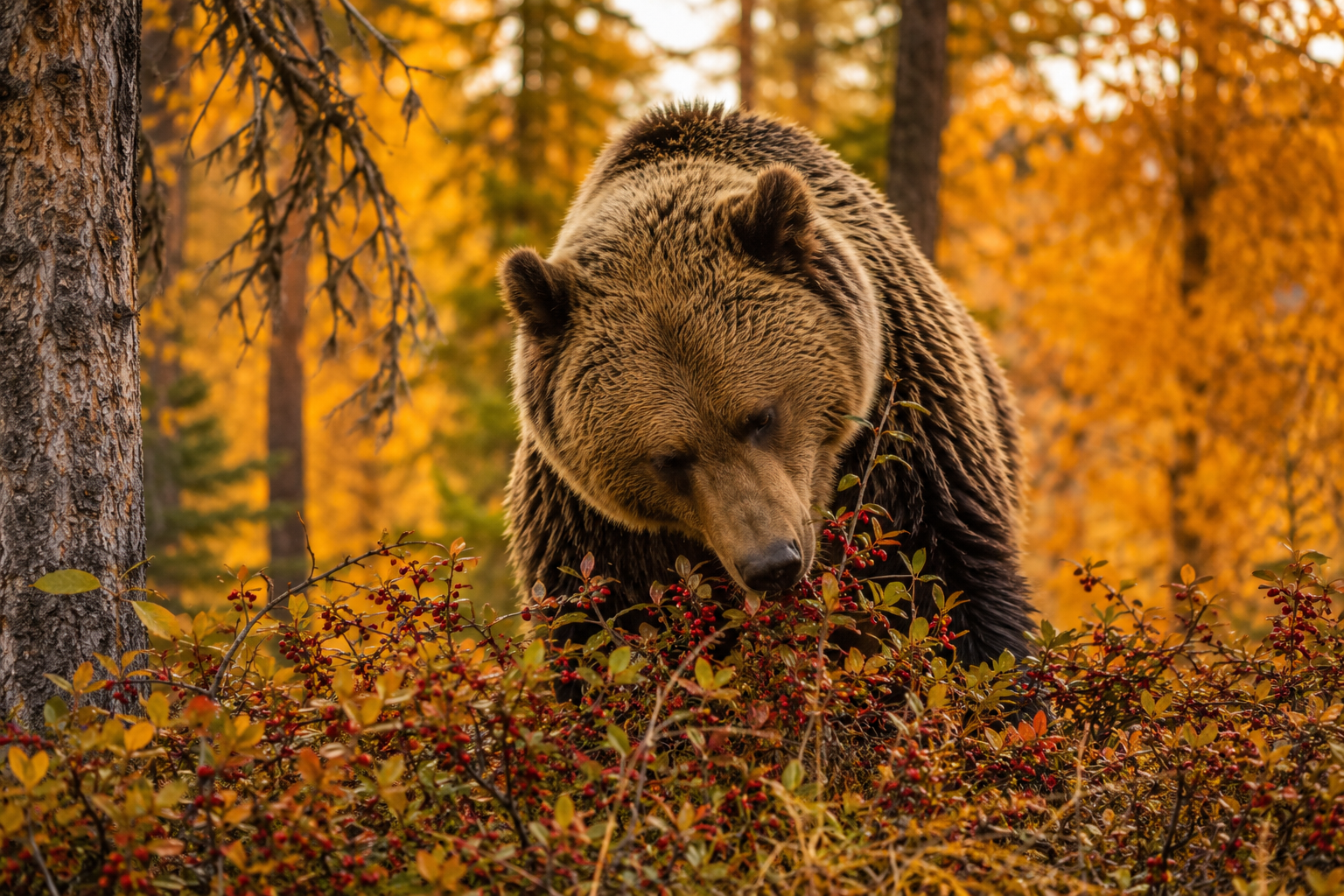
In Yellowstone, grizzly bears are true omnivores. Their diet changes with the seasons, including grasses, roots, berries, insects, fish, small mammals, and occasionally larger prey or carrion. This flexibility allows them to survive in one of North America's most dynamic environments.
Built for Every Season
Life in Yellowstone changes dramatically throughout the year, and grizzly bears must adapt to each season.
During spring, they emerge from winter dens hungry after months without eating. Summer brings an abundance of plants, insects, and small animals, while autumn becomes a race to build fat reserves before hibernation begins. A grizzly may consume tens of thousands of calories each day during this period, preparing for another long winter.
Hibernation is not simply a long sleep. During several months inside the den, a bear's heart rate slows dramatically, energy consumption decreases, and stored body fat becomes its primary source of nourishment until spring returns.
🧠 Science Behind It
Why Don't Grizzly Bears Eat During Hibernation?
Unlike many mammals, grizzly bears survive winter by relying almost entirely on stored body fat. Their metabolism slows significantly, allowing them to conserve energy while remaining in a state from which they can awaken if disturbed.
This remarkable adaptation enables them to endure Yellowstone's harsh winters without searching for food.
📊 Quick Facts
- 🐻 Scientific name: Ursus arctos horribilis
- ⚖ Weight: Up to 360 kg (800 lb.) or more
- ⚡ Top speed: 56 km/h (35 mph)
- 🌿 Diet: Omnivore
- ❄ Hibernation: Approximately 5–7 months
Transition
While the grizzly dominates Yellowstone's forests and mountain slopes, the park's open valleys belong to another remarkable traveler.
Every autumn, their calls echo across the landscape as thousands gather for one of North America's most spectacular wildlife events.
Elk: The Great Migration
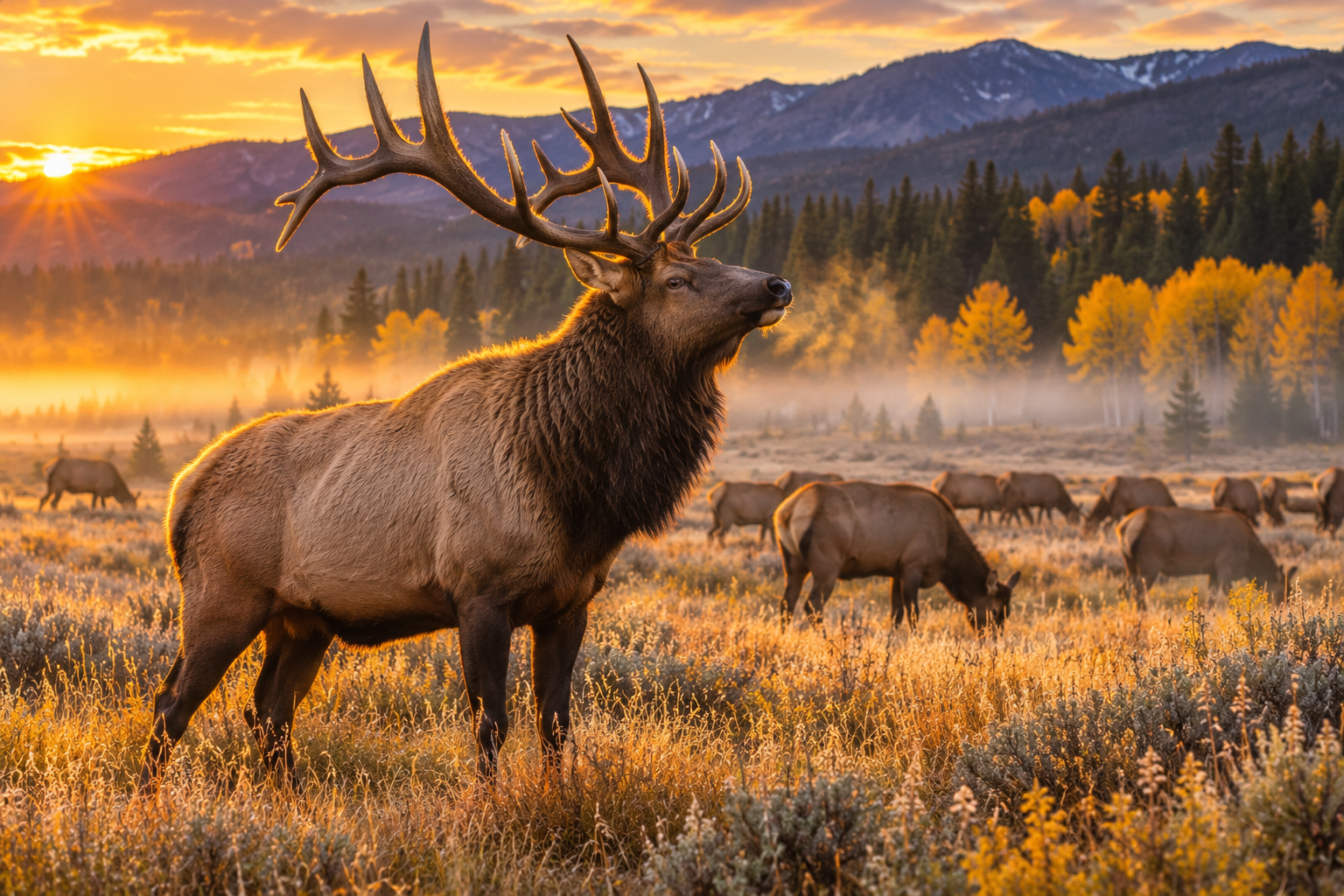
Every autumn, Yellowstone's quiet valleys come alive with one of nature's most unforgettable sounds.
The deep, haunting bugle of the bull elk echoes across the landscape, announcing the beginning of the breeding season. These powerful calls can travel for kilometers, challenging rivals and attracting females in a dramatic display that has played out for thousands of years.
Elk are among Yellowstone's most abundant large mammals, with thousands roaming its forests, grasslands, and river valleys. Their seasonal movements help connect different parts of the ecosystem, carrying nutrients and shaping vegetation as they graze throughout the year.
Life on the Move
Yellowstone's seasons are extreme.
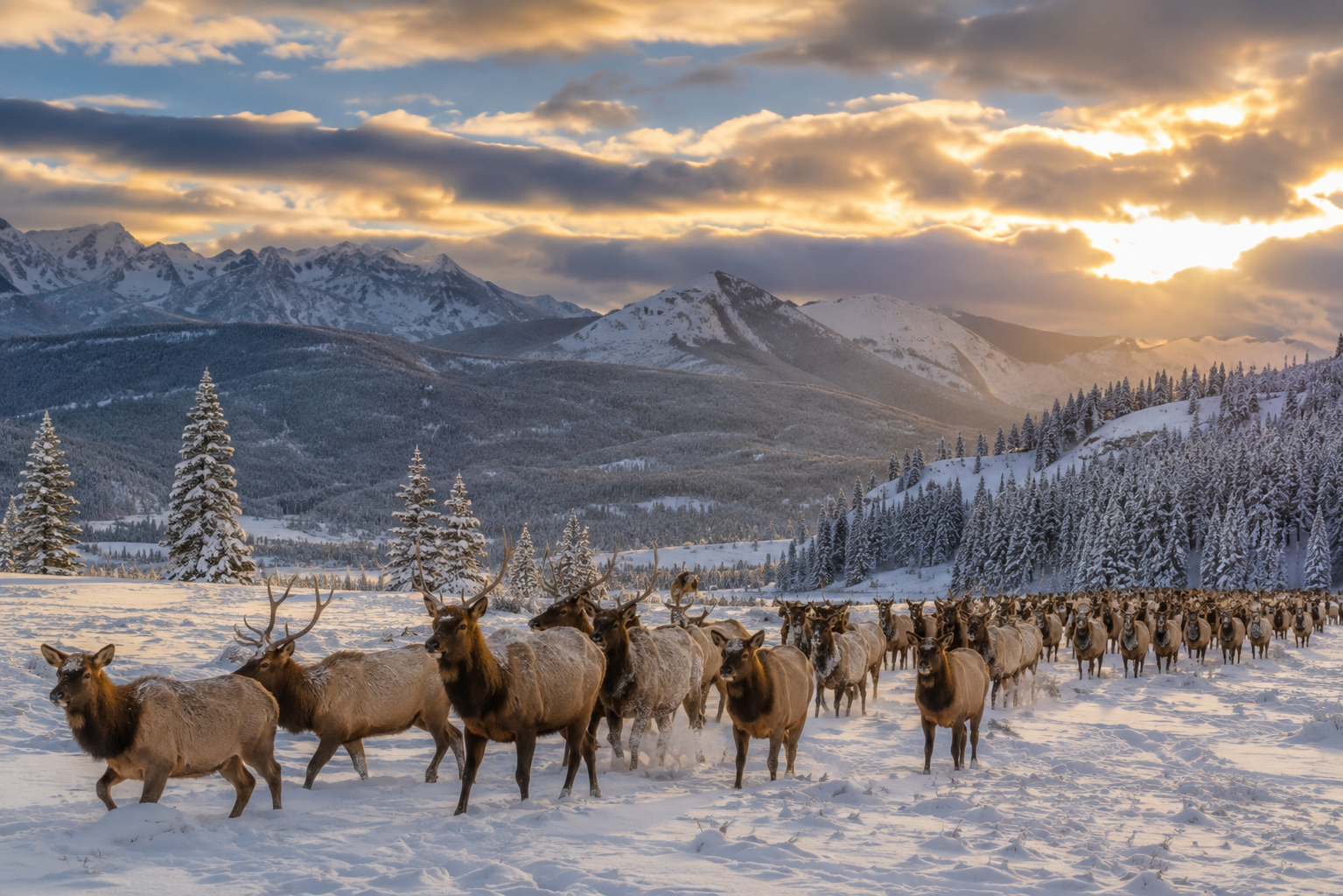
Deep winter snow can bury mountain meadows beneath thick layers of ice, making food difficult to reach. Rather than remain in harsh conditions, elk migrate to lower elevations where grasses are more accessible and survival becomes easier.
These seasonal journeys have shaped Yellowstone's ecosystem for thousands of years, influencing predators, scavengers, and even the growth of vegetation along migration routes.
Migration is not simply movement.
It is a survival strategy refined over countless generations.
The Annual Rut
During autumn, normally peaceful elk become fierce competitors.
Bull elk gather harems of females and defend them against rivals through dramatic displays of strength. Most confrontations end with bugling, posturing, and intimidation, but occasionally two evenly matched bulls lock antlers in powerful contests that determine breeding rights.
The rut is physically exhausting.
Many dominant males lose a significant amount of body weight before winter arrives, making survival through the coming months even more challenging.
🧠 Science Behind It
Why Do Male Elk Grow New Antlers Every Year?
Unlike horns, antlers are made of living bone and are shed annually.
Each spring, rising hormone levels trigger rapid antler growth. By late summer, the velvet covering dries and peels away, revealing hardened antlers ready for the autumn breeding season.
After the rut ends, the antlers are shed, and the cycle begins again.
📊 Quick Facts
- 🦌 Species: Rocky Mountain Elk
- 📏 Shoulder height: Up to 1.5 m
- ⚖ Weight: 225–320 kg
- 🌿 Diet: Grasses, shrubs, leaves
- 📢 Famous for: Autumn bugling calls
Transition
While elk roam Yellowstone's valleys and forests, the skies above are equally alive.
Golden eagles soar on rising thermals, bald eagles patrol lakes and rivers, and tiny songbirds fill the forests with sound.
The next chapter of Yellowstone's wildlife story takes flight.
Your section title
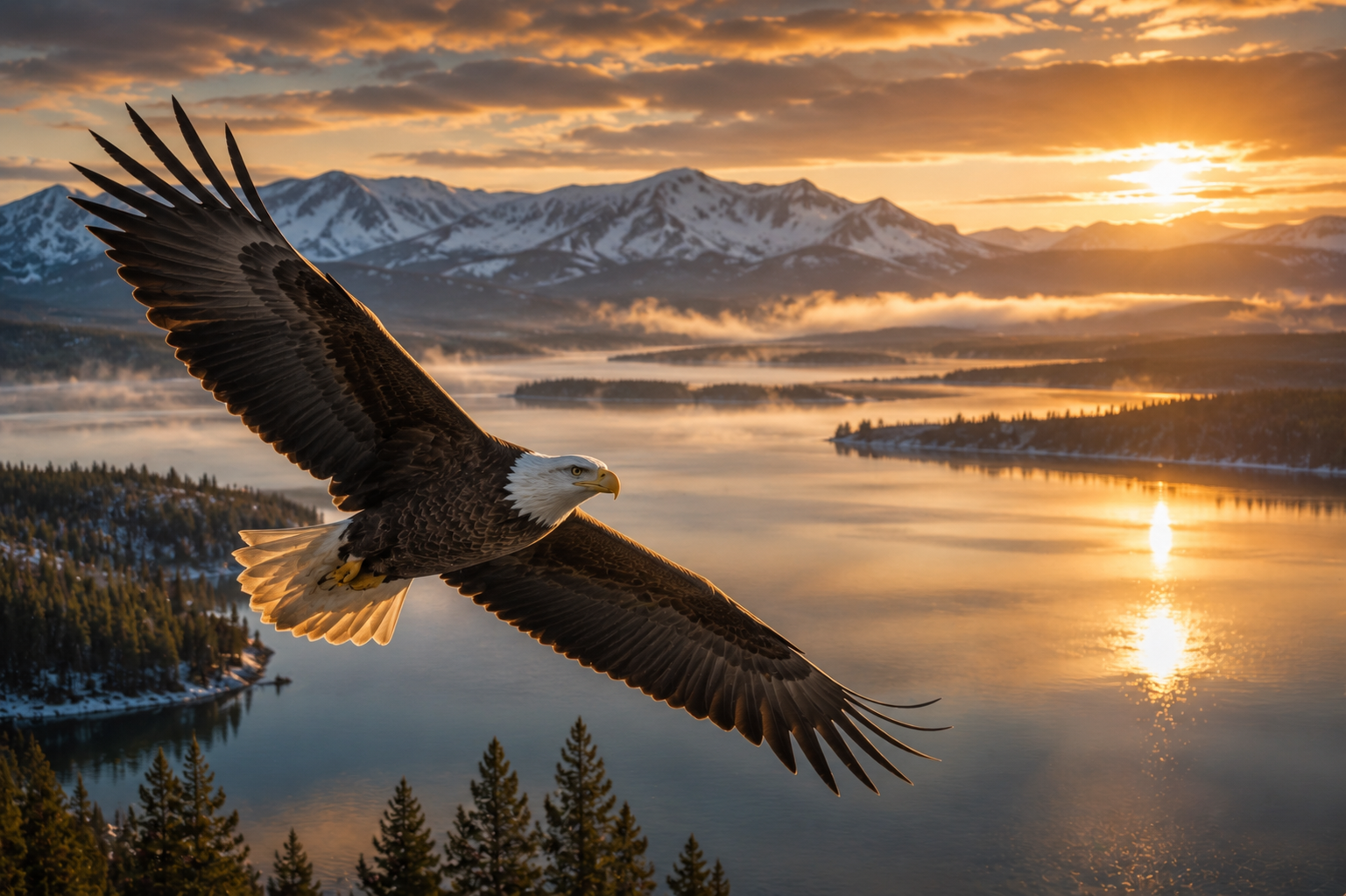
While bison thunder across open valleys and wolves silently patrol the forests, another world exists above them.
More than 280 bird species have been recorded in Yellowstone National Park, from powerful birds of prey circling mountain ridges to tiny songbirds hidden among pine forests. Together, they fill the wilderness with movement, color, and sound throughout the changing seasons.
Each habitat supports a different community of birds.
Open grasslands attract hawks and meadowlarks, dense forests shelter owls and woodpeckers, while rivers and lakes provide ideal nesting grounds for bald eagles, ospreys, ducks, and trumpeter swans.
For many visitors, Yellowstone's wildlife begins on the ground.
For birdwatchers, it begins in the sky.
Yellowstone Bird Habitats
The Bald Eagle: A Symbol of the American Wilderness
One of Yellowstone's most recognizable birds is the bald eagle.
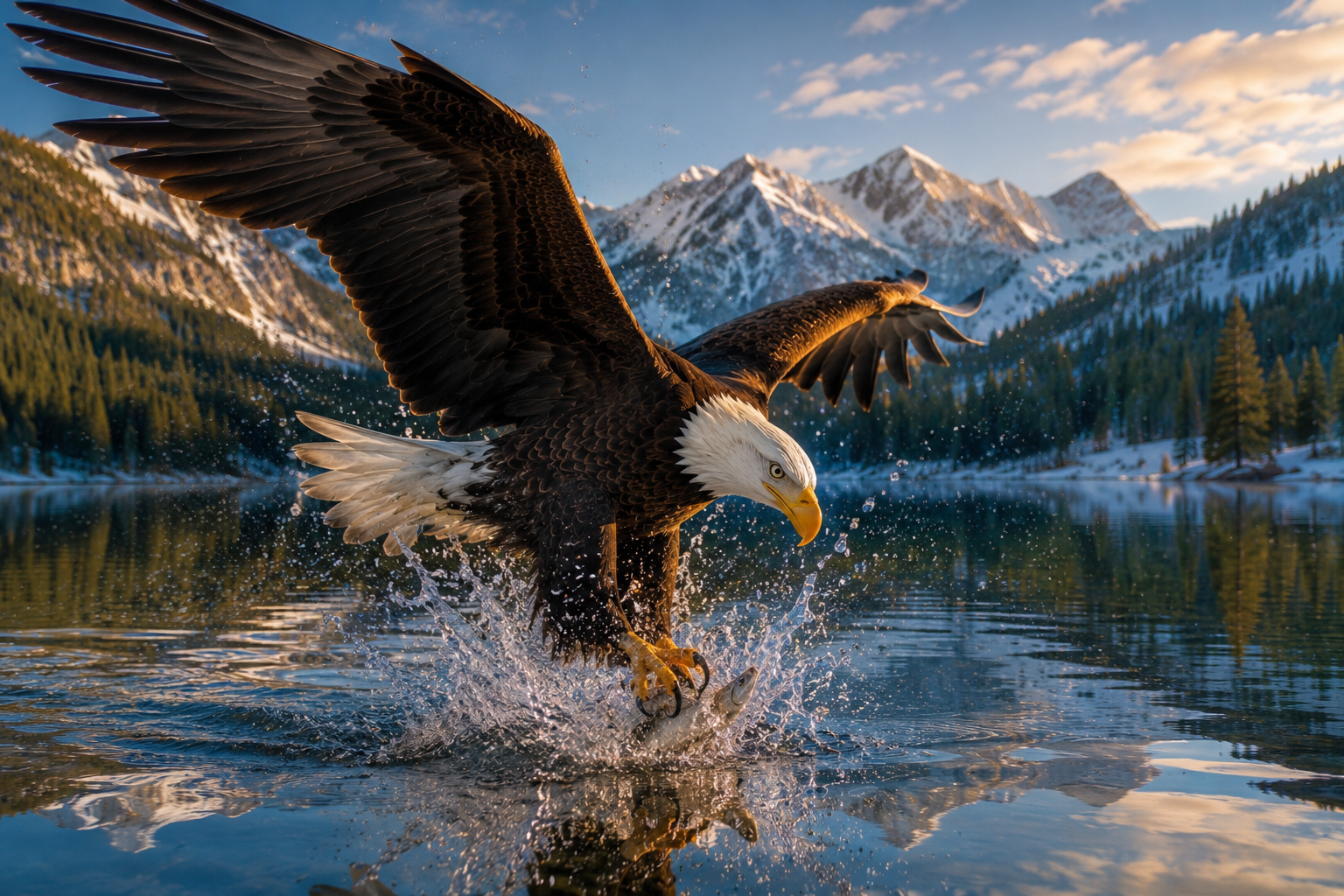
Despite its name, the bald eagle isn't actually bald. The word comes from an old English term meaning "white-headed." Adults develop their striking white head and tail feathers after about five years, making them instantly recognizable against Yellowstone's blue skies.
With a wingspan reaching over 2 meters (7 feet), bald eagles soar effortlessly above rivers and lakes, scanning the water below for fish. Their exceptional eyesight allows them to detect prey from remarkable distances before diving with incredible precision.
Their recovery is also one of North America's greatest conservation successes. Once threatened by habitat loss and pesticides, bald eagle populations have rebounded thanks to decades of conservation efforts.
🧠 Science Behind It
Why Can Eagles See So Well?
A bald eagle's eyesight is estimated to be four to five times sharper than that of a human. Specialized eyes allow it to detect small movements from great distances while maintaining sharp focus during flight.
This extraordinary vision makes eagles among the most efficient daytime hunters in the animal kingdom.
📊 Quick Facts
- 🦅 Bird species recorded: 280+
- 👁 Bald eagle vision: 4–5× sharper than humans
- 🪶 Wingspan: Up to 2.3 meters (7.5 feet)
- 🌊 Best viewing areas: Yellowstone Lake & major rivers
Chapter 3 Reflection
Yellowstone's wildlife is more than a collection of remarkable animals.
Every species—from the tiny songbird to the towering bison, from the silent wolf to the soaring eagle—plays a role in maintaining the delicate balance of one of Earth's last great temperate ecosystems.
Together, they remind us that wilderness is not defined by a single animal.
It is defined by the countless connections that allow an entire ecosystem to thrive.
CHAPTER4-The Rhythm of the Seasons
The Rhythm of the Seasons
Yellowstone never stays the same for long.
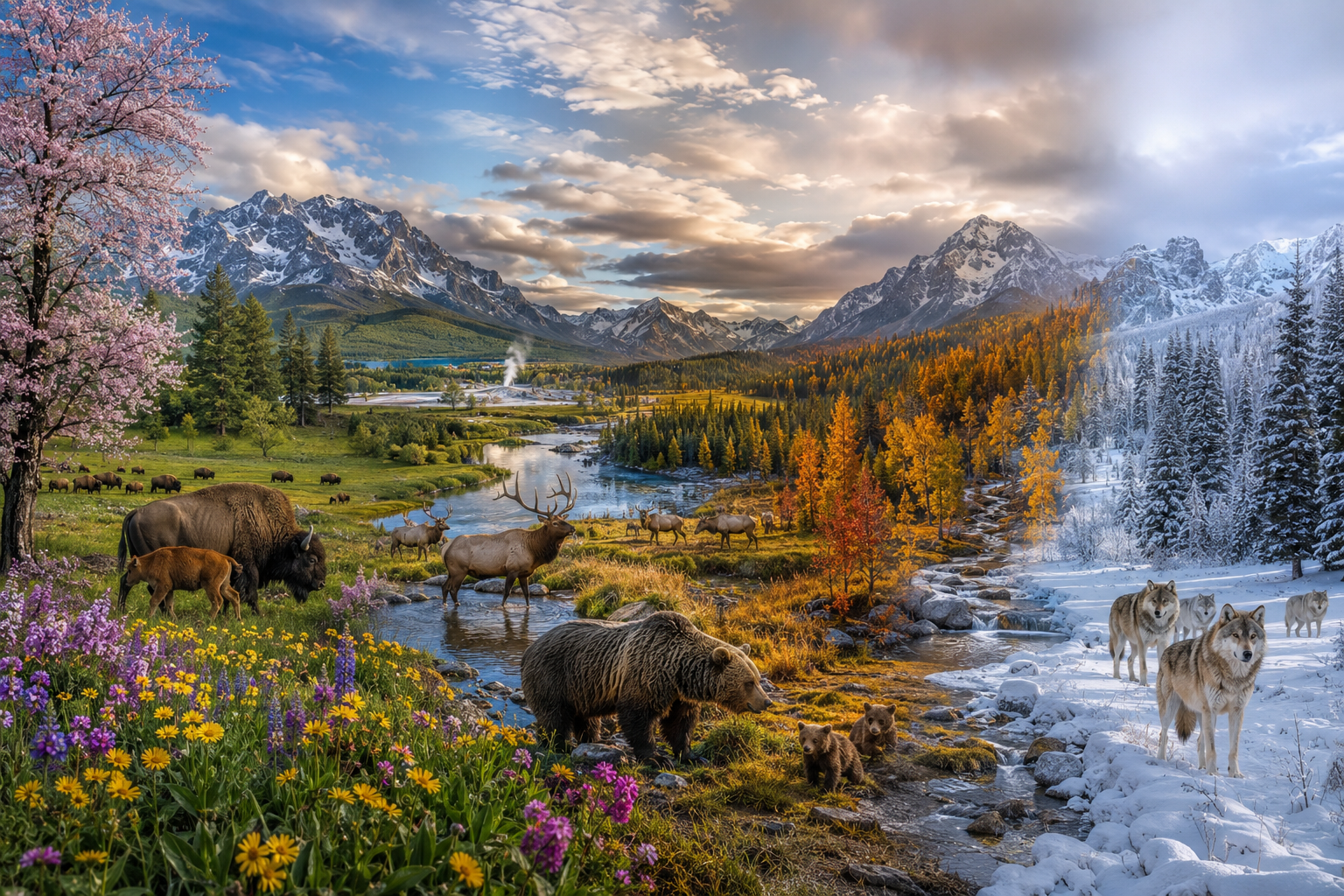
Each season reshapes the landscape, influences wildlife behavior, and creates new challenges for survival. From blooming valleys in spring to deep winter snow, the park follows a natural rhythm that has remained largely unchanged for thousands of years.
🌸 Spring – A Season of Renewal
As snow begins to melt, rivers swell with fresh water and wildflowers cover the valleys. Bison calves, elk calves, and bear cubs make their first appearance, marking the beginning of a new generation.
☀️ Summer – A Season of Abundance
Warm temperatures fill Yellowstone with life. Meadows become lush, insects thrive, birds raise their young, and wildlife takes advantage of plentiful food before the colder months return.
🍂 Autumn – A Season of Preparation
Autumn transforms Yellowstone into shades of gold and crimson. Elk begin their famous rut, grizzly bears feed almost constantly to prepare for hibernation, and many birds begin their southward migration.
❄️ Winter – A Test of Survival
Heavy snowfall covers much of the park, limiting food and movement. Wolves continue hunting in packs, bison use their powerful heads to clear snow, and grizzly bears remain safely inside their winter dens.
Despite the harsh conditions, Yellowstone remains full of life.
📊 INFOGRAPHIC – Yellowstone Through the Seasons
Chapter Reflection
The changing seasons are the heartbeat of Yellowstone. Every migration, every flower, every snowfall, and every new generation of wildlife follows this timeless cycle, keeping one of the world's greatest ecosystems in balance.
Chapter 5 – Living Above a Super volcano
Living Above a Super volcano
Beneath Yellowstone lies one of Earth's largest volcanic systems. Although the last major eruption occurred about 631,000 years ago, the park remains volcanically active today.
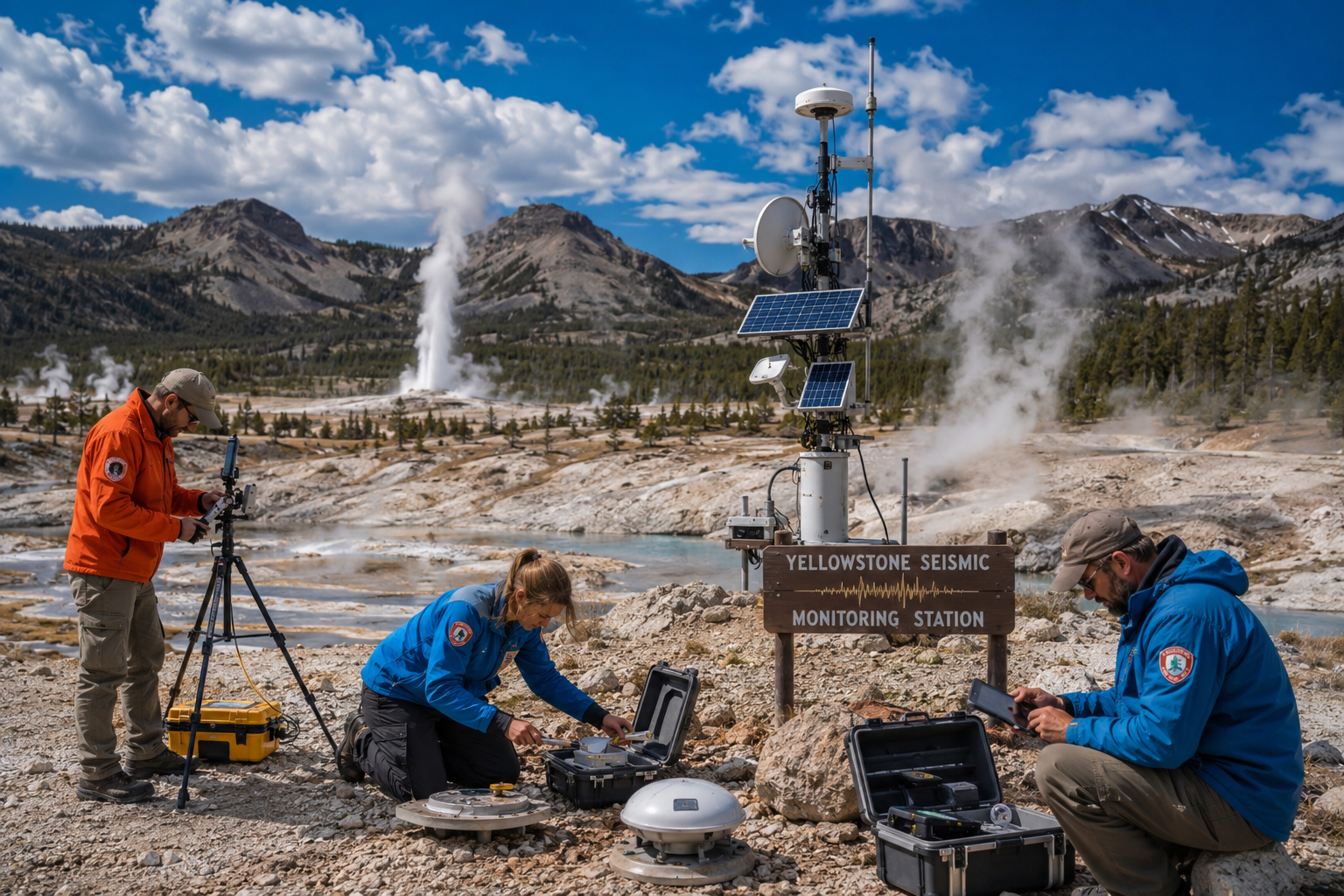
Thousands of earthquakes, shifting ground, and constantly changing geothermal features reveal that heat still rises from deep below the surface. These signs are carefully monitored by scientists, helping them understand how the volcanic system evolves over time.
Despite its reputation, Yellowstone is not expected to erupt anytime soon. Current monitoring shows no evidence that a catastrophic eruption is imminent.
📊 INFOGRAPHIC – How Yellowstone Is Monitored
Myth vs Reality
Yellowstone is often featured in movies and online videos predicting an imminent super volcano eruption.
The scientific evidence tells a different story.
While the park is geologically active, experts continuously monitor it, and there are no signs that a major eruption is expected in the foreseeable future. Yellowstone's geothermal activity is a normal expression of its volcanic system—not evidence that an eruption is about to occur.
🧠 Science Behind It
Yellowstone is monitored 24 hours a day by networks of seismometers, GPS stations, satellites, and geothermal observations. This continuous monitoring allows scientists to detect even subtle changes in the volcanic system and provide timely information if activity changes.
📊 Quick Facts
- 🌋 Last major eruption: 631,000 years ago
- 🌡 Geothermal features: 10,000+
- 📈 Earthquakes each year: Thousands (mostly very small)
- 🔬 Monitoring: Continuous, year-round
Transition
Yellowstone's future depends not only on natural forces but also on the people who protect this extraordinary landscape.
Chapter 6 – Protecting Yellowstone for Future Generations
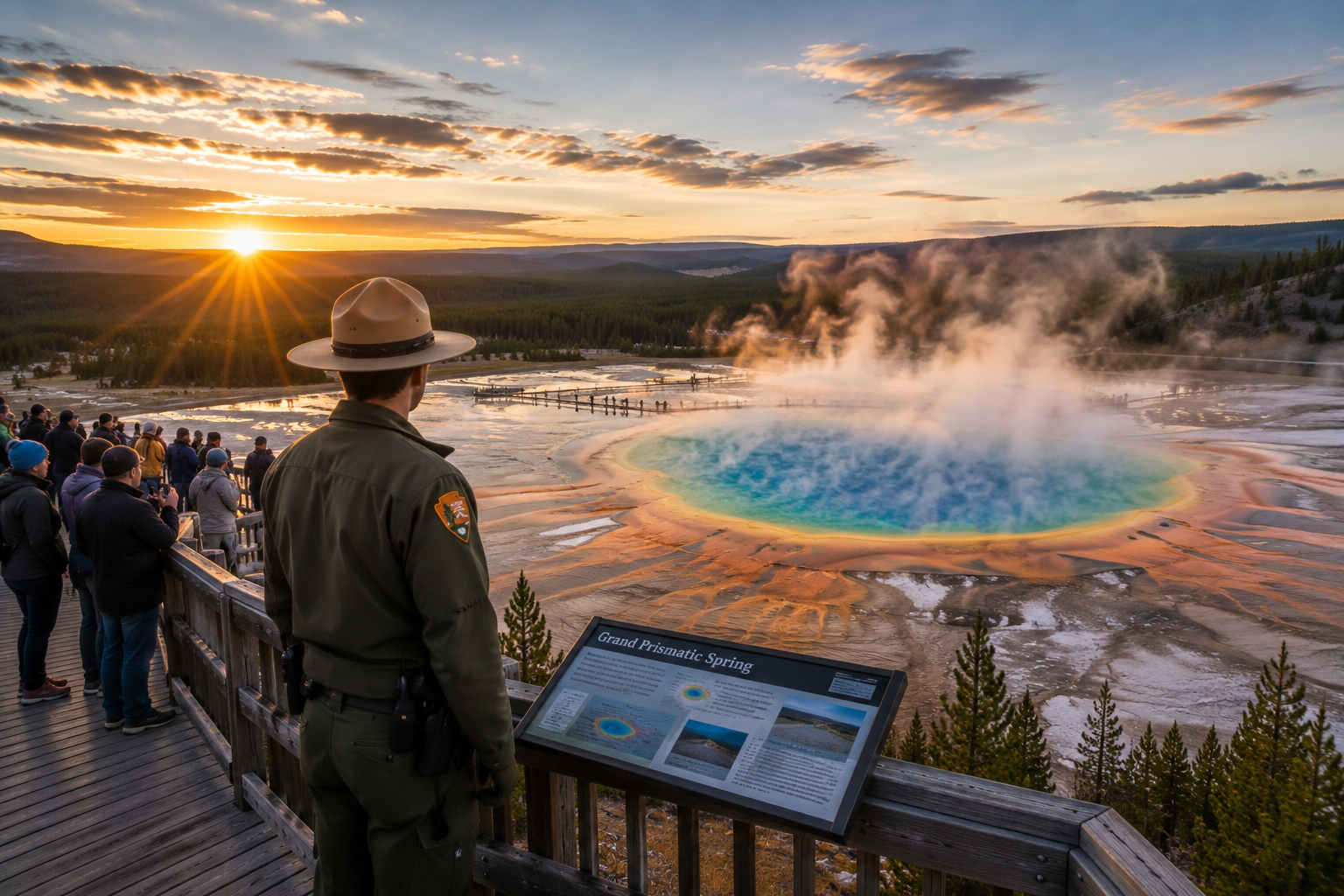
Yellowstone is far more than a national park.
It is a living laboratory, a wildlife sanctuary, and one of the world's greatest natural treasures. Every year, millions of visitors come to experience its geysers, forests, rivers, and remarkable wildlife, making conservation more important than ever.
Protecting such a vast ecosystem requires constant effort. Scientists monitor wildlife populations, restore habitats, study geothermal activity, and work alongside park rangers to preserve Yellowstone's fragile balance.
Visitors also play an essential role by respecting wildlife, staying on designated trails and boardwalks, and following park regulations designed to protect both people and nature.
📊 INFOGRAPHIC – How You Can Protect Yellowstone
A Legacy Worth Preserving
Since becoming the world's first national park in 1872, Yellowstone has inspired the global conservation movement.
Its landscapes remind us of Earth's immense geological power, while its wildlife demonstrates the resilience and interconnectedness of nature. Every geyser eruption, wolf howl, migrating elk herd, and soaring eagle represents a story that has unfolded for thousands of years.
Protecting Yellowstone ensures these stories continue for generations yet to come.
Product highlight
Choose a vibrant image and write an inspiring paragraph about it. It does not have to be long, but it should reinforce your image.
Conclusion
Yellowstone National Park is a place where fire shapes the land, water powers extraordinary geothermal wonders, wildlife thrives in one of the world's last intact temperate ecosystems, and every season brings new life to an ancient landscape.
From the immense volcanic forces beneath the surface to the delicate balance maintained by wolves, bears, bison, elk, and birds, Yellowstone reveals how closely every part of nature is connected.
More than 150 years after its protection began, Yellowstone continues to inspire scientists, photographers, explorers, and millions of visitors from around the world.
Its greatest lesson is simple:
When nature is protected, it has an extraordinary ability to endure, recover, and inspire.
Frequently Asked Questions (FAQ)
Why is Yellowstone famous?
Yellowstone is famous for its geothermal features, including Old Faithful and Grand Prismatic Spring, its abundant wildlife, and its status as the world's first national park.
Is Yellowstone's super volcano going to erupt soon?
No. Scientists continuously monitor Yellowstone, and there is currently no evidence that a major eruption is imminent.
What animals can visitors see in Yellowstone?
Common wildlife includes American bison, gray wolves, grizzly bears, black bears, elk, moose, bald eagles, coyotes, foxes, and many other bird species.
What is the best time to visit Yellowstone?
Summer offers the easiest access to most attractions, while spring and autumn provide excellent wildlife viewing. Winter offers a unique, snow-covered landscape with fewer visitors.
Why is Yellowstone important?
Yellowstone protects one of the world's most remarkable geological and ecological systems while serving as a global symbol of conservation and scientific research.