Why Is the Dead Sea So Salty You Can't Sink?
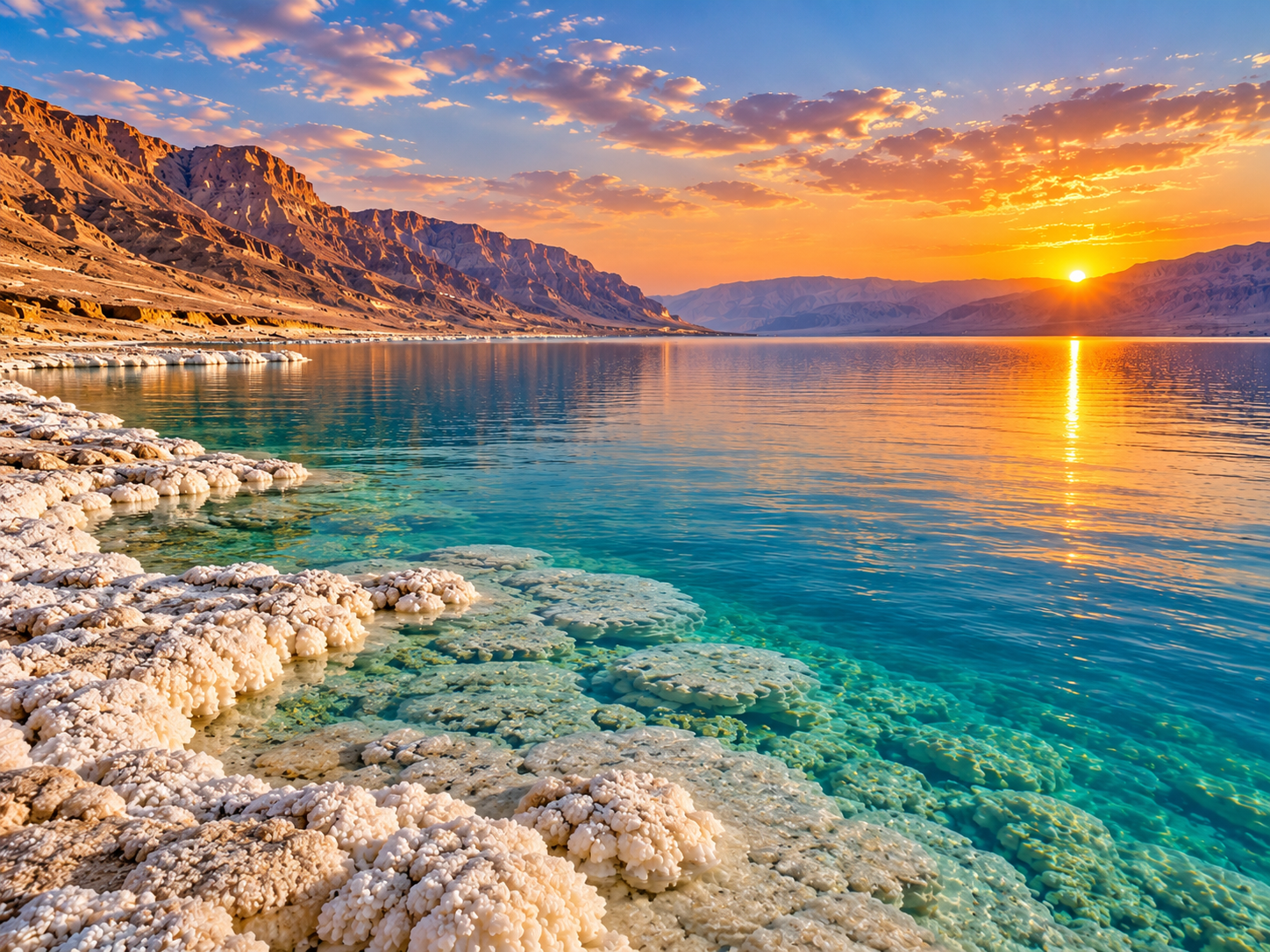
The first time you see someone floating in the Dead Sea, it looks almost impossible.
They lie back.
Their legs rise toward the surface.
They can float without much effort.
The water seems to hold them up.
So why is the Dead Sea so different from an ordinary lake or sea?
The answer begins with salt.
The Dead Sea has an extremely high concentration of dissolved minerals, making its water much denser than ordinary seawater. Denser water provides more buoyant force, so your body floats higher in it. The U.S. Geological Survey describes the Dead Sea as extremely saline and notes that its dense water allows people to float unusually easily.
But that creates another question.
Where did all that salt come from?
The Dead Sea sits in a closed basin.
Water can flow into it.
It has no natural outlet.
So when water evaporates in the hot, dry climate, the water leaves but the dissolved minerals stay behind. Over a very long time, those minerals have become highly concentrated.
The floating is therefore only the last part of the story.
First came the basin.
Then the water.
Then evaporation.
Then salt.
A lot of it.
And eventually, water dense enough to make you feel as though you are sitting on its surface.
Chapter 1 — Where Did All the Salt Come From?
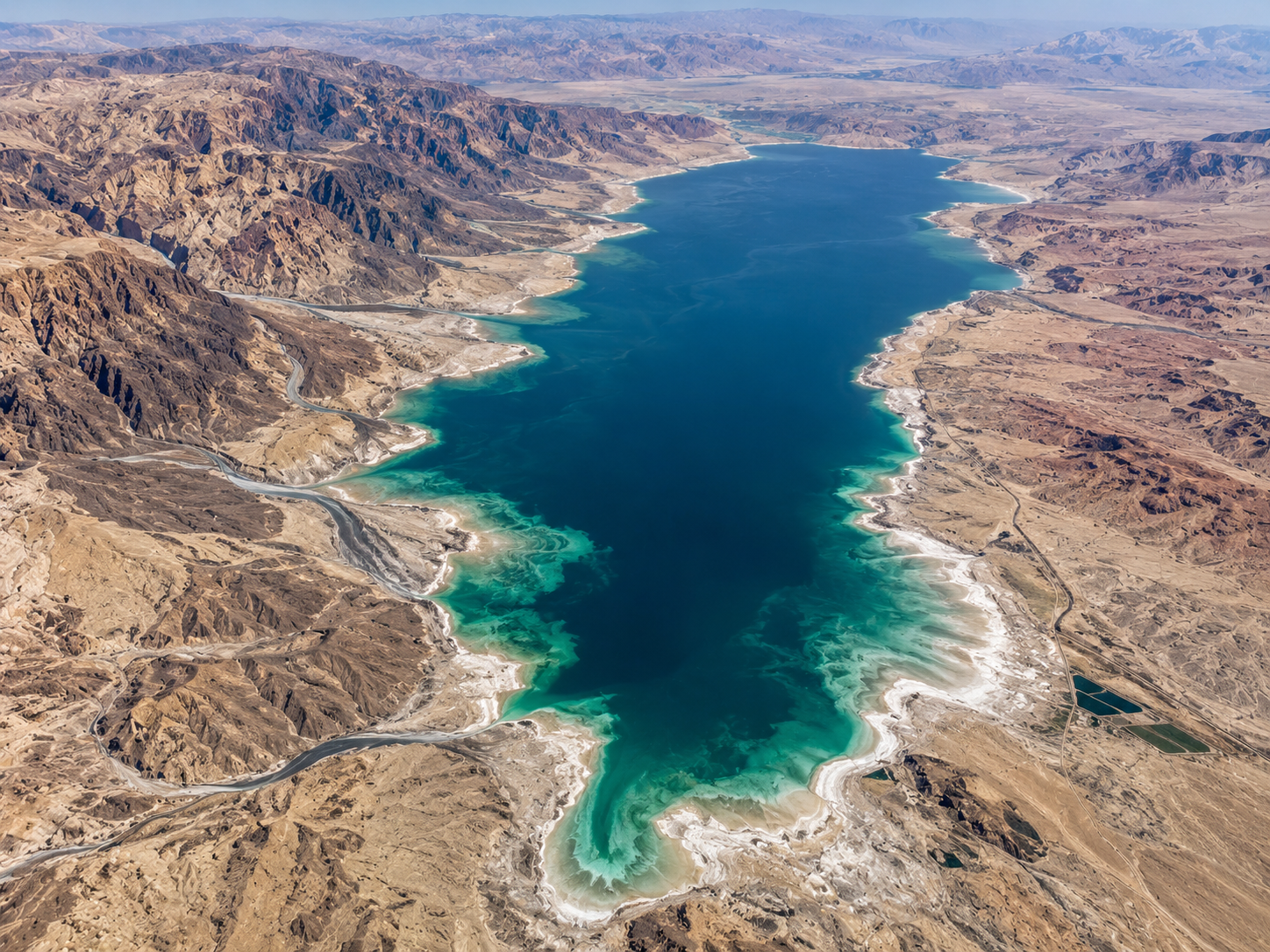
Look at a normal lake.
A river may flow into it.
Rain may fall into it.
Water may leave through another river.
The Dead Sea works differently.
It is a closed basin.
Water flows in, but there is no natural river carrying that water onward to another sea.
That makes evaporation very important.
Under the hot, dry conditions of the region, water leaves the lake as vapour. But salt and other dissolved minerals cannot evaporate with it.
They remain.
More water arrives.
More water evaporates.
The minerals stay.
Over time, the concentration rises.
The USGS describes the Dead Sea as a closed watershed in which water primarily leaves through evaporation. It also notes that the area can lose roughly 1,300–1,600 millimetres of water through evaporation each year.
This is the basic reason the Dead Sea became so salty.
It is not because salt is somehow pouring into it endlessly from one giant underground source.
It is because the basin is very good at keeping minerals and losing water.
That is a powerful combination.
Imagine adding a spoonful of salt to a glass of water.
Now remove some of the water.
The salt is still there.
Remove more water.
The remaining water becomes saltier.
The Dead Sea has been doing a much larger version of this for a very long time.
Why the Dead Sea Became So Salty
Chapter 2 — Why Does Salt Make You Float?
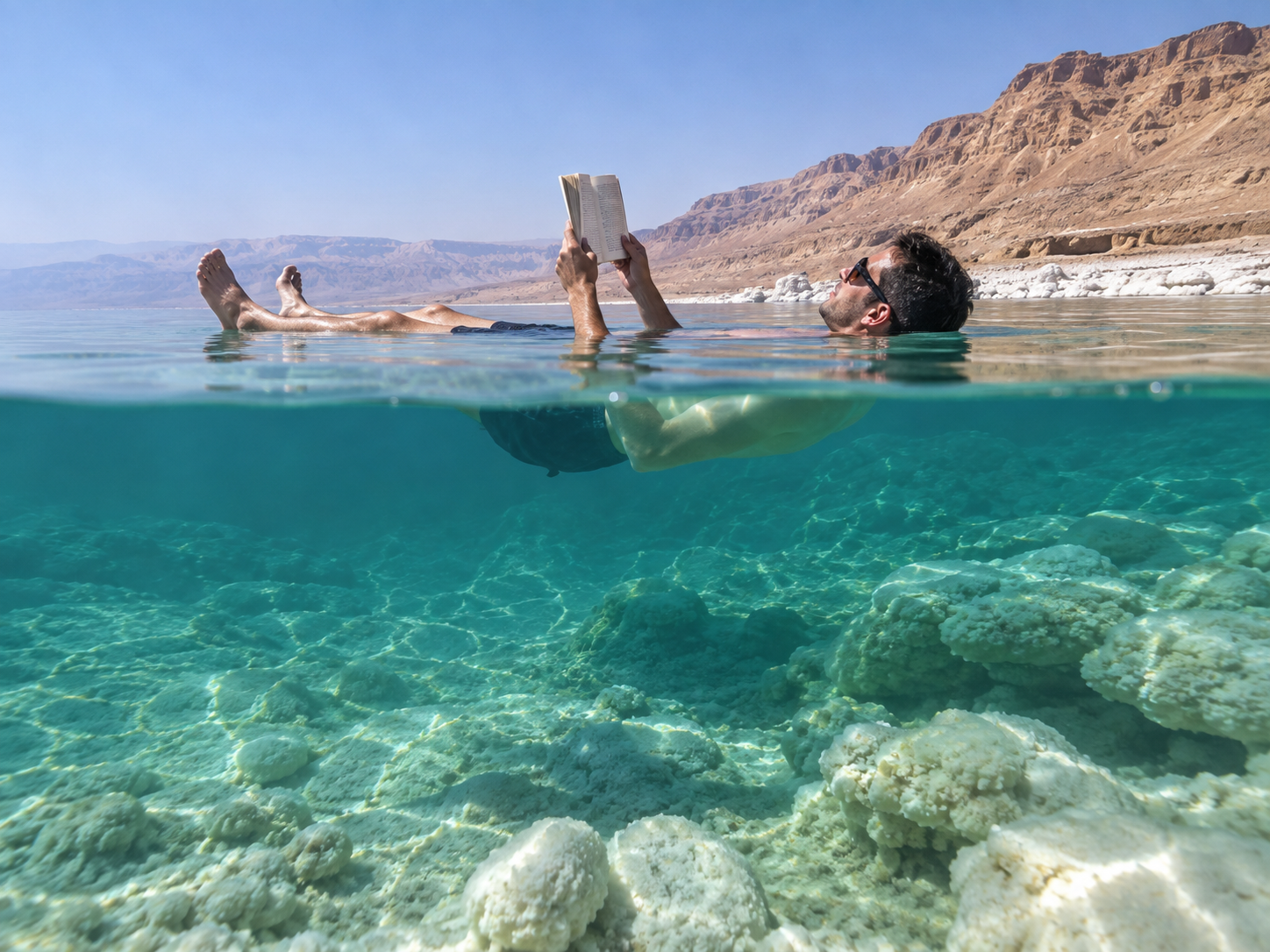
Now comes the part you can actually feel.
Get into ordinary seawater and you float a little more easily than in freshwater.
Get into the Dead Sea and the difference becomes obvious.
The reason is density.
Density simply means how much mass is packed into a given amount of space.
Adding large amounts of dissolved salt and other minerals makes water denser. The U.S. Geological Survey notes that saltier water is denser and therefore provides greater buoyancy; it specifically uses the Dead Sea as an example of water that can hold people up unusually well.
Your body is less dense than the extremely salty water around you.
So the water pushes upward strongly enough to support you.
You still have weight.
Gravity is still pulling you downward.
The difference is that the upward force from the dense water is much stronger than what you experience in ordinary water.
That is why you can float so high.
It can even feel strange when you first try it.
Your legs rise.
Your body resists sinking.
And suddenly an ordinary act like floating feels completely different.
There is no invisible platform beneath you.
The water itself is doing the work.
Why Dense Water Holds You Up
Chapter 3 — The Salt Is Not Just Table Salt
There is another surprise.
When people say the Dead Sea is “salty,” it is easy to imagine ordinary table salt dissolved in enormous amounts.
That is only part of the story.
Dead Sea water contains a mixture of dissolved minerals, including chloride, magnesium, calcium, sodium and potassium. USGS data describe a very high concentration of dissolved solids, with chloride making up a particularly large share.
This unusual mixture matters.
It makes the water dense.
It also makes the Dead Sea chemically very different from ordinary seawater.
That helps explain why the lake supports very little ordinary aquatic life.
The name “Dead Sea” did not come from nowhere.
The extreme salinity and unusual chemistry make the environment difficult for most larger aquatic organisms.
But the lake is not literally lifeless.
Microorganisms adapted to very salty conditions can survive there.
So even the name needs a little care.
The Dead Sea is “dead” in the sense that its extreme water conditions prevent the kinds of fish and aquatic communities found in normal lakes and seas.
But life has still found ways to exist there.
That is often how extreme environments work.
They do not remove all life.
They remove most of it.
What Is Actually Dissolved in the Dead Sea?
Chapter 4 — Why Doesn't the Dead Sea Just Get Saltier Forever?
Here is where the story becomes more complicated.
If water keeps evaporating and salt stays behind, shouldn't the Dead Sea eventually become almost solid salt?
It cannot continue in a simple straight line forever.
As water becomes extremely concentrated, some minerals begin to form solid deposits and leave the water.
The chemistry also changes as different minerals respond differently to increasing concentration.
That is why the Dead Sea is not simply becoming an endlessly saltier version of the same water.
Some minerals can precipitate out.
In simple terms, they come out of the water and become solid.
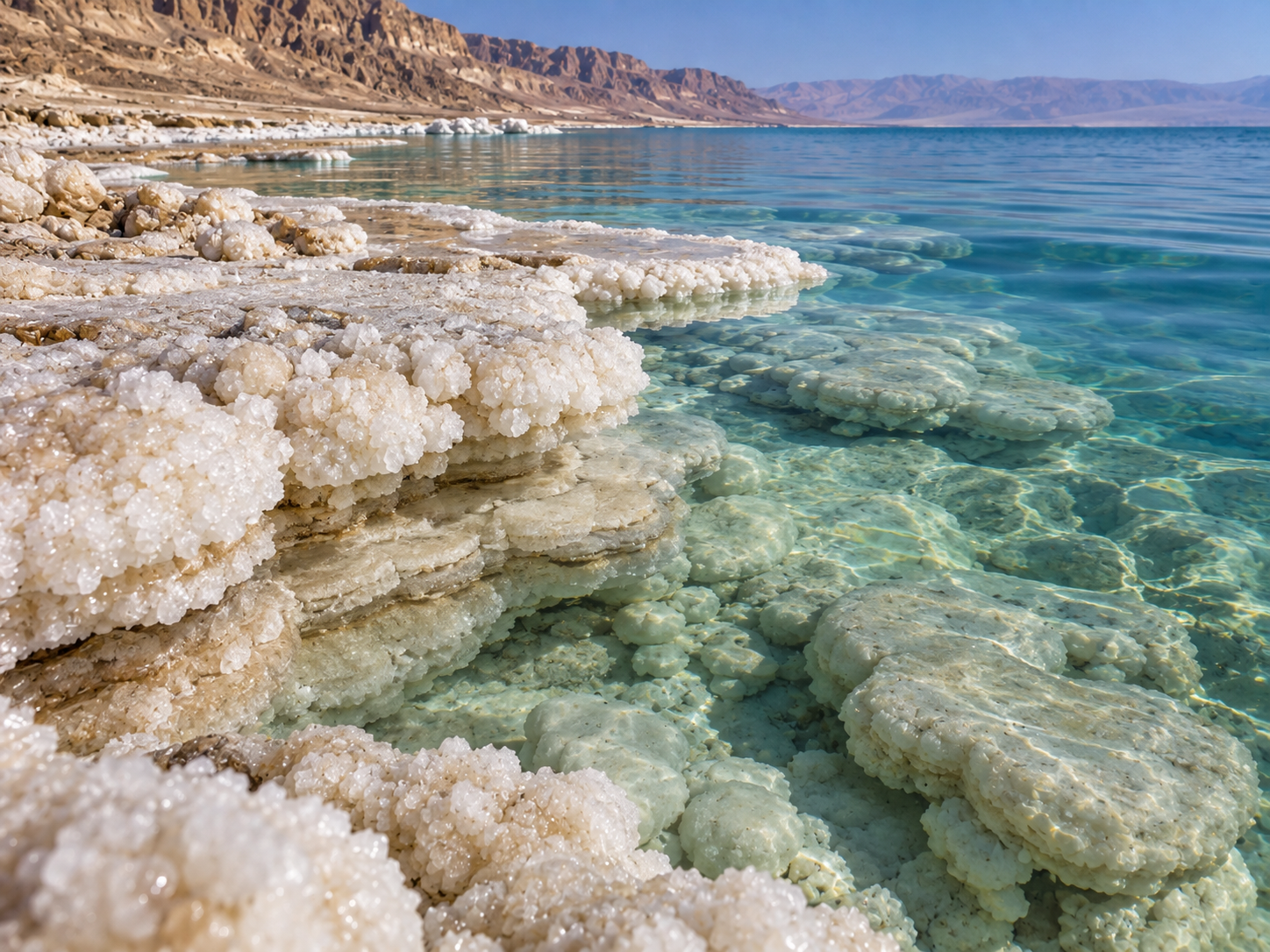
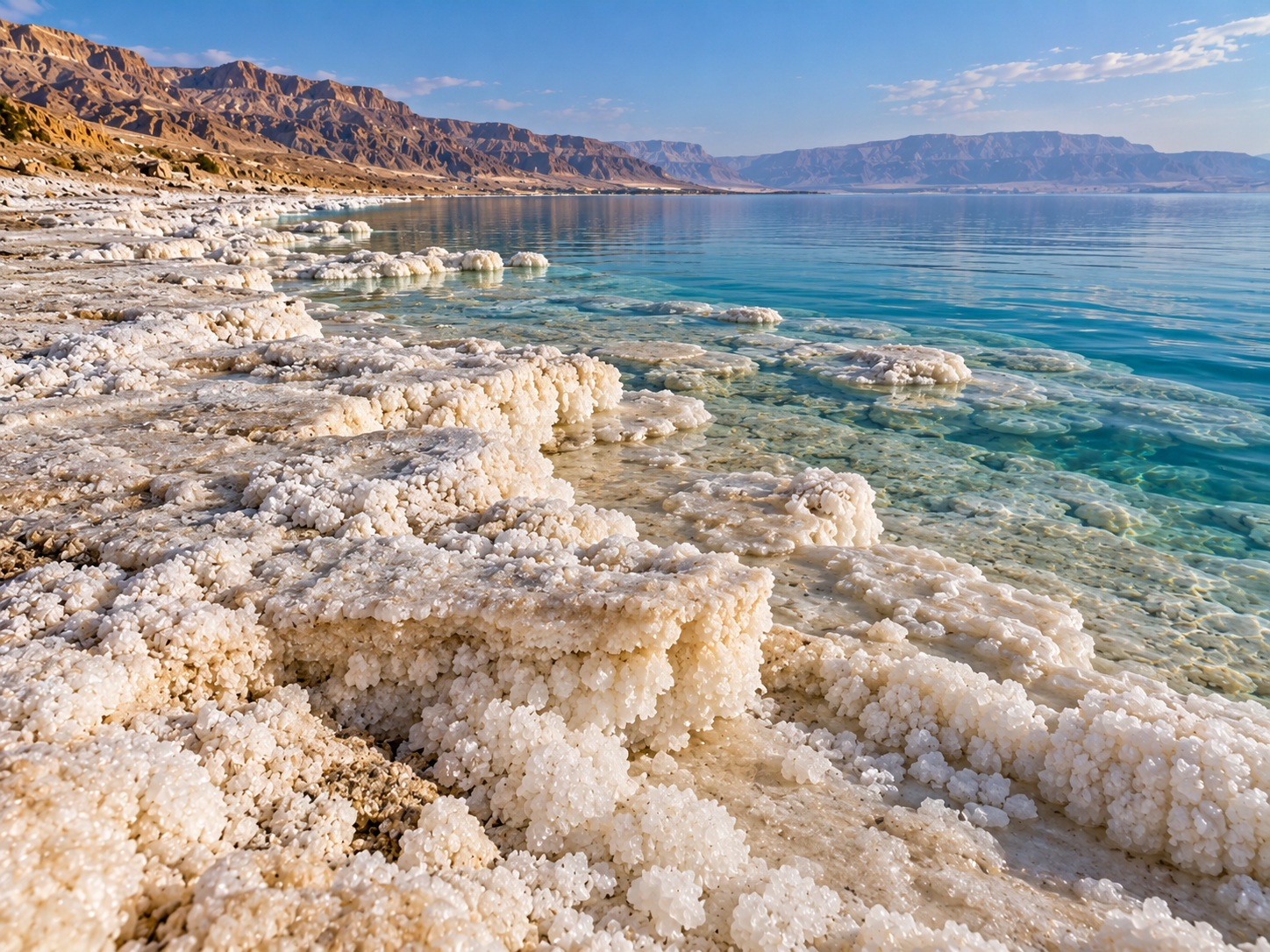
You can see the process around the shoreline.
Bright white salt and mineral deposits collect where water evaporates.
USGS explains that evaporation concentrates Dead Sea minerals and that the lake has been used as a source of minerals including potash, magnesium and bromine.
So the lake has a kind of mineral cycle.
Water arrives carrying dissolved material.
Evaporation concentrates it.
Some of it eventually leaves the water as solid mineral.
Then the cycle begins again.
That is why the Dead Sea shore can look as though it has been dusted with salt.
The white crystals are part of the lake's chemistry made visible.
Image prompt: Detailed shoreline documentary photograph of the Dead Sea showing thick white salt and mineral crystals forming along the receding waterline, shallow dense water beyond, rugged desert mountains in the distance, natural sunlight, realistic textures, 4:3.
What Happens When the Water Gets Too Concentrated?
Chapter 5 — The Dead Sea Is Shrinking
There is a modern problem hidden inside this very old story.
The Dead Sea is losing water.
Its level has fallen dramatically over the past century, mainly because much of the water that once flowed into it is now diverted for human use, while evaporation continues. USGS studies of the Dead Sea basin document substantial changes in lake level and water balance.
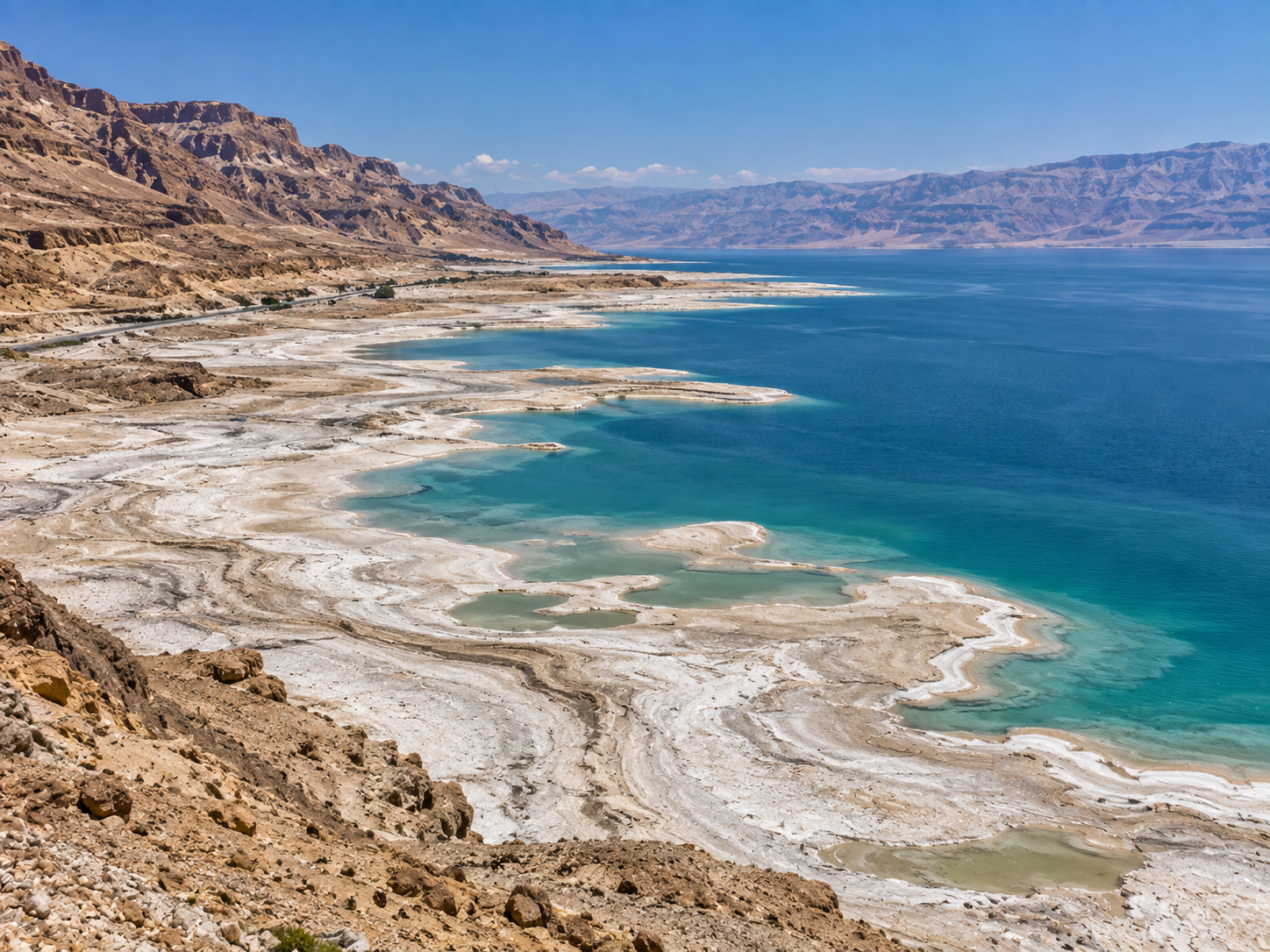
The result can be seen around the shoreline.
The water retreats.
New land appears.
Salt deposits are left behind.
And sinkholes have developed in parts of the surrounding region where underground freshwater dissolves buried salt layers, causing the ground above to collapse.
So the Dead Sea's famous saltiness has become part of a much larger environmental problem.
A lower lake does not simply mean a different beach.
It changes the landscape around it.
Roads and buildings can be affected.
Freshwater sources become more difficult to manage.
Mineral industries face changing conditions.
And the lake itself continues to shrink.
That creates an interesting contradiction.
The same evaporation that helped make the Dead Sea so salty is natural.
The recent acceleration of water loss is not simply natural.
Human water use in the basin has changed how much water reaches the lake.
The Dead Sea therefore tells two stories at once.
One is very old.
Water evaporates.
Salt remains.
The other is modern.
There is now less water arriving in the first place.
Why Is the Dead Sea Shrinking?
Chapter 6 — So, Can You Really Not Sink?
There is a small misunderstanding hidden in the title.
The Dead Sea makes floating easy.
It does not make sinking physically impossible.
You are still a person in water.
Your body still displaces water.
Your position still depends on how you move and how you breathe.
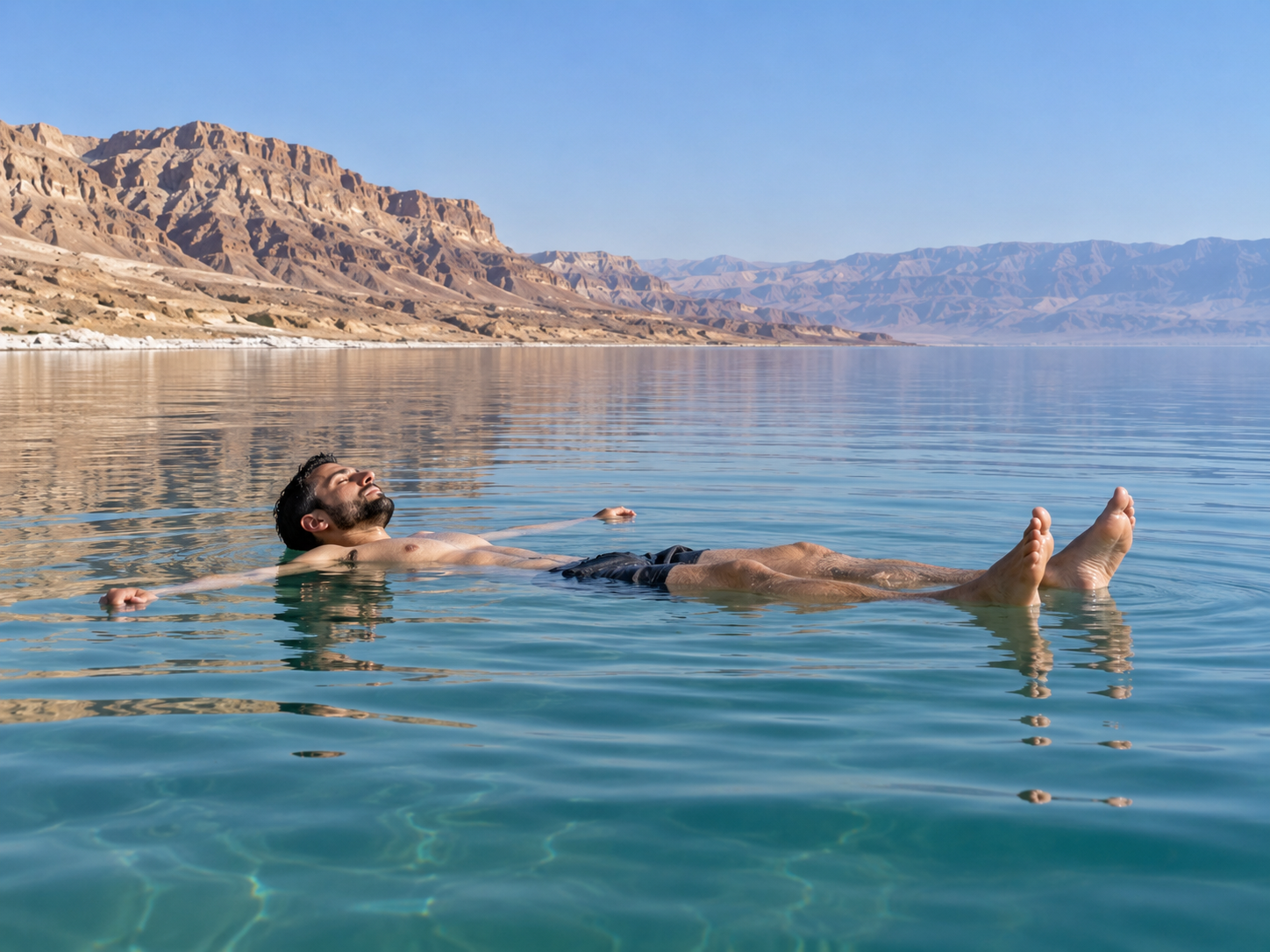
The important difference is that the water is unusually dense, so your body can remain largely above the surface while floating. The USGS describes the experience as floating “high” in the extremely dense water.
That is why people often look almost as though they are sitting on a chair.
The water is providing so much support that only part of the body needs to be submerged.
And that strange experience gives us a very simple way to understand density.
Put an object into less-dense water and it sinks more deeply.
Put the same object into denser water and it floats higher.
The Dead Sea simply takes this familiar rule to an extreme.
So yes, you can float remarkably easily.
But the more interesting question is not:
“Why can't you sink?”
It is:
“Why is the water dense enough to hold you so high?”
Now the answer is clear.
The lake has been concentrating minerals for a very long time.
Water leaves.
Minerals stay.
The water becomes denser.
And when you finally step into it, you feel the result immediately.
Why You Float So High
Chapter 7 — The Salt Is the Last Chapter of a Much Older Story
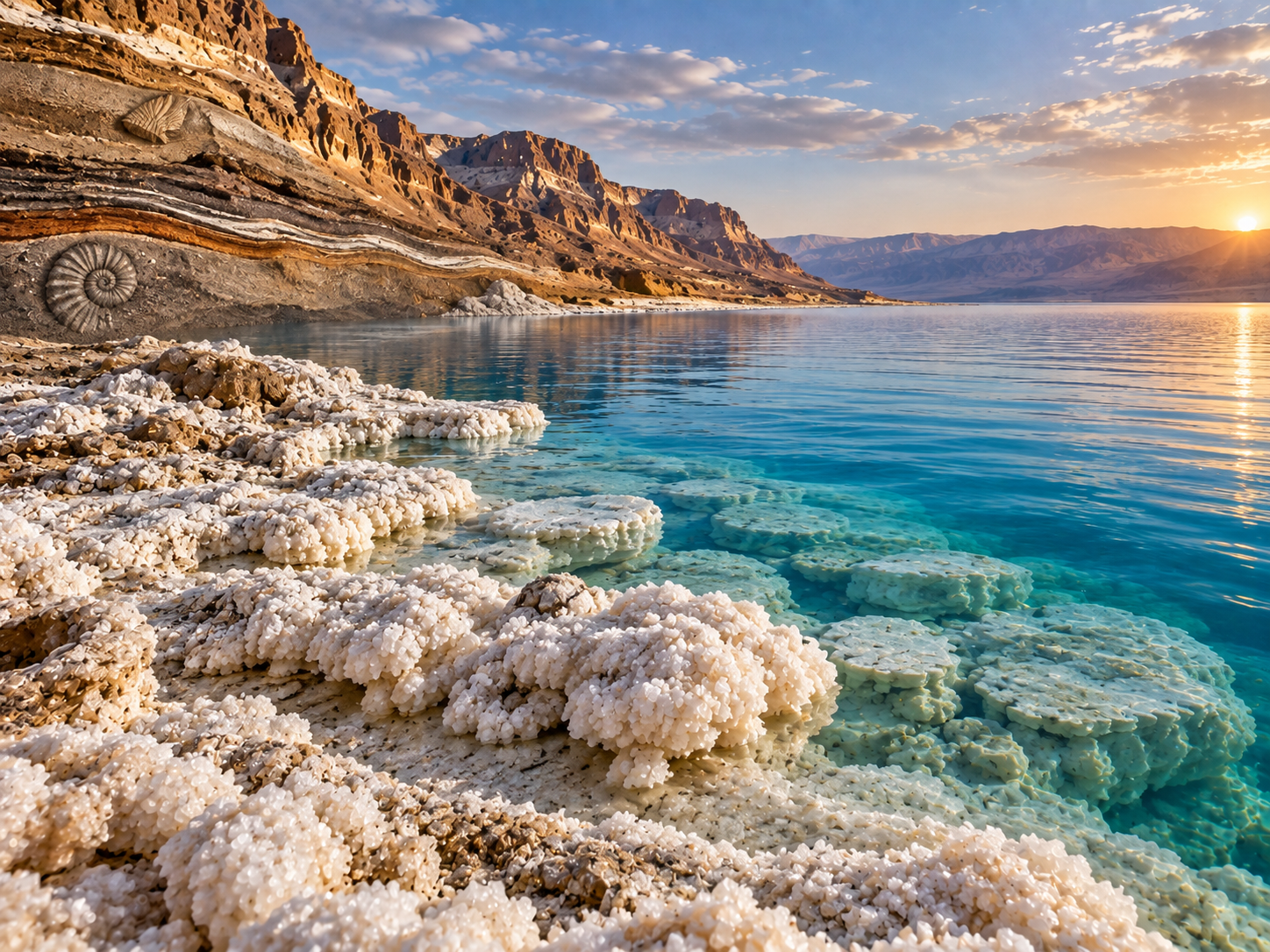
The Dead Sea did not become famous because people discovered that they could float in it.
The lake was already unusual long before anyone turned that into a photograph.
It occupies one of the lowest places on Earth's land surface.
Water has flowed into its basin for thousands of years.
Minerals have arrived with that water.
Evaporation has taken water away.
The minerals have remained.
Over time, that process created an environment far saltier and denser than ordinary seawater.
Then humans noticed what that water could do.
They came to bathe.
They extracted minerals.
They built communities and industries around the basin.
And eventually, people began to notice one of its strangest physical properties.
You could lie back in it and float.
But even that simple experience points back to the geology.
The floating is not the beginning of the story.
It is the final result.
A closed basin.
A hot, dry climate.
Evaporation.
Minerals left behind.
Extremely dense water.
And finally, you.
You step into the Dead Sea and suddenly discover what all that geology feels like.
The water holds you up.
Frequently Asked Questions
1. Why is the Dead Sea so salty?
The Dead Sea is in a closed basin with no natural outlet. Water enters but mainly leaves through evaporation, leaving dissolved salts and minerals behind. Over long periods, they become highly concentrated.
2. Why can you float so easily in the Dead Sea?
The water contains so many dissolved minerals that it is much denser than ordinary freshwater and seawater. The denser water provides greater buoyant support, allowing your body to float unusually high.
3. Can you really not sink in the Dead Sea?
The famous floating effect makes sinking much more difficult, but “you cannot sink” is an oversimplification. Your ability to float depends on body position and other factors; the key difference is the unusually dense water.
4. Is the Dead Sea actually a sea?
Despite its name, the Dead Sea is a lake. It is a terminal lake in a closed basin, meaning it has no natural surface outlet carrying water onward to another sea.
5. What is the Dead Sea made of?
Its water contains a highly concentrated mixture of dissolved minerals, including chloride, magnesium, sodium, calcium and potassium. It is not simply seawater with extra table salt.
6. Why doesn't the salt simply disappear through evaporation?
Water evaporates, but the dissolved minerals remain. As concentration rises, some minerals can eventually leave the water by forming solid deposits around the lake.
7. Is the Dead Sea really dead?
The extreme salinity prevents most ordinary aquatic animals, such as fish, from living in the water. However, specialized microorganisms can survive in highly saline conditions, so the lake is not literally without life.
8. Why is there so much salt around the Dead Sea shore?
As water evaporates and the shoreline retreats, dissolved minerals become concentrated and can form solid salt and other mineral deposits around the edges of the lake.
9. Why is the Dead Sea shrinking?
The lake naturally loses large amounts of water through evaporation, but human water use has also reduced the amount of freshwater reaching the Dead Sea. The combination has contributed to a major decline in lake level.
10. What makes Dead Sea water denser than normal seawater?
The huge amount of dissolved minerals increases the water's density. Saltier water is generally denser than freshwater, and the Dead Sea takes that effect much further because its mineral concentration is exceptionally high.