Why Is Lake Natron Red?
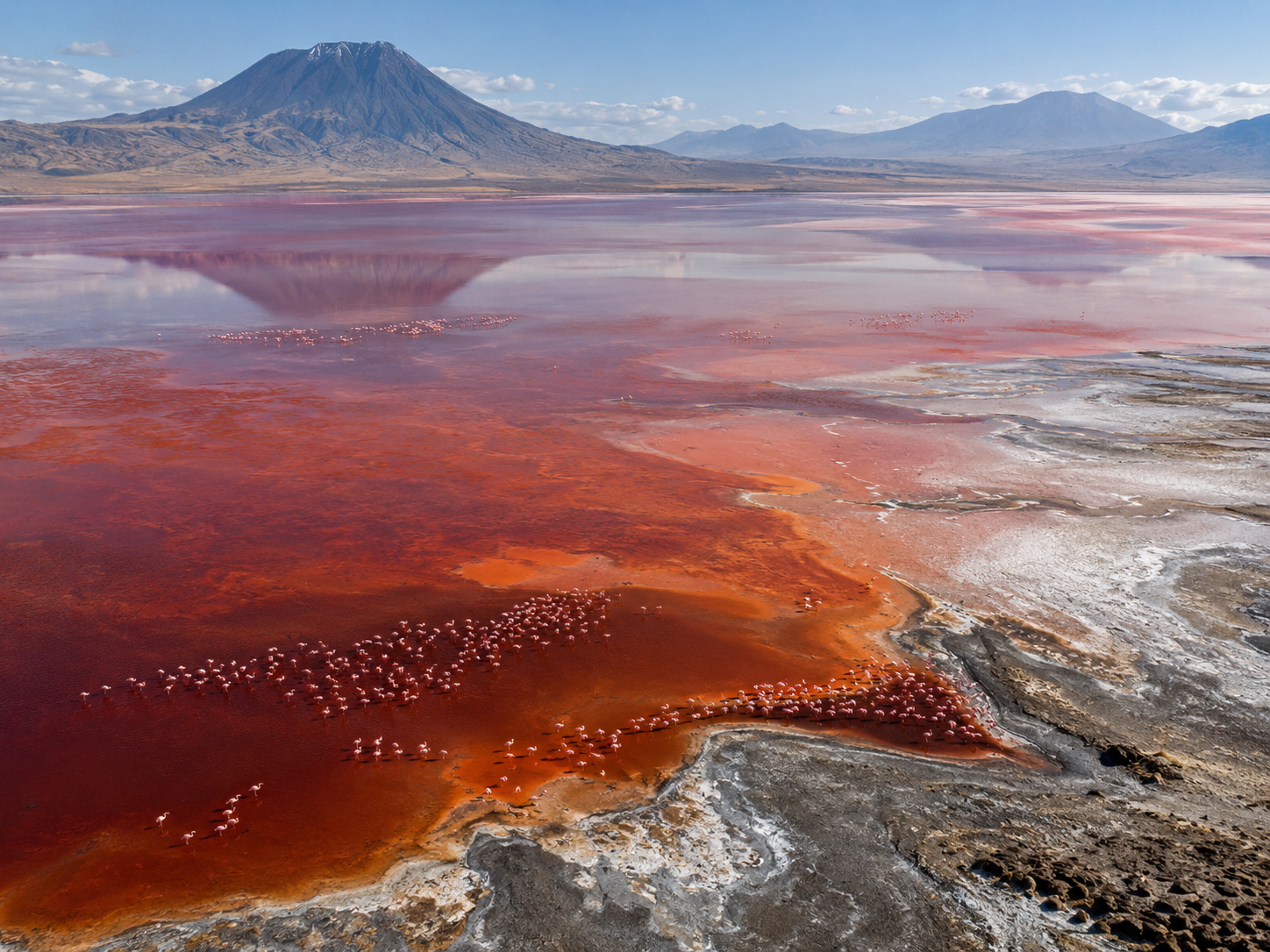
At first, Lake Natron does not look like an ordinary lake.
Parts of it can turn red.
Other areas can look orange, pink or rusty brown.
And around the same lake, thousands of lesser flamingos gather to breed.
That seems like an odd combination.
A lake with water this strange should not be such a good place for birds.
Yet it is.
So why is Lake Natron red?
The colour comes largely from microorganisms that can live in its extreme conditions. The lake is very salty and highly alkaline, and salt-loving microbes can produce red and orange pigments as they grow.
But there is another reason the lake can look so intense.
Lake Natron is shallow in many areas, and strong evaporation can concentrate the salts and microorganisms. As water levels fall, the colour can become much deeper.
The lake can therefore change from one shade to another.
And that famous story about animals turning to stone?
That needs a little fixing too.
Animals do not simply touch the water and instantly become stone.
The water can help preserve and mineral-coat remains under certain conditions. It is strange enough without turning it into a supernatural story.
The real Lake Natron is more interesting.
It is a harsh lake that has become a perfect home for organisms most creatures would struggle to tolerate—and one of the most important breeding places for lesser flamingos in East Africa.
Chapter 1 — The Red Starts With a Very Harsh Lake
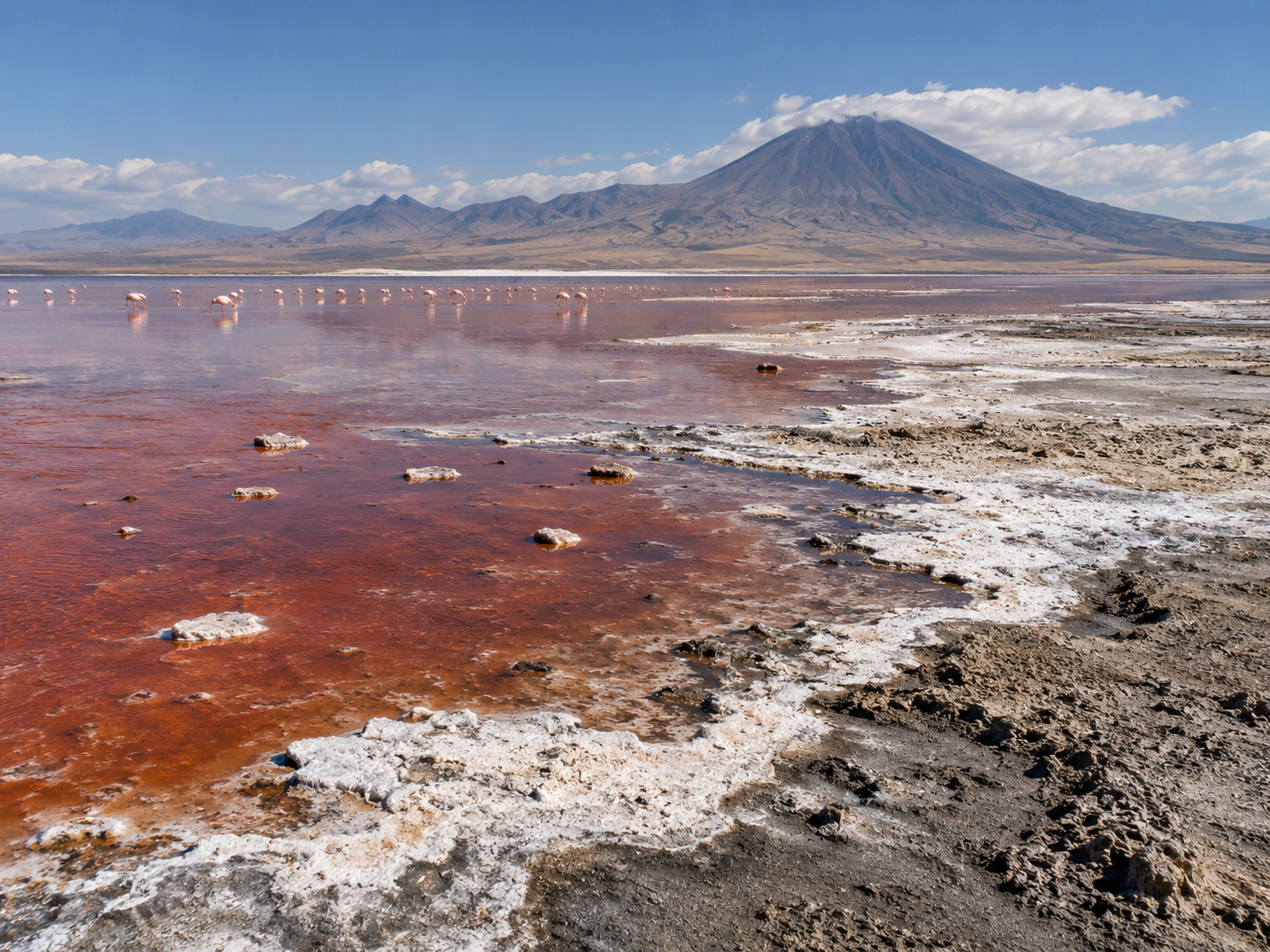
Before we explain the colour, look at the lake itself.
Lake Natron sits in northern Tanzania in the East African Rift.
It is shallow.
It is highly saline.
And it is strongly alkaline.
That last part is especially important.
Alkaline water has a very high pH. In Lake Natron, the conditions can be extreme enough that most fish and many other animals cannot live there comfortably.
But some microorganisms can.
That is the first key to the red water.
Life at Lake Natron is not built around the conditions that suit us.
It is built around the conditions that suit them.
The lake receives water from rivers and hot springs, but evaporation is very strong. Water leaves the lake while many dissolved minerals remain behind.
The result is a place where salts can become highly concentrated.
And when you make a lake this salty and alkaline, you change who can live in it.
Most organisms drop away.
A smaller group takes their place.
Those survivors are the ones we need to meet.
Because some of them are red.
Why Lake Natron Is Such a Harsh Place
Chapter 2 — So Who Is Making the Water Red?
Now we get to the surprising part.
The red colour is not coming from some strange mineral paint.
Living organisms help create it.
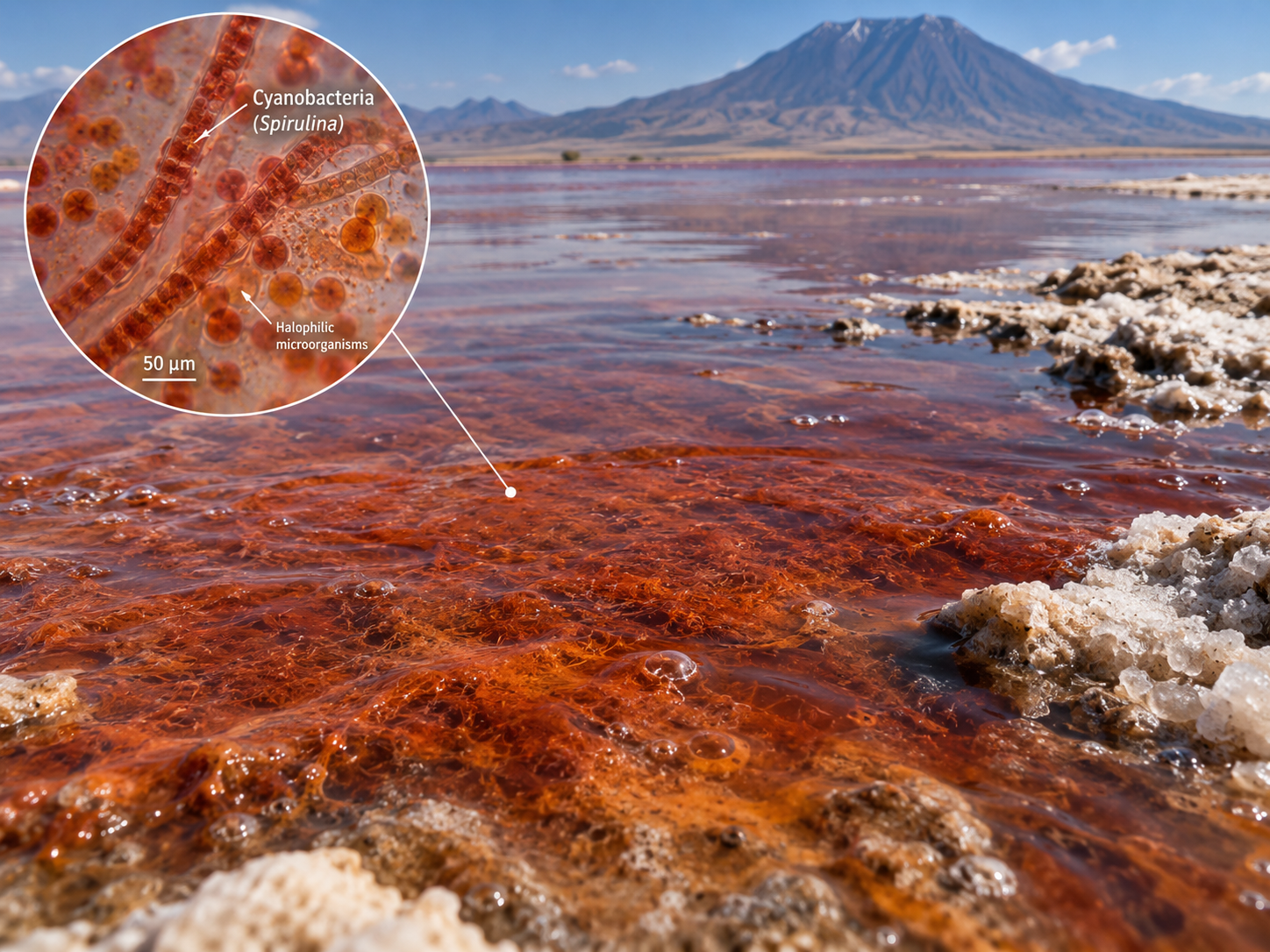
Lake Natron supports salt-loving microorganisms, including certain cyanobacteria and other microbes adapted to very salty water.
Some of these organisms contain strong red, orange or pink pigments.
One important pigment group is carotenoids.
You may already know one carotenoid.
Beta-carotene helps give carrots their orange colour.
In very salty lakes, pigment-producing microorganisms can build up in large numbers. When the water becomes concentrated, their colours become much easier to see.
So when you look at the red surface of Lake Natron, you are not simply looking at coloured water.
You are seeing the result of a microscopic community.
The organisms are tiny.
The lake is enormous.
But there can be enough of them for their pigments to change the colour of the whole surface.
This is one of those moments when a landscape suddenly becomes easier to understand.
The red lake is not a giant chemical bottle.
It is a living system.
The Tiny Organisms Behind the Red
Chapter 3 — Why Does the Red Become So Dark?
There is a simple pattern at Lake Natron.
More evaporation.
More concentration.
Stronger colour.
That is not a rule that applies perfectly to every part of the lake, but it helps explain why the landscape can look so different at different times.
When water evaporates, the salts and other dissolved substances do not leave with it.
They stay.
The water becomes more concentrated.
The microorganisms living in that environment can also become more concentrated.
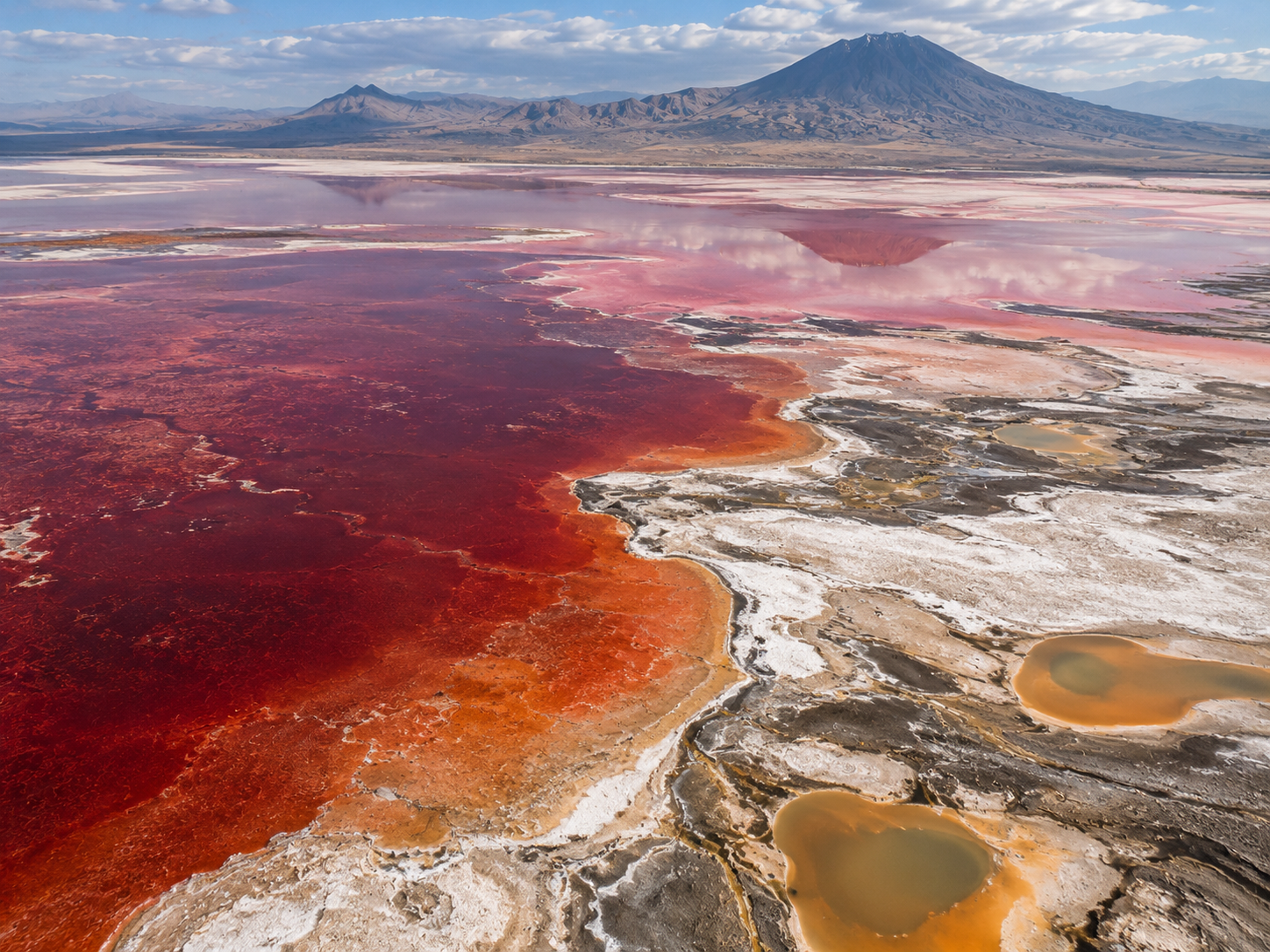
Shallow pools may therefore look much darker than areas with more water.
Some parts can appear red.
Others may look pink.
Elsewhere, you may see orange, brown or white salt crust.
The lake is not one giant bowl of one colour.
It is a patchwork.
And the colour can depend on how much water is present, how salty that water has become, how many pigment-producing organisms are there and how the light falls across the surface.
That is why two photographs of Lake Natron can look surprisingly different.
They may both be accurate.
They may simply show different parts of the lake—or the same part under different conditions.
The colour is not fixed.
It follows the water.
Why the Colour Changes
Chapter 4 — And Then Thousands of Flamingos Arrive
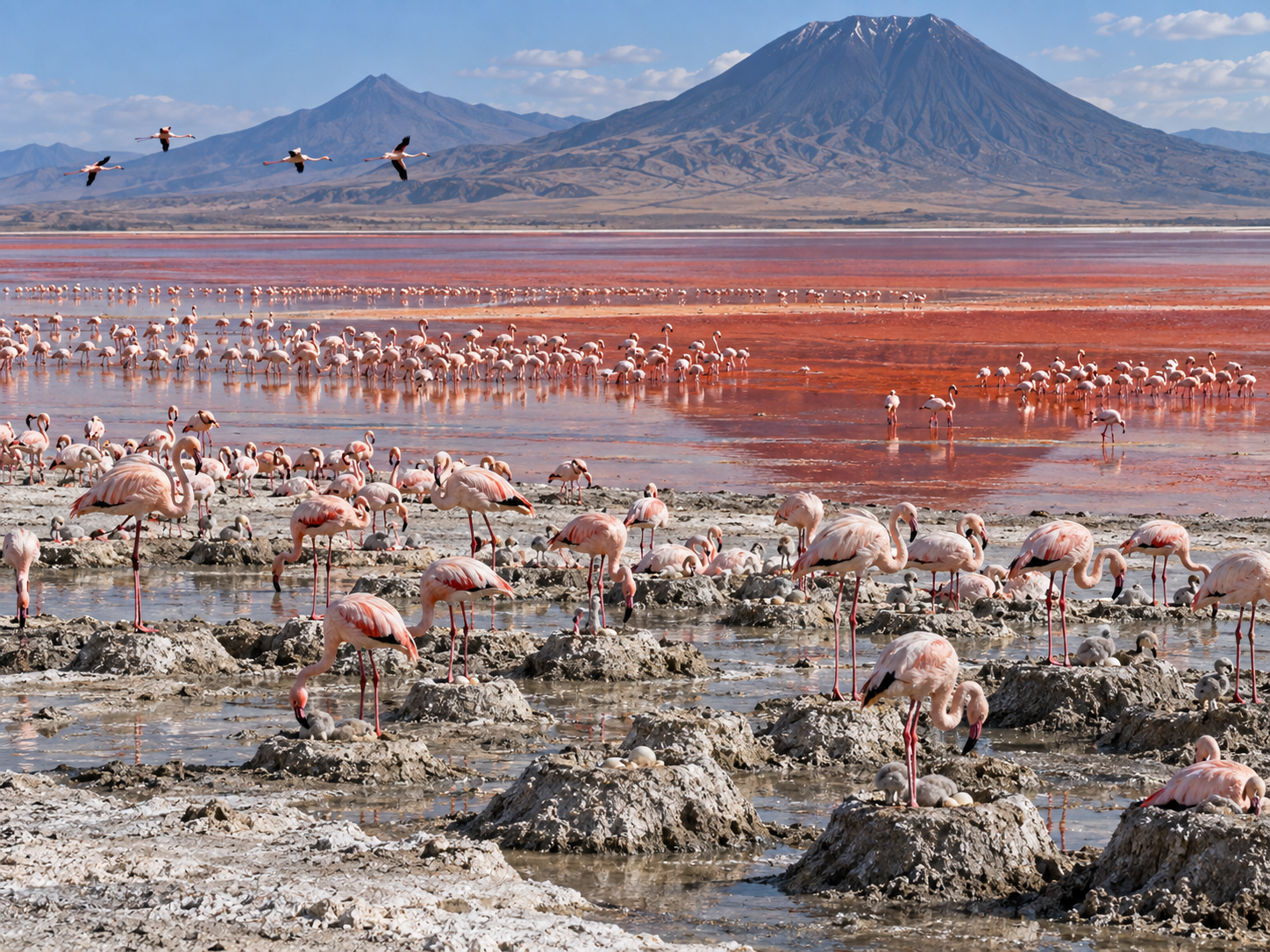
Now comes the part that seems almost impossible.
The lake is harsh.
So why do so many flamingos come here?
Because the same conditions that make Lake Natron difficult for many animals can make it useful for lesser flamingos.
Lake Natron is one of the most important breeding areas for the lesser flamingo, and a large part of the species' population depends on suitable breeding sites in East Africa.
The birds feed on algae and other tiny organisms found in saline lakes.
And the shallow, alkaline water has another advantage.
There are fewer large predators moving through the water than you would find around an ordinary freshwater lake.
The mudflats and shallow islands can provide places for flamingos to build their nests and raise chicks.
It is not a comfortable environment.
It is a useful one.
That is an important difference.
When you look at Lake Natron as a flamingo does, the strange water starts to make more sense.
The red lake is not simply somewhere the birds tolerate.
Under the right conditions, it gives them something they need.
Food.
Space to breed.
And a place that can be harder for many predators to reach.
Why Flamingos Choose Lake Natron
Chapter 5 — Did Lake Natron Really Turn Animals to Stone?
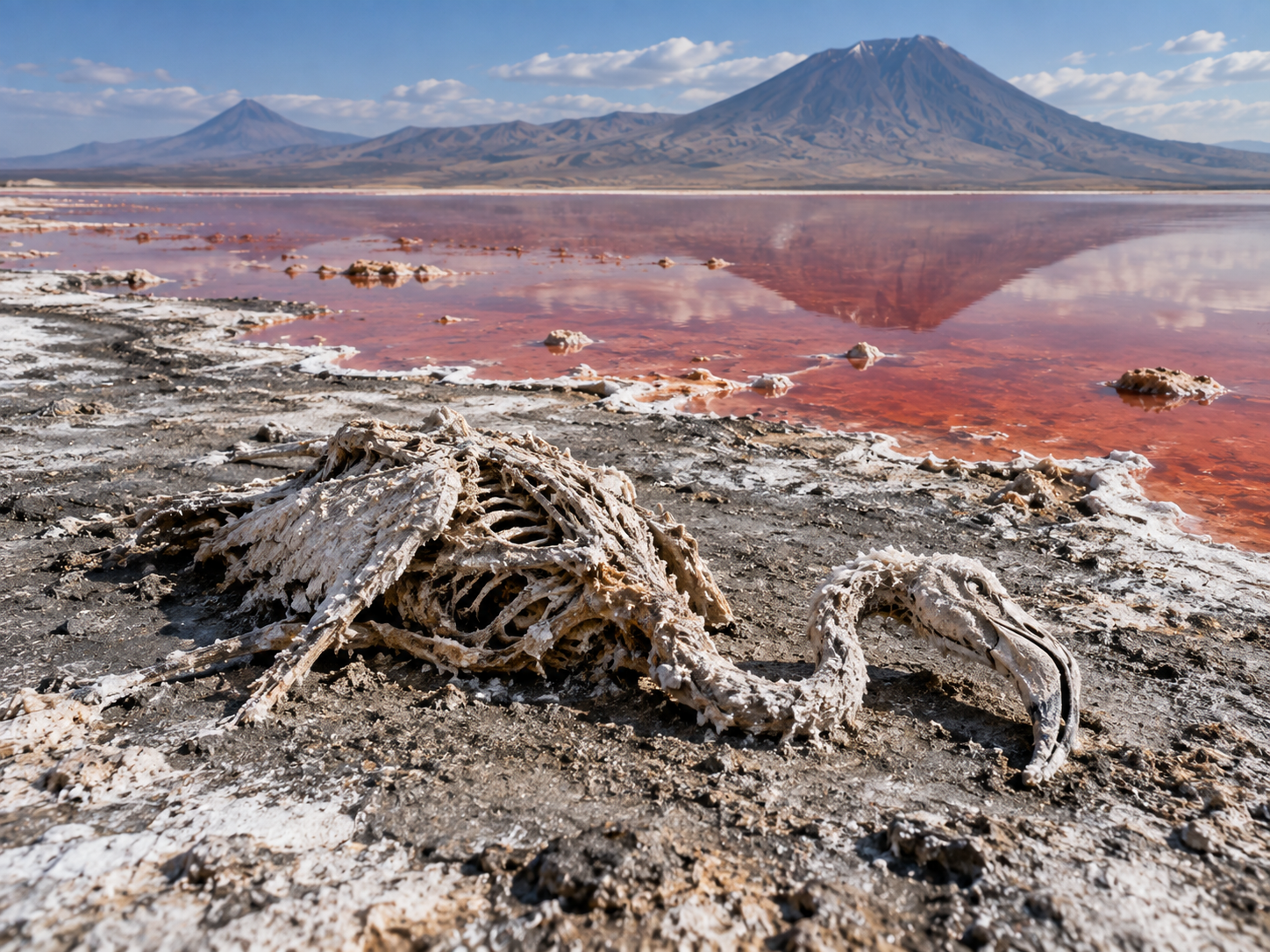
This is the famous story.
A photographer once found the remains of animals around Lake Natron and photographed them in ways that made them look almost statue-like.
The images spread.
Soon the story became:
Lake Natron turns animals to stone.
It sounds like a fantasy.
It is also too simple.
The lake's water is extremely alkaline and rich in minerals. Under suitable conditions, mineral deposits can accumulate on dead animals and help preserve their remains.
But that is not the same thing as an animal suddenly turning to stone when it enters the lake.
And the process is not instant.
The photographs that inspired the story show preserved remains, not living animals being magically petrified.
That distinction matters because the real science is interesting enough.
An extreme environment can slow decay in some circumstances.
Minerals can coat surfaces.
Drying can preserve parts of a carcass.
Together, these processes can produce remains that look remarkably artificial.
The lake does not need magic.
Chemistry is strange enough.
What Really Happens to Animal Remains?
Chapter 6 — The Lake Is Extreme, but It Is Not Dead
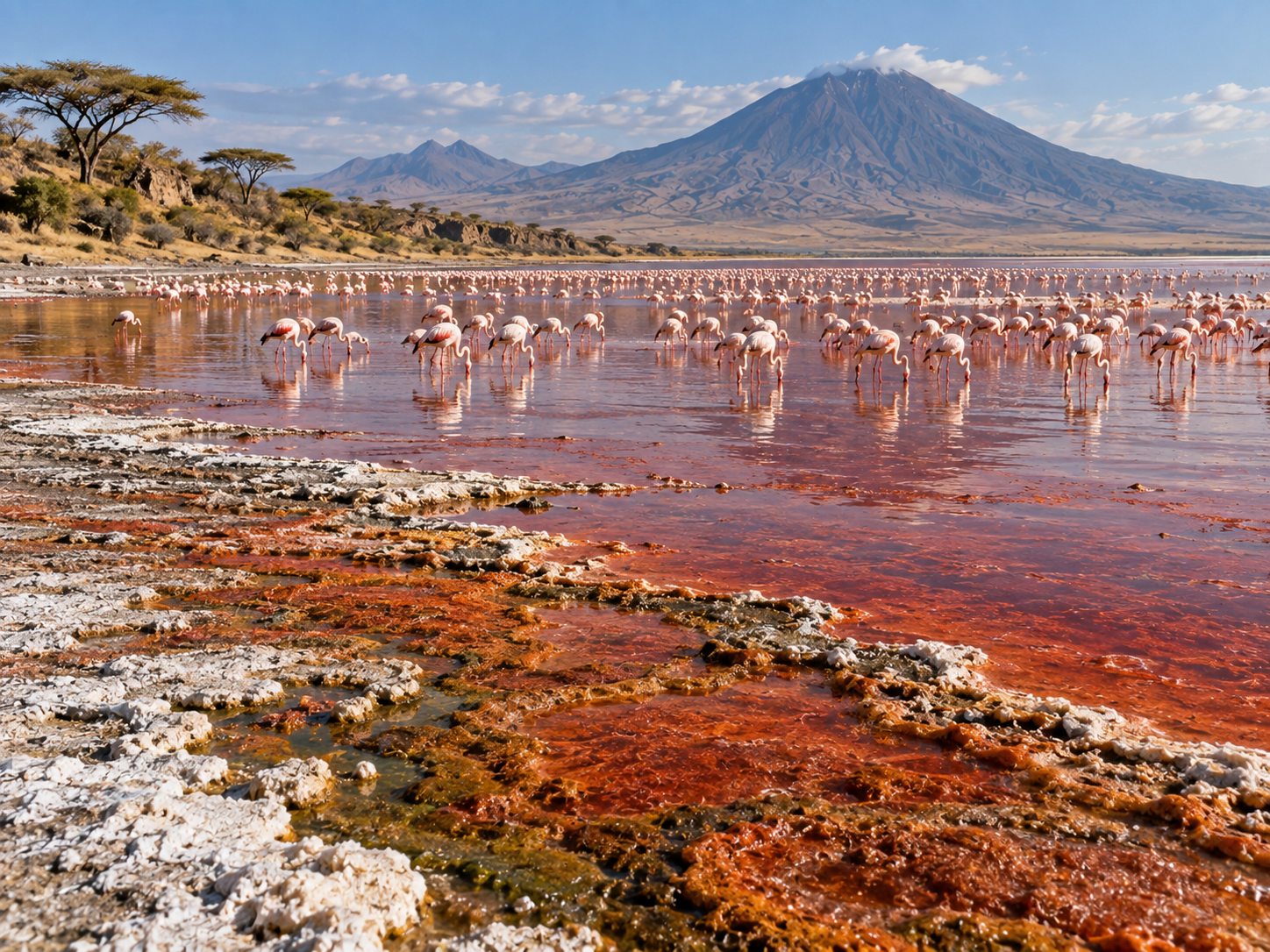
It is easy to look at Lake Natron and think nothing could live there.
The water can be bright red.
The shoreline can be covered in salt.
The lake can become extremely alkaline.
Yet life is everywhere, just not the kind we usually notice.
Salt-loving microorganisms thrive there.
Flamingos depend on the wider lake system.
The surrounding landscape supports other forms of life adapted to the dry Rift Valley environment.
This is a useful lesson in ecology.
A place does not have to be comfortable to be full of life.
It only needs to have the right conditions for something.
Lake Natron is a particularly clear example.
Its extreme chemistry pushes many species away.
But that creates space for organisms that are specially adapted to it.
And once those organisms become abundant, other animals can use them.
The result is a strange chain.
The salty lake supports microorganisms.
The microorganisms help support flamingos.
The flamingos depend on the lake for breeding.
A place that looks hostile from the outside becomes an important habitat when you look more closely.
That is the real story of Lake Natron.
Not a dead lake.
A very selective one.
The Lake’s Unusual Food Web
Chapter 7 — The Red Lake Is Part of a Much Bigger System
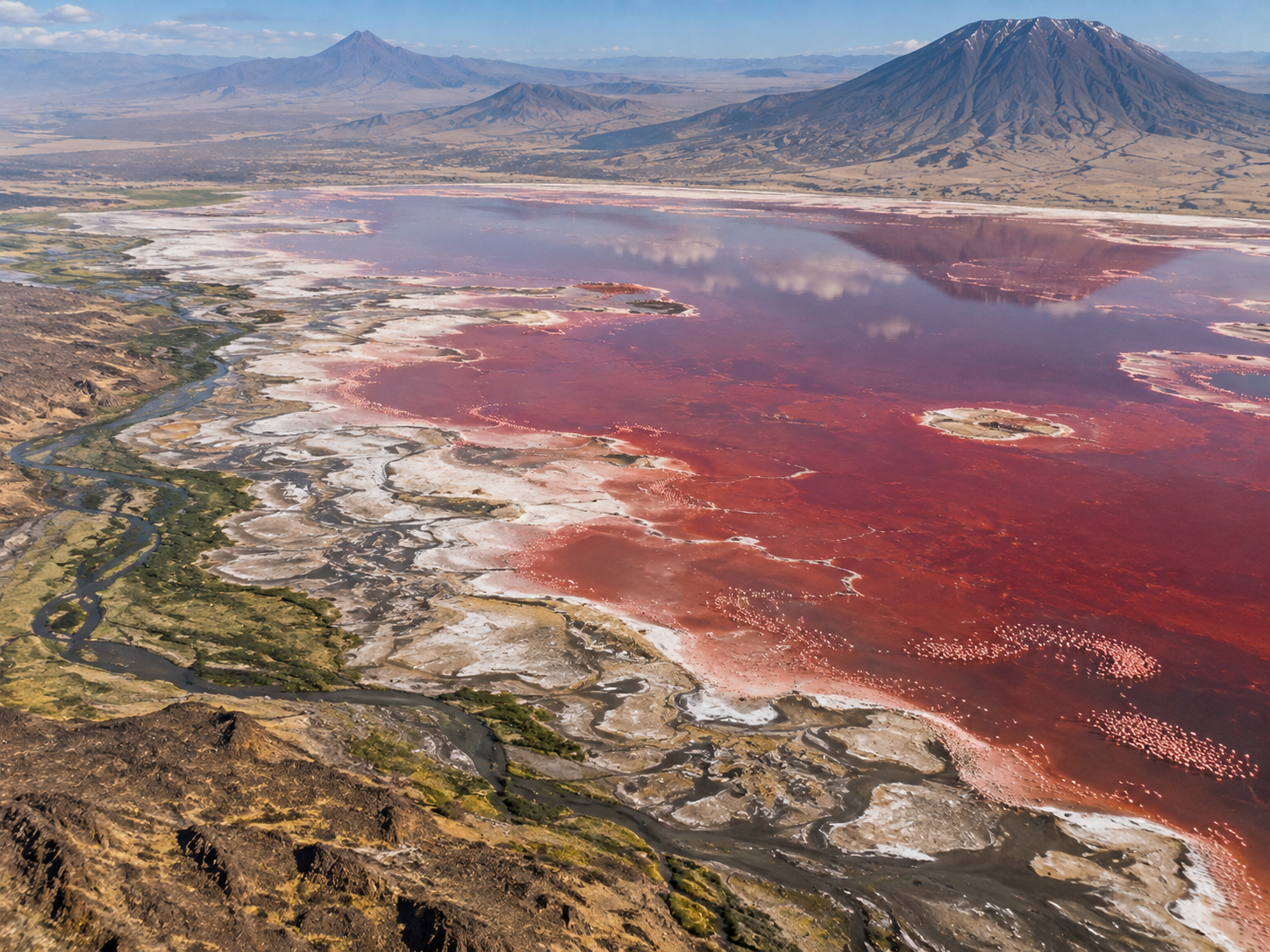
Lake Natron is often photographed as if it exists by itself.
A red patch of water.
A few mountains.
Some flamingos.
But the lake is part of the East African Rift, a much larger geological and ecological system.
Its water comes from the surrounding landscape, including rivers and springs.
Its chemistry is shaped by the rocks beneath and around the basin.
Its water level changes with rainfall and evaporation.
Its colour changes with those conditions.
And the flamingos depend on the whole system, not just the red water.
That is why protecting Lake Natron is about more than protecting a beautiful photograph.
Changes to water flow, land use, mineral extraction or disturbance around important breeding areas could affect the balance that makes the habitat work.
The lake looks simple from a distance.
It is not.
There is geology underneath it.
Chemistry inside it.
Microbial life in the water.
Birds feeding and breeding around it.
And weather constantly changing the whole picture.
The red colour is simply the part we notice first.
One Lake, Many Systems
So, Why Is Lake Natron Red?
The lake is red because a very unusual environment has created the right conditions for very unusual life.
The water is extremely salty and alkaline.
Evaporation concentrates what remains.
Salt-loving microorganisms thrive in those conditions.
Many produce strong red and orange pigments.
When enough of them are present, the colour becomes visible across the shallow water.
And the colour can change as the lake's water level and chemistry change.
That is why Lake Natron can look pink one day, deep red another time, and pale in other places.
The strangest part is perhaps not the colour at all.
It is what the colour tells you.
Something is living there.
Something adapted to water that most organisms could never tolerate.
And that same harsh lake supports huge breeding populations of lesser flamingos.
So the next time you see a photograph of a red lake and think it looks lifeless, Lake Natron offers a useful correction.
Sometimes the harshest places are not empty.
They simply belong to different kinds of life.
Frequently Asked Questions
1. Why is Lake Natron red?
Lake Natron can turn red or orange because salt-loving microorganisms living in its highly saline and alkaline water produce strong pigments. When these organisms become concentrated in shallow water, the colour can become especially intense.
2. Why does Lake Natron change from pink to red?
The colour depends on conditions in the lake. Water level, evaporation, salinity, microorganisms and sunlight can all affect what you see. As water evaporates and becomes more concentrated, some areas can appear much darker.
3. What makes Lake Natron so salty?
Lake Natron has no major outlet to carry its dissolved minerals away. Water is also lost through strong evaporation, leaving salts and other minerals behind and making the remaining water increasingly concentrated.
4. Is Lake Natron really pink?
Yes. Parts of the lake can appear pink, orange or deep red depending on local conditions. The colour is natural and comes largely from pigment-producing microorganisms living in the extreme water.
5. Why can flamingos live at Lake Natron?
Lesser flamingos are specially adapted to feeding and breeding around saline lakes. Lake Natron provides suitable food, shallow areas and important breeding habitat, making it an important site for the species.
6. Does Lake Natron turn animals to stone?
No. Animals do not instantly turn to stone when they enter the lake. Mineral-rich and highly alkaline conditions can help preserve or coat remains over time, which can make them look statue-like.
7. What microorganisms make Lake Natron red?
The lake contains salt-loving microorganisms, including pigment-producing cyanobacteria and other microbes. Some produce red, orange or pink pigments that contribute to the colour of the water.
8. Why is Lake Natron so alkaline?
The lake receives mineral-rich water from its surrounding drainage basin and volcanic environment, while strong evaporation concentrates dissolved materials. This combination can produce extremely alkaline conditions.
9. Does Lake Natron always stay red?
No. Its colour is not constant. Different parts of the lake can show different shades, and changes in water level, salinity, microbial populations and light can alter its appearance.
10. Where is Lake Natron?
Lake Natron is in northern Tanzania, near the border with Kenya, in the East African Rift. It lies in a largely dry landscape beneath the volcanic mountains of the region.