Introduction
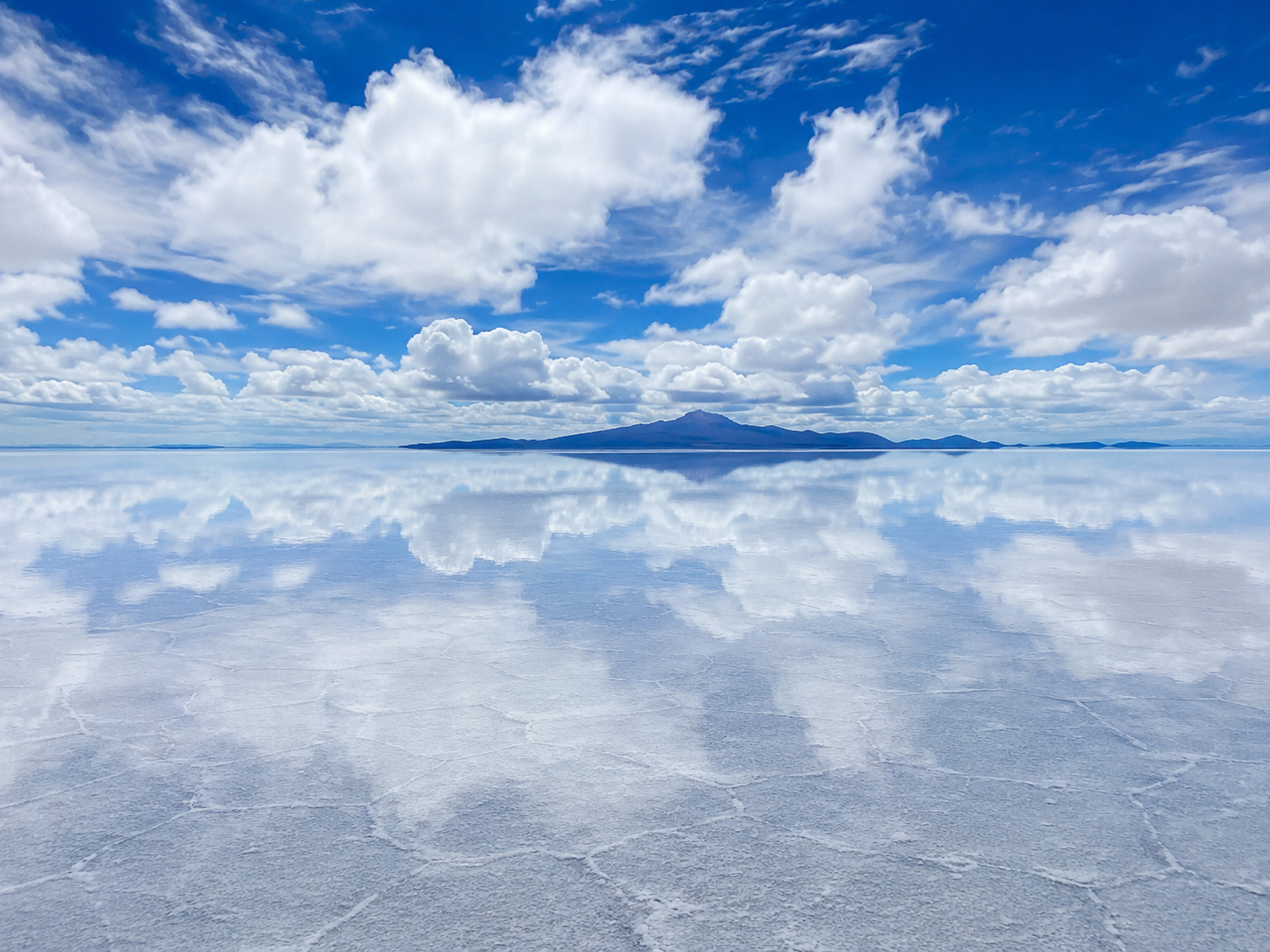
For part of the year, Salar de Uyuni looks like what it is: an enormous white salt flat.
Then rain arrives.
A thin layer of water spreads across the surface, and something strange happens.
The ground begins to disappear.
Clouds appear below your feet. Mountains seem to float in the distance. The line between the sky and the ground becomes hard to find.
For a moment, the salt flat looks like a giant mirror.
So how can a desert do that?
The answer is surprisingly simple.
There does not need to be a deep lake.
There only needs to be a very flat surface and a thin, calm layer of water.
Salar de Uyuni is unusually well suited for this. It sits at about 3,650 metres above sea level and is one of the largest and flattest salt surfaces on Earth. During the rainy season, parts of it can be covered by shallow water.
The water spreads across the salt crust.
Because the ground is so flat, the water also becomes extremely shallow and wide.
And because the surface is so smooth, it can reflect the sky.
That is when the desert stops looking like a desert.
Chapter 1 — It Was Once a Very Different Landscape
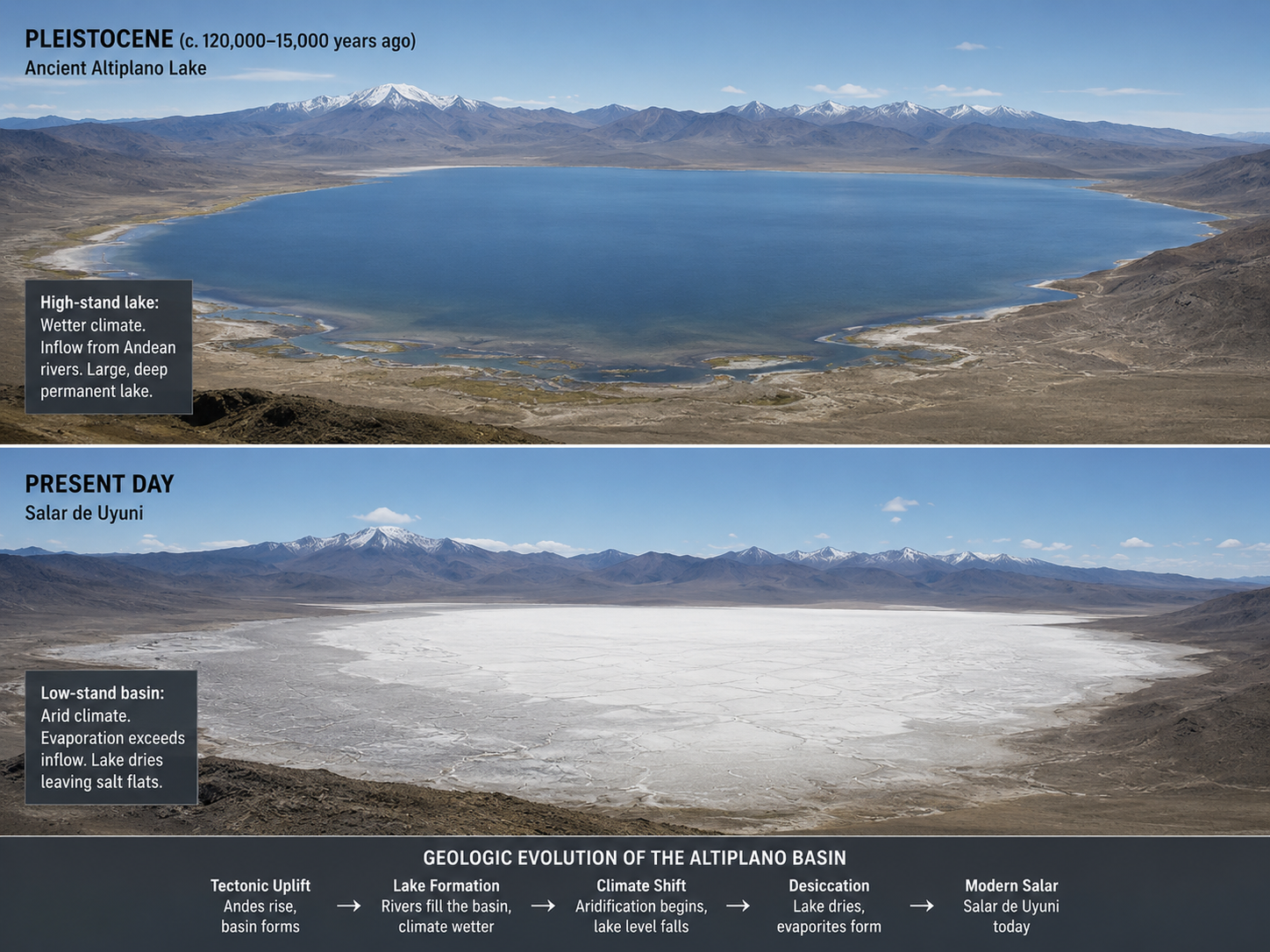
Before there was a salt flat, there was water.
The story of Salar de Uyuni reaches back to huge lakes that once covered parts of the Bolivian Altiplano.
As those lakes changed and eventually disappeared, their dissolved minerals did not simply vanish with the water. They were left behind and became concentrated in the basin.
Over time, repeated flooding and drying helped build the enormous salt crust that covers the basin today.
USGS research links the salts and brines of Uyuni to remnants of large Pleistocene lakes, including the former Lago Minchin system. As the ancient waters receded and evaporated, minerals such as halite—the mineral form of common salt—were left behind.
The result is extraordinary in scale.
The main salt crust covers roughly 9,000 square kilometres, according to USGS descriptions, and in many areas it forms an unusually hard, flat surface.
That flatness is important.
Very important.
Because the mirror effect does not begin with the water.
It begins with the shape of the ground underneath it.
From Ancient Lake to Salt Flat
Chapter 2 — The Secret Is How Flat It Is
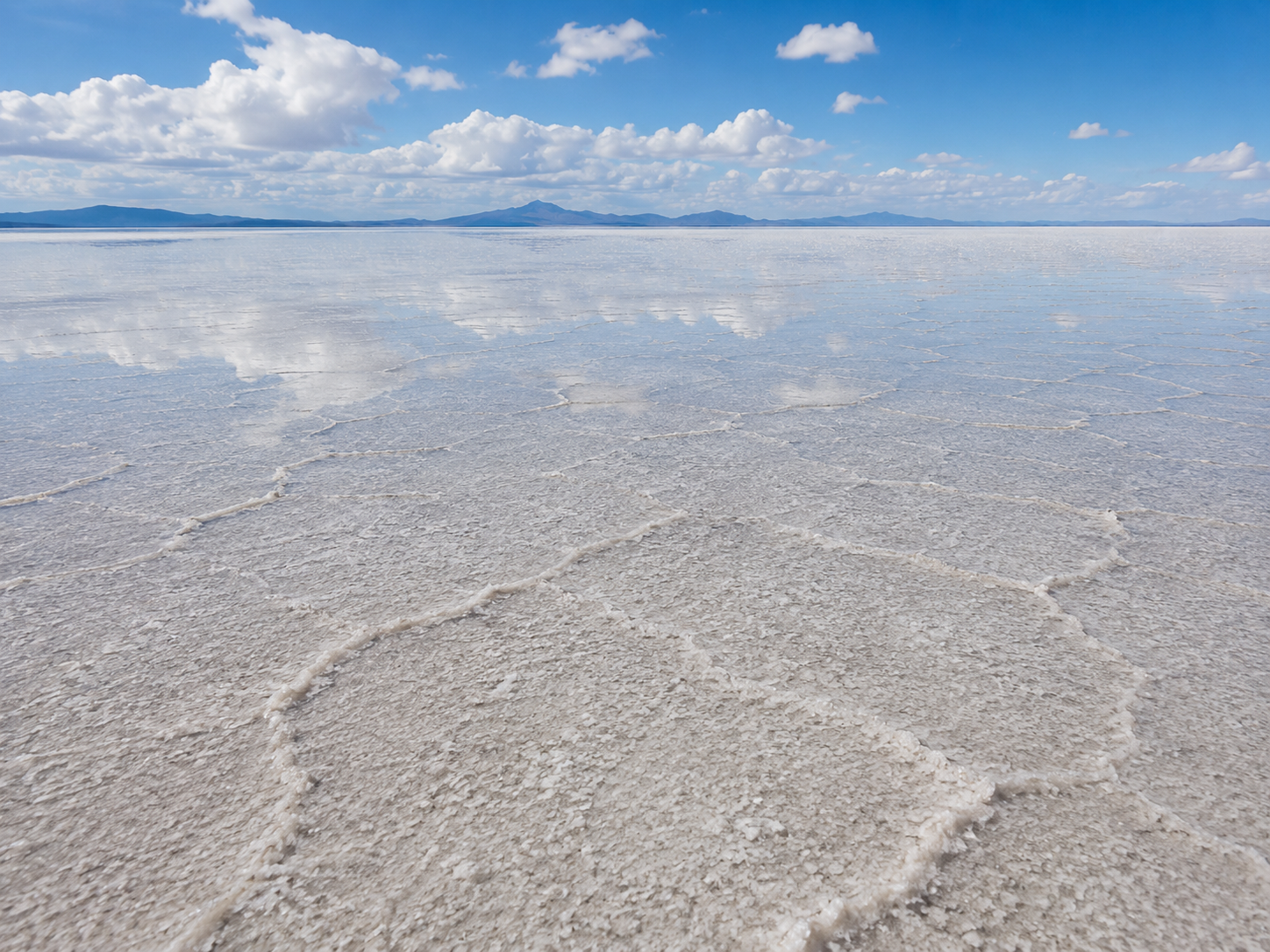
Look across Salar de Uyuni and try to find a slope.
There are hills around it.
But the salt surface itself is astonishingly flat.
USGS describes Salar de Uyuni as a huge hard salt crust whose average relief is less than a centimetre in the areas studied. Annual flooding and drying help keep much of the surface smooth.
That matters because water normally has somewhere to go.
It runs downhill.
Even a small slope can send water toward one side.
But on an enormous, nearly level salt surface, a shallow amount of rainwater can spread outward over a very large area.
Instead of a little pool sitting in one place, you can get a thin sheet of water covering the salt.
This is the trick.
The water does not have to be deep.
In fact, the famous mirror effect is most striking when the water is shallow.
The salt flat gives the water a huge, nearly level surface.
The water gives that surface something it normally does not have:
a smooth layer capable of reflecting the sky.
Without the flat ground, there is no giant mirror.
Why Flatness Matters
Chapter 3 — Then Rain Arrives
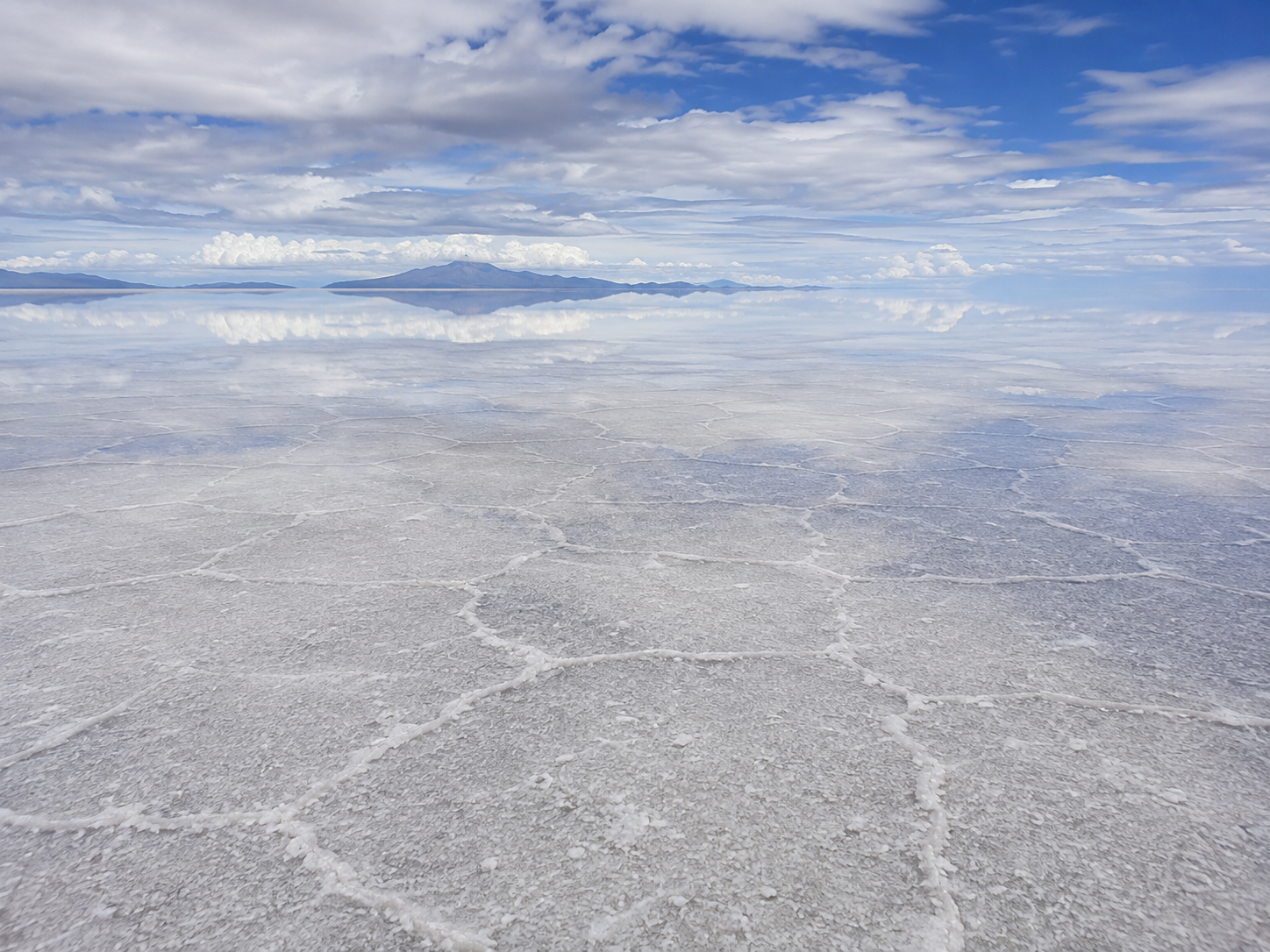
For most of the dry season, the mirror is gone.
You see salt.
White salt.
Cracked salt.
In some areas, the crust forms those famous polygon patterns that can stretch across the landscape like a giant natural pavement.
Then the rainy season changes the scene.
USGS notes that Salar de Uyuni is seasonally flooded, with the rainy season generally running from about November to March, and satellite observations distinguish areas of water over salt from dry salt surfaces.
The amount of water does not need to be enormous.
That is the part people often imagine incorrectly.
You are not looking at a new giant lake covering the whole salar.
You are looking at a thin film of water over an exceptionally flat surface.
And because the surface is so wide, even a small depth can create an enormous area of reflection.
The rain also hides the details that normally tell your eyes where the ground ends.
The salt disappears beneath the water.
The water reflects the bright sky.
The horizon becomes difficult to read.
And suddenly you are standing between two skies.
One above you.
One below.
When the Salt Flat Becomes a Mirror
Chapter 4 — Why Does the Sky Look Like It Is on the Ground?
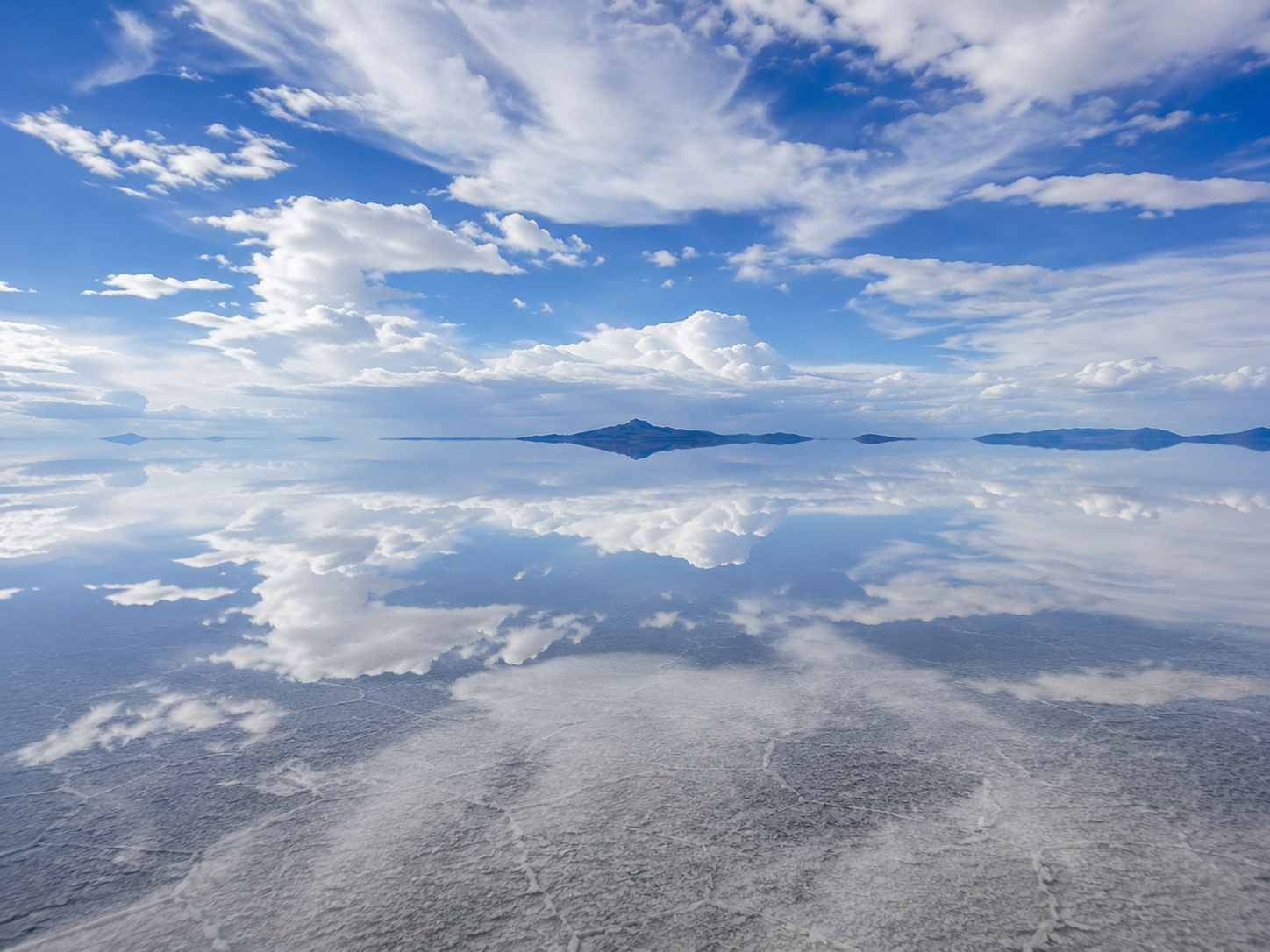
Now comes the part that makes the place look almost unreal.
Look down.
You see clouds.
They are not there.
Of course, they are reflections.
The water is acting like a huge, natural mirror.
A smooth water surface can reflect light from the sky toward your eyes. At Salar de Uyuni, the water can form a remarkably broad and calm sheet over the almost perfectly flat salt crust.
The flatter and calmer the surface, the cleaner the reflection can appear.
That is why the best photographs have almost no visible boundary between sky and ground.
The distant mountains are reflected too.
Your eyes suddenly lose one of their normal clues.
There is no obvious line saying:
“This is water.”
There is simply another sky beneath the first one.
And because the water is so shallow, it can be almost invisible from a distance.
You are looking at a reflection without immediately noticing the surface doing the reflecting.
That is why Salar de Uyuni can look less like a flooded desert and more like the sky has fallen onto the ground.
How the Mirror Effect Works
Chapter 5 — The Mirror Does Not Stay Forever
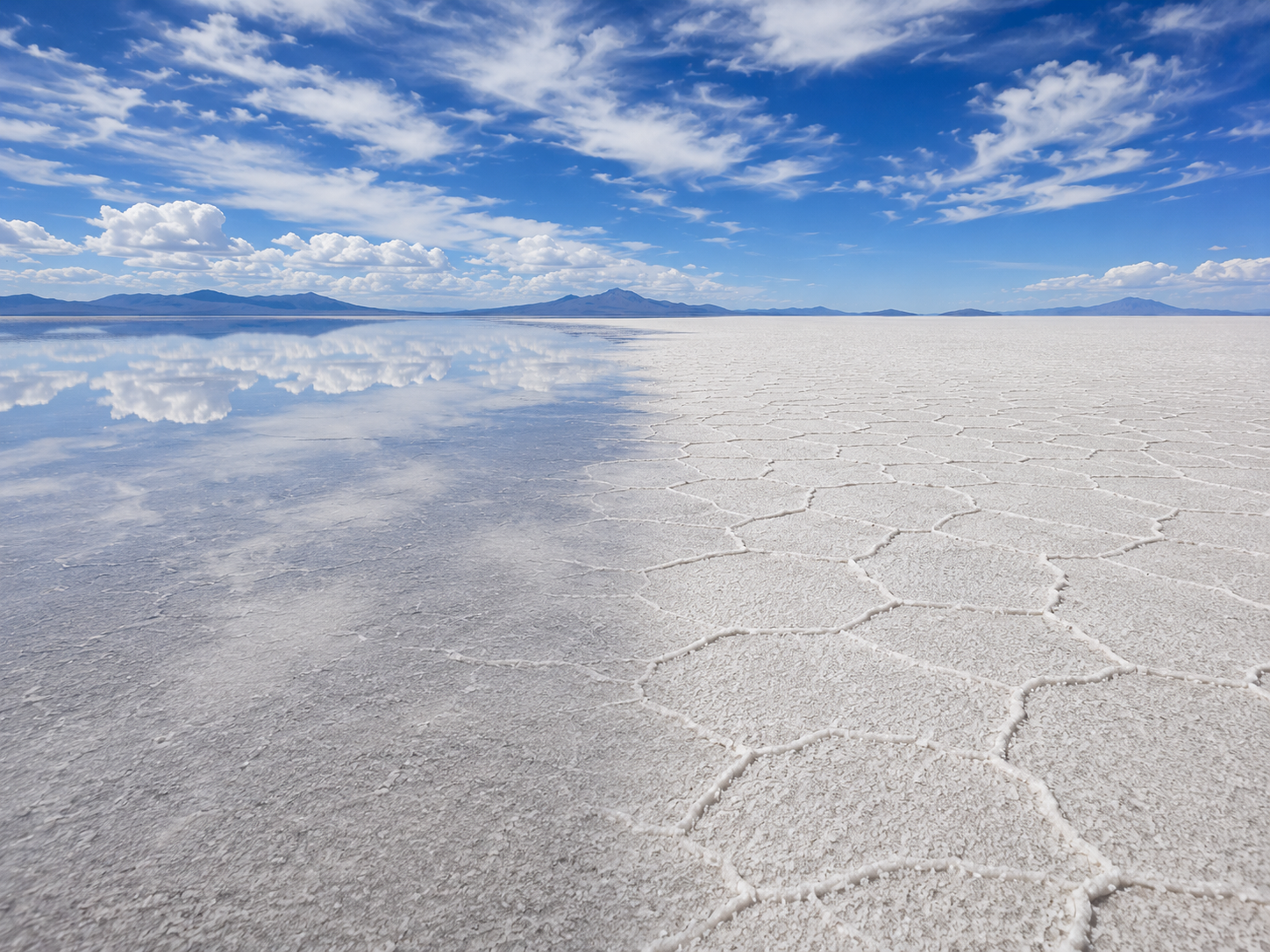
The most photographed version of Salar de Uyuni is not there all year.
The mirror is temporary.
That makes sense once you know what creates it.
You need water.
You need the right surface conditions.
And you need the water to remain calm enough to produce a clear reflection.
During the dry season, much of the surface returns to salt.
USGS observations show strong seasonal differences: the salar is especially dry from about April through November, while moisture and flooding increase during the rainy period.
Wind can also change the picture.
Tiny waves break up a clean reflection.
Uneven water changes the surface.
And as the water disappears, the mirror disappears with it.
The landscape returns to white salt.
This is why those famous photographs should not make you think Salar de Uyuni is always a giant mirror.
It is more accurate to think of the mirror as a seasonal state of the salt flat.
For much of the year, it is a salt desert.
For a shorter period, under the right conditions, it becomes something that looks like a lake, even though the salt flat underneath has not gone anywhere.
The transformation is temporary.
That is part of what makes it so striking.
Why the Mirror Disappears
Chapter 6 — The Same Salt Flat Is Also a Huge Resource
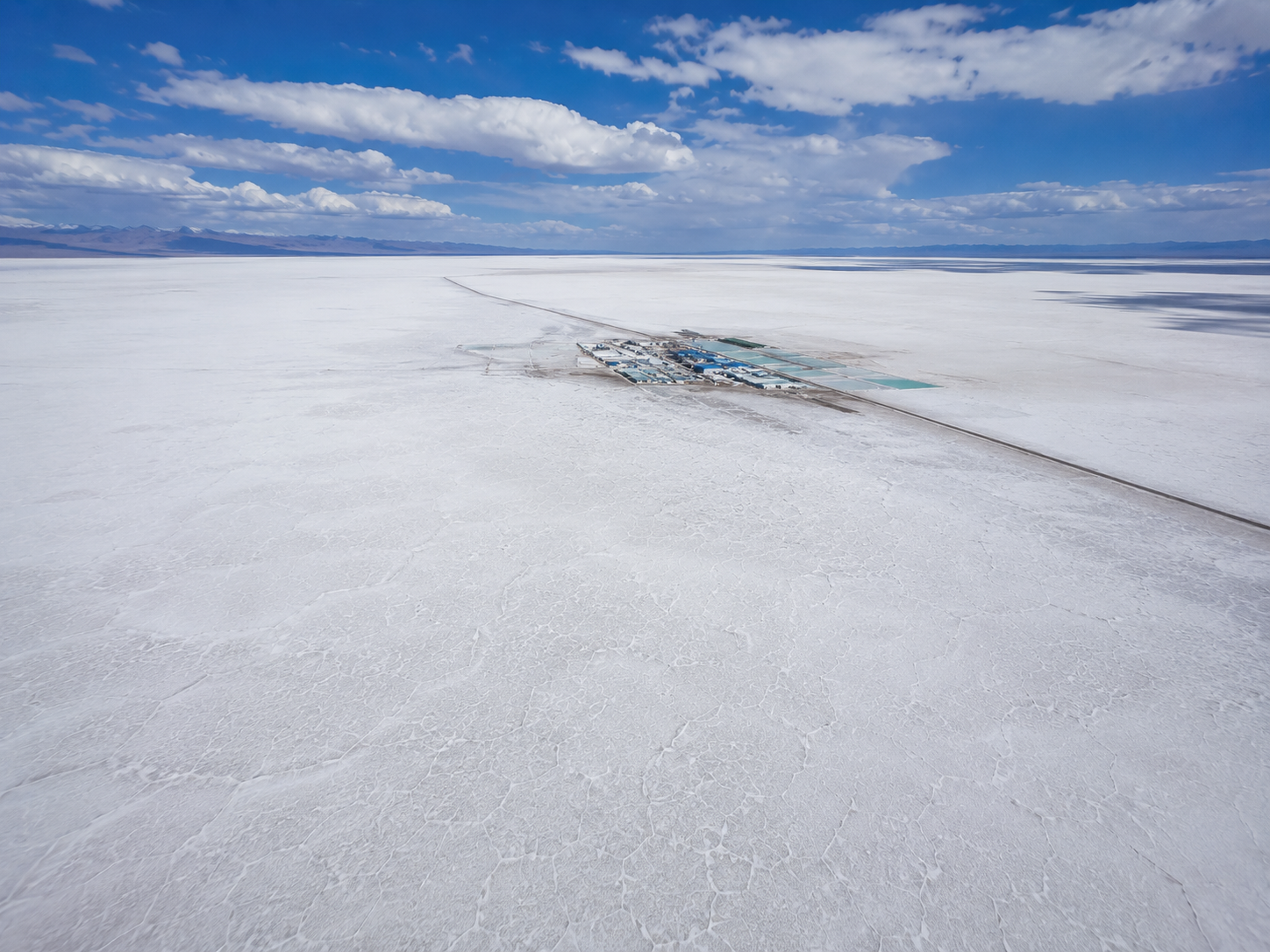
There is another story beneath the white surface.
Salar de Uyuni contains brine rich in lithium.
That matters far beyond Bolivia.
Lithium is used in rechargeable batteries, including those used in electric vehicles and energy-storage systems. USGS identifies Uyuni as a major lithium-rich salar, and research has documented lithium-bearing brines beneath the salt crust.
So the same landscape that attracts people for its reflections is also valuable for something completely different.
Salt is visible.
Brine is hidden.
And the hidden material has become part of a much larger global discussion about batteries, energy and mineral supply.
Bolivia has spent years trying to develop its lithium resources at commercial scale. The country has struggled with technical, political and investment challenges, and its approach is changing. In January 2026, Bolivia's government said it would respect existing lithium agreements and work on new rules intended to attract investment.
That means the future of Salar de Uyuni is not only a question of tourism.
It is also a question of how a country uses a huge natural resource while managing a landscape that has become globally famous.
And there is a useful reminder here.
A salt flat can look empty.
It is not.
Under the white surface is a complicated system of salt, brine, water and minerals.
What looks like a blank landscape from above is actually full of things people want.
What Lies Beneath the Salt?
Chapter 7 — A Desert, a Lake, or a Mirror?
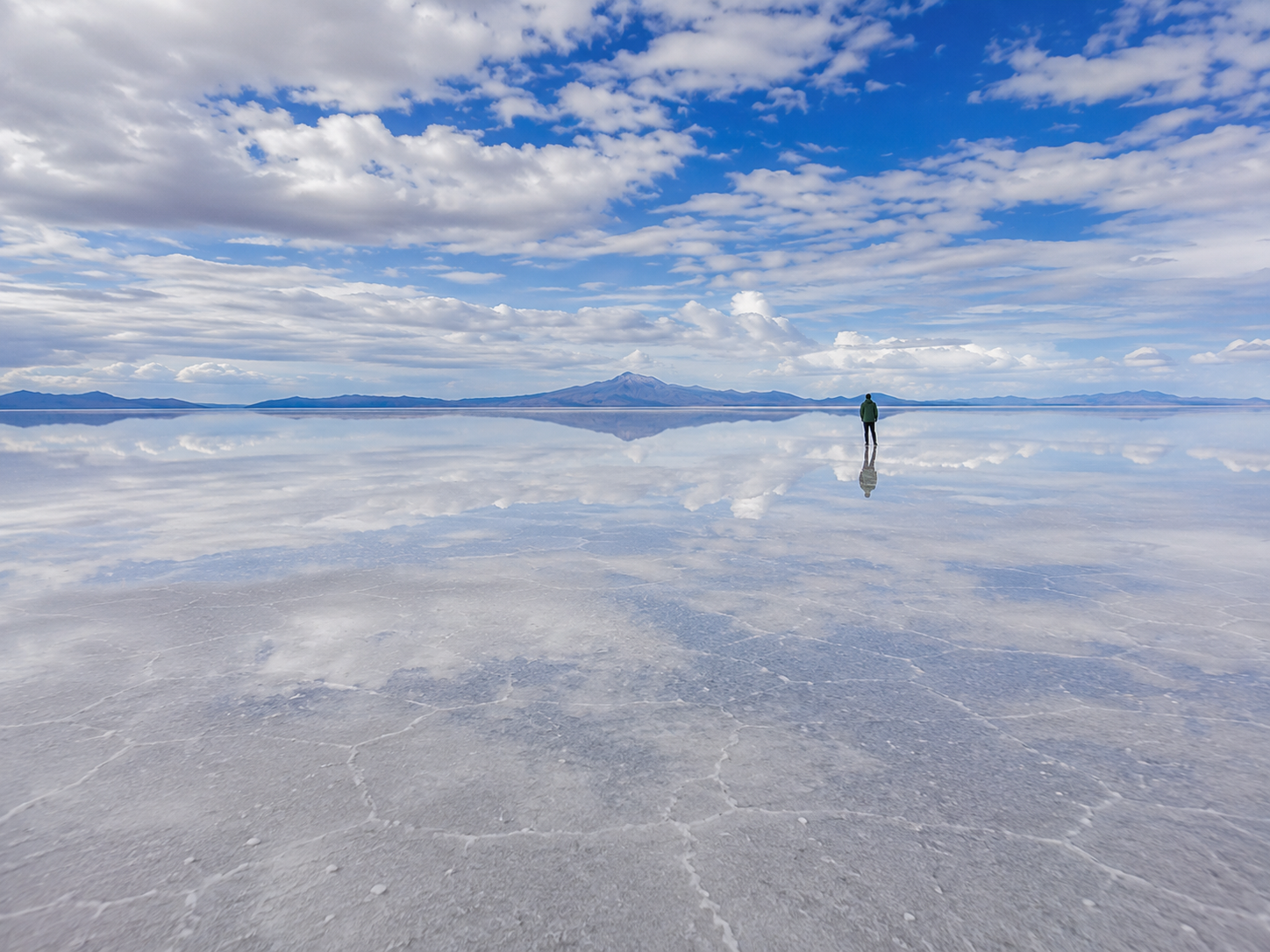
So what is Salar de Uyuni?
A desert?
A salt flat?
A former lake?
A temporary mirror?
In a way, it is all of them.
Its present-day surface is a vast salt crust formed from the long history of ancient lakes and evaporation.
When the rainy season brings shallow water, the same surface can become almost perfectly reflective.
The salt has not changed into glass.
The desert has not become a lake.
The ground is still there.
There is simply water covering it.
And that water changes what your eyes see.
The salt flat becomes a mirror because several ordinary things happen in exactly the right place:
There is a huge, extremely flat surface.
Rain spreads across it.
The water remains shallow.
The surface stays calm enough to reflect the sky.
That is all.
Nothing supernatural is happening.
Which may be the most satisfying part of the whole story.
The giant mirror is not a trick.
It is what happens when salt, water, light and an unusually flat landscape meet at the right moment.
For a few weeks or months, depending on conditions, the ground seems to disappear.
And the sky takes its place.
The Four Things That Create the Mirror
Frequently Asked Questions
1. Why does Salar de Uyuni turn into a giant mirror?
During the rainy season, a thin layer of water can spread across the extremely flat salt crust. The smooth water surface reflects the sky, creating the giant mirror effect.
2. When does Salar de Uyuni become a mirror?
The mirror effect is most associated with the rainy season, roughly from November to March, although the exact timing and extent of surface water can vary.
3. Does Salar de Uyuni become a deep lake?
Usually, the famous mirror effect comes from a shallow layer of water spread across the salt crust, not from a deep lake covering the entire salar. USGS observations record seasonal flooding and shallow water across parts of the surface.
4. Why is Salar de Uyuni so flat?
The salt crust formed through repeated flooding and drying, and the annual water cycle helps maintain broad, smooth areas. USGS describes the salar as an exceptionally flat hard salt surface.
5. What was Salar de Uyuni before it became a salt flat?
The basin was connected with large Pleistocene lake systems. As the ancient waters receded and evaporated, salts and other minerals were concentrated and left behind.
6. Why can Salar de Uyuni reflect the sky so clearly?
A smooth, shallow layer of water acts like a broad mirror. Because the salt surface is exceptionally flat, the water can spread over a very large area, making the reflection appear almost seamless.
7. Does the Salar de Uyuni mirror effect happen every year?
Seasonal flooding occurs, but the exact amount and distribution of water can vary. The mirror effect therefore does not look exactly the same every year or in every part of the salar.
8. Why is Salar de Uyuni important for lithium?
Brines beneath the salt crust contain lithium, making the salar an important lithium resource. Bolivia has been developing its lithium industry and is continuing to work on investment and production plans.
9. Is Salar de Uyuni always white?
No. During the dry period, the salt crust dominates the view. When shallow water covers the surface, it can become highly reflective and the landscape can look blue, grey or almost like open sky.
10. What makes Salar de Uyuni look like it has no horizon?
The shallow water reflects the sky and clouds so strongly that the boundary between the real sky and its reflection becomes difficult to see. From a low viewpoint, the ground can almost disappear into the reflected sky.