Why Are the Houses in Bo-Kaap Painted Different Colors?
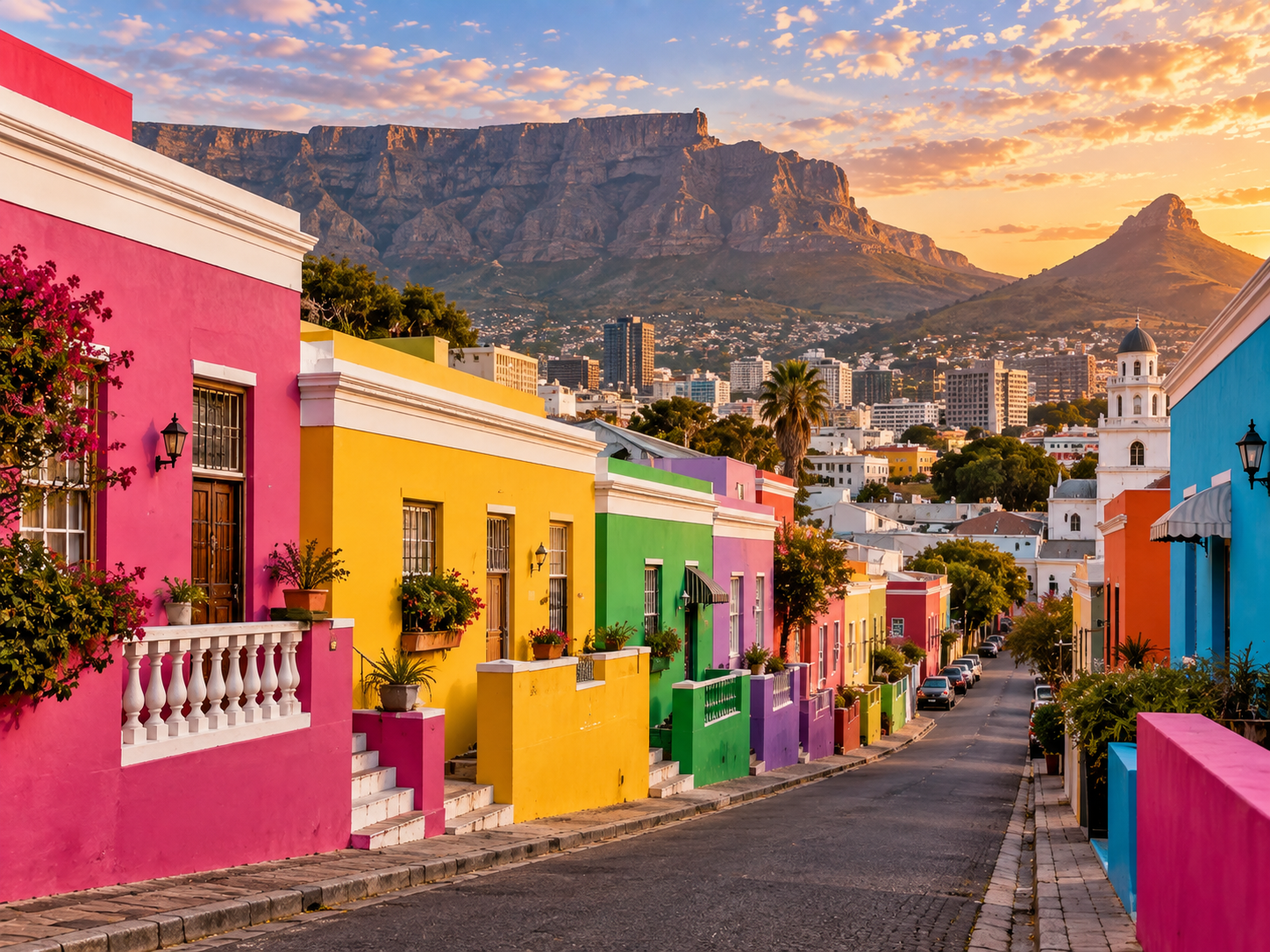
Walk through Bo-Kaap in Cape Town and the first thing you notice is the colour.
One house is pink.
The next is yellow.
Then blue, green, orange, red.
The houses sit close together on steep streets beneath Signal Hill, their bright walls standing out against the mountain and the sky.
It looks almost too cheerful to be an old historic neighbourhood.
So why are the houses in Bo-Kaap painted in different colours?
There is a popular answer.
The houses were once painted white while they were rented. When people began owning their homes, they painted them bright colours as a sign of freedom and independence.
That story is widely told, including by Cape Town Tourism and South African History Online.
But there is a catch.
The exact history of the colours is not as neatly documented as the popular story makes it sound.
The neighbourhood's history is much bigger than paint.
Bo-Kaap grew into a centre of Cape Muslim life. Many residents were descendants of enslaved people, political exiles and others brought to the Cape from parts of Africa and Asia. After slavery was abolished, the community grew and developed its own strong identity.
So the colourful houses are not simply a tourist attraction.
They are part of a neighbourhood with a complicated history of slavery, freedom, religion, family and belonging.
Chapter 1 — These Houses Were Not Built to Look Colorful
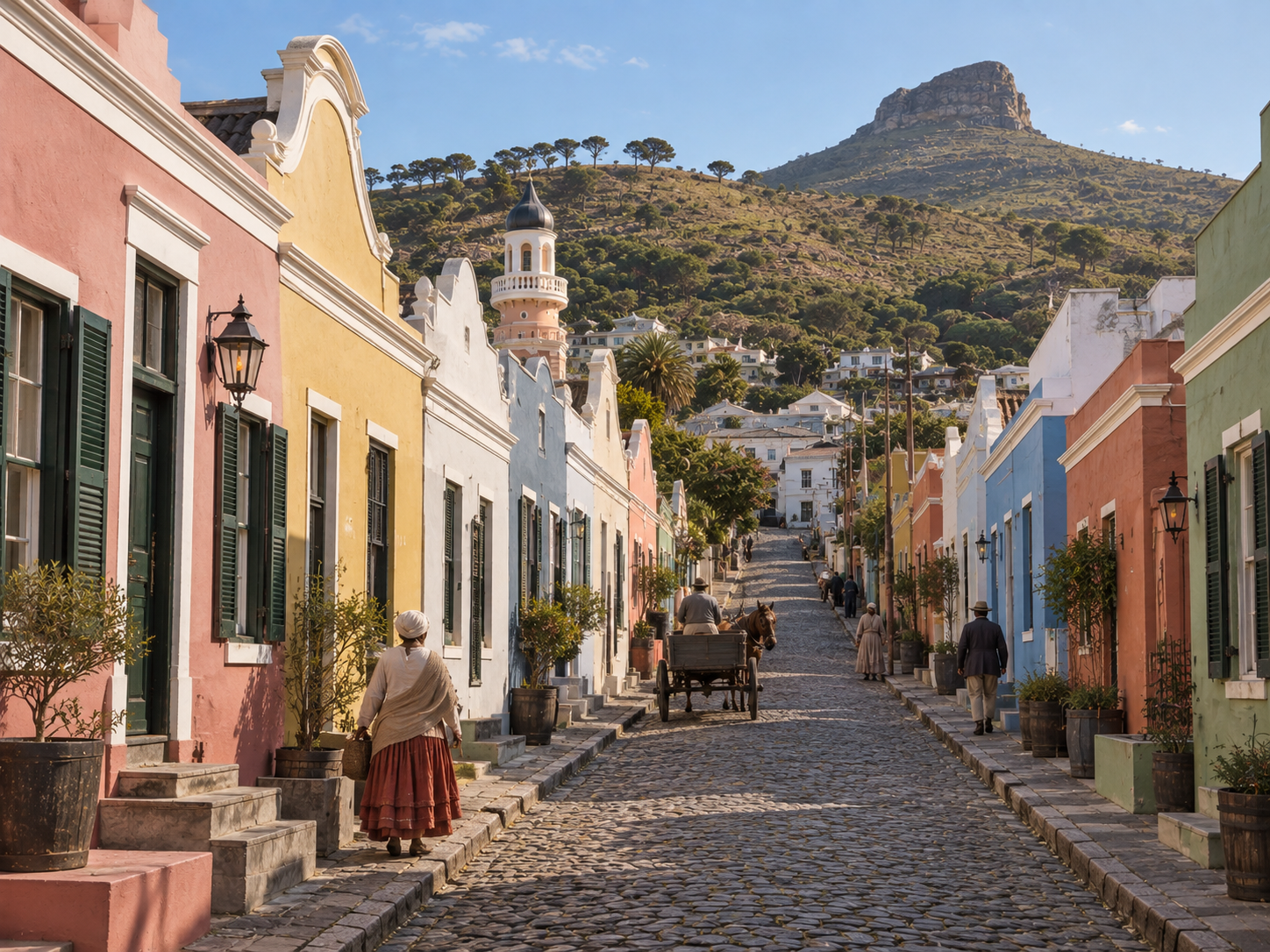
Before the colours, there were the houses.
Many of them were built as relatively modest homes between the 18th and 19th centuries. The Bo-Kaap Museum itself occupies a house dating to 1768, one of the area's early surviving buildings.
The houses were practical.
They had narrow fronts because the plots were small and tightly arranged. Many had flat roofs, front steps or verandas, and features associated with Cape Dutch and Georgian architecture.
This is why the streets look so different from a modern housing development.
The houses were built close together.
The roads climb and turn.
The buildings follow the slope.
And many of the houses are surprisingly small.
The colour came later, or at least the famous rainbow of colours did.
One important part of the story is that many houses in the area were originally rental properties. Some accounts say that houses had to remain white while they were being rented. When residents became homeowners, they were no longer restricted in the same way and began using brighter colours.
That story is widely repeated.
But historians cannot point to one single moment when Bo-Kaap suddenly became a rainbow.
The evidence is less tidy than that.
What we can say with confidence is that the neighbourhood developed a distinctive tradition of brightly painted homes, and that the colours became closely linked with the identity of Bo-Kaap.
The houses were here first.
The rainbow came later.
How Bo-Kaap’s Houses Developed
Chapter 2 — Then Freedom Changed Who Lived Here
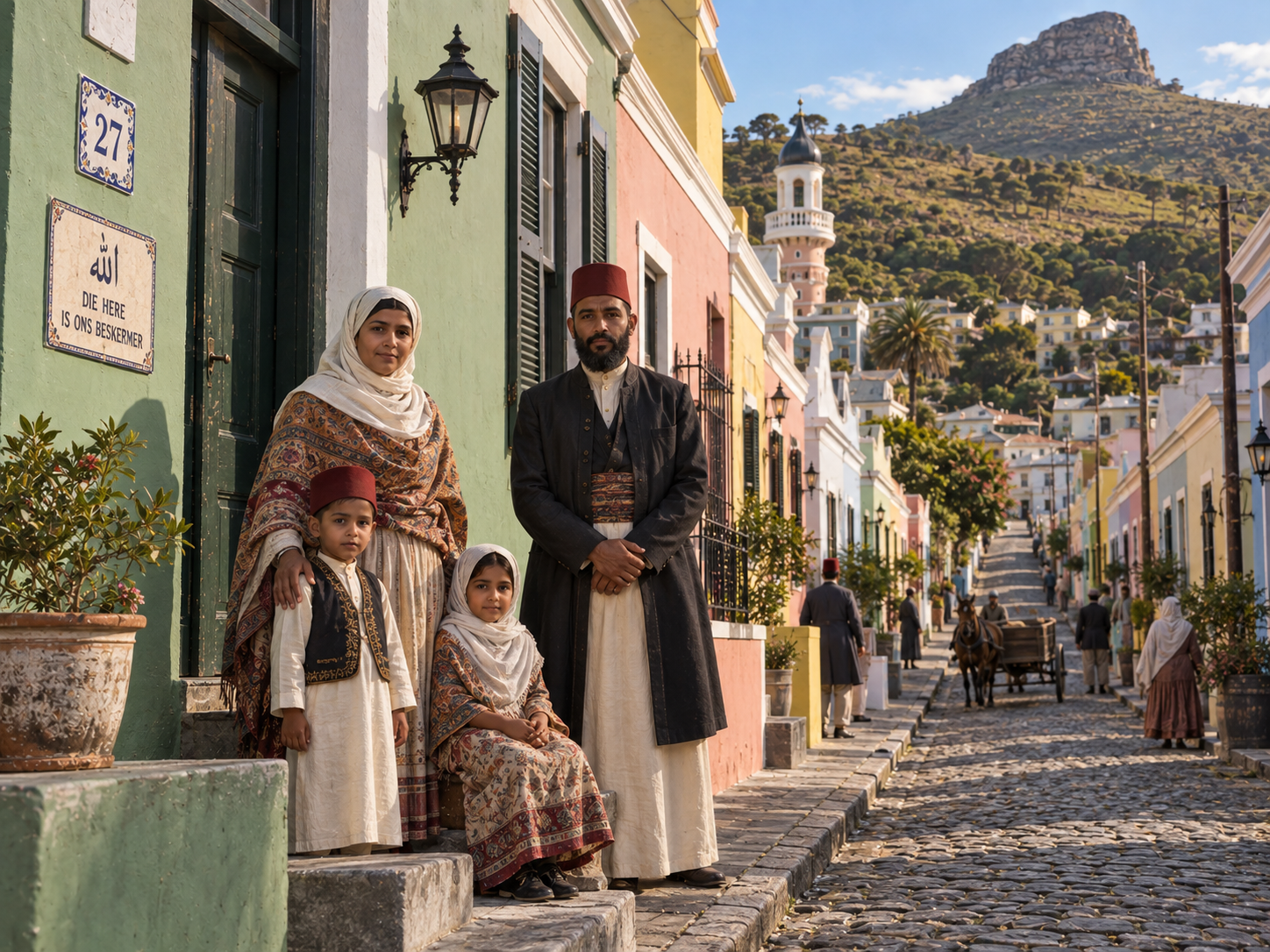
To understand the colours, you have to understand the people.
Bo-Kaap became closely associated with Cape Muslim communities whose ancestors came from many parts of Africa and Asia.
Some were brought to the Cape as enslaved people.
Others arrived as political exiles, convicts, artisans and workers.
The community was not made up of one single group, but Islam became an important part of life in the neighbourhood. The first mosque in the Cape, the Auwal Mosque, was established in the area in the early 19th century and remains there today.
Then slavery ended.
In 1834, slavery was abolished in the Cape Colony, followed by a period of apprenticeship before full emancipation in 1838. Freed people needed places to live, and the Bo-Kaap became one of the neighbourhoods where many settled.
That changed the character of the area.
People were no longer simply tenants within a colonial housing system.
Families built lives there.
They opened businesses.
They worshipped there.
Children grew up there.
The streets became part of everyday community life.
This matters because the colourful houses are sometimes presented as if they appeared for decoration.
But houses mean something different when they belong to families.
A colour on a wall can be decoration.
It can also be a statement:
This is our home.
And that is one reason the story of Bo-Kaap's colours cannot be separated from the story of freedom.
From Enslavement to Community
Chapter 3 — So Were the Houses Painted for Eid?
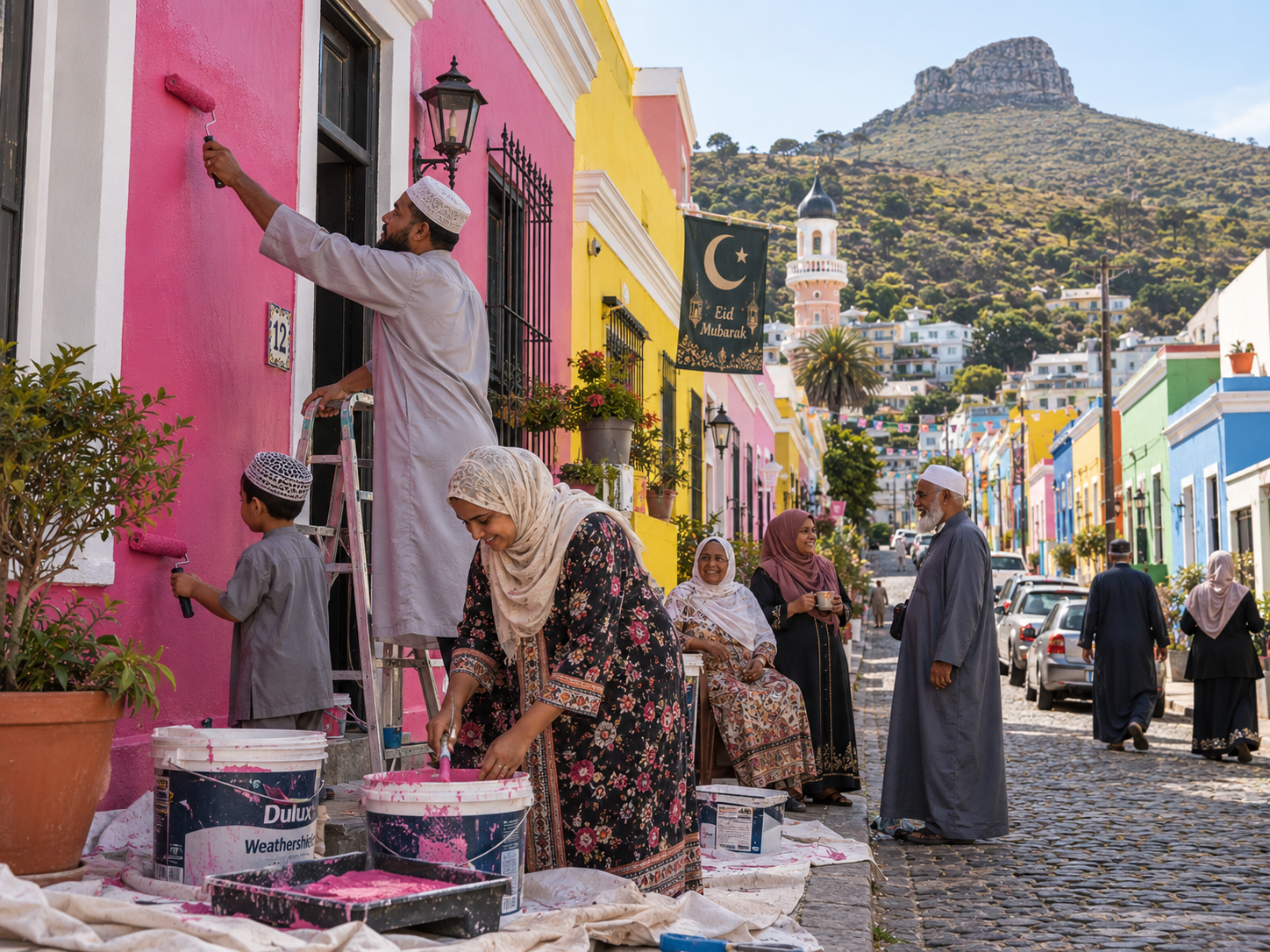
This is where the story gets more complicated.
You may have heard another explanation.
The houses were painted different colours for Eid, the celebration at the end of Ramadan.
The idea has been widely published. One commonly repeated account says residents repaint their houses in bright colours around Eid, and that choosing colours could even involve neighbours talking about their plans so the houses would not clash.
It is a lovely story.
And Eid is certainly important to Bo-Kaap's Muslim community.
But there is a problem with presenting this as the single origin of all the colours.
The historical evidence does not give us a simple document saying:
“This is the day Bo-Kaap residents began painting their houses different colours for Eid.”
Other accounts connect the colours more strongly with home ownership and freedom after the era of rental housing. Cape Town Tourism still presents that explanation as the commonly told story.
So which one is true?
The safest answer is that the colours have more than one layer of meaning, and the exact beginning of the tradition is not completely settled.
Freedom is part of the story.
Muslim cultural traditions are part of the story.
And over time, repainting homes in bright colours became part of the visual identity of the neighbourhood.
That is more believable than searching for one magic explanation.
A neighbourhood's traditions do not always begin on one particular day.
Sometimes they grow.
What Is the Real Story Behind the Colours?
Chapter 4 — The Streets Tell Another Part of the Story
Walk through Bo-Kaap and look past the paint.
The streets are steep.
The houses are narrow.
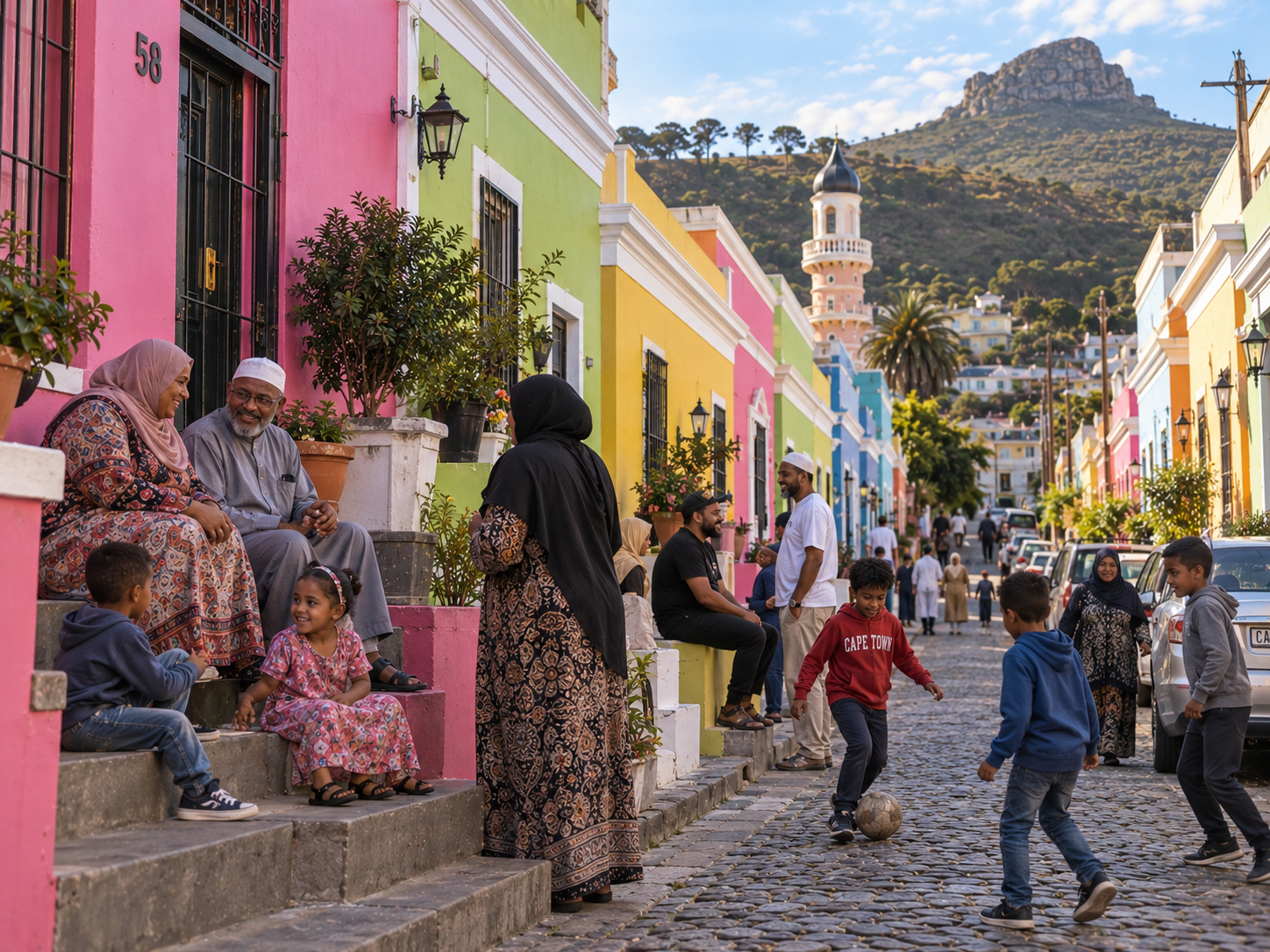
Many have front steps where people can sit and talk.
The Bo-Kaap Museum notes that these raised verandas, or stoeps, could serve as places where family and friends gathered.
That sounds like a small architectural detail.
It is not.
A neighbourhood is shaped by what its streets allow people to do.
Bo-Kaap's streets have long been communal spaces. Residents have used them to meet, children have played there, and neighbours have known one another across the short distances between houses.
The colours make this feeling visible.
You can see one house beside another.
Different colours.
The same street.
The same neighbourhood.
And that is why it would be a mistake to treat Bo-Kaap simply as a row of colourful buildings for visitors to photograph.
The buildings are old.
The streets have been lived in.
The community came before the tourist photographs.
The colours became famous because they are beautiful.
But they matter because there are people behind them.
More Than Paint: How the Street Works
Chapter 5 — Then Apartheid Tried to Redraw the Neighbourhood
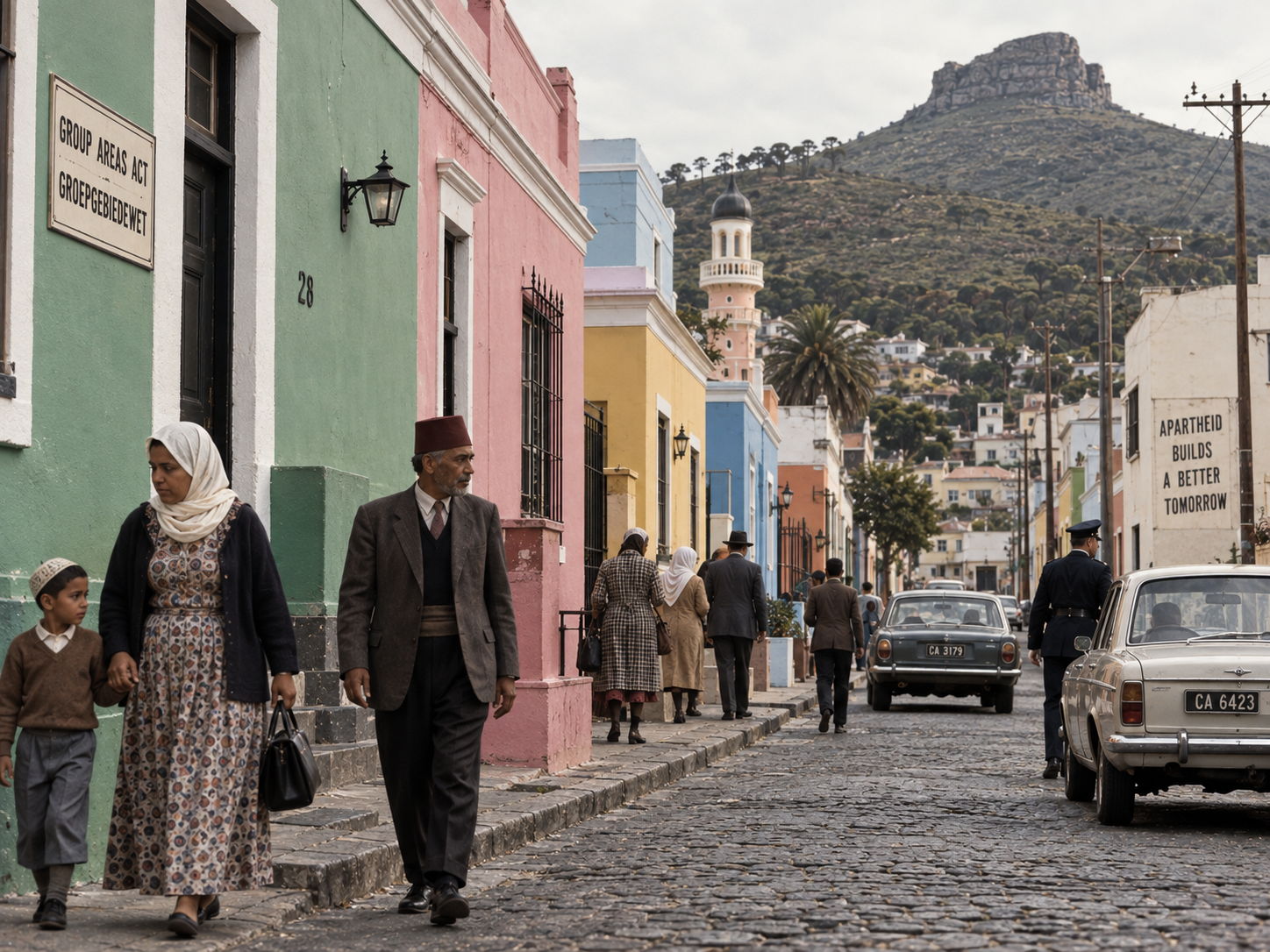
Bo-Kaap's colourful houses survived something much darker than changing paint.
During apartheid, the government used laws to control where people could live according to race and classification.
The Group Areas Act reshaped neighbourhoods across South Africa.
People were removed from communities where their families had lived for generations.
Bo-Kaap was affected too.
In 1957, parts of the area were reserved for people classified as “Malay,” and later the neighbourhood was formally designated as a “Malay Group Area.” Some residents were forced to leave.
Nearby District Six suffered an even more devastating fate.
After it was declared a white area in 1966, thousands of residents were forcibly removed and the neighbourhood was largely destroyed.
Bo-Kaap survived.
That does not mean apartheid left it untouched.
It changed who could live there.
It separated families and communities.
But many of Bo-Kaap's historic buildings remained standing.
That is important when you walk through the neighbourhood today.
The houses are colourful.
But behind the colour is a history of forced separation and resistance.
The bright walls therefore tell only one part of the story.
The streets remember another.
How Apartheid Changed Bo-Kaap
Chapter 6 — Now the Colours Mean Something Different Too
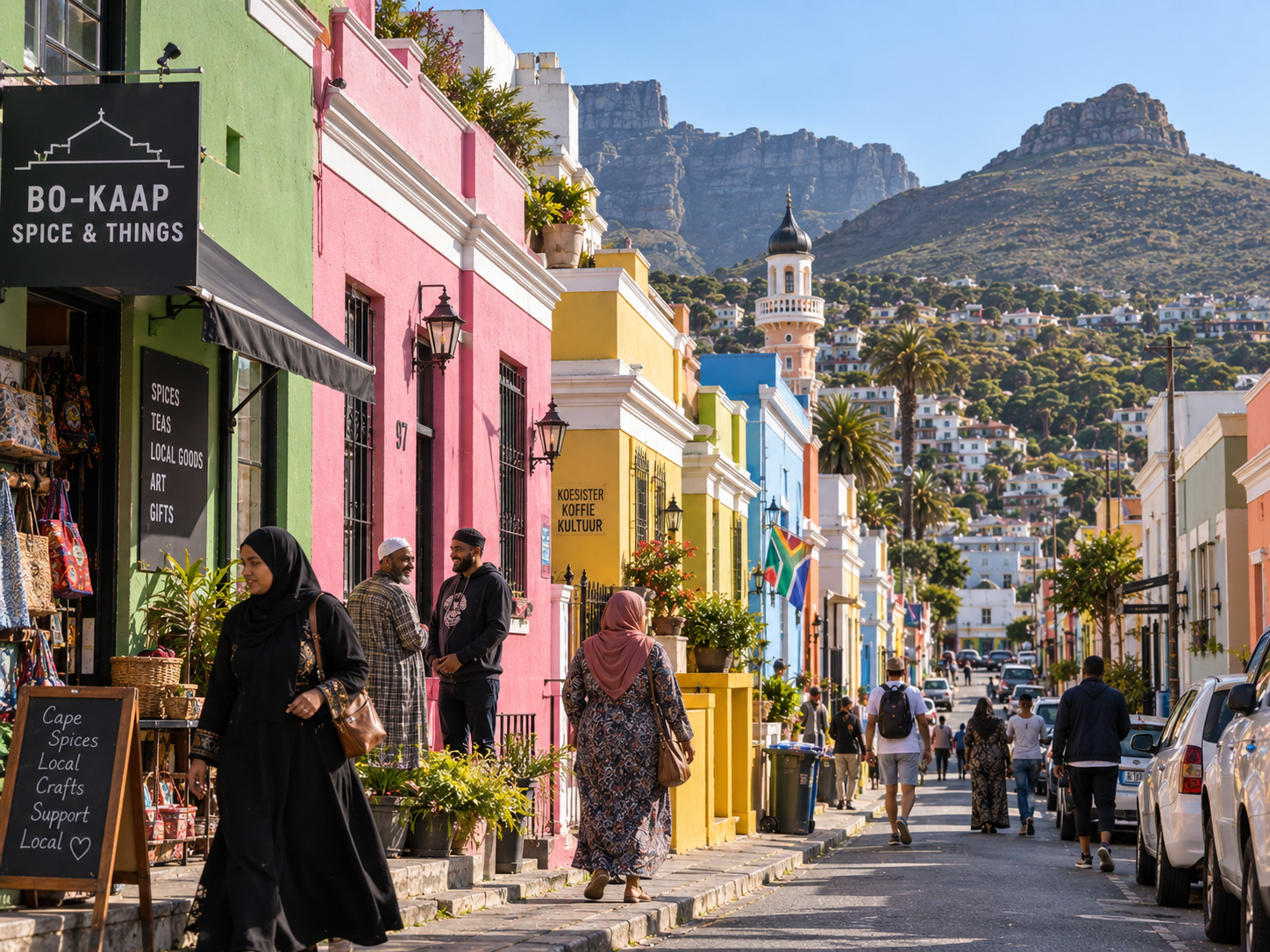
Today, Bo-Kaap is one of Cape Town's most photographed neighbourhoods.
Visitors come for the houses.
The colours appear in travel guides, photographs, postcards and social media feeds.
That attention has helped make Bo-Kaap famous.
But it has also created a difficult question.
Who is the neighbourhood for?
The area is still a residential community, not an open-air museum.
Its history is still part of everyday life.
The Bo-Kaap Museum describes the neighbourhood as a significant part of Cape Town's cultural heritage and highlights its long connection with Muslim families.
At the same time, rising interest in the neighbourhood has brought pressure from property development and changing property values.
That means the colourful houses can be seen in two ways.
To a visitor, they may look like beautiful buildings.
To a family who has lived there for generations, the same house may mean home, memory and inheritance.
The colour is visible to everyone.
The meaning is not.
And perhaps that is the best reason to look beyond the paint.
A Living Heritage
So, Why Are the Houses in Bo-Kaap Painted Different Colors?
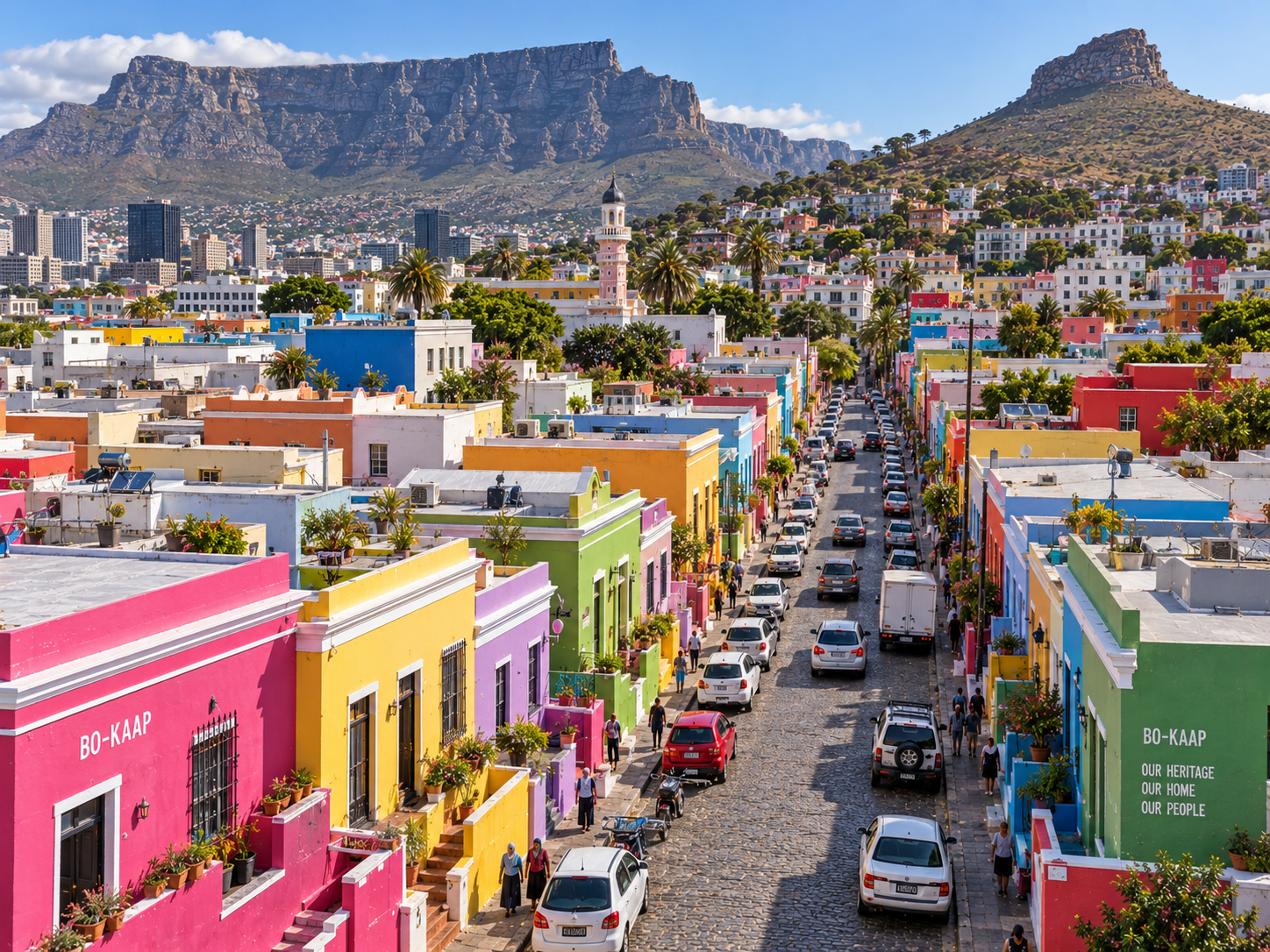
There is no single sentence that explains all of it.
The popular story says that homes once had to be white while they were rented, and that residents later used bright colours as a sign of freedom and ownership.
Another tradition connects colourful repainting with Eid and the celebrations of Cape Muslim families.
The exact beginning of the colour tradition is harder to pin down.
What is much clearer is the history around it.
Bo-Kaap grew from 18th-century housing into a close-knit community strongly associated with Cape Muslim culture. Many residents were descendants of enslaved people and political exiles from Africa and Asia. After emancipation, the neighbourhood became home to generations of freed families and other residents.
Its houses survived apartheid.
Its community survived forced removals and segregation.
And its colourful streets eventually became one of Cape Town's best-known images.
So when you see a pink house beside a yellow one, the colours are not the whole story.
They are the part that catches your eye first.
Behind them is a much older story about who lived there, who was allowed to own a home, how a community was built, and how that community kept its identity.
The rainbow came later.
The people came first.
Frequently Asked Questions
1. Why are the houses in Bo-Kaap painted different colours?
The exact origin of the colour tradition is not completely documented. A widely repeated explanation connects bright colours with freedom and home ownership after the period when houses were commonly rented, while another tradition connects colourful repainting with Eid celebrations.
2. Were Bo-Kaap houses originally white?
Many accounts say that houses were required to be painted white while they were rented. This is part of the commonly told explanation for why residents later chose brighter colours. The full history of the colour tradition, however, is more complicated than that single story.
3. Did people paint the houses for Eid?
There is a long-standing account connecting house painting with Eid, the celebration marking the end of Ramadan. It is part of the area's cultural tradition, but it should not be presented as the proven single origin of all Bo-Kaap's colours.
4. What is Bo-Kaap known for?
Bo-Kaap is known for its historic houses, steep cobbled streets and strong Cape Muslim cultural heritage. The area contains many buildings dating from the 18th and 19th centuries.
5. Who lived in Bo-Kaap?
The neighbourhood has been home to people of different backgrounds, but it became especially closely associated with Cape Muslims. Many Muslim residents were descendants of people brought to the Cape from Africa and Asia as slaves, while others arrived as political exiles and workers.
6. When was Bo-Kaap built?
Much of the neighbourhood was developed between about 1760 and 1840, although the area continued to change afterward. The Bo-Kaap Museum occupies a house dating to 1768.
7. What style are the Bo-Kaap houses?
The neighbourhood contains buildings influenced by Cape Dutch and Georgian architecture. Many older homes have narrow fronts, flat roofs, decorative parapets and raised front stoops.
8. Why is Bo-Kaap important to Cape Muslim history?
Bo-Kaap became a major centre of Cape Muslim community life. The area contains historic mosques and has been home to generations of Muslim families. The Auwal Mosque, established in the early 19th century, remains an important landmark.
9. Did apartheid affect Bo-Kaap?
Yes. Apartheid's Group Areas policies changed who could live in different parts of Cape Town. Parts of Bo-Kaap were designated for people classified as “Malay,” and some residents were forcibly removed.
10. Is Bo-Kaap just a tourist attraction?
No. It is still a residential neighbourhood and an important part of Cape Town's cultural heritage. Visitors may know it for its colourful houses, but for residents the area is also a place of home, family, religion and community.