Introduction — Faces That Have Watched for Centuries
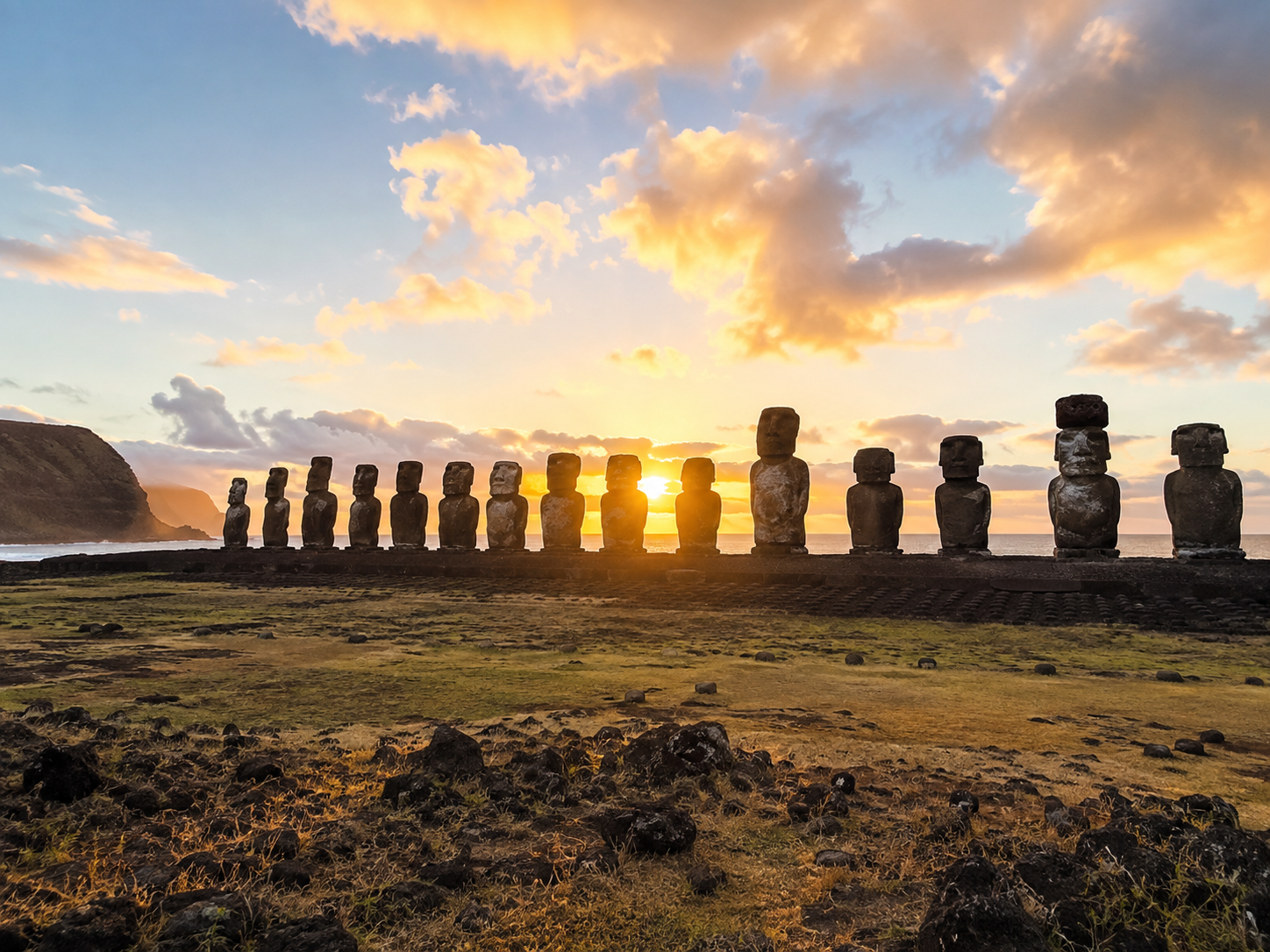
Across the volcanic landscape of Rapa Nui, enormous stone faces stand above the Pacific.
They are the moai—monumental statues created by the island's Polynesian inhabitants. Nearly 1,000 are known from archaeological research, including statues that remain unfinished in the quarry. Some are several metres tall, while the largest completed examples weigh many tonnes.
Rapa Nui is also one of the most isolated inhabited islands on Earth. Its distance from other Polynesian islands makes the achievement of reaching and settling it remarkable in its own right.
But the statues created a different kind of mystery.
How were such enormous stones carved? How were they transported across the island? Why were they erected? And what happened to the society that built them?
Over time, popular stories have offered simple answers: mysterious outsiders, supernatural explanations, or a sudden civilization-ending collapse.
Archaeology tells a more complicated story.
Researchers have developed competing explanations for some of Rapa Nui's biggest questions, and several details remain uncertain. Even the timing of the island's initial settlement has been refined and debated through different archaeological and genetic studies. Recent research places Polynesian settlement broadly around the 12th–13th centuries CE, rather than treating one exact year as established fact.
What is clearer is that the people of Rapa Nui developed a sophisticated society capable of monumental construction, agriculture and long-distance ocean voyaging.
The moai are not evidence of a lost civilization.
They are evidence of a real Polynesian civilization whose achievements are still being investigated.
The story begins long before the statues were carved.
It begins with a group of Polynesian voyagers crossing an enormous stretch of ocean toward one of the most isolated islands humans had ever settled.
Chapter 1 — The Island and Its People
A Remote Island in the Pacific
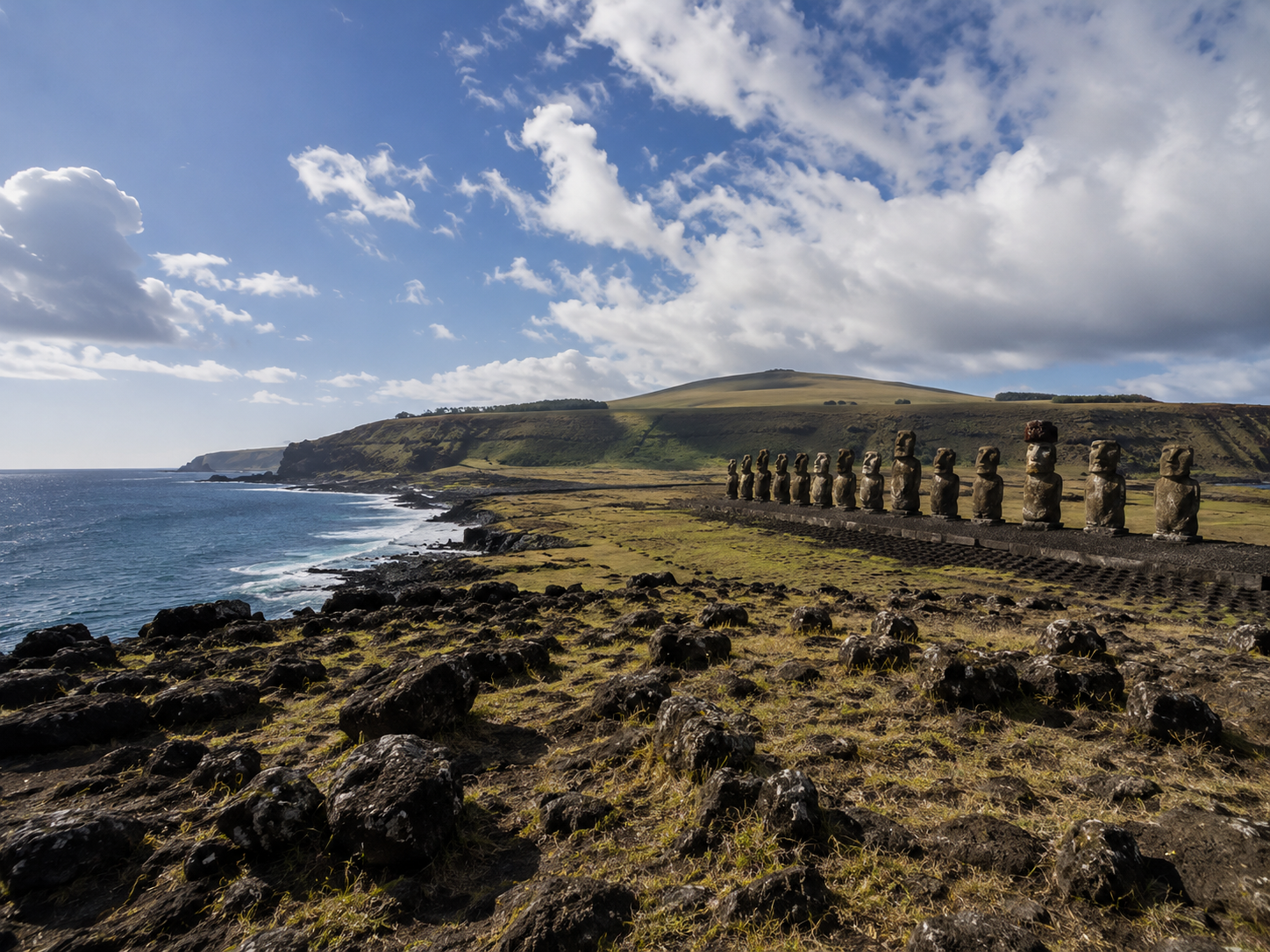
Rapa Nui, better known in English as Easter Island, sits in the southeastern Pacific, thousands of kilometres from mainland South America.
Its isolation is one of the first things that makes its history remarkable.
The island is part of Polynesia, and archaeological and genetic research indicates that its permanent settlement was achieved by Polynesian voyagers. A major genetic study published in Nature placed the settlement of Rapa Nui at approximately 1200 CE, although the exact chronology remains an area of archaeological debate.
That distinction matters.
We can be confident that Polynesian people settled the island centuries before European contact. But assigning the settlement to one precise year would suggest a level of certainty the evidence does not provide.
The people who developed their society here became known as the Rapa Nui.
Over generations, they adapted to an isolated volcanic island with limited natural resources and developed distinctive forms of agriculture, settlement and ceremonial architecture.
And eventually, they began creating something extraordinary.
The moai.
A Society Built Around Clans and Communities
Rapa Nui society was not simply a single centralized kingdom ruling the entire island.
Archaeological research points toward communities and social groups organized across different parts of the island, with ceremonial sites, settlements and agricultural areas forming interconnected landscapes. Researchers continue to debate exactly how political authority was organized and how much power individual chiefs held.
This decentralized structure is important because it changes how we think about the moai.
The statues were not simply monuments ordered by an unknown empire.
They were produced within a society whose communities invested enormous effort in carving, transporting and erecting monuments.
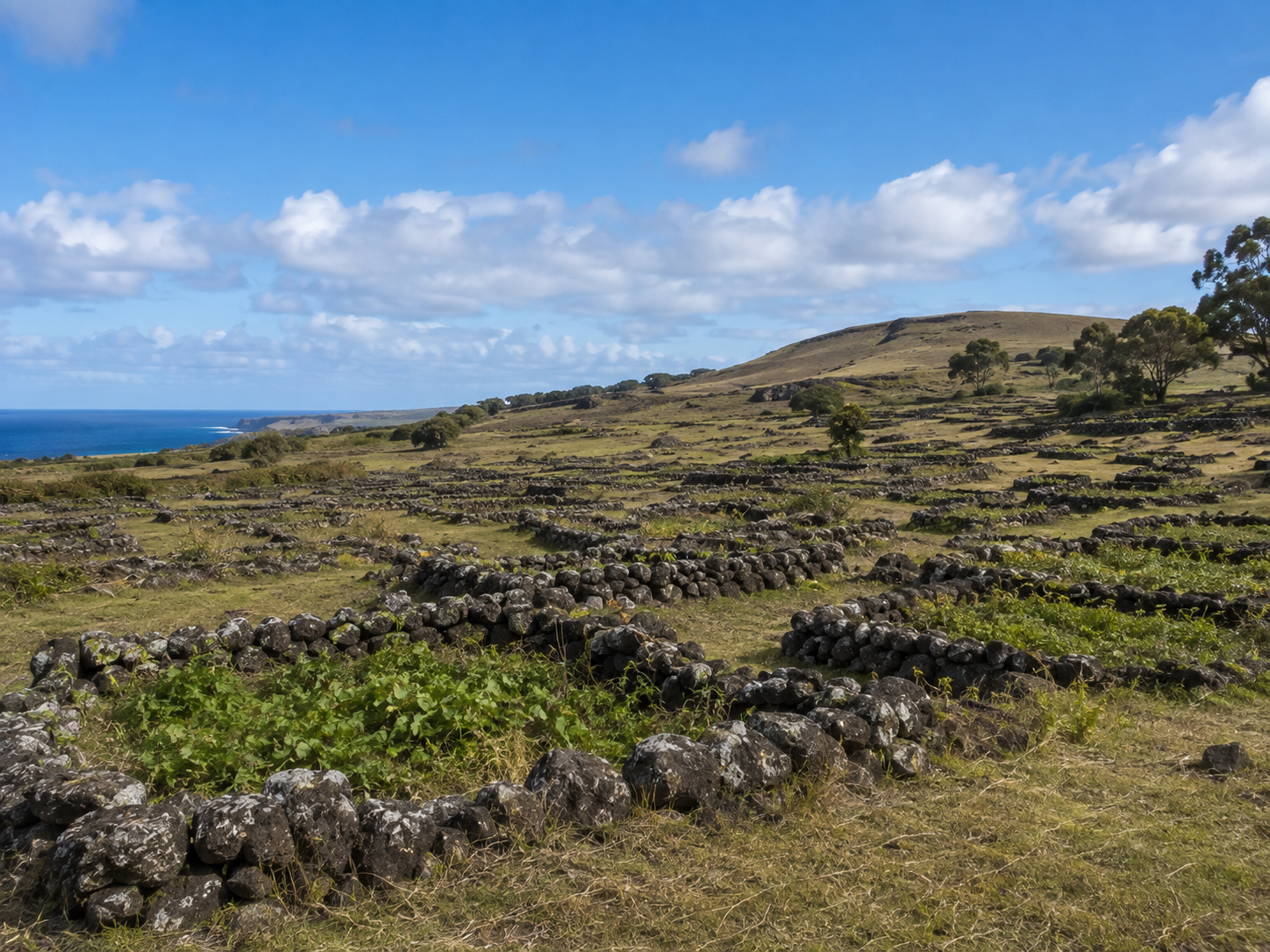
The archaeological record contains evidence of extensive agricultural practices, residential areas and ceremonial architecture alongside the statues.
The island's environment also demanded ingenuity.
Rapa Nui had no large rivers and limited freshwater resources. Its inhabitants developed agricultural techniques suited to the island's conditions, including systems that helped protect crops from wind and conserve moisture.
This was not a civilization living in complete isolation from its environment.
It was a society continually adapting to it.
Why Were the Moai Created?
The exact motivations behind individual statues are not completely known.
However, archaeologists generally understand the moai within the island's ceremonial and ancestral traditions rather than as unexplained objects.
Their construction required organized labour, specialized knowledge and access to the island's volcanic stone resources.
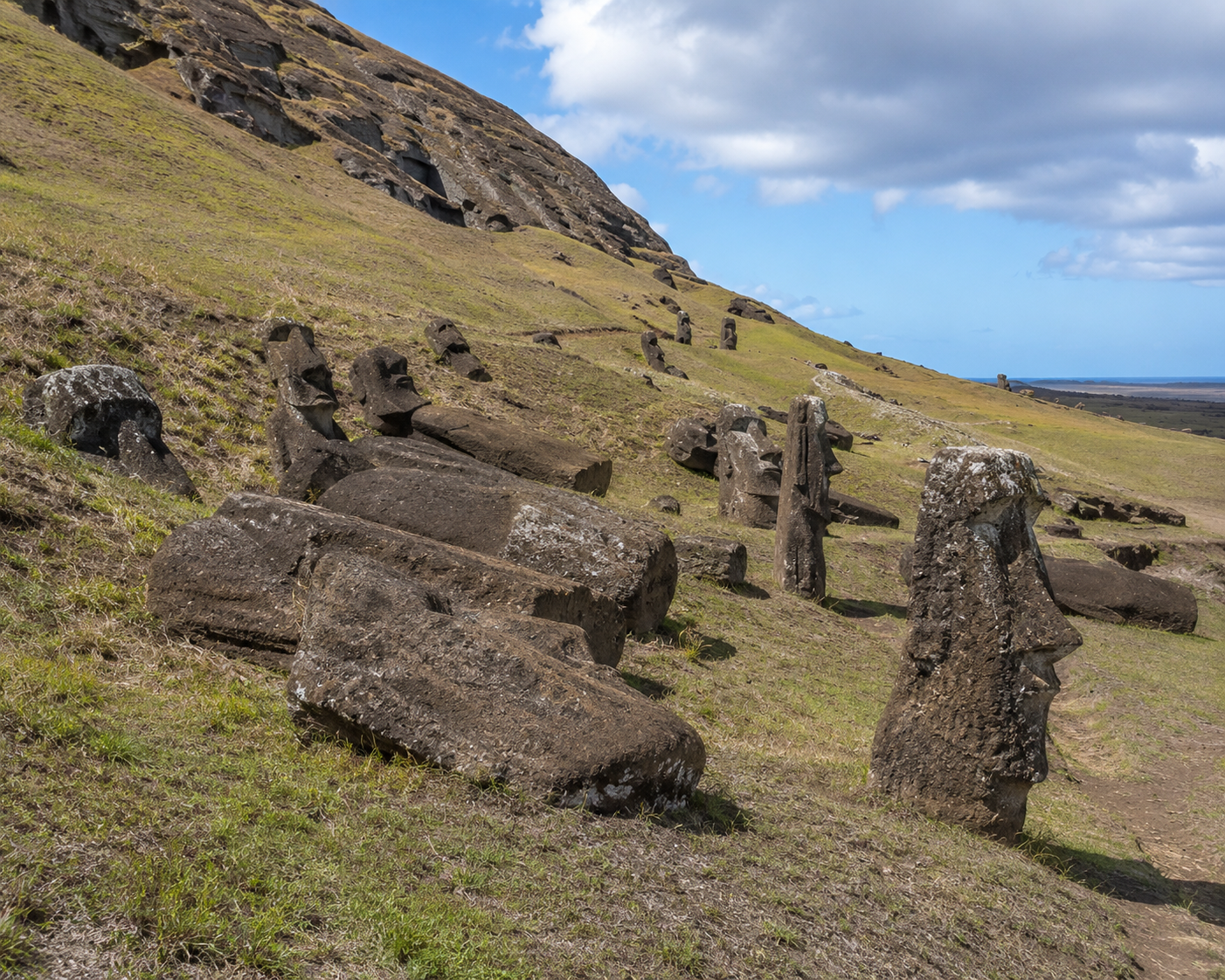
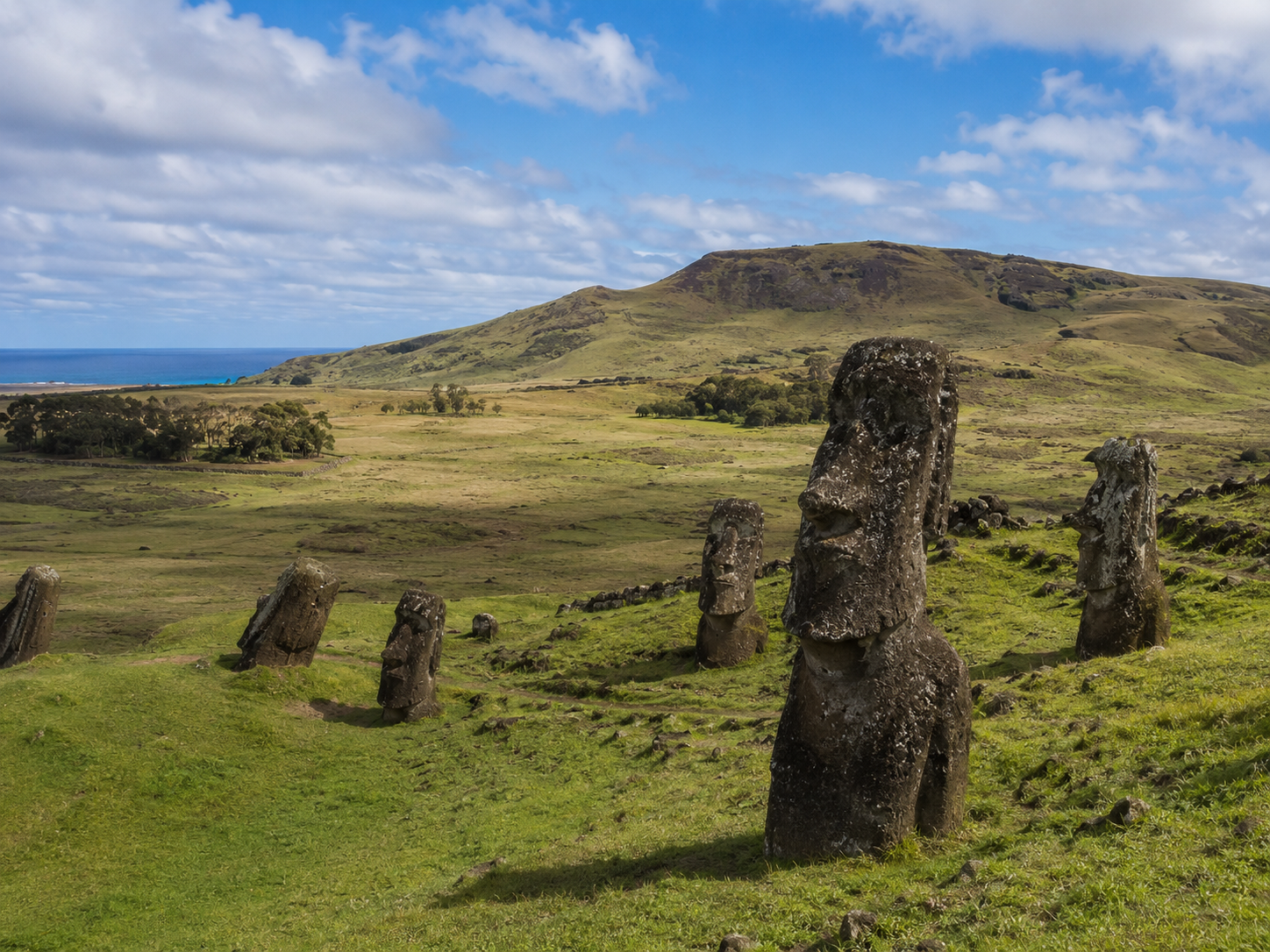
The largest quarry was Rano Raraku, where hundreds of statues were carved from volcanic tuff.
Some were transported away.
Others were left unfinished on the quarry slopes.
And some of the largest statues were never completed at all.
This unfinished landscape provides archaeologists with something unusual: a record of the statue-making process itself.
An Island That Was Never Truly Forgotten
European contact began in 1722, when the Dutch navigator Jacob Roggeveen arrived on Easter Sunday, giving the island its European name.
But Rapa Nui history did not begin with European arrival.
By then, Polynesian communities had already lived on the island for centuries, developed their own traditions and transformed its landscape.
Much of what happened during those centuries remains open to archaeological investigation.
That is why Rapa Nui should not be reduced to a single story about giant statues or a mysterious collapse.
Its history is the story of people adapting to an isolated island, developing a distinctive society and creating one of the world's most recognizable monumental traditions.
And the most extraordinary part is still ahead.
The moai were not only carved.
They had to be moved.
The island's isolation made the achievement remarkable.
But the question that has fascinated researchers for generations is even more physical:
How did the Rapa Nui move stones weighing many tonnes across the island?
Chapter 2 — How the Moai Were Actually Made and Moved
Carved From the Volcano
The moai were not carved from ordinary rock.
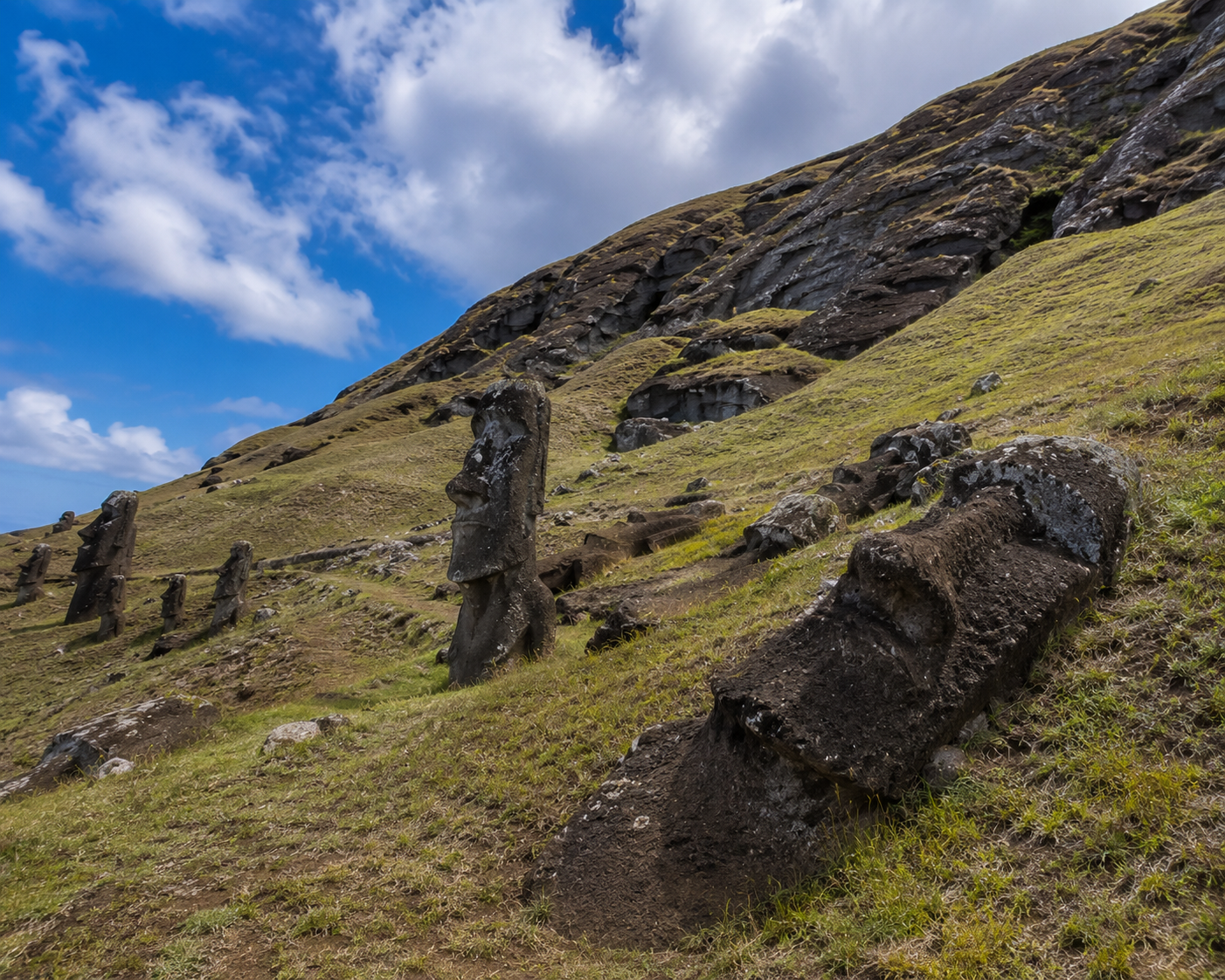
Most were made from a relatively soft volcanic stone called lapilli tuff, quarried at Rano Raraku. More than 95% of the island's known moai are associated with this quarry.
The quarry still preserves unfinished statues, carving areas and abandoned figures at different stages of production. It is almost like a workshop frozen in the landscape.
Rapa Nui carvers shaped the statues directly from the volcanic rock, gradually separating each figure from the surrounding stone.
The process required considerable skill.
The familiar face was only part of the statue. The body, arms, hands and distinctive proportions were carefully formed before the moai was separated from the quarry wall.
Some were eventually transported across the island.
Others never left.
The Journey Was the Difficult Part
Creating a huge stone statue was only half the challenge.
A finished or partly finished moai had to leave the quarry and travel to its destination, sometimes over considerable distances.
For decades, researchers have proposed different ways this might have happened.
Some models involve horizontal transport, using wooden sledges or other forms of support.
Another possibility is the upright “walking” method, in which teams used ropes to rock the statue from side to side while gradually moving it forward.
There is no surviving eyewitness account describing exactly how every moai was transported.
That is why the subject remains an archaeological question rather than a solved engineering problem.
The Walking Moai Hypothesis
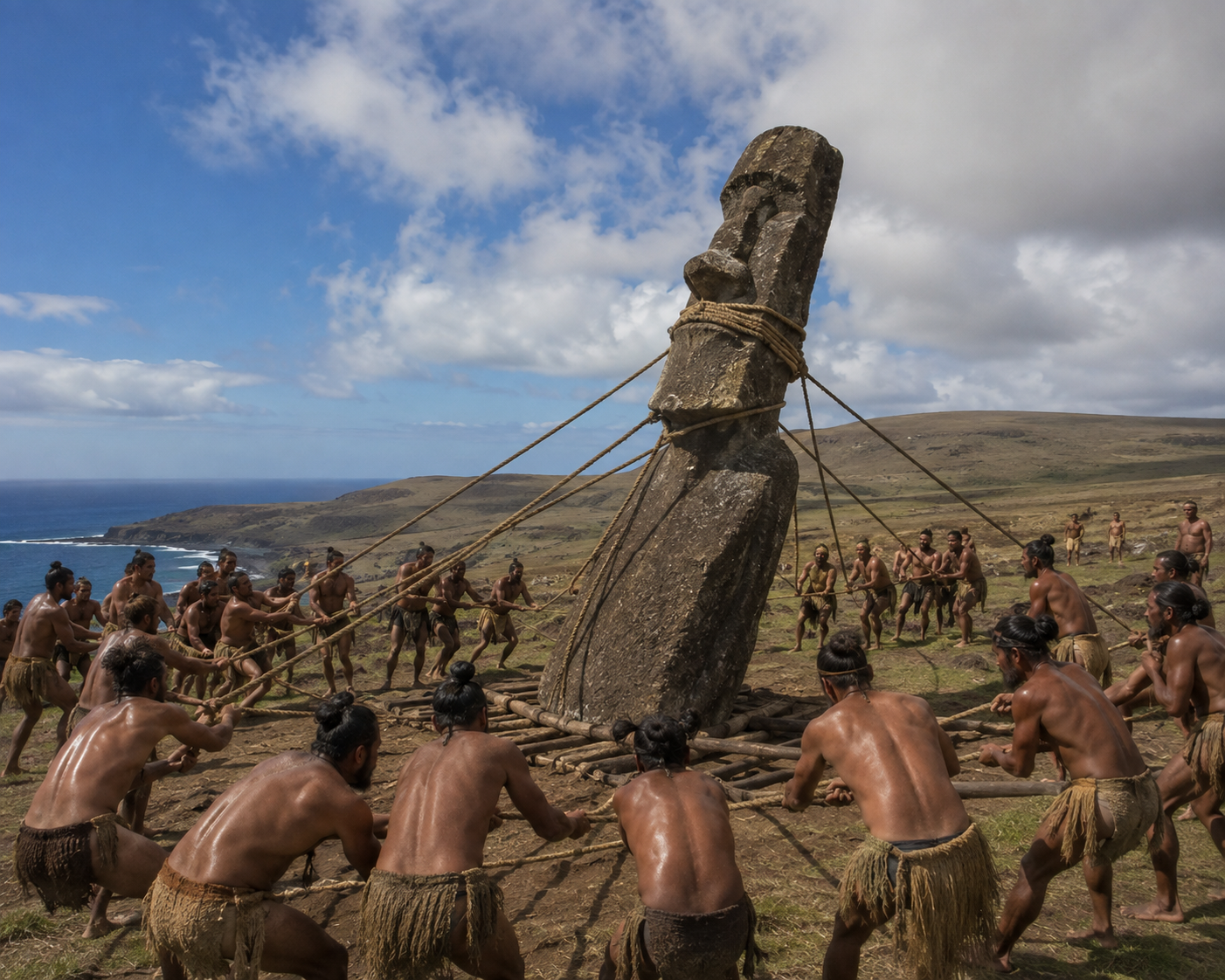
In 2012, archaeologists Terry Hunt and Carl Lipo, working with Rapa Nui collaborators, published experimental research testing whether a moai could be moved upright.
They built a 4.35-ton replica and demonstrated that a team using ropes could rock it from side to side, causing the statue to move forward in a controlled motion.
The experiment showed that the method was physically possible.
It did not, by itself, prove that every ancient moai was transported this way.
That distinction is important.
More recent research by Lipo and Hunt has strengthened the walking hypothesis by examining the shapes of road-side moai, their forward lean and distinctive bases. Their 2025 study argues that these features are consistent with statues being deliberately designed for upright transport.
But other transport models remain part of the archaeological discussion.
The most responsible conclusion is therefore:
Walking is a leading and experimentally supported explanation, but the precise transport history of every moai is not established beyond doubt.
What the Archaeological Roads Tell Us
The statues themselves provide another clue.
Researchers have studied moai abandoned along ancient routes leading away from Rano Raraku. Some have shapes and positions that are compatible with upright movement.
The 2025 research identified characteristics including forward-leaning bodies and D-shaped bases that the authors argue would have helped make the walking technique stable and efficient.
But archaeological evidence can support an explanation without proving that it was the only method ever used.
It is entirely possible that different statues, routes or stages of transport required different techniques.
The important discovery is not that archaeologists have found a magical answer to the mystery.
It is that Rapa Nui people may have developed an ingenious transport system using the shape of the statue itself.
The word “walked” is useful because it describes the motion.
It does not mean the stone statue literally moved by itself.
The evidence points instead toward human engineering, coordination and physics.
And that may be the most remarkable part of the story: the Rapa Nui did not need supernatural forces to move multi-ton monuments.
They needed knowledge, ropes, teamwork—and a very clever understanding of how a massive stone body could be made to move.
Chapter 3 — The Collapse Myth vs. What the Evidence Shows
Did Rapa Nui Destroy Itself?
For decades, Rapa Nui was presented as a warning about what happens when a society uses up its own resources.
The familiar story was straightforward: the islanders cut down their forests to build canoes, obtain fuel and move the moai. As the forests disappeared, resources declined, conflict followed, and the population supposedly collapsed before Europeans arrived.
This interpretation became especially influential through Jared Diamond's 2005 book Collapse.
There is real evidence of major environmental change.
Rapa Nui's palm-dominated forests disappeared over several centuries after Polynesian settlement. Researchers have found evidence of human burning and clearing, while introduced Polynesian rats have also been proposed as an important factor because they could consume palm seeds and prevent regeneration.
But environmental change and civilizational collapse are not automatically the same thing.
That distinction has become central to the modern debate.
The Forest Really Did Disappear
There is little doubt that Rapa Nui experienced substantial deforestation.
The disagreement concerns why it happened and what consequences it had for the population.
One line of research emphasizes human activity. Archaeological evidence includes burned palm remains and charcoal associated with periods of forest clearance, leading some researchers to conclude that people were a major driver of the transformation. A 2010 study by Mieth and Bork argued that human activity, rather than rats, was the dominant cause of palm woodland destruction.
Other researchers have emphasized the role of the Polynesian rat (Rattus exulans), introduced by the first settlers.
A 2025 study by Terry Hunt and Carl Lipo modeled the effects of rats on palm regeneration and argued that intense seed predation, combined with human forest clearing, could have driven the rapid ecological transformation. Their research explicitly challenges the idea of a simple human-caused “ecocide.”
So the evidence does not support the simplistic statement:
“The Rapa Nui simply cut down every tree and destroyed their civilization.”
The environmental history was more complicated.
But Did the Population Collapse Before Europeans Arrived?
This is where the older narrative faces an even larger challenge.
If Rapa Nui society had suffered a catastrophic population collapse centuries before European contact, researchers would expect archaeological, demographic or genetic evidence for such an event.
Recent research has questioned whether that evidence exists.
A 2024 ancient-DNA study examining 15 ancient Rapanui individuals found no evidence for a severe population bottleneck in the 1600s. The researchers concluded that their genetic data did not support the classic scenario of a massive pre-European population collapse.
That does not mean the island experienced no environmental stress.
Nor does it prove that human activity played no role in deforestation.
It means the older sequence—
deforestation → resource collapse → population crash → societal collapse
—is not established as historical fact.
The Role of European Contact
European contact began in 1722.
The most devastating demographic changes came later.
During the 19th century, Rapa Nui people were exposed to introduced diseases and suffered catastrophic disruption from Peruvian slave raids, particularly during the 1860s.
These events had consequences that are much better documented historically than a hypothetical pre-European population collapse.
Hunt and Lipo's archaeological interpretation has therefore emphasized European-introduced diseases as a major cause of demographic collapse.
The recent ancient-DNA research also found evidence inconsistent with a severe 17th-century population bottleneck, strengthening the case against treating the traditional “ecocide” timeline as settled.
But researchers continue to debate the island's demographic history, including population size and the precise relationship between environmental change and social organization.
There Was No Single Explanation
The strongest conclusion is therefore not that one side has completely defeated the other.
Rapa Nui experienced major ecological transformation.
Humans contributed to forest clearing.
Introduced rats may have made forest regeneration much more difficult.
The islanders adapted their agriculture and livelihoods to changing conditions.
And centuries later, European contact brought diseases, exploitation and slave raids that devastated the population.
A particularly important recent study published in 2025 argues that rats and humans worked together to produce the island's ecological transformation, rather than supporting a simple “people destroyed their own island” explanation.
That is a much more complicated story than the traditional collapse narrative.
What We Can Actually Say
The evidence allows several conclusions with reasonable confidence:
- The island was substantially deforested.
- Human activity contributed to that transformation.
- Introduced Polynesian rats likely played an important role in preventing palm regeneration, although their relative importance remains debated.
- The idea of a sudden, pre-European population collapse is increasingly challenged by archaeological and genetic evidence.
- European contact and 19th-century slave raids caused severe demographic disruption.
- The exact size and trajectory of the pre-European population remain uncertain.
That last point is important.
There is no reliable census from the centuries before European arrival. Population estimates are reconstructed from archaeological evidence and models, so exact numbers should not be presented as established fact.
The old story of Rapa Nui is often told as a simple warning about environmental destruction.
The archaeological record suggests something harder—and more human.
A society transformed its environment, adapted to those changes, and then faced a devastating series of outside forces centuries later.
The moai did not cause that story.
But they provide one of its most remarkable clues.
Chapter 4 — What the Moai Actually Meant
More Than Stone
The moai were not simply enormous sculptures placed around an island.
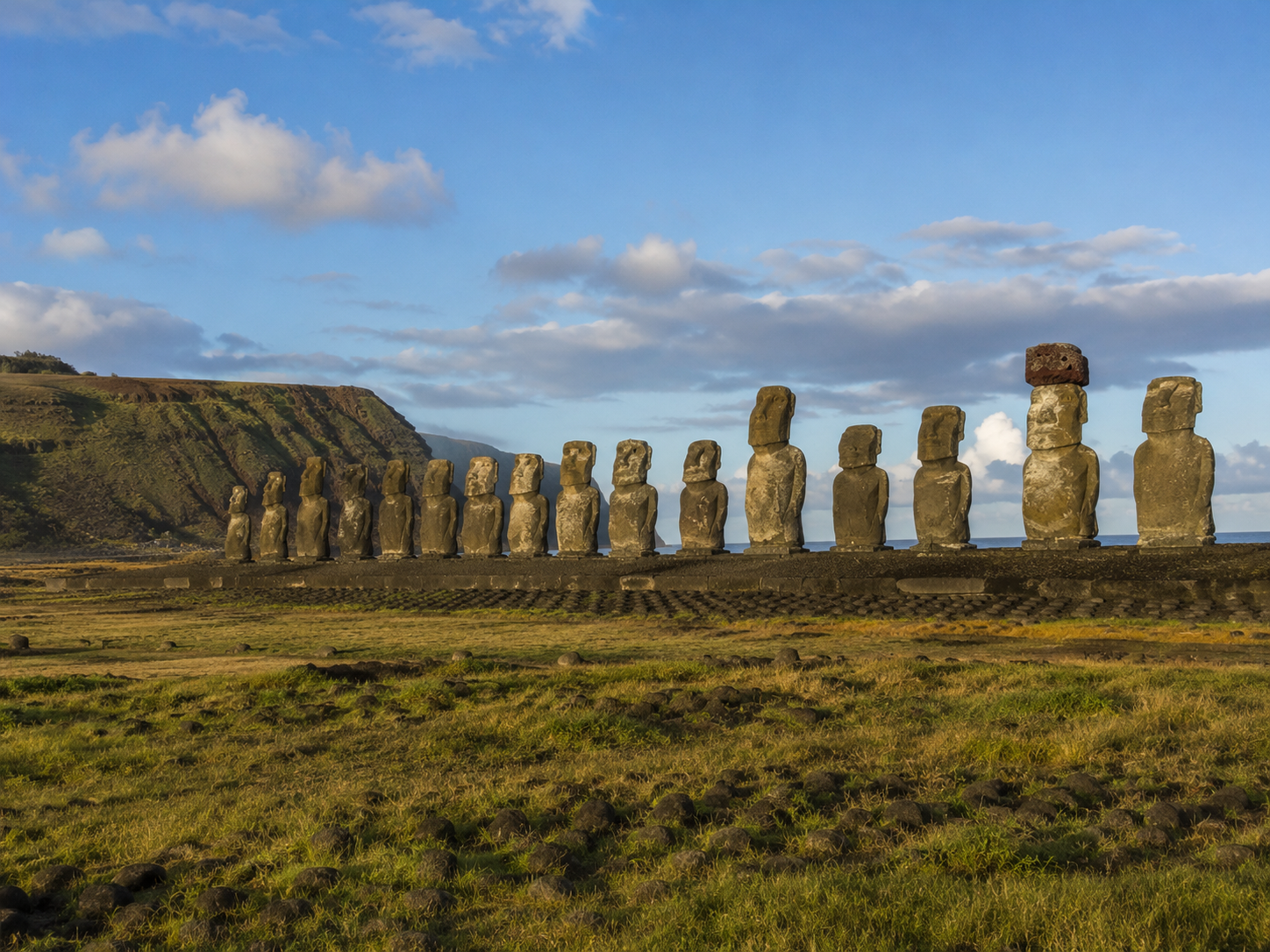
Archaeological evidence and Rapa Nui traditions connect them with ancestors, lineage and social identity. UNESCO describes the moai as representations of ancestors, while the ahu—the ceremonial platforms on which many stood—were important parts of the island's ceremonial landscape.
The exact meaning of an individual moai is harder to establish.
Rapa Nui did not leave behind written explanations telling us who every statue represented or precisely what ceremonies accompanied its erection. Researchers therefore reconstruct their meaning from archaeology, oral traditions, the placement of statues and the wider ceremonial landscape.
The safest conclusion is that the moai were connected to ancestral power and the communities that commissioned them, rather than being decorative monuments.
Why They Usually Face Inland
One of the most repeated facts about the moai is also one that needs careful wording.
Most moai erected on ahu face inland, looking across the land associated with their communities rather than toward the open ocean.
UNESCO's archaeological documentation describes the statues as generally facing inland over the land of the descent group connected with the ancestors represented by the moai.
This has often been simplified into the idea that the statues were built to “watch over and protect the people.”
That interpretation is consistent with Rapa Nui understandings of ancestral power, but the exact beliefs surrounding individual statues are not completely recoverable.
The important point is that their orientation was not random.
Their placement connected the statues with land, ancestry and community.
And there is an important exception to the usual pattern.
The Seven Facing the Sea
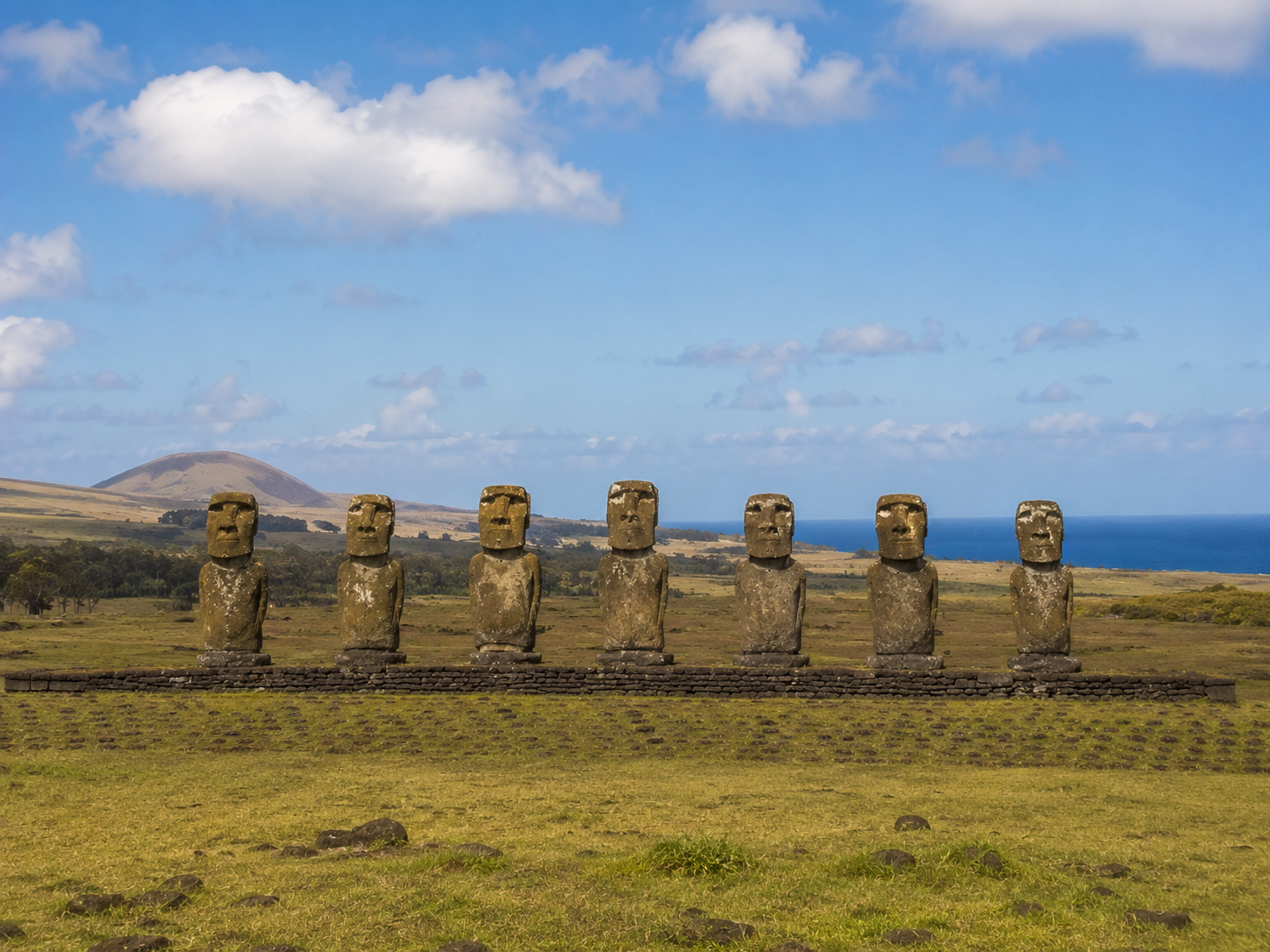
At Ahu Akivi, seven restored moai stand facing toward the ocean.
This is sometimes presented as proof that the general rule is wrong.
It isn't.
The seven statues are unusual precisely because most moai on ahu were oriented inland. Their unusual orientation has generated different interpretations, and the exact reason they face seaward is not firmly established.
Some traditional interpretations connect them with ancestors watching over the island's people or with the voyaging origins of Rapa Nui.
Those ideas should be treated as interpretations rather than established archaeological fact.
What we can say with confidence is simpler:
Their orientation is unusual, and its precise meaning remains uncertain.
The Moai Were Part of a Larger Ceremonial World
The statues cannot really be understood by looking at the figures alone.
The ahu were complex ceremonial platforms that could incorporate burials and other structures. Archaeological evidence shows that these places were repeatedly modified and rebuilt over time.
The moai therefore formed part of a wider landscape of:
- ceremonial platforms,
- burials,
- settlements,
- agricultural areas,
- roads,
- quarries and
- other ritual sites.
This wider context helps explain why simply calling the moai “statues” misses something important.
They were monumental representations embedded within the social and ceremonial life of Rapa Nui.
Their enormous size also required communities to organize substantial labour and resources.
The monument was therefore both a religious expression and a visible statement of the community that created it.
Their Meaning Changed Over Time
Rapa Nui's religious traditions did not remain completely unchanged.
UNESCO documents a later transition toward the tangata manu, or Birdman, tradition associated particularly with the ceremonial village of Orongo. The British Museum also notes that the moai Hoa Hakananai'a was later associated with the Birdman religion, showing that the ritual significance of an individual statue could change over time.
This is another reason to avoid describing the entire history of the moai with one simple explanation.
The statues belonged to a changing society.
Their meanings, ritual roles and relationships with later traditions could change as Rapa Nui culture changed.
Important note:
Exact meanings and rituals associated with individual moai are not completely known.
The moai were therefore not mysterious objects left behind by an unknown civilization.
They were created by the Rapa Nui themselves, within a cultural system whose archaeological remains are still visible across the island.
Their greatest mystery is not who built them.
It is how much of the meaning behind them we can still recover after centuries of cultural change.
Chapter 5 — Easter Island Today
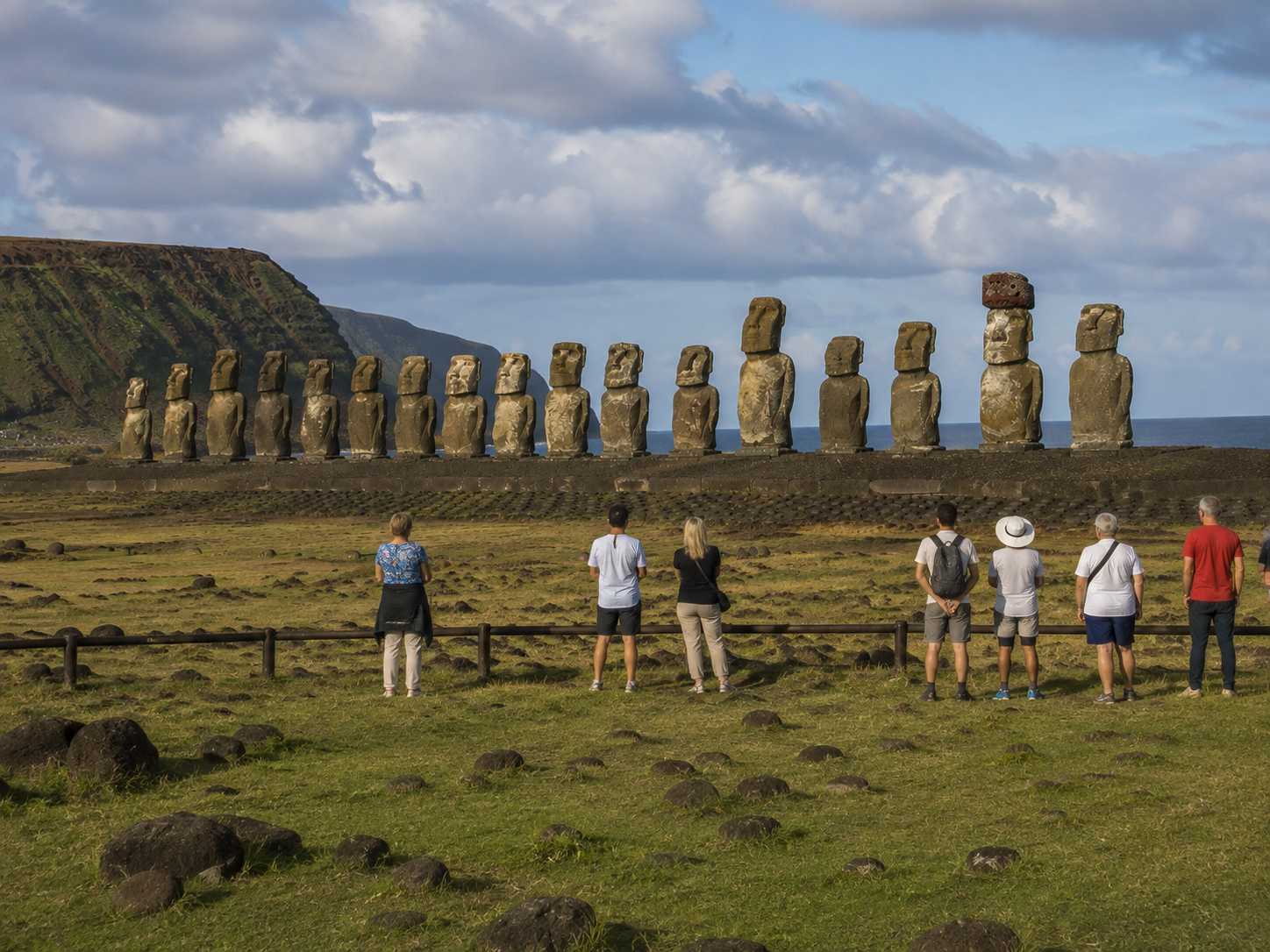
A Living Island, Not an Ancient Ruin
Rapa Nui is not simply an archaeological site frozen in the past.
It is a living island, home to the descendants of the people who created the moai, alongside residents from other backgrounds. The island's cultural landscape is protected within Rapa Nui National Park, which has been a UNESCO World Heritage Site since 1995.
Today, visitors come to see places such as Rano Raraku, Ahu Tongariki, Ahu Akivi and Orongo.
Tourism is an important part of the island's modern economy, but it also creates a difficult responsibility: thousands of years of archaeological and cultural history must be preserved while the island remains a home for its present-day communities.
Preserving the Moai
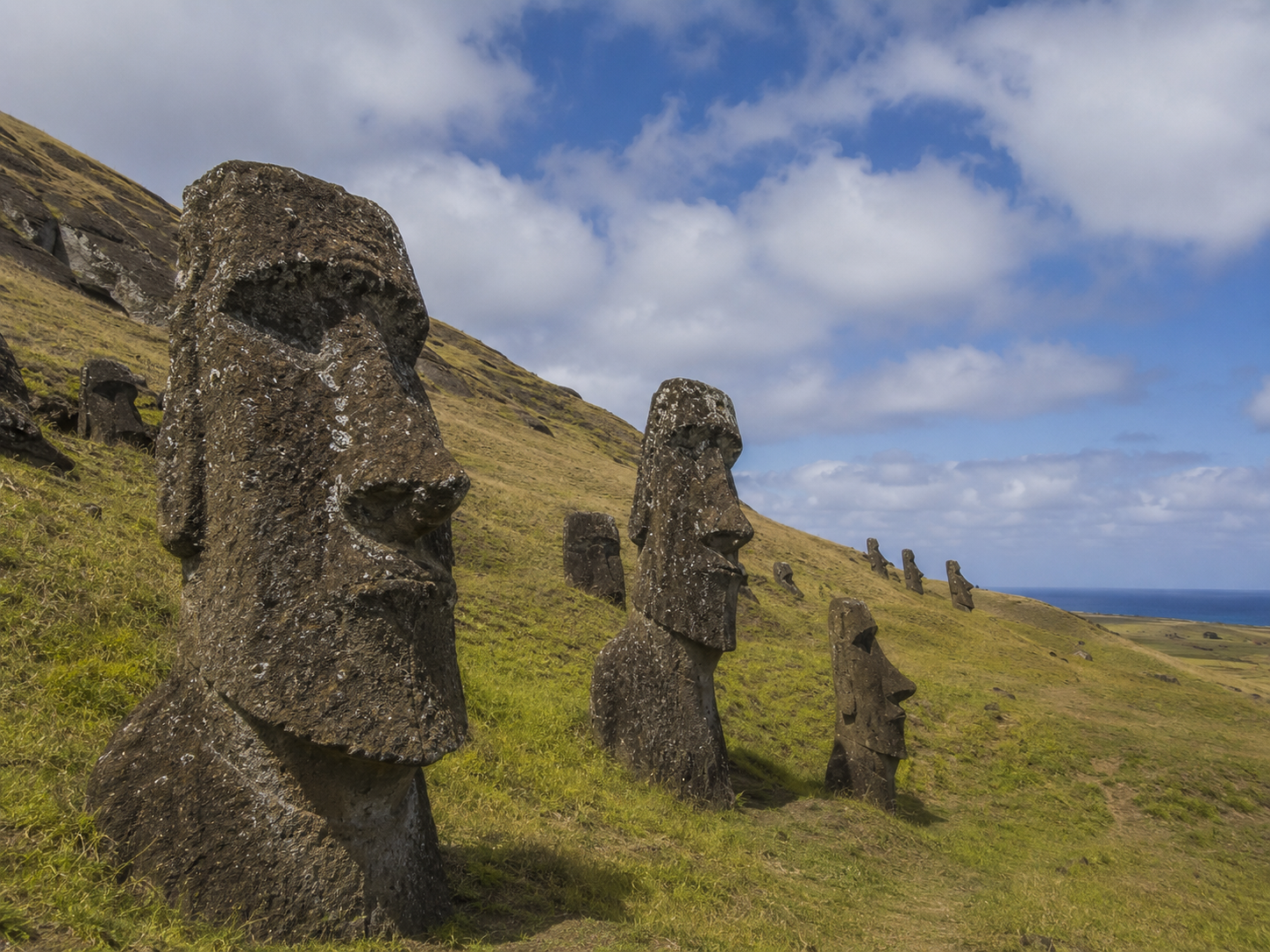
The moai are made from volcanic rock, and that rock is vulnerable to natural weathering.
Rain, wind, salt and biological growth can gradually alter the stone. Coastal archaeological sites face an additional threat from wave action and erosion. Researchers from the University of the Highlands and Islands and Bournemouth University have documented coastal erosion affecting ahu and other archaeological remains around Rapa Nui.
The danger is not only theoretical.
A 2022 fire at Rano Raraku damaged archaeological resources at the island's most important moai quarry. UNESCO's subsequent assessment identified serious alterations in 22 moai and emphasized the need for continued conservation and risk management.
This makes preservation a race against several forces at once: natural weathering, coastal erosion, fire and human activity
A Threat From the Coast
Many of Rapa Nui's most important ceremonial platforms were built close to the ocean.
That location creates a long-term vulnerability.
Research has identified coastal erosion and rising sea levels as threats to archaeological sites, while future wave activity could place some coastal monuments at greater risk. A recent study has specifically identified Ahu Tongariki among the sites that could face increasing exposure to coastal flooding and wave impacts later this century.
Conservation therefore cannot mean simply repairing statues after they are damaged.
It also means protecting the landscape around them.
The archaeological context—the ahu, burials, roads, quarry areas and surrounding deposits—is part of the history too.
Once that context is lost, archaeologists cannot recover all of the information it contained.
The Story Is Still Being Written
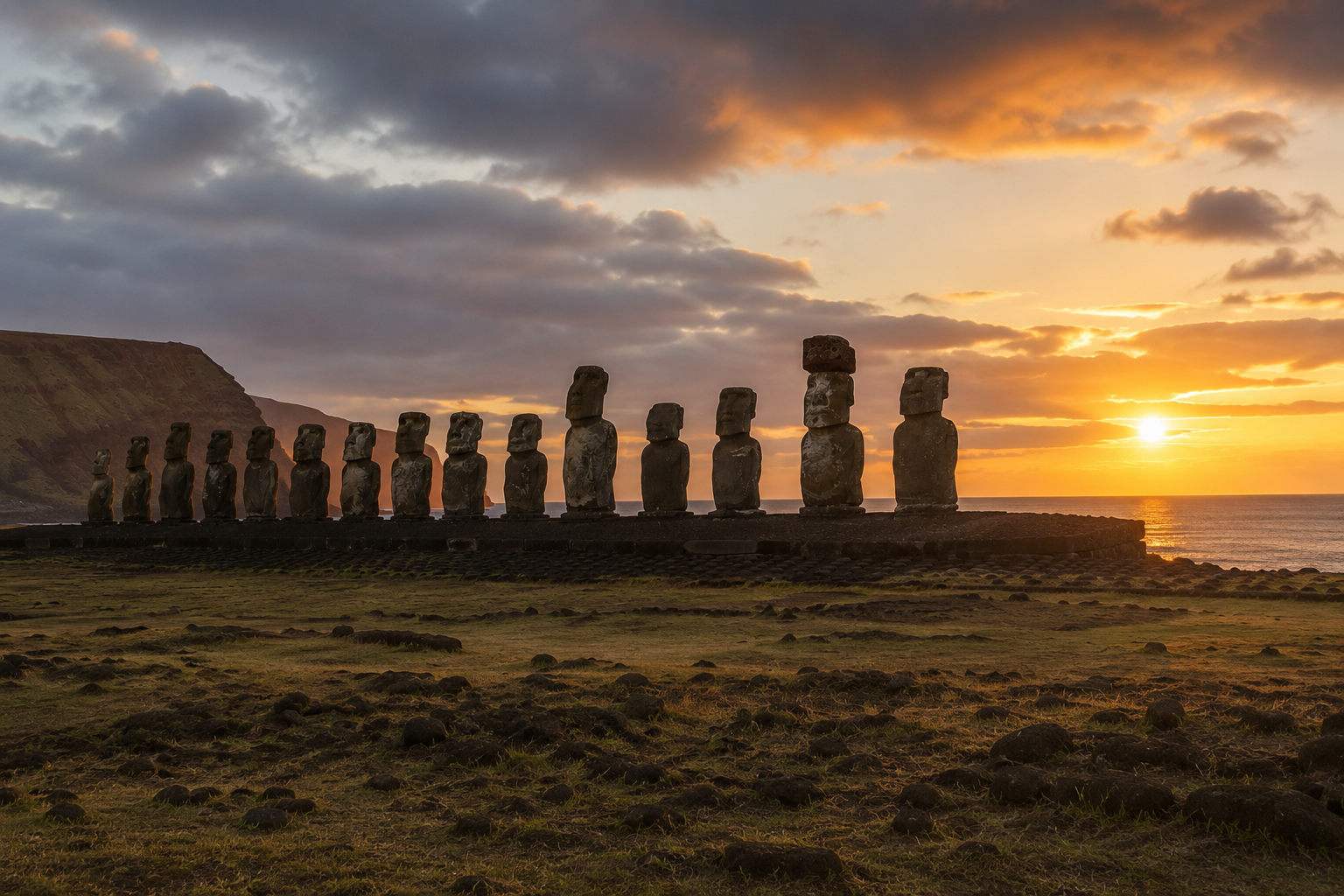
Rapa Nui is sometimes described as a place of ancient mysteries.
But perhaps the more interesting reality is that many of its questions are being investigated rather than solved with dramatic answers.
Researchers are still studying how the island was settled, how communities were organized, how the moai were transported, how the environment changed and how the population was affected by European contact.
The moai themselves remain the most visible evidence of that history.
They have survived centuries of environmental change, cultural transformation and outside contact.
But survival is not guaranteed forever.
Rapa Nui is therefore not a monument to a vanished civilization.
It is the homeland of a living people, surrounded by the archaeological remains of a remarkable past.
The faces of the moai still look across the island—but today, preserving what they represent is as important as understanding how they were made.
FAQ — Easter Island (Rapa Nui)
1. How many moai are on Easter Island?
Archaeological surveys have documented around 1,000 moai, including completed, unfinished and fallen statues. The exact number can vary depending on how statues are counted.
2. How were the moai made?
Most moai were carved from volcanic lapilli tuff, primarily at the Rano Raraku quarry. Carvers shaped the statues directly from the volcanic rock before some were transported to ceremonial sites.
3. How were the moai transported?
The exact method is not known with complete certainty. One leading hypothesis, supported by experimental archaeology, proposes that teams used ropes to rock upright statues from side to side, gradually moving them forward. Other transport methods have also been proposed.
4. Did the moai really “walk”?
Not literally. “Walking” describes the proposed rocking motion of an upright statue. Experiments have demonstrated that this method is physically possible, but that does not prove every moai was transported this way.
5. Why do most moai face inland?
Most moai erected on ahu were oriented toward the land and communities associated with them. Researchers generally connect their placement with ancestral and ceremonial traditions, although the exact meaning of individual statues is not always known.
6. Why do the seven moai at Ahu Akivi face the ocean?
The seven moai at Ahu Akivi are an important exception to the usual inland orientation. Their exact significance remains uncertain, and several interpretations have been proposed.
7. Did Rapa Nui people destroy their own civilization?
There is no simple answer. Rapa Nui experienced substantial deforestation and environmental change, with human activity and introduced Polynesian rats both proposed as important factors. However, recent archaeological and genetic research challenges the older idea of a massive pre-European population collapse caused by “ecocide.”
8. What caused the major population decline on Rapa Nui?
European contact brought profound disruption. During the 19th century, introduced diseases and Peruvian slave raids contributed to a severe demographic decline. The relative importance of earlier environmental changes and later colonial impacts remains an area of research.
9. When did Europeans first reach Easter Island?
Dutch navigator Jacob Roggeveen arrived in 1722, on Easter Sunday. This is why Europeans began calling the island “Easter Island.”
10. Are the moai connected to ancestors?
Archaeological evidence and Rapa Nui traditions strongly connect the moai and their ceremonial platforms with ancestors, lineage and community identity. However, the precise meaning and ritual function of individual statues cannot always be reconstructed.
11. Are there still unfinished moai?
Yes. Rano Raraku contains numerous unfinished statues and abandoned carving areas, providing important archaeological evidence about how the moai were produced.
12. Is Easter Island still inhabited?
Yes. Rapa Nui is a living Polynesian community, not an abandoned archaeological site. Modern Rapa Nui people maintain cultural connections with the island and its heritage.
13. Are the moai protected?
Yes. Much of the island's archaeological heritage is protected within Rapa Nui National Park, which was designated a UNESCO World Heritage Site in 1995.
14. Are the moai threatened today?
Yes. Natural weathering, coastal erosion, fire and human activity can threaten archaeological remains. Conservation efforts focus not only on the statues themselves but also on the wider archaeological landscape.
15. Were the moai built by aliens or a lost advanced civilization?
There is no credible archaeological evidence supporting those claims. The archaeological record attributes the moai to the Polynesian society that developed on Rapa Nui.