The Journey Begins
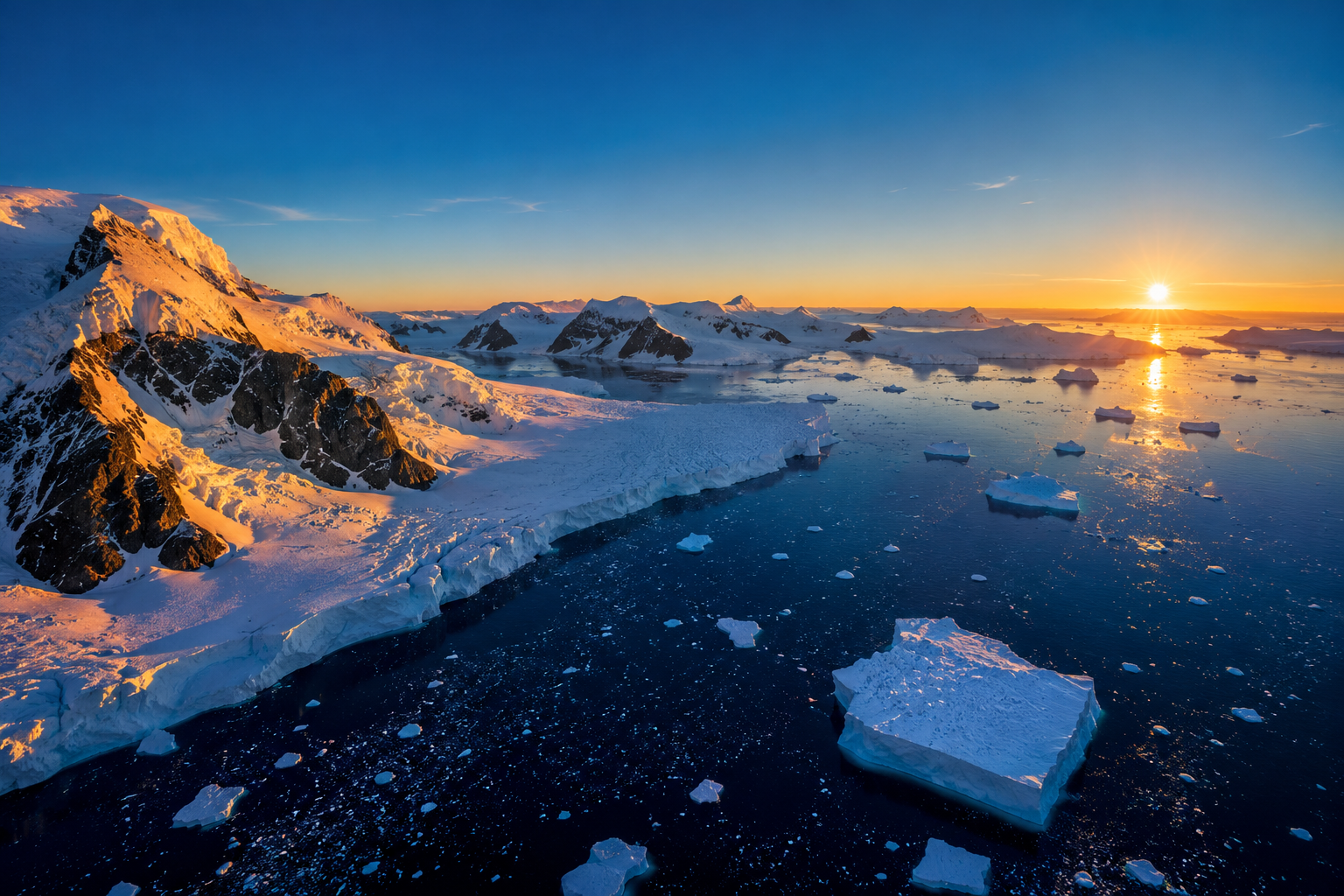
The engines fall silent.
For a moment...
There is nothing.
No traffic.
No cities.
No birds singing in the trees.
Only the sound of the wind sweeping across an endless ocean of ice.
You step onto the frozen ground.
The snow beneath your boots crunches like broken glass.
The air is so cold that every breath feels sharp inside your lungs.
Around you stretches a landscape unlike anywhere else on Earth.
White.
Endless.
Untouched.
This is Antarctica.
The southernmost continent.
A place so remote that no country owns it.
A land without permanent cities, without highways, and without the noise of modern civilization.
Here, nature still decides everything.
The first explorers who reached this frozen world described it as another planet.
Standing here today, it is easy to understand why.
The horizon seems to disappear into the sky.
Mountains rise from the ice like forgotten kingdoms.
Glaciers flow so slowly that their movement cannot be seen by the human eye, yet over centuries they carve entire landscapes.
At first glance, Antarctica appears lifeless.
But that first impression is wonderfully misleading.
Beneath the ice...
Across the frozen seas...
And within the surrounding Southern Ocean...
Life has learned not only to survive, but to thrive.
This is not simply the coldest place on Earth.
It is one of its greatest living wonders.
Where Ice Rules the Earth
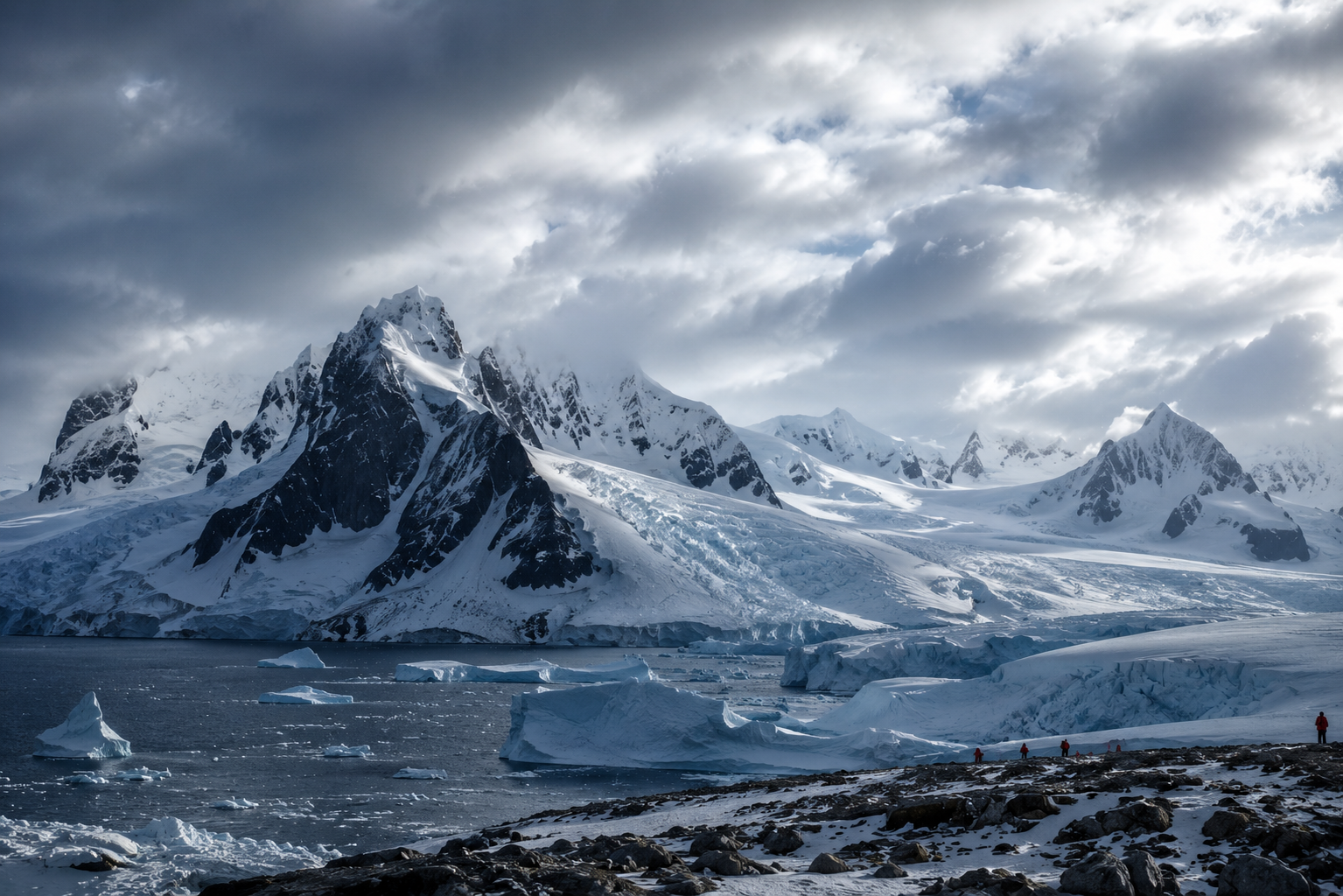
The further you travel...
The more Antarctica begins to erase the world you know.
There are no roads to follow.
No trees to break the horizon.
No villages waiting beyond the next hill.
Only ice.
Ice that stretches so far that the Earth itself seems to disappear into the sky.
Standing here, you quickly realize something extraordinary.
This isn't simply a frozen landscape.
It is a continent buried beneath an ocean of ice.
Imagine taking every glacier you have ever seen...
Then multiplying it beyond imagination.
Nearly 98% of Antarctica is covered by ice, some of it more than 4 kilometers (2.5 miles) thick.
That frozen blanket has remained here for millions of years, quietly recording the history of Earth's changing climate.
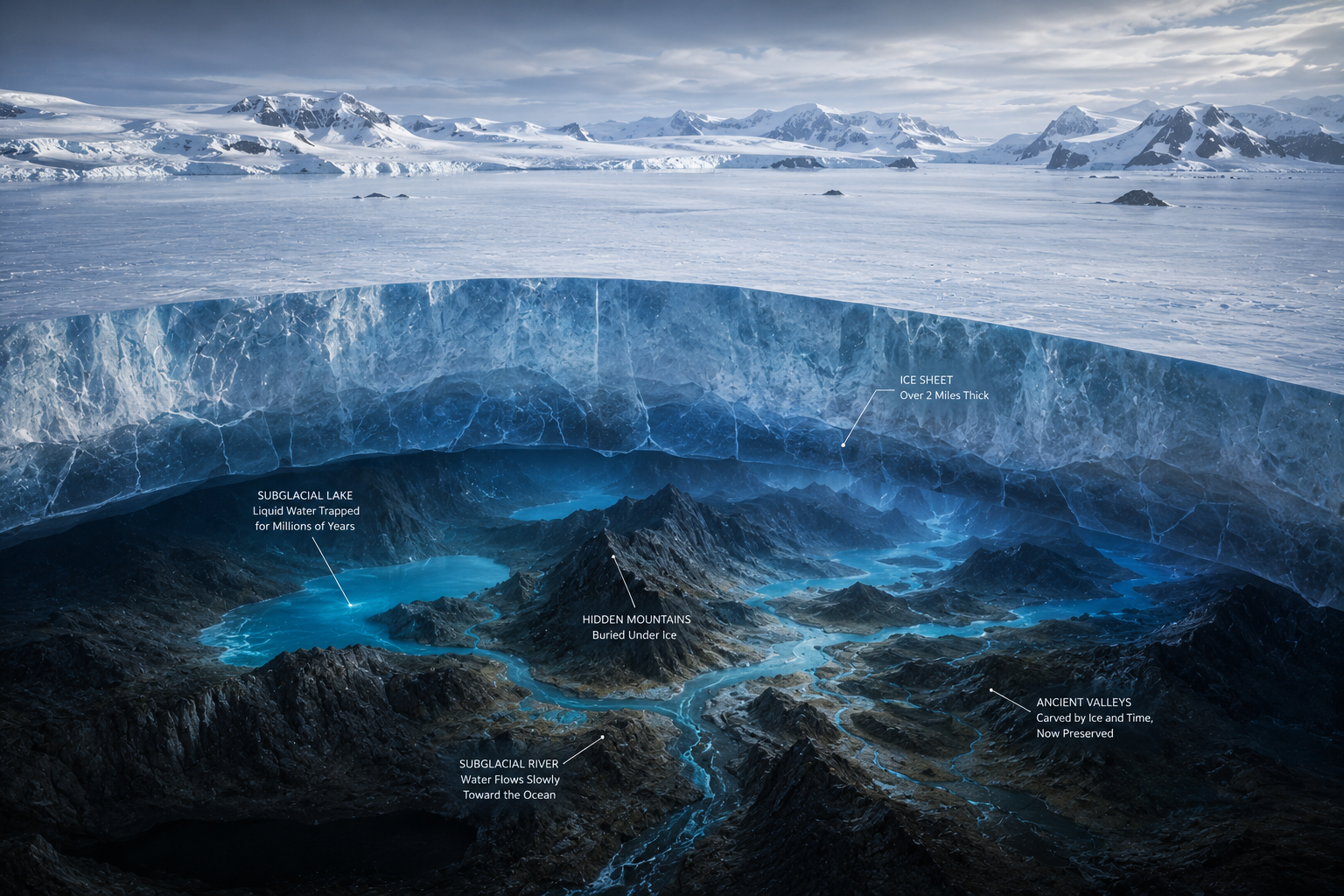
Yet beneath this immense weight lies another Antarctica entirely.
Hidden mountain ranges rise higher than the Alps.
Ancient valleys cut deep into the bedrock.
More than 400 subglacial lakes remain sealed beneath the ice, isolated from the outside world for hundreds of thousands—and in some cases, millions—of years.
No human has ever walked through these hidden landscapes.
Some have never even seen sunlight.
It is a world beneath a world.
As the day unfolds, the weather changes with astonishing speed.
Moments ago, the sky was clear.
Now, a wall of snow races across the horizon.
Within minutes, everything vanishes.
The mountains.
The icebergs.
Even your own footsteps.
This is a whiteout—one of Antarctica's most dangerous natural phenomena.
Sky and ground merge into a single endless sheet of white.
Without shadows or landmarks, experienced explorers can lose their sense of direction in moments.
In Antarctica, survival often depends not on strength...
But on patience.
The storm always decides when the journey continues.
Then, as suddenly as it arrived...
The storm is gone.
Sunlight breaks through the clouds, and the frozen continent begins to transform.
The glaciers glow with shades of deep sapphire blue.
Icebergs sparkle like enormous crystals drifting across the sea.
Every color you see has been shaped by pressure, time, and countless winters.
Some of this ice fell as snow long before the first pyramids were built.
Some formed before humans learned to farm.
In Antarctica, even the landscape carries the memory of ancient Earth.
And just when it seems impossible that anything could survive here...
A distant sound drifts across the wind.
Not the roar of a storm.
Not the cracking of ice.
But the calls of thousands of penguins gathering along the frozen shore.
The next stage of the expedition is about to reveal Antarctica's greatest miracle
🌍 Life Against Impossible Odds
The first sound reaches you long before the animals come into view.
A chorus of calls...
Soft at first.
Then louder.
Until the silence of Antarctica is replaced by thousands of voices echoing across the ice.
You climb a small ridge.
And suddenly...
The frozen wilderness is alive.
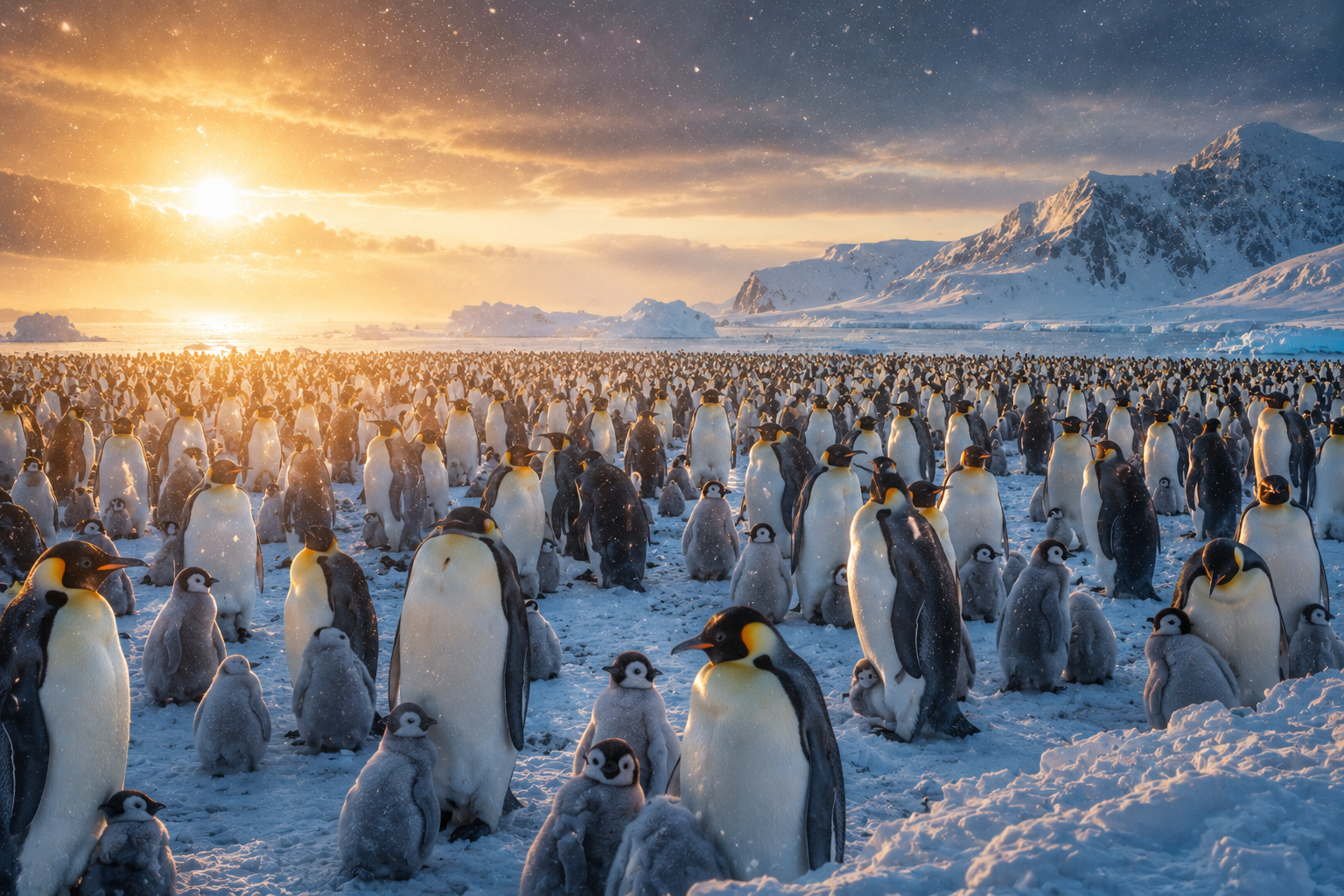
Before you stands one of the largest emperor penguin colonies on Earth.
Thousands of birds gather shoulder to shoulder, each one perfectly adapted to survive a place that seems impossible for life.
From a distance, they appear almost identical.
But within the colony, every parent can recognize the unique call of its own chick among thousands of others.
It is a remarkable bond in one of the harshest environments on the planet.
Winter here is unlike winter anywhere else.
Temperatures can fall below −50°C.
Powerful winds make the air feel even colder.
Yet this is precisely when emperor penguins begin raising their young.
While many animals flee extreme conditions...
These birds move toward them.
After laying a single egg, the female returns to the sea in search of food.
The male remains behind.
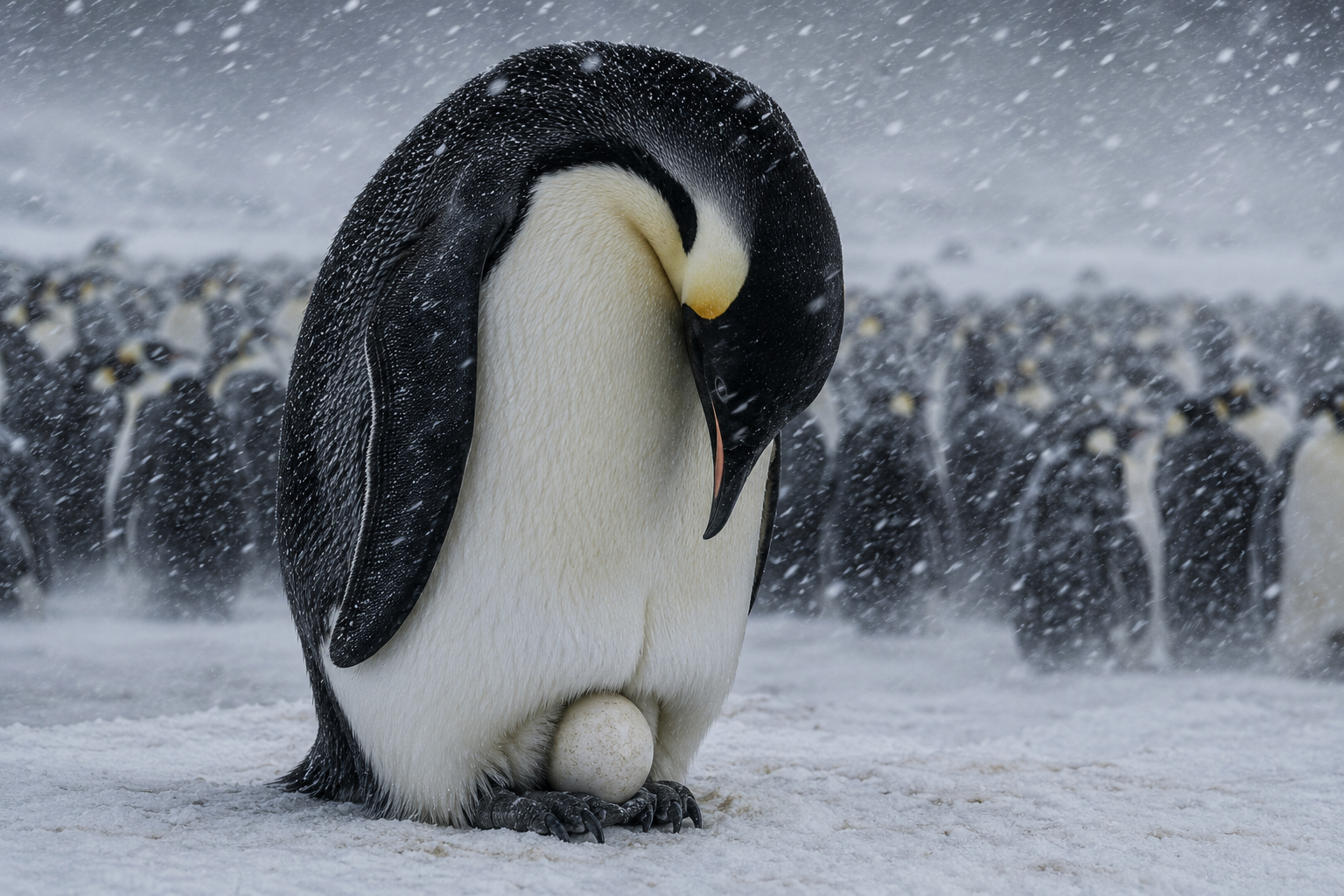
For nearly two months, he balances the fragile egg on the tops of his feet, protecting it beneath a warm fold of skin called the brood pouch.
During this time, he does not eat.
He survives entirely on stored body fat while blizzards sweep across the continent.
It is one of the greatest acts of endurance in the animal kingdom.
Survival here is never a solitary effort.
As the wind strengthens, the colony begins to move.
Not in panic.
But with astonishing coordination.
Thousands of penguins slowly shuffle together into a dense circle.
Those exposed to the freezing wind gradually move inward.
Those sheltered inside eventually rotate outward.
Every bird takes its turn facing the storm.
It is nature's version of teamwork.
Without it, many would not survive the Antarctic winter.
But Antarctica's story does not end on the ice.
Beyond the frozen shoreline lies the Southern Ocean—a world every bit as dramatic.
Beneath the icy surface, leopard seals glide silently through crystal-clear water, waiting patiently for an opportunity to hunt.
Nearby, pods of orcas work together with extraordinary intelligence, creating waves to wash seals from floating ice.
Each movement is calculated.
Each hunt depends on cooperation.
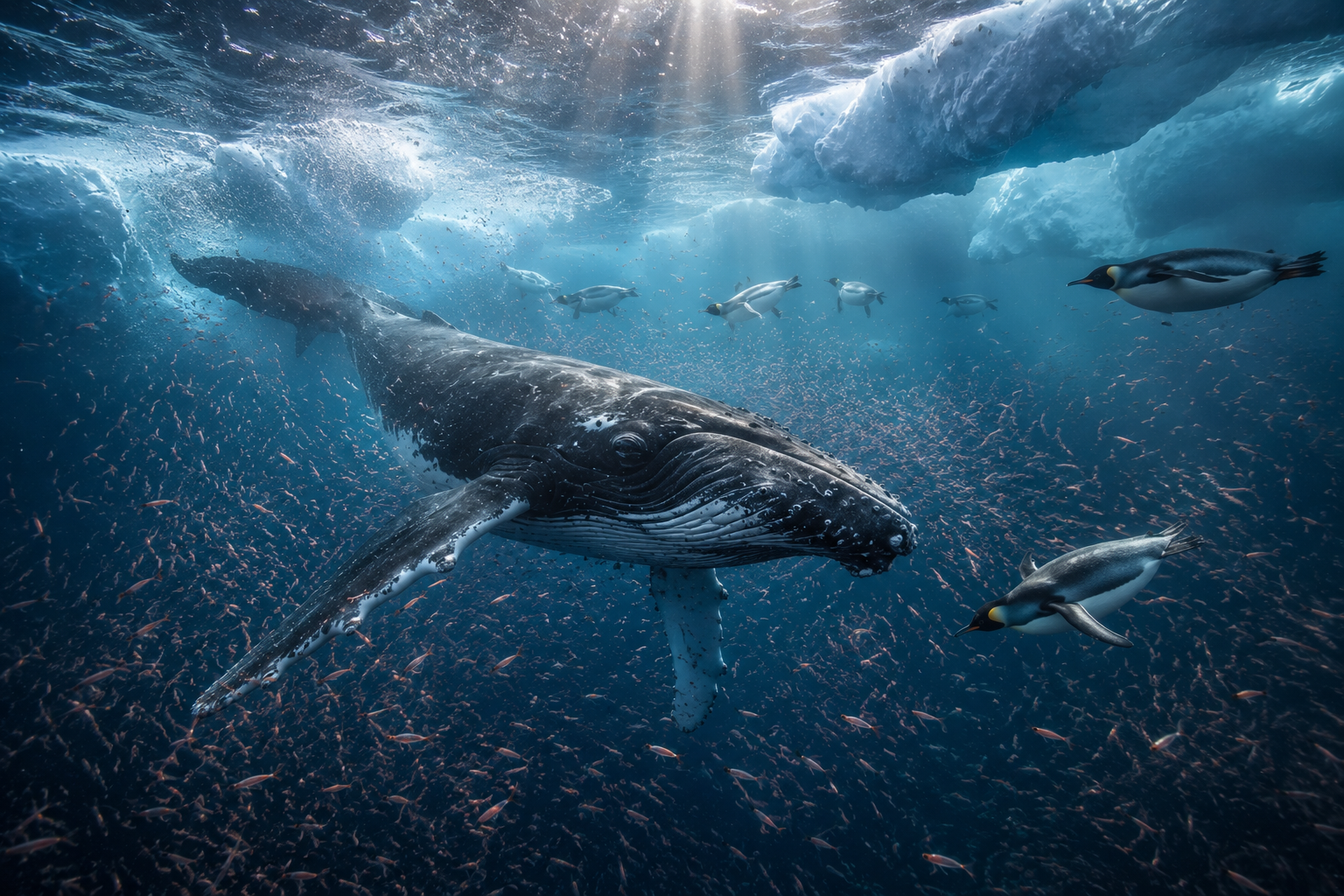
Further offshore, humpback whales arrive during the brief Antarctic summer.
After months of feeding elsewhere, they gorge on enormous swarms of tiny shrimp-like creatures called krill.
Though each krill is only a few centimeters long, together they support one of the richest marine ecosystems on Earth.
From penguins and seals to whales and seabirds...
An entire food web depends on these tiny animals.
At first glance...
Antarctica appears empty.
A silent continent of snow and ice.
But spend enough time here, and another truth begins to emerge.
Life has not merely survived this frozen world.
It has mastered it.
Every feather.
Every layer of blubber.
Every instinct passed from one generation to the next tells the same remarkable story.
In the coldest place on Earth...
Nature refused to surrender.
It adapted.
And because it adapted...
The frozen wilderness became one of the planet's greatest living ecosystems.
🌍 Secrets Hidden Beneath the Ice
If Antarctica has one final secret...
It is the world no one can see.
Standing on the surface, it is easy to believe the continent is nothing but ice.
But appearances can be deceiving.
Far beneath your boots lies another Antarctica.
A landscape hidden for millions of years.
Imagine flying over a mountain range.
Now imagine that every mountain...
Every valley...
Every cliff...
Has been buried beneath ice so thick that it completely disappears from the world above.
That is Antarctica.
Scientists have discovered entire mountain ranges beneath the ice that rival some of Earth's greatest peaks.
Ancient river systems twist across the buried landscape.
Deep valleys stretch for hundreds of kilometers.
Some regions have remained untouched since long before modern humans existed.
It is one of the least explored places on our planet.
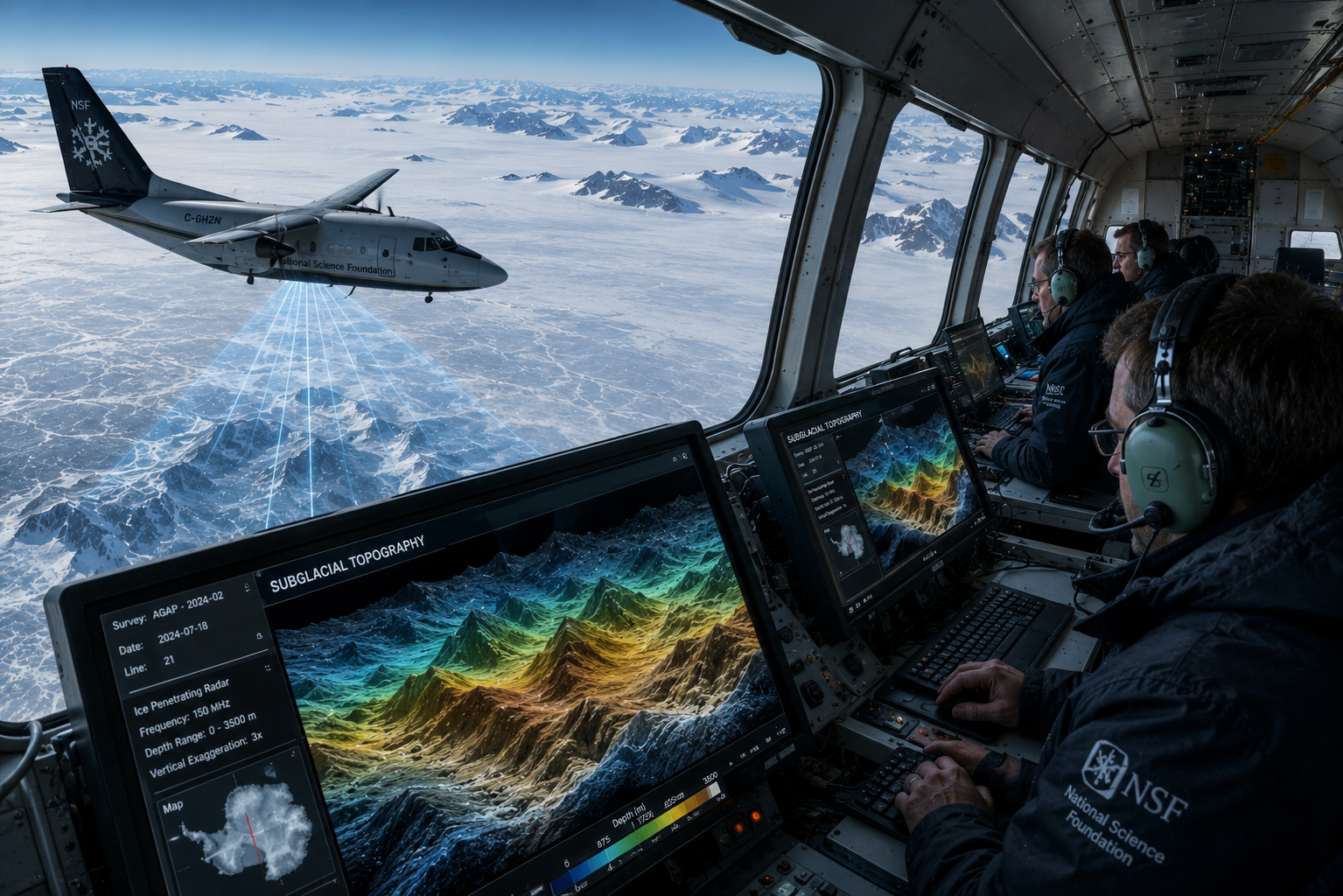
The greatest discoveries here were not made with shovels.
They were made with sound.
Aircraft carrying powerful radar instruments fly slowly across the frozen continent.
Invisible waves pass through the ice...
Bounce off the bedrock below...
And return with extraordinary detail.
Piece by piece...
Scientists have mapped an entire continent that human eyes have never seen.
Every new survey uncovers another hidden ridge.
Another forgotten valley.
Another chapter of Earth's geological history.
Antarctica is still revealing its secrets.
Then came an even more astonishing discovery.
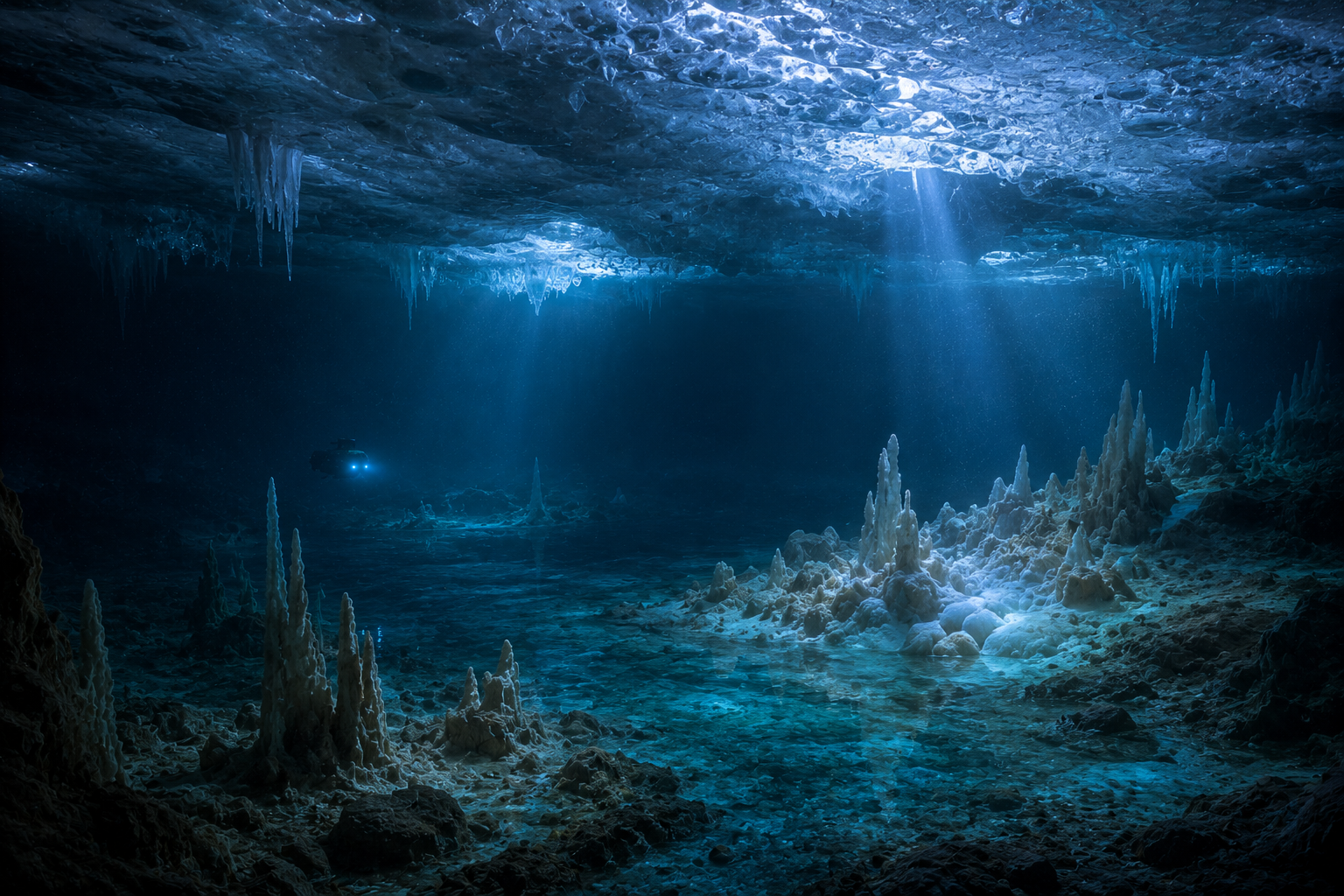
Deep beneath the ice...
Scientists found lakes.
Not frozen lakes.
Liquid water.
One of the most famous is Lake Vostok, hidden beneath nearly four kilometers of ice.
It has been sealed off from the outside world for perhaps millions of years.
No sunlight has ever reached its waters.
No wind has disturbed its surface.
It is one of the most isolated environments on Earth.
Could microscopic life exist there?
The path to understanding alien worlds begins beneath our own.
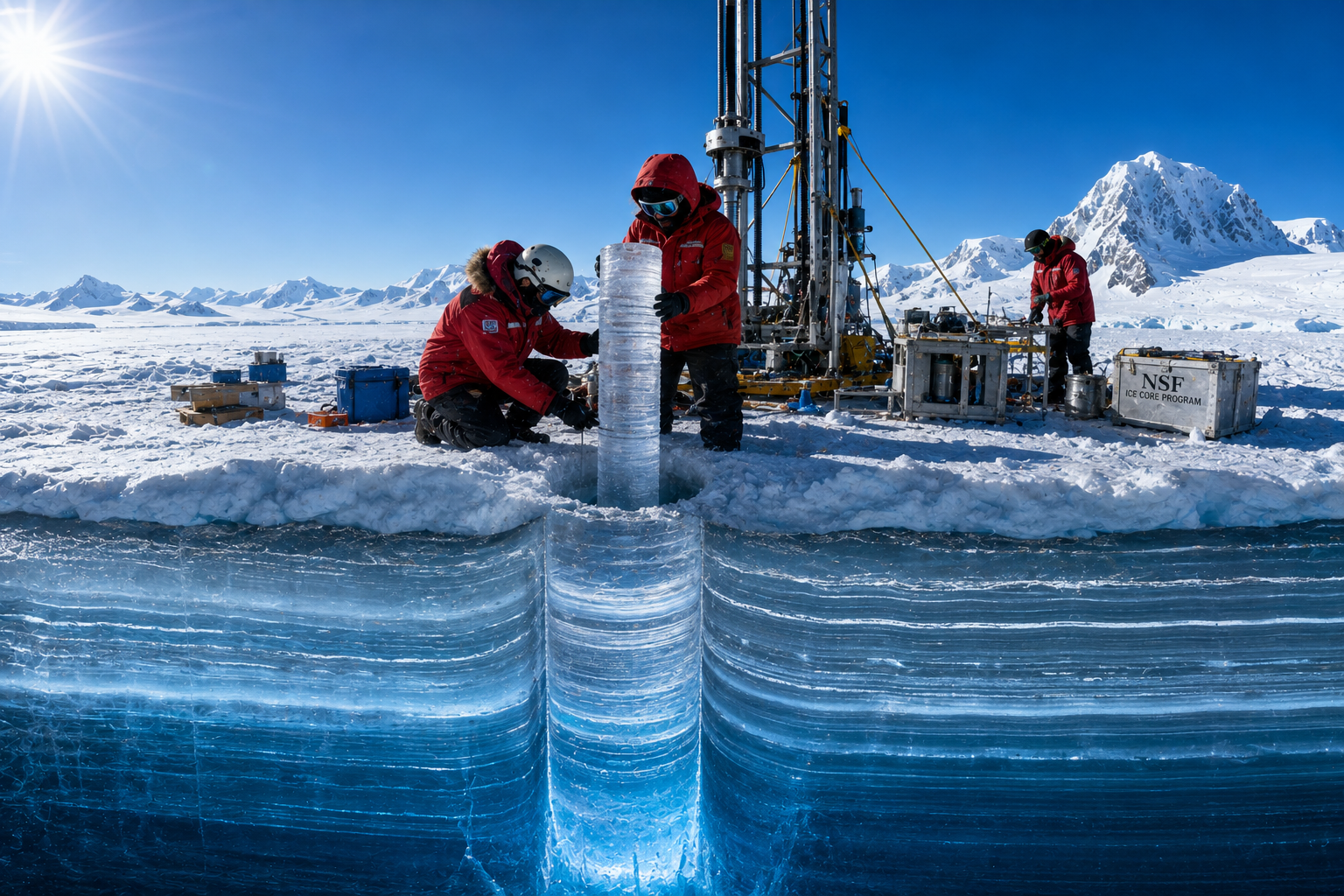
Every layer of Antarctic ice tells a story.
Winter after winter...
Snow settled onto the continent.
Over thousands of years, that snow compressed into ice.
Tiny bubbles of ancient air became trapped inside.
Those bubbles remain frozen today.
They are time capsules.
By drilling deep into the ice sheet, scientists can study air that was breathed by mammoths...
Air that existed before the pyramids...
Even air from hundreds of thousands of years before human civilization.
Few places on Earth preserve history so perfectly.
Antarctica is not only a frozen wilderness.
It is Earth's greatest natural archive.
Every meter of ice carries another page of our planet's story.
And scientists are still learning how to read it.
As the drilling equipment falls silent...
The wind returns.
The expedition leaves the hidden world beneath the ice and heads toward the only people who ever call Antarctica home.
Not permanently.
But long enough to uncover its remaining mysteries.
Ahead lies one of the most isolated workplaces on Earth—where scientists live for months surrounded by nothing but ice, wind, and silence.
🌍 The People Who Live Here... Temporarily
For most of human history...
Antarctica existed only as a mystery.
A blank white space on old maps.
A place so remote that many believed no one could survive there.
Today...
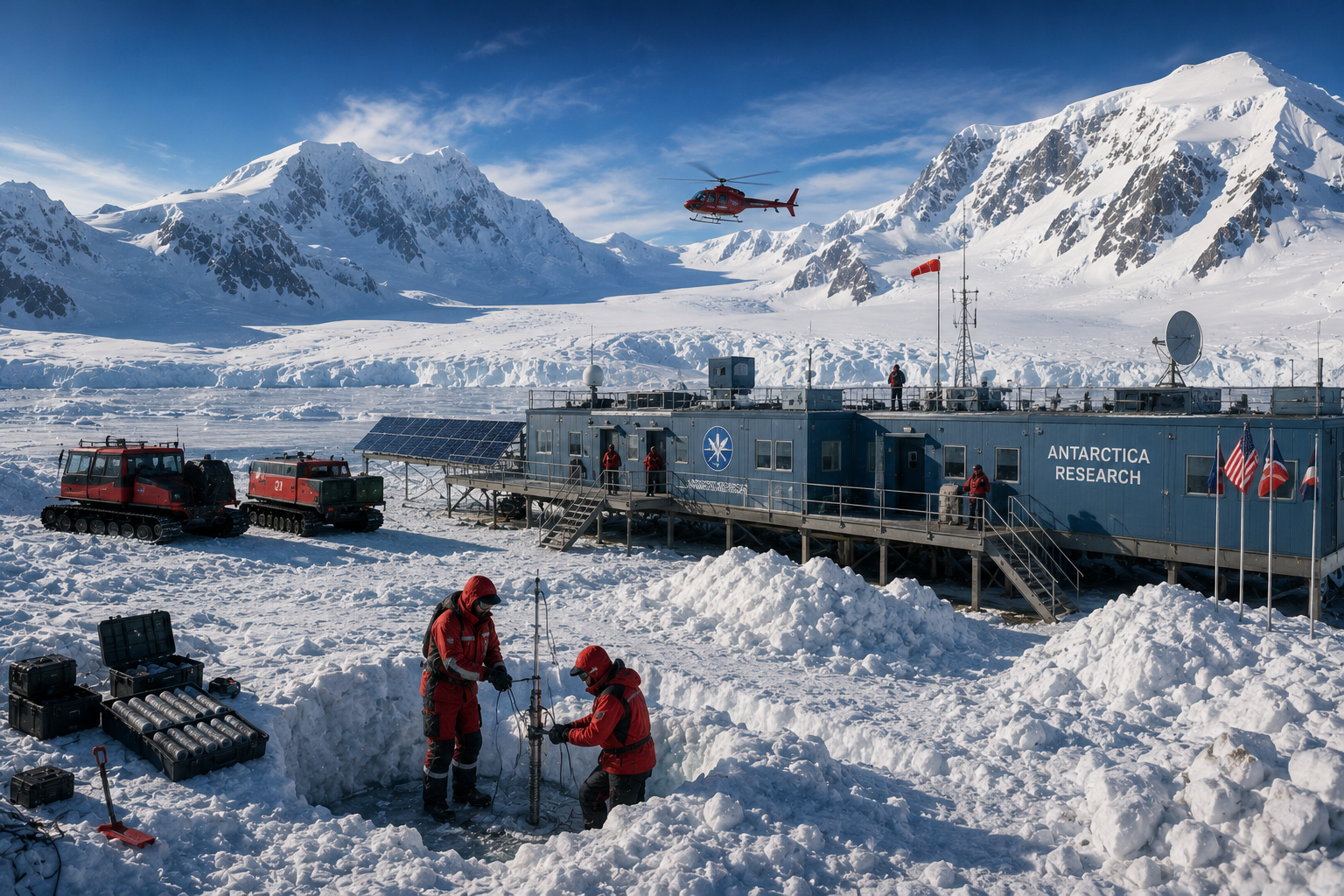
People do live in Antarctica.
But not in the way you might imagine.
There are no permanent towns.
No schools.
No supermarkets.
No neighborhoods filled with families.
Instead, the continent is home to a small community of scientists, engineers, doctors, pilots, chefs, mechanics, and researchers who travel here from around the world with a single purpose.
To understand one of Earth's last great frontiers.
During the Antarctic summer, the population grows to several thousand people.
When winter arrives, only a fraction remain.
For months, they are surrounded by nothing but ice, darkness, and the relentless polar wind.
Life here is unlike anywhere else on Earth.
Every shipment of food, fuel, and equipment must arrive by ship or aircraft.
If something breaks...
There is no nearby hardware store.
If someone becomes seriously ill...
Rescue may depend entirely on the weather.
Sometimes storms keep aircraft grounded for days.
Patience is not simply a virtue in Antarctica.
It is a necessity.
Yet despite these challenges, research stations never stop working.
Every day, scientists monitor glaciers, drill deep ice cores, study penguin colonies, track weather systems, observe the Southern Ocean, and search for clues about Earth's changing climate.
The discoveries made here help improve weather forecasts, deepen our understanding of past climates, and reveal how the frozen continent influences oceans across the globe.
Living here also changes how people see the world.
There are days when the Sun never sets.
And other times when darkness lasts for weeks.
The nearest city may be thousands of kilometers away.
The nearest tree...
Thousands more.
Many researchers describe Antarctica as the quietest place they have ever experienced.
Without traffic, crowds, or the constant sounds of everyday life, they begin noticing things they had forgotten.
The distant crack of a glacier.
The call of a penguin carried by the wind.
The whisper of drifting snow across the ice.
Silence itself becomes part of the landscape.
One remarkable fact makes Antarctica unlike any other continent.
It belongs to no single nation.
Through the Antarctic Treaty, dozens of countries have agreed that this frozen land should be used for peaceful purposes and scientific research.
Instead of competing over its resources, nations cooperate to better understand it.
In a world often divided by borders...
Antarctica quietly reminds us that some places are too important to belong to anyone.
They belong to everyone.
As the expedition draws toward its final destination...
The frozen continent offers one last lesson.
It is beautiful.
It is powerful.
But it is also changing.
Ahead lies the final chapter—where towering ice shelves break into the sea, ancient glaciers retreat, and the future of Earth's last great wilderness comes into focus.
🌍 A Continent That Belongs to Tomorrow
The expedition is almost over.
But Antarctica has one final story to tell.
At first glance...
The continent appears eternal.
Its mountains of ice seem too vast to change.
Too ancient to disappear.
Yet Antarctica has never been a frozen world standing completely still.
Its glaciers move.
Its ice shelves crack.
Its snow falls, compresses, and slowly becomes part of an ever-changing landscape.
Change has always been part of Antarctica's story.
Today, scientists continue to study these changes more closely than ever before.
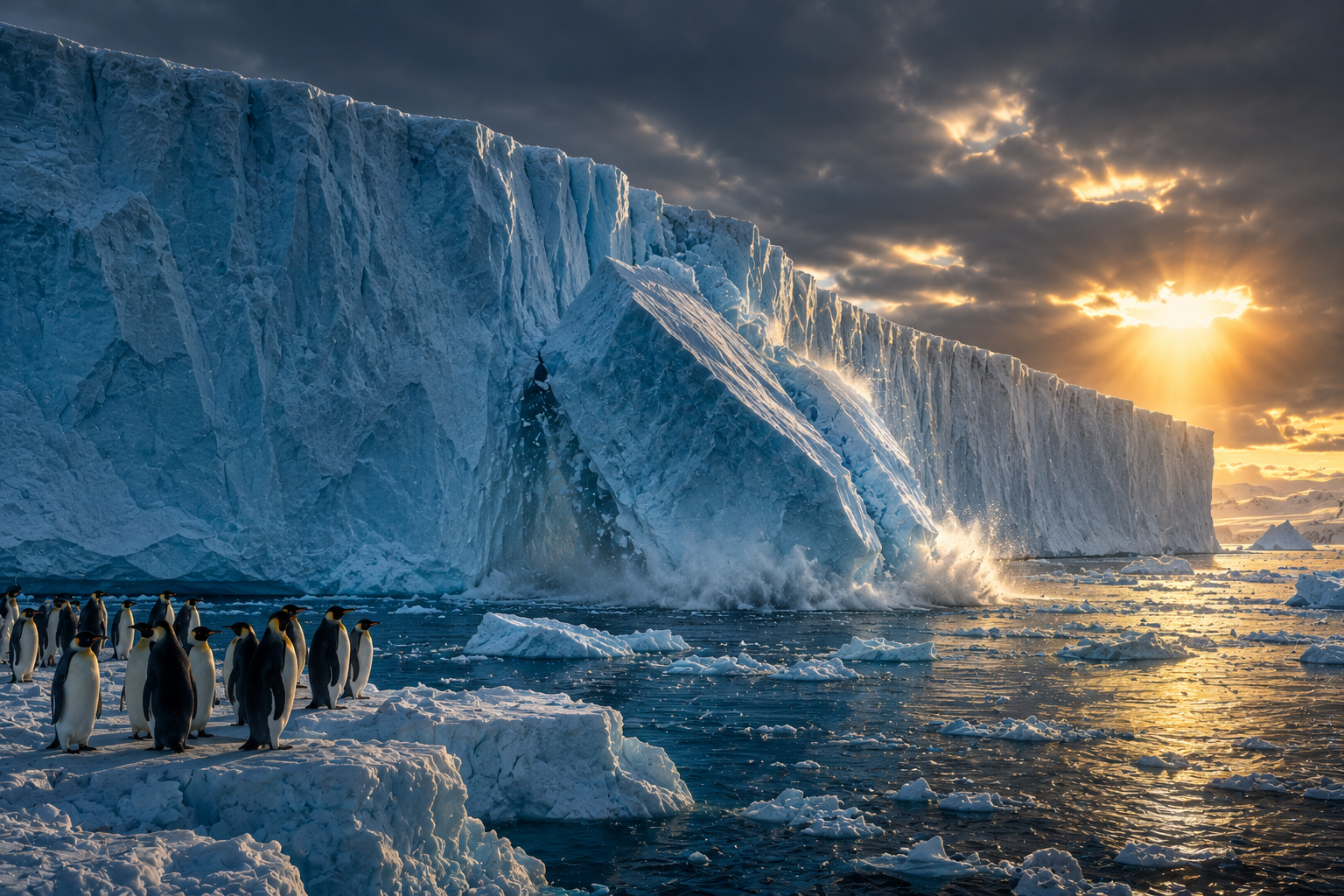
Across parts of the continent, enormous icebergs naturally break away from floating ice shelves—a process known as calving.
Some of these icebergs are so immense that they are visible from space.
Others drift silently across the Southern Ocean for years before slowly melting into the sea.
These events are part of Antarctica's natural cycle, but researchers also monitor long-term changes in ice thickness, glacier movement, ocean temperatures, and snowfall to better understand how the continent is evolving.
Every measurement collected here helps improve our understanding of Earth's climate system.
Antarctica is more than a remote wilderness.
It plays a vital role in regulating global ocean circulation, influencing weather patterns, and storing the largest reserve of freshwater on the planet.
What happens here...
Rarely stays here.
The frozen continent is deeply connected to the rest of the world.
Standing on the ice one last time...
You begin to understand why Antarctica feels different from every other place on Earth.
It asks for nothing.
It offers no luxury.
No comfort.
No easy path.
Only silence.
Only distance.
Only the rare privilege of witnessing a world that still belongs almost entirely to nature.
Long after the expedition ends...
Long after the aircraft disappears beyond the horizon...
The wind will continue its endless journey across the ice.
The penguins will gather once again.
The glaciers will continue their slow march toward the sea.
And Antarctica...
Will remain one of the last places on Earth where nature still speaks louder than humanity.
🌍 Before You Leave...
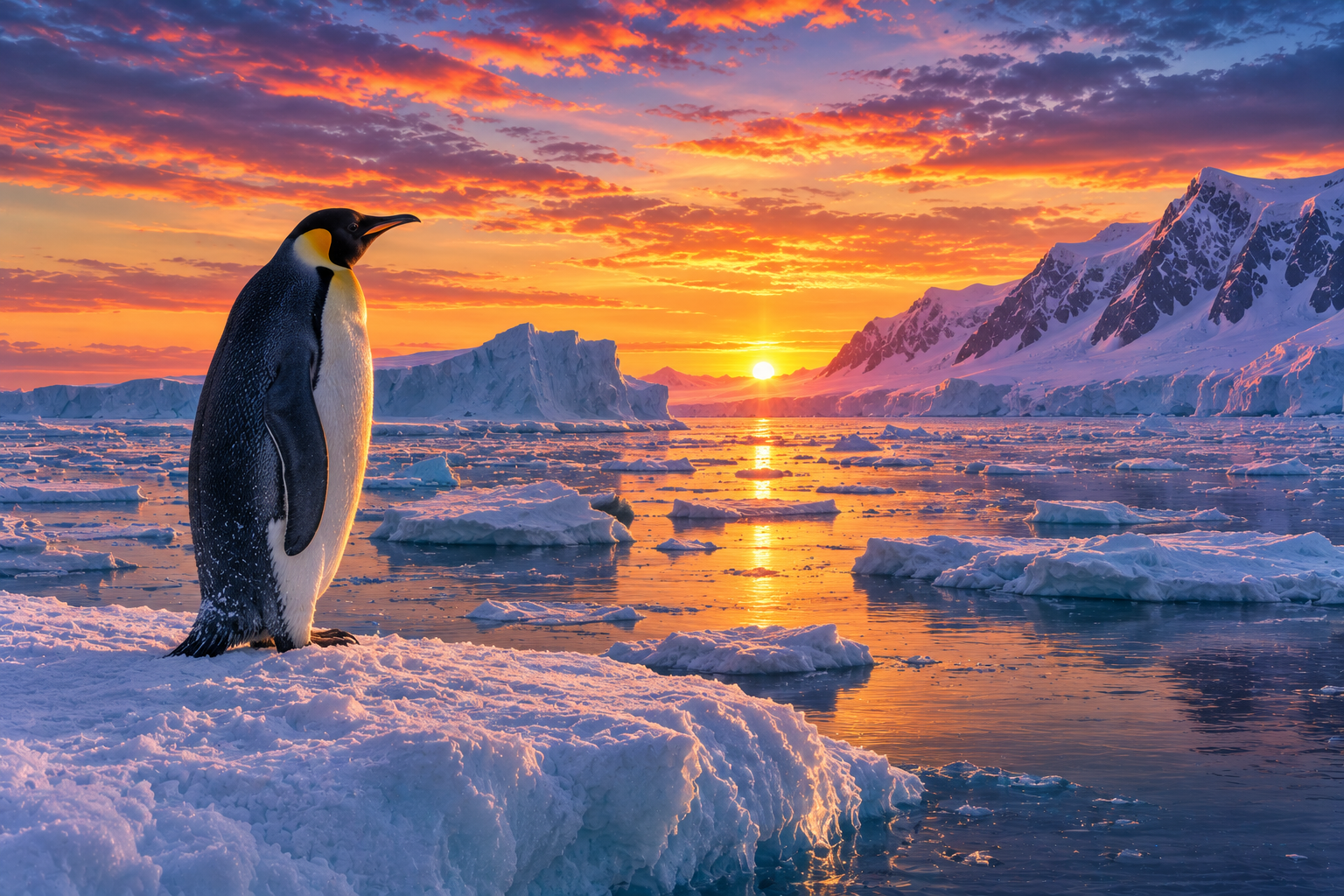
Antarctica is often called the last great wilderness.
After standing among its glaciers, watching penguins endure impossible winters, discovering hidden lakes beneath kilometers of ice, and meeting the scientists who dedicate their lives to understanding this extraordinary continent, that title no longer feels like an exaggeration.
It feels earned.
Some places change because people arrive.
Antarctica changes the people who arrive.
Perhaps that is its greatest mystery.
Not what lies beneath the ice...
But what this silent continent awakens within those fortunate enough to experience it.