Introduction
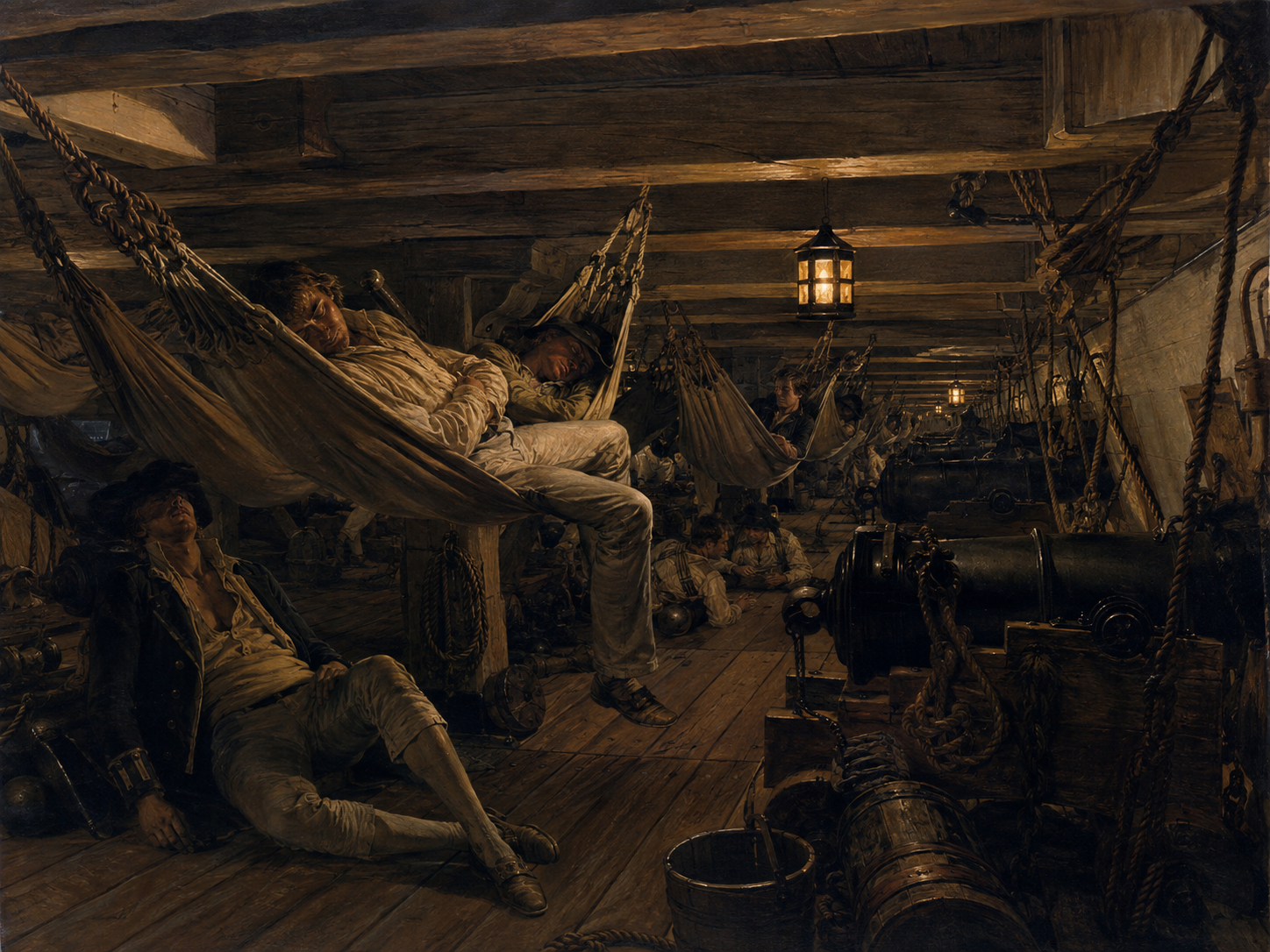
Imagine trying to sleep on a wooden ship in the middle of the ocean.
There is no quiet bedroom. No solid floor designed for sleeping. No row of comfortable beds with plenty of space between them.
Instead, below deck, hundreds of sailors may be working, eating, storing equipment and trying to sleep in the same cramped space.
Then someone gives you a piece of canvas and two ropes.
Your bed is now hanging from the ceiling.
It sounds miserable.
Yet for generations of sailors, the hammock was not simply a strange substitute for a bed. It was a remarkably practical answer to one of the biggest problems aboard a sailing ship: there was never enough room.
On early American naval frigates, enlisted sailors slept in hammocks on the berth deck, while officers generally had more private sleeping arrangements. On USS Constitution, for example, the crew's hammocks could be strung up over the guns and taken down when the space was needed for other work.
The hammock had another advantage that a wooden bed could not match.
When it was time to work, the sailor could take it down, roll it around his bedding and stow it away.
The sleeping space disappeared.
The ship got its deck back.
That simple trick explains much of the hammock's success at sea.
But the story goes deeper than saving space. Hammocks had to fit around watches, gun crews, ventilation, cleaning routines and the constant movement of a ship.
To understand why sailors slept in them, you first have to understand what it was like to live aboard a sailing warship.
Chapter 1 — The Impossible Sleeping Quarters of a Sailing Ship
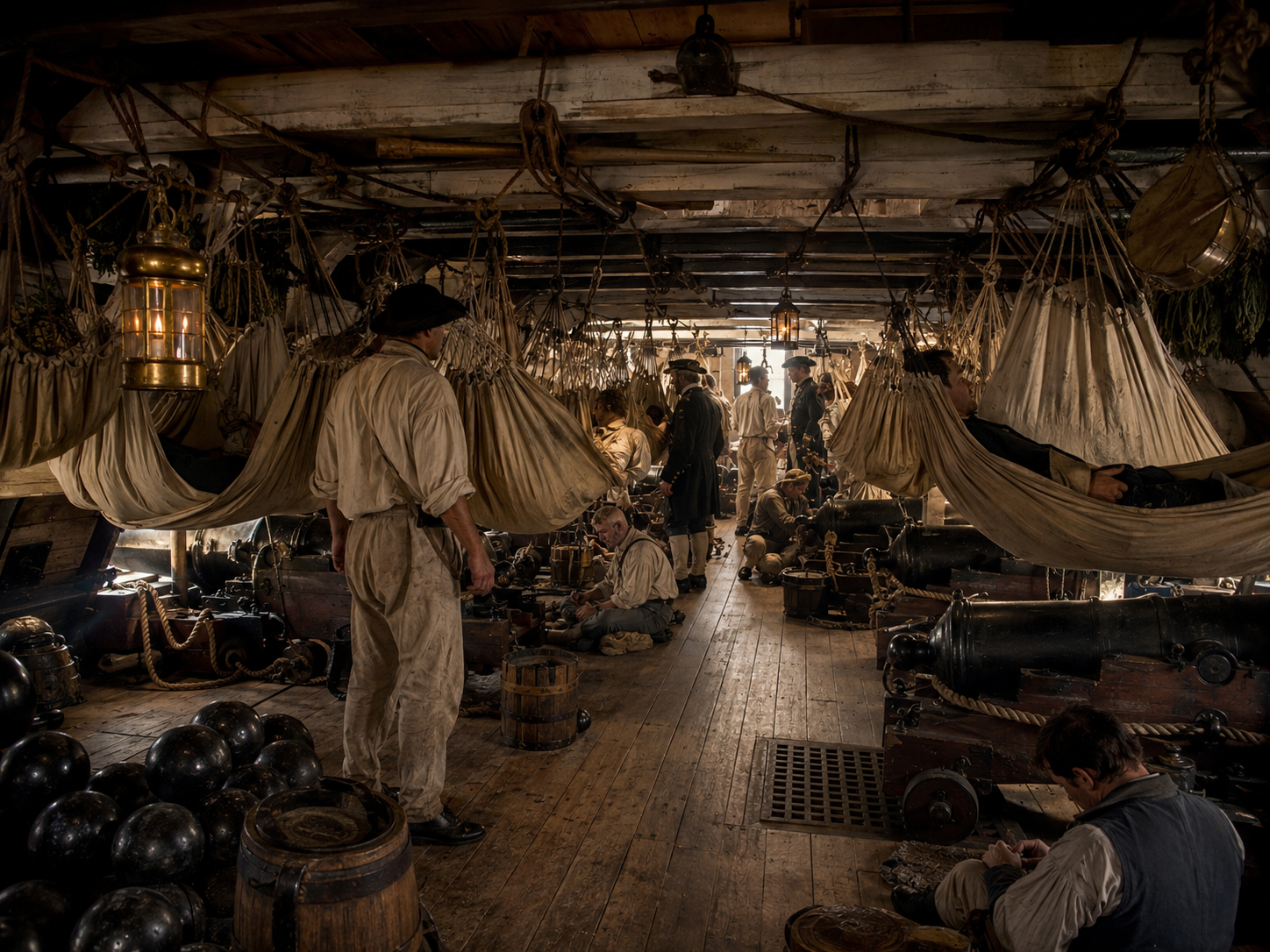
A sailing warship was not built around the idea of comfortable sleeping.
Every part of the vessel had a job.
Guns needed space. Sails and rigging required equipment. Food, water and ammunition had to be stored. Crew members needed room to work.
And then there were the sailors themselves.
A large warship could carry hundreds of people.
The early American frigate USS Constitution, for example, carried approximately 500 officers, enlisted sailors, Marines and boys. The National Museum of the U.S. Navy describes life aboard as difficult and highly organized, with the crew divided into watches so that the ship could operate around the clock.
That created an obvious problem.
Where do all those people sleep?
A conventional bed takes up space even when nobody is using it.
A hammock does not.
A sailor could suspend it when it was time to sleep and remove it when the space was needed for other activities. On Constitution, enlisted sailors slept in hammocks that were often strung above the guns. When they got up for duty, the hammock was rolled up and put away.
The ship could therefore change its use of the same space throughout the day.
A place for sleeping could become a working area.
A place for resting could become part of the ship's fighting system.
That was the real genius of the hammock.
It did not make the ship bigger.
It made the existing space more flexible.
How a Hammock Saved Shipboard Space
Chapter 2 — Where Did Sailors Actually Sleep?
The phrase “sailors slept in hammocks” can create the wrong picture.
It may sound as though every sailor simply climbed into a hammock whenever he felt tired.
Life aboard ship was far more structured.
Sailors worked in watches. Some were on duty while others rested, and then the groups switched. The U.S. Navy describes the system aboard early frigates as a continuous cycle in which men worked specific watches and slept during their available rest periods.
Below deck, hammocks could be packed closely together.
There was little privacy.
A sailor's hammock was also not necessarily a permanent piece of furniture.
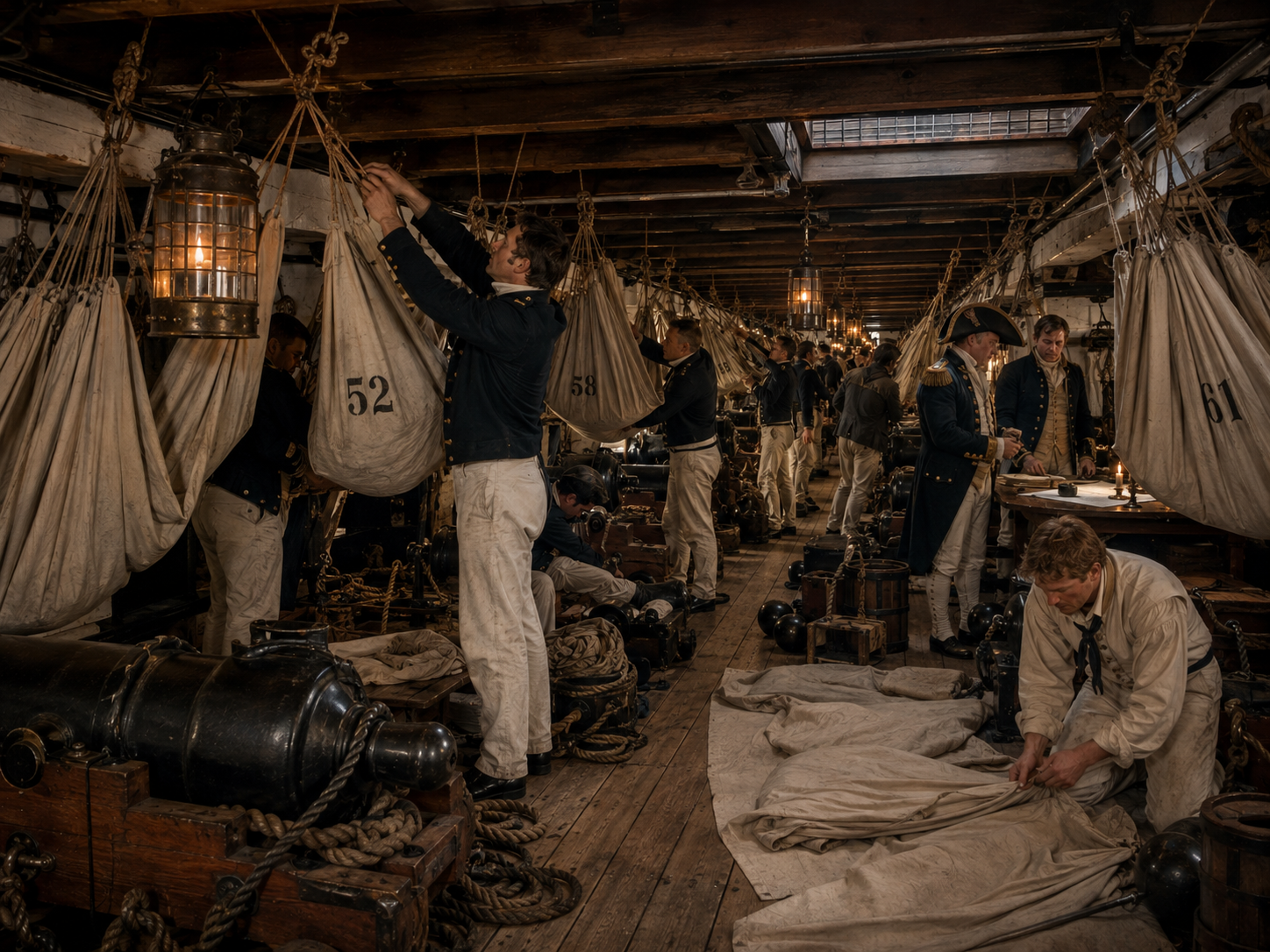
Naval records show that hammocks were numbered and assigned to particular sailors. A Royal Museums Greenwich record of the frigate Pallas describes sailors being issued numbered hammocks that were returned to their designated places after being aired or stowed.
This mattered because the ship was constantly changing.
Hammocks could be hung at night and taken down in the morning. In some periods, they were moved onto deck for airing and stowed in designated nettings.
The U.S. Navy later had detailed procedures for lashing and storing hammocks after reveille.
So a hammock was more than a bed.
It was part of the sailor's assigned equipment.
You slept in it, folded your bedding into it, moved it when required and kept track of your place.
On a crowded ship, even sleeping had a routine.
A Sailor’s Hammock Was Personal Equipment
Chapter 3 — How Did Hammocks Enter European Maritime Life?

The hammock itself is much older than European naval use.
Long before European sailors adopted it, hammock-like sleeping systems were used in parts of the Americas.
European maritime use developed later, during the early modern period.
One important figure in the story is Christopher Columbus. European accounts from his voyages described Indigenous people in the Caribbean using suspended sleeping beds. The idea was subsequently adopted by European sailors and adapted to shipboard conditions.
That does not mean Columbus suddenly invented the hammock for European ships.
He did not.
The important development was the transfer and adaptation of an existing technology.
European sailors encountered a practical way of sleeping above the ground and eventually recognized that the same principle could solve a problem aboard ships.
Suspending a sleeping surface from ropes had an obvious advantage at sea.
It did not require a flat floor.
And that was exactly what a ship had very little of.
Over time, hammocks became increasingly associated with naval life in European and later American fleets.
By the 18th century, they were an established part of life aboard many naval vessels. Historical records from British and American ships document their use and the routines surrounding them.
The story is therefore less about a single invention and more about adaptation.
A sleeping technology developed in one environment found a new purpose in another.
From Caribbean Sleeping Technology to Naval Hammock
Chapter 4 — Why Was a Swinging Bed Surprisingly Practical?
Here is the strange part.
A hammock looks unstable.
A wooden bed seems safer.
But aboard a moving ship, the hammock had an advantage that a rigid bed did not.
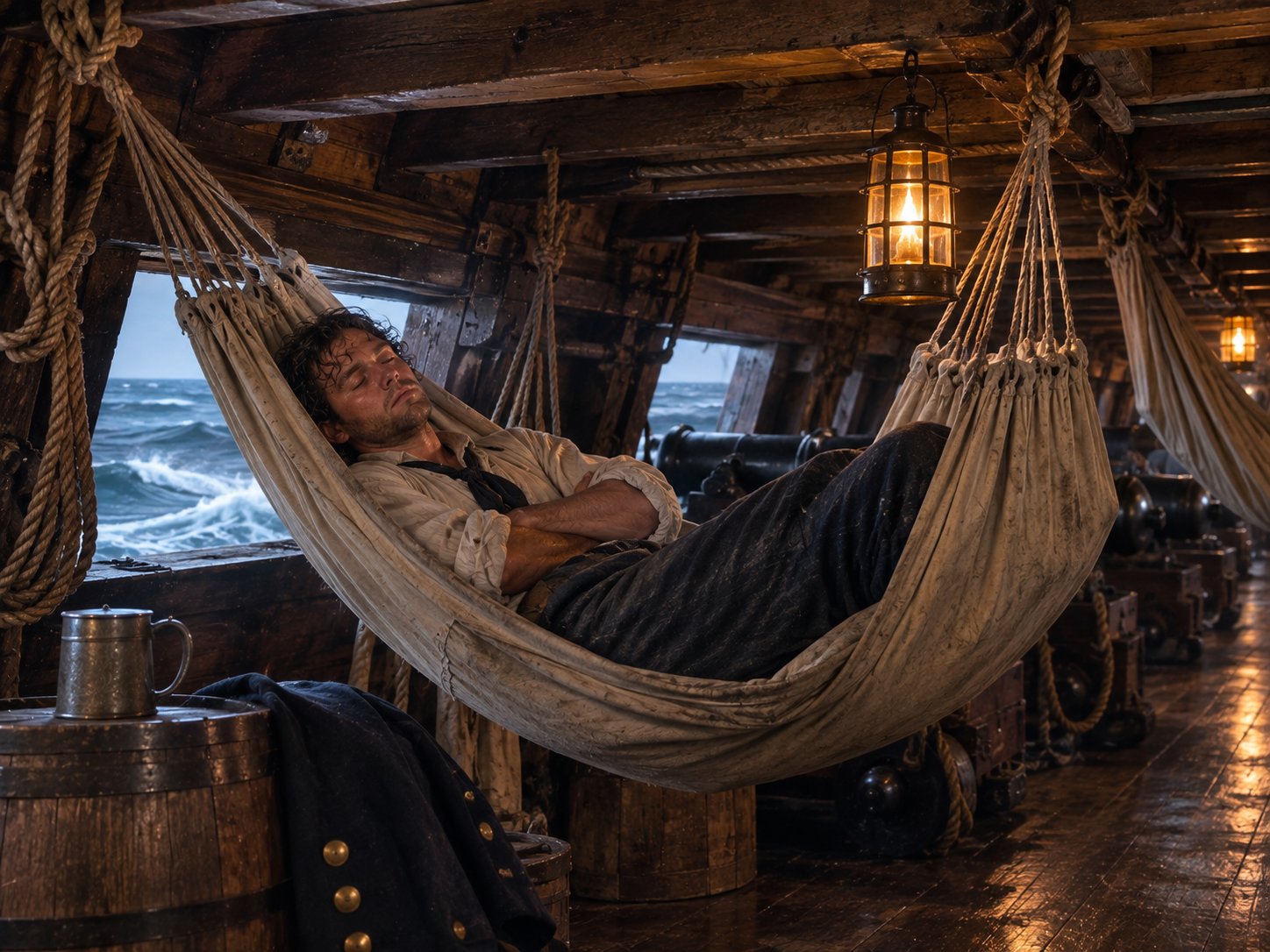
It could move with the ship.
When a vessel rolled and pitched in rough seas, a suspended hammock could swing and shift rather than remaining rigidly fixed to the floor.
That did not magically make rough seas comfortable.
A sailor could still be thrown around, become seasick or struggle to sleep.
But the hammock's flexibility made it well suited to an environment where the surface beneath you was constantly moving.
There was another advantage.
The curved fabric supported the sailor without requiring a large wooden frame.
That saved materials and, more importantly, space.
And when the sailor got out, the entire sleeping arrangement could be removed.
The hammock therefore solved several problems simultaneously:
It was compact.
It was portable.
It used overhead space.
It could be stored.
And it worked reasonably well aboard a moving vessel.
That is why the hammock survived.
It was not necessarily the most comfortable bed.
It was the right bed for the environment.
Why a Hammock Worked on a Moving Ship
Chapter 5 — What Happened When Hundreds of Sailors Needed to Sleep?
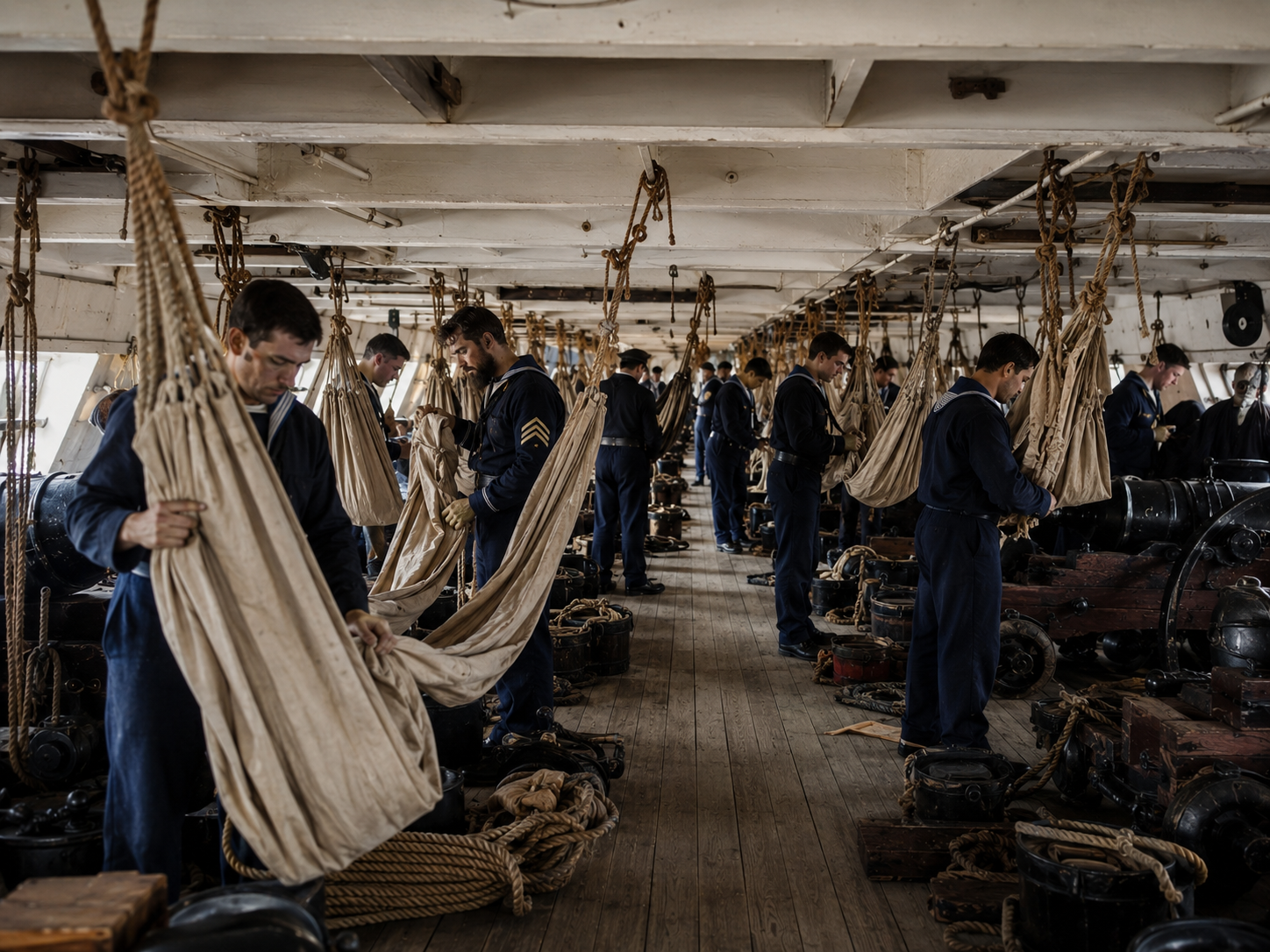
The hammock solved the space problem, but it did not make life aboard ship spacious.
Quite the opposite.
Sailors could be packed into shared living areas, with hammocks hanging close together.
There was little personal space.
A sailor might have to sleep while other men were working nearby. The ship operated in shifts, so the sleeping area could never behave like a quiet bedroom on land.
And the ship had to be ready for work at any moment.
Historical naval instructions show how carefully hammocks were managed. In an 1815 U.S. Navy order, hammocks were part of the daily routine, with sailors taking them down and stowing them according to the ship's schedule.
This also explains why sailors became skilled at turning a hammock into a compact bundle.
The bedding could be placed inside the canvas, the sides pulled together and the whole thing lashed tightly.
The U.S. Navy later documented detailed procedures for this process, including the use of specific lashings and designated hammock storage areas.
Imagine doing that every day.
Sleep.
Wake.
Turn out.
Take down your bed.
Roll it.
Secure it.
Store it.
Then go back to work.
The hammock was comfortable enough to sleep in.
But it was also something you were expected to manage as part of the ship's routine.
A Hammock Had to Disappear Every Morning
Chapter 6 — Sleeping, Disease, Vermin and Hygiene
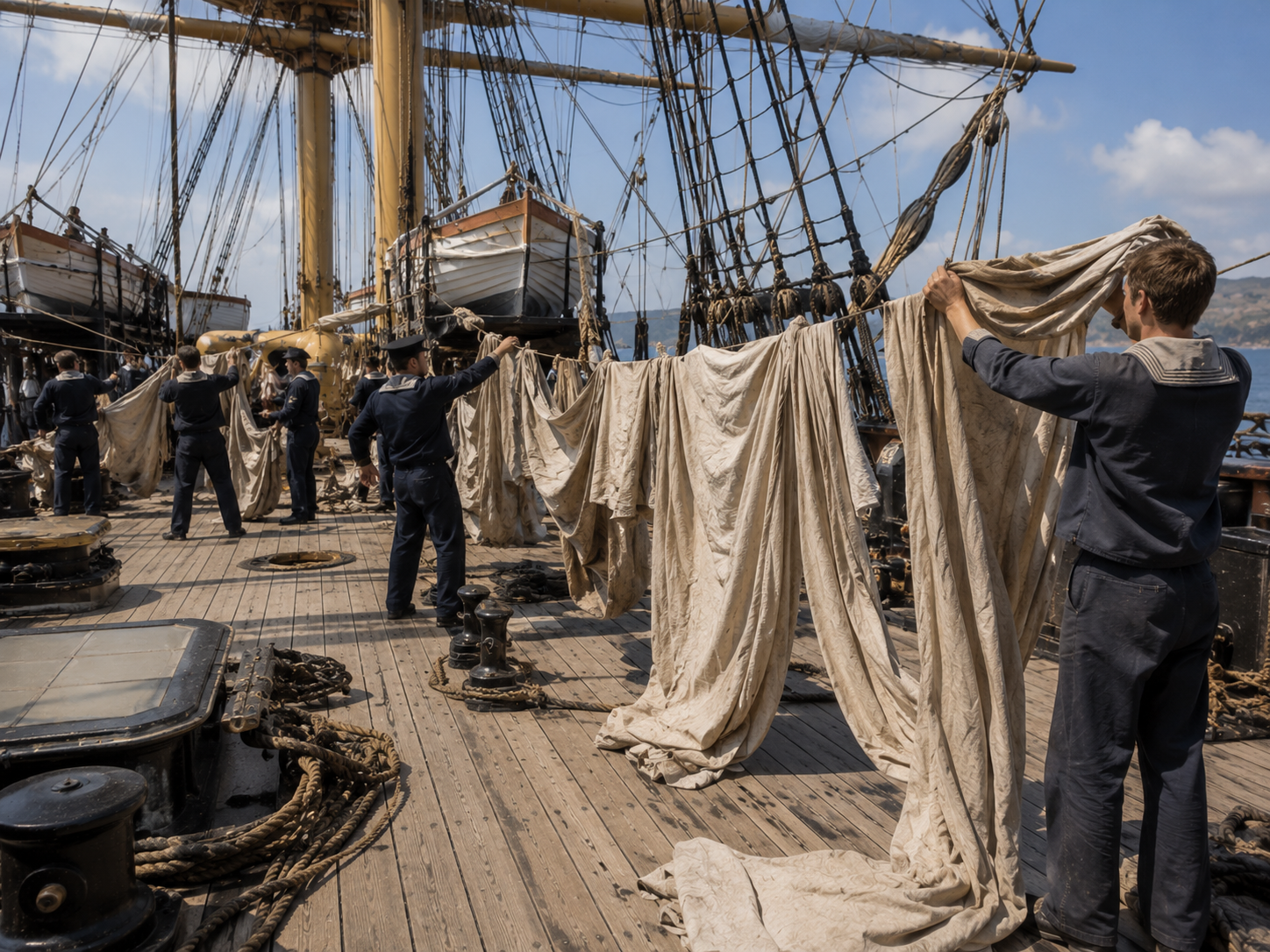
A hammock solved the problem of space.
It did not solve the problem of cleanliness.
Life aboard historical ships could be dirty, crowded and uncomfortable. Fresh water was limited, ventilation could be poor and sailors lived close together for long periods.
Bedding therefore became part of the ship's hygiene routine.
Historical naval records show that hammocks were aired and cleaned as part of regular shipboard practices. The U.S. Navy's historical material describes procedures for airing bedding and managing hammocks, while surviving photographs and records show sailors cleaning and handling their hammocks on deck.
This makes sense.
A canvas hammock held a sailor's mattress and blankets.
If those materials stayed damp and dirty in a dark compartment for long periods, problems could follow.
Moving hammocks into the open air gave the bedding an opportunity to dry and be cleaned.
There was also another practical consideration: insects.
Ships carried food, clothing and large quantities of organic material, creating opportunities for pests to thrive.
A hammock could not eliminate vermin.
But its portability made bedding easier to handle than a heavy permanent bed.
The difference matters.
The hammock was never a hygienic miracle.
It was simply easier to move, air and inspect than a fixed sleeping structure in an already crowded environment.
Why Sailors Aired Their Hammocks
Chapter 7 — Why Did Hammocks Eventually Disappear?
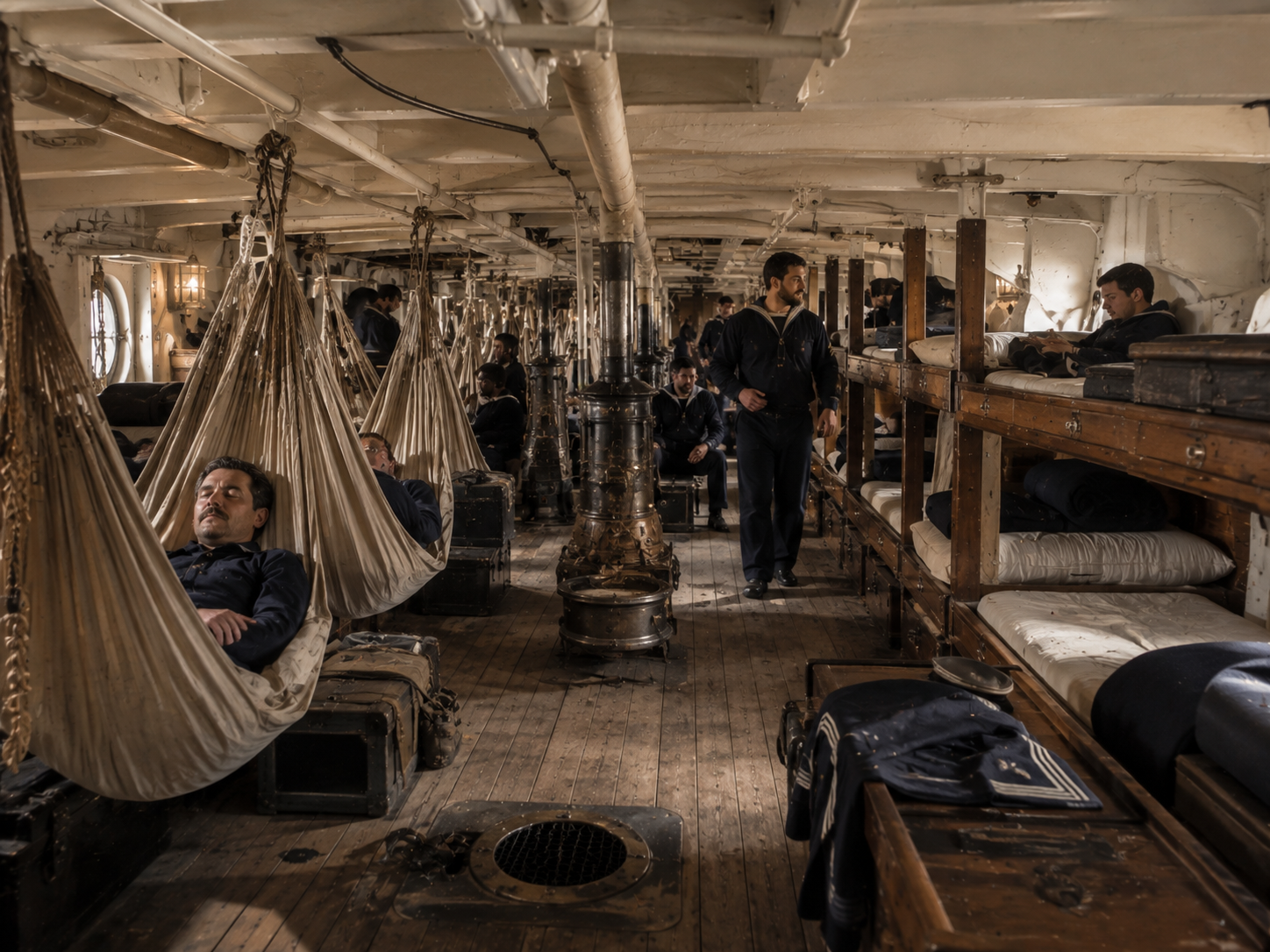
The hammock did not disappear because someone suddenly decided it was uncomfortable.
It disappeared gradually as ships changed.
Naval vessels developed better accommodation systems, different internal layouts and new forms of sleeping furniture. As ships became more technologically complex, the old arrangement of hanging large numbers of canvas hammocks from shared spaces became less necessary.
Fixed bunks and later naval berths could provide more standardized sleeping arrangements.
The transition was not instantaneous.
Hammocks remained in naval use well into the 20th century. U.S. Navy records, for example, document hammock use around the turn of the century and beyond. Photographs from the early 1900s show hammocks stowed above sailors' sleeping areas, while later records show them still being used in certain circumstances.
In fact, the hammock could survive even when fixed bunks were available because it remained useful in crowded situations.
A 1944 U.S. Navy image documents a sailor using a hammock aboard a crowded troop or cargo ship because fixed bunks were in short supply.
That tells us something important.
The hammock was never just an old-fashioned curiosity.
It was a solution to a particular problem.
When the problem remained, the hammock remained useful.
When ships could provide better sleeping spaces without sacrificing valuable room, its importance declined.
And that is probably the best way to understand its history.
Sailors did not choose hammocks because they thought sleeping in the air was luxurious.
They chose them because ships were crowded, constantly moving places where every square foot mattered.
The hammock fit that world almost perfectly.
From Hammocks to Bunks
FAQ Frequently Asked Questions
1. Why did sailors sleep in hammocks?
Sailors used hammocks because they were practical in crowded ships. They could be suspended overhead, removed when the space was needed and stored when not in use.
2. Were hammocks more comfortable than beds?
Not necessarily. Their main advantage was practicality. A hammock required little floor space and could adapt to a moving ship, but rough seas could still make sleeping difficult.
3. How did sailors sleep on crowded ships?
Many enlisted sailors slept in canvas hammocks suspended from beams or other supports. On American frigates such as USS Constitution, hammocks were used on the berth deck and could be removed when the space was needed.
4. Did every sailor sleep in a hammock?
No. Sleeping arrangements varied according to period, ship, navy and rank. Officers generally had more private accommodations, while enlisted sailors commonly used hammocks on many naval vessels.
5. Did hammocks save space on ships?
Yes. Their biggest practical advantage was that they could be suspended when needed and removed afterward, allowing the same area to serve other purposes.
6. Did sailors take their hammocks down every morning?
On many naval vessels, yes. Hammocks were incorporated into formal daily routines and were taken down, lashed and stored according to shipboard regulations.
7. Were sailors' hammocks numbered?
In some naval systems, yes. Historical records from HMS Pallas describe numbered hammocks associated with individual sailors and their assigned positions aboard the ship.
8. Did sailors clean their hammocks?
Hammocks and their bedding were aired and maintained as part of naval hygiene routines. U.S. Navy historical records document procedures for handling, cleaning and airing hammocks.
9. When did sailors stop using hammocks?
There was no single date. Hammocks continued to be used well into the 20th century, even after fixed bunks became common in some vessels. Their use declined as ship design and sleeping accommodations changed.
10. Why didn't sailors just use ordinary beds?
A conventional bed would permanently occupy valuable floor space. On a crowded ship, that was a serious disadvantage. A hammock could be taken down and stored, allowing the same space to be used for work, equipment or movement.