Introduction
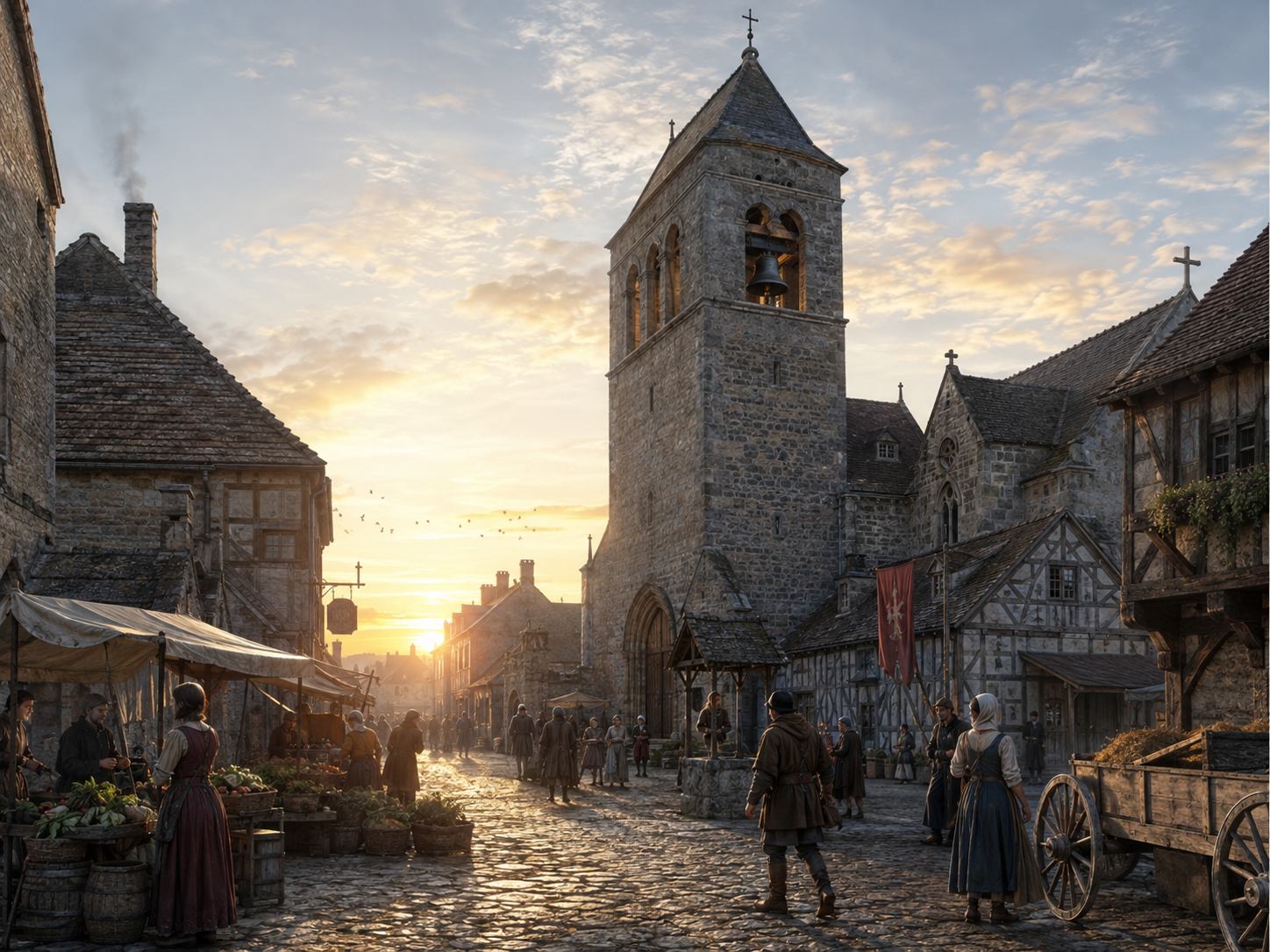
Imagine waking up tomorrow with no clock.
No phone.
No wristwatch.
No alarm.
You look outside and see a pale sky beginning to brighten. Somewhere nearby, a bell rings.
You know the day is beginning.
Later, another bell sounds. People begin moving toward church. Shops and workshops become busy. Hours pass, but nobody is checking a glowing screen to see whether it is 10:30 or 10:45.
This was not because medieval people had no idea what time it was.
They had many ways of understanding time.
The difference was that time was less personal.
For much of medieval Europe, the rhythm of the day was shaped by the sun, the seasons, work, meals, religious observances and—particularly in towns and villages with churches—the sound of bells.
Monastic communities followed established canonical hours, dividing the day around religious services and prayers. Bells announced these moments not only to monks and clergy but could also make the rhythm of the religious day audible to people living nearby.
The result was a fascinating system.
You did not necessarily need to know an exact number of minutes.
You needed to know where you were in the day.
Morning.
Midday.
Afternoon.
Evening.
Night.
And then mechanical clocks began spreading through European towns.
That changed more than the accuracy of timekeeping.
It gradually turned time from something a community heard and experienced together into something individuals could increasingly measure for themselves.
Chapter 1 — A World Without a Clock in Every Room
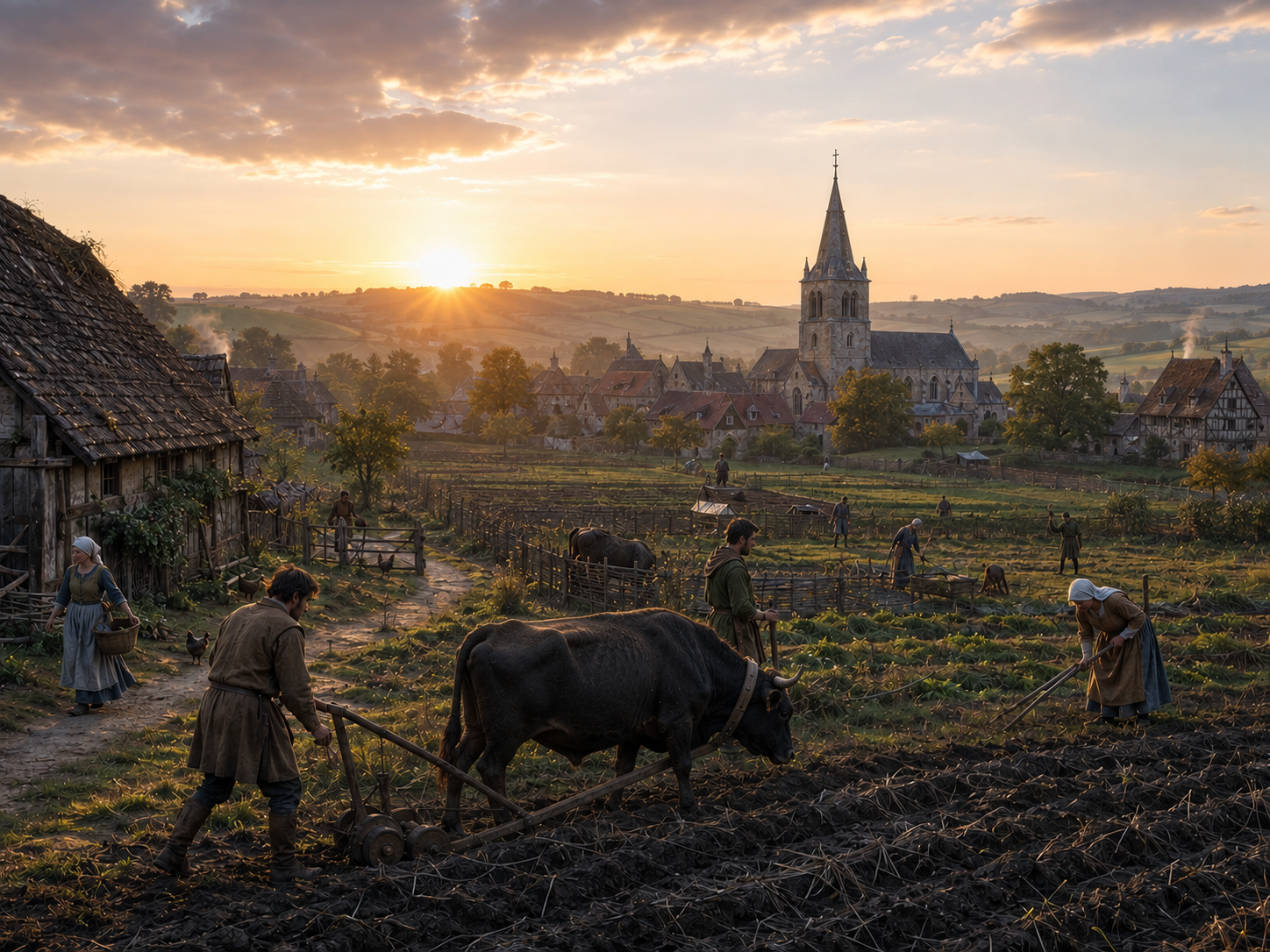
Today, knowing the time is almost effortless.
Your phone can tell you the time to the second.
A wall clock can hang in almost any room.
A train station displays the exact minute.
Medieval people lived in a very different environment.
Portable personal clocks were not part of ordinary daily life, and mechanical clocks only became increasingly important in European towns during the later medieval period.
But this does not mean medieval people simply guessed.
They had an impressive collection of natural and social clues.
The sun told people roughly where they were in the day.
Sunrise marked the beginning of daylight.
Midday could be estimated from the position of the sun.
Sunset marked the transition toward night.
The seasons changed the length of daylight.
People also learned the rhythms of their surroundings.
Animals behaved differently at different times.
Markets opened.
Work began.
Meals were prepared.
Church services occurred.
Bells announced important moments.
In other words, medieval time was often event-based and observable.
You might not need to know that it was precisely 7:42.
You needed to know that dawn had arrived and it was time to begin the day's activities.
That was a perfectly workable system for a society whose daily schedules were built around daylight and recurring routines.
How Medieval People Experienced Time
Chapter 2 — The Sun Was the First Clock
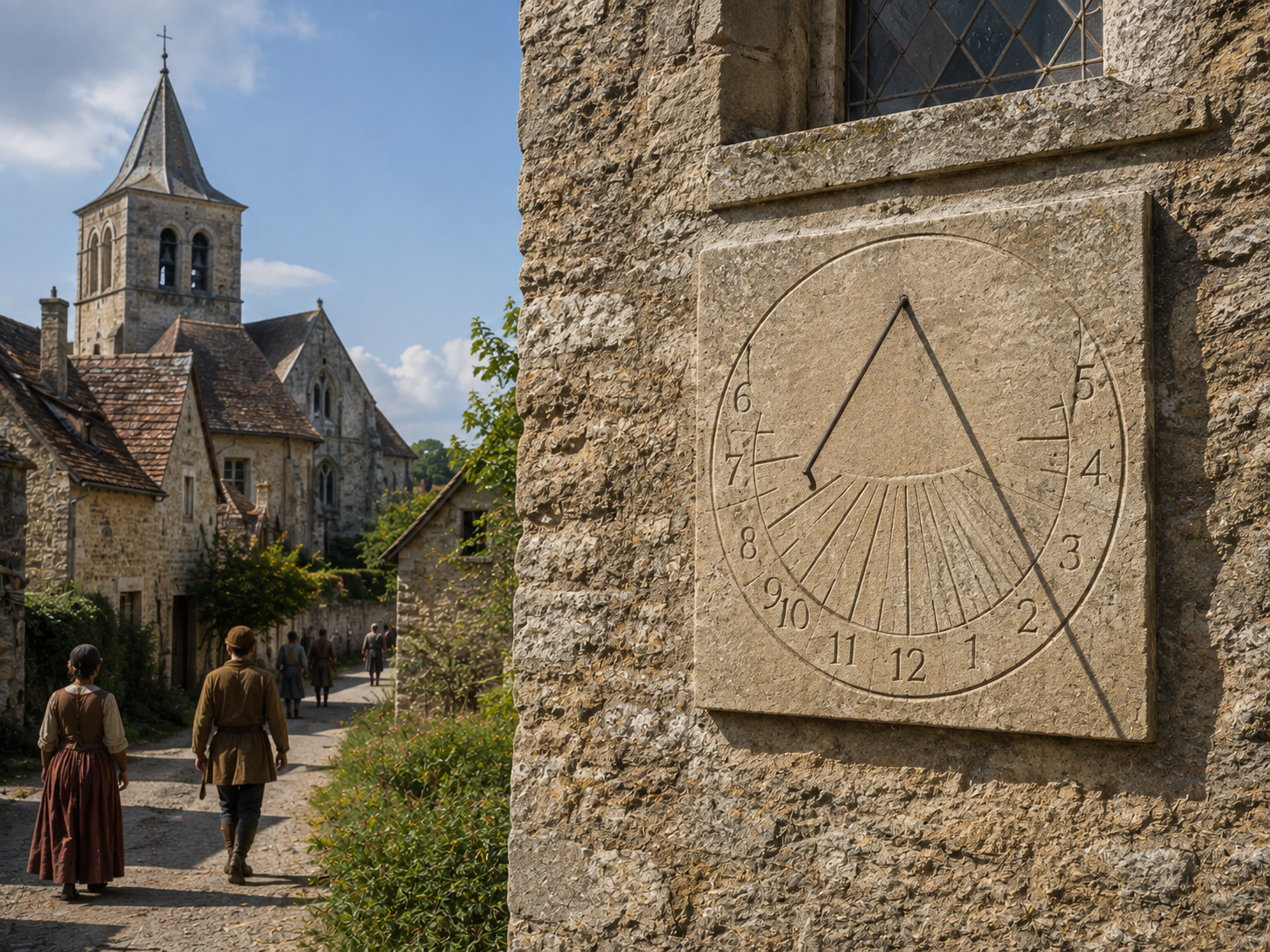
Long before mechanical clocks, the most obvious timekeeper was above everyone's head.
The Sun.
Its movement across the sky provided a natural framework for the day.
People could recognize dawn, midday and sunset without any instrument.
Sundials could also provide more structured measurements during daylight, although their usefulness depended on sunlight and their design.
But the medieval day was not divided into perfectly equal modern hours in every context.
This is important.
When we say “hour,” we might imagine sixty minutes.
That was not always how medieval people experienced an hour.
In the traditional system of temporal hours, the period of daylight was divided into twelve parts, as was the period of darkness. Because daylight changes length during the year, these hours were not always the same duration.
A daylight hour in summer could therefore be longer than a daylight hour in winter.
This sounds strange until you remember what the system was designed to describe.
It was not trying to produce the same numerical time measurement we use today.
It was organizing the changing day.
The sun therefore did not simply tell people what time it was.
It helped define what “time” meant.
The day expanded and contracted with the seasons.
Morning arrived differently in June than in December.
And daily life adapted accordingly.
Why Medieval Hours Were Different
Chapter 3 — The Bell Turned Time Into a Public Sound
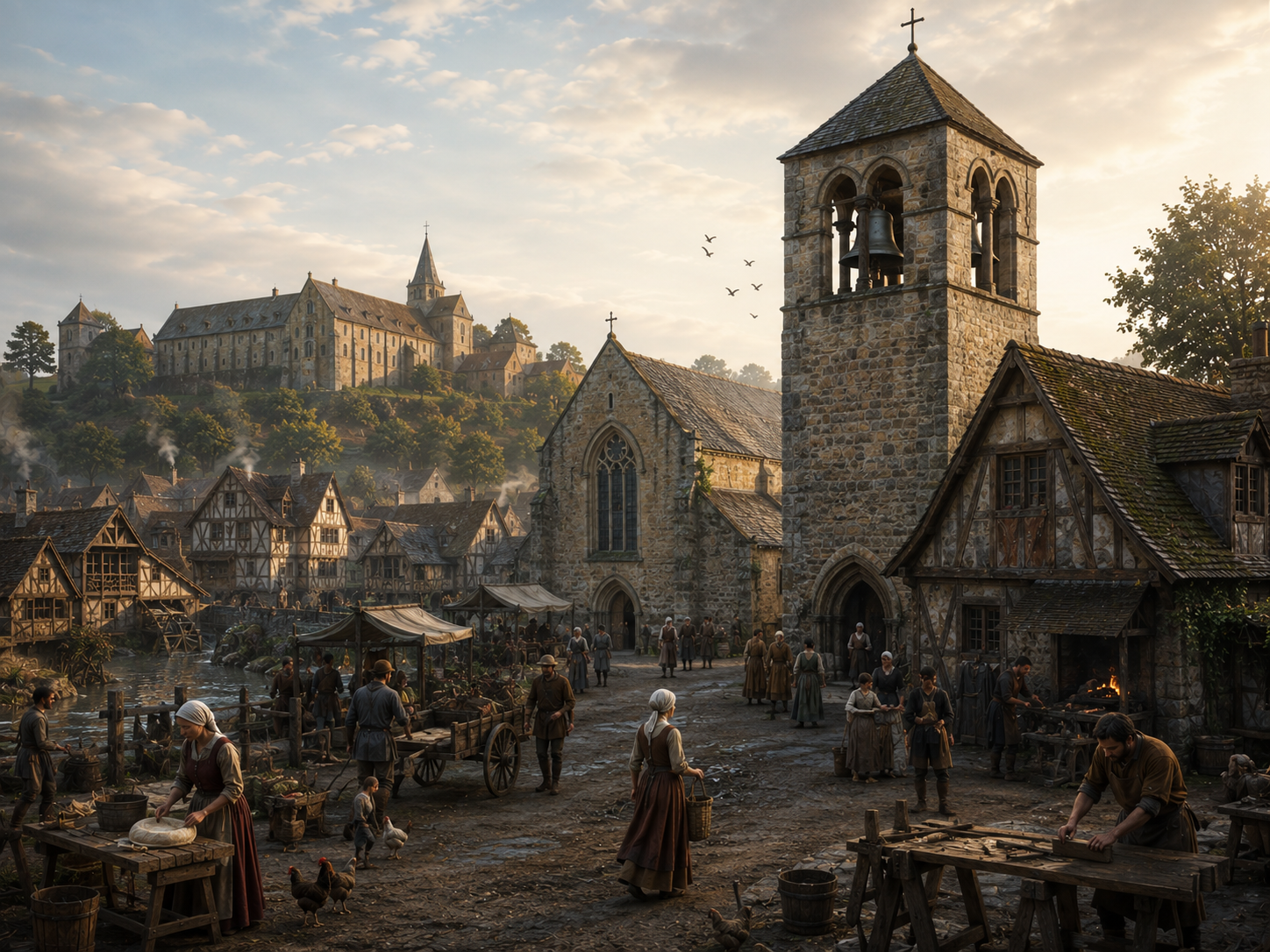
And everyone could hear it.
How a Bell Shared Time
Chapter 4 — What Did “Morning” Actually Mean?
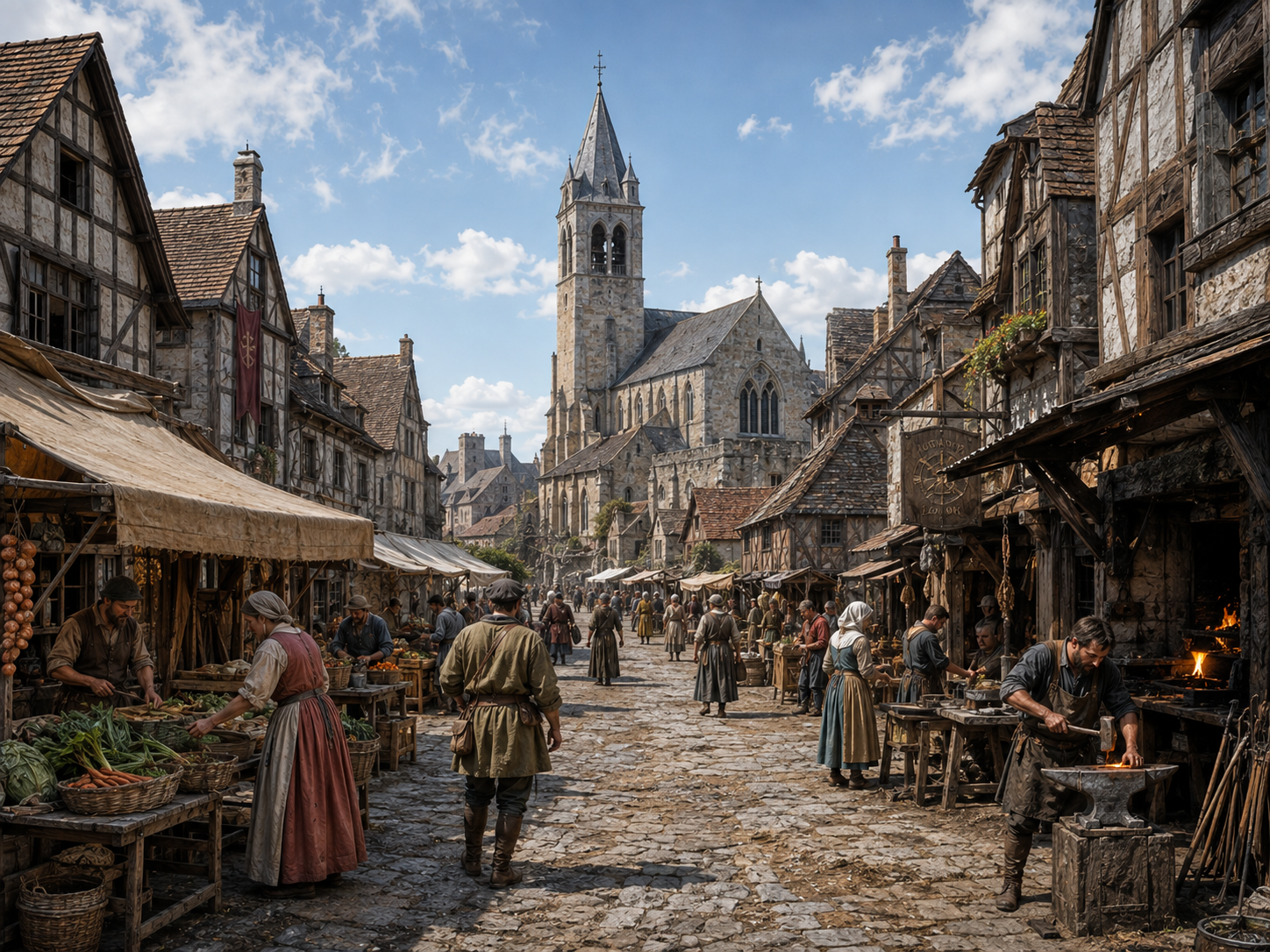
Today, if someone tells you to meet them at 8:00 in the morning, there is little room for interpretation.
Medieval people often operated differently.
A person might describe a time through a familiar event or part of the day.
Dawn.
Morning.
Midday.
After the morning service.
Before Vespers.
At sunset.
The meaning could depend on context.
This did not make medieval life chaotic.
People became extremely skilled at coordinating activities through repeated routines.
Imagine a town where the same bell sounds at roughly familiar points every day.
After enough repetition, people learn what comes next.
The baker knows when customers begin arriving.
The craftsman knows when the working day is underway.
The merchant knows when the market becomes active.
The farmer knows when daylight is sufficient for work.
Time becomes something people feel through routine.
This is very different from looking at a digital clock.
And it could be surprisingly precise for the activities that mattered.
A person did not need to know the exact minute to know whether they were late for a market opening or whether evening was approaching.
The system worked because everyone around them participated in the same rhythms.
Time was partly social.
Medieval Time Was Often Event-Based
Chapter 5 — Then Mechanical Clocks Arrived
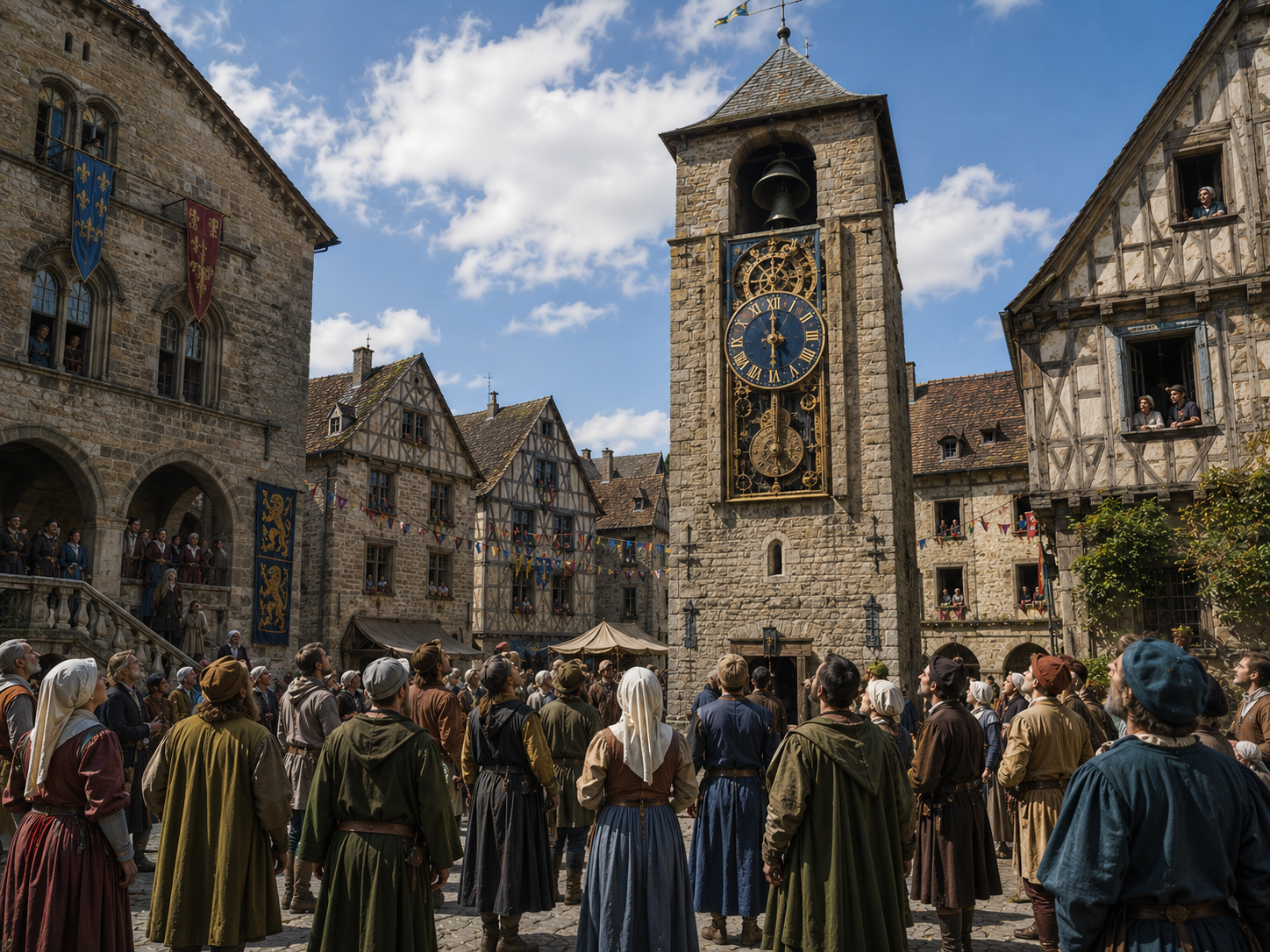
Eventually, a different kind of timekeeper appeared.
The mechanical clock.
Large mechanical clocks emerged in Europe during the late medieval period, with public clock towers becoming increasingly important in towns during the fourteenth century and afterward.
These machines did something earlier systems could not easily do.
They produced a repeated mechanical signal that could divide the day into more standardized units.
A town with a public clock did not need everyone to own a clock.
One machine could serve an entire community.
The clock could be mounted in a tower where people could see it or hear its bells.
This was a major change.
The town no longer depended entirely on the sun's position to estimate the passage of the day.
A mechanical mechanism could continue counting through changing daylight.
But early mechanical clocks were not modern precision instruments.
They could be inaccurate and required adjustment.
Their importance was not that they suddenly produced perfect time.
Their importance was that they mechanized the measurement of time.
That distinction is crucial.
The medieval clock did not suddenly create the idea of an hour.
People had been dividing days into hours for centuries.
What changed was the ability of a machine to mark those divisions independently of the sun.
Time was becoming something that could be measured mechanically.
What the Mechanical Clock Changed
Chapter 6 — Why Exact Time Started to Matter More
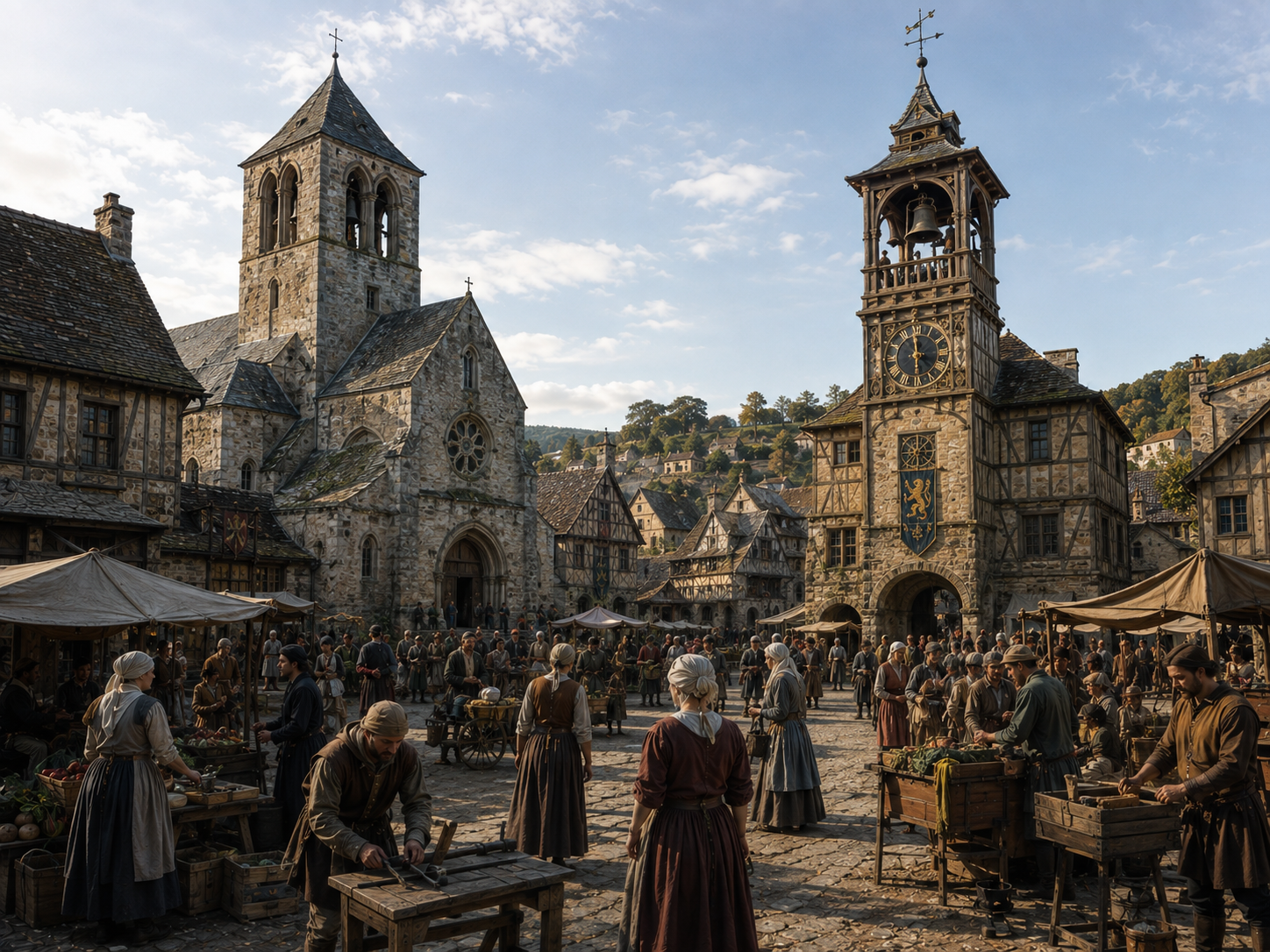
Once towns had mechanical clocks, a new possibility emerged.
People could coordinate activities according to a more standardized measure.
This became increasingly useful as urban economies became more complicated.
Markets had opening and closing routines.
Work needed coordination.
Religious institutions had established schedules.
Public life involved meetings, services and appointments.
Later, transportation and industry would make accurate time even more important.
But we should not imagine that a mechanical clock instantly transformed medieval society.
The change was gradual.
Clocks were expensive.
Early mechanisms were imperfect.
Many people still relied on traditional signals.
Church bells did not suddenly become irrelevant.
In fact, clock towers often used bells.
The new technology could therefore strengthen an older habit.
People were still hearing time.
But now the sound could be generated by a mechanical machine rather than relying entirely on observation of the sun or manual signaling.
This distinction is easy to miss.
The history of timekeeping is not a clean story in which one system disappears and another immediately replaces it.
Old and new systems overlapped.
The sun remained.
Church bells remained.
Sundials remained.
Mechanical clocks joined them.
Eventually, however, mechanical time became increasingly dominant in public life.
Old and New Timekeeping Overlapped
Chapter 7 — From Communal Time to Personal Time
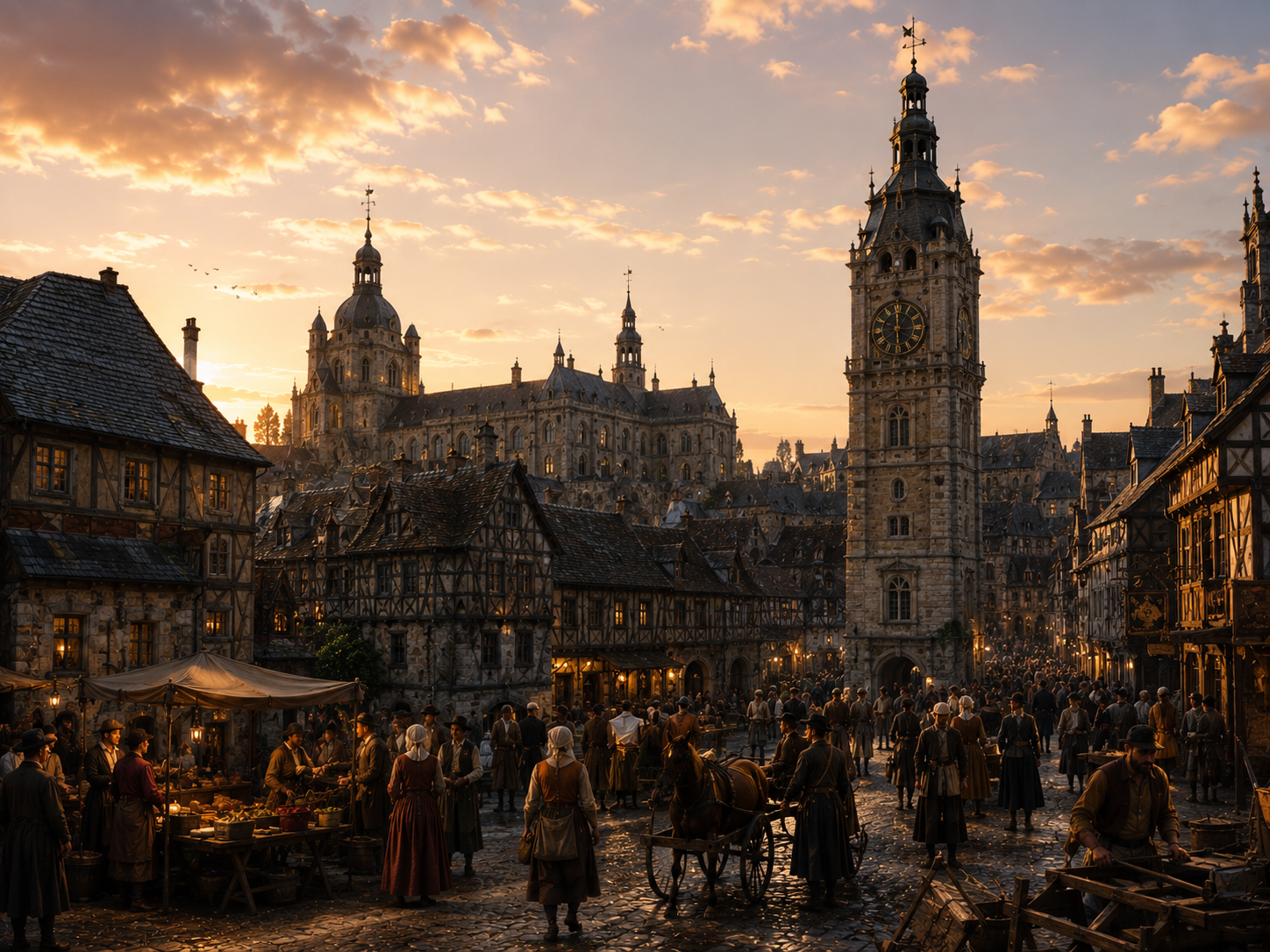
Today, time follows us everywhere.
A clock sits on the wall.
A phone rests in a pocket.
A computer shows the exact minute.
A smartwatch can measure seconds without anyone else knowing what time it is.
This is a very different relationship with time.
In the medieval town, one of the most important time signals could come from somewhere else.
A church bell rang.
The town heard it.
People adjusted their activities accordingly.
Time was therefore partly communal.
The growth of mechanical clocks gradually changed that relationship.
Public clocks made standardized time more visible and audible.
Later, portable clocks and watches made it increasingly possible for individuals to carry their own timekeeper.
The transition took centuries.
It was not simply a technological improvement.
It changed expectations.
Being “on time” could become increasingly precise.
Work could be coordinated around measured hours.
Travel could be planned more carefully.
Appointments could become less dependent on natural daylight.
Eventually, standardized time would become essential for railways, industry, communications and modern urban life.
But the beginning of that transformation can be heard in something much simpler:
a bell.
For a medieval person, a bell did not merely announce a religious service.
It could tell the surrounding community where they were in the day.
The sound traveled across rooftops, fields and streets.
Everyone heard the same signal.
And for a society without a clock in every home, that was remarkably powerful.
The medieval world was not without time.
It was a world where time belonged to the landscape, the church, the sun—and eventually the machine.
From Communal Time to Personal Time
FAQ Frequently Asked Questions
1. How did medieval people know what time it was?
They used several methods, including the position of the sun, sundials, religious schedules, bells and daily routines. Later medieval communities increasingly used mechanical clocks.
2. Why did medieval churches ring bells?
Church bells announced religious services and important moments in the religious day. Their sound could also provide a wider community with a shared signal for daily activities.
3. Did medieval people have clocks?
Yes, but mechanical clocks were not common personal household objects. Large public mechanical clocks became increasingly important in European towns during the later medieval period.
4. What were canonical hours?
Canonical hours were established times of prayer and worship used particularly by Christian religious communities. Bells were often used to signal these observances.
5. Did medieval people use sundials?
Yes. Sundials could help determine the time during daylight by measuring the position or shadow of the sun.
6. Were medieval hours the same as modern hours?
Not always. Traditional temporal hours divided daylight and darkness into twelve parts each, meaning the length of an hour could change with the season. Later mechanical clocks encouraged more standardized equal hours.
7. Did medieval people know the exact time?
They could measure or estimate time using different methods, but exact minute-by-minute time was much less accessible than it is today. The important change was the increasing availability and precision of mechanical timekeeping.
8. When did mechanical clocks become common?
Large mechanical clocks became increasingly important in European towns during the fourteenth century and afterward. Their spread was gradual, and early clocks were much less accurate than modern clocks.
9. Did mechanical clocks replace church bells?
Not immediately. Mechanical clocks could actually operate bells, allowing the older communal sound of bells to continue while the underlying timekeeping became increasingly mechanical.
10. How did clocks change medieval life?
Clocks gradually made standardized, mechanically measured time more accessible in public life. Over the longer term, this contributed to a shift from time being mainly experienced through natural and communal rhythms toward increasingly precise and individually measured time.