Introduction — A Ship Like No Other
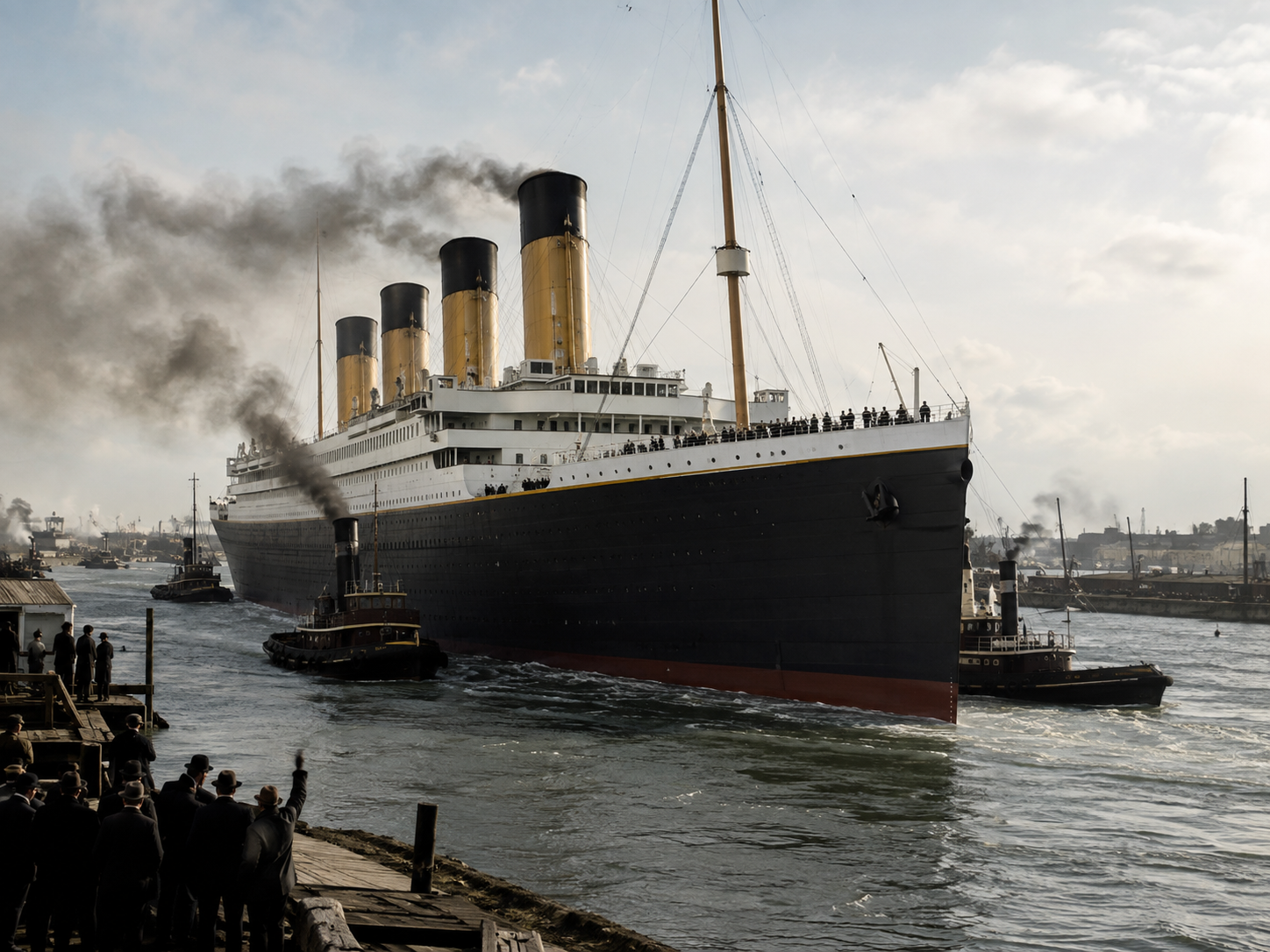
On the morning of April 10, 1912, the RMS Titanic left Southampton for New York.
She was enormous by the standards of her age: 882 feet long, more than 92 feet wide, and the largest ship in the world when she entered service. Four funnels rose above her decks. Inside were restaurants, lounges, a swimming pool, a gymnasium, Turkish baths and cabins that offered an extraordinary level of comfort for a transatlantic liner.
But the Titanic represented more than luxury.
She was a product of a period when industrial power seemed to be reshaping the boundaries of the possible. Steel structures were becoming larger, engines more powerful, wireless communication was connecting ships across the ocean, and ocean liners had become symbols of national and commercial prestige.
Thousands of people came to see her leave Southampton.
Some were traveling in comfort. Others were crossing the Atlantic because they hoped America would offer them a different future. Crew members boarded knowing that the ship was not simply a vessel but a workplace on which they would spend weeks, months, or years of their lives.
There was confidence surrounding the Titanic. Some of it came from her engineering. Some came from the reputation of the Olympic-class liners. And some came from the culture of the time, which increasingly believed that technology could make dangerous things manageable.
Four days later, that confidence would meet an iceberg in the North Atlantic.
What followed was not simply the story of a ship sinking. It was a story about engineering, communication, decisions, social class, human behavior and the limits of confidence.
Chapter 1 — Building the Impossible
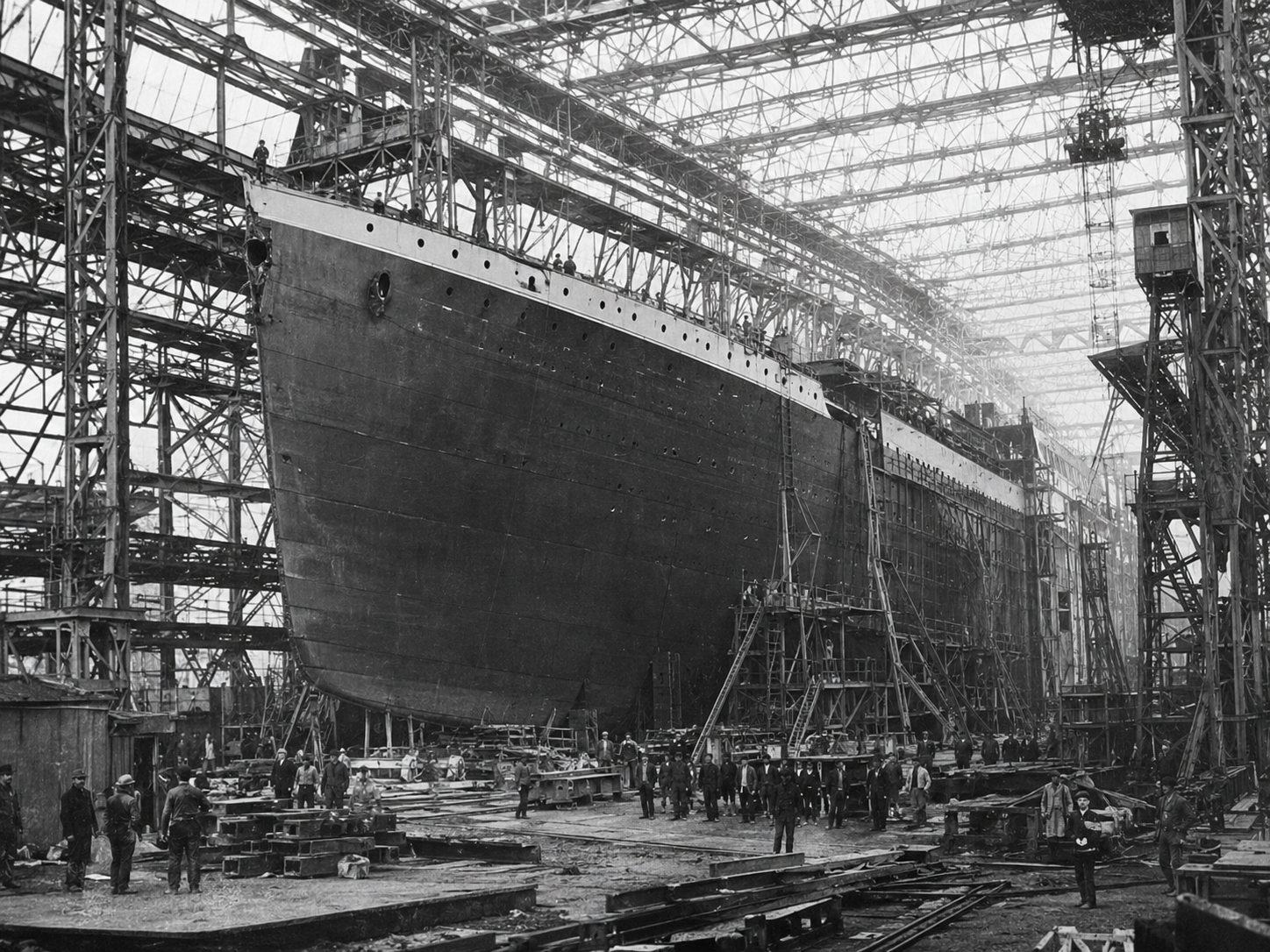
The Titanic was conceived during a period of intense competition between British and German ocean liners.
White Star Line wanted ships that could dominate the North Atlantic through size, comfort and prestige. The company turned to Harland & Wolff in Belfast, where the Olympic and Titanic were built as sister ships.
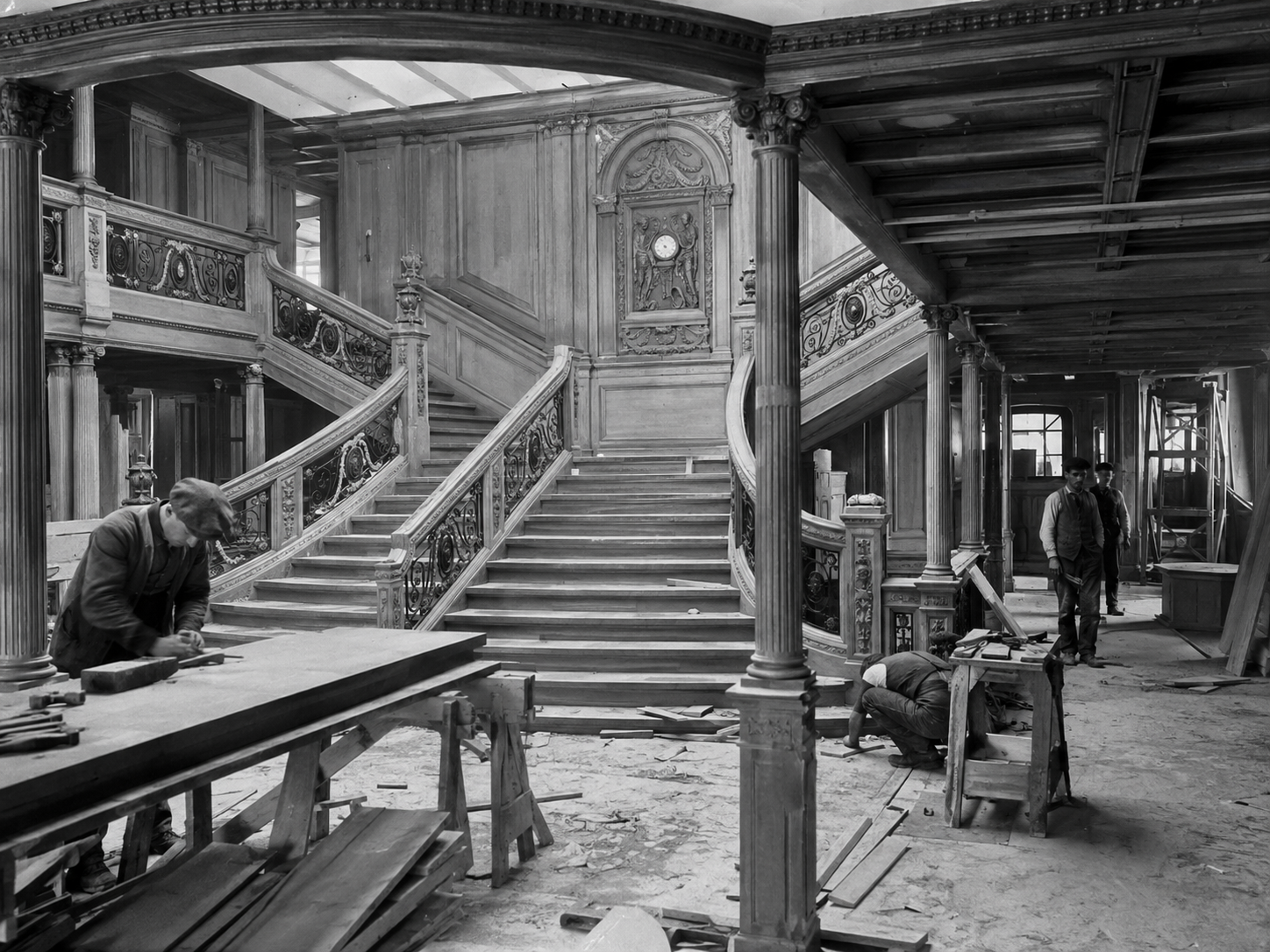
Construction of Titanic began in 1909. She was launched on May 31, 1911, from Slipway No. 3 at the Harland & Wolff yard. At launch she was already an extraordinary object, but much of the work remained: fitting the machinery, interiors, electrical systems and thousands of other components that would turn the bare hull into a working passenger liner.
Her safety design was impressive for the period.
The ship was divided into watertight compartments by transverse bulkheads, with watertight doors designed to restrict the spread of flooding. The design gave the vessel substantial protection against certain types of damage. Contemporary descriptions were confident enough to call the ship “practically unsinkable.” That phrase appeared in The Shipbuilder in discussion of the Olympic-class design and was subsequently simplified and amplified by newspapers into the more absolute “unsinkable.”
That distinction matters.
“Unsinkable” was not a precise engineering specification. It was a popular description built upon genuine confidence in the ship's safety systems.
And those systems were not magic.
The watertight bulkheads did not rise all the way to the highest decks. This meant that if enough forward compartments flooded, water could eventually pass over the tops of the bulkheads into compartments farther aft. The design assumed that the extent of flooding would remain within survivable limits.
That assumption would become crucial.
The Titanic was also a remarkable machine. Her three propellers were driven by a combination of reciprocating steam engines and a low-pressure turbine. Her designed speed was around 24–25 knots, although she did not need to reach maximum speed to demonstrate her capabilities.
None of this makes the ship foolishly designed.
Quite the opposite. The Titanic was technologically advanced, strongly built and equipped with safety features that reflected the best practices of her time.
The tragedy came from the difference between being exceptionally safe and being impossible to sink.
No ship is simply one thing. Strength, redundancy and safety all have limits.
The Titanic was about to discover where hers were.
How Titanic Was Built
Chapter 2 — Those Aboard
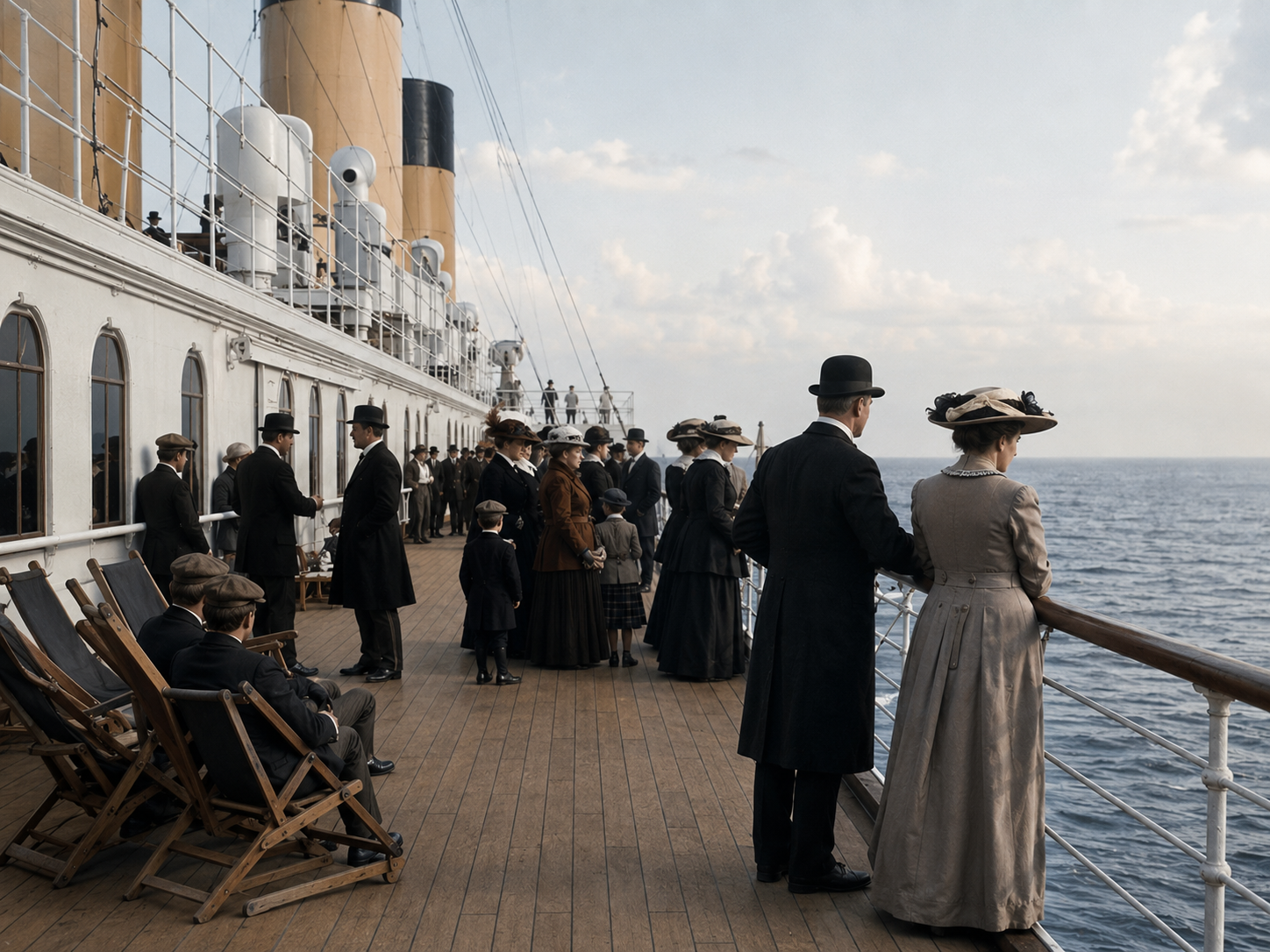
The Titanic carried a miniature version of the society that built her.
The British inquiry recorded roughly 1,300 passengers and around 900 crew, with small differences between contemporary records. First class included wealthy travelers, business figures and families. Second class offered accommodations closer to what an upper-middle-class traveler might expect at home. Third class was considerably more basic and included many emigrants traveling toward a new life in the United States.
Behind those categories were individual lives.
Isidor and Ida Straus, owners of the American department store Macy's, were returning to the United States. They were among the best-known passengers aboard. Benjamin Guggenheim, a wealthy American businessman, was also traveling in first class.
But wealth was only one part of the human story.
The ship's musicians, engineers, stokers, stewards and cooks were working aboard a vessel that most passengers experienced primarily as a place of comfort. Below the elegant public rooms was another world of boilers, machinery, coal and exhausting labor.
The engineering department alone employed hundreds of people. The British inquiry recorded 885 crew members on the voyage from Queenstown, including personnel in the deck, engine and victualling departments.
Then there were the emigrants.
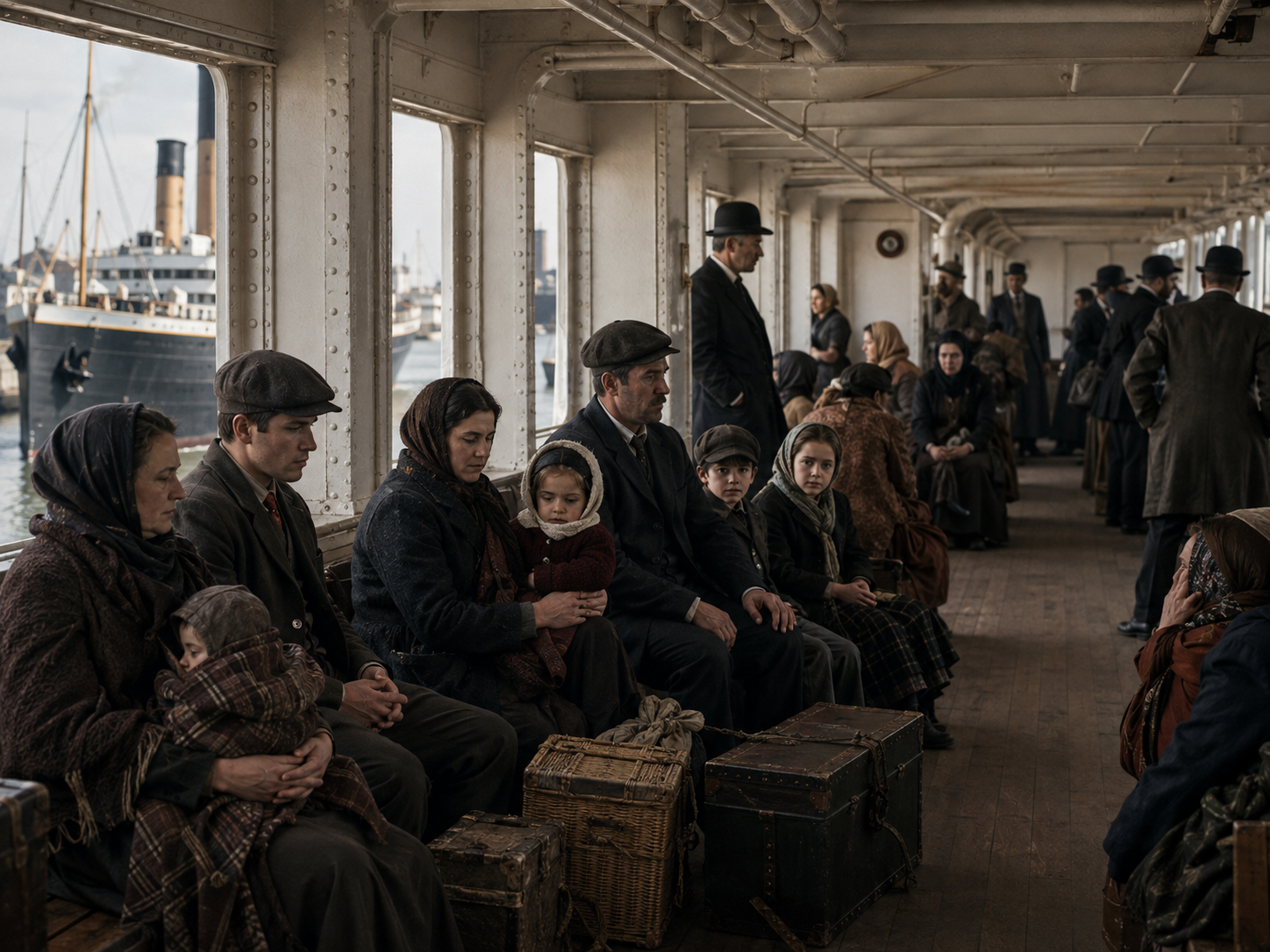
Many third-class passengers came from across Europe. Some were traveling alone. Others were families. They carried luggage, documents and possessions that represented years of work and preparation. Their destination was often not simply New York but somewhere beyond it: a relative's home, a job, farmland, or a city they had never seen.
That makes the passenger list more meaningful than a collection of names.
The Titanic was carrying people with very different ideas of what the future might look like.
A wealthy passenger might have been returning from Europe.
A young immigrant might have been beginning an entirely new life.
A steward might have been earning money to support family at home.
A stoker might spend the voyage working in heat and noise far removed from the polished dining rooms above.
All of them occupied the same ship.
But they did not experience the ship in the same way.
That difference would become critical when the emergency came.
Who Was on Titanic?
Chapter 3 — Five Days at Sea
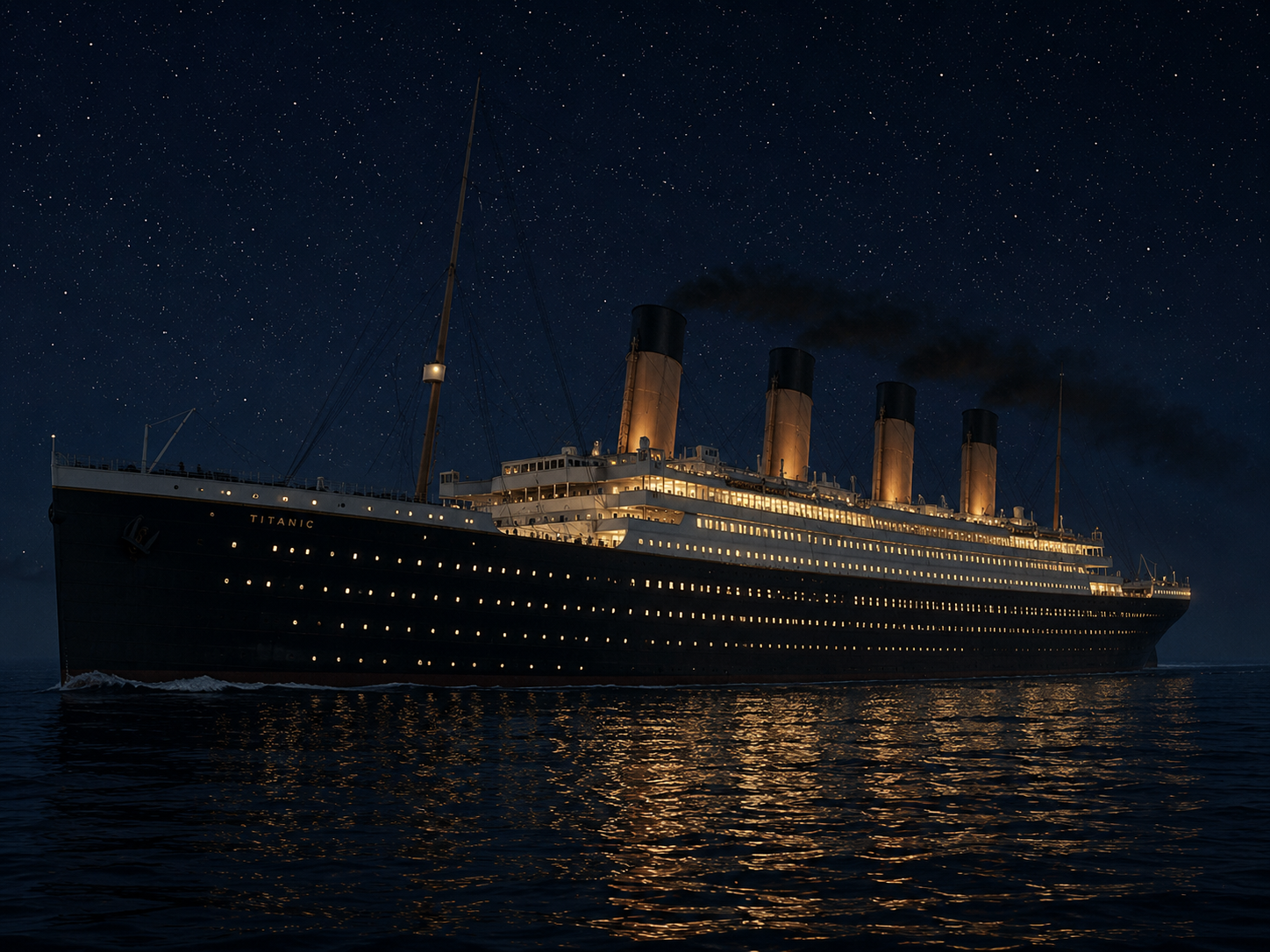
The Titanic left Southampton on April 10.
She stopped at Cherbourg in France and Queenstown in Ireland before beginning the long Atlantic crossing toward New York. The ocean was unusually calm. According to the U.S. Senate inquiry, the voyage experienced clear conditions apart from a brief period of fog, with bright weather and relatively calm seas.
For passengers, the journey had the rhythm of ordinary ocean travel.
Meals. Deck walks. Conversation. Letters. Music. Sleep.
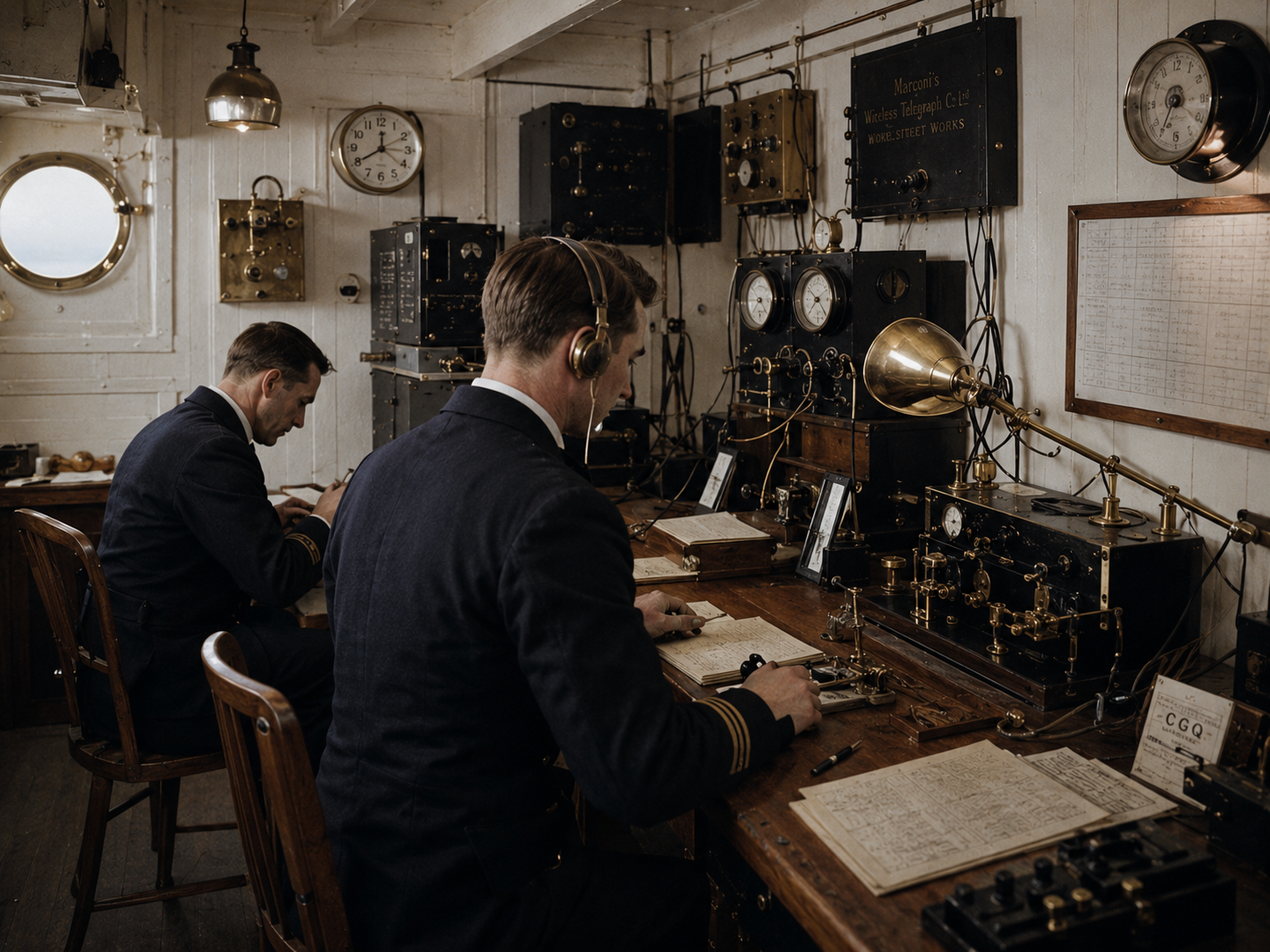
The wireless operators connected the ship to the outside world, handling personal messages as well as navigational information.
And there was ice.
Warnings about ice were received during the voyage. The U.S. inquiry concluded that at least three ice warnings reached Captain Edward Smith directly on April 14. One warning from the Baltic reported ice near the Titanic's intended track.
These warnings were not ignored in the sense that nobody knew ice existed.
The situation was more complicated.
The ship was operating within established practices for liners crossing the North Atlantic. The British inquiry later noted that vessels had historically maintained speed through ice regions in clear weather, relying on lookouts to detect dangers. The official investigation nevertheless concluded that the ship should have taken greater precautions, including reducing speed or moving farther south.
That distinction is important.
The disaster was not caused by one dramatic decision made in isolation.
It developed from a chain of ordinary assumptions: that the weather was clear, that lookouts could detect ice, that speed could be maintained, that the warning situation was manageable and that the ship's safety systems provided substantial protection.
By the evening of April 14, the Titanic was moving through a dark and unusually calm sea.
That calm may actually have made ice harder to detect, because there were no waves breaking around an iceberg to create obvious white water.
The ship continued west.
The passengers slept, talked or remained awake in the ship's rooms and corridors.
On the bridge, the lookouts watched the darkness ahead.
Near midnight, the Atlantic looked almost empty.
It wasn't.
The Final Day
Chapter 4 — The Collision
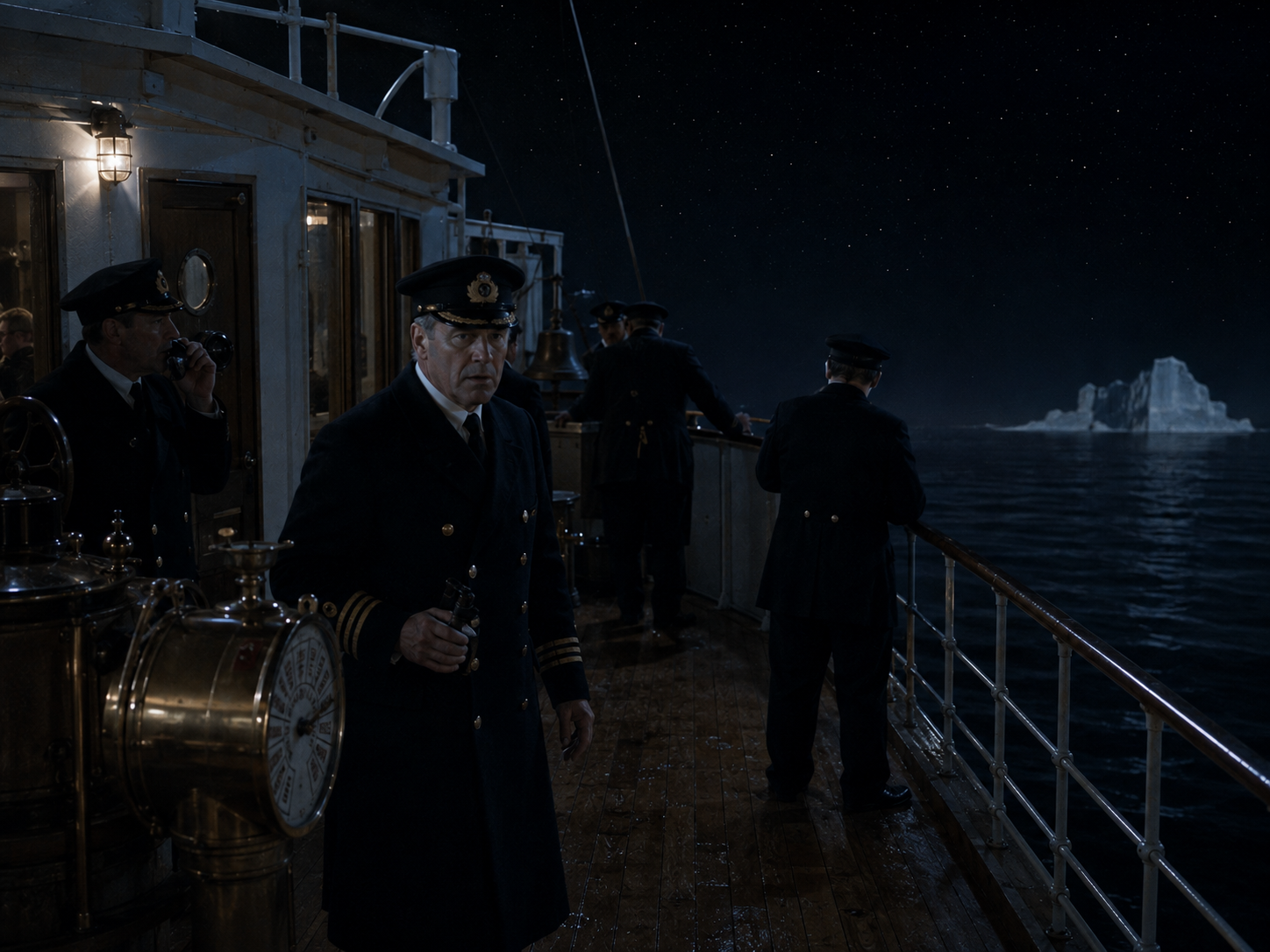
At approximately 11:40 p.m. on April 14, the lookout spotted an iceberg directly ahead.
The alarm was raised.
The helm was turned hard to port, and the engines were ordered to reverse. The British inquiry later found that these actions were appropriate once the iceberg had been sighted. But at roughly 22 knots, the ship had very little time to maneuver.
The iceberg struck the starboard side.
For decades, popular retellings imagined a dramatic gash running hundreds of feet through the hull.
The actual damage was more complicated.
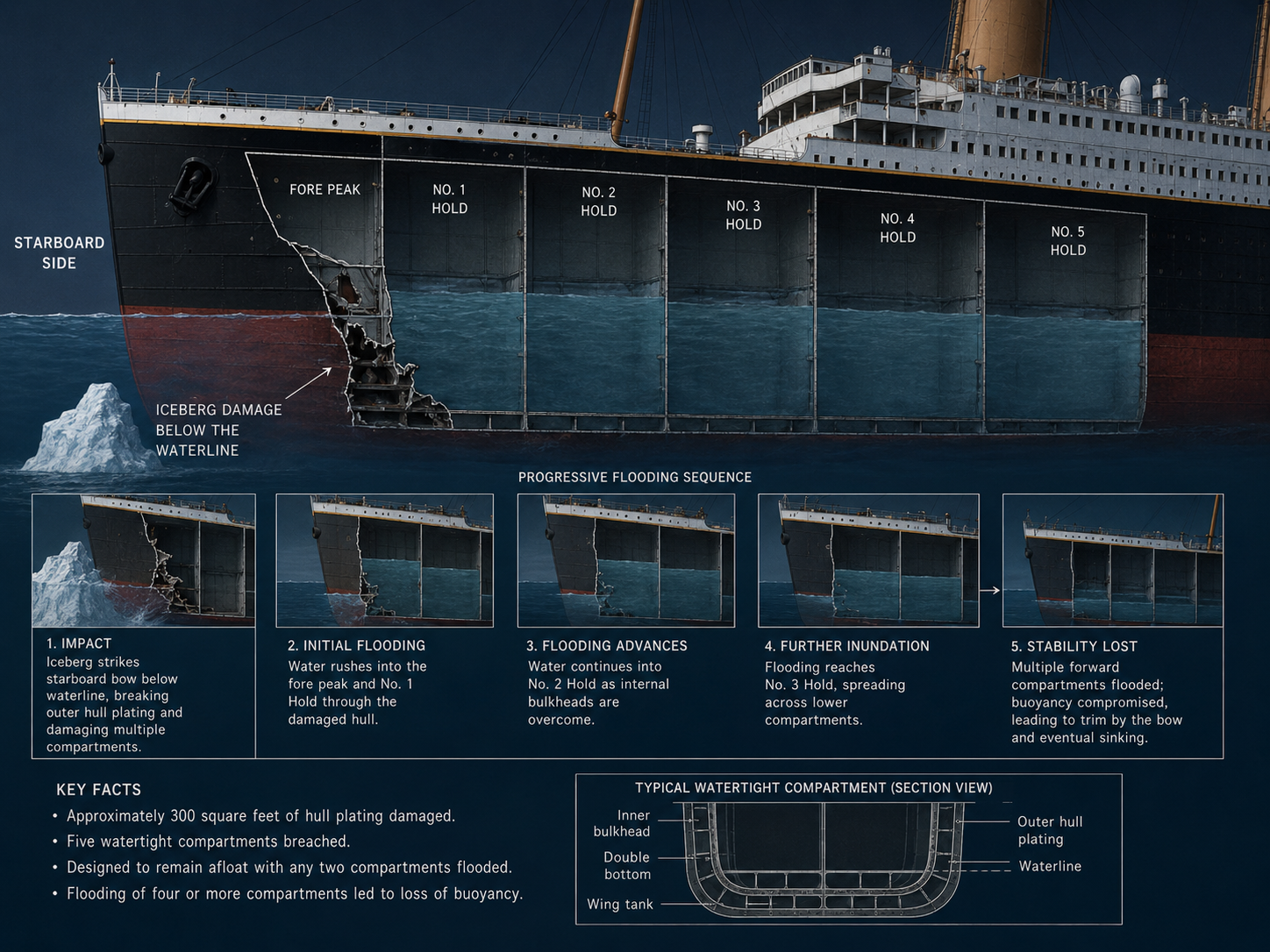
The British inquiry described the iceberg as penetrating the starboard side in several places below the waterline, extending from the forepeak toward No. 4 boiler room. The damage allowed seawater to enter multiple forward compartments.
The crucial problem was not simply that the hull had been damaged.
It was the number and position of the compartments affected.
The ship's watertight system could protect her from limited flooding. But the damage extended across enough forward compartments that the ship's design could no longer contain the water effectively.
Water entered.
The bow began to settle.
At first, many people aboard did not understand what had happened.
There had been no enormous explosion. The collision itself had been much less dramatic from many parts of the ship than later stories suggested.
But below the waterline, the consequences were already irreversible.
As water flooded the forward compartments, the bow sank lower. The changing angle of the ship allowed water to reach higher points and eventually spill over bulkheads into spaces that had initially remained dry.
The very safety system designed to keep flooding contained could no longer contain it.
The British inquiry concluded that the ship's loss resulted from collision with an iceberg and criticized the speed at which she had been navigated under the circumstances.
The important thing about the collision is how ordinary the initial moment was.
A lookout saw something.
An alarm was given.
The bridge reacted.
The ship turned.
And yet the physics of what had already happened beneath the surface could not be reversed.
Why Titanic Could Not Stay Afloat
Chapter 5 — The Hours That Followed
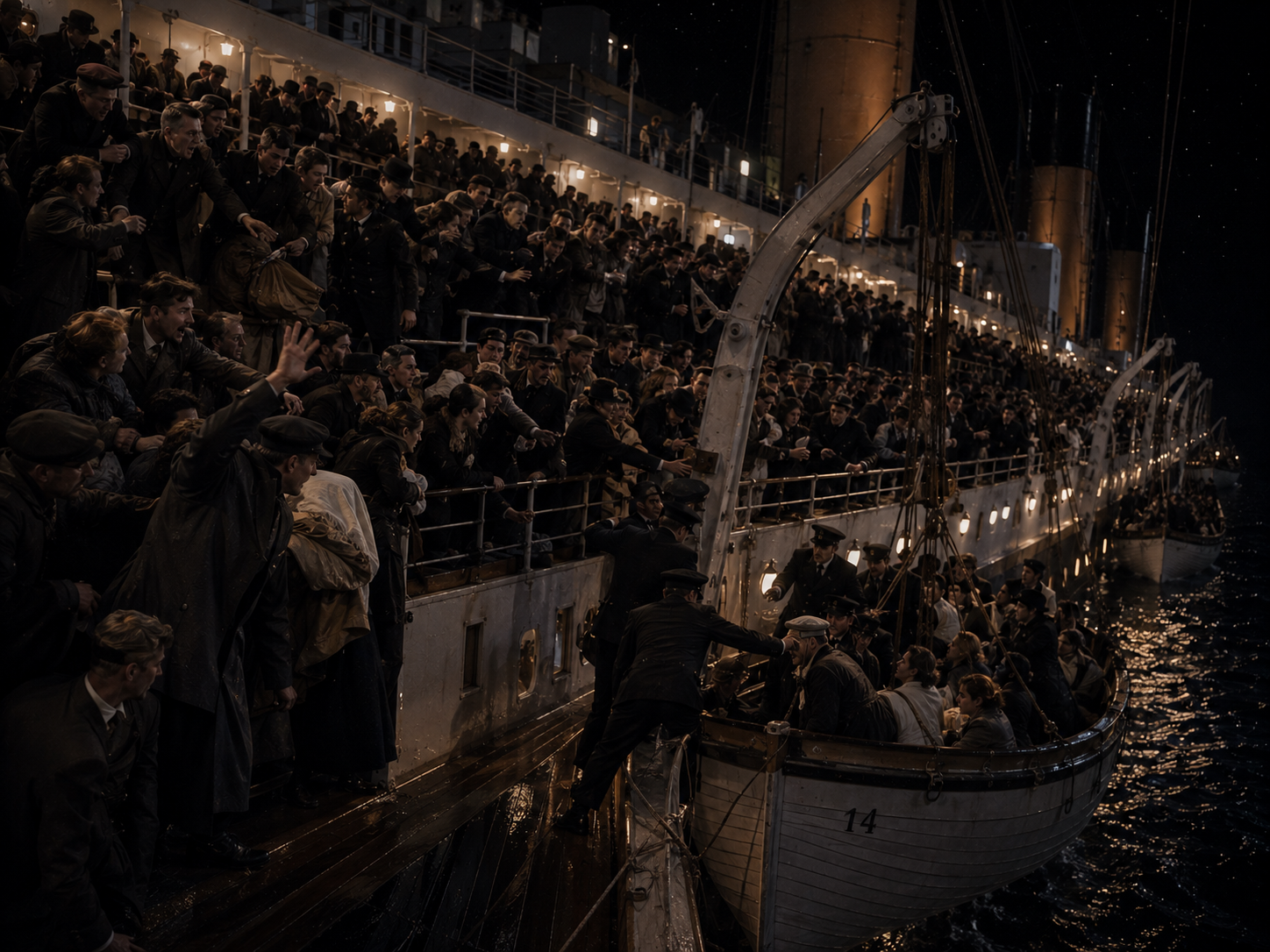
The Titanic had entered an emergency for which the ship had not been equipped to evacuate everyone at once.
She carried 20 boats with a total nominal capacity of 1,178 people. More than twice that many people were aboard.
The reason was not that White Star Line had simply forgotten lifeboats.
The number of boats complied with the regulations then in force, which were based on ship tonnage rather than the total number of people aboard. A ship could therefore legally carry lifeboats for far fewer people than its full complement.
The problem became obvious only when the lifeboats were actually needed.
As the boats were lowered, many left without being filled to their designed capacity.
The first lifeboat, for example, carried far fewer people than it could theoretically hold.
Several factors contributed: uncertainty about the ship's condition, confusion during the evacuation, the unfamiliarity of the situation, and the understandable reluctance of some passengers and crew to leave a ship that still looked relatively stable.
The resulting pattern of survival was stark.
The British inquiry's statistics show major differences between groups. First-class passengers had a much higher survival rate than third-class passengers. Women and children generally survived at substantially higher rates than men, while survival among crew members was also comparatively low.
But it would be too simple to describe the disaster as a single deliberate decision to save rich people and abandon everyone else.
Access mattered.
Information mattered.
Physical location mattered.
The ship was large, vertically divided and unfamiliar to many passengers. Third-class accommodation was farther from the boat deck, and language differences existed among passengers. The evacuation also unfolded over several separate areas rather than as one orderly movement toward a single assembly point.
There were also individual acts of courage and confusion.
Crew members worked to uncover and lower boats.
Musicians continued playing during part of the evacuation, according to survivor testimony.
Radio operators Jack Phillips and Harold Bride continued transmitting distress messages while the situation deteriorated.
Captain Smith remained involved in the evacuation and distress operations until the final stage, although the precise details of his last moments remain uncertain.
And everywhere, people were making decisions with incomplete information.
Was the ship really going to sink?
Was it safer to remain aboard?
Was there enough time?
For some passengers, the lifeboat was terrifying because it meant leaving a huge, well-lit ship for a small wooden boat on a dark ocean.
For others, the choice was clearer.
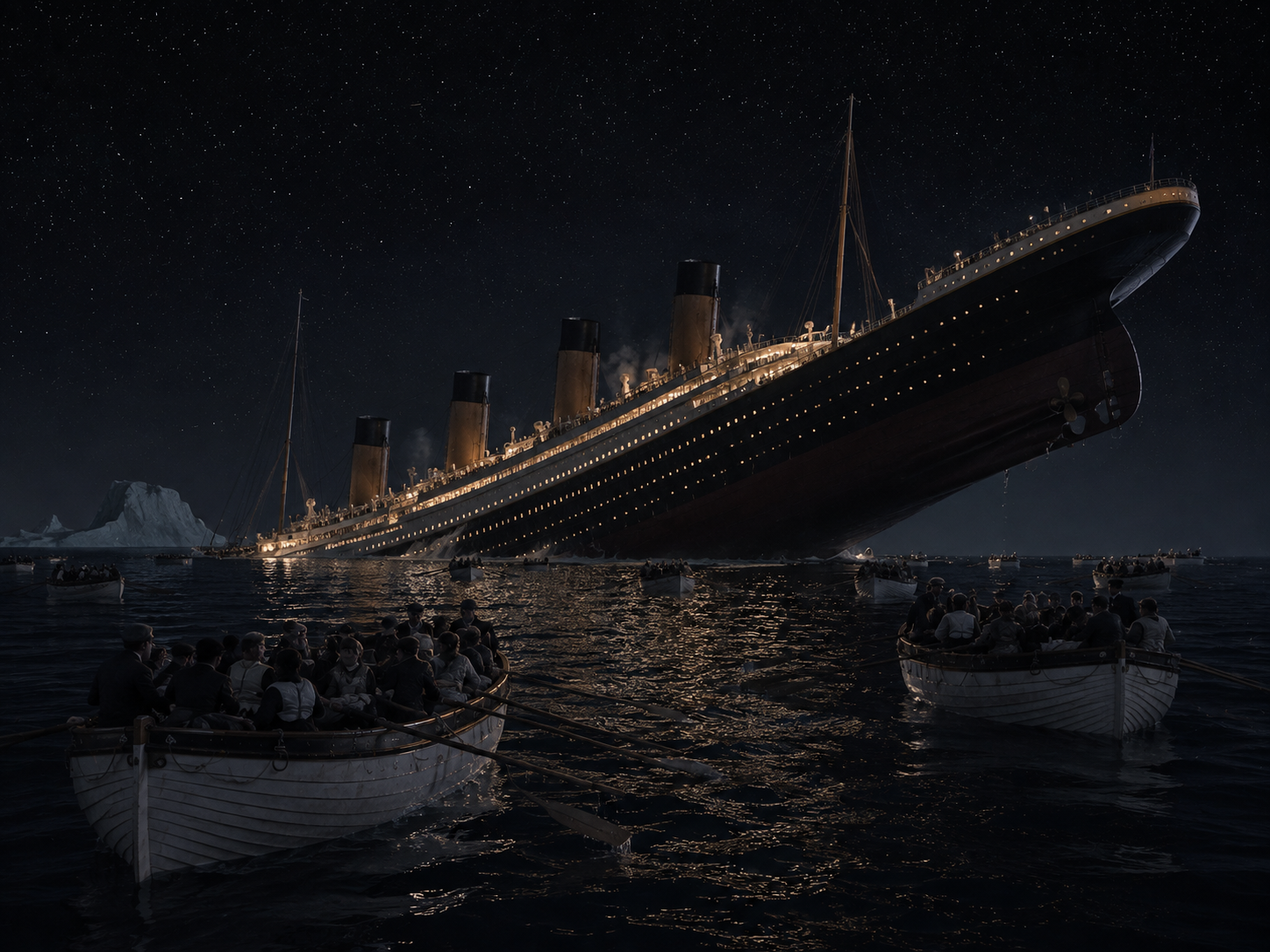
The ship's bow continued to sink.
The stern rose.
The lights remained on for a while longer.
Then the electrical system failed.
In the early hours of April 15, Titanic disappeared beneath the North Atlantic.
The exact moment of final breakup and sinking has been debated in detail, but the broad sequence is well established: the bow went under, the ship's structure failed, the vessel broke apart, and the two major sections descended separately to the seafloor.
The sea then became quiet again.
Hundreds of people remained in lifeboats.
Many others were in the freezing water.
The tragedy had become a survival problem measured in minutes.
Survival and Loss
Chapter 6 — After
The Titanic did not vanish into silence.
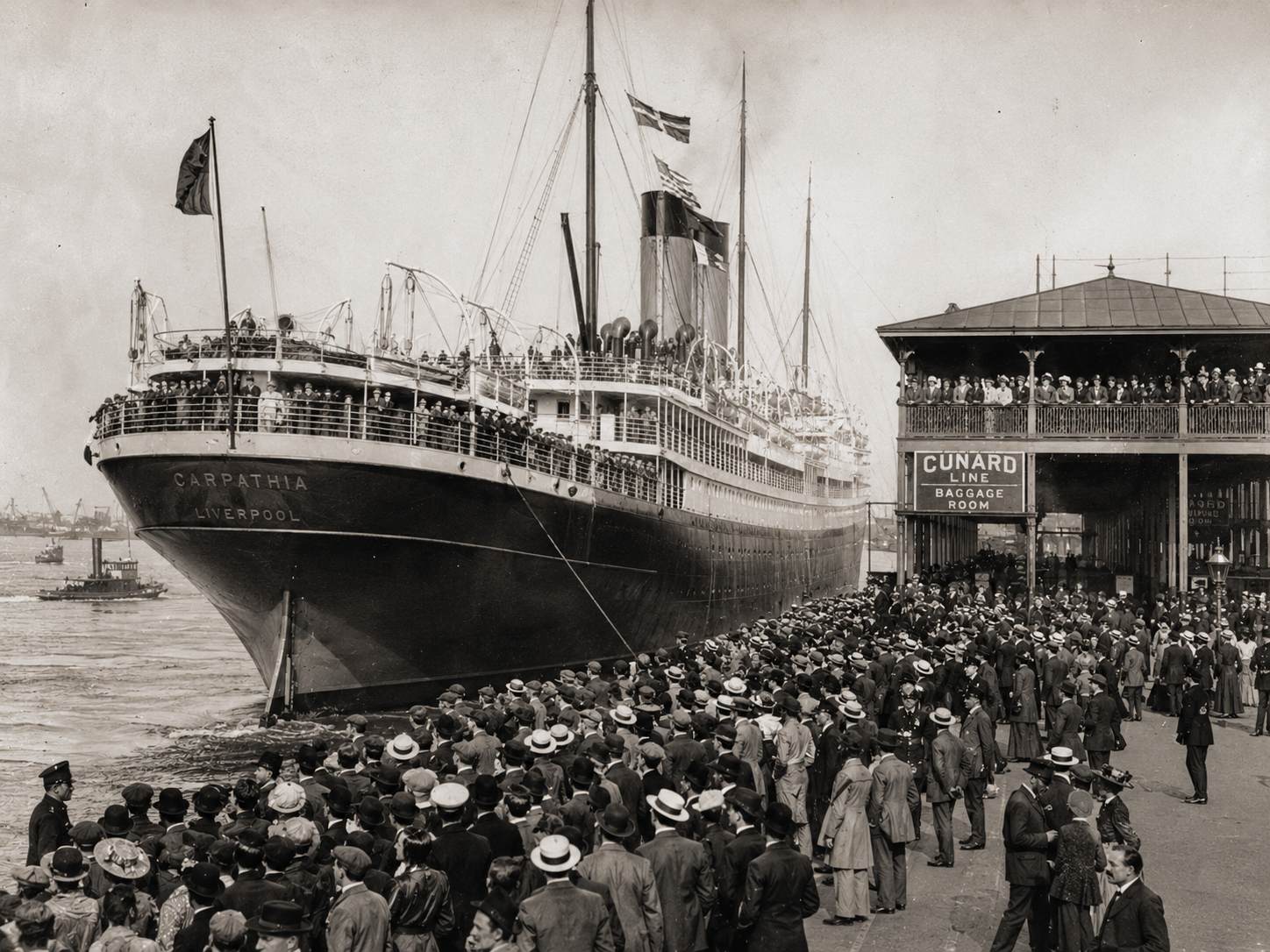
The Cunard liner Carpathia responded to the distress signals and turned toward the sinking ship. Captain Arthur Rostron ordered the vessel to make maximum speed toward the reported position while navigating through an area where ice was present.
The Carpathia reached the lifeboats after the Titanic had disappeared.
Contemporary records contain discrepancies over the exact number rescued, but roughly 700 survivors were brought aboard and later taken to New York.
For those waiting in New York, the early news was confused.
Initial reports were incomplete and sometimes wrong. Families gathered at White Star offices and newspaper buildings, waiting for passenger names to appear.
The disaster quickly became an international story.
Then came the investigations.
The American Senate inquiry began within days. The British Wreck Commissioner's Inquiry followed and held 37 public sittings, hearing from 97 witnesses and examining the ship's construction, navigation, wireless communications, lifeboats and evacuation.
The inquiries were important because they moved the discussion away from the idea of a freak accident.
They examined systems.
Why had the ship been traveling so quickly in an area where ice had been reported?
Why were there so few lifeboats for everyone aboard?
How were distress signals handled?
Why was there no internationally coordinated system for tracking dangerous ice?
The answers contributed to major changes in maritime safety.
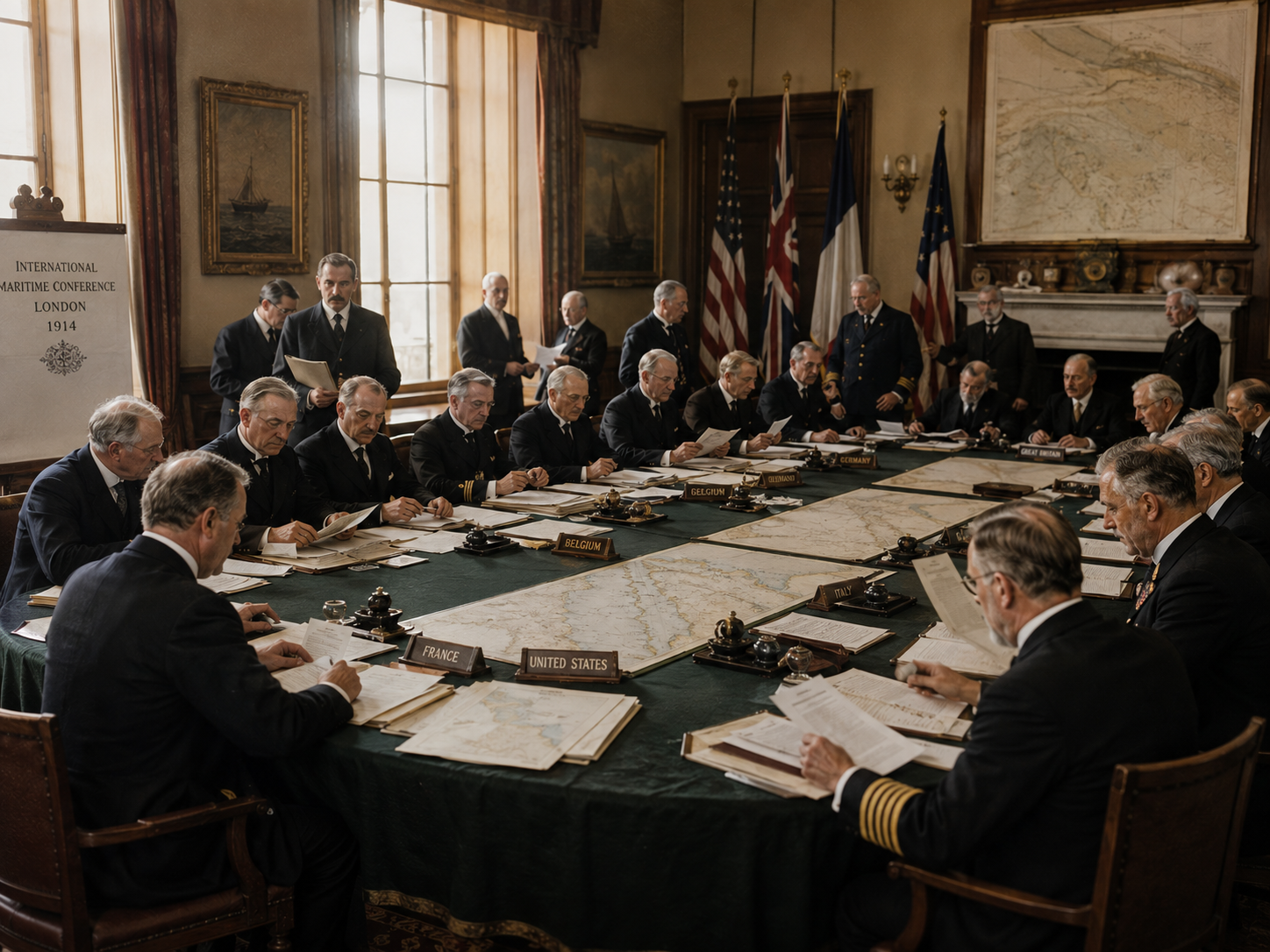
The 1914 International Convention for the Safety of Life at Sea, or SOLAS, included requirements concerning watertight subdivision, lifesaving appliances and continuous radio watch. It also provided for the establishment of the North Atlantic ice patrol.
The ice patrol became particularly important.
The United States began patrol operations after the disaster, and the International Ice Patrol was formally established under the 1914 SOLAS framework. It continues to monitor iceberg danger in the North Atlantic.
This is one of the least visible legacies of Titanic.
The ship became a symbol of disaster.
But the response to the disaster helped create systems designed to prevent another one.
Safety at sea is often built this way.
Not from confidence alone, but from the memory of what confidence failed to anticipate.
How Titanic Changed Maritime Safety
Chapter 7 — What Remains
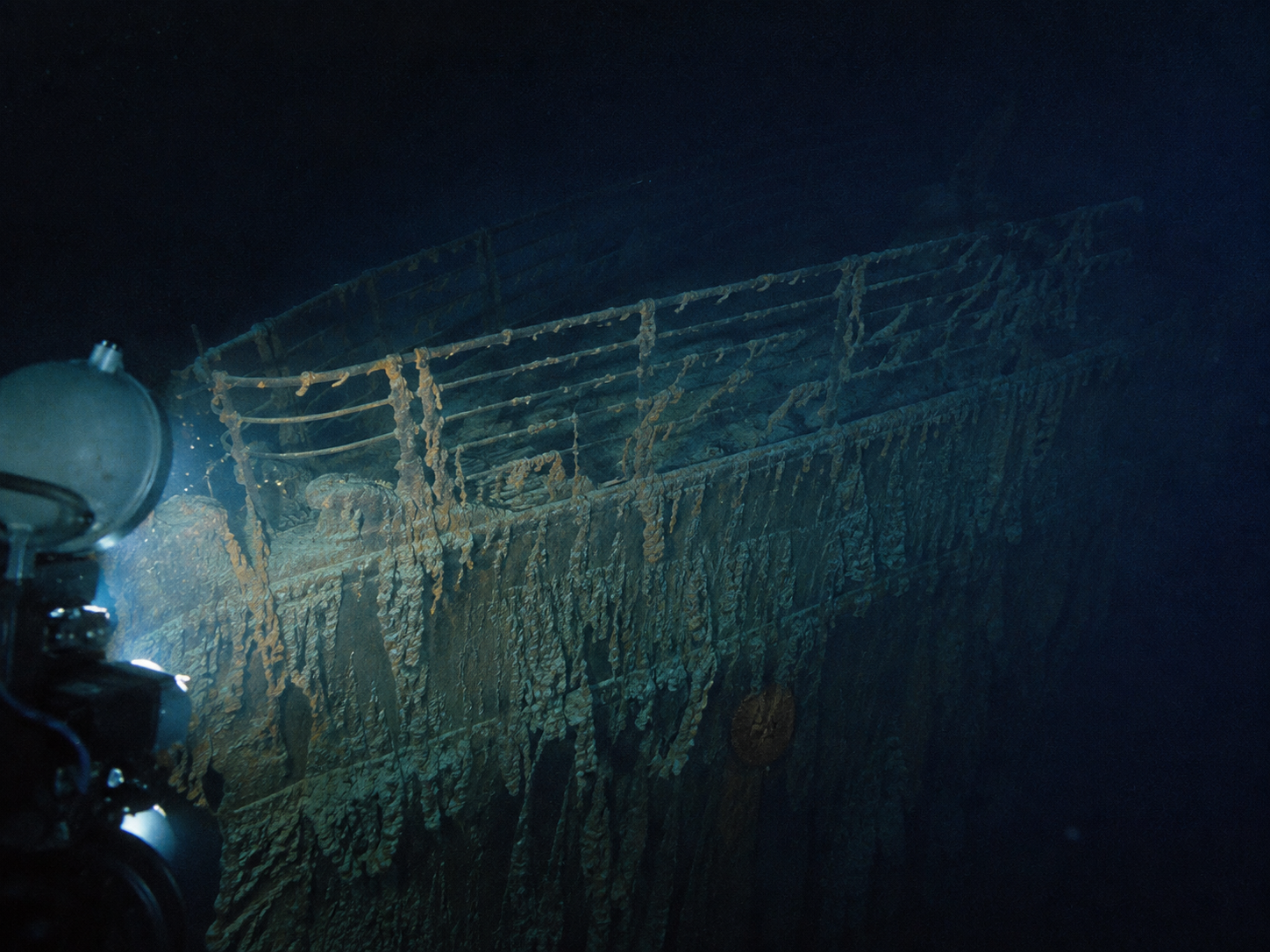
For more than seven decades, the Titanic existed mainly through photographs, documents and memory.
The ship itself was somewhere in the North Atlantic, beyond the reach of ordinary divers.
Finding her required technology that did not exist in 1912.
In 1985, a joint American-French expedition led by Robert Ballard of Woods Hole Oceanographic Institution and Jean-Louis Michel of IFREMER searched a huge area of the seafloor.
Rather than looking only for the enormous hull, the team also searched for the debris scattered around the wreck.
That approach proved decisive.
Just after 1 a.m. on September 1, 1985, a remotely towed camera detected an object made by humans: a boiler. The wreck had been found at a depth of roughly 3,800 meters.
The discovery changed the story.
Researchers could finally see what remained.
The bow was recognizable.
The stern had suffered far greater structural destruction.
A vast debris field surrounded the wreck, containing objects released as the ship broke apart and descended.
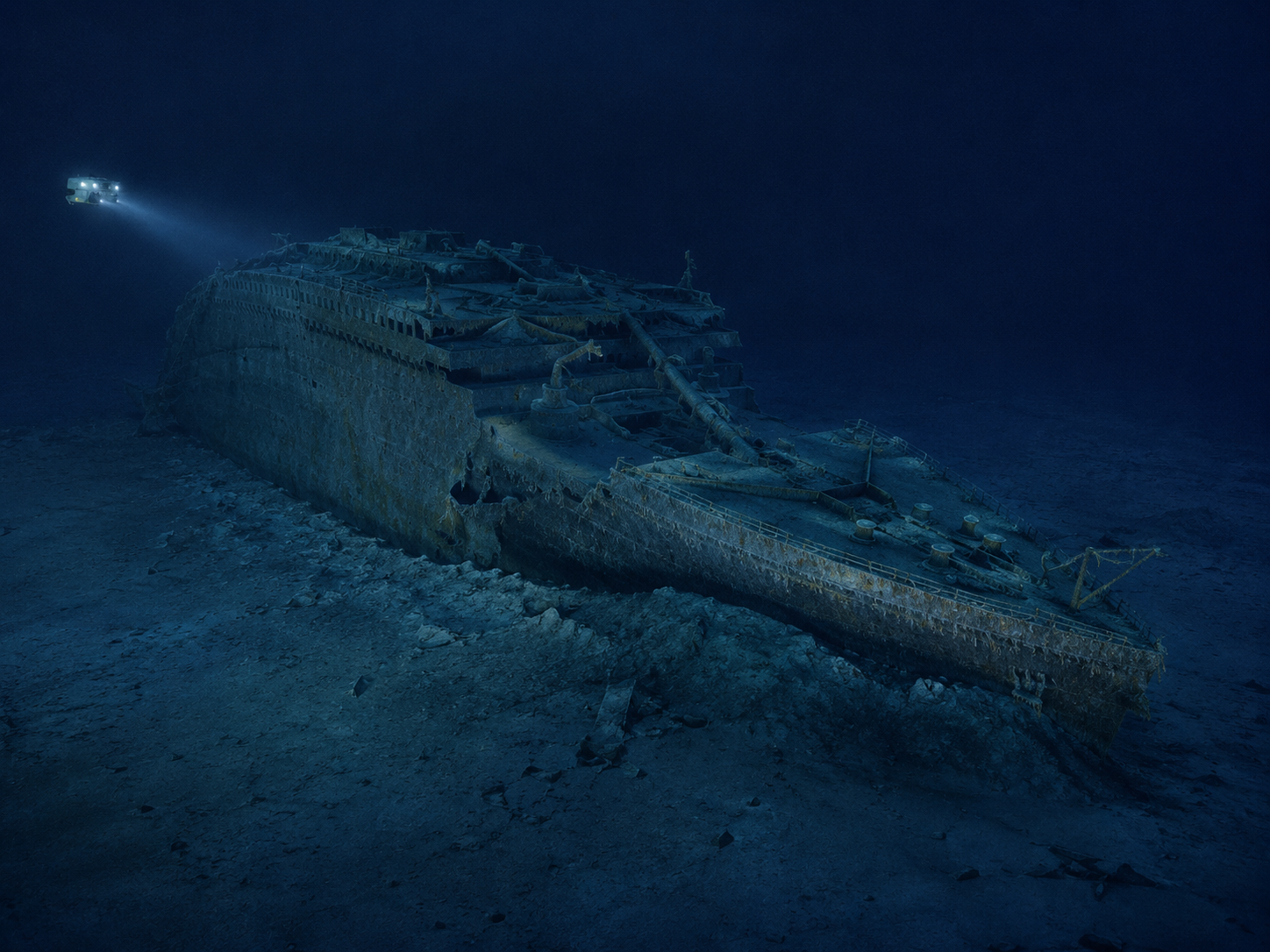
In 1986, further exploration brought the first detailed visual examination of the wreck using deep-sea vehicles, including the remotely operated vehicle Jason Jr.
The wreck did more than satisfy curiosity.
It allowed researchers to compare physical evidence with testimony from 1912.
It gave archaeologists and engineers a way to study the ship's construction, deterioration and breakup.
It also changed the public imagination.
The Titanic was no longer only the beautiful liner in sepia photographs.
She was a physical place on the ocean floor.
A bow covered in rust.
A broken stern.
Scattered objects.
A ship slowly being altered by the deep sea.
And there is something important in that change.
The Titanic began as a monument to confidence in modern engineering.
Her wreck became a reminder that engineering has never been about eliminating uncertainty altogether.
It is about understanding risk, preparing for failure and recognizing the limits of what we know.
More than a century after the sinking, the fascination remains.
Perhaps that is because the story contains something larger than the ship.
It contains an entire world in transition: wealthy passengers and migrants, steam power and wireless communication, industrial ambition and old social divisions, confidence in technology and the discovery of its limits.
On April 10, 1912, the Titanic left Southampton heading west.
People stood along the docks and watched her go.
She looked like the future.
Today, we know where that voyage ended.
But perhaps that is why the image of her departure still matters.
For the people watching from shore, the future had not yet happened.
It was simply a ship moving out toward the open sea.
FAQ
1.Was Titanic really called “unsinkable”?
Not in the absolute sense implied by the popular phrase. A contemporary description of the Olympic-class design called it “practically unsinkable,” reflecting confidence in its watertight subdivision and safety features. Newspapers later popularized the simpler “unsinkable” label.
2.Why were there not enough lifeboats?
The Titanic carried 20 boats with nominal capacity for 1,178 people, even though more than 2,200 people were aboard according to contemporary records. The regulations of the period based lifeboat requirements primarily on ship tonnage rather than simply providing space for everyone aboard.
3.How many people survived Titanic?
Exact totals vary among contemporary records because passenger and crew lists contained discrepancies. A safe historical summary is that about 700 people survived and roughly 1,500 died. The British and American inquiries produced slightly different totals.
4.Could the Titanic disaster have been prevented?
Probably, although no single counterfactual can be proven with certainty. The British inquiry concluded that the ship was traveling at excessive speed under the circumstances and stated that greater precautions against ice should have been taken. Better evacuation capacity would also have reduced the loss of life.
5.Did Titanic receive iceberg warnings?
Yes. Multiple ice warnings were received during the voyage, including messages that reached the bridge on April 14. The important historical question is not whether ice was known to exist, but how those warnings were interpreted and what action was taken in response.
6.Why did Titanic sink after having watertight compartments?
The collision damaged enough forward compartments to exceed the survivable flooding assumed by the design. Once the bow settled, seawater could pass over the tops of some bulkheads into additional compartments, allowing progressive flooding.
7.Where is the Titanic wreck today?
The wreck lies in the North Atlantic at approximately 3,800 meters (12,500 feet) below the surface, roughly 350 nautical miles off Newfoundland. It was discovered on September 1, 1985, by a joint American-French expedition led by Robert Ballard and Jean-Louis Michel.
8.What changed after Titanic?
The disaster accelerated international maritime-safety reforms. The 1914 SOLAS framework included stronger provisions concerning lifesaving appliances, watertight subdivision and continuous radio watch, and established the basis for the North Atlantic ice patrol.
9.What happened to the Titanic’s radio operators?
Jack Phillips and Harold Bride were responsible for operating Titanic’s Marconi wireless station. They transmitted distress messages after the collision and continued working while the evacuation was underway. Phillips died in the disaster; Bride survived and later gave evidence to the British inquiry.
10.How cold was the water when Titanic sank?
The sea temperature in the Titanic's location was around 28°F (-2°C). Because seawater can remain liquid below 0°C, the extreme cold posed a severe danger to people in the water. Exposure and hypothermia contributed significantly to the loss of life among those who did not reach the lifeboats.