Introduction — A Road Made of Thousands of Roads
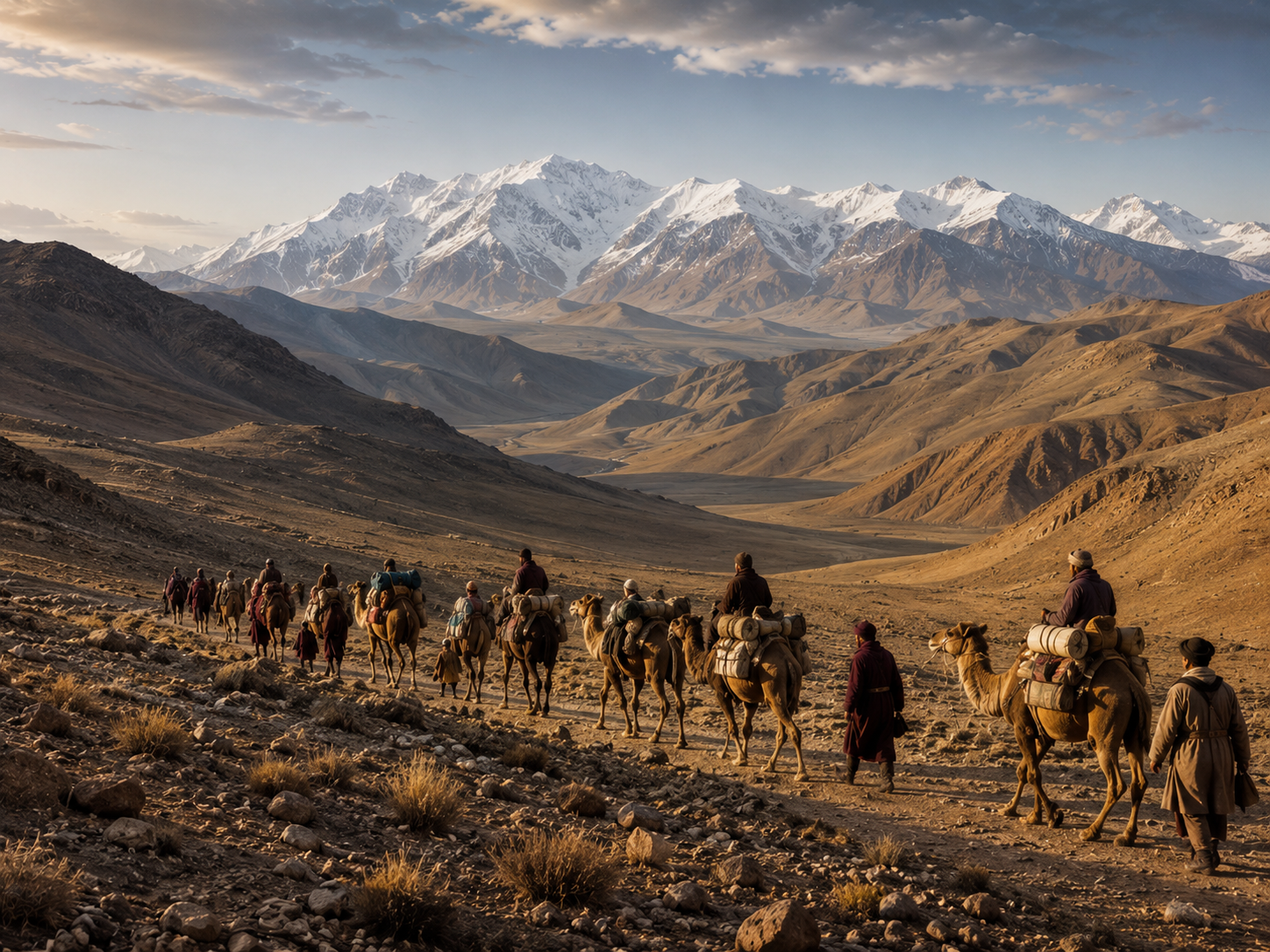
Imagine standing on the edge of the Gobi Desert more than two thousand years ago.
Ahead lies a landscape of rock, sand and distant mountains. Behind you is China. Somewhere far beyond the horizon are Central Asian oases, Iranian cities, Mediterranean ports and societies whose languages you do not know.
There is no highway.
No railway.
No map showing one continuous line across the continent.
Yet people are moving.
Merchants carry silk westward. Horses and precious stones travel east. Monks cross mountains in search of religious texts. Craftsmen teach techniques to people they may never meet again. Languages mingle in market towns. New religions establish communities far from where they began.
This was the world later called the Silk Roads.
The name can be misleading. There was never one road stretching continuously from China to Europe. Instead, there was a constantly changing web of paths, caravan routes, mountain passes, river crossings, oasis towns and maritime connections. Some routes flourished for centuries. Others shifted when political borders, climate, war or commercial interests changed.
At its greatest extent, the network linked societies across a huge portion of Eurasia.
UNESCO describes the Silk Roads as interconnected routes connecting East Asia, the Indian subcontinent, Central Asia, Western Asia and the Near East. Individual corridors could stretch thousands of kilometres, while the overall network extended much farther through its branches.
Silk was one of the most valuable commodities moving along these routes.
But silk was only part of the story.
What travelled with it was more consequential: beliefs, technologies, artistic traditions, languages, agricultural knowledge and scientific ideas.
The Silk Road did not simply connect places.
It connected people who had no reason to know one another—and gave them reasons to meet.
Chapter 1 — Where It Began
The Silk Road did not begin at a single moment.
Long before Chinese silk became a famous luxury in distant lands, communities across Central Asia were already trading with one another. Goods, animals, metals and textiles moved between settled societies and nomadic peoples.
What changed dramatically during the Han dynasty was the scale and reach of China's connections toward Central Asia.
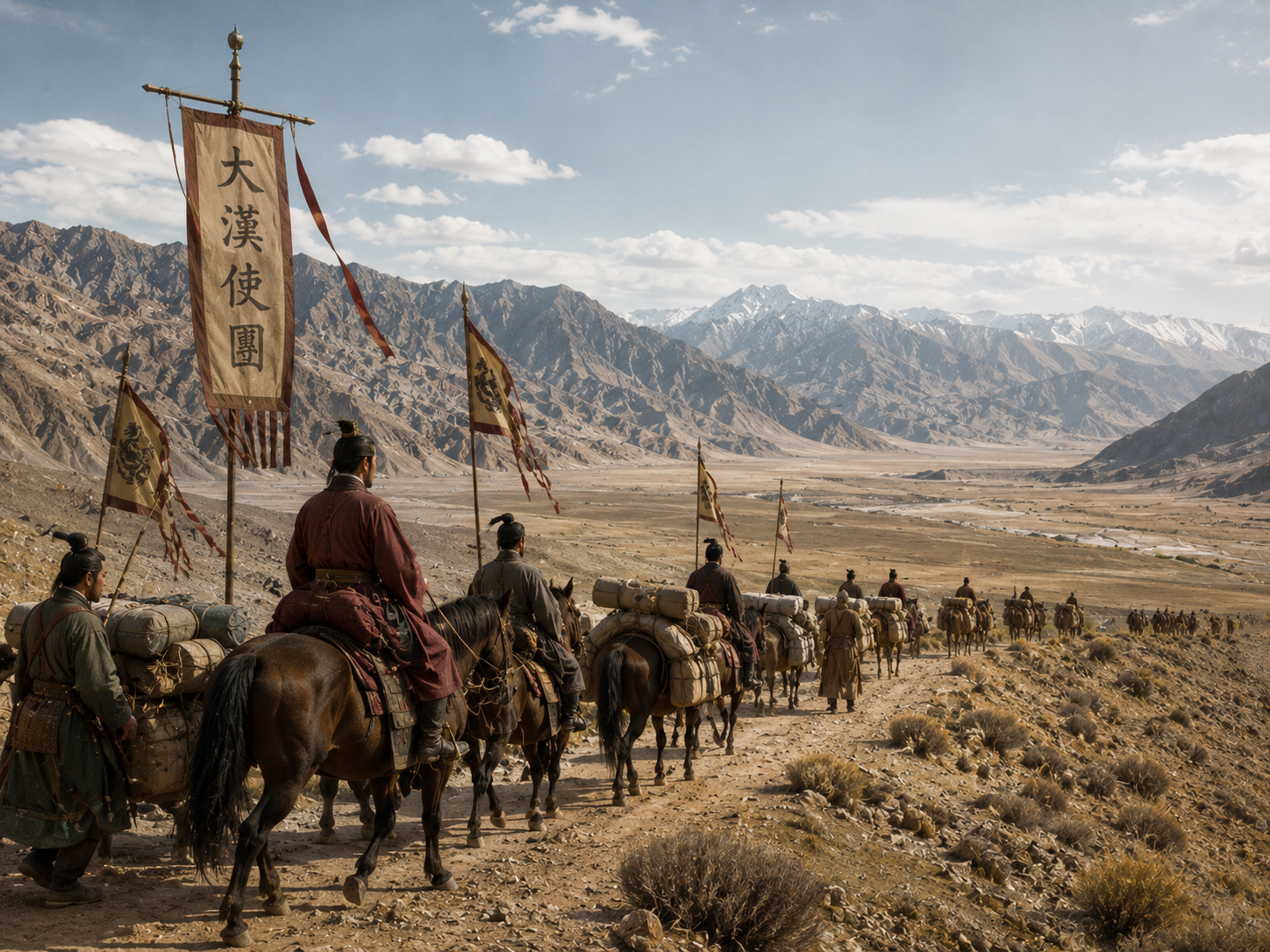
Around 139 BCE, Emperor Wu of Han sent the diplomat Zhang Qian westward. His mission was not originally a trade expedition. The Han court wanted alliances against the Xiongnu, a powerful confederation that controlled large parts of the northern frontier.
Zhang Qian never completed the mission as planned.
He was captured and spent years among the Xiongnu before eventually escaping. When he finally returned to China, he brought information about distant peoples and regions that was valuable to the Han court.
His reports described places far to the west, including the kingdoms of Central Asia.
The emperor sent him on another mission in 119 BCE.
These journeys helped the Han court understand the geography and political landscape beyond its western frontier and contributed to stronger connections between China and Central Asia. UNESCO identifies Zhang Qian's diplomatic mission as an important milestone in the development of these long-distance connections.
But calling Zhang Qian the founder of the Silk Road would be misleading.
He did not create the ancient networks from nothing.
He helped establish stronger and more systematic connections between the Han state and regions farther west, while older trade routes already existed across Central Asia.
Silk soon became one of the commodities associated with these expanding connections.
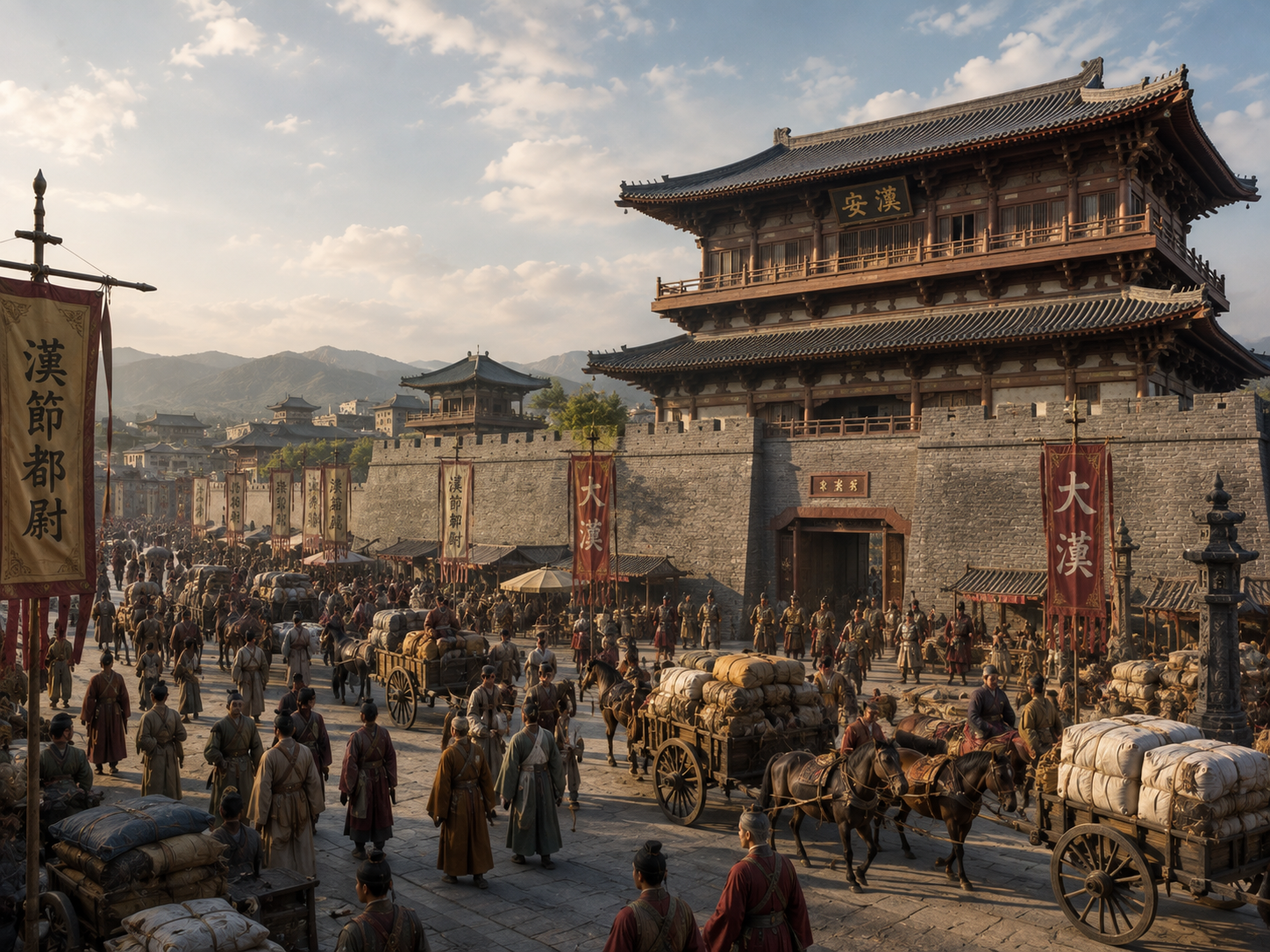
Chinese silk had extraordinary value. It was lightweight, durable, beautiful and difficult to produce. Under the Han dynasty it became an important export, and examples of Chinese silk have been found far beyond China's borders.
But even then, the route was never simply a Chinese road carrying Chinese goods westward.
The exchange moved in multiple directions.
Horses came east.
Jade, metals, textiles, spices and other commodities changed hands.
And the people who carried them were often not Chinese.
Central Asian merchants, particularly Sogdians in later centuries, became important intermediaries in the long-distance trade system.
The Silk Road was therefore less an invention than an expansion of connections that were already forming across Eurasia.
China was one major source.
Central Asia became the bridge.
And beyond it lay another world.
Zhang Qian and the Han Connection
Chapter 2 — The Routes Themselves
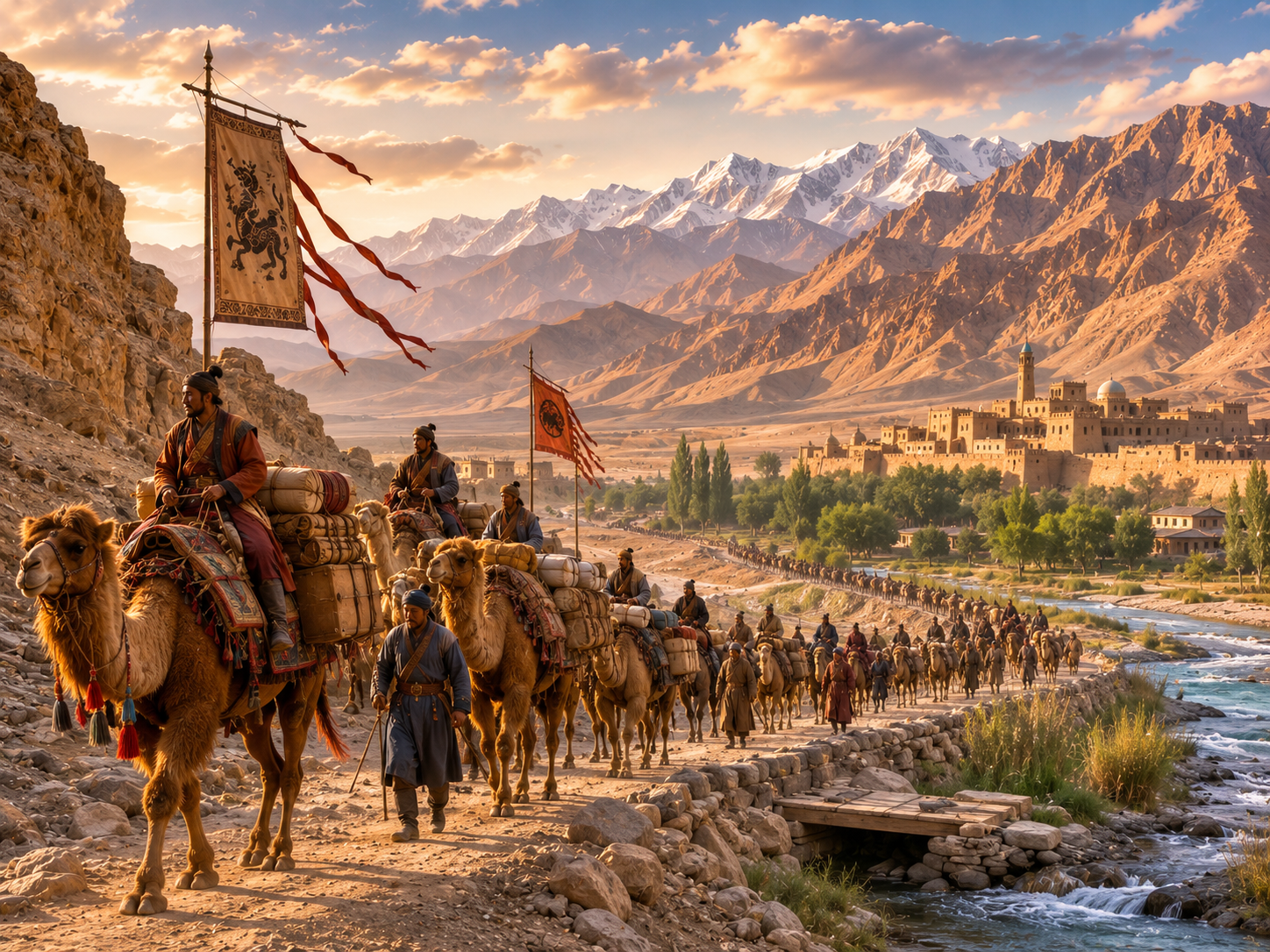
The easiest way to misunderstand the Silk Road is to imagine it as a single line.
It was nothing like that.
A merchant leaving Chang'an did not simply point west and follow the same road all the way to Europe.
Instead, routes divided and rejoined.
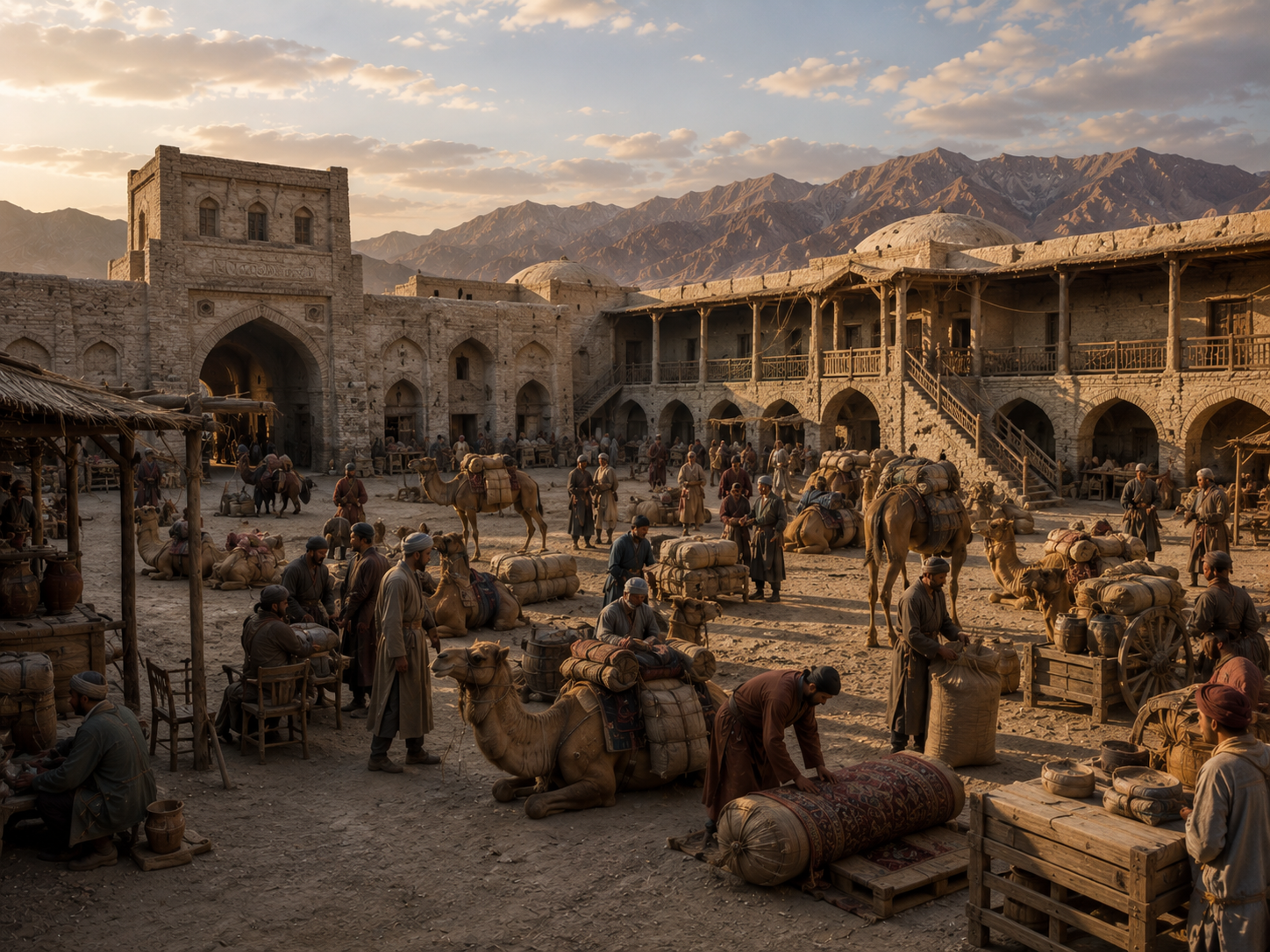
Mountains forced travelers toward particular passes. Deserts made oases essential. Rivers created natural corridors. Political borders determined which roads were safe. Changing rulers could redirect trade toward another city.
The result was a network that changed constantly.
One major eastern corridor ran through the Hexi Corridor, a narrow strip between the Tibetan Plateau and the Gobi Desert. From there, routes reached Dunhuang and then divided around the formidable Taklamakan Desert, eventually converging toward the mountain valleys of Central Asia. UNESCO's Chang'an–Tianshan corridor alone covers approximately 5,000 kilometres and contains a network of routes extending roughly 8,700 kilometres.
The geography was brutal.
The Silk Roads crossed deserts, high mountains, grasslands, river valleys and fertile oases.
Travelers could move through environments ranging from below sea level to elevations approaching 7,400 metres in the broader network documented by UNESCO.
That geography shaped the trade itself.
A caravan could not simply carry unlimited cargo.
Water was a constraint.
Food was a constraint.
Animals could become exhausted or die.
This encouraged merchants to move goods in stages.
A silk shipment might pass through the hands of several different merchants before reaching its final destination. A merchant did not necessarily travel thousands of kilometres personally.
Instead, the network functioned through chains of exchange.
Cities became crucial.
Samarkand, Kashgar, Merv, Bukhara, Dunhuang and numerous smaller settlements acted as meeting points between different regions.
Caravanserais provided shelter, storage and places where travelers could rest and exchange goods. Forts, wells, post stations and irrigation systems helped make movement across difficult landscapes possible.
This is why the Silk Road cannot be separated from geography.
The route existed where the landscape allowed people to survive.
And where people could survive, settlements grew.
Some became wealthy.
Some became powerful.
Some disappeared when water sources changed, political control shifted or trade moved elsewhere.
The road was never fixed.
It followed opportunity.
A Network Across Eurasia
Chapter 3 — More Than Silk
Silk gave the network its modern name.
It did not define everything that moved through it.
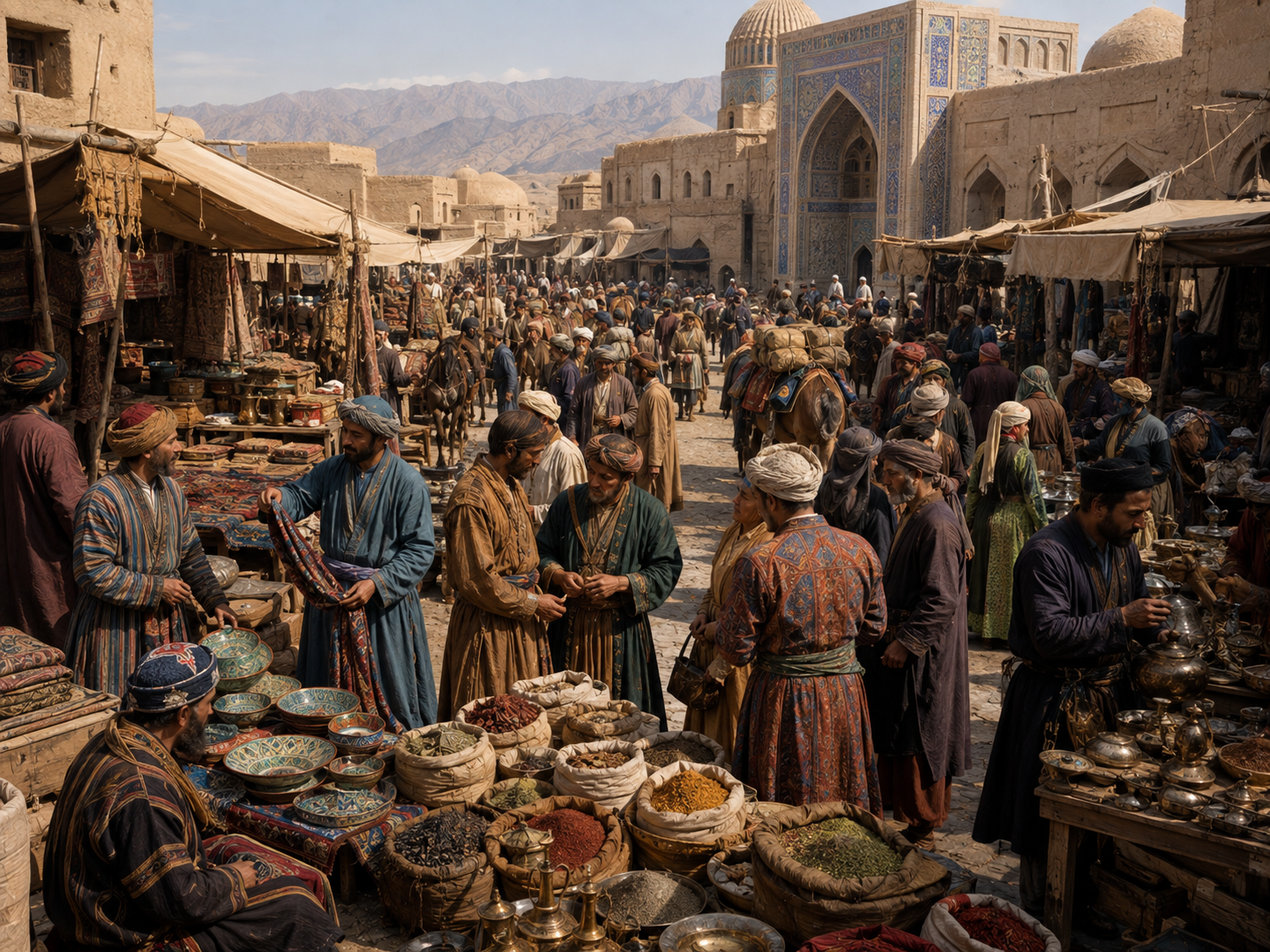
A trading city such as Dunhuang reveals the extraordinary diversity of Silk Road commerce. Historical documents from the region mention silk, cotton, wool, fur, tea, ceramics, medicines, fragrances, jade, camels, sheep, dyes, dried fruits and tools.
Other routes carried glassware from the Mediterranean world, precious stones from Central Asia, horses from the steppe and spices from southern regions.
But material goods were only the beginning.
Ideas traveled too.
One of the clearest examples is Buddhism.
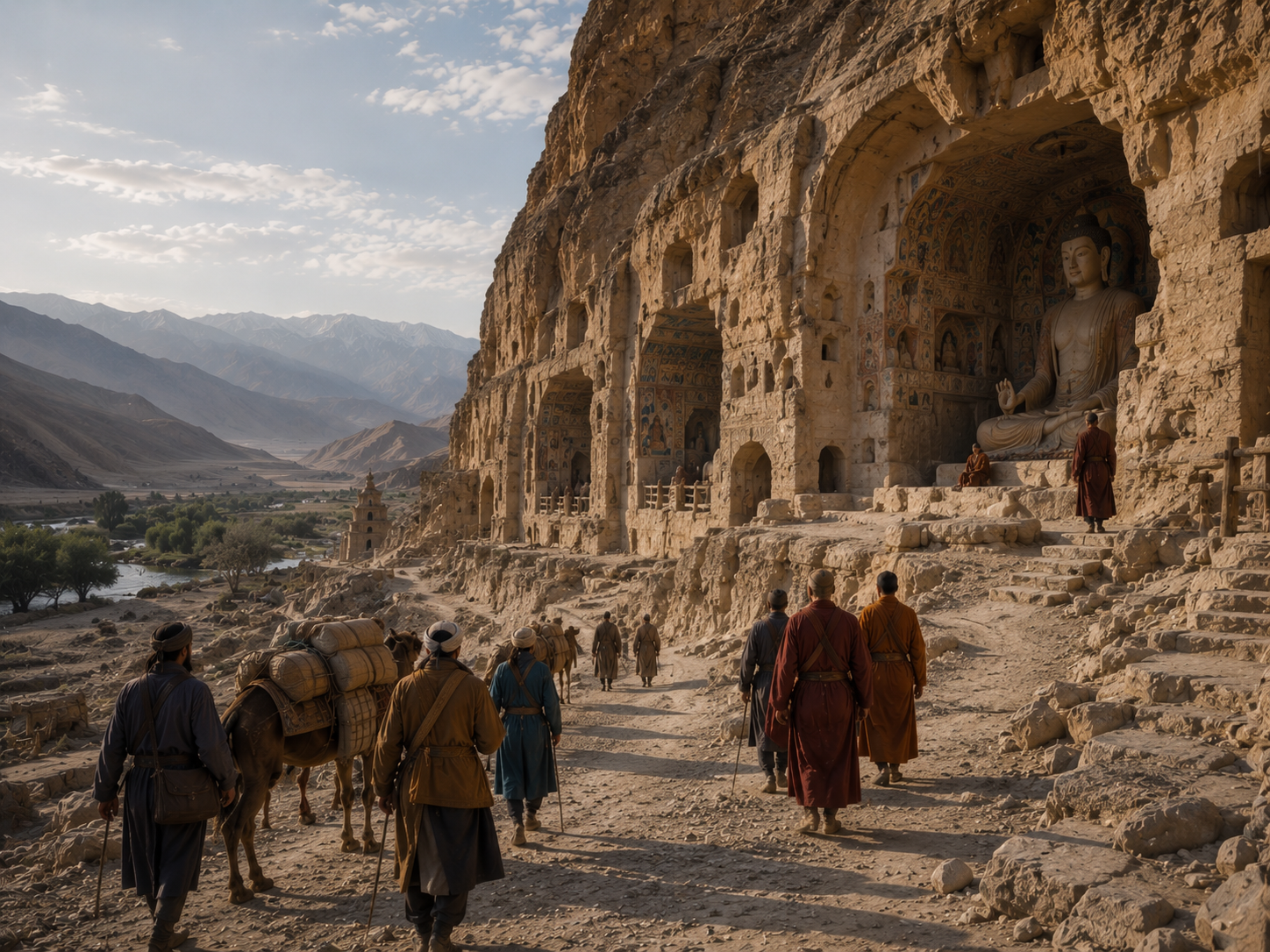
Buddhist traditions moved from the Indian subcontinent through Central Asia and into China and other parts of East Asia. Buddhist monasteries, sculptures and cave temples appeared along important routes, providing both religious centers and evidence of cultural exchange.
Other religions traveled as well.
Zoroastrianism, Christianity, Manichaeism and Islam all established communities across parts of the Silk Road world.
These movements were rarely the result of one traveler carrying an entire religion from one civilization to another.
Religious transmission was gradual.
Merchants settled in foreign cities.
Missionaries traveled with caravans.
Local rulers adopted new beliefs.
Communities translated texts.
Art changed as different traditions encountered one another.
A Buddhist image created in Central Asia might look different from one produced in India because local artists had absorbed different visual traditions.
The same process happened with architecture, languages and technology.
Paper is a famous example.
What Traveled Along the Silk Roads?
Chapter 4 — The People Who Made It Work
The Silk Road was not built by roads alone.
It was built by people who knew how to cross them.
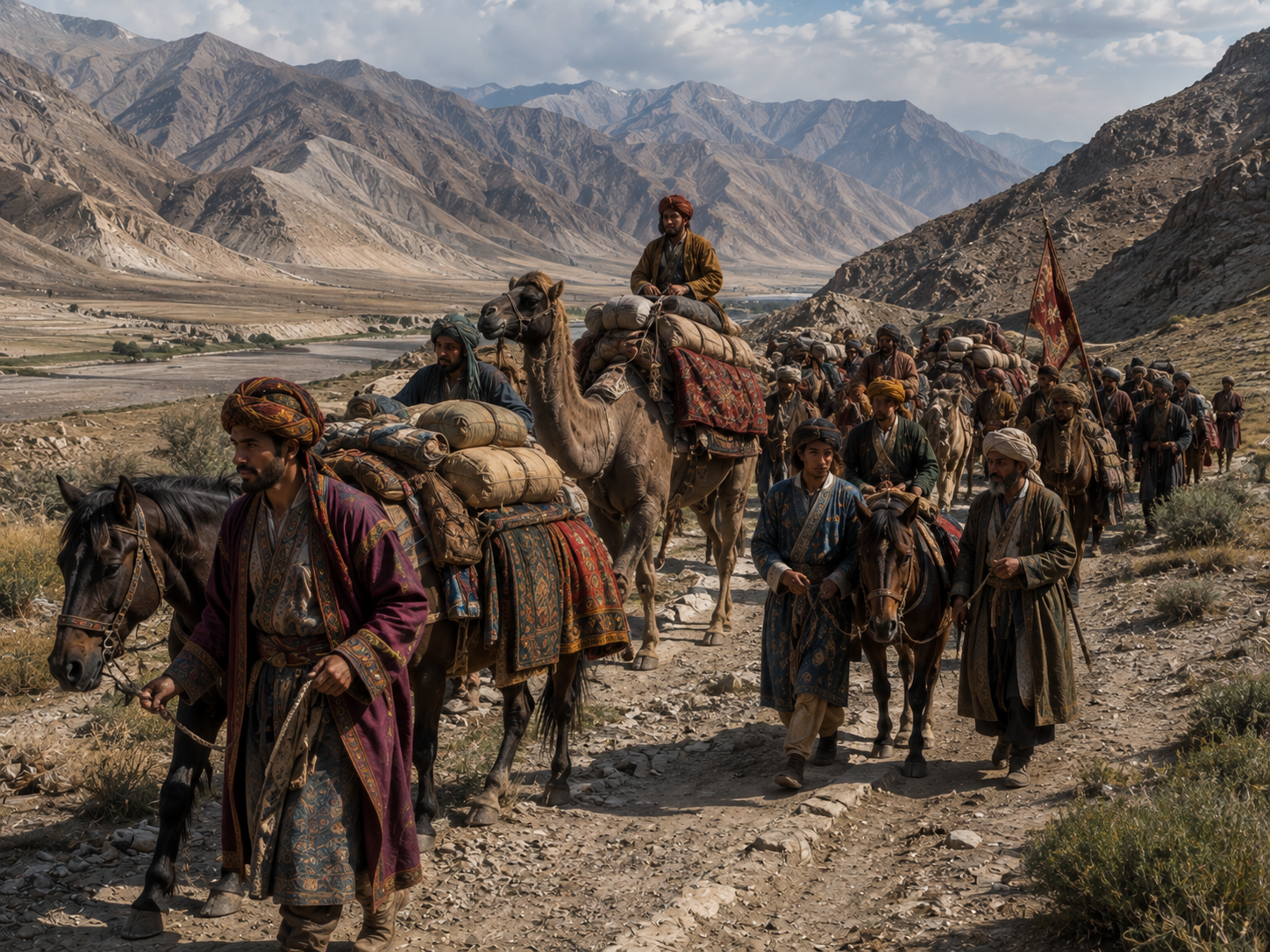
A caravan might contain merchants, guides, translators, animal handlers and guards.
No single traveler needed to understand the entire continent.
A merchant needed to understand his next market.
A guide needed to know the landscape ahead.
A translator needed to bridge languages.
A local ruler needed to keep trade routes sufficiently secure to benefit from the wealth passing through his territory.
And an innkeeper at a caravanserai needed to provide food, water and shelter.
This created a remarkable human network.
Central Asian merchants became especially important intermediaries. The Sogdians, whose communities were concentrated around parts of Central Asia, were among the most significant commercial groups connecting distant regions during the early medieval period.
They were not alone.
Persian, Arab, Indian, Chinese, Turkic and many other merchants participated in different periods and regions of the trade.
The people moving through these routes were therefore rarely representatives of a single civilization.
They were individuals pursuing different goals.
Profit.
Pilgrimage.
Diplomacy.
Adventure.
Knowledge.
Sometimes necessity.
One of the most famous travelers was Marco Polo.
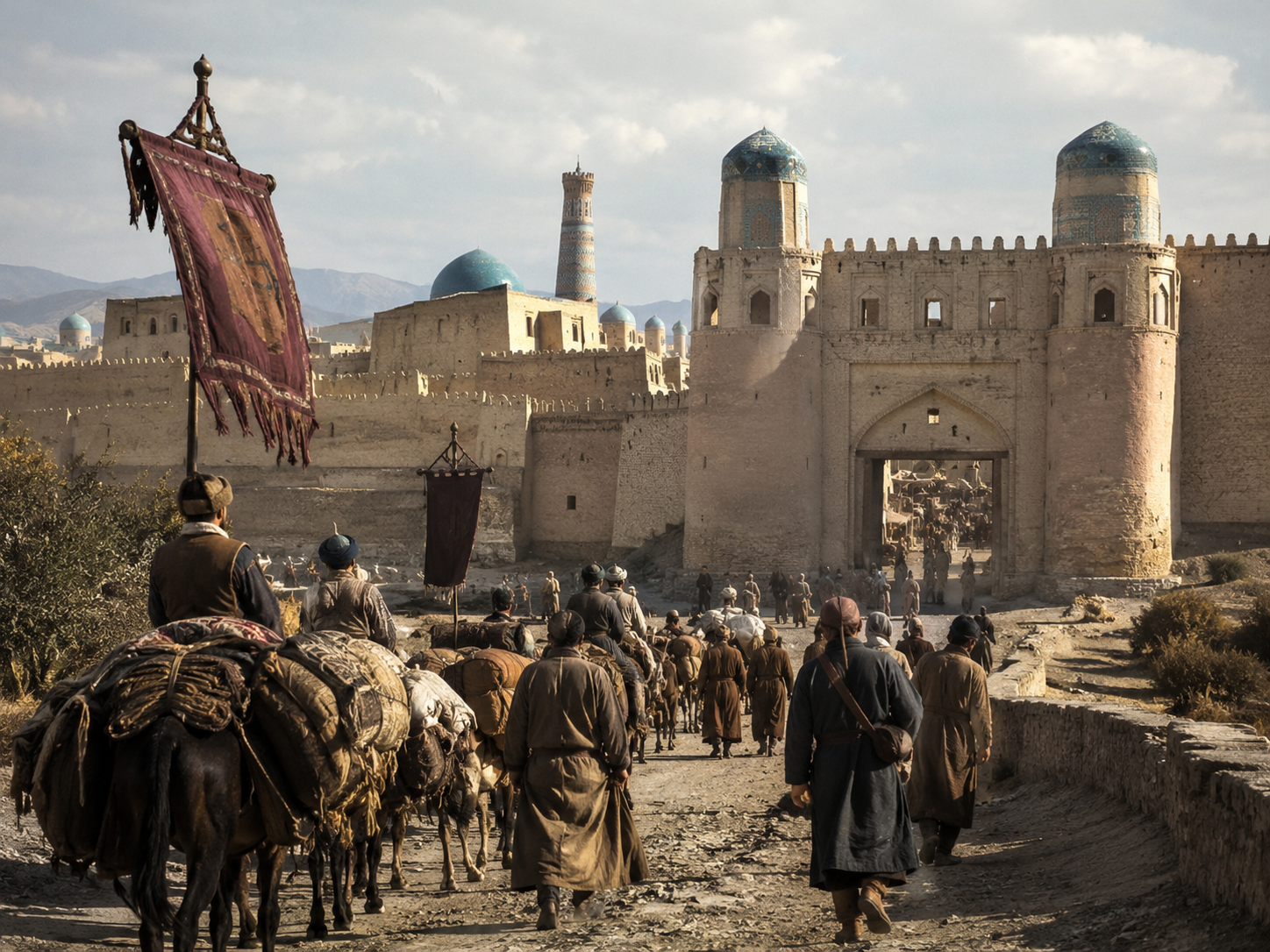
According to his account, he traveled from Europe to Asia with his father and uncle and spent years in the Mongol Empire. His experiences were eventually recorded in a book that became enormously influential in medieval Europe. UNESCO dates his travels broadly to 1271–1292.
But Marco Polo's story requires caution.
His account is valuable evidence for medieval perceptions of Asia, but some details have been debated by historians. Questions have been raised about certain omissions and claims, and not every story attributed to Polo can be independently confirmed.
That does not make the entire account false.
Nor does it mean every detail should be accepted without criticism.
The better approach is to treat The Travels of Marco Polo as an important historical source that requires comparison with other evidence.
And Marco Polo was only one traveler among thousands whose names were never recorded.
For every famous explorer, there were countless people whose movements left only fragments in archaeological evidence, inscriptions, documents or abandoned settlements.
Their lives are easier to miss.
But without them, there would have been no Silk Road.
The People Behind the Network
Chapter 5 — The Silk Road's Dark Passenger
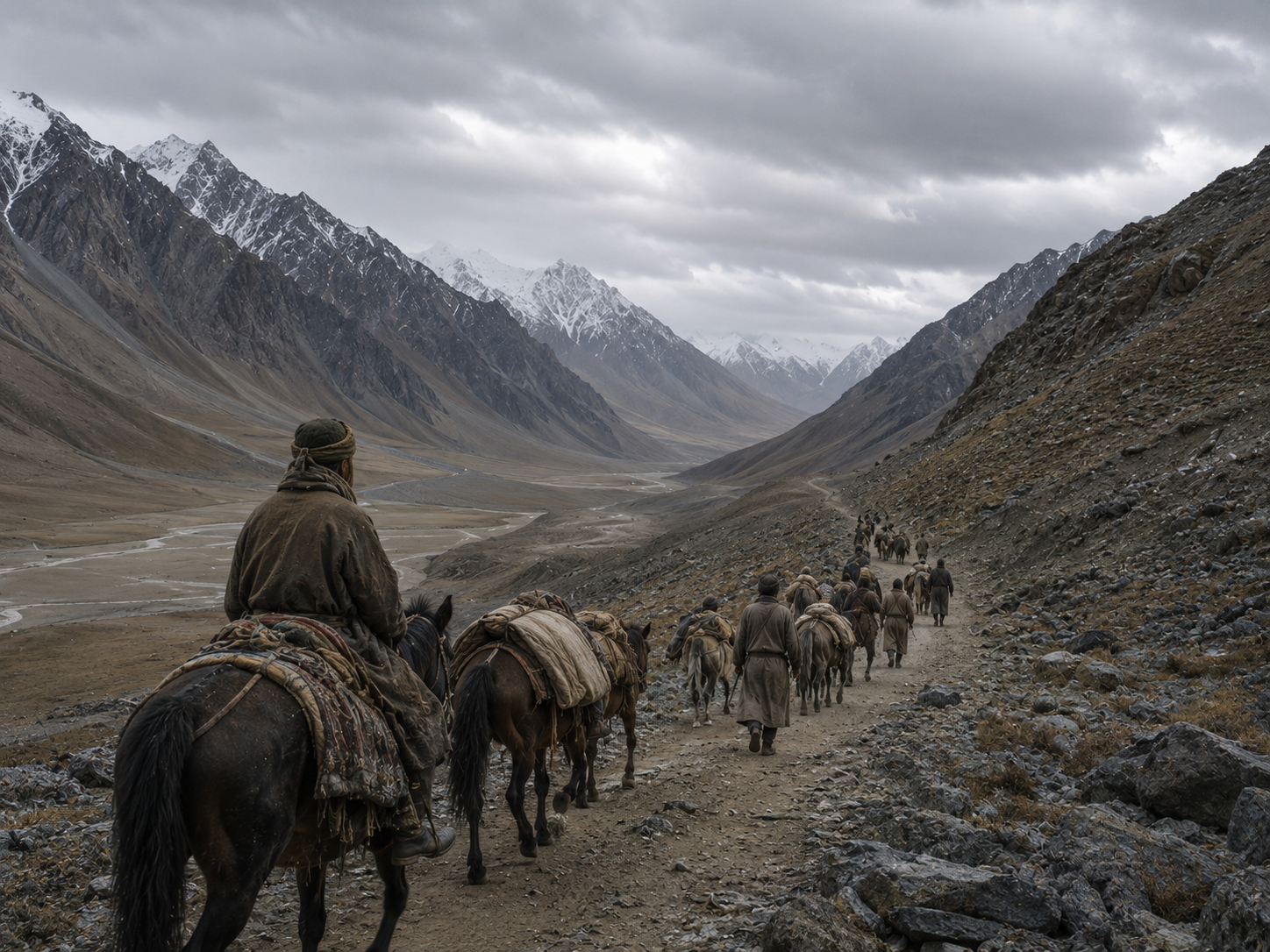
A road that carries people and animals across continents can carry something else.
Disease.
Human populations have always transported microorganisms as they moved, traded and migrated. Long-distance exchange networks increased opportunities for contact between communities that had previously been separated.
That does not mean the Silk Road simply caused pandemics.
The historical evidence is much more complicated.
What researchers can say with greater confidence is that expanding trade networks created pathways through which people, animals and goods could move over great distances. Those movements may have helped pathogens travel as well. The exact routes and mechanisms varied between diseases and periods.
The fourteenth-century Black Death is the most famous example associated with Eurasian trade networks.
The plague pandemic that reached Europe in the 1340s was caused by the bacterium Yersinia pestis. Modern genetic and archaeological research has established Central Asia as a crucial region in the long history of plague, although the precise geographical pathways by which the fourteenth-century pandemic moved toward Europe remain a subject of active research.
Trade was only one part of the system.
Armies moved.
Caravans moved.
Ships moved.
Rodents and their fleas could move with stored grain and other materials.
And humans themselves carried infections.
A network designed to accelerate exchange could therefore accelerate exposure as well.
This was not unique to the Silk Roads.
The same fundamental principle applies to every major transportation network in human history.
Connectivity has benefits.
It also creates vulnerabilities.
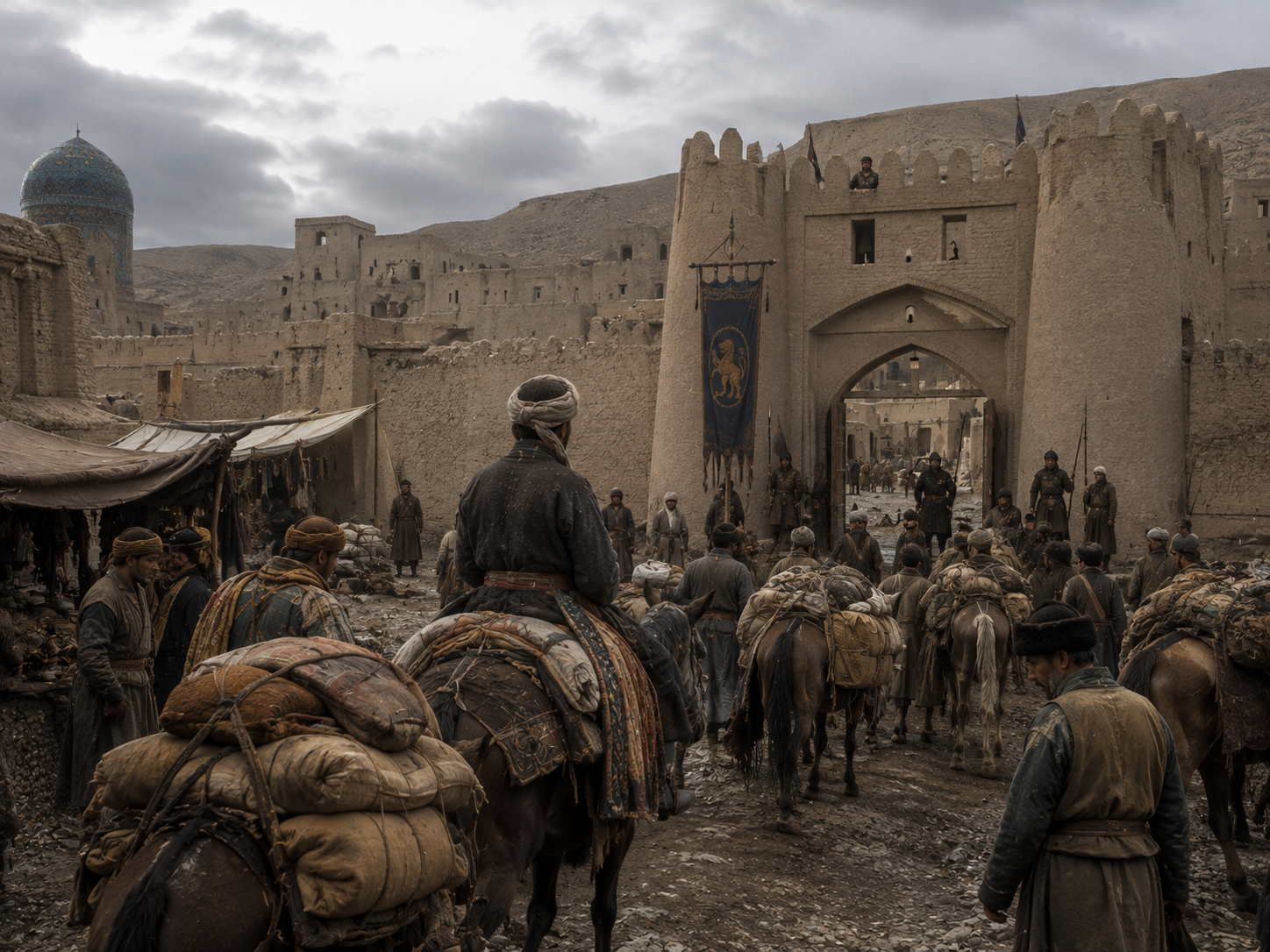
That does not make the ancient merchants responsible for the diseases that later moved through Eurasia. They did not understand bacteria, viruses or epidemiology in the modern sense.
They understood something much simpler.
People traveled.
Trade followed them.
And sometimes illness followed too.
The darker side of connectivity is easy to overlook when we focus only on beautiful textiles, exotic spices and famous cities.
But the Silk Roads connected ecosystems as well as civilizations.
They linked people who had different disease histories and different levels of exposure.
Their significance therefore reaches beyond commerce.
The same network that helped ideas spread could also help biological processes cross borders that once appeared enormous.
Connectivity and Disease
Chapter 6 — Decline and Legacy
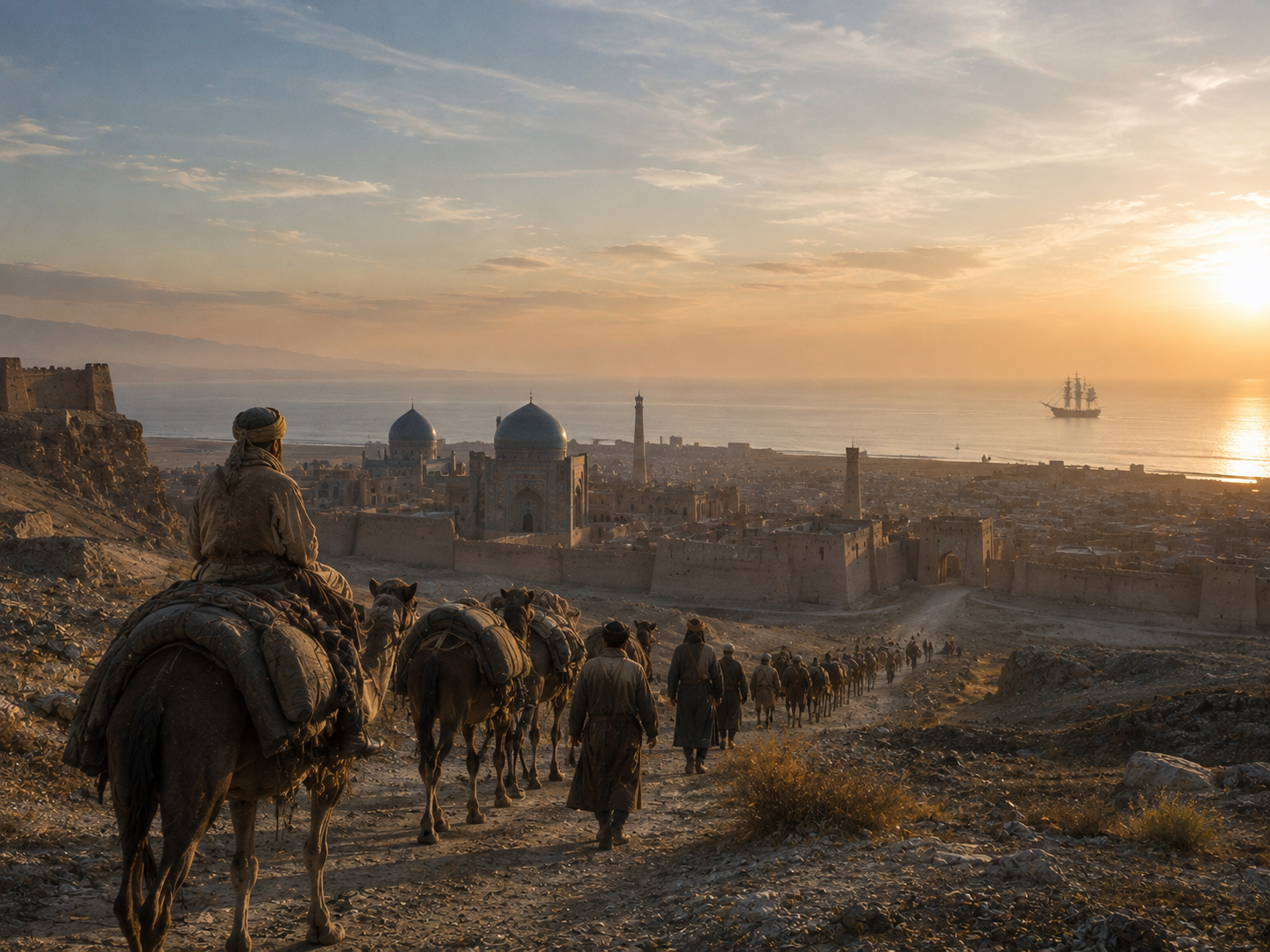
The Silk Roads did not suddenly disappear.
For centuries, their importance rose and fell according to political conditions, wars, economic changes and the security of individual routes.
Even after the great Mongol conquests created a period of relatively broad political connectivity across much of Eurasia in the 13th and 14th centuries, routes continued to depend on the stability of the states through which they passed.
Later, maritime trade became increasingly important.
European voyages around Africa opened new possibilities for moving valuable goods between Asia and Europe by sea. Oceanic routes could carry much larger quantities of cargo than caravans crossing deserts and mountains.
That did not make the overland routes vanish overnight.
Ottoman-controlled territories remained important centers of commerce, and Asian overland trade continued for centuries.
The larger pattern was a gradual diversification of the ways Eurasia could be connected.
The horse caravan did not simply lose a race to the sailing ship.
The world had acquired another network.
And eventually, railways, steamships and modern roads would transform the geography of long-distance trade again.
Yet the idea represented by the Silk Roads never disappeared.
Today, the phrase is used for a very different kind of project.
In 2013, Chinese President Xi Jinping announced the Silk Road Economic Belt, followed later that year by the 21st-Century Maritime Silk Road, together forming the framework now widely known as the Belt and Road Initiative (BRI).
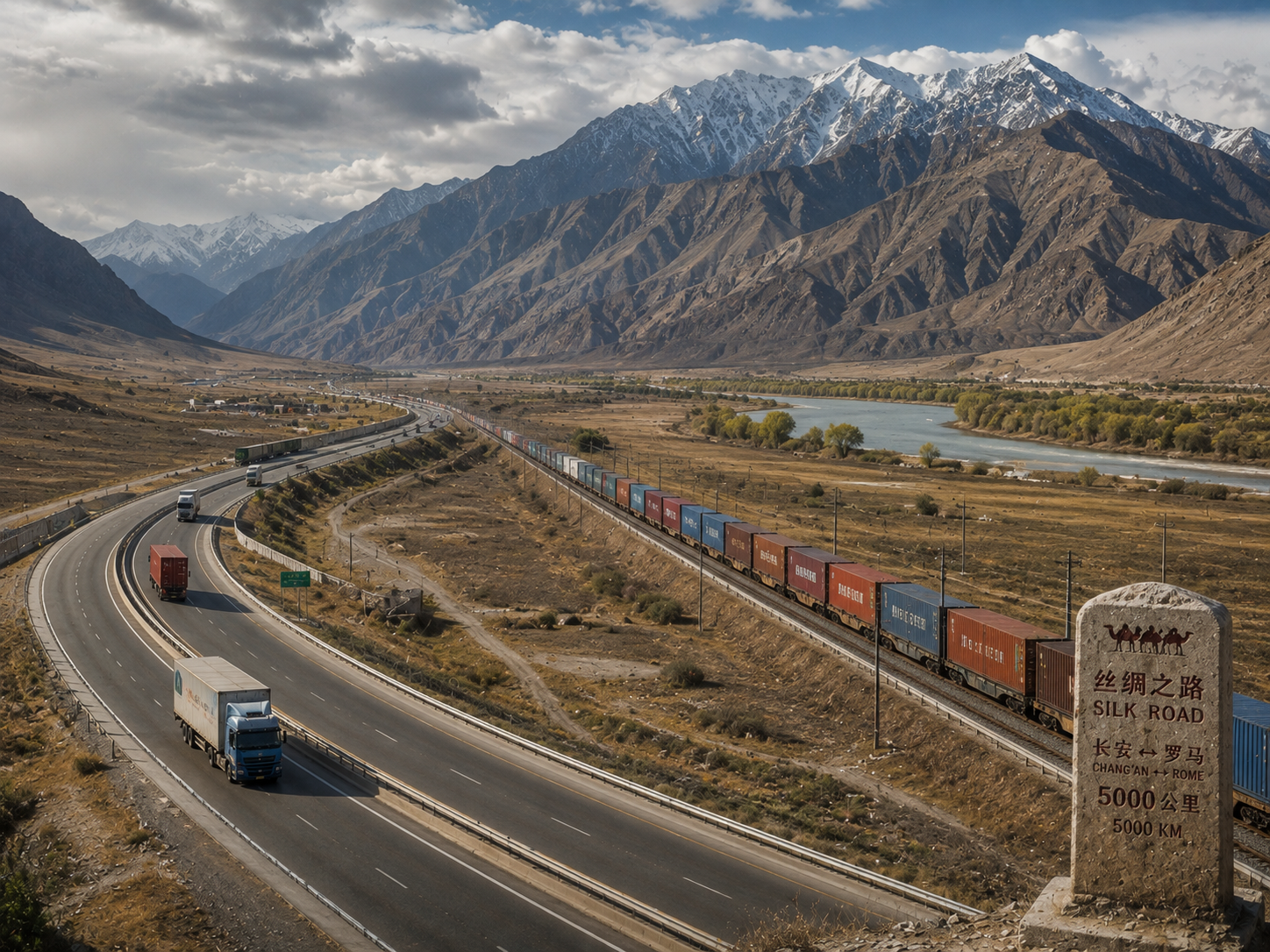
The modern initiative involves infrastructure, trade, investment and connectivity across numerous countries.
It is not the ancient Silk Road reborn.
The economic systems are different.
The technology is different.
The political relationships are different.
But the historical metaphor is deliberate.
Both invoke the idea of connecting distant parts of Eurasia through networks.
That may be the most enduring legacy of the ancient Silk Roads.
Not the silk itself.
Not even the caravan.
The idea that geography does not have to mean isolation.
Across thousands of years, the technologies have changed.
The animals have changed.
The routes have changed.
The political powers have changed.
But the fundamental human impulse remains recognizable:
to cross the distance between one place and another.
The Silk Roads were never one road.
They were a system of connections.
And perhaps that is why the name survived.
Because the real story was never about a road.
It was about what happens when people can move.
From Ancient Routes to Modern Connectivity
FAQ
1.Why was it called the Silk Road?
The modern term “Silk Road” was coined in the 19th century by German geographer Ferdinand von Richthofen. Ancient travelers did not describe their trade network by this single name. The term refers to silk's importance as a high-value commodity, particularly in trade connected with China.
2.Did the Silk Road actually reach Europe?
Yes, but not through one continuous road traveled from China to Europe by a single caravan. Goods moved through chains of merchants and intermediaries across Central Asia, the Iranian world, the Near East and Mediterranean regions. Some goods could eventually reach European markets through these interconnected exchanges. UNESCO describes the network as extending across a vast portion of Eurasia rather than following one fixed route.
3.Was silk the most important product on the Silk Road?
Silk was one of the network's most famous and valuable commodities, but it was far from the only important product. Horses, spices, ceramics, metals, jade, textiles, medicines, fragrances and many other goods were exchanged across different sections of the network.
4.Did people travel the entire Silk Road from China to Europe?
Most did not. Long-distance commerce commonly worked through multiple stages and intermediaries. Merchants could carry goods between neighboring regions, where another merchant would take over the next stage. This made the network possible without requiring most individuals to cross the entire continent.
5.Did the Silk Road spread religions?
Yes. Buddhism, Zoroastrianism, Christianity, Manichaeism and Islam all traveled through various Silk Road networks. Religious transmission occurred through merchants, missionaries, monks, migrants and communities that settled along the routes.
6.Did the Silk Road cause the Black Death?
It is too simplistic to say that the Silk Road caused the Black Death. Expanding networks of movement may have provided opportunities for pathogens and infected hosts to travel, but the pandemic involved complex ecological, demographic and political processes. The exact pathways of medieval plague transmission remain an active area of research.
7.What happened to the Silk Road?
The Silk Roads did not simply shut down. Their importance changed over time as political conditions shifted and maritime trade expanded. Overland commerce continued, but oceanic routes increasingly offered efficient ways to move large quantities of goods across long distances.
8.What is the Belt and Road Initiative?
The Belt and Road Initiative (BRI) is a modern Chinese-led international connectivity and infrastructure framework announced in 2013. It uses the historical Silk Road as part of its conceptual framing, but it operates through modern infrastructure, finance, trade and political relationships and should not be treated as the ancient Silk Road continuing unchanged.
9.Was the Silk Road one road?
No. This is the central misconception.
It was a network of interconnected routes that changed across centuries. Different branches connected deserts, mountain passes, river valleys, oasis towns, cities and maritime ports. Some routes became important while others declined or shifted.
10.Why does the Silk Road still matter today?
Because it provides an early example of how connectivity can transform societies. The movement of merchandise was only one consequence. People also carried languages, religions, technologies, artistic traditions and knowledge. The Silk Roads show that globalization did not begin with modern ships, aircraft or the internet—it has much older roots in human movement across Eurasia.