Introduction
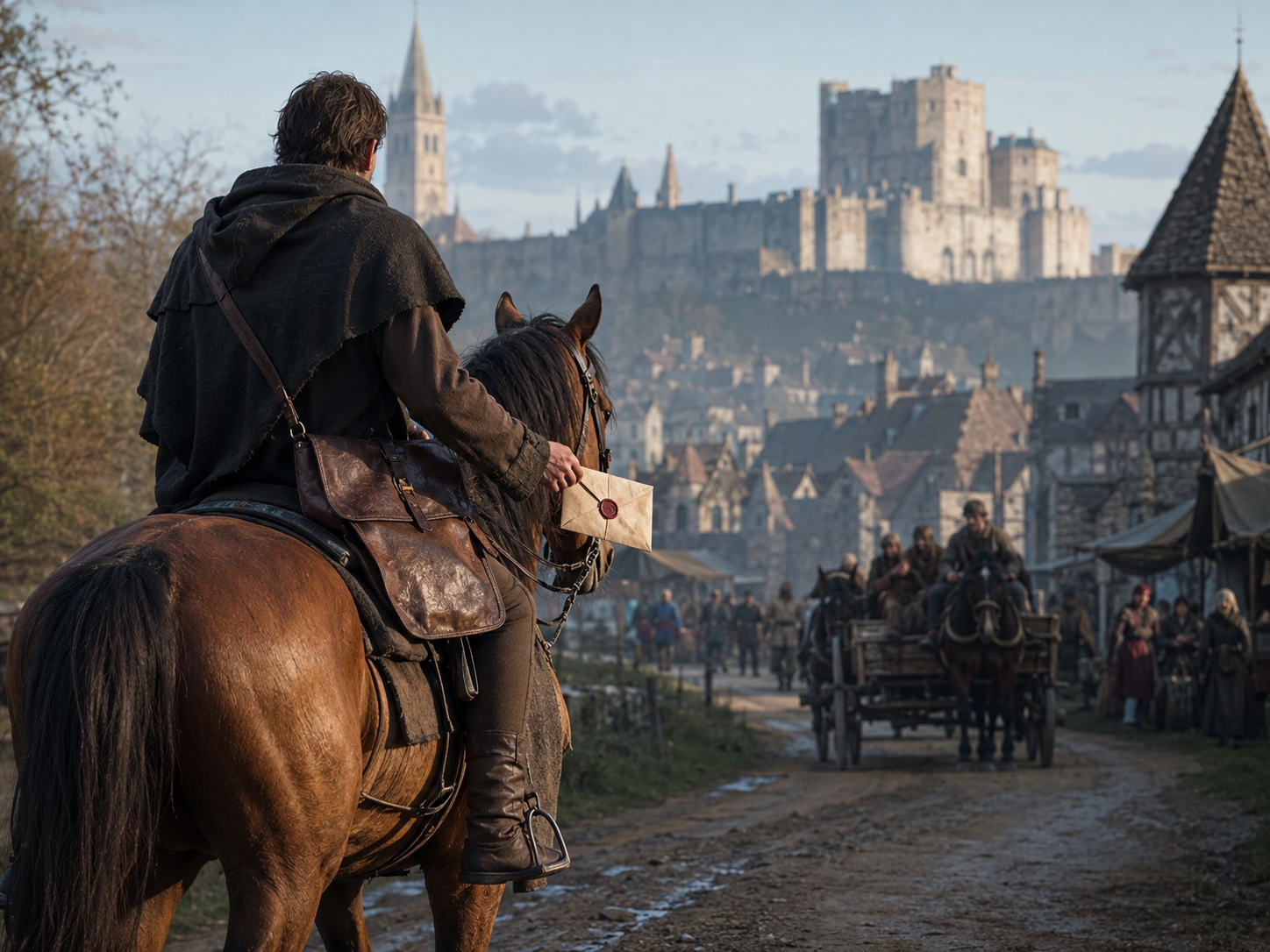
Imagine you need to send someone an urgent message.
They are not in the next street.
They are 300 miles away.
You cannot call them. There is no email. No text message. No postal worker arriving at your door the next morning.
So what do you do?
You write the message down.
Then someone has to carry it.
That sounds simple until you remember what the roads were like, how long the journey could take, and how many things could go wrong along the way.
The message might spend days on horseback. It might pass through several hands. It might travel with a merchant, a servant, a royal messenger or someone trusted by the person who sent it.
And sometimes, it did not have to be written at all.
A messenger could simply arrive and say:
“Your lord wants you to know this.”
Long before phones and the internet, people still had urgent things to say. Kings needed news from distant armies. Merchants needed to know when goods had arrived. Families wanted to hear from relatives. Rulers needed to send orders across their territories.
The technology was different.
The problem was not.
Chapter 1 — The Message Had to Travel
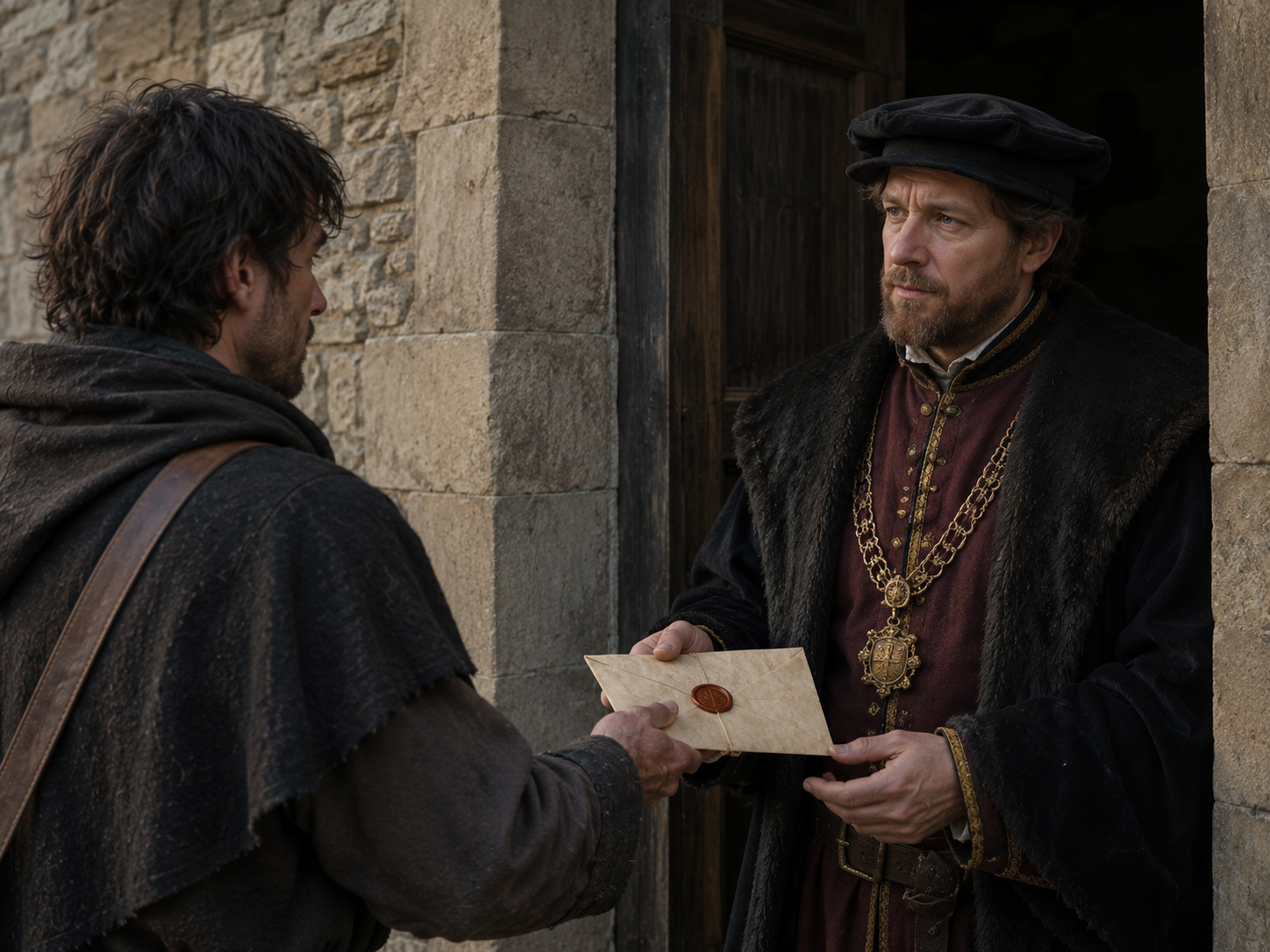
A message cannot move by itself.
Someone has to carry it.
Before regular mail services existed, letters and important messages were often carried by trusted messengers. The Metropolitan Museum has surviving evidence of these men, including a messenger badge from around 1400–1450. Such badges identified messengers working for rulers or city authorities and could even contain small compartments for credentials or messages.
That tells us something useful.
A messenger was not just a man who happened to know the road.
He was part of the system.
A ruler could give him a letter.
The messenger could travel to another town.
He could hand it to the person named in the message.
And the journey was done.
But what if the distance was very long?
That was where things became difficult.
A messenger riding hundreds of miles could not simply keep going at full speed. Horses needed food and rest. Roads were not always good. Rivers had to be crossed. Weather could slow the journey.
And there was another problem.
How did you know the message had actually reached the right person?
Trust mattered.
A valuable or secret letter could not simply be handed to the first traveler you met on the road.
The messenger needed to be trusted by the sender. The person receiving the message needed to know that the messenger really had authority to speak for them.
Sometimes the messenger carried a seal, badge or other proof.
So before the message could move quickly, there had to be something more basic.
Someone people trusted enough to carry it.
The First Step: A Person Carries the Message
Chapter 2 — A Fast Horse Could Change Everything
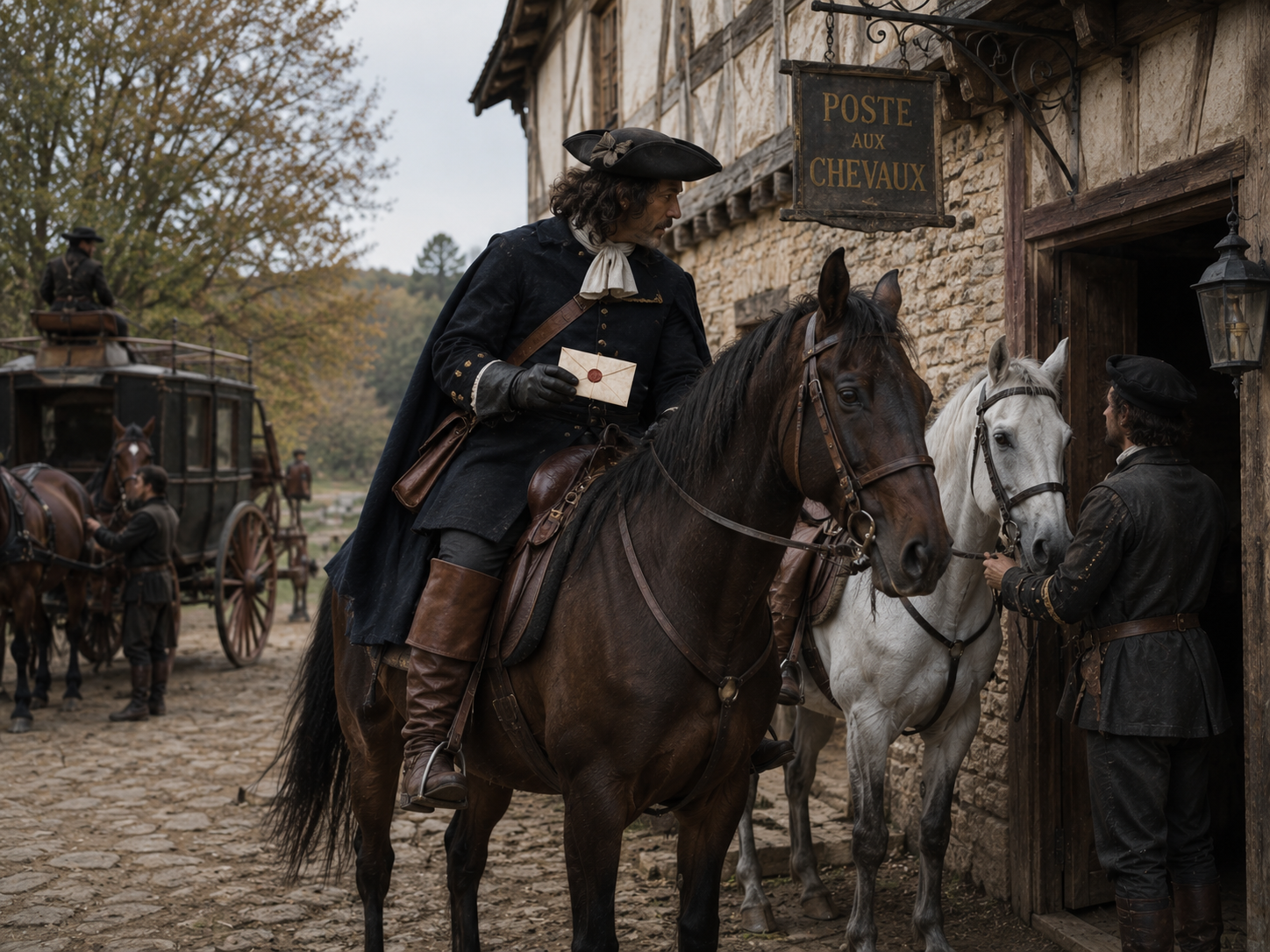
Now imagine two messengers leaving at the same time.
One is walking.
The other is on a good horse.
Which message arrives first?
The answer seems obvious.
But over a long distance, the difference becomes enormous.
A horse allowed a messenger to cover much more ground than someone traveling on foot. And when the message was important enough, speed could matter more than comfort.
This is where horses became part of the communication system itself.
A messenger did not always need to ride one horse for the entire journey. In later European postal systems, horses could be kept at stations along major routes, allowing riders to change horses and continue. Government-regulated posting systems developed especially in the early modern period to speed the movement of people and messages.
The idea is simple.
Ride.
Change horse.
Ride again.
Instead of asking one tired horse to carry the messenger all the way, the system could keep the journey moving.
This was especially useful for governments.
A ruler who needed news from far away did not necessarily care that the messenger was uncomfortable.
He cared that the message arrived.
The same was true during war.
An army commander might need to know what was happening somewhere else. A king might need to send an order. A government might need information from another city.
The faster the messenger moved, the sooner the people at the other end could act.
Distance had not disappeared.
But a good horse made it feel smaller.
Why Changing Horses Mattered
Chapter 3 — Sometimes the Message Was the Messenger
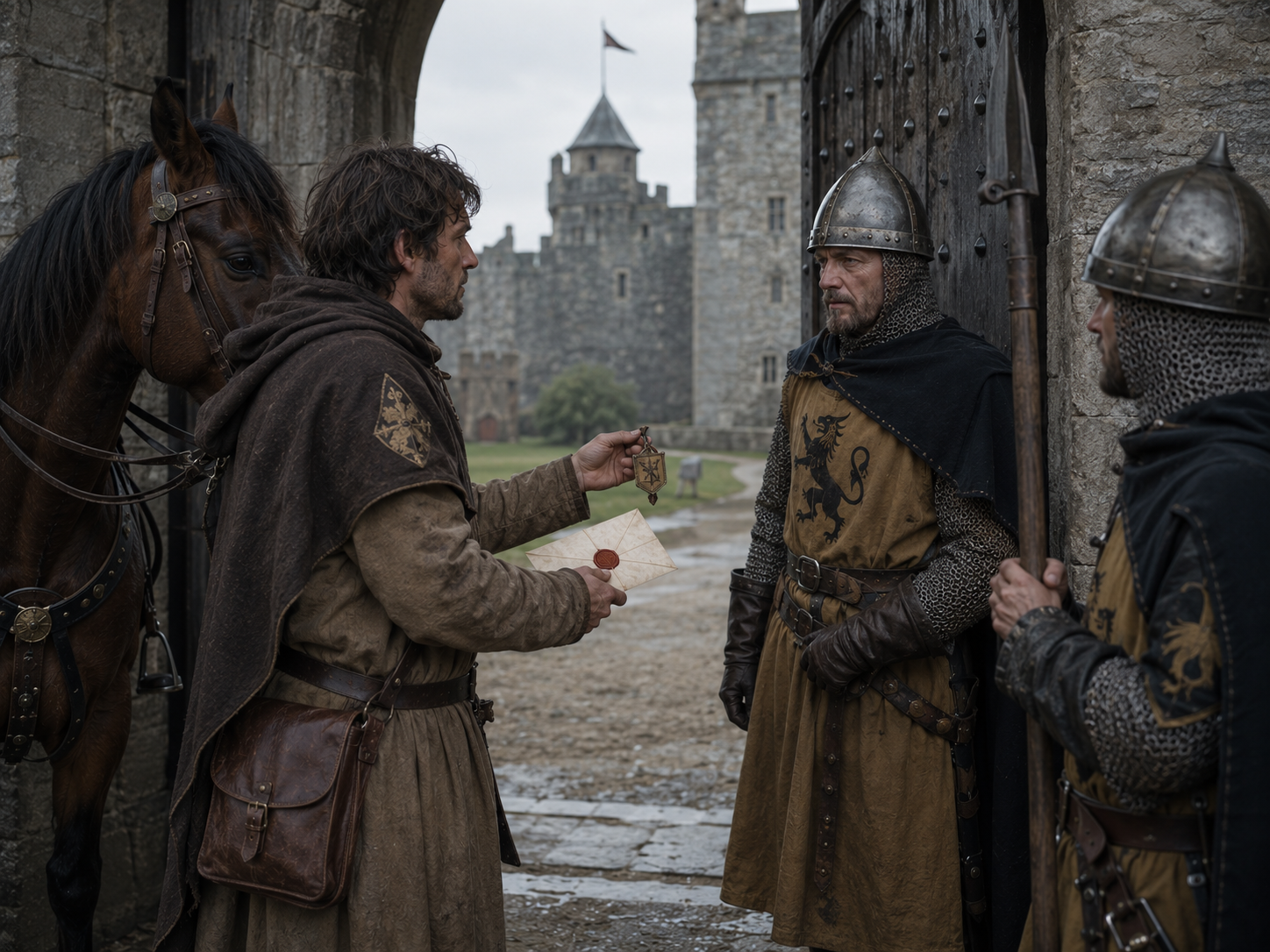
Not every message needed a letter.
Sometimes the person was the message.
Imagine a king wants to give an order to a commander.
Writing it down is possible.
But perhaps there is something he wants explained.
Perhaps the commander needs to answer a question.
Perhaps the order is sensitive.
A written letter cannot answer anything.
A messenger can.
He can arrive, give the message, answer questions and report back.
That made human messengers especially useful for diplomacy and government.
The messenger carried more than words.
He carried authority.
His identity mattered.
His reputation mattered.
And the people receiving him needed to know that he really represented the person who sent him.
This is one reason messenger badges are so interesting. The Metropolitan Museum's example from around 1400–1450 shows that official messengers could be visibly identified while carrying out their duties. Some early badges may even have been designed to hold credentials or small messages.
You can see why this mattered.
A stranger arriving at a castle and saying, “I bring a message from the king,” was not enough.
The question would be:
Are you really the king's messenger?
The whole system depended on the answer being yes.
That is why communication was also a problem of trust.
The message had to arrive.
But the recipient also had to believe it.
A Messenger Carried Trust Too
Chapter 4 — Letters Solved a Different Problem
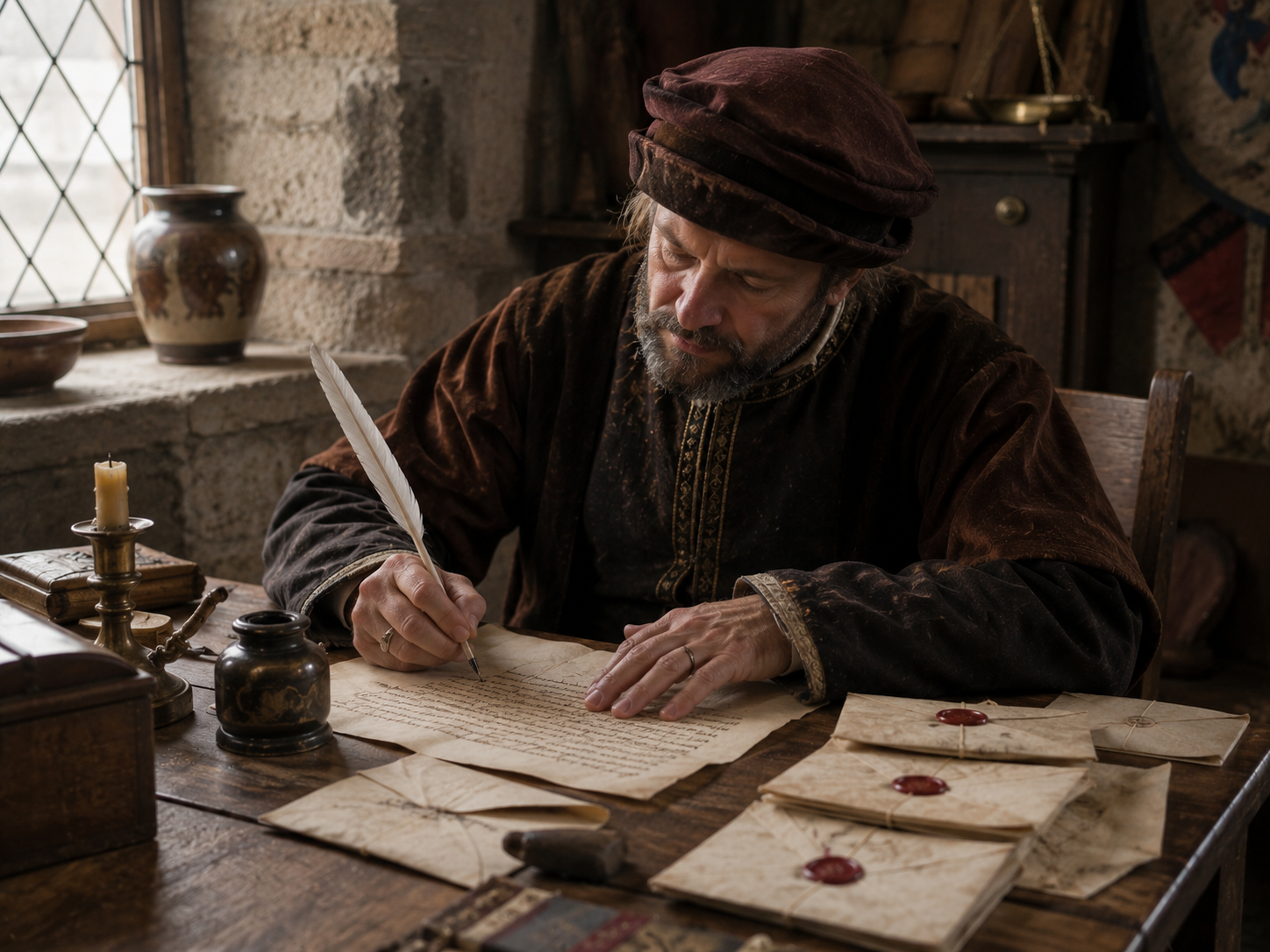
A messenger can speak.
A letter can wait.
That made written messages useful in a completely different way.
Suppose you are a merchant and need to tell a business partner about a payment.
You do not want the messenger to rely on memory.
You want the exact information written down.
A letter can carry names, amounts, instructions and promises.
The recipient can read it later.
And the letter can be kept.
That mattered for governments too.
A written order could travel from one official to another. A letter could carry information across a long distance without requiring the sender to remember every detail.
Letters also created a record.
If someone later asked, “What exactly did you tell him?” there could be a written answer.
Of course, letters had their own weakness.
They still had to travel.
A beautifully written message sitting on a table was not useful to the person waiting 300 miles away.
Someone still had to carry it.
And that person could take days to arrive.
So writing did not remove the problem of distance.
It made the message more reliable once it arrived.
For important communication, that was a big improvement.
Why Write the Message Down?
Chapter 5 — Then the Road Became a Network
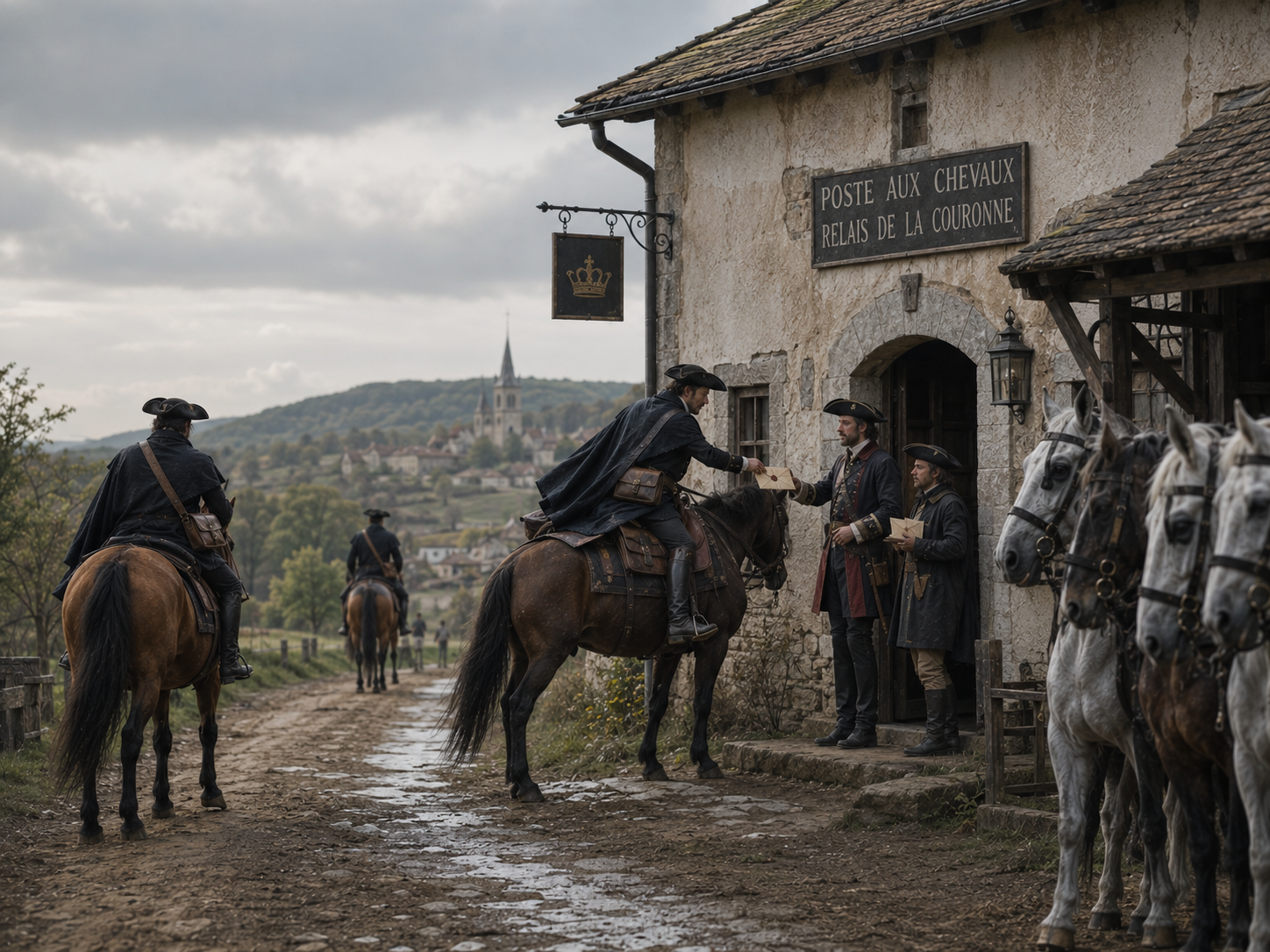
Sending one letter is one thing.
Sending thousands is another.
A ruler could employ several messengers.
A merchant could send letters with people already traveling.
But eventually, if a government or large organization needed regular communication, it made sense to organize the whole process.
That is when postal networks become important.
Instead of asking:
“Who can carry this letter?”
you can begin asking:
“Where can this letter enter the network?”
That is a much bigger idea.
A message is handed to one person.
That person gets it to the next point.
Someone else carries it onward.
In later European postal systems, posting stations and fresh horses helped couriers move over long distances without relying on one horse for the entire trip. These systems became increasingly organized under government regulation in the early modern period.
The exact form varied by country and period, so there was no single medieval postal system covering all of Europe.
That is important.
The word “postal service” can make the past sound much more modern than it really was.
But the basic idea was already there in pieces:
routes,
messengers,
stations,
horses,
officials,
and places where information changed hands.
Once those pieces were connected, distance became easier to manage.
Not easy.
Just more manageable.
From One Messenger to a Network
Chapter 6 — But What If Someone Else Read It?
Now imagine the message is important.
And private.
Perhaps it contains military information.
Perhaps a ruler is making a secret plan.
Perhaps a merchant does not want a competitor to know what he is planning.
The messenger still has to carry the letter.
So the sender faces another problem.
How do you make the message safe while it is traveling?
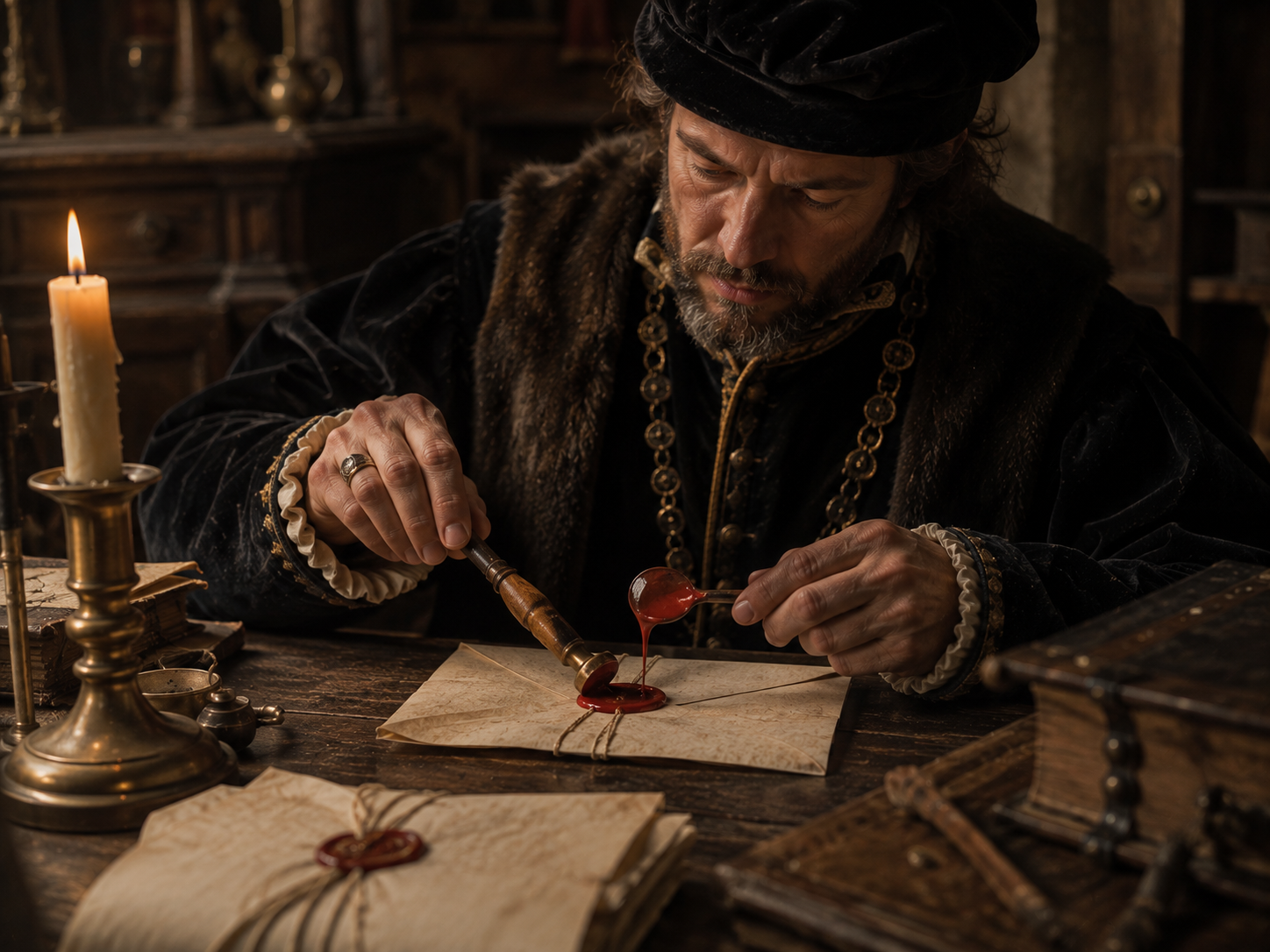
One answer was the seal.
A wax seal could show whether a letter had been opened or tampered with. It could also help identify the sender.
But a seal did not make the words inside impossible to read.
For sensitive information, people could also use codes and ciphers. These were not the same everywhere and did not always offer perfect protection, but they added another layer between the message and anyone who might intercept it.
This gives us a useful picture of old communication.
Speed mattered.
But so did trust.
And sometimes secrecy mattered just as much.
A letter could travel hundreds of miles and still fail completely if the wrong person opened it.
The message therefore had to survive the journey physically and politically.
That was a harder problem than simply finding a horse.
Protecting a Message
Chapter 7 — Distance Was Never Really Beaten
We sometimes imagine modern communication as the moment when people finally defeated distance.
But that is not quite what happened.
People were already finding ways around it.
They built roads.
They kept horses.
They hired messengers.
They wrote letters.
They used people who were already traveling.
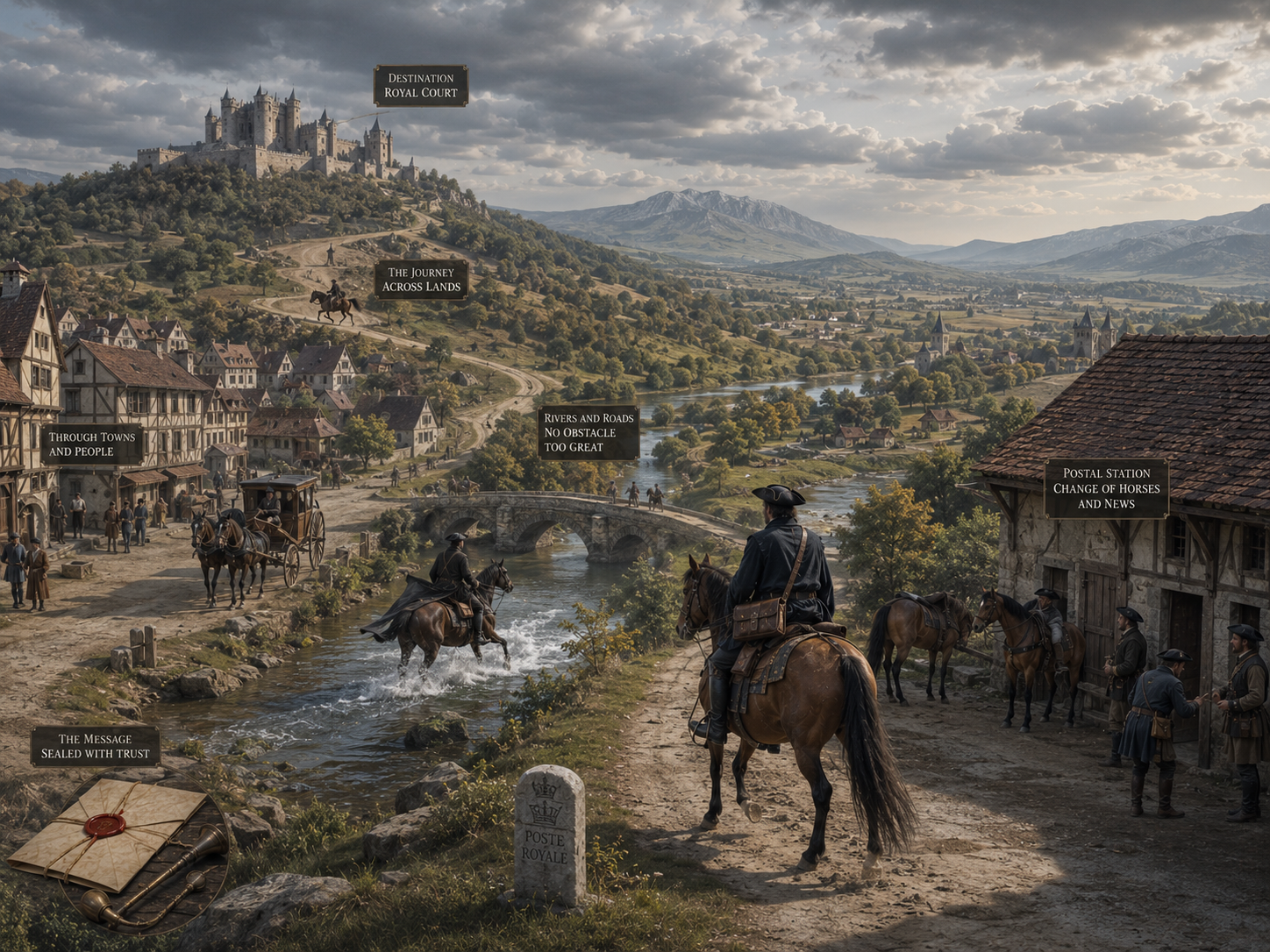
They created routes and, later, more organized postal networks.
Each improvement removed one small difficulty.
A messenger on foot became a messenger on horseback.
One horse became several.
One messenger became a relay.
A spoken message became a written letter.
One route became a network.
The journey was still there.
The waiting was still there.
But the system around the message became better.
This is why the history of communication is not really a story about suddenly discovering how to send information.
People had been doing that for a very long time.
The big change was how quickly, safely and regularly they could do it.
Before phones and the internet, a message could still cross a country.
It just had to travel through the world first.
And that meant something very simple:
A message hundreds of miles away was never just information.
It was a journey.
From a Message to a Network
Frequently Asked Questions
1. How did people send messages before phones?
They used messengers, letters, riders and other travelers. Important messages could be carried by trusted people over roads connecting towns and cities.
2. How did medieval people send messages over long distances?
They commonly relied on messengers who traveled on foot or horseback. Written letters could be carried between distant places, while important officials could also send people to deliver spoken messages.
3. How long did it take to send a message in medieval times?
There was no single answer. It depended on the distance, roads, weather, horses and the type of messenger used. A message traveling hundreds of miles could take days or longer.
4. Did medieval people have a postal service?
Some organized systems existed, but there was no single postal service covering all of medieval Europe. Different rulers, cities, merchants and institutions developed their own ways of moving messages.
5. Did medieval messengers use horses?
Yes. Horses were especially useful when speed mattered. In later European postal systems, relay stations with fresh horses could help couriers travel more quickly over long distances.
6. How did people make sure a messenger was genuine?
Official messengers could carry identifying marks, badges, seals or other proof of their connection to the sender. A surviving messenger badge from around 1400–1450 at the Metropolitan Museum shows how official messengers could be identified.
7. Why were letters important before phones?
Letters allowed people to record exact information that could be carried over long distances. Unlike a spoken message, the recipient could keep the written message and refer to it later.
8. How did medieval people protect secret messages?
They could use sealed letters, identifying marks and, in some cases, codes or ciphers. A seal could help show whether a letter had been opened, although it did not by itself make the contents secret.
9. Could a message be sent without a letter?
Yes. A messenger could deliver a spoken message directly to the recipient. This could be useful when the sender wanted a conversation, an explanation or a reply.
10. What was the biggest problem with sending messages before modern technology?
Distance. Every message had to travel through the physical world. Someone had to carry it, and the journey could be slowed by roads, weather, horses and other problems. The major improvement over time was making that journey faster and more organized.