Introduction — More Than a Conqueror
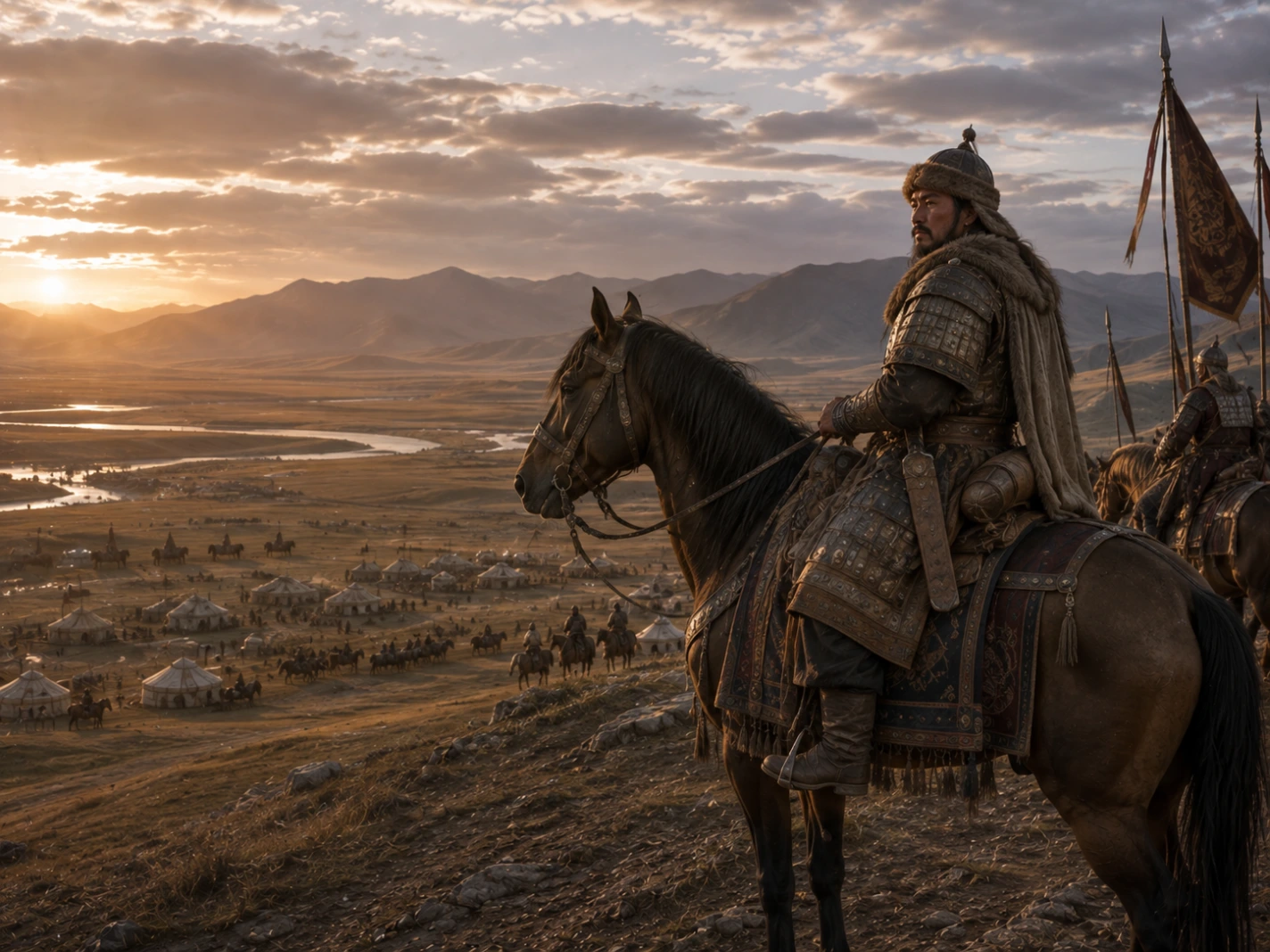
In 1206, the Mongolian steppe looked very different from the map we know today.
There were no modern borders. Powerful tribes competed for land, animals and influence. Alliances could change quickly, and a young leader could lose everything in a single defeat.
From this world came Temüjin, the man later known as Genghis Khan.
His childhood was far from the life of a future emperor. After his father, Yesügei, was killed, Temüjin and his family were abandoned by their clan. They had to survive on their own on the harsh Mongolian steppe. Years later, Temüjin had built enough support to defeat his rivals and unite the major Mongol tribes.
In 1206, at a great gathering called a quriltai, he was proclaimed Chinggis Khan.
What followed changed the history of Eurasia.
Genghis Khan began a series of conquests that eventually created a huge empire. His armies defeated powerful states across Central Asia and China, and his successors later expanded the empire even farther. At its greatest extent, the Mongol Empire became the largest contiguous land empire in history.
But Genghis Khan's story is not only about conquest.
His armies could be extremely destructive, and cities that resisted the Mongols sometimes suffered terrible losses. At the same time, the Mongols created systems that helped govern enormous territories. They protected important trade routes, developed relay stations for communication and generally allowed several religions to exist within their empire.
That is what makes Genghis Khan difficult to understand.
He was a conqueror capable of enormous violence.
He was also a political leader who built a system that survived him and changed how people, goods and ideas moved across Eurasia.
To understand him, we have to look at both sides of the story.
Chapter 1 — A Childhood of Survival
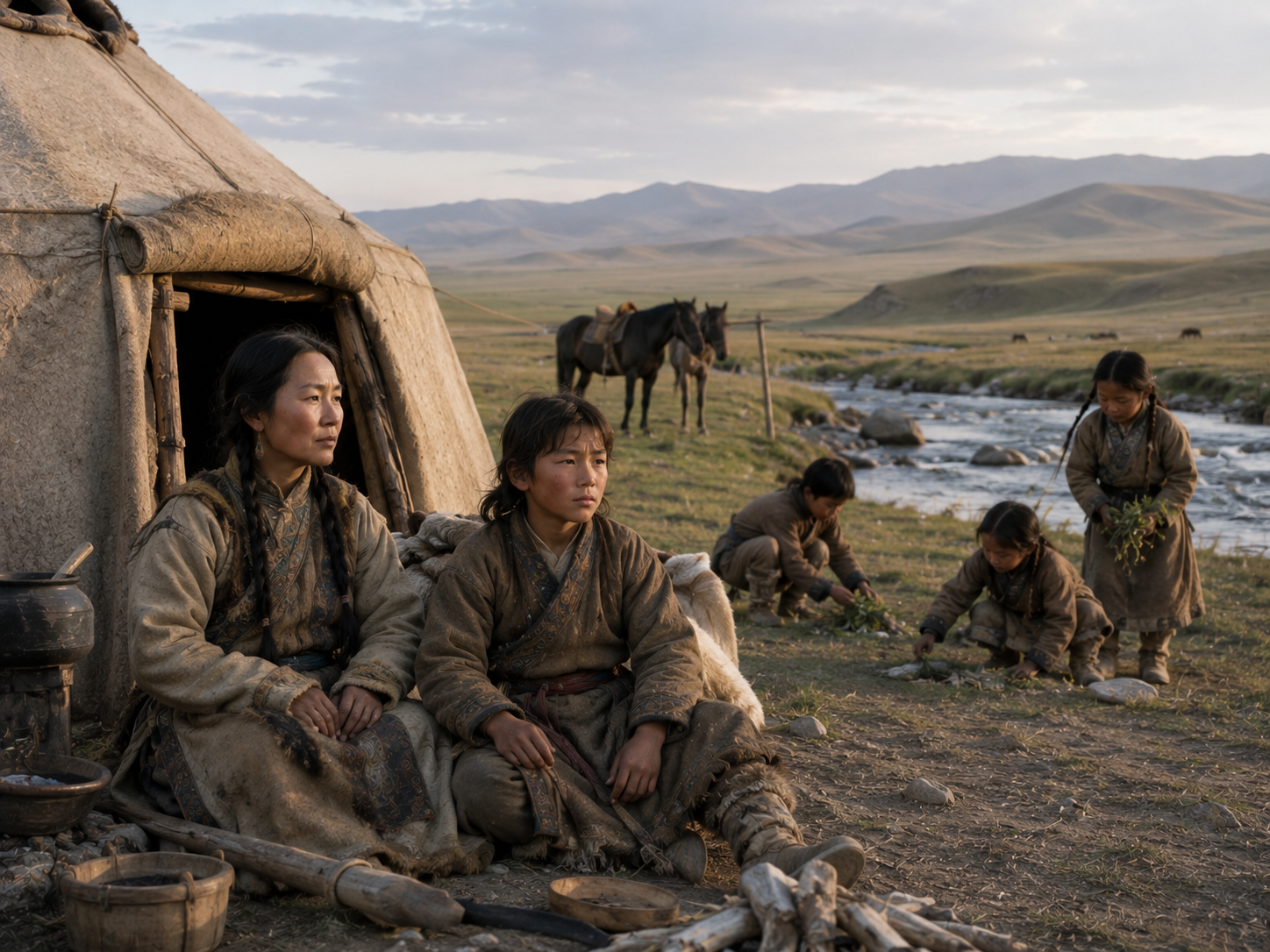
Temüjin was probably born around 1162, although the exact year is uncertain. He was the eldest son of Yesügei, a Mongol leader on the steppe.
His childhood changed suddenly when his father was killed by Tatars. Temüjin was still a boy. Without his father, the family's position became much weaker.
Soon afterward, many of Yesügei's followers abandoned the family. Temüjin, his mother Höelün, and his siblings were left to survive on their own.
Life on the steppe was difficult even for people with strong tribal support. Without a clan protecting them, the family had very little security. They gathered plants, caught fish and hunted small animals to survive.
The Secret History of the Mongols, the most important surviving source about Temüjin's early life, describes these years as a period of hunger, danger and hardship. The source was written after his rise to power, so historians are careful about treating every detail as completely certain. But the basic story of his family's abandonment is widely accepted.
Temüjin was growing up in a world where survival depended heavily on family, alliances and loyalty.
He had lost all three.
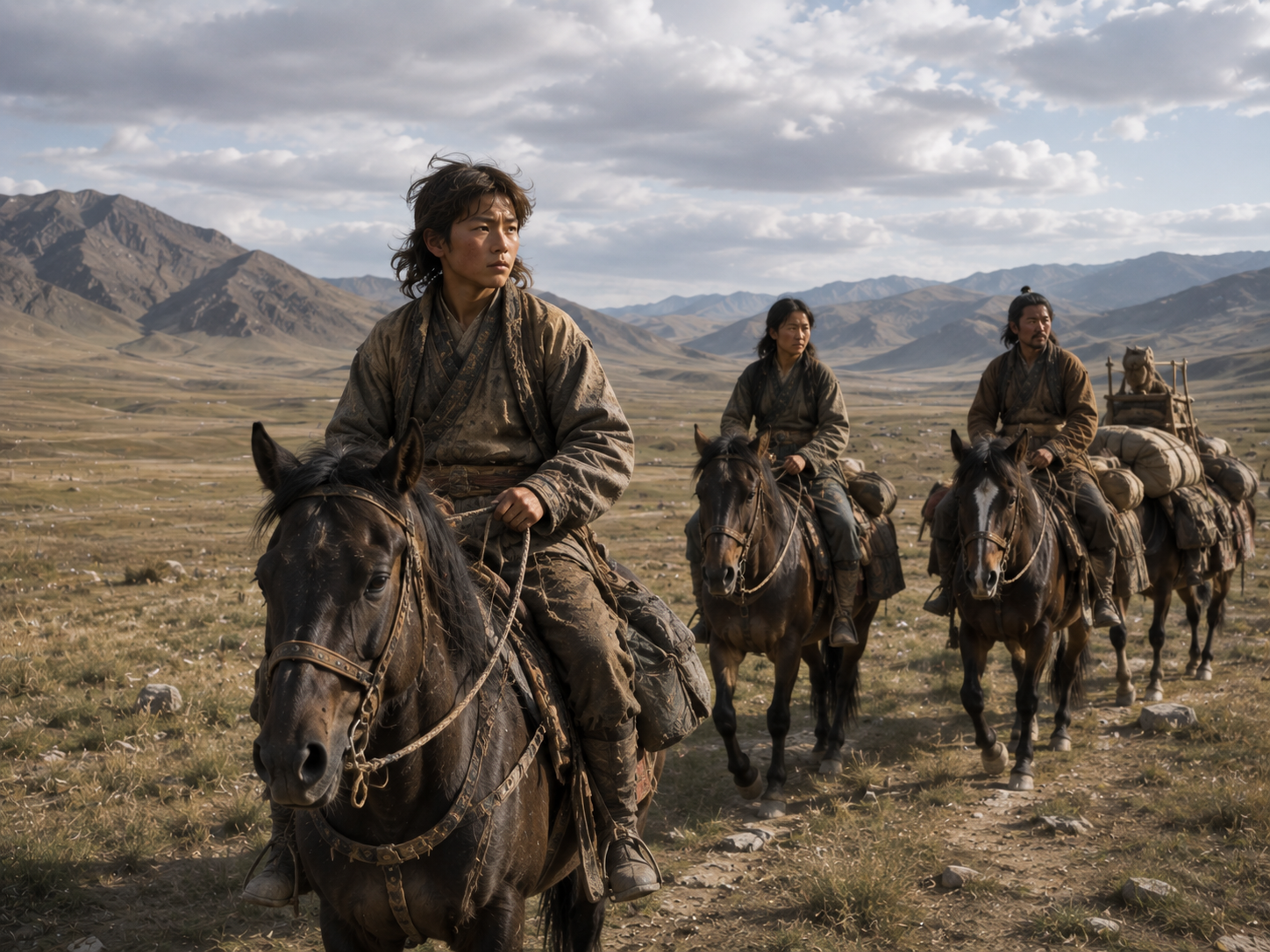
His childhood also showed him how quickly relationships could change.
Even within his own family, conflict could become dangerous. According to the Secret History of the Mongols, Temüjin and his younger brother Khasar killed their half-brother Behter after a dispute over food and authority.
As Temüjin grew older, he began building relationships outside his immediate family. He married Börte and formed important alliances with powerful leaders, including Toghril, the ruler of the Kereit.
He also became closely connected with Jamuqa, who was first his friend and ally but later became his rival.
These early relationships became important as Temüjin entered the struggle for power on the steppe.
His childhood had not given him wealth or a powerful inheritance.
Instead, it had placed him in a world where loyalty had to be built, alliances had to be maintained and power could disappear very quickly.
That world would shape the political career of the man who eventually became Genghis Khan.
The Early Life of Temüjin
Chapter 2 — Uniting the Steppe
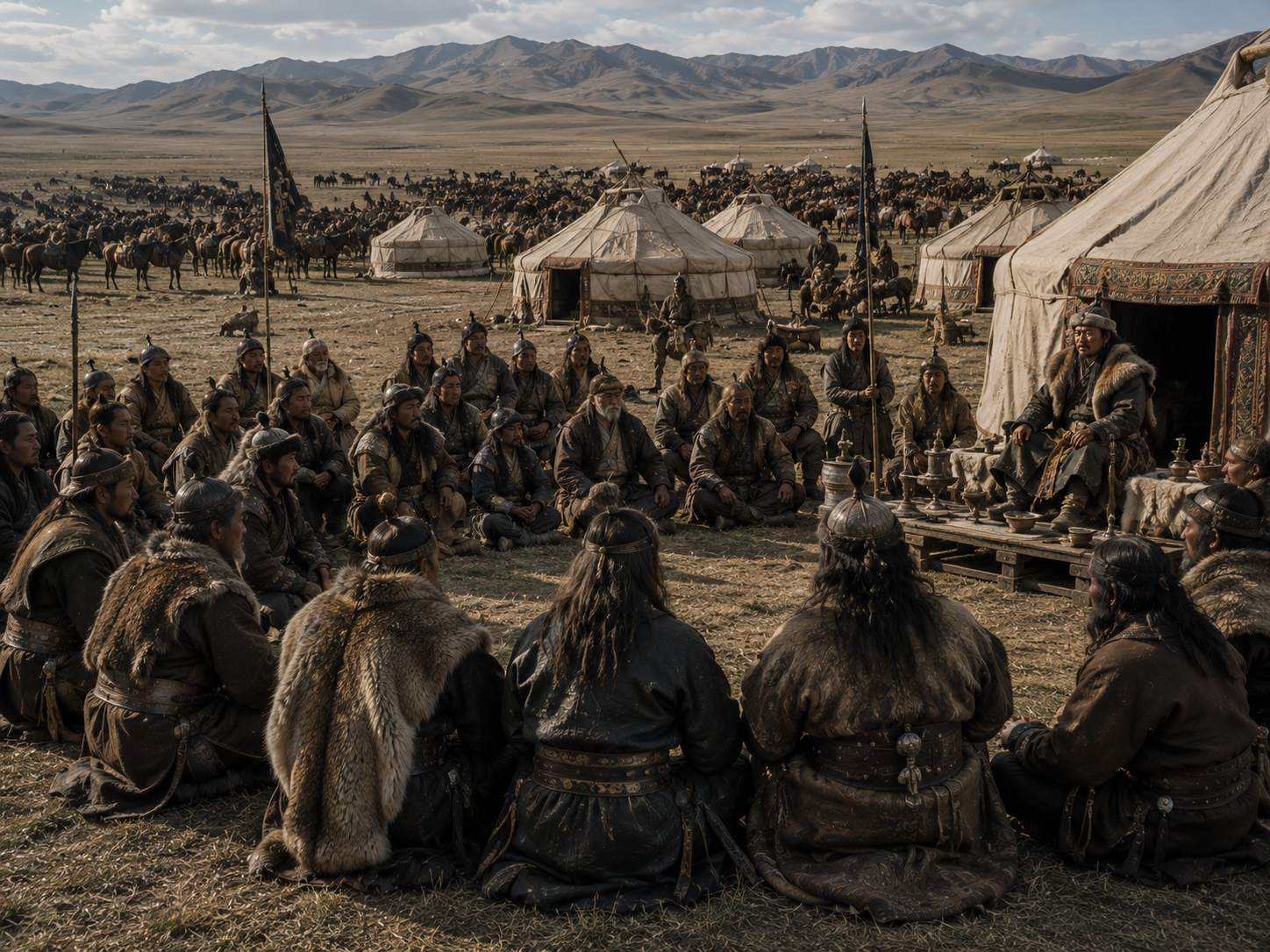
As Temüjin grew older, he began building his own group of followers.
The Mongolian steppe was divided among many tribes and clans. They fought over pasture, animals, influence and old rivalries. Alliances were often temporary, and a leader could lose his power quickly after a defeat.
Temüjin understood that he needed more than his own family to survive.
He formed alliances with powerful leaders, including Toghril of the Kereit. He also built a close friendship with Jamuqa, but their relationship eventually turned into a rivalry.
Temüjin's greatest strength was his ability to attract loyal followers. He rewarded people who served him well, even when they came from different tribes. This helped him build a following that was based less on old tribal divisions and more on personal loyalty and military service.
He also reorganized his warriors into larger military units. The Mongol army used groups of 10, 100, 1,000 and 10,000 soldiers, making it easier to organize and command a large force.
But Temüjin did not rise without fighting.
He defeated rival groups one after another, including the Tatars, Kereit and Naiman. Some enemies were killed, while others were absorbed into his growing political and military system.
With every victory, his influence became stronger.
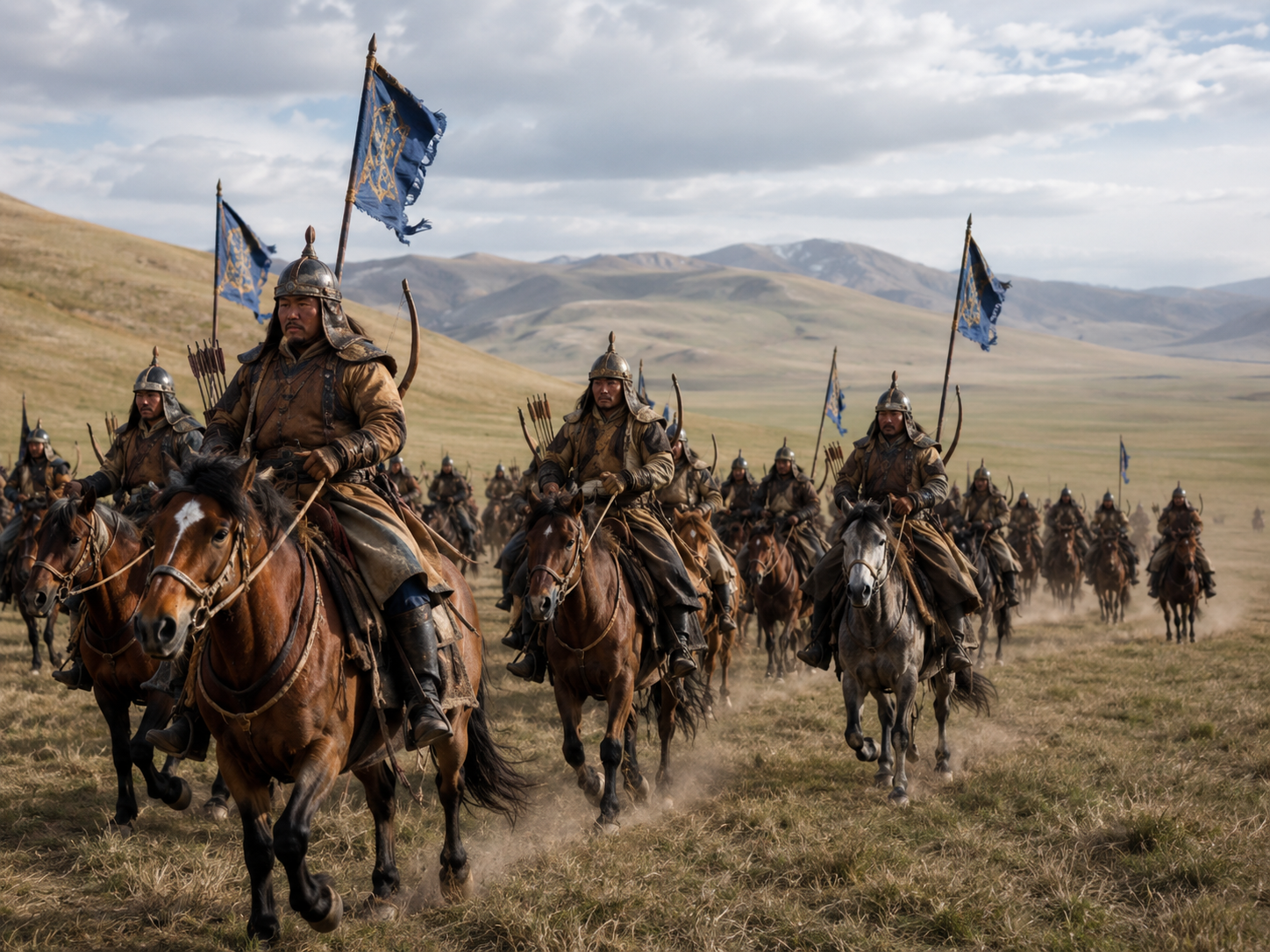
By the beginning of the 13th century, Temüjin had become the most powerful leader on the Mongolian steppe.
His final challenge was to bring the remaining powerful tribes under his control.
After further conflicts, the major rivals had been defeated or absorbed.
In 1206, Mongol leaders gathered at a great assembly known as a quriltai. There, Temüjin was proclaimed Chinggis Khan, the title by which he became known in history as Genghis Khan.
The exact meaning of Chinggis Khan is still debated, so it is safer not to treat “universal ruler” as a certain translation.
What mattered was the political change.
For the first time, the Mongol tribes were united under one dominant leader.
Temüjin had begun his life with very little protection. Now he controlled a powerful and organized steppe state.
But uniting the Mongols was only the beginning.
Beyond the steppe were wealthy kingdoms, trading cities and large empires.
Genghis Khan would soon turn his attention toward them.
How Temüjin Unified the Steppe
Chapter 3 — The Conquests
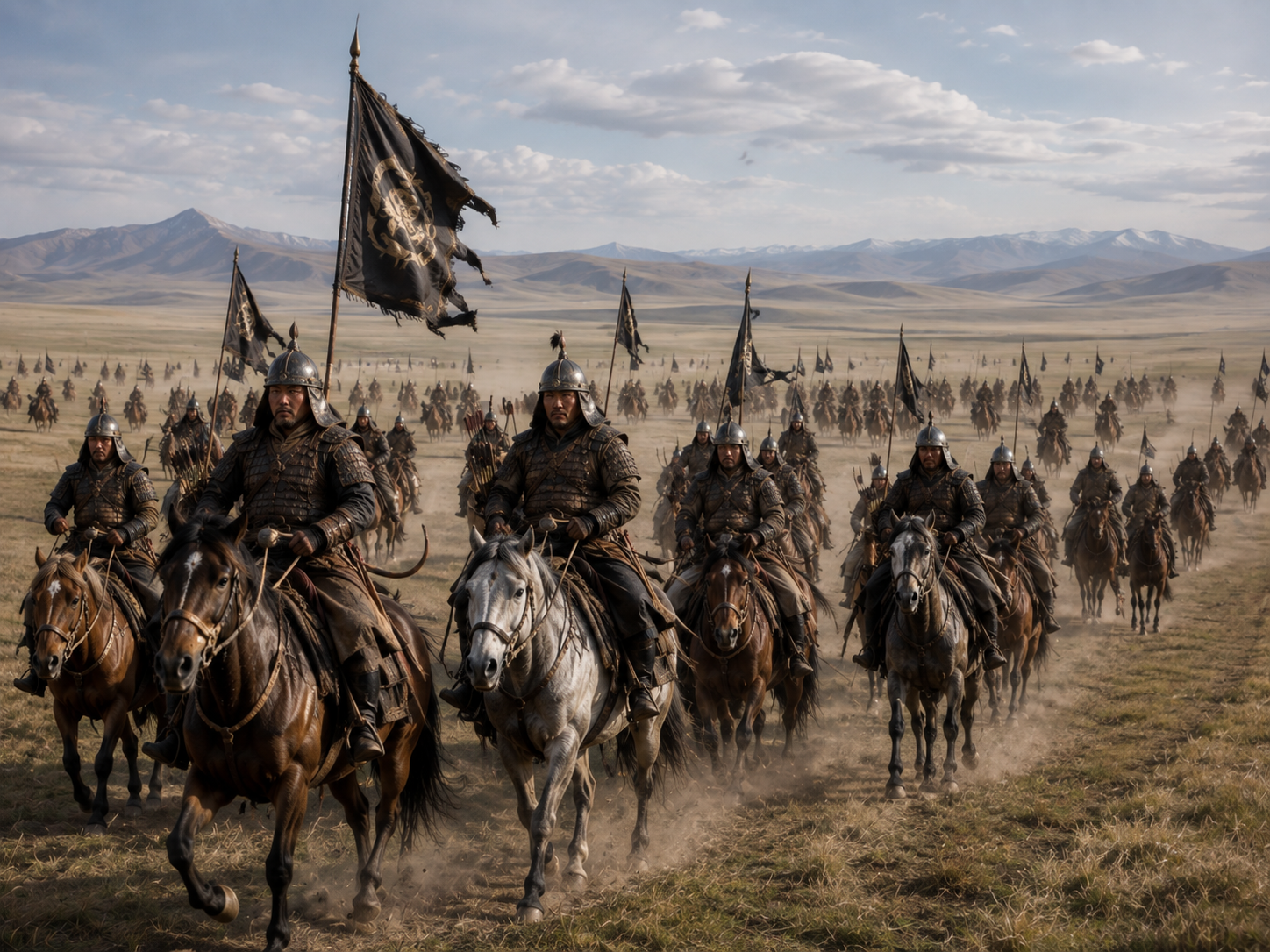
After uniting the Mongol tribes, Genghis Khan turned his attention beyond the steppe.
The Mongols first fought nearby powers, including the Western Xia and the Jin dynasty in northern China. These campaigns gave the Mongol army experience against large, settled states with fortified cities and organized armies.
The Mongols were very different from the armies they faced.
Most Mongol warriors were highly mobile horsemen. They could travel long distances quickly and were skilled with the composite bow. They could attack from a distance, retreat when necessary and return from another direction.
But speed alone did not explain their success.
The Mongol army was carefully organized. Soldiers trained to follow commands, communicate across large distances and move in coordinated groups. Scouts gathered information about enemy forces and terrain before major battles.
The Mongols were also willing to learn from the people they defeated.
When they encountered strong walls and fortified cities, they made use of engineers and specialists from conquered regions. They adopted siege weapons and techniques that had not traditionally been part of steppe warfare.
This made the Mongol army more than a cavalry force.
It was becoming a flexible military system that could fight in many different environments.
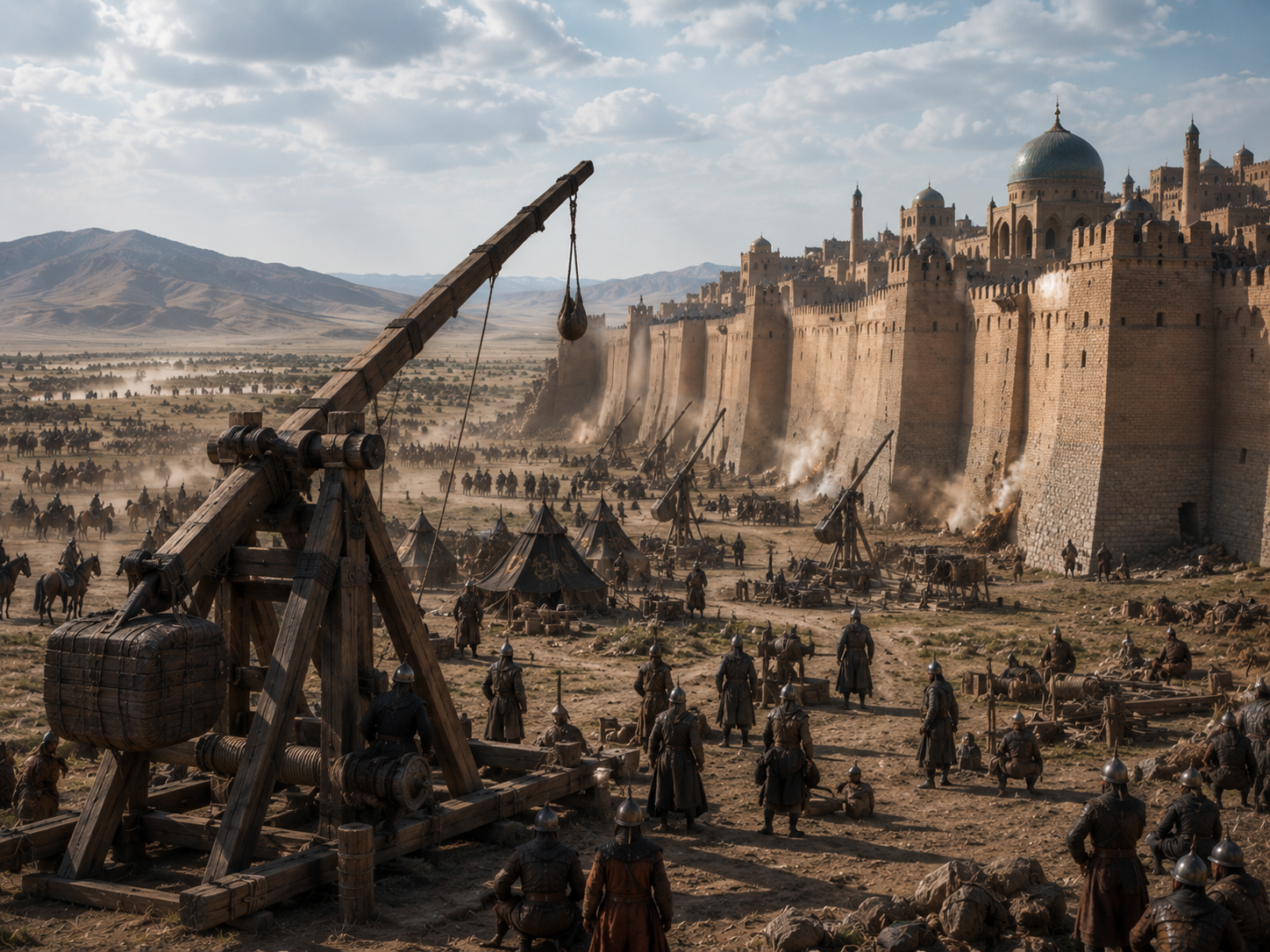
The Mongols became even more feared during their campaigns in Central Asia.
A major turning point came when a Mongol diplomatic and trading mission was attacked in the Khwarazmian Empire. Genghis Khan responded with a massive invasion beginning in 1219.
Mongol armies moved through Central Asia with remarkable speed.
Cities such as Bukhara, Samarkand and Merv were captured during the campaign. Some cities surrendered and were spared some of the destruction that followed resistance. Others faced extreme violence.
The Mongols deliberately used their reputation as a weapon.
If a city believed that resistance would bring terrible consequences, its leaders might decide that surrender was safer. This helped the Mongols avoid long sieges in some places. But when cities resisted, the resulting destruction could be devastating.
It is important not to soften this part of the story.
The Mongol conquests caused enormous loss of life and destruction in several regions. Exact numbers are difficult to establish because medieval sources often exaggerate or contradict one another, but the violence was very real.
At the same time, the Mongols did not win simply because they were more brutal than everyone else.
Their success came from a combination of mobility, discipline, planning, intelligence, adaptability and psychological warfare.
By the time Genghis Khan died in 1227, the territory under Mongol control stretched across a huge part of Asia.
And his successors would take the empire even farther.
Why the Mongols Won
Chapter 4 — Governing an Empire
Conquering land was one thing.
Keeping control of it was much harder.
Genghis Khan ruled people from very different cultures, languages and religions. Instead of trying to replace everything with Mongol customs, the Mongols often kept local officials and used their knowledge to run conquered territories.
This was practical. A large empire needed people who understood taxation, trade, farming and administration.
Religion was another important part of Mongol rule.
Genghis Khan and many later Mongol rulers generally allowed different religions to exist within the empire. Buddhists, Muslims, Christians and followers of other faiths could practice their beliefs. Religious leaders could also receive special privileges.
But this should not be understood as modern religious equality. Mongol rulers were mainly concerned with loyalty and political stability, and their policies could change from one place and period to another.
Another important part of Mongol rule was the system of laws, orders and customs often connected with the Yassa.
Older books sometimes describe the Yassa as a single, complete written law code created by Genghis Khan. Historians today are more cautious. The evidence points to various Mongol laws, orders and traditions rather than a surviving legal book containing every rule of the empire.
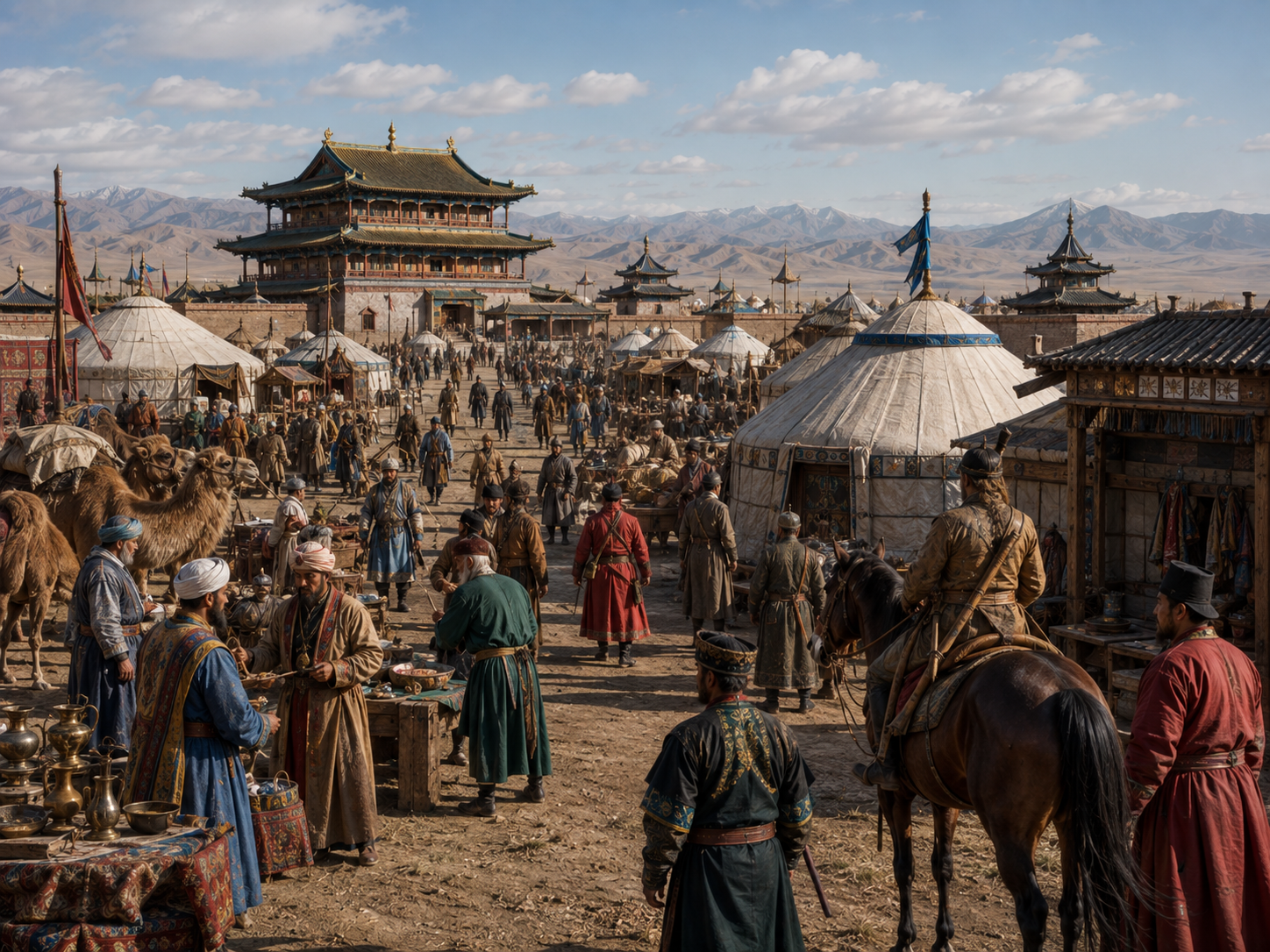
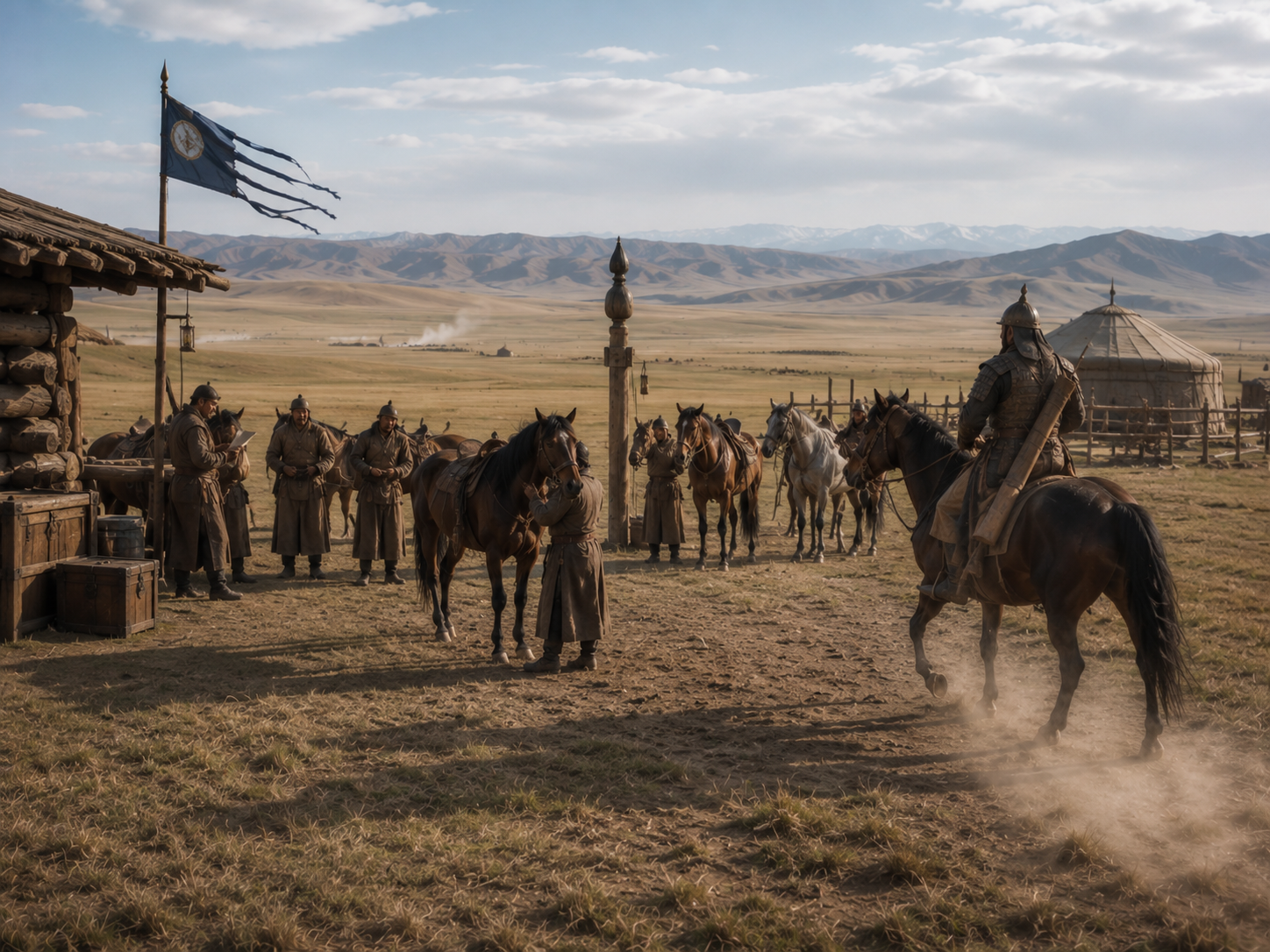
One of the most useful systems developed by the Mongols was the yam, a network of relay stations spread across the empire.
At these stations, official messengers could change horses, rest and continue their journey.
This may sound simple, but across an empire that stretched thousands of kilometres, it was extremely important.
A message that once might have taken a very long time to travel could move much faster when riders had fresh horses waiting along the way.
The system was developed under Genghis Khan and greatly expanded under his son Ögedei Khan.
The Mongols also worked to protect important trade routes. Merchants were valuable because trade brought wealth and taxes into the empire. Better security and improved communication made long-distance travel easier in many parts of Mongol-controlled Eurasia.
This had an unexpected result.
The Mongols had built their empire through conquest, but the empire also created stronger connections between distant regions.
Merchants, diplomats, religious travelers and ideas could move across much of Eurasia more easily than before.
The people who built the empire were famous for their horses and armies.
But their ability to organize, communicate and govern was just as important to keeping that empire together.
How the Mongols Governed
Chapter 5 — Death and Succession
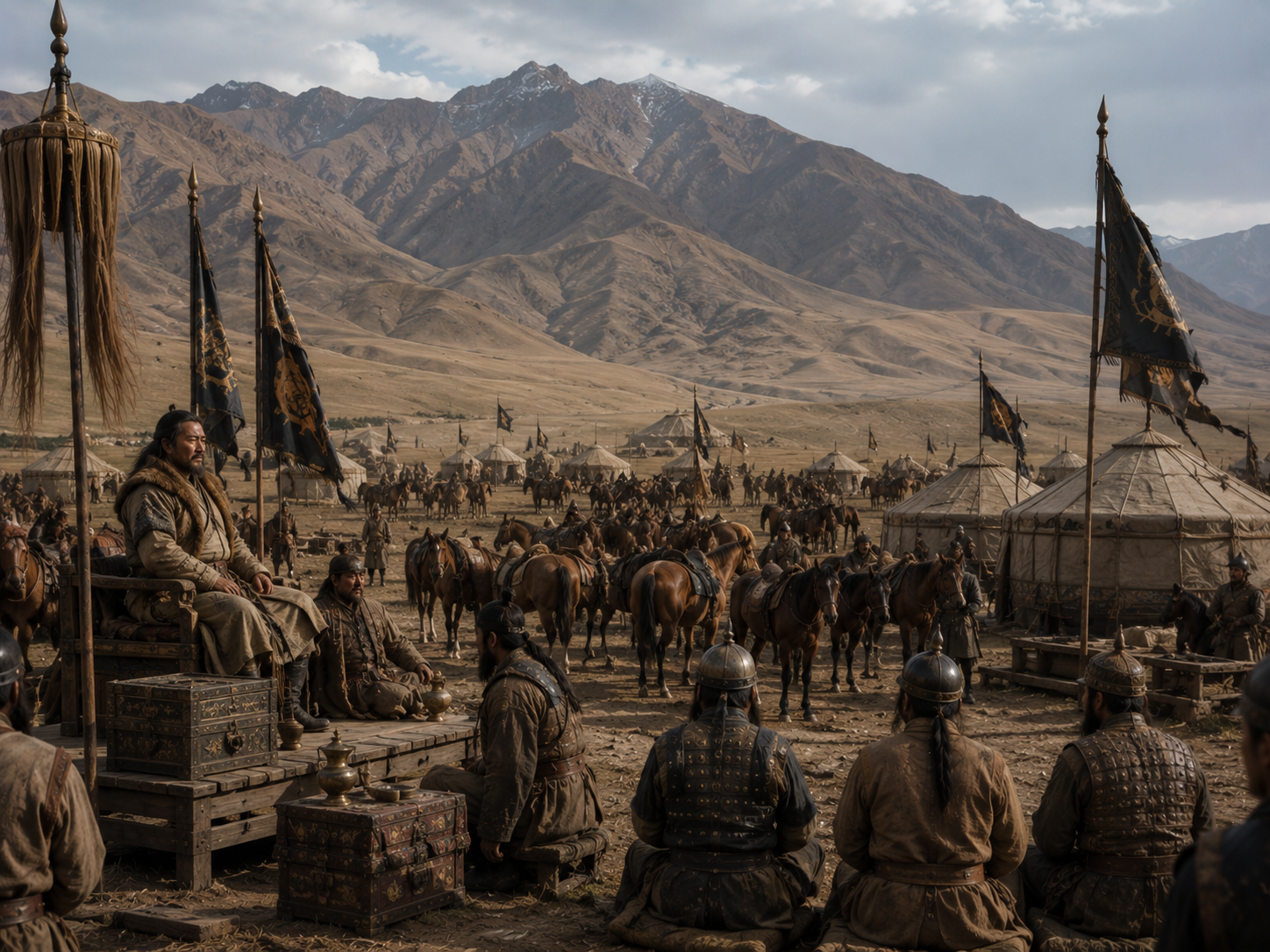
By 1227, Genghis Khan was in his sixties and still leading military campaigns.
His final campaign was against Western Xia, a kingdom in northern China that had previously come under Mongol pressure. During the campaign, Genghis Khan became seriously ill.
He died in August 1227.
The exact cause of his death is still unknown.
Several later accounts give different explanations. Some describe illness, while others connect his death with an accident or injury. Because the sources were written at different times and do not agree, historians cannot confidently choose one explanation as the truth.
His death was kept relatively private while the campaign continued.
There was another question as well: where was he buried?
That remains a mystery.
Traditions connect his burial with Burkhan Khaldun, a sacred mountain in northeastern Mongolia that had been important in his life. Stories also developed about efforts to hide the location of his grave.
But no confirmed tomb has ever been found.
Researchers have searched the region using archaeology, satellite imagery and other methods, but Genghis Khan's burial place remains unknown

The Mongol Empire did not collapse when Genghis Khan died.
That was one of his greatest achievements as a ruler.
He had created a political system that could continue without him.
His sons and other members of the ruling family already controlled different parts of the empire. After his death, his son Ögedei Khan eventually became the next Great Khan.
The Mongol conquests continued.
Ögedei expanded Mongol power farther into China and Central Asia, while other members of the family led campaigns toward the west. In later decades, Genghis Khan's grandsons, including Kublai Khan, pushed the empire even farther.
So Genghis Khan's death was not the end of the Mongol expansion.
It was the beginning of its next stage.
He had started with a divided group of tribes on the Mongolian steppe.
By the time of his death, he had created the foundation of an empire that his descendants would expand across much of Eurasia.
The Last Years of Genghis Khan
Chapter 6 — The Empire After Him
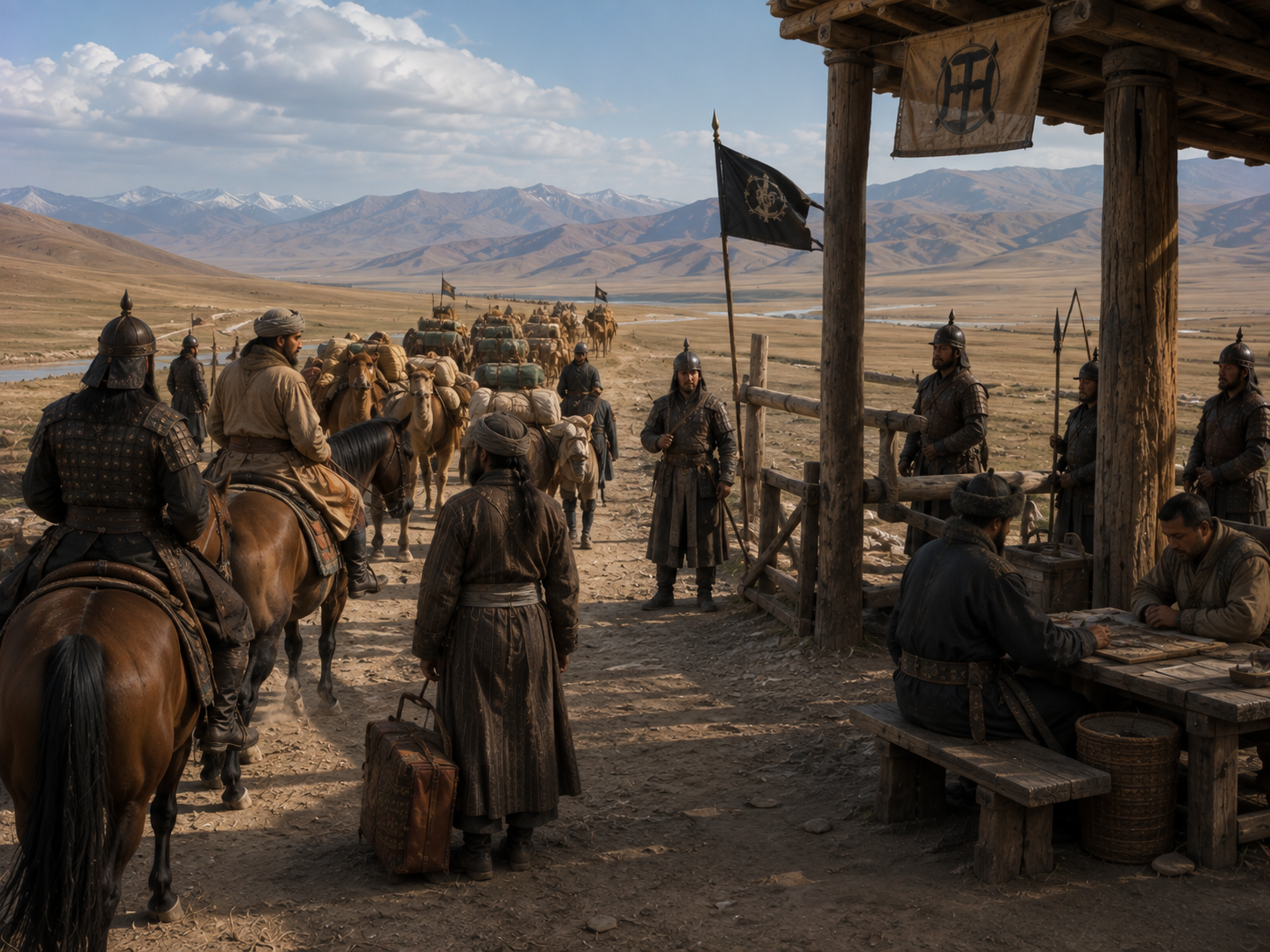
Genghis Khan had built the foundation of the Mongol Empire, but his death did not stop its expansion.
His son Ögedei Khan became Great Khan in 1229. Under Ögedei and later Mongol rulers, armies continued moving across Asia and into Europe.
In China, the Mongols continued their long struggle against the Song dynasty. Far to the west, Mongol armies moved into Persia and Eastern Europe. By the middle of the 13th century, Mongol power stretched across an enormous part of Eurasia.
One of the most important later rulers was Kublai Khan, Genghis Khan's grandson.
Kublai eventually completed the Mongol conquest of China and founded the Yuan dynasty in 1271.
But the empire was becoming too large to be controlled as one closely connected state.
Different branches of the ruling family began governing different regions. The Golden Horde controlled much of the western steppe, the Chagatai Khanate ruled large parts of Central Asia, and the Ilkhanate controlled much of Iran and nearby territories.
They were still connected by their Mongol heritage, but they increasingly acted as separate political powers.
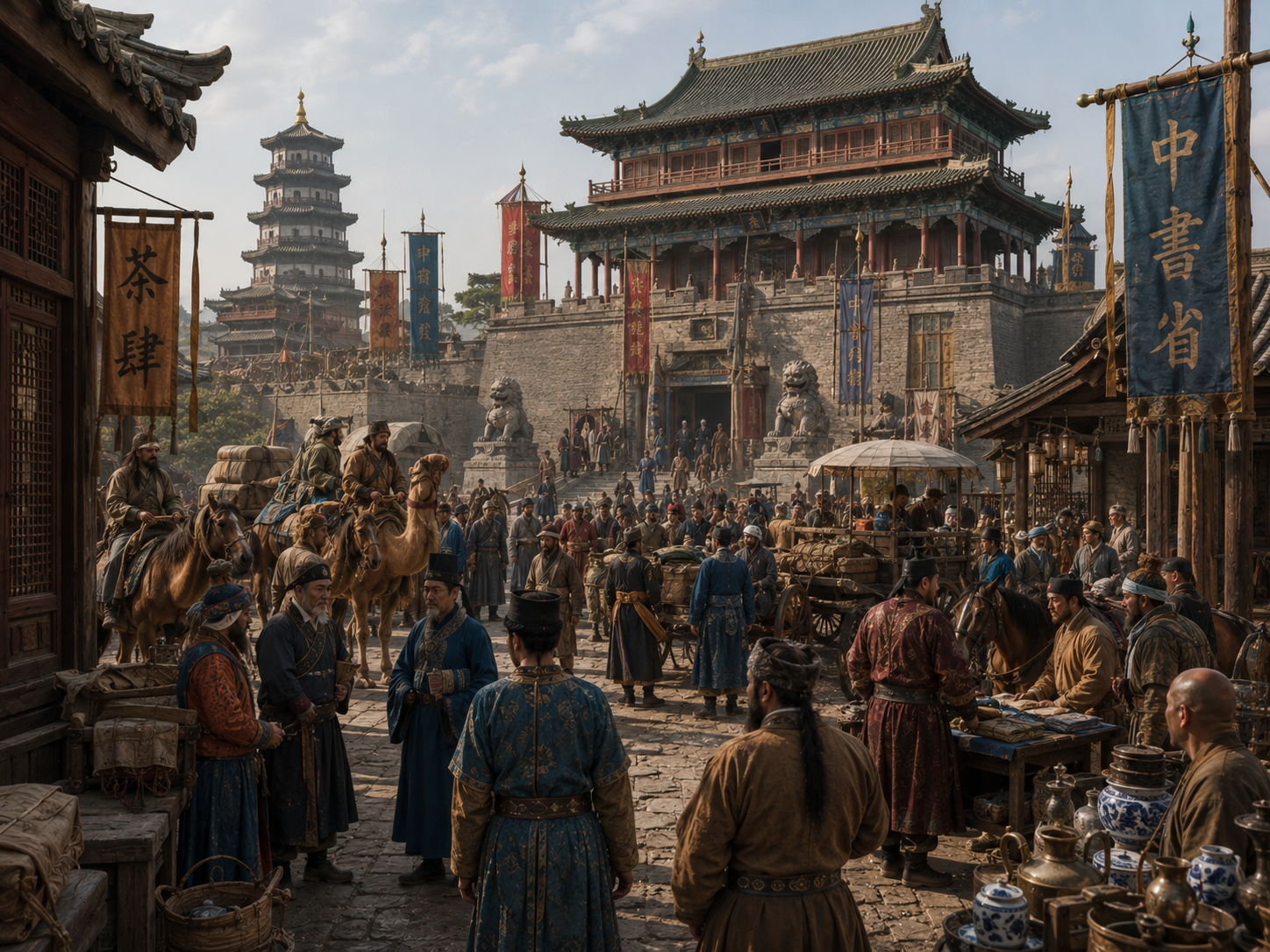
The Mongol Empire also changed the way people moved across Eurasia.
During periods of relative stability, merchants could travel across large sections of Mongol-controlled territory. The relay system helped official communication, while protection of important trade routes made long-distance commerce easier in many regions.
This period is often called the Pax Mongolica, meaning the “Mongol Peace.”
The name can be misleading.
There was no complete peace across the empire. Mongol rulers sometimes fought one another, and rebellions and wars continued.
The term refers instead to a period of relative stability across important parts of Eurasia, especially during the 13th and early 14th centuries.
During this period, goods, travelers, diplomats and ideas moved across enormous distances.
This was closely connected to the Silk Roads.
A merchant could travel through several Mongol-controlled territories and encounter fewer political barriers than before. Cities across Central Asia became important centers of trade, and Europeans became more aware of parts of Asia that had previously been distant and difficult to reach.
The Mongol Empire had been created through war.
Yet under its later rulers, it also became a powerful network connecting distant parts of Eurasia.
That was one of the great contradictions of the empire.
Genghis Khan had conquered the distance. His successors helped people cross it.
From Genghis Khan to the Mongol Empire
Chapter 7 — Legacy and Reassessment
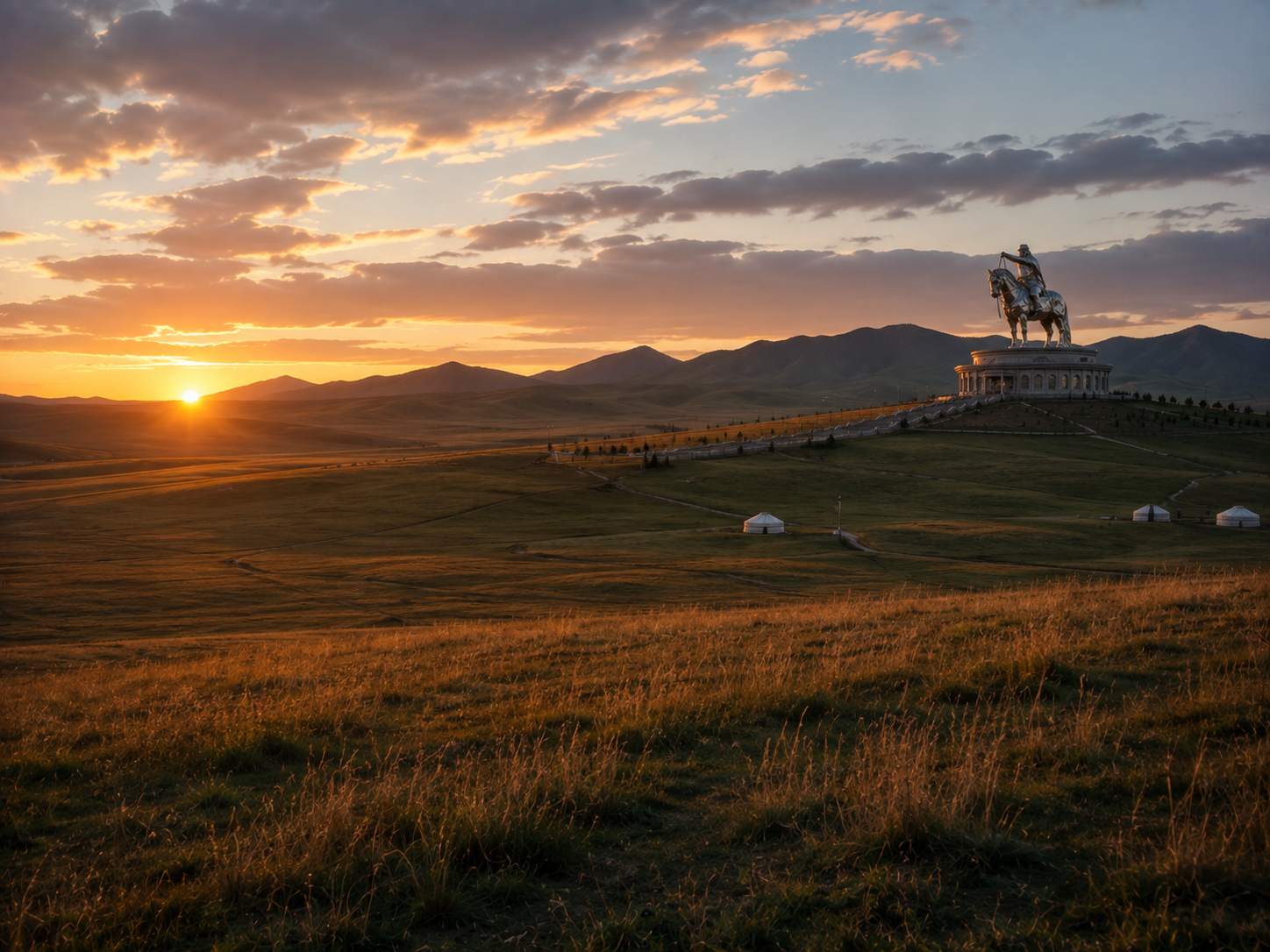
More than 800 years after his death, Genghis Khan is still a difficult person to describe in just a few words.
For a long time, many Western histories presented him mainly as a ruthless conqueror who destroyed cities and killed huge numbers of people.
There is truth in that.
His campaigns caused terrible destruction, and the suffering caused by Mongol conquest should not be hidden.
But that is not the whole story.
Genghis Khan also created a political system that was able to bring many different peoples under one empire. The Mongols used local administrators, developed systems for communication and supported trade across large parts of Eurasia.
His successors continued these policies and expanded them even further.
This has changed the way historians look at him.
Rather than asking whether Genghis Khan was simply “good” or “evil,” historians can ask a more useful question:
How did one leader create such a powerful empire, and what happened because of it?
The answer includes both conquest and destruction, but also government, trade, communication and cultural exchange.
There is another fascinating part of his legacy: genetics.
In 2003, researchers studied Y-chromosome patterns in more than 2,000 men from populations across Asia. They found one particular lineage in about 8 percent of the men in their sample.
The researchers estimated that this lineage could represent about 0.5 percent of men living in the world today.
They suggested that the lineage may have come from Genghis Khan's male family line or another closely related ruling lineage.
This led to the famous claim that one in every 200 men is a descendant of Genghis Khan.
But that headline is stronger than the evidence.
Researchers did not have a confirmed DNA sample from Genghis Khan himself. The study showed that a particular Y-chromosome lineage was unusually widespread, but it could not prove that every person carrying it was directly descended from Genghis Khan.
So the claim is interesting, but it should be treated as a scientific hypothesis, not a proven fact.
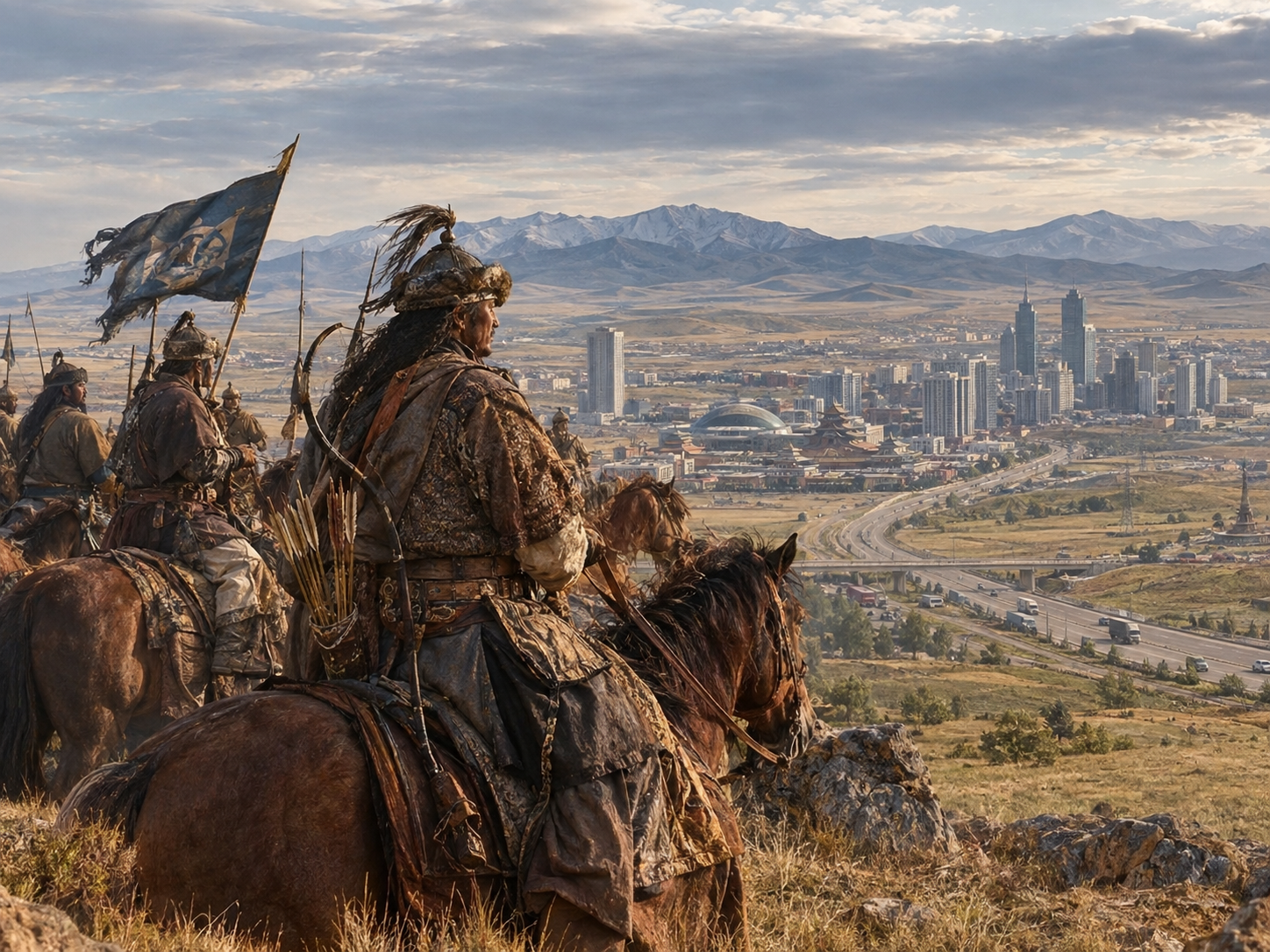
Genghis Khan's image also depends greatly on where you look.
In Mongolia, he is an important national historical figure and a symbol of Mongolian identity.
Elsewhere, memories are often more connected to the destruction caused by the Mongol conquests.
Both memories are part of the historical record.
Genghis Khan was a brilliant military organizer who built one of history's most powerful empires.
He was also responsible for wars that brought enormous suffering to conquered populations.
His empire connected distant parts of Eurasia, but it was created through violent conquest.
His rulers allowed several religions to exist across much of the empire, but that tolerance did not mean modern religious equality.
These contradictions are not problems that need to be removed from the story.
They are the story.
Genghis Khan began life as a vulnerable boy on the Mongolian steppe. He survived abandonment, built alliances, defeated his rivals and became the founder of an empire that his descendants expanded across much of Eurasia.
His tomb remains unknown.
His exact cause of death remains uncertain.
And even his genetic legacy, often repeated as a simple fact, still contains important unanswered questions.
What is certain is the scale of his impact.
Few individuals have changed the political map of Eurasia as dramatically as Genghis Khan.
His empire eventually disappeared.
But the routes it connected, the states it created and the historical debates surrounding his name have lasted for centuries.
That is why Genghis Khan is still worth studying—not as a simple hero or villain, but as one of the most complicated figures in world history.
The Legacy of Genghis Khan
FAQ Frequently Asked Questions
1. Was Genghis Khan really that brutal?
Yes. His conquests involved large-scale destruction, mass killing and forced displacement in several regions, particularly during campaigns in Central Asia and Iran. At the same time, the Mongol state developed sophisticated military and administrative systems. Both realities are essential to understanding him accurately.
2. How did Genghis Khan die?
Genghis Khan died in 1227 during the Mongol campaign against Western Xia. His exact cause of death remains uncertain. Later sources proposed different explanations, but none can be established as fact with sufficient confidence.
3. Where is Genghis Khan buried?
His tomb has never been conclusively identified. Burkhan Khaldun in northeastern Mongolia is traditionally associated with his burial, but no confirmed grave has been found.
4. How large was the Mongol Empire?
At its maximum extent under Genghis Khan's successors, the Mongol Empire covered roughly 23 million square kilometres, making it the largest contiguous land empire generally recognized in history. Its greatest territorial extent came after Genghis Khan's death.
5. Is it true that one in 200 men today are descendants of Genghis Khan?
This is an oversimplification. A 2003 genetic study identified a Y-chromosome lineage in about 8% of sampled men across 16 Asian populations, corresponding to roughly 0.5% of men worldwide in the study's estimate. The researchers suggested that the lineage may have originated from Genghis Khan or his male relatives, but they did not prove direct descent from Genghis Khan himself.
6. Did Genghis Khan create the Yassa?
The historical evidence is more complicated than popular histories suggest. Yassa is associated with Mongol laws, regulations and decrees, but historians do not have reliable evidence for a single surviving comprehensive law code personally written by Genghis Khan.
7. Were the Mongols tolerant of other religions?
Mongol rulers generally permitted several religions to operate within their territories and sometimes granted religious communities privileges or protections. However, policies differed between rulers and regions, so describing the empire as uniformly or perfectly religiously tolerant would be misleading.
8. What was the Mongol yam system?
The yam was an imperial relay network connecting stations where official messengers could obtain fresh horses, food and supplies. Its foundations were established under Genghis Khan and the system was substantially expanded under his successor Ögedei. It became an important communications network across the empire.
9. Did Genghis Khan personally create the largest empire in history?
Not entirely. Genghis Khan founded the Mongol Empire and conquered an enormous territory, but his sons, grandsons and later successors expanded it to its maximum extent. Kublai Khan and other descendants were particularly important in the later expansion.
10. What was the Pax Mongolica?
The Pax Mongolica refers to a period of relative stability across significant parts of Mongol-controlled Eurasia, especially during the 13th and early 14th centuries. It was not universal peace, but it helped facilitate long-distance trade, travel, diplomacy and cultural exchange.